The two cathedrals of Salamanca: Gothic, Romanesque and an astronaut
Two complete buildings from different periods, stuck together and sharing a wall, with a single ticket. Where the astronaut is, what the Torre del Gallo is and why the climb up Ieronimus pays off.
In Salamanca there is not one cathedral: there are two, stuck together, sharing a wall and working as a single building with a single entrance. The old one is twelfth-century Romanesque; the new one was begun in 1513 and finished in 1733. And both survived because, while the new one was being built, the old one went on being used, and when the new one was ready nobody had the nerve to pull the other one down.
The astronaut is on the Puerta de Ramos of the New Cathedral, the doorway facing the square, on the left and quite high up. It was carved by the stonemason Miguel Romero during the restoration of 1992.
The New Cathedral: Gothic out of time
And on purpose, not out of delay.
It was begun in 1513, when the Renaissance had been around for less than a century in Italy and had barely reached Spain, and even so Salamanca chose Gothic. It was not ignorance: it was the style considered proper to a cathedral, while the Renaissance was still seen as a matter for palaces. The design was drawn by Juan Gil de Hontañón and continued by his son Rodrigo.
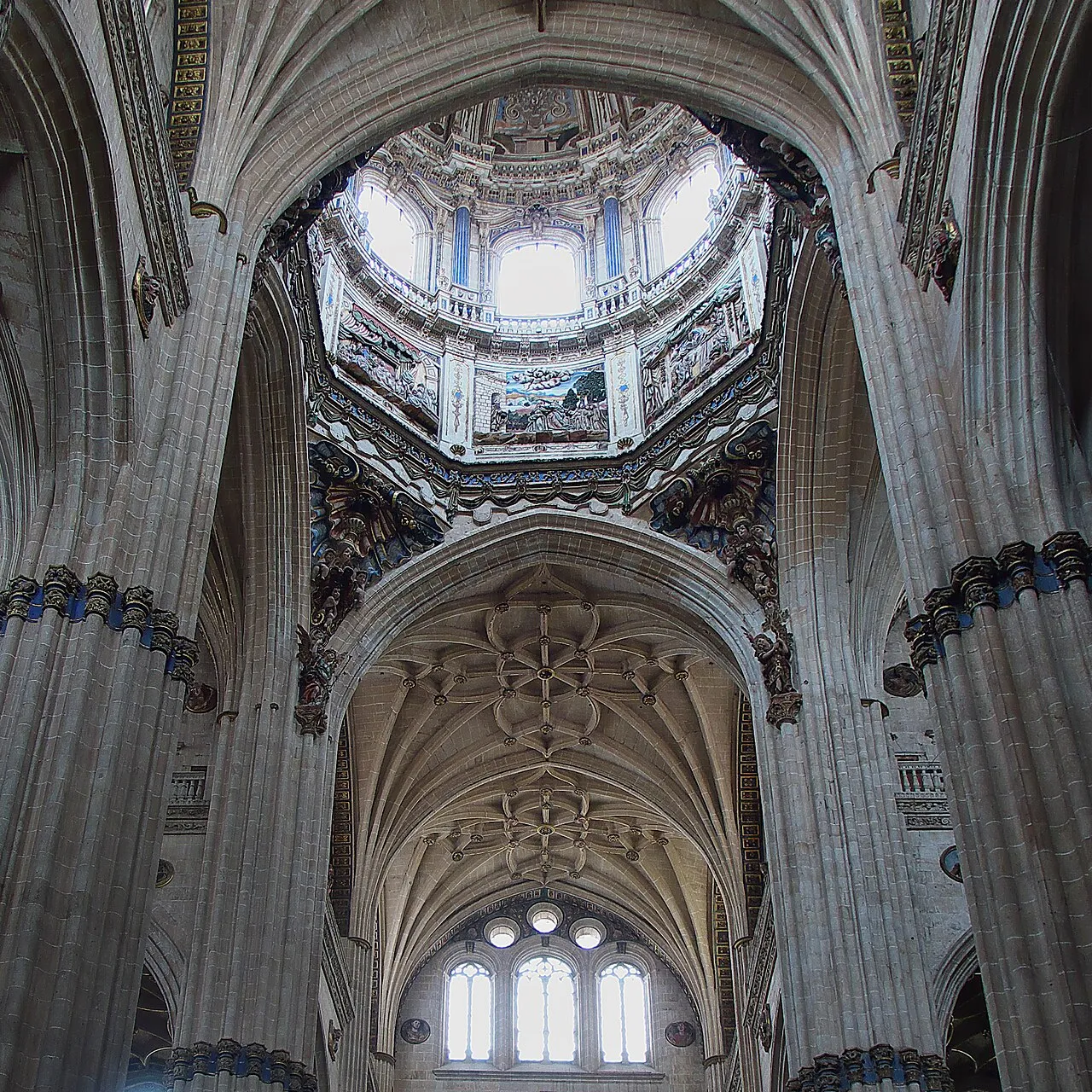
The result is three naves of considerable height, with very elaborate rib vaults whose ribs cross to form stars, and a spaciousness that impresses even if you have come from other large cathedrals. The lantern tower and the bell tower were finished off in Baroque, two centuries after the start.
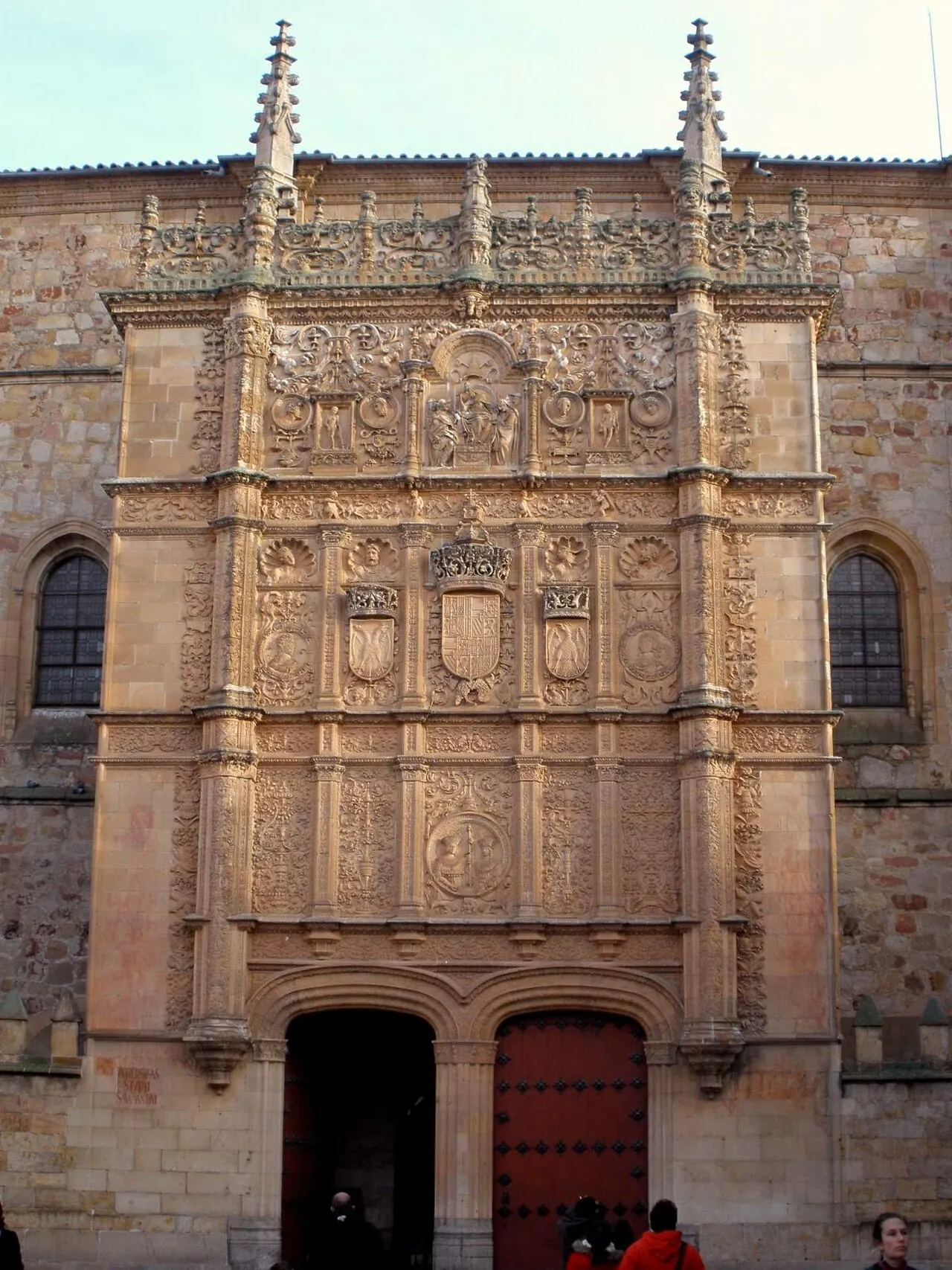
The north front, the one with the Puerta de Ramos, is a Plateresque panel carved to the last centimetre, with scenes of the Passion and an ornamental density that makes it hard to fix your eye. It is one of the great doorways of sixteenth-century Spain.
And on one of its archivolts is the astronaut, in his spacesuit, and near him a dragon eating an ice cream. They are no inexplicable anomaly: they are the guild signature of the 1992 restoration, an old custom that makes it possible, five centuries from now, to tell which part is original and which was redone.
Entry around 10 €, with the Old Cathedral included. Look for the mark of the Lisbon earthquake of 1755, which cracked the tower and forced its base to be filled in solid: that is why today it is far thicker than the original design intended.
It is on the left and quite high up, and it is hard to see without having it pointed out. The tradition of signing restorations with a contemporary element is old and perfectly accepted: a bull in the sixteenth century, an astronaut in the twentieth.
You go in from inside the new one, down a few steps, and the change is brutal: from the height and the light of late Gothic you pass into a lower, darker and much denser space. It is one of the best preserved Romanesque cathedrals in Spain.
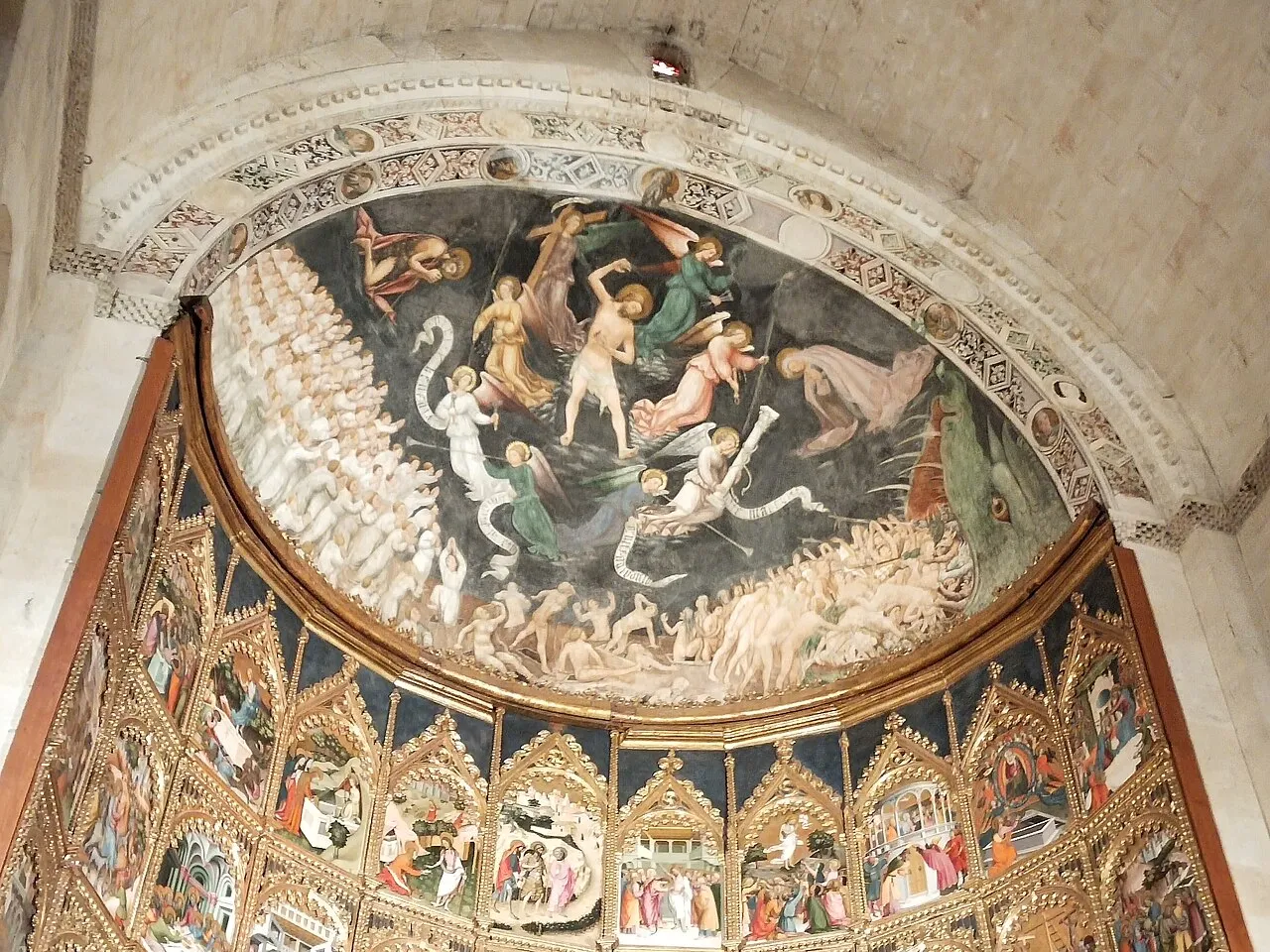
The greatest piece is in the apse: an altarpiece from the middle of the fifteenth century with fifty-three panels painted on a gold ground, the work of Nicolás Florentino, telling the life of Christ and of the Virgin scene by scene. It is one of the most complete groups of Gothic painting to survive.
Above it, covering the apse vault, an enormous fresco of the Last Judgement by the same artist, with hell handled with considerable rawness. Seeing the two together — the orderly account below, the warning above — is to understand how a medieval church communicated with people who could not read.
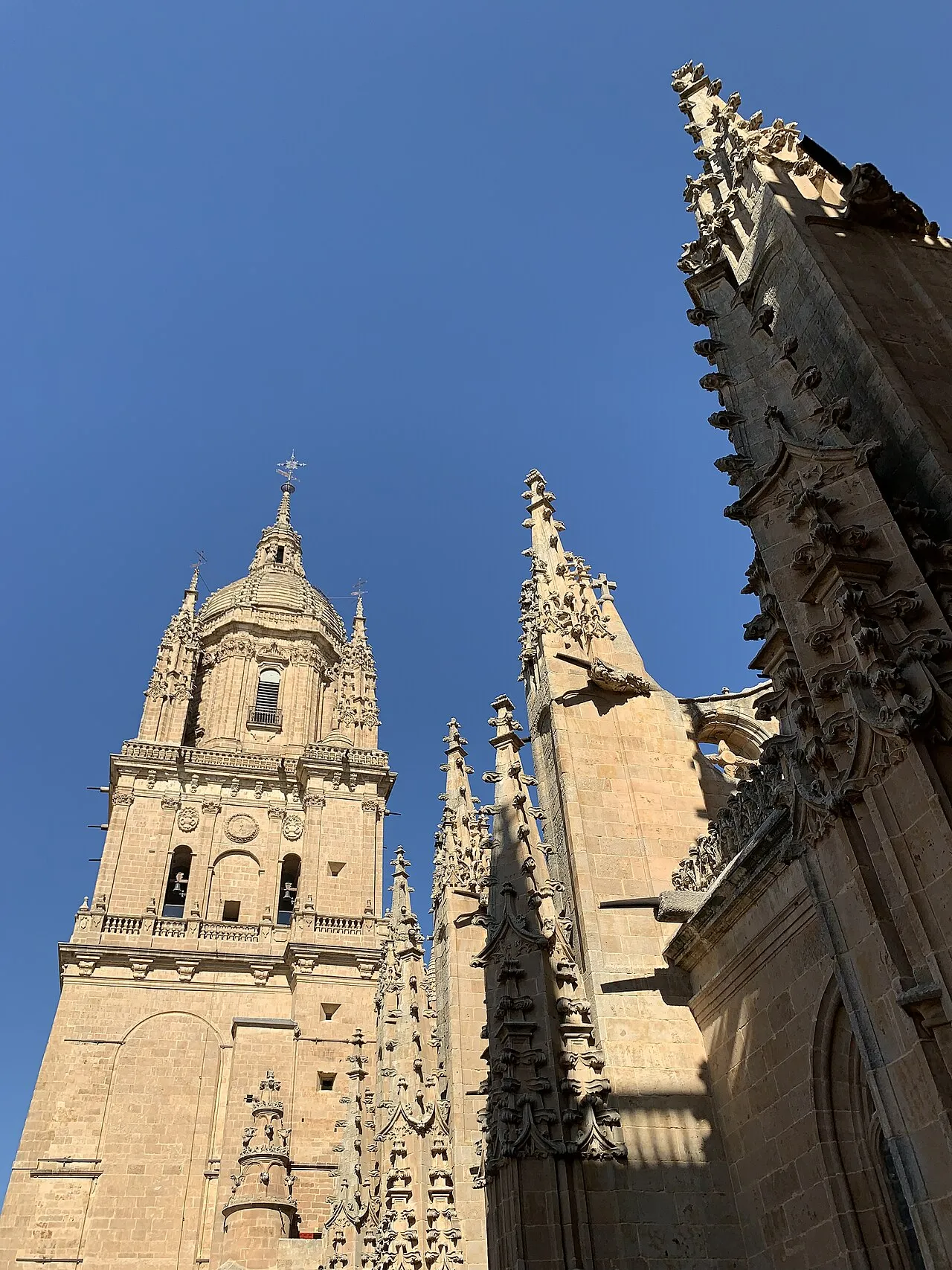
And then there is the Torre del Gallo, the lantern tower, which is seen from outside. It is a ribbed dome on a drum with two rows of windows, covered in stone scales, of clear Byzantine influence. Its closest relatives are in Zamora and in Toro.
Ieronimus, the visit almost nobody makes
It is a route through the upper levels of the two cathedrals that uses the service passages opened in the thickness of the walls, originally meant for maintaining stained glass and roofs. You walk along narrow corridors, cross galleries and look down into the naves from a height at which they are never seen.
That vantage point changes everything. The rib vaults can be taken in close up, with their ribs and their keystones, and from one of the galleries you see the Romanesque lantern tower of the old cathedral from an angle impossible at ground level. Then you come out onto the outdoor terraces above the roofs.
The name comes from Bishop Jerónimo de Perigord, the first bishop of resettled Salamanca and confessor to El Cid. The ticket is separate from the one for the cathedrals, costs around four euros and the visit takes a good hour.
And there is a tradition tied to these towers that is still alive. The Lisbon earthquake of 1755 cracked the cathedral tower and forced it to be reinforced. Since then, every 31 October a local man climbs to the top dressed in charro costume, plays the pipe and tabor and gives thanks that the city held. He is called the Mariquelo.
In one chapel off the cloister there is a medieval pipe organ, one of the oldest in Europe that can still be played. Go out to the Patio Chico, the little square behind: it is the best view of the Torre del Gallo and one of the quietest corners of the old town.
A good hour, with the stairs spread over flights and landings, so it is not a continuous climb. There are narrow passages and the odd stretch at height: not suitable with claustrophobia or severe vertigo. Better at the end of the afternoon, with the stone alight.
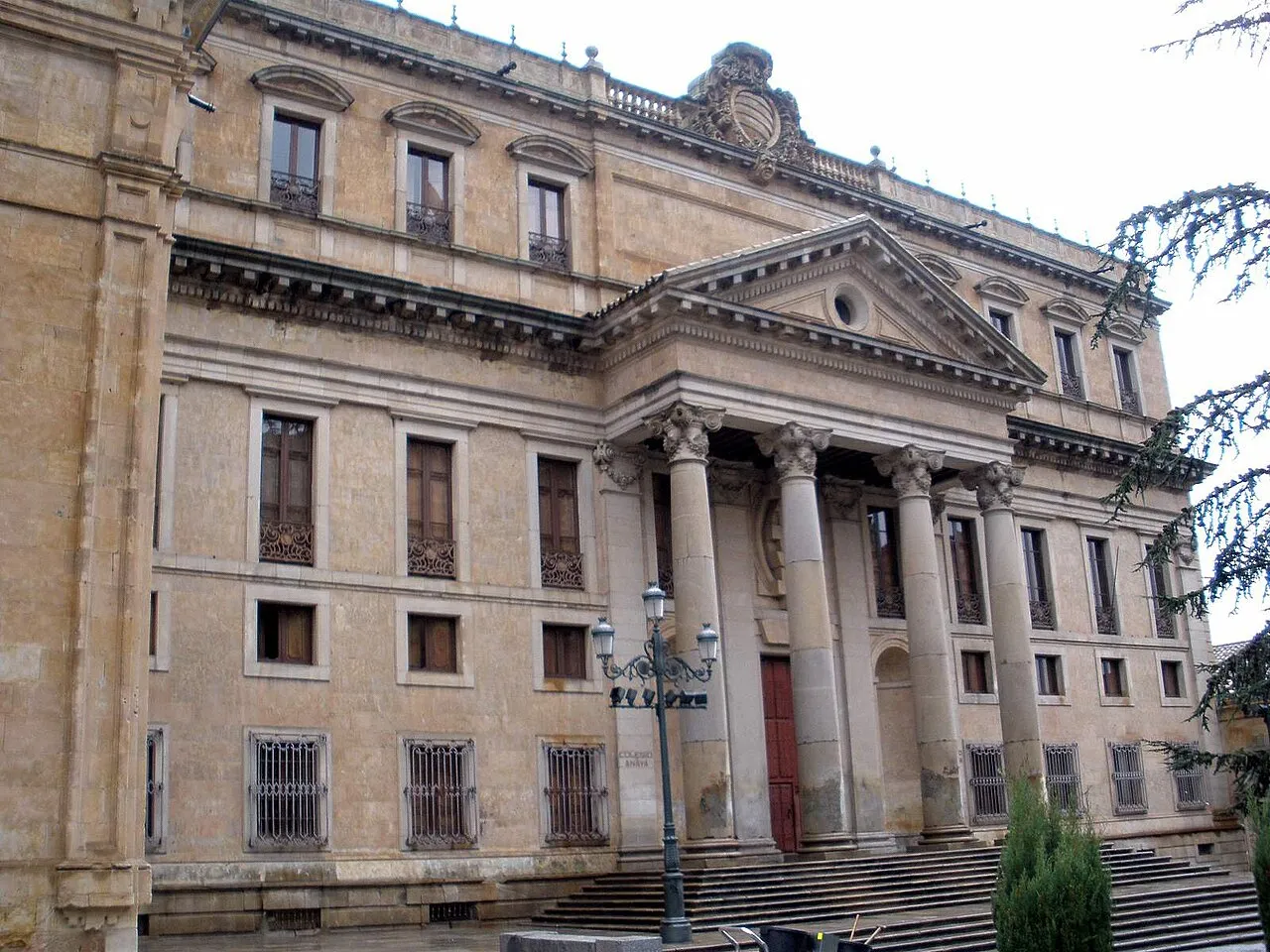
Opposite the New Cathedral, a plain neoclassical building with a portico of giant Ionic columns that comes as a surprise in a city carved to the last centimetre. Its square, with trees and benches, is one of the best places in the old town to sit late in the day.
Because while the new one was being built, between 1513 and 1733, the old one went on being used for worship, and when the new one was finished nobody had the nerve to pull down a twelfth-century Romanesque building in good condition. They were left stuck together, sharing a wall, and today they work as a single complex with a single ticket.
Where is the astronaut?
On the New Cathedral, on an archivolt of the Puerta de Ramos, the front facing the square, on the left and quite high up. Near it there is a dragon eating an ice cream. They were carved by the stonemason Miguel Romero during the restoration of 1992, following the guild custom of signing interventions with a contemporary element.
What is the Torre del Gallo?
The lantern tower of the Old Cathedral: a ribbed dome on a drum with two rows of windows and covered in stone scales, of clear Byzantine influence that probably arrived by way of Aquitaine. Its closest relatives are in Zamora and in Toro.
Is Ieronimus worth it?
Very much so, and it is the least visited of the important visits. It runs through the upper levels of the two cathedrals along the service passages opened in the thickness of the walls, with the vaults seen close up and the outdoor terraces at the end. Separate ticket, about four euros, and a good hour of walking.
What is the Mariquelo?
Every 31 October, the anniversary of the Lisbon earthquake of 1755 that cracked the cathedral tower, a local man climbs to the top in charro costume, plays the pipe and tabor and gives thanks that the building and the city held. The tradition was lost for decades and was revived in the seventies.
Can you visit only one of the two?
No, the ticket is joint and gives access to both. What is worth deciding is the order: going into the New Cathedral first and then down into the Old one gives you the full contrast, from the height and light of late Gothic to the density and half-light of twelfth-century Romanesque.
Practical information
WherePlaza de Anaya, 5 minutes from the Plaza Mayor and 2 from the Patio de Escuelas.
TicketsAround 10 € for both cathedrals on a single ticket. Ieronimus is separate, about 4 €.
DurationAn hour for the two cathedrals; another good hour if you do Ieronimus.
The astronautPuerta de Ramos, the doorway facing the square, on the left and quite high up.
Don't missThe Patio Chico, behind, for the view of the Torre del Gallo. It is free and very quiet.
Best timeEnd of the afternoon for Ieronimus: the golden stone lights up seen from the terraces.
On the map
🎧 With Viavoy
Walk Salamanca and listen at your own pace
Download Viavoy and walk Salamanca offline, whenever you like.
from 2,99 €· one-off payment
City Pass · 9,99 €3 days, all the tours in Salamanca