The University of Salamanca: the frog, the lecture hall and the School
Where the frog is exactly and what it really means, what you see inside and why a few friars from this house invented international law. Eight centuries in an hour's visit.
Alfonso IX founded it in 1218 and it is the oldest university still working in Spain. But what makes it memorable is not the dates: it is walking into a stone lecture hall with rough wooden benches worn down by generations, and knowing that in that exact place people argued over whether the peoples of America had rights. That happened here, and it changed international law.
The frog is on the façade, on the right-hand pilaster of the lower tier, perched on a skull. It is tiny. Tradition says that whoever finds it without help will pass the year.
The façade, and what the frog means
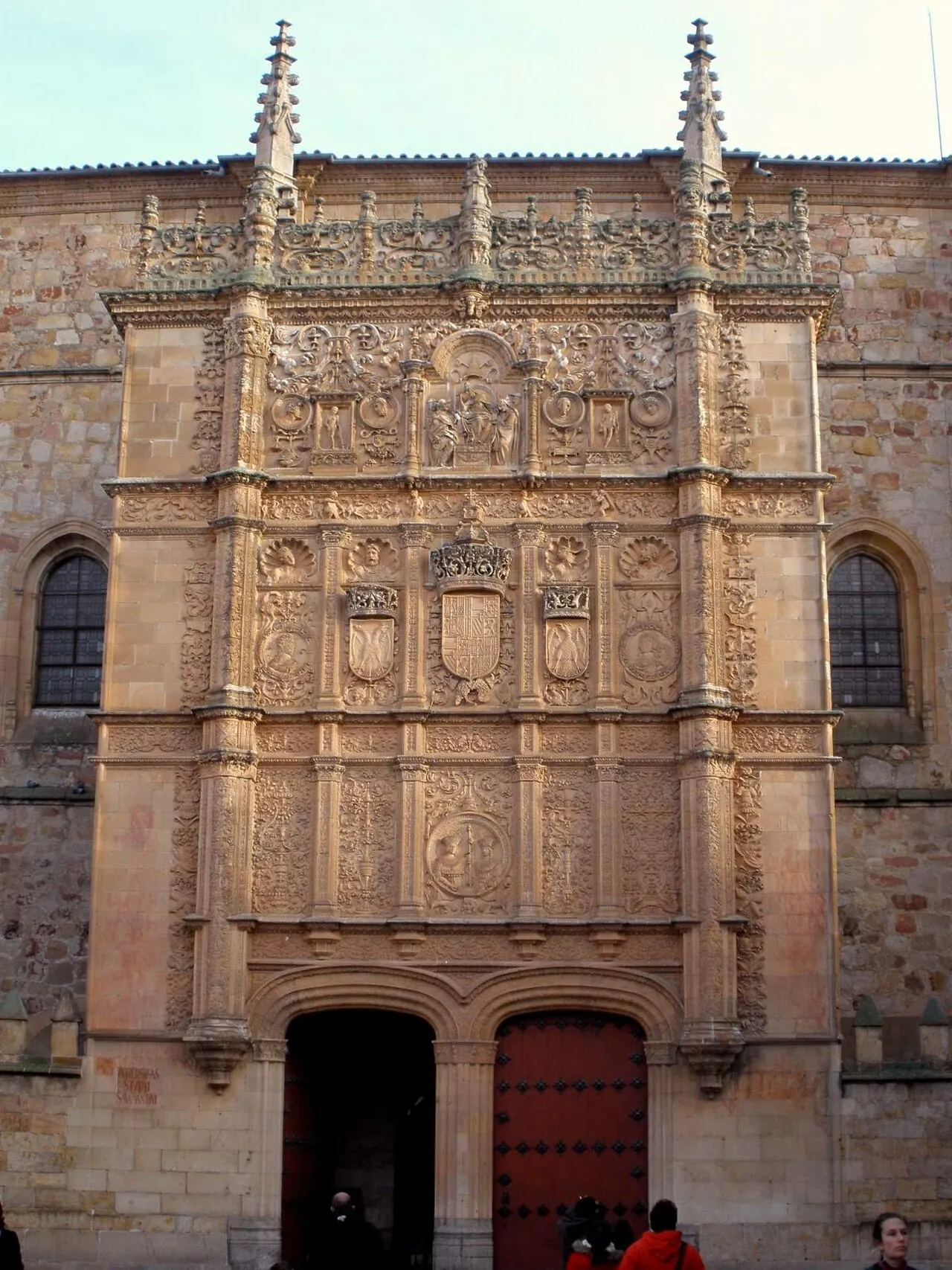
A stone altarpiece with a programme.
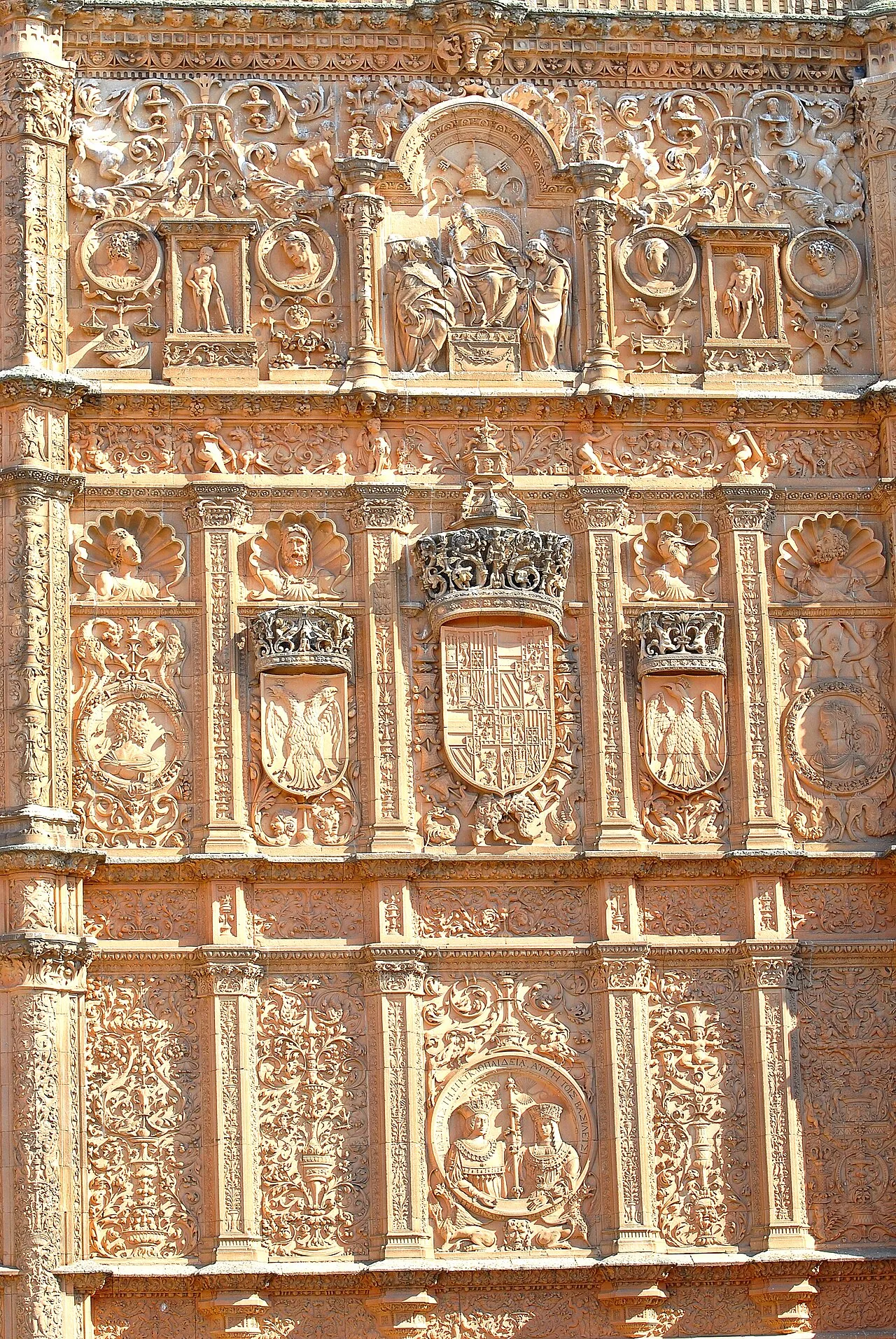
The façade does not organise the building: it organises images. It is a rectangular panel carved to the last centimetre, with three tiers stacked up and a subject in each. At the bottom, a medallion of the Catholic Monarchs with an inscription in Greek that sums up a pact: the monarchs to the university and the university to the monarchs.
The central tier is ruled by the imperial coat of arms of Charles V with the double-headed eagle, and above it a scene of the Pope with cardinals. Monarchy, empire and church, from the bottom up: the institution placed itself under those three protections and set it in writing on the door.
And then there is the frog. Finding it without having it pointed out takes some doing, which has turned the search into the rite of passage for every visitor. But its original meaning has nothing playful about it: in the iconography of the period the frog was associated with lust and the skull with death.
The pairing is therefore a warning aimed at young students newly arrived in a city full of temptations: excess leads to the end. A memento mori hidden among the ornament, which five centuries later has turned into a good-luck charm for passing exams.
Pure Plateresque, that moment when late Gothic and the Italian Renaissance cross paths in Spain. It can be seen free of charge and at any hour from the courtyard. Mid-morning or late in the day, with raking light, the relief reads far better than at midday.
Some maintain that it is not a frog but a toad, and others argue that it represents the physician of the Catholic Monarchs, whose surname sounded similar. Neither version is settled. What can be checked is that it is there and that people have been looking for it for five centuries.
The Aula Fray Luis de León is the piece that justifies the ticket. Long benches of rough wood, with no backs, where students took notes on their knees; a raised lectern; a wooden ceiling; and no decoration at all. It is exactly as it was.
Fray Luis taught here until the Inquisition imprisoned him for almost five years for translating the Song of Songs into Spanish, something forbidden at the time. When he came back acquitted to this same room, tradition says he began with two words: “Decíamos ayer”, as we were saying yesterday. The phrase is probably apocryphal and has become the motto of the house.
The Biblioteca Antigua, the old library, is looked at from the doorway, without going in: wooden shelves up to the ceiling, some forty thousand old volumes and an atmosphere that impresses even from a distance. It is one of the best preserved historic libraries in Europe.
The cloister gives access to the chapel and to the university staircase, whose reliefs draw attention for their subject: profane scenes, with figures chasing one another and episodes of student life, unusual in a building of this character.
The School of Salamanca
In the sixteenth century, a group of theologians and jurists linked to this university and to the convent of San Esteban formulated here a set of ideas that lie at the origin of modern international law, and they did so in the most uncomfortable context possible: the debate over the legitimacy of the conquest of America.
Francisco de Vitoria argued that the peoples of America were the legitimate owners of their lands, that they had sovereignty of their own regardless of their religion, and that the mere fact of discovering an inhabited territory gave no title of conquest. Domingo de Soto and Francisco Suárez later developed those theses.
These were not academic ideas without consequences: they influenced the laws of the Indies and fed the Valladolid debate between Las Casas and Sepúlveda. That this should be argued inside the very empire that was doing the conquering is, in itself, a remarkable fact.
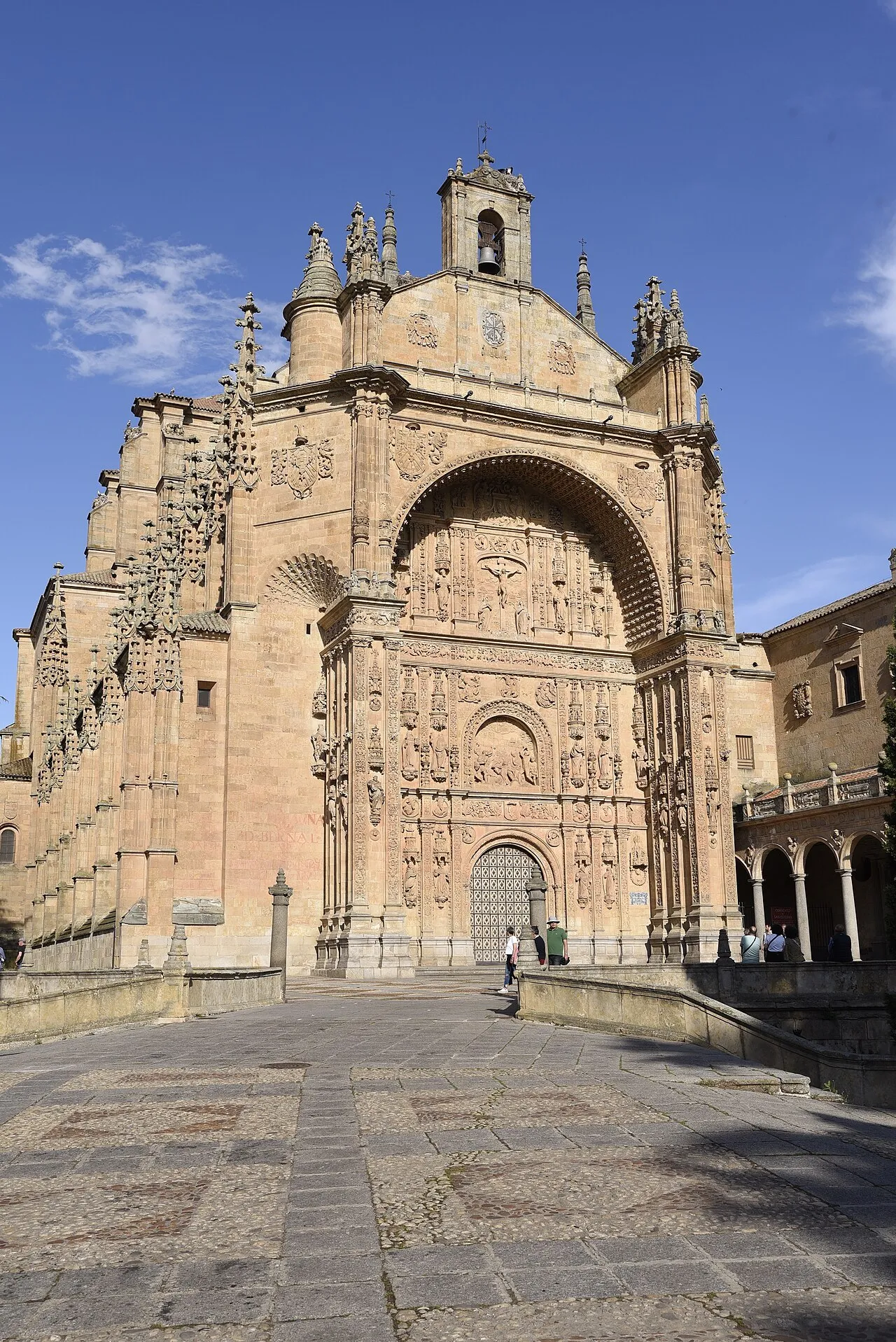
It is probably the most important intellectual contribution to have come out of a Spanish university, and it happened in these lecture halls and in the convent of San Esteban, ten minutes' walk away. Seeing both on the same day makes sense.
Entry around 10 €, usually including the Escuelas Menores. Look along the walls for the vítores, those red inscriptions with the word “Víctor” that celebrated new doctorates and that were painted with bull's blood mixed with oil, at the new doctor's expense.
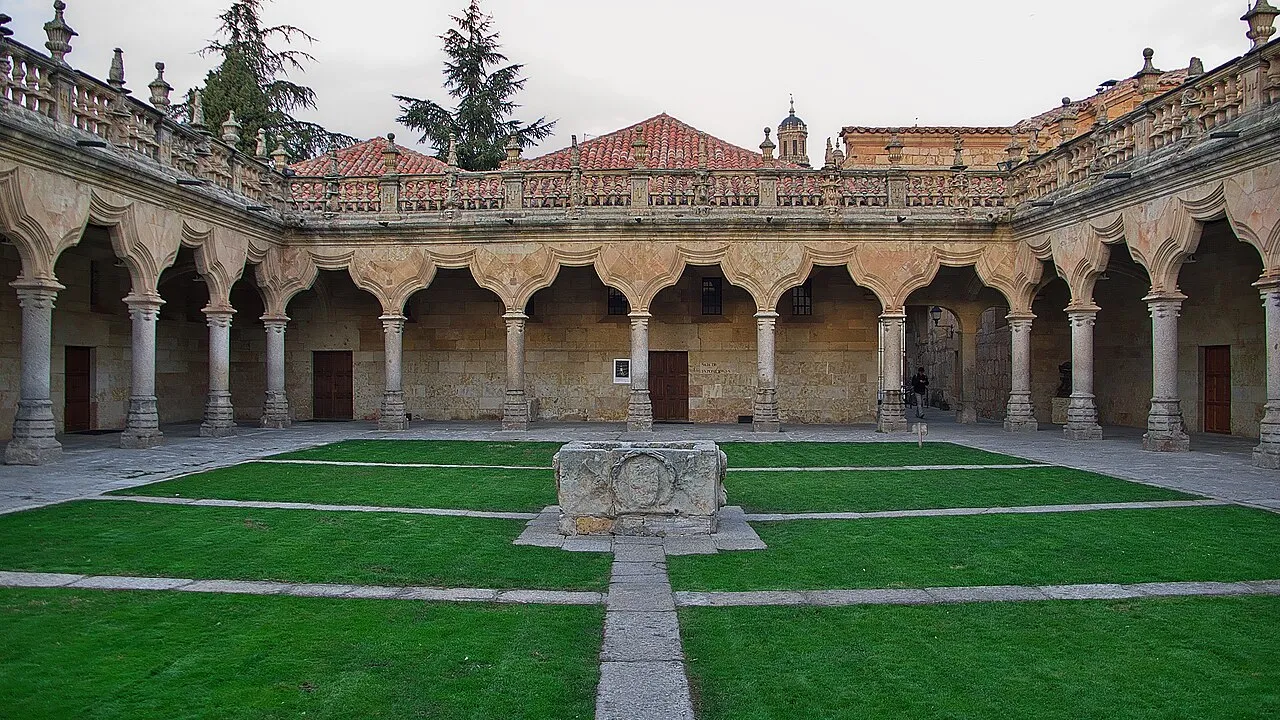
They hold the Cielo de Salamanca, the sky of Salamanca, Fernando Gallego's fresco with the constellations and the zodiac that covered the vault of the old library. Only a third survives: the rest was lost when the building was remodelled in the eighteenth century. It is usually included in the same ticket.
Ten minutes away, the other setting of the School of Salamanca: Francisco de Vitoria lived and taught here. And here Columbus found the support of Fray Diego de Deza when the committee of experts had already rejected his project, and rightly so: his calculations were wrong.
On the Plateresque façade facing the Patio de Escuelas, on the right-hand pilaster of the lower tier, perched on a skull. It is very small and sits at a certain height, so it is hard to locate without help. Student tradition says that whoever finds it without having it pointed out will pass the year.
What does the frog mean?
In Renaissance iconography the frog was associated with lust and the skull with death, so the pairing is a moral warning aimed at young students: excess leads to the end. It is a memento mori hidden among the ornament, which five centuries later has turned into a good-luck charm for passing exams.
What do you see inside the University?
The cloister with its staircase of profane reliefs, the chapel, the Biblioteca Antigua seen from the doorway — some forty thousand volumes on shelves up to the ceiling — and above all the Aula Fray Luis de León, with its long backless benches, worn down by generations and preserved exactly as they were.
What was the School of Salamanca?
A group of sixteenth-century theologians and jurists — Francisco de Vitoria, Domingo de Soto, Francisco Suárez — who formulated here the foundations of modern international law during the debate over the conquest of America: that the peoples of America had rights and sovereignty, and that discovering an inhabited territory gave no title of conquest.
What are the vítores?
The inscriptions in red with the word “Víctor” and a set of initials that you see on walls all over the city. They celebrated someone reaching the rank of doctor, and they were painted with bull's blood mixed with oil. The new doctor paid for the bull, the party and the pigment, so taking a doctorate was expensive.
Are the Escuelas Menores included?
Normally yes, in the same ticket, although it is worth checking. They are right opposite, across the Patio de Escuelas, and they hold the Cielo de Salamanca, Fernando Gallego's astronomical fresco. A great many people leave the main building and go away without crossing the square, which is a mistake.
Practical information
WherePatio de Escuelas, 3 minutes from the Plaza Mayor along the Rúa Mayor.
TicketsAround 10 €, with the Escuelas Menores included. There are free time slots; check the official website.
DurationForty minutes for the University, twenty more for the Escuelas Menores.
The frogRight-hand pilaster of the lower tier of the façade, on a skull. It is tiny.
Best timeMid-morning or late in the day: with raking light the relief of the façade really reads.
Don't missThe Aula Fray Luis, the Biblioteca Antigua from the doorway and the red vítores on the walls.
On the map
🎧 With Viavoy
Walk Salamanca and listen at your own pace
Download Viavoy and walk Salamanca offline, whenever you like.
from 2,99 €· one-off payment
City Pass · 9,99 €3 days, all the tours in Salamanca