Salamanca in 2 days: the frog, the astronaut and the river
University and cathedrals on the first day, convents and palaces on the second, with the walk down to the Tormes at sunset. With the two things you have to look for and the exact hour for the golden stone.
Salamanca is a small city, completely flat and with a density of monuments per square metre hard to match in Spain. Two days are more than enough, and the only organising criterion that matters is the light: the Villamayor stone everything is built in changes completely depending on the hour, and at midday it flattens and the relief of the façades is lost.
Villamayor stone comes soft out of the quarry — that is what made the detail of the Plateresque possible — and hardens in the air, forming a crust of iron oxide. That oxide is what gives it its golden colour.
Day 1, morning: the Plaza Mayor and the University
And the first thing you have to look for.
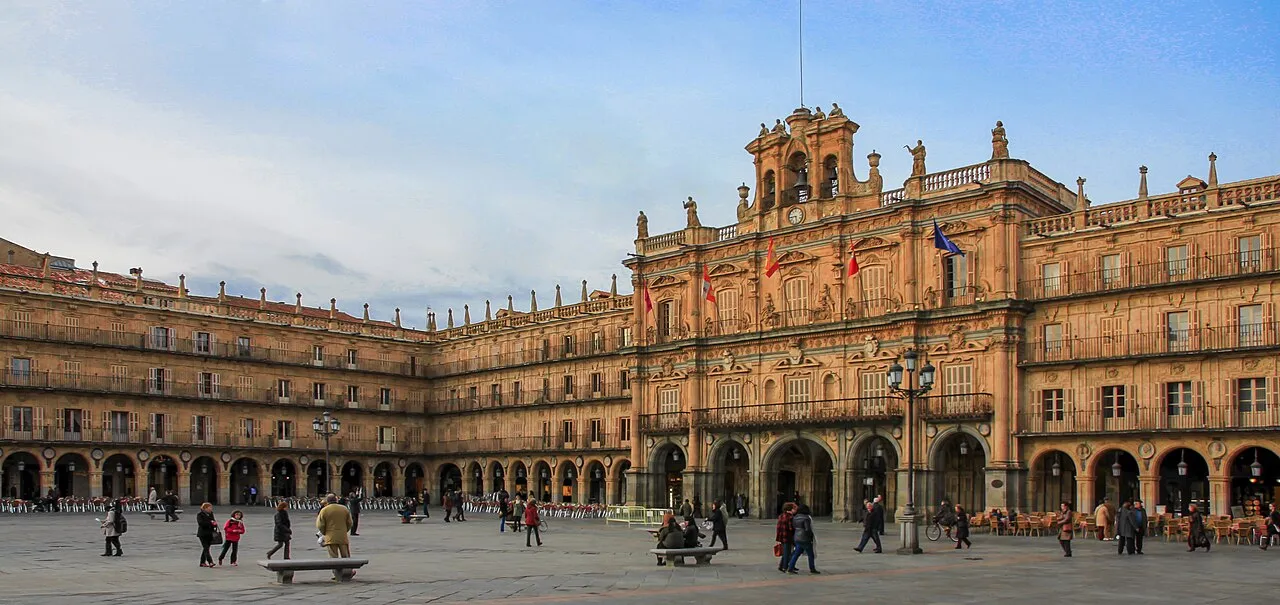
Start in the Plaza Mayor, which is reckoned the most beautiful in Spain and whose effect comes from repetition: eighty-eight identical arches, three floors of balconies with the same rhythm and everything in the same stone. It was built between 1729 and 1755 and it was not a space for strolling: it was a bullring, and that is why it is closed.
Look at the medallions above the arches, with busts of kings and historical figures. The series has been completed over centuries, some gaps are still empty on purpose and there have been removals for political reasons: it is a fairly faithful thermometer of how Spain has changed.
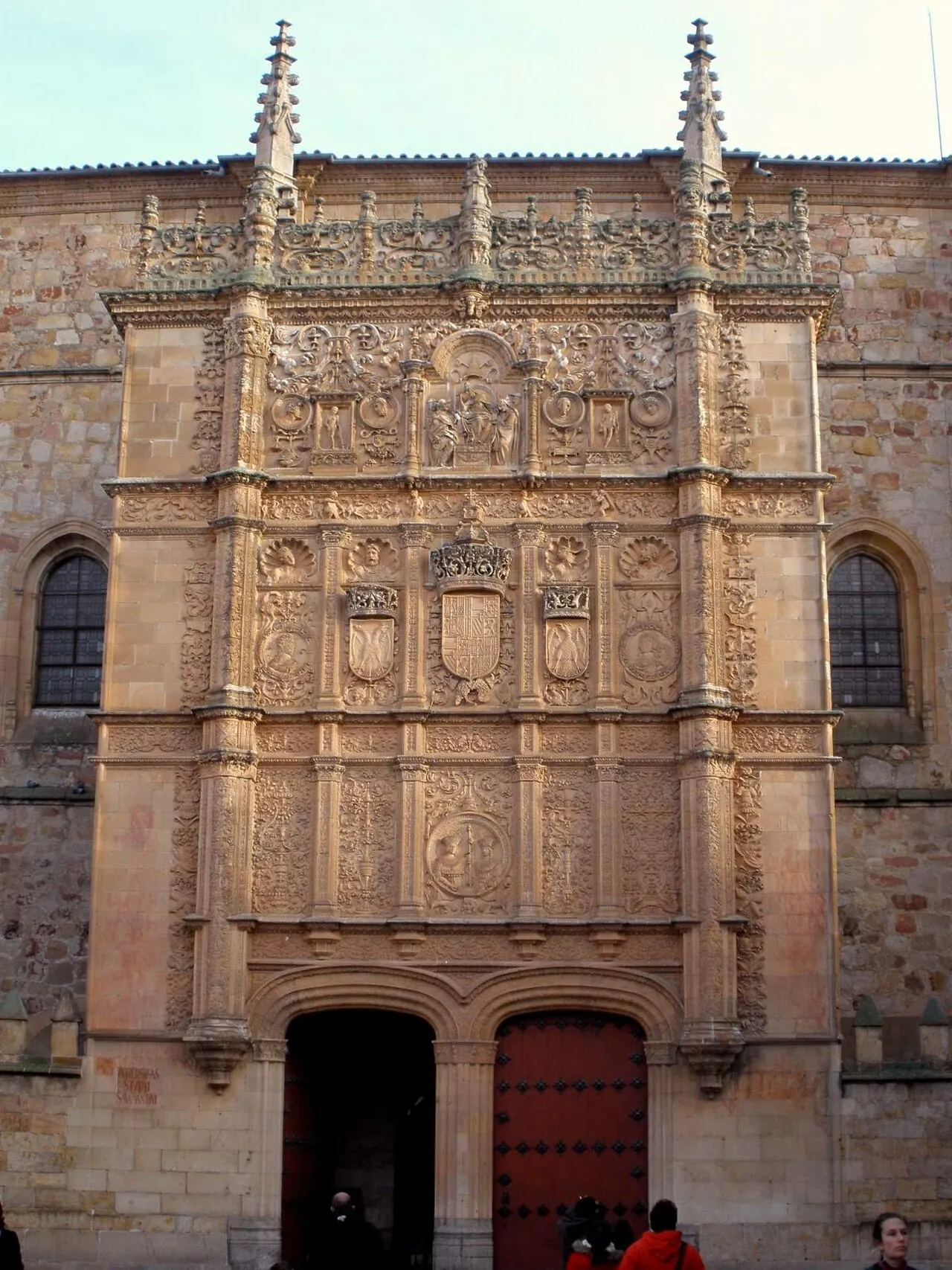
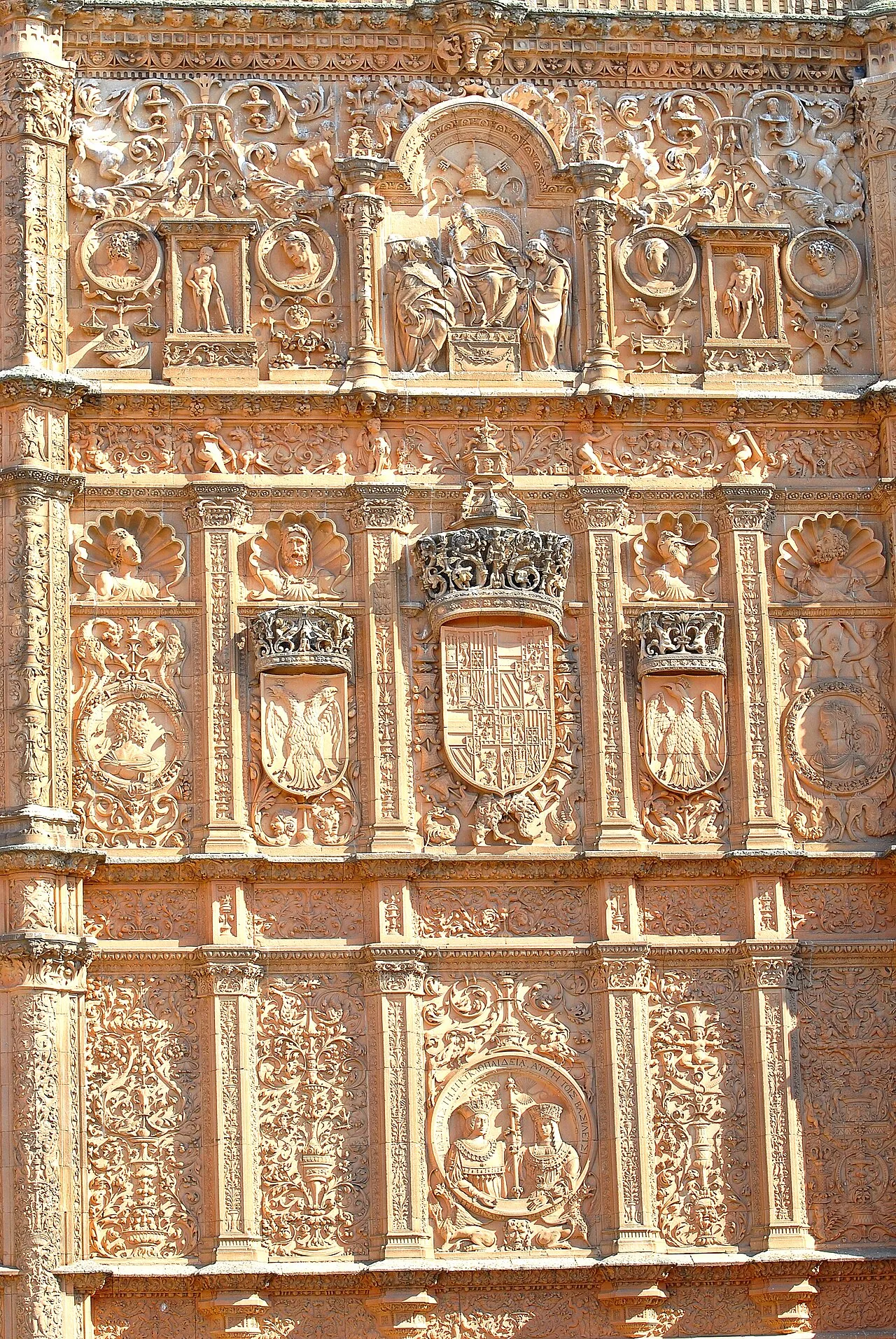
Then walk down the Rúa Mayor to the Patio de Escuelas, and there is the search you cannot skip. On the Plateresque façade of the University, on the right-hand pilaster of the lower tier, there is a tiny frog perched on a skull. It is hard to find without help and tradition says that whoever manages it alone will pass the year.
Its real meaning is less kindly: frog and skull were symbols of lust and death, a moral warning aimed at young students. Inside, the Aula Fray Luis de León keeps its long backless benches, worn down by generations, exactly as they were.
It is not square: no two sides are the same length and no angle is a right angle, because it had to be fitted into the existing street plan. The uniformity of the elevations conceals it completely. At nightfall, with the lighting on, the golden stone turns almost orange.
A stone altarpiece that organises not doorways but images: the Catholic Monarchs below with an inscription in Greek, the imperial coat of arms in the middle, the Pope above. The university placed itself under those three protections and set it in writing on the door.
Founded by Alfonso IX in 1218, the oldest still working in Spain. Here the School of Salamanca — Vitoria, Suárez — formulated the foundations of international law during the debate over the conquest of America. The Biblioteca Antigua, the old library, is looked at from the doorway.
Cross the Patio de Escuelas and go into the Escuelas Menores, which almost everybody skips despite their being included in the same ticket. They hold the Cielo de Salamanca, the sky of Salamanca, Fernando Gallego's fresco that depicted the firmament with its constellations and its zodiac. Only a third survives.
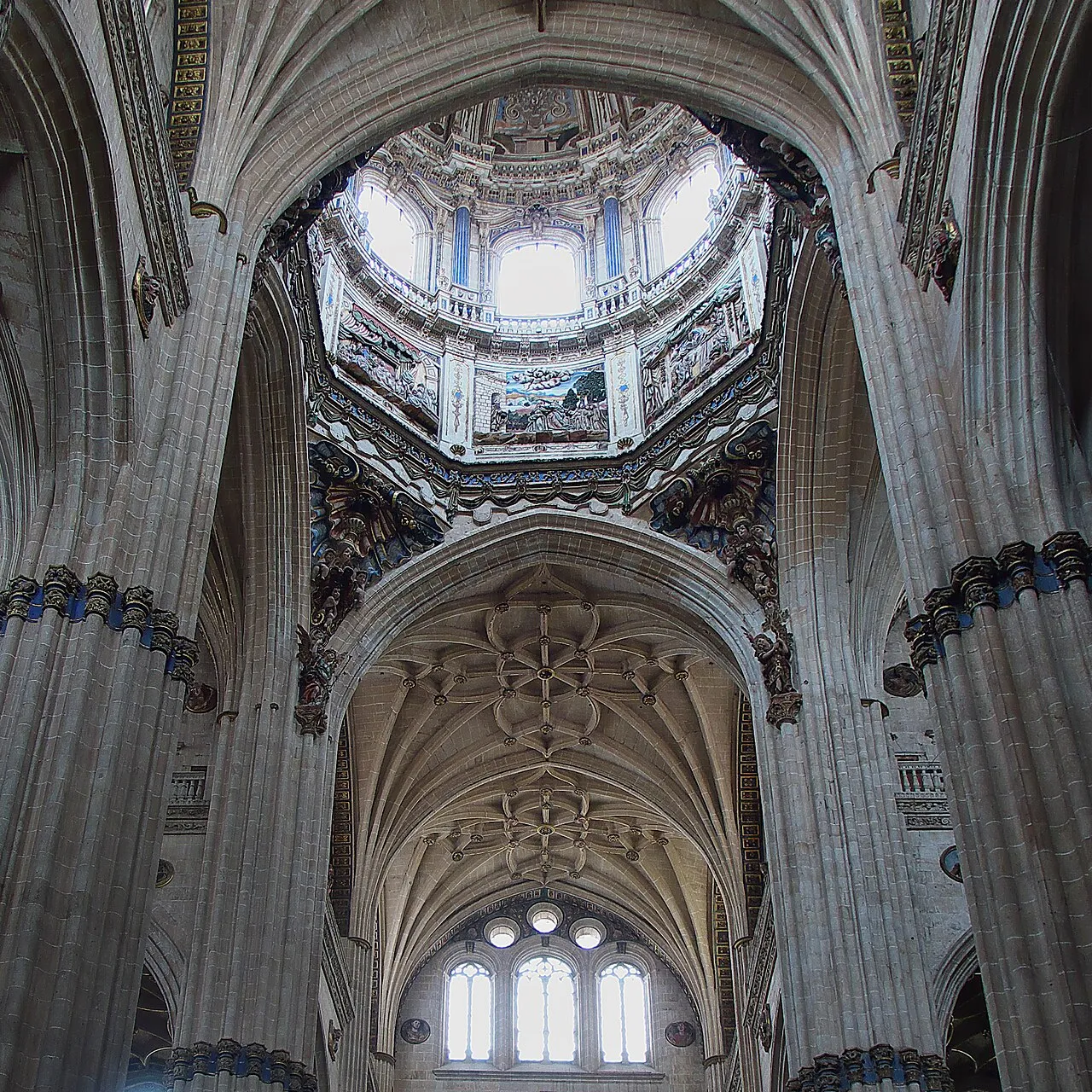
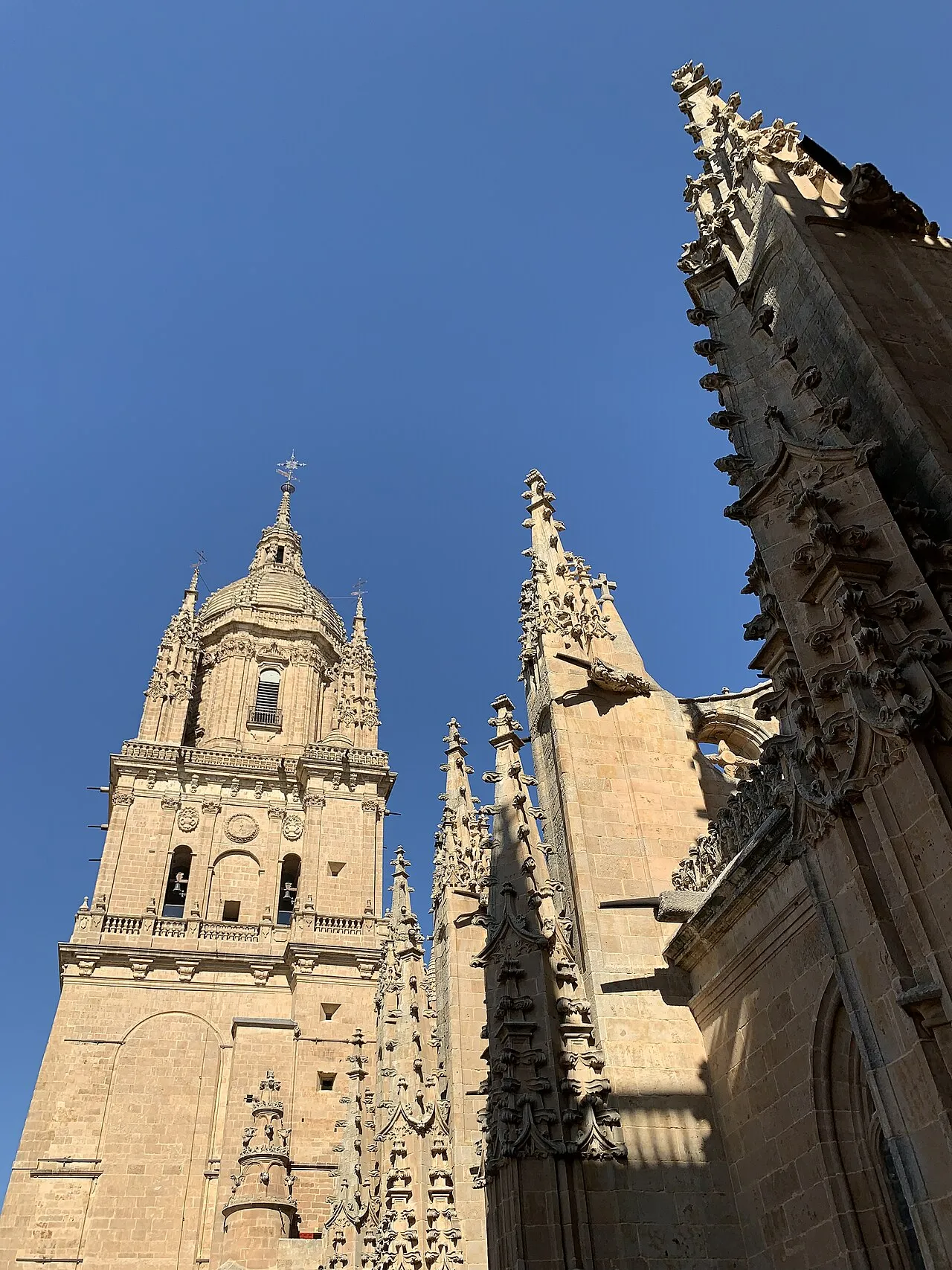
Two minutes away are the cathedrals, in the plural: two complete buildings from different periods, stuck together and sharing a wall, with a single ticket. The New Cathedral was begun in 1513 and finished in 1733 — that is, Gothic when the Renaissance had already been around in Italy for almost a century, and by choice.
On an archivolt of its Puerta de Ramos is the second thing you have to look for: an astronaut in a spacesuit and, near him, a dragon eating an ice cream. They were carved by the stonemason Miguel Romero during the restoration of 1992, following the guild custom of signing interventions with a contemporary element.
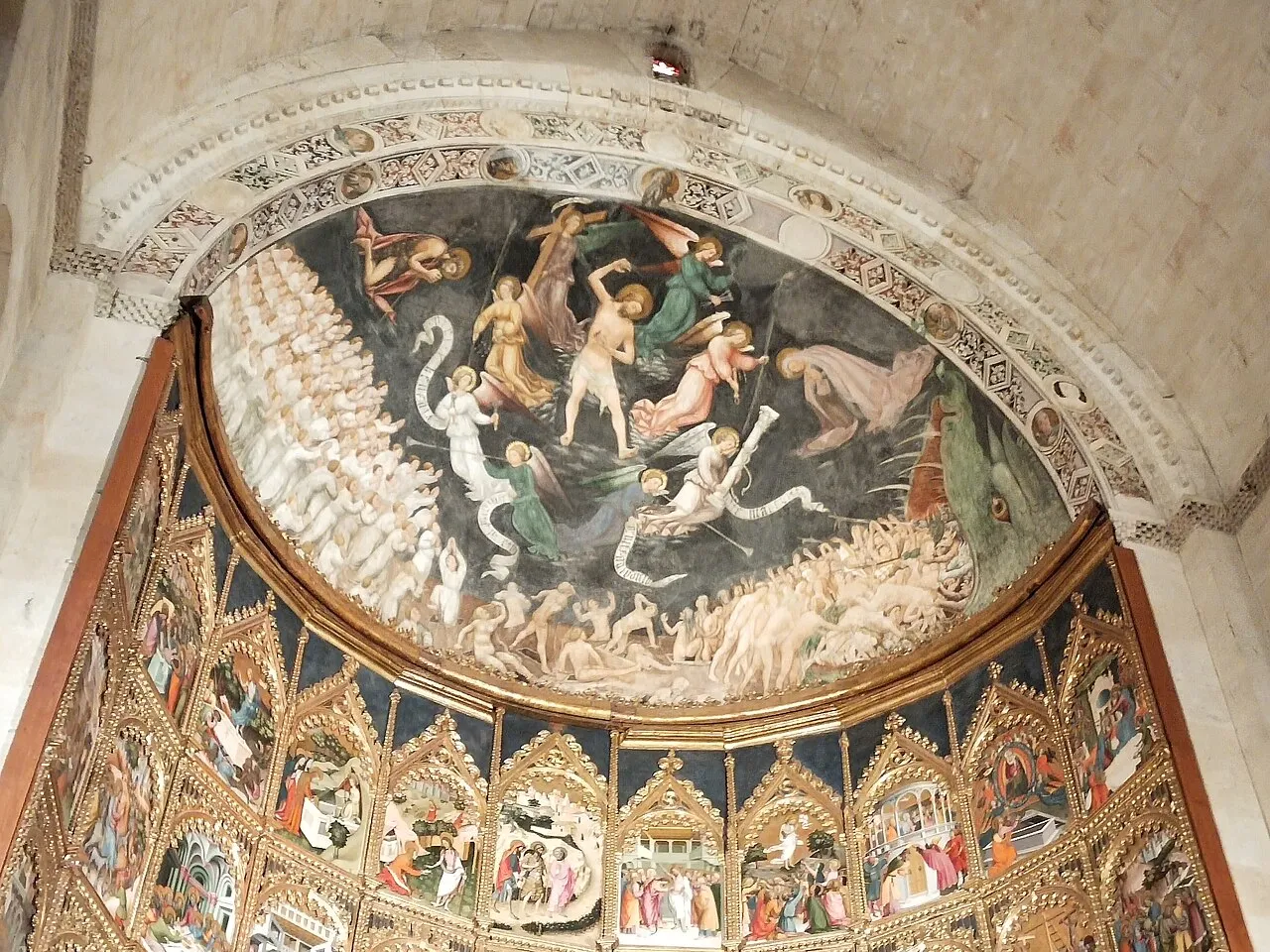
Then go down into the Old Cathedral, twelfth-century Romanesque, and the contrast is brutal: lower, darker, denser. It holds an altarpiece of fifty-three panels by Nicolás Florentino and a Last Judgement in the apse. And go out to the Patio Chico to see the Torre del Gallo, its lantern tower covered in stone scales.
The astronaut is on the front facing the square, on the left and quite high up: it is hard to see without having it pointed out. And look for the mark of the Lisbon earthquake of 1755, which cracked the tower and forced its base to be filled in solid, leaving it thicker than the design intended.
Its lantern tower, the Torre del Gallo, is a ribbed dome covered in stone scales of Byzantine influence, and its closest relatives are in Zamora and in Toro. In one chapel off the cloister there is a medieval organ that can still be played.
The route through the upper levels of the two cathedrals, walking along the service passages opened in the thickness of the walls and coming out onto the terraces. Separate ticket and about 4 €. Every 31 October someone climbs up with a pipe to give thanks that the building withstood the earthquake.
Head east along calle San Pablo, passing the Torre del Clavero, an octagonal tower crowned by eight projecting turrets that is all that remains of a fifteenth-century palace which has vanished completely. It stands free in the middle of a square that did not exist when it was built.
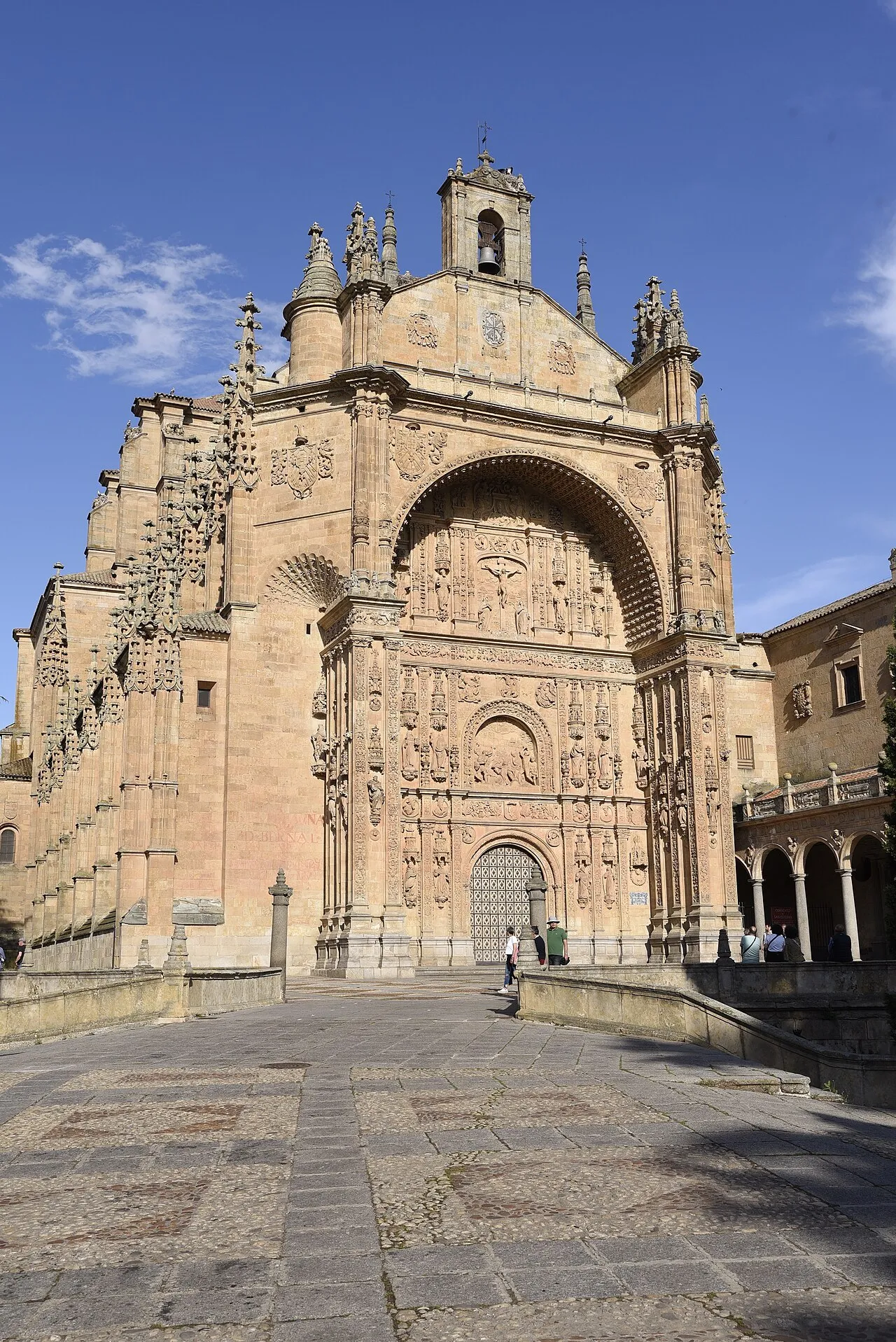
On the Plaza del Concilio de Trento stand, facing each other, San Esteban and Las Dueñas. The front of San Esteban is a stone altarpiece thirty metres high, one of the peaks of the Plateresque, and something important happened inside: here Columbus found the support of Fray Diego de Deza when the experts had already rejected him.
And they had rejected him rightly, it is worth saying: not because they thought the Earth was flat, but because Columbus had miscalculated the circumference of the Earth. He reached America because there was a continent in the way that nobody expected.
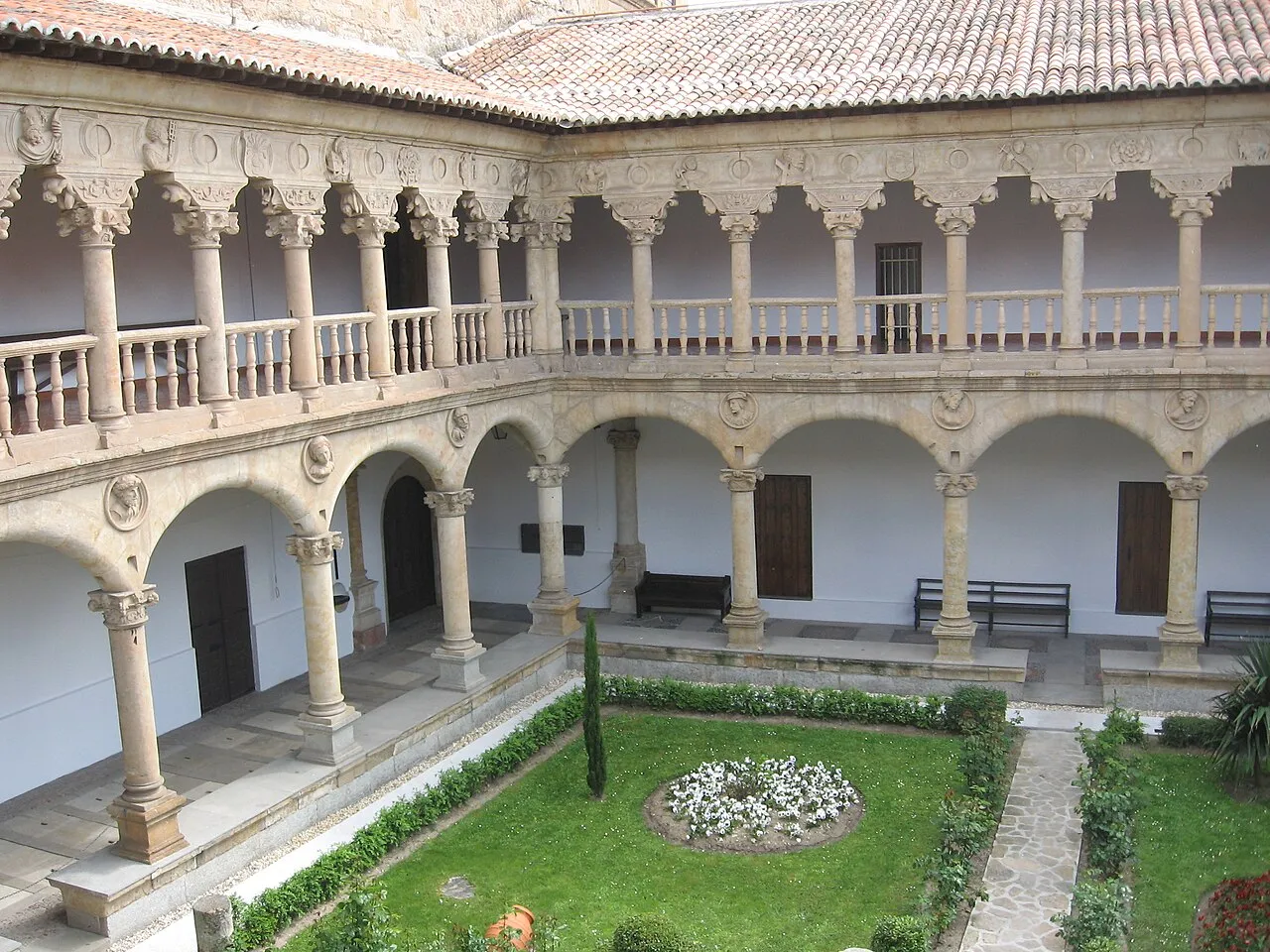
Opposite, Las Dueñas has a cloister of irregular, almost pentagonal plan, with capitals carved one by one in the upper gallery: monsters, mermaids, skulls, deformed faces. Not one is repeated, they are set high up and you have to look for them. The nuns sell sweets through the revolving hatch.
Francisco de Vitoria taught here, arguing that the peoples of America had rights and sovereignty of their own and that discovery gave no title of conquest. Its Kings' Cloister gives access to the Soto staircase, cantilevered and with no central support.
The irregularity of the cloister comes from having had to fit it into an existing palace, and it works in its favour: since no two stretches are the same, the perspective changes as you walk and the courtyard seems bigger. Reduced hours with a closure at midday.
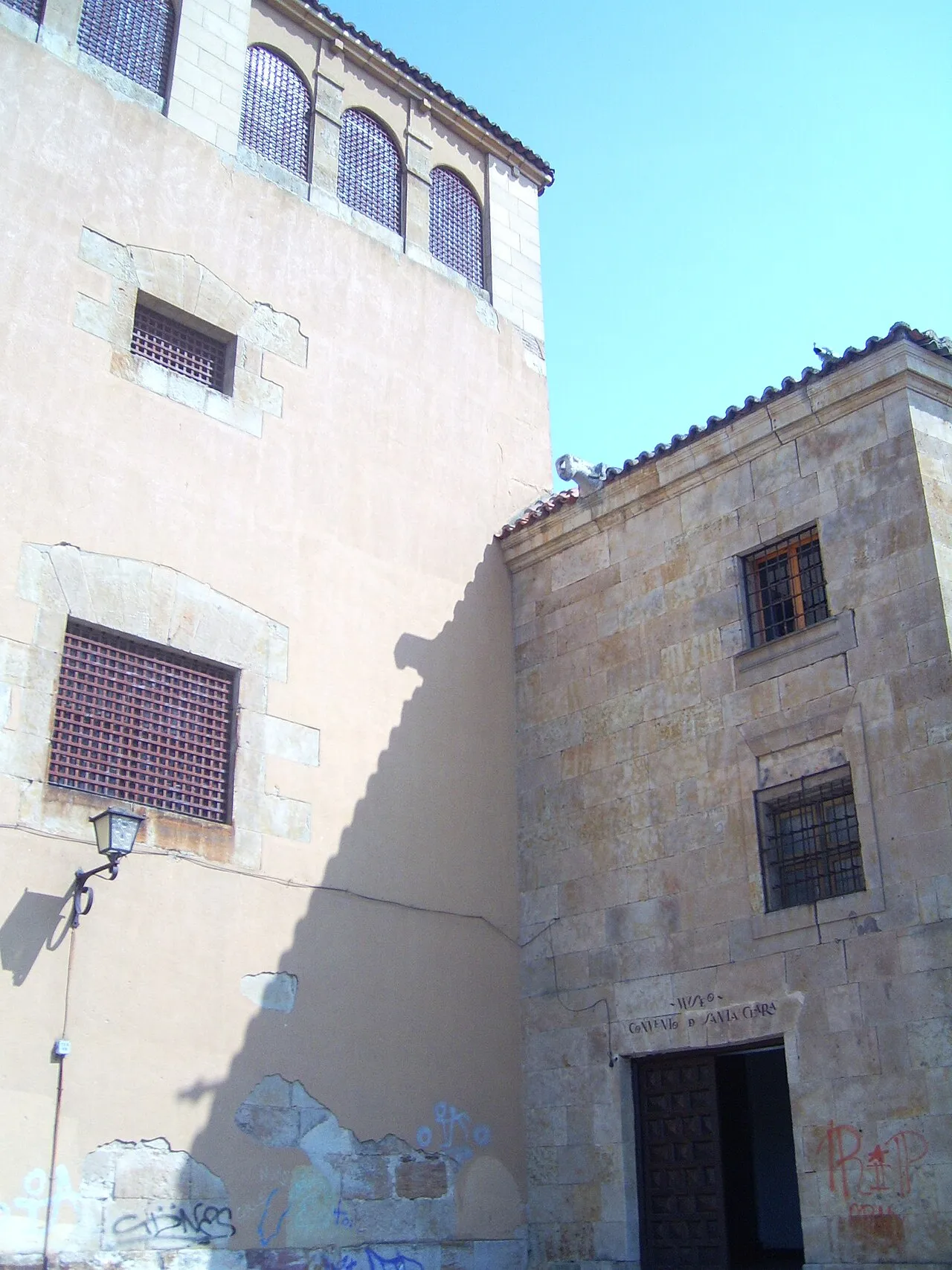
Its fifteenth-century Mudéjar coffered ceiling spent three hundred years covered by a Baroque ceiling, and that aesthetic contempt is what kept it intact. Today you walk along a gangway at its level. Compulsory guided visit, and one of the least known in the old town.
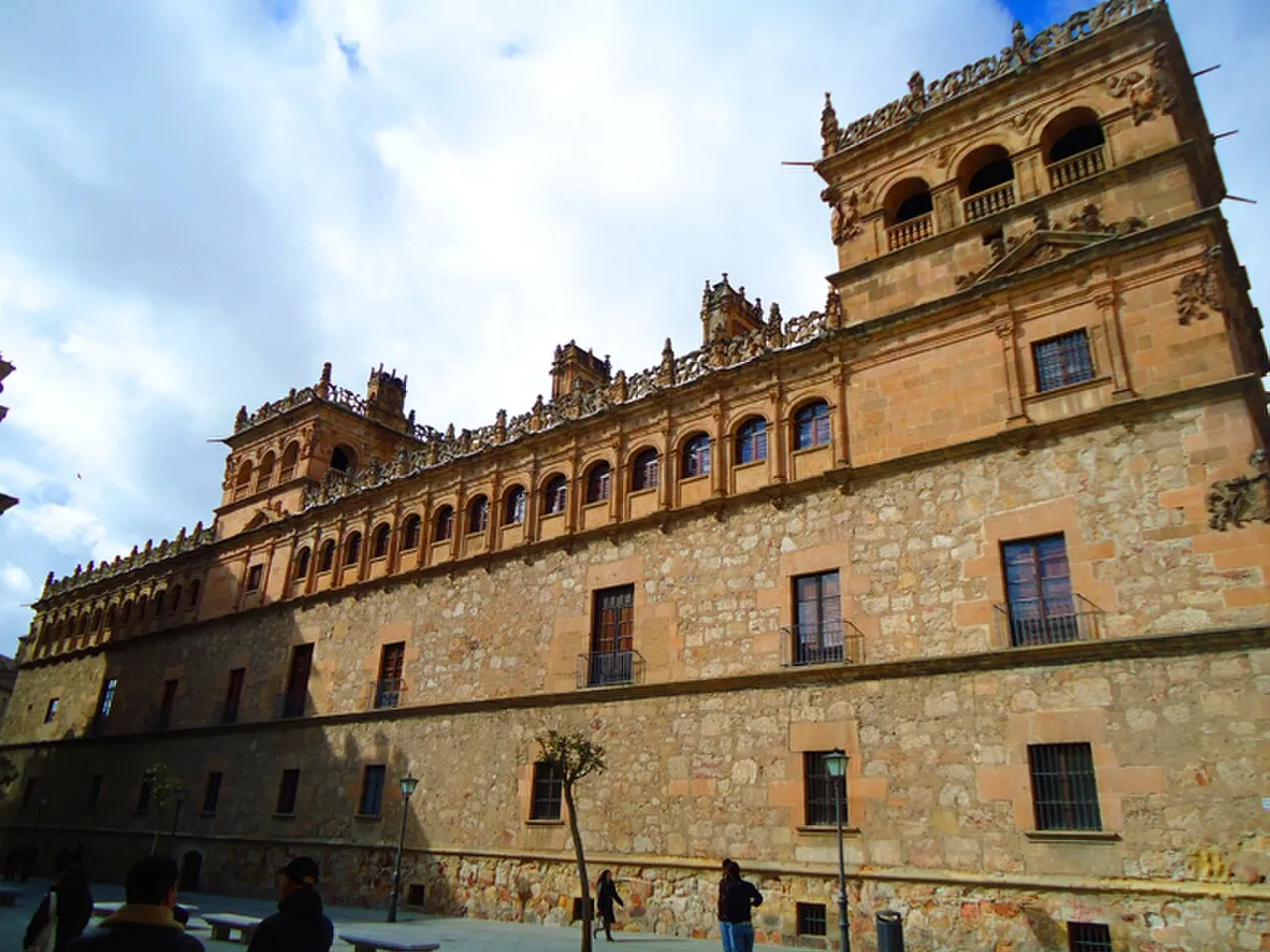
Climb towards the north of the old town, the noble quarter, far less walked. There stands the Palacio de Monterrey, the most influential Renaissance palace in Spain, of which only a quarter of the project was built: that fragment became the model copied by dozens of Castilian palaces.
A step away, the Casa de las Muertes, with four small skulls on the corbels that the city turned into a dark legend and which are in fact a conventional memento mori. And the Plaza de los Bandos, which recalls something real: for two centuries Salamanca was split into two noble factions that killed one another.
Close the day by going down to the river. From the cathedrals, along the wall, you reach the Huerto de Calixto y Melibea, a terraced garden named after the two lovers in “La Celestina” and the quietest place in the old town. Next to it, the Casa Lis, Art Nouveau from 1905, with a whole façade of stained glass.
And at the end, the Roman Bridge. Cross the whole of it to the far bank and turn round: bridge in the foreground, city wall, and above it the two cathedrals cut out against the sky. At sunset, with the stone alight, it is the image that sums up the city.
A solid lower storey, an open upper gallery and a crested parapet with chimneys treated like small temples. Deciding that the silhouette against the sky was part of the design was a new idea in Spain. It opens for guided visits in limited time slots.
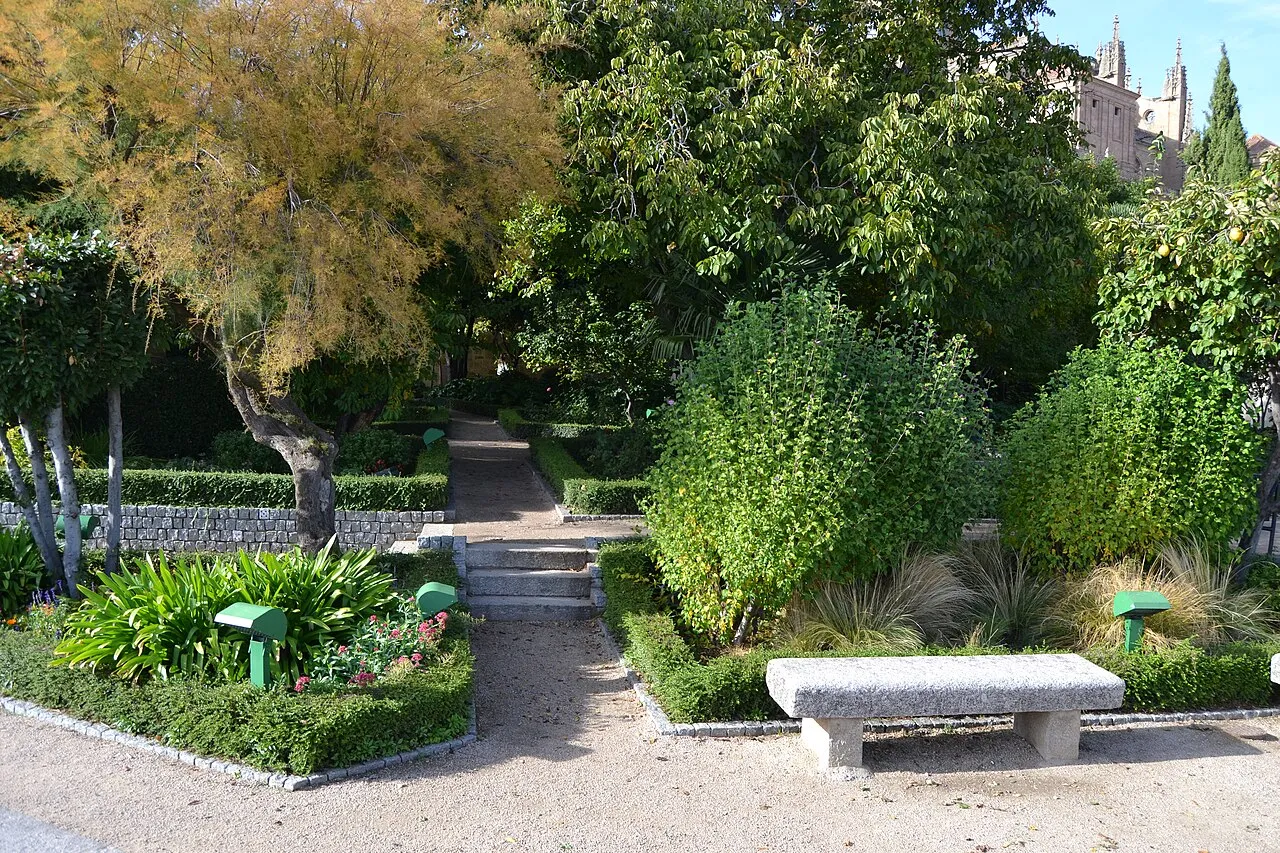
Fernando de Rojas wrote “La Celestina” while he was a student here, and in 1499 published a work without heroes that takes courtly love apart. The garden, from the twentieth century, was laid out on the remains of the medieval walls. It is free and it is where the students sit down to read.
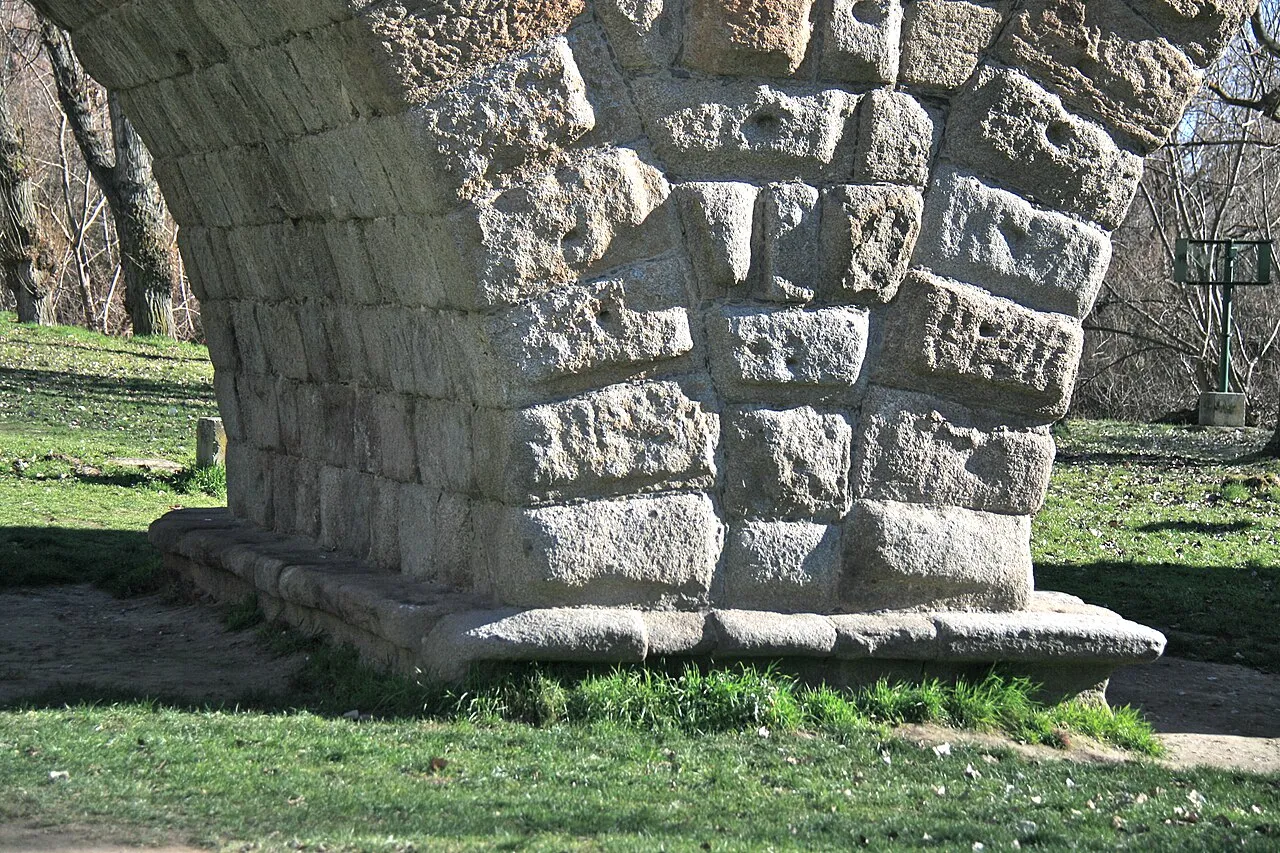
Fifteen of its arches are original Roman work; the rest was rebuilt after the flood of 1626, which destroyed the riverside suburbs. It was part of the Vía de la Plata, and it is the reason the city sits exactly here. At its head, the Vettonian verraco of the Lazarillo.
With room to spare. The old town is small, completely flat and walked without taking any transport. Two days cover the Plaza Mayor, the university buildings, the two cathedrals, the convent quarter to the east, the palaces to the north and the walk down to the river. With only one day you have to choose between the convents and the river.
Where is the frog on the University?
On the Plateresque façade facing the Patio de Escuelas, on the right-hand pilaster of the lower tier, perched on a skull. It is tiny and hard to find without help. Student tradition says that whoever locates it without having it pointed out will pass the year; its original meaning was a moral warning about lust and death.
And where is the astronaut?
On the New Cathedral, on an archivolt of the Puerta de Ramos, the one facing the square, on the left and quite high up. It was carved by the stonemason Miguel Romero during the restoration of 1992. Near it there is a dragon eating an ice cream. It is the guild signature that lets you tell the restored parts from the original.
Is Ieronimus worth it?
Very much so, and it is the least visited of the important visits. It runs through the upper levels of the two cathedrals along the service passages opened in the thickness of the walls, with the vaults seen close up and the city from the terraces. It takes a good hour and the ticket is separate from the one for the cathedrals.
What time of day does the city look best?
Mid-morning and late in the afternoon. The Villamayor stone everything is built in needs raking light for the relief of the façades to read: at midday it flattens and much of the Plateresque carving stops registering. At nightfall, with the lighting on, the Plaza Mayor turns almost orange.
What do you eat in Salamanca?
Ibérico cured meats from Guijuelo, which is in the province itself, and above all ham; hornazo, a pie filled with pork loin, chorizo and egg, typical of Lunes de Aguas; and chanfaina, a stew of rice with offal. For dessert, chochos and bollo maimón. To drink, wines from Sierra de Salamanca or from Arribes.
Practical information
Getting thereHigh-speed train from Madrid in an hour and a half. Coaches from Madrid and Valladolid.
Getting aroundA flat, pedestrian old town. You do not need transport on any stretch.
Look forThe frog on the façade of the University and the astronaut on the Puerta de Ramos of the New Cathedral.
Best timeMid-morning and late afternoon. At midday the stone flattens and the relief is lost.
FreePatio de Escuelas, Casa de las Conchas, Huerto de Calixto y Melibea and the Roman Bridge.
EatingGuijuelo ibérico, hornazo and chanfaina. Wines from Sierra de Salamanca or Arribes.
On the map
🎧 With Viavoy
Walk Salamanca and listen at your own pace
Download Viavoy and walk Salamanca offline, whenever you like.
from 2,99 €· one-off payment
City Pass · 9,99 €3 days, all the tours in Salamanca