1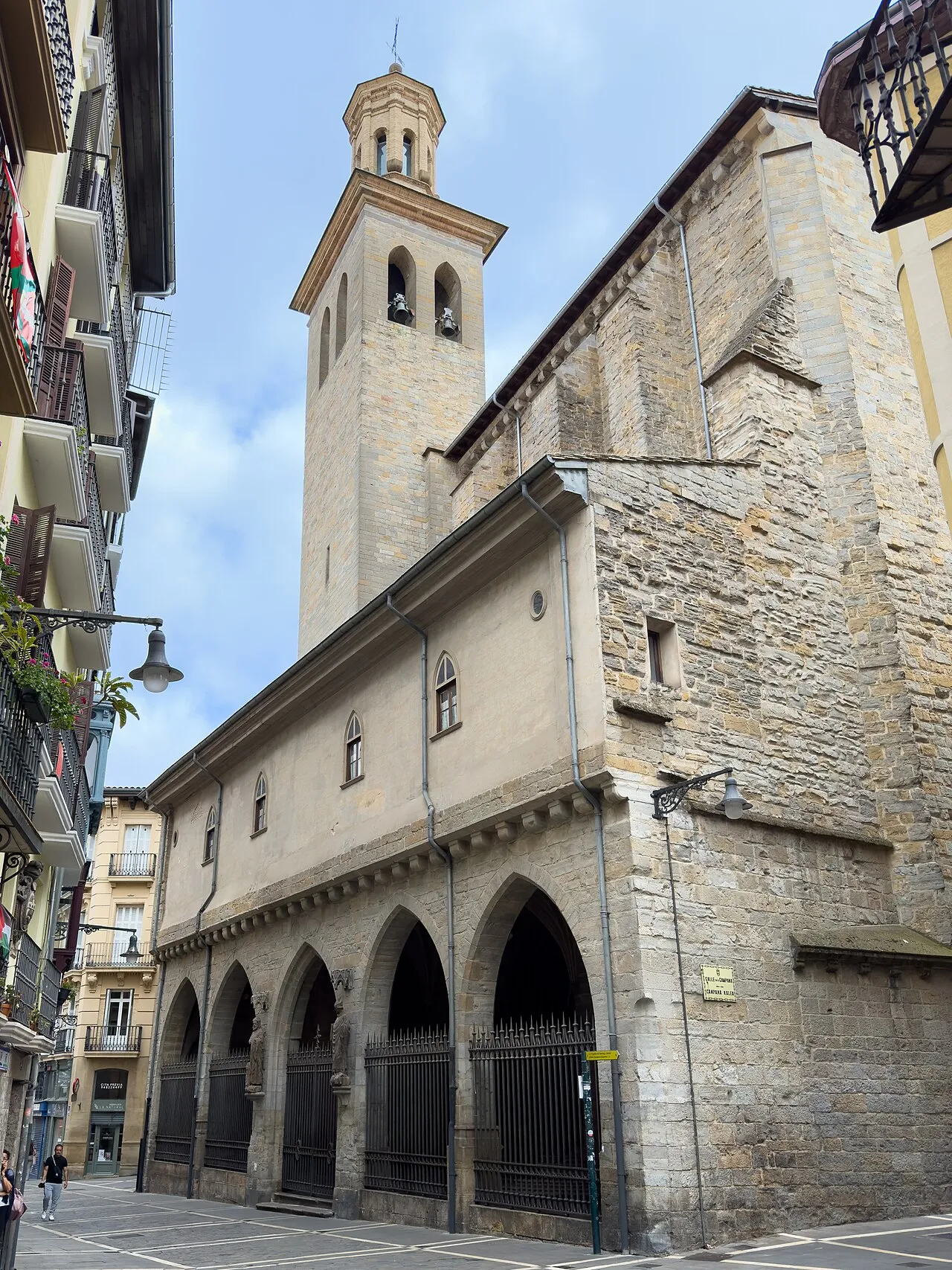
Church of San Saturnino
📍 Old town
“San Cernin” to everyone here. Two massive towers and castle walls: it was built between 1277 and 1297, right after the war, as the stronghold of its burgo.
In 1276 two of them razed the third to the ground. In 1423 a king forced them to merge into a single city. And the scars are still there to see in the churches.
🎧 On the walk The Cathedral, the walls and monumental PamplonaFor centuries Pamplona was not one city but three: la Navarrería, the burgo of San Cernin and the settlement of San Nicolás, each with its own wall, its own laws, its own mayor and even its own language. They did not live side by side: they competed, and in 1276 they killed each other. The churches still tell the story.
La Navarrería was the original core, around the cathedral, settled by Navarrese. The burgo of San Cernin was founded by people who came from beyond the Pyrenees: Alfonso I the Battler gave them a fuero, a charter of law of their own, in 1129 so that they would settle here.
For centuries that burgo had its own laws, its own mayor and its own language: many documents were written in Occitan. San Cernin and la Navarrería were, to all practical purposes, two separate rival towns pressed up against each other.
The third, the settlement of San Nicolás, joined later with the same logic. All three competed for the trade of the Camino de Santiago, for royal privileges and for control of space, and each one walled itself off against the other two.
That model — quarters of francos, settlers from north of the Pyrenees, with charters of their own next to the original core — occurred in several towns along the Camino, but in none of them with the violent consequences it had in Pamplona.
“San Cernin” to everyone here. Two massive towers and castle walls: it was built between 1277 and 1297, right after the war, as the stronghold of its burgo.
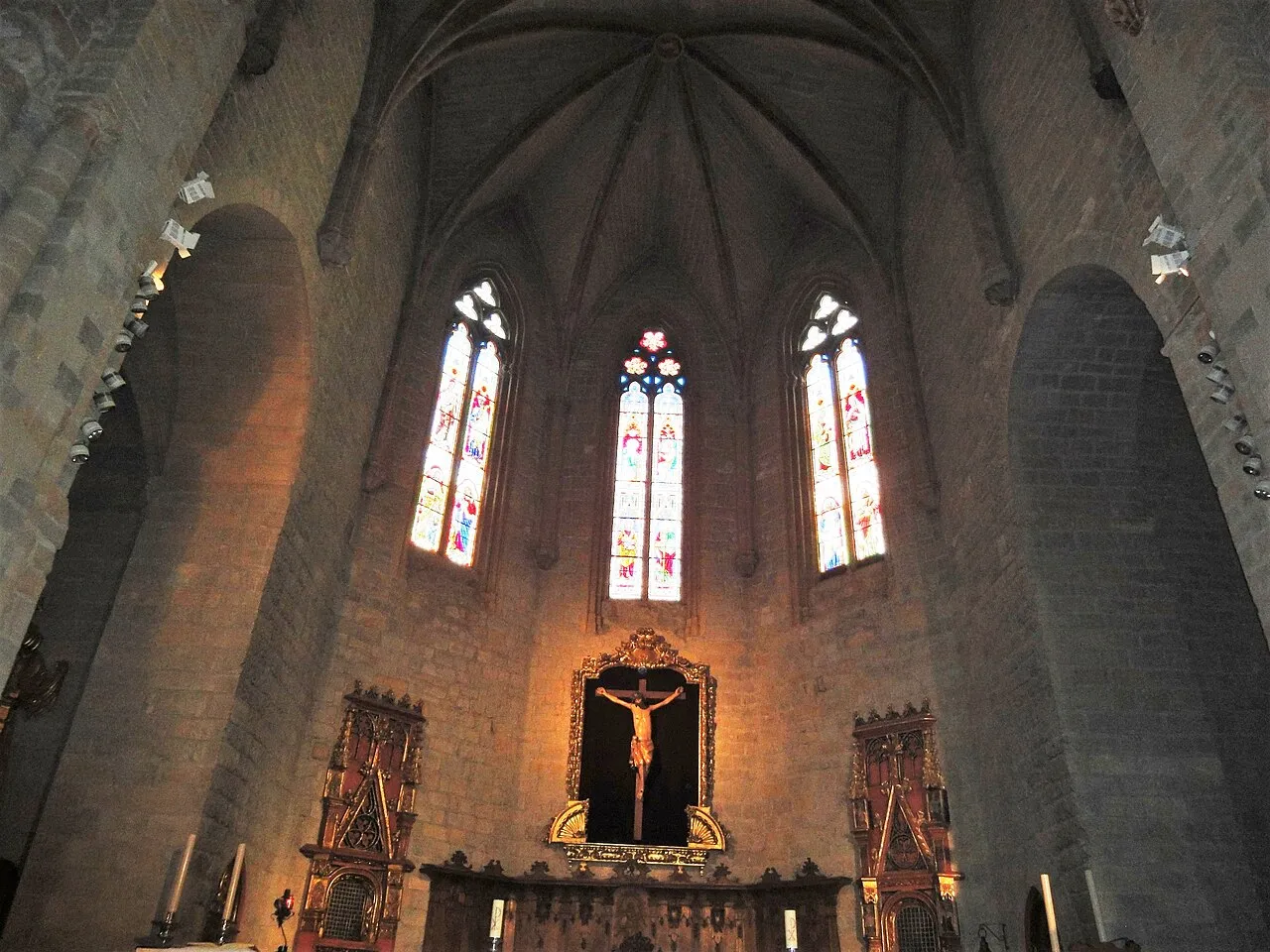
The fortress of the third burgo, from the twelfth and thirteenth centuries, with a defensive tower. It burned in the wars between quarters and had to be rebuilt.
Download the app and discover Pamplona offline, whenever you like. Take the walking tour The Cathedral, the walls and monumental Pamplona with a local guide in your ear.
Find out more about Viavoy →The confrontation broke out in 1276. The burgos of San Cernin and San Nicolás, with French military support, attacked and completely razed la Navarrería, the cathedral quarter.
The destruction was so complete that the quarter was reduced to rubble and left uninhabited for decades. It was not a neighbourhood skirmish: it was the annihilation of a third of the city by the other two thirds.
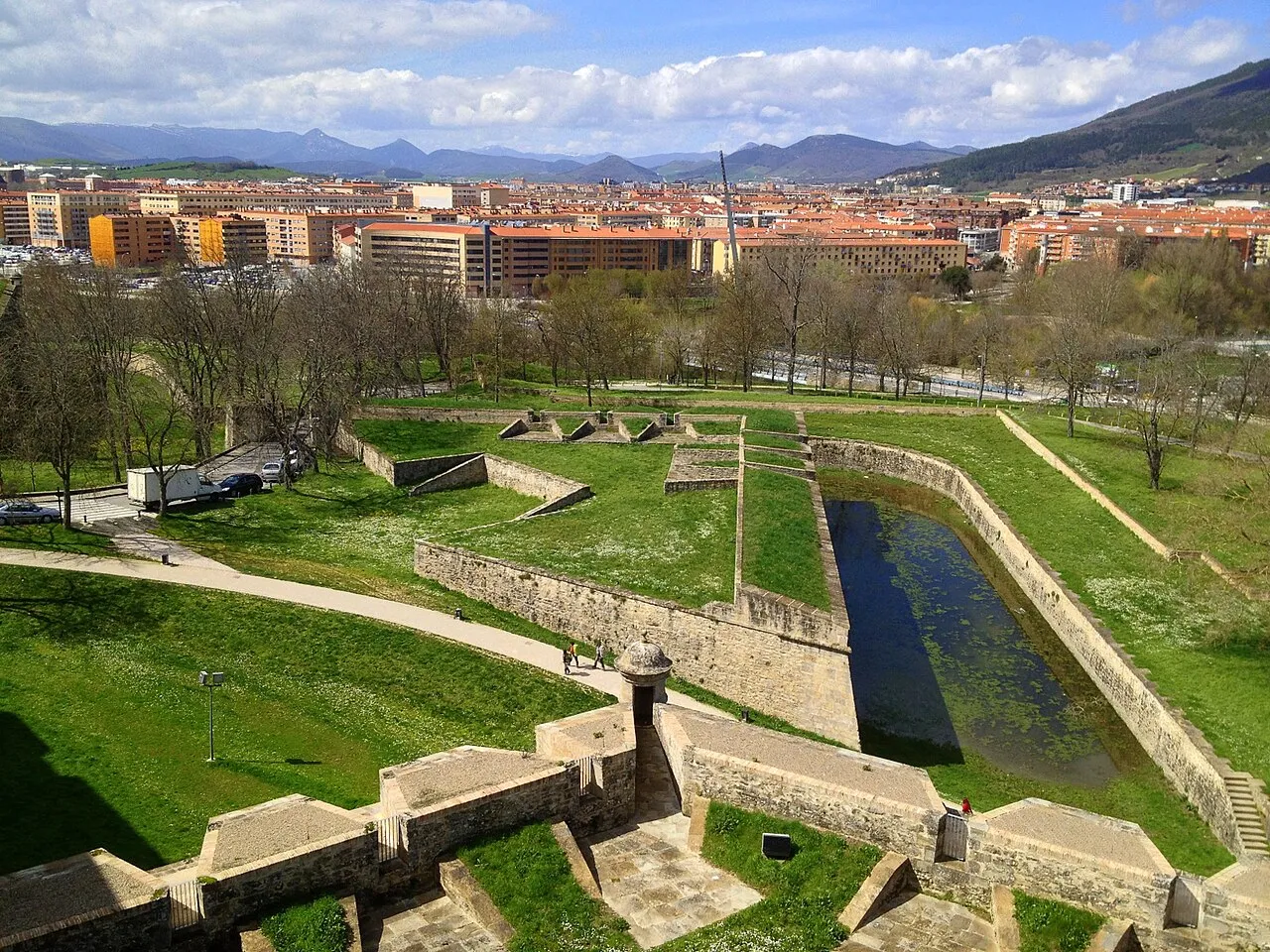
The Church of San Saturnino was built immediately afterwards, between 1277 and 1297, and that is why it looks like a bastion: two massive towers and castle walls. The same logic explains the church of San Nicolás, with its defensive tower, burned down in those wars.
Those churches do not have a military air by accident: they were armed refuges where the people of each burgo took shelter when the others attacked. Praying and defending yourself in the same building.
On 8 September 1423, Charles III the Noble imposed the Privilegio de la Unión, the Privilege of the Union: the three burgos merged into a single city, with a single council, a single seal and a single flag.
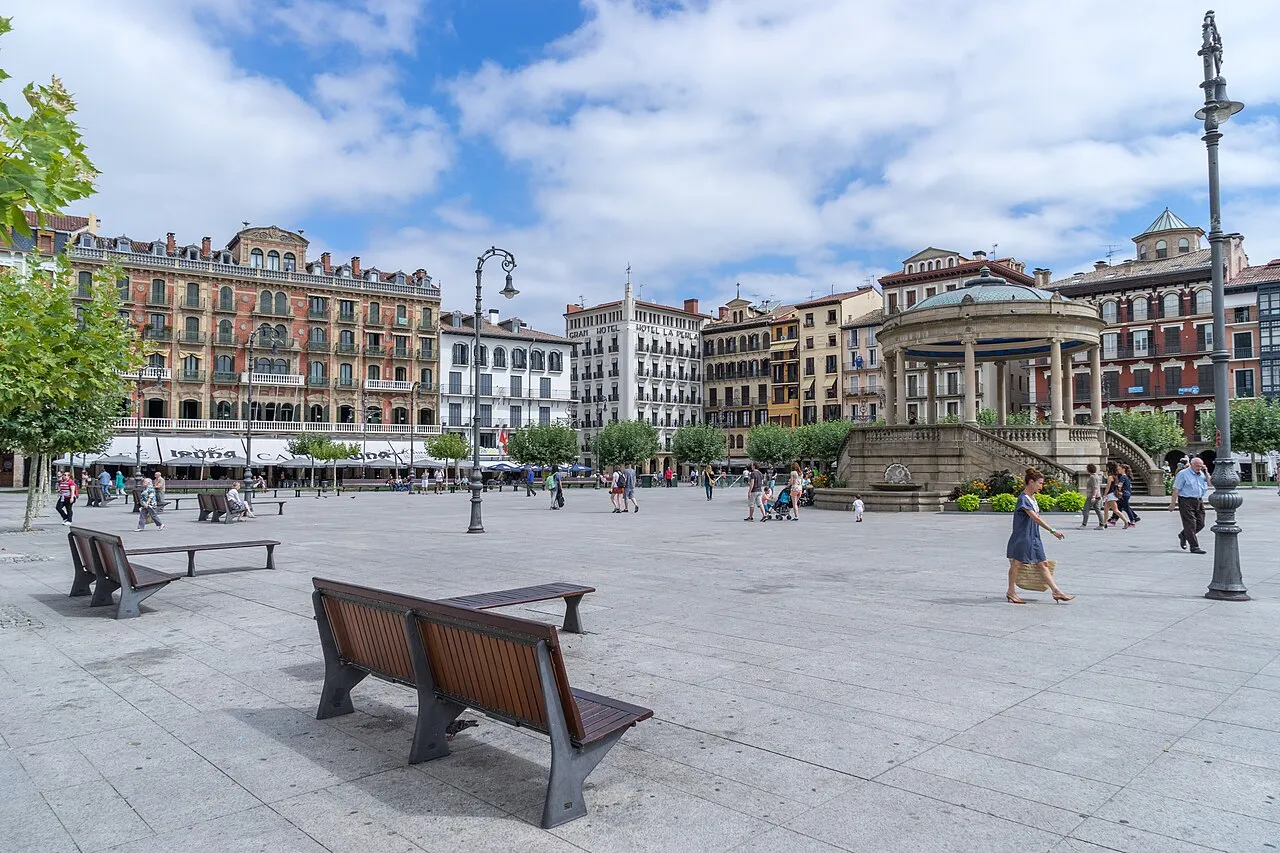
And he ordered the town hall to be built at the exact point where the three met, which was no man's land. That is why its square is an irregular, narrow gap: it is literally the seam between the three old towns.
For that gesture the most important avenue of the modern Ensanche bears his name, Carlos III. It is a tribute to the king who turned three grudges into one city.
Charles III is buried in the cathedral, in an alabaster tomb he commissioned in his own lifetime from the sculptor Janin Lomme, who came from Tournai, with a cortège of plorantes, mourners carved one by one. It is considered a jewel of European funerary Gothic.
The other building that tells this story is the Royal Archive, the palace of the kings of Navarre raised around 1189, the oldest in the city and one of the very few Romanesque civil buildings in Spain.
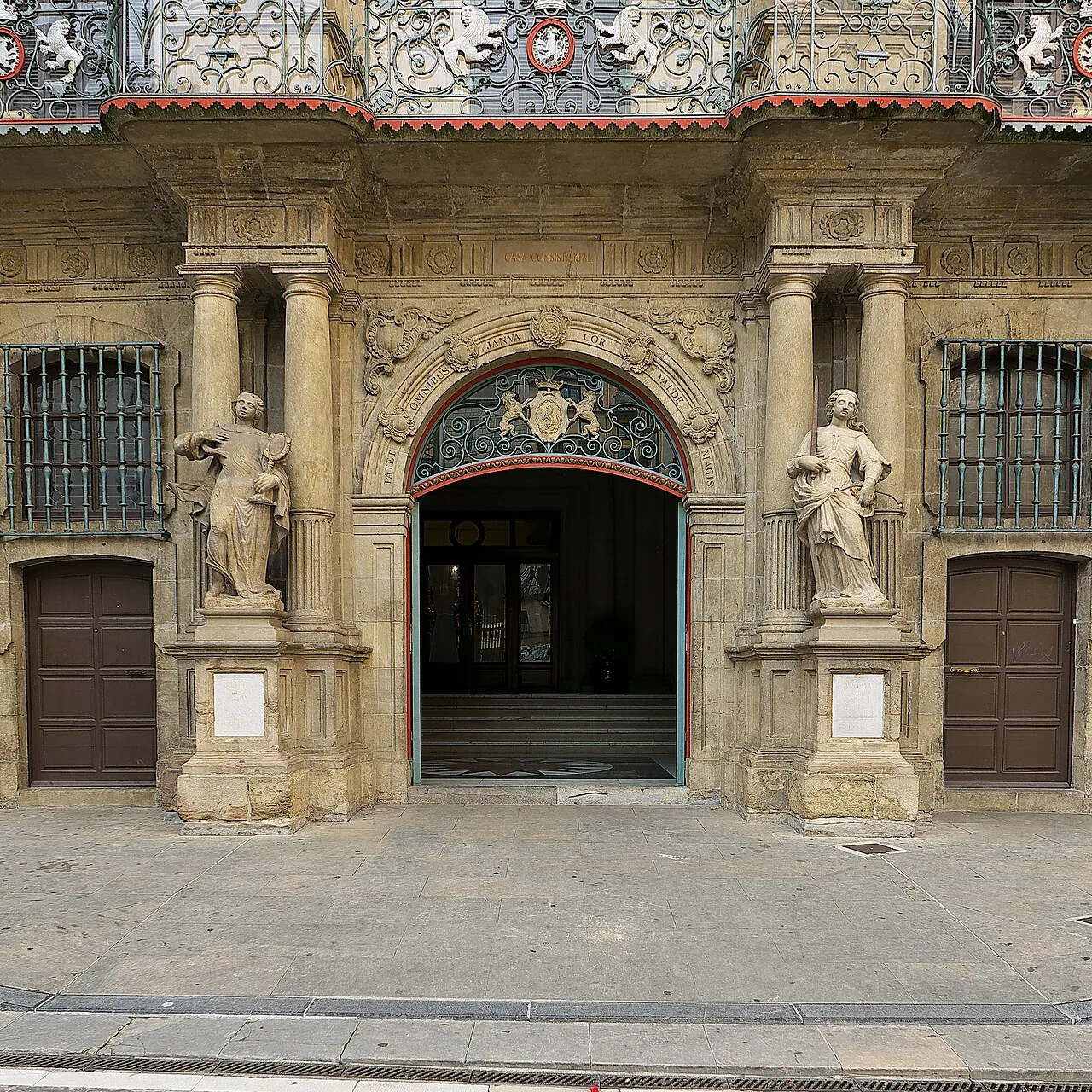
Raised at the exact point where the three burgos met, which was no man's land. That is why its square is an irregular, narrow gap.
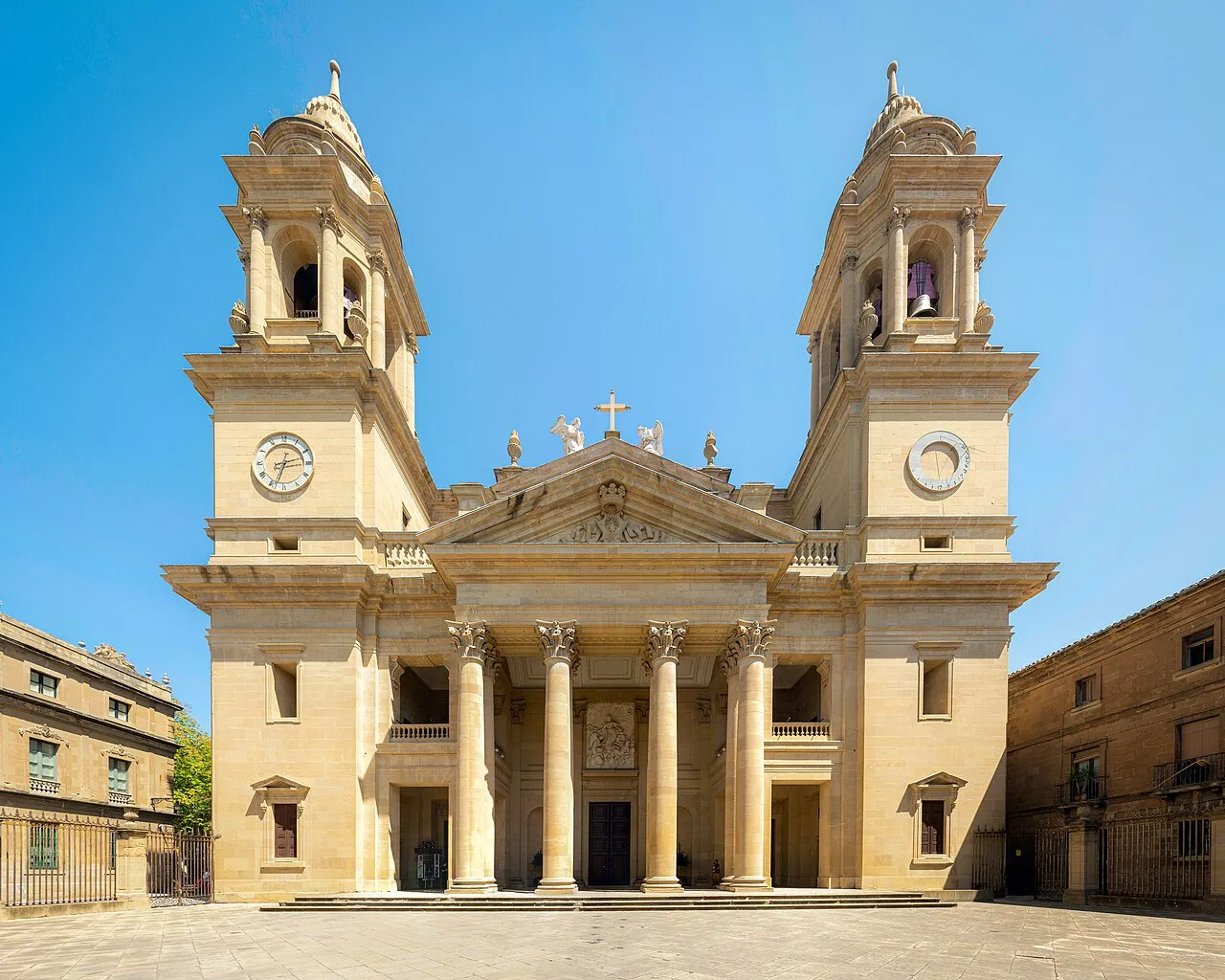
In the heart of the old Navarrería, the razed quarter. It holds the alabaster tomb of Charles III, the king who imposed the union in 1423.
La Navarrería, the original core around the cathedral, settled by Navarrese; the burgo of San Cernin, founded by people who came from beyond the Pyrenees with a charter of their own from 1129; and the settlement of San Nicolás. Each had its own wall, its own laws, its own mayor and even its own language.
Because they were competing for the same things: the trade of the Camino de Santiago, royal privileges and control of urban space. Each had its own jurisdiction and none recognised any authority over the others, so conflicts were settled by force. And in 1276 they were settled once and for all.
The burgos of San Cernin and San Nicolás, with French military support, attacked and completely razed la Navarrería, the cathedral quarter. The destruction was total: the quarter was reduced to rubble and left uninhabited for decades. It was not a skirmish, it was the annihilation of a third of the city.
By royal imposition. On 8 September 1423 Charles III the Noble decreed the Privilegio de la Unión: the three burgos merged into a single city, with a single council, a single seal and a single flag. And he ordered the town hall to be built at the exact point where the three met.
In the churches, above all. San Saturnino was built between 1277 and 1297, right after the war, and it has two massive towers and castle walls because it was the armed stronghold of its burgo. San Nicolás, from the twelfth and thirteenth centuries, has a defensive tower and burned down in those wars. And in the town hall square, irregular because it is the seam between the three.
Because that point was no man's land: the gap where the three rival burgos met. When they finally united, the common building went up exactly there, and that is why the square is an irregular, narrow space instead of the great open esplanade that usually goes with a town hall.
King of Navarre between the fourteenth and fifteenth centuries, and the man who made Pamplona: in 1423 he signed the document that merged the three burgos into one city. He also turned the castle of Olite into a royal palace of outrageous luxury, with hanging gardens and a lion house. He is buried in Pamplona Cathedral.
Download Viavoy and walk Pamplona offline, whenever you like.

Keep reading