1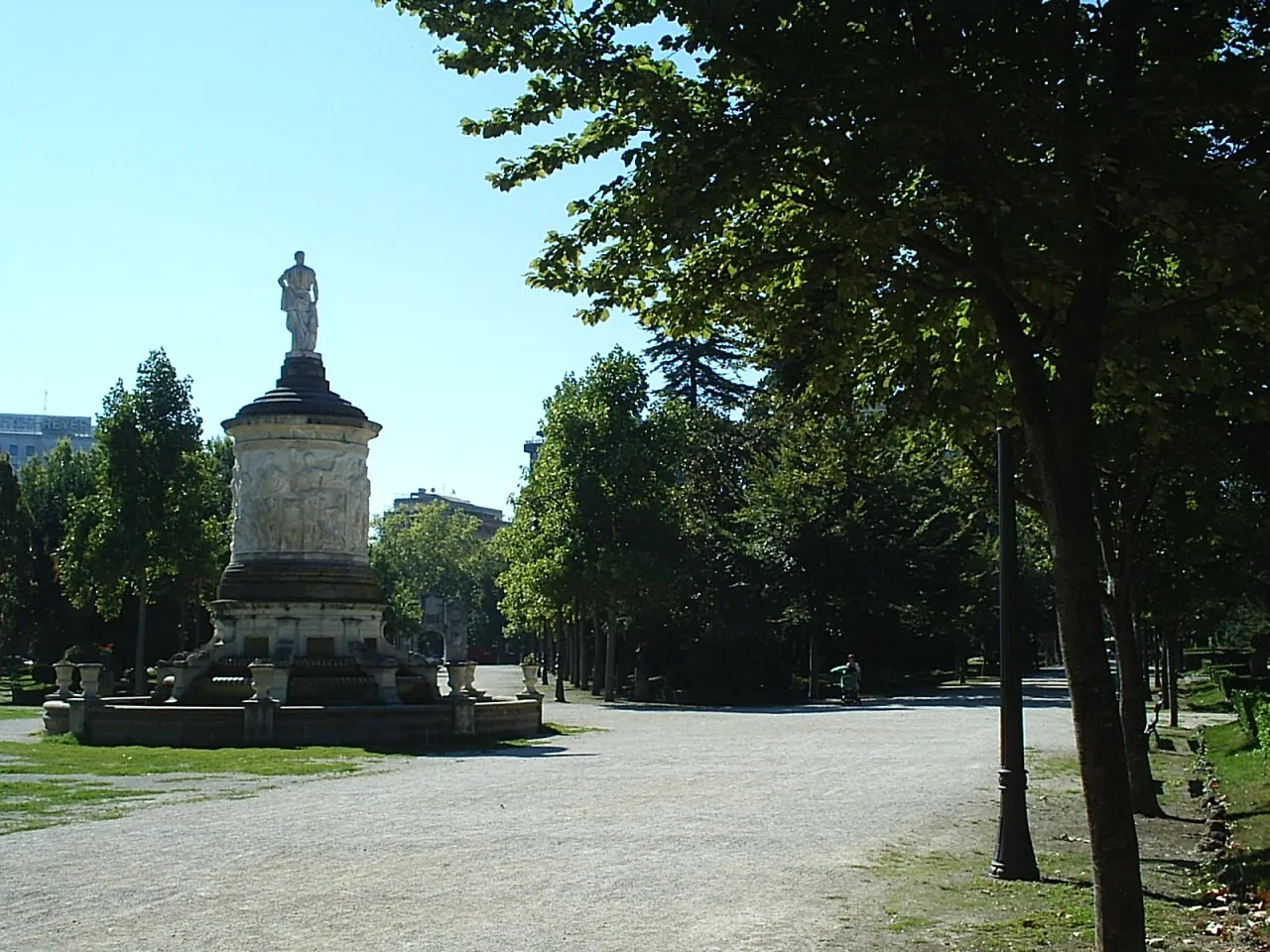
Taconera Gardens
📍 West of the old town
The oldest garden in the city, from 1830, on the military glacis. With red deer, fallow deer and peacocks living in the moat, free to visit.
Military glacis turned into gardens, moats with deer inside and a sixteenth-century fortress that is now a public park. How a city turned its belt of war into its belt of leisure.
🎧 On the walk The Citadel, La Taconera and the green ringEverything green in Pamplona comes from war. The gardens sit on the glacis, the ground where not even a shrub was allowed to grow; the great park is a sixteenth-century citadel; and the best viewpoint is called Media Luna after a defensive work. The paradox is the city's best argument.
The Jardines de la Taconera are the oldest garden in Pamplona, laid out in 1830 in the French taste, with straight walks, flower beds, statues and pavilions, right on top of the old glacis on the western flank.
The detail that surprises most is the moat: it survives, and inside it live red deer, fallow deer, peacocks and goats, in what works as a small open-air zoo with free access. Seeing deer in an eighteenth-century fortification, in the very centre of a capital, does not happen in many places.
Among the walks there are fountains and monuments to figures from Navarre: the Fuente de la Mariblanca, the statues of the Kings of Navarre and the monument to Julián Gayarre, the tenor from the Roncal valley who was a world star in the nineteenth century.
And a story of regret: the Portal de San Nicolás, the monumental gateway, was knocked down in 1915 when the city wanted to breathe outside its walls. Decades later, regretting it, the city put it up again following the old model.
The oldest garden in the city, from 1830, on the military glacis. With red deer, fallow deer and peacocks living in the moat, free to visit.
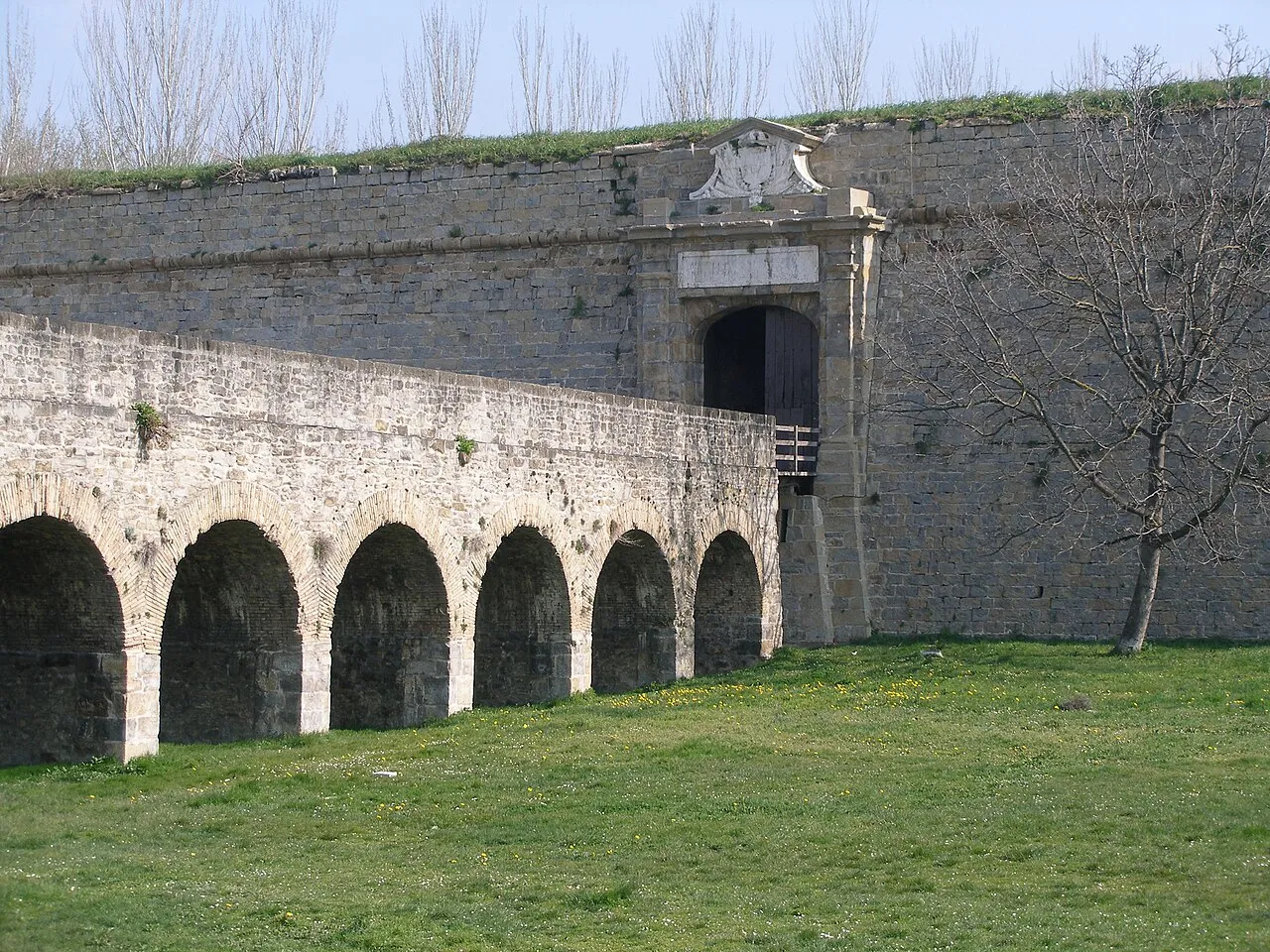
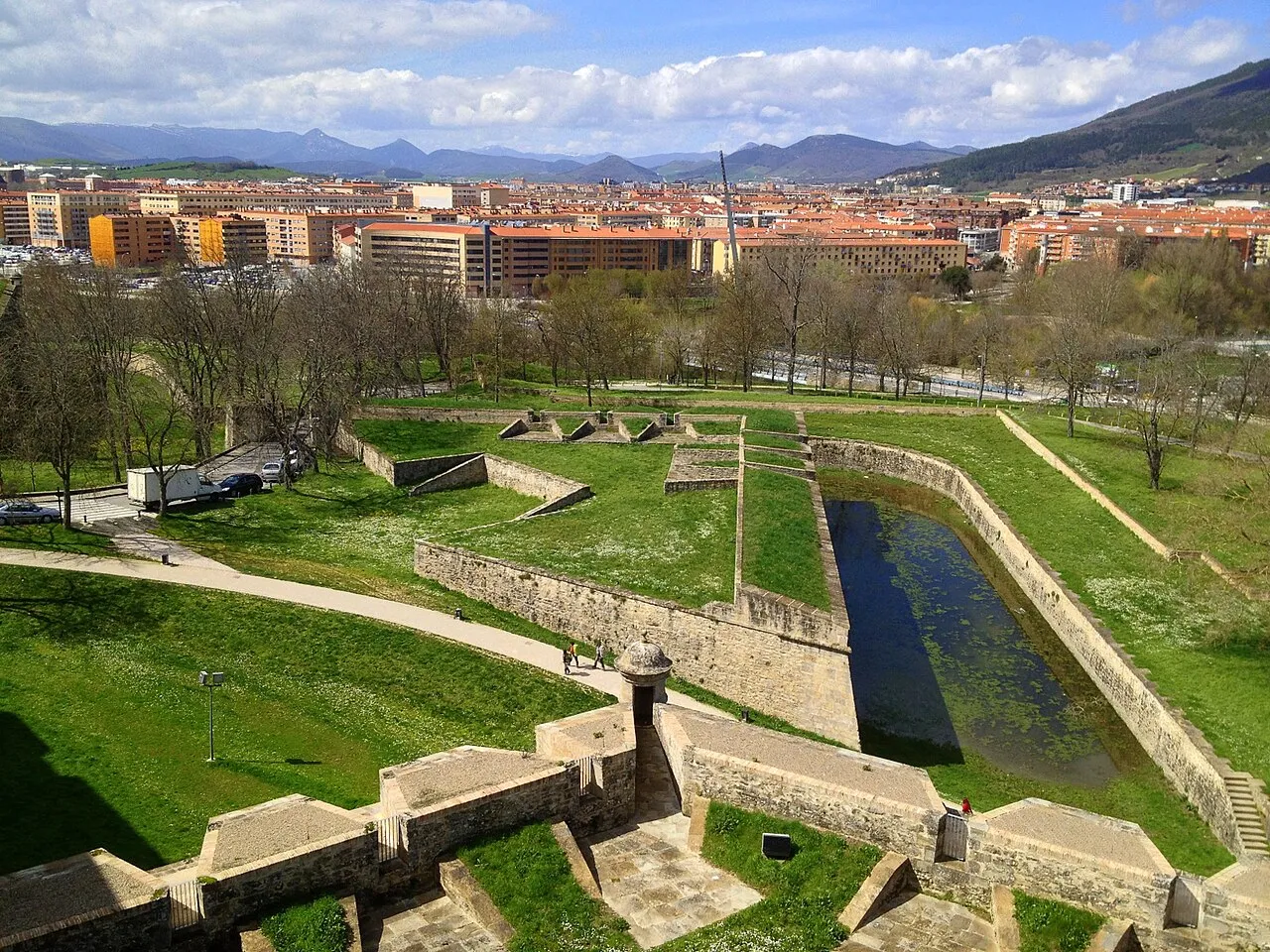
Philip II's five-pointed star, 1571, today a public park with the walls turned into a promenade and the pavilions into exhibition halls.
Download the app and discover Pamplona offline, whenever you like. Take the walking tour The Citadel, La Taconera and the green ring with a local guide in your ear.
Find out more about Viavoy →The Citadel is the high point of the ring: a five-pointed star that Philip II ordered from the Italian engineer Giacomo Palearo, el Fratín, in 1571, following the model of Antwerp.
Of its five bastions — Santa María, Santiago, Real, San Antón and La Victoria — three remain. The other two were demolished from 1888 onwards so that the city could grow towards the Ensanche.
Today it is a public park, with the walls turned into a promenade, the moats full of vegetation and the old military pavilions converted into exhibition halls. The transformation from war machine into leisure space is complete.
It connects with the Taconera along the Vuelta del Castillo, a perimeter ring that surrounds the whole complex and is the most used running route in the city. Taken together, you can walk all the way round the old town through green space.
And there is an anecdote that sums up the history of the place: this most perfect of fortresses fell only once, and not by force. On 16 February 1808 the French staged a snowball fight, distracted the sentries and walked in without a shot.
The parque de la Media Luna closes the ring on the east side, and it too owes its name to the fortifications: in the eighteenth century there was a “media luna” here, a half-moon, an advanced defensive work with that shape.
It was designed by Víctor Eusa in 1935, the architect who did most to shape the modern face of Pamplona, across almost seventy thousand square metres. And it is a balcony: at its feet lie the meanders of the Arga, the market gardens of La Magdalena and the old town hanging opposite.
Below runs the Camino de Santiago, over the medieval Magdalena bridge, where the pilgrims coming down from Roncesvalles after crossing the Pyrenees enter the city. It is the front door for thousands of people every year.
The other great viewpoint is on the opposite side: el rincón del Caballo Blanco, on the Redín bastion. Between the two you take in the whole valley, and both are free to visit.
This whole process — obsolete fortifications turned into parks and promenades — was repeated all over Europe through the nineteenth century. In Pamplona it worked out especially well because the wall was not completely knocked down and the circuit is still continuous.
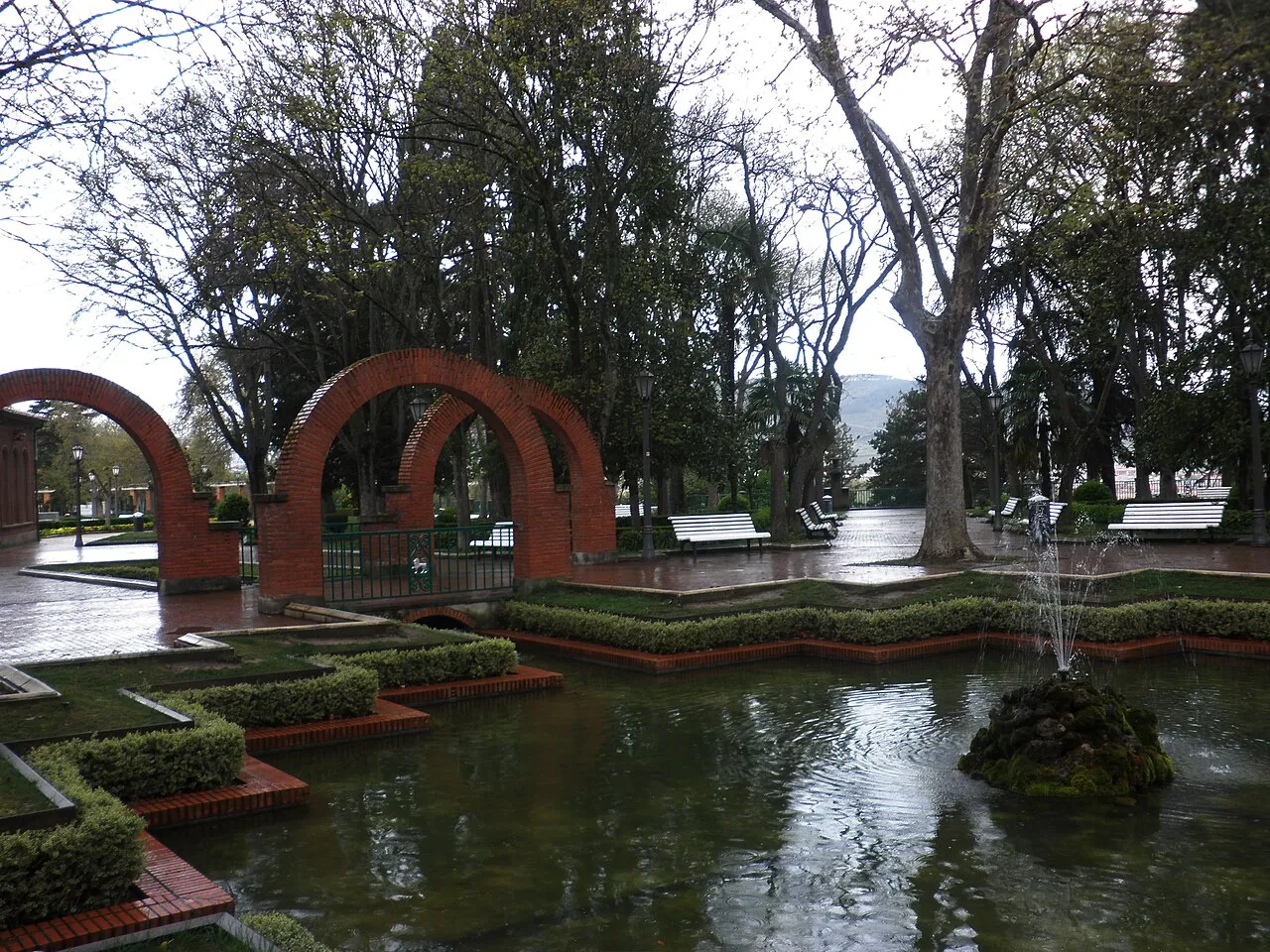
The balcony Víctor Eusa designed in 1935 above the meanders of the Arga. Below runs the Camino de Santiago, over the medieval Magdalena bridge.
The other great viewpoint, on the opposite side: a hundred and eighty degrees with the Arga wrapping round the old town. At sunset there is no better spot.
The set of parks and gardens that surrounds the historic centre, occupying the ground that used to be given over to military defence: the cleared glacis around the walls, the Citadel itself and the advanced defensive works. You can walk all the way round the city through green space.
It was called the glacis and it was the open space that surrounded the walls on the outside. In a fortified town it was strictly forbidden for any tree to grow or any building to go up there, because it would have given cover to an attacker and blocked the line of fire of the defenders.
Yes, and fallow deer, peacocks and goats too, living in the garden's surviving moat, in what works as a small open-air zoo with free access. Seeing deer in an eighteenth-century fortification, in the very centre of a capital, is something you do not see in many places.
Yes, it is a public park with free access. The walls have been turned into a promenade, the moats are full of vegetation and the old military pavilions have been converted into exhibition halls, which have their own opening hours. Of its five original bastions, three remain.
Because in the eighteenth century there was a “media luna” here, a half-moon, an advanced defensive work with that characteristic shape, which protected the entrance to the city. As with La Taconera and the Citadel, the name of the green space comes straight from the fortification that occupied the site.
There are two and they are on opposite sides: el rincón del Caballo Blanco, on the Redín bastion next to the cathedral, with a hundred and eighty degrees over the Arga; and the parque de la Media Luna, to the east, with the meanders of the river and the old town hanging opposite. Both are free to visit, and both are better at sunset.
The full circuit, between two and three hours walking without hurrying: La Taconera, the Vuelta del Castillo, the Citadel and, on the other side, La Media Luna. It is flat and pleasant, and the Vuelta del Castillo is also the running route most used by the people of Pamplona.
Download Viavoy and walk Pamplona offline, whenever you like.

Keep reading