1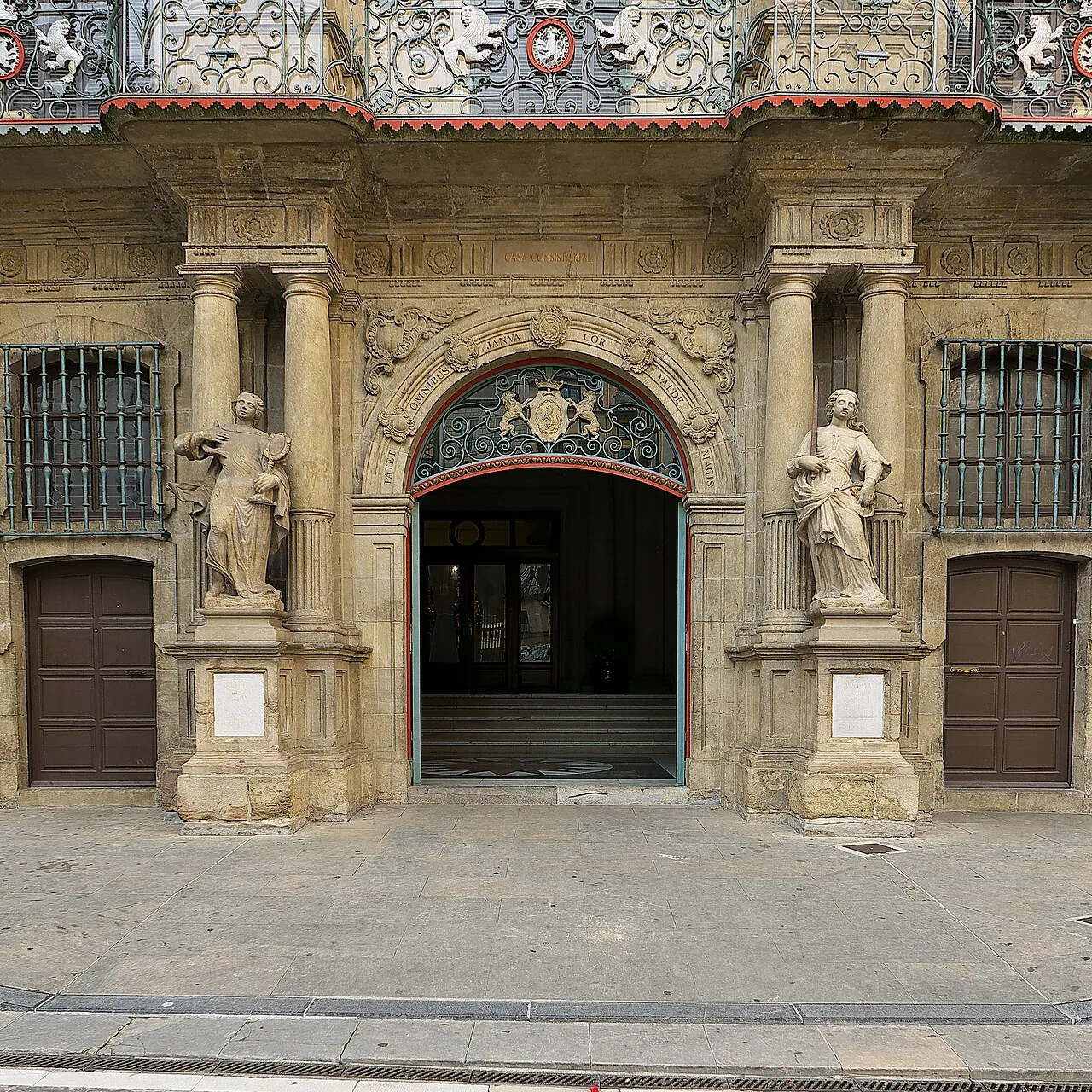
City Hall
📍 Plaza Consistorial
The chupinazo balcony, on a Baroque façade from 1752 with the three classical orders stacked one above the other. And where “Pobre de mí” is sung at midnight on the 14th.
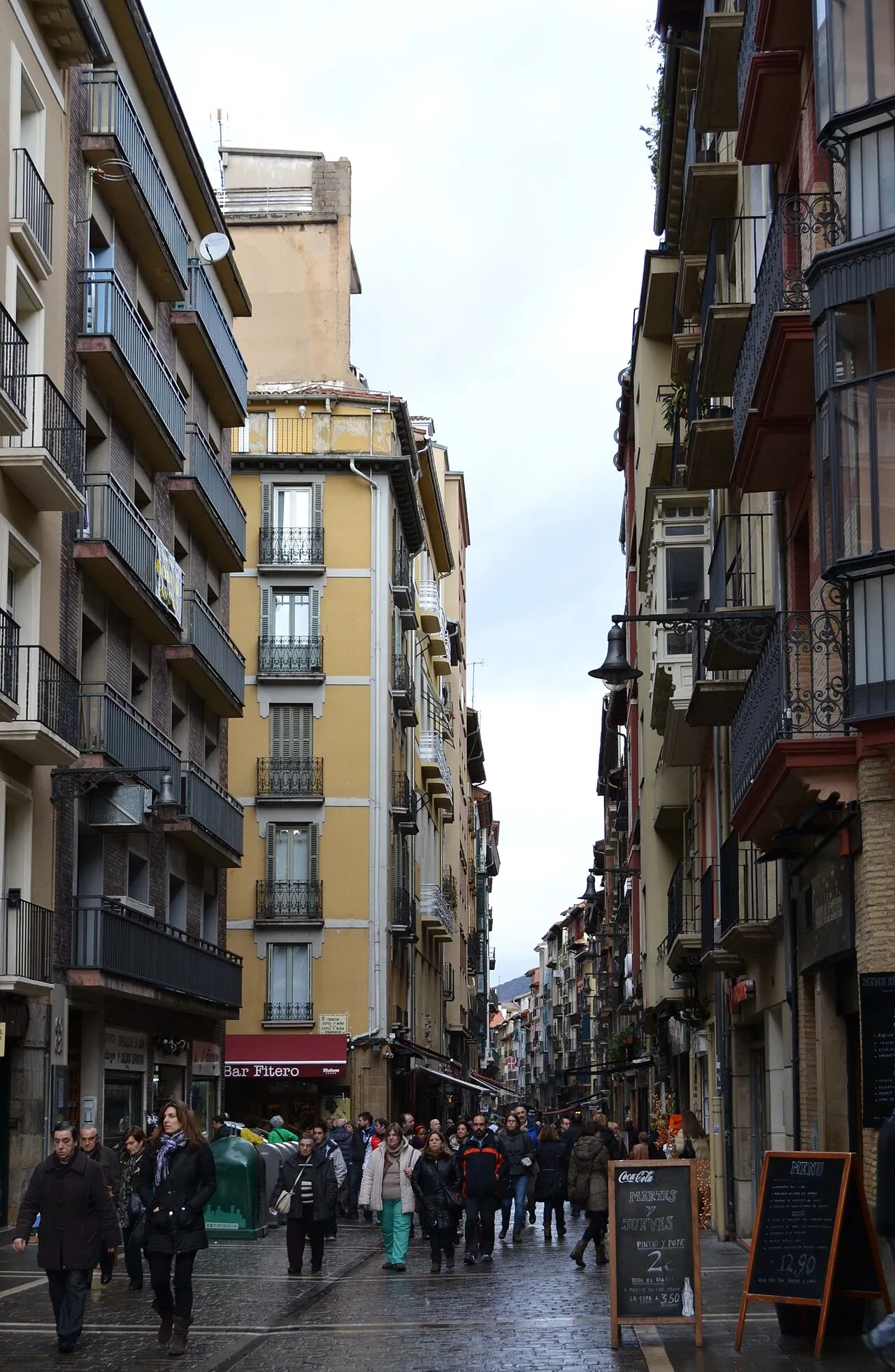
Eight hundred and fifty metres, two minutes and a year of waiting. What happens on each day from 6 to 14 July, and why the festival was originally held in October.
🎧 On the walk The running of the bulls, San Fermín and Plaza del CastilloThe Sanfermines are nine days, not a race. But the race is what explains them: eight hundred and fifty metres covered in two or three minutes, which the city waits for all year long. This guide tells you how it all works, stretch by stretch and day by day.
It all begins at midday on 6 July, from the balcony of the Casa Consistorial, the town hall: a rocket that bursts while a human tide roars below with neckerchiefs held high. The word comes from “chupín”, the popular name for the rocket.
The cry is bilingual, like the city: “Pamploneses, pamplonesas, ¡Viva San Fermín!, Iruindarrak, iruindarrok, gora San Fermin!” — long live San Fermín, first in Spanish and then in Basque. And at that moment tens of thousands of red neckerchiefs, until then worn tied round the wrist, go up to the neck all at once.
The saint lives in the Church of San Lorenzo, in an octagonal Baroque chapel raised between 1696 and 1717 for the sole purpose of guarding him. Every 7 July he is carried out shoulder-high in procession along calle Mayor.
And one surprising fact: the saint's feast day fell on 10 October, with rain and cold, while the cattle fair and the bullfights were held in summer. In 1591 the city decided to put it all together and move the celebration to 7 July, for the good weather. That purely practical change invented the Sanfermines.
The chupinazo balcony, on a Baroque façade from 1752 with the three classical orders stacked one above the other. And where “Pobre de mí” is sung at midnight on the 14th.
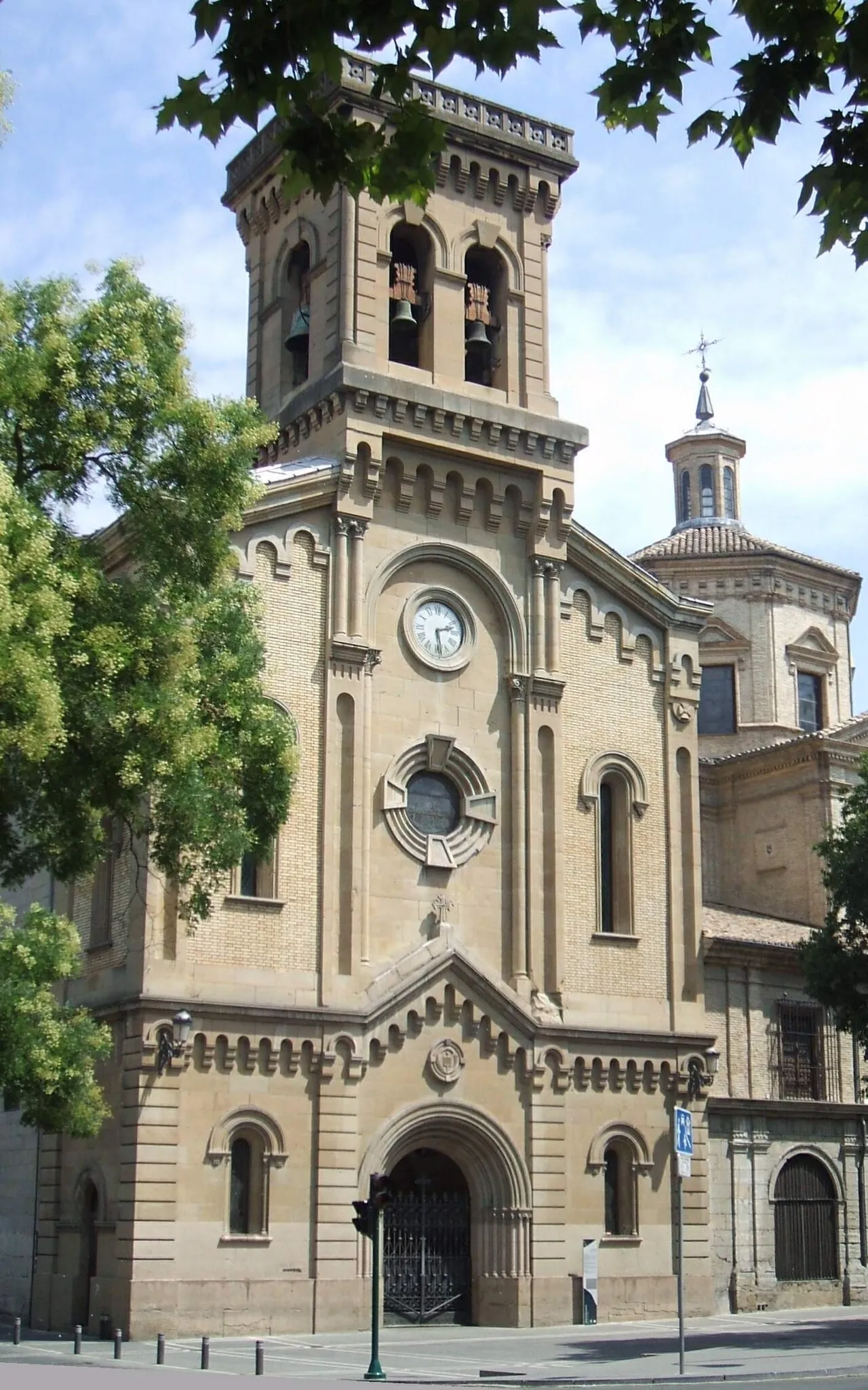
Where the saint lives, in an octagonal chapel built for him alone. The procession of 7 July sets out from here, and the encierro route begins a few minutes away, on the cuesta de Santo Domingo.
Download the app and discover Pamplona offline, whenever you like. Take the walking tour The running of the bulls, San Fermín and Plaza del Castillo with a local guide in your ear.
Find out more about Viavoy →It starts on the cuesta de Santo Domingo. At eight o'clock sharp a rocket goes off, the gate opens and six bulls plus the steers that lead them charge up the slope. A second rocket signals that no animal has been left behind, which is the most dangerous situation of all.
This first stretch is one of the hardest: almost three hundred metres of rising slope that pushes you on, with slippery ground and the bulls still together and fresh. The veterans sum it up like this: here you do not run in front of the bull, you survive.
Next comes the town hall square and the Mercaderes bend, a tight right turn where the bulls skid and often fall against the fencing. It is the most photographed point and one of the most unpredictable.
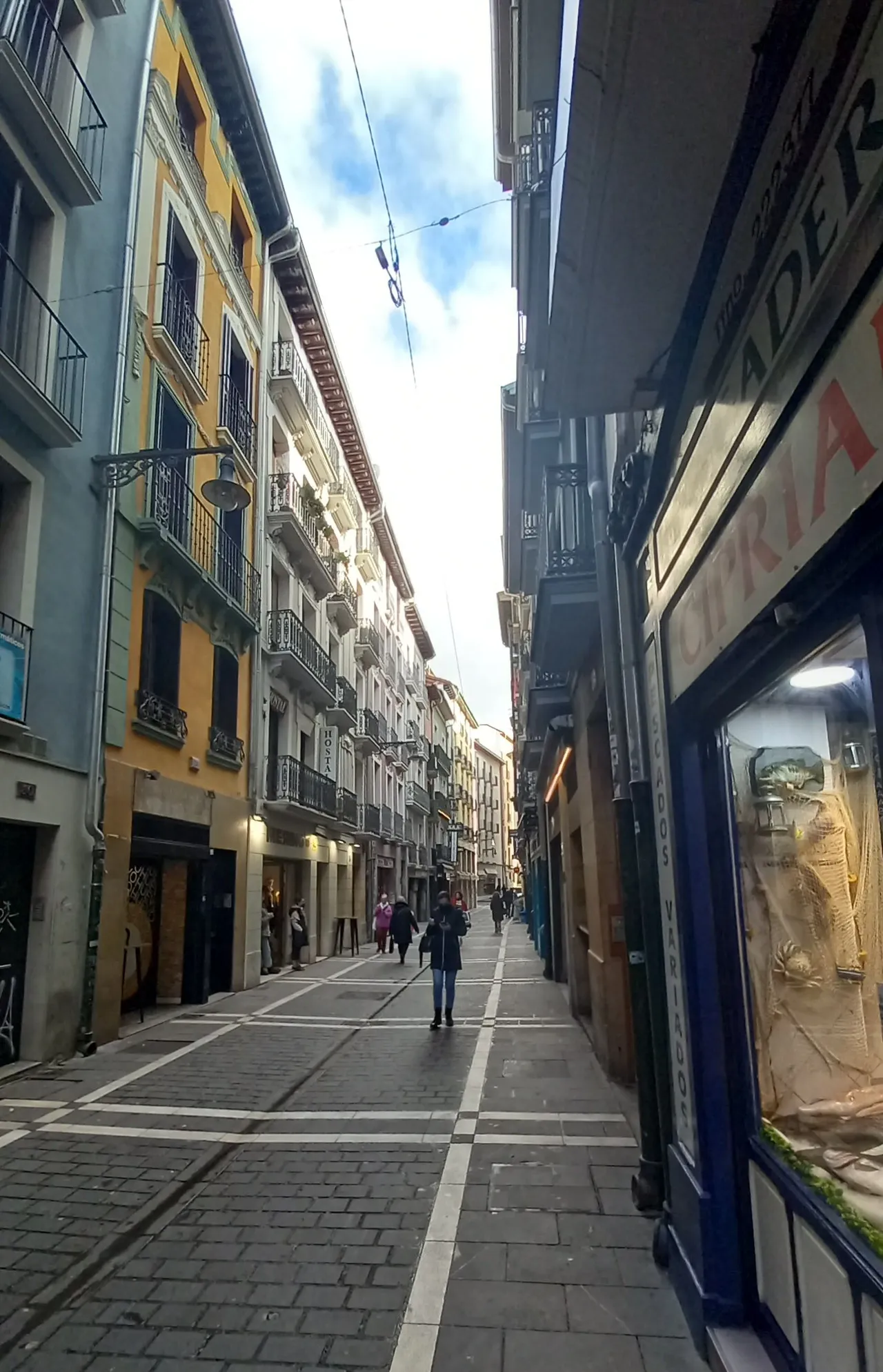
After that, calle Estafeta: three hundred metres of straight line with no bend to hide in. For many runners this is the real encierro, the stretch where the hardest thing is done, which is not fleeing but placing yourself in front of the bull and running alongside it for a few metres, matching its stride.
And the finish: the Telefónica stretch, the callejón that narrows sharply — where the pile-ups happen — and the entrance to the sand of the bullring. In all, some eight hundred and fifty metres and two or three minutes.
Running is free and there is no need to register, but there are rules and fines: you must be of legal age, not be drunk, not run in the opposite direction, not carry rucksacks or bundles and not take photos or videos while running. The police pull anyone who does not comply off the route before the rocket goes off.
The white and red does not come from the Middle Ages: it caught on in the nineteen thirties, when the first peñas, the neighbourhood clubs, adopted it and the whole city copied the idea. Tradition adds that the red recalls the martyrdom of San Fermín, who was beheaded.
Women have been able to run without restriction since 1974: until that year a municipal by-law expressly forbade it. That is why the Monument to the Encierro, with its nineteen figures, does not include a single one.
What almost nobody knows about is the encierrillo: on the previous afternoon the bulls are moved in silence and in the dark from the corrals at El Gas to those at Santo Domingo, with no crowd shouting and the streets empty. It is the exact opposite of the encierro.
And the festival does not end with the race: there are bullfights in the afternoon in the same ring — the bull that runs at eight is the one fought later — gigantes y cabezudos, the giants and big-heads, in the morning, peñas and charangas, the brass bands, all day long, and the Riau-Riau, the most argued-over and most often cancelled event of them all.
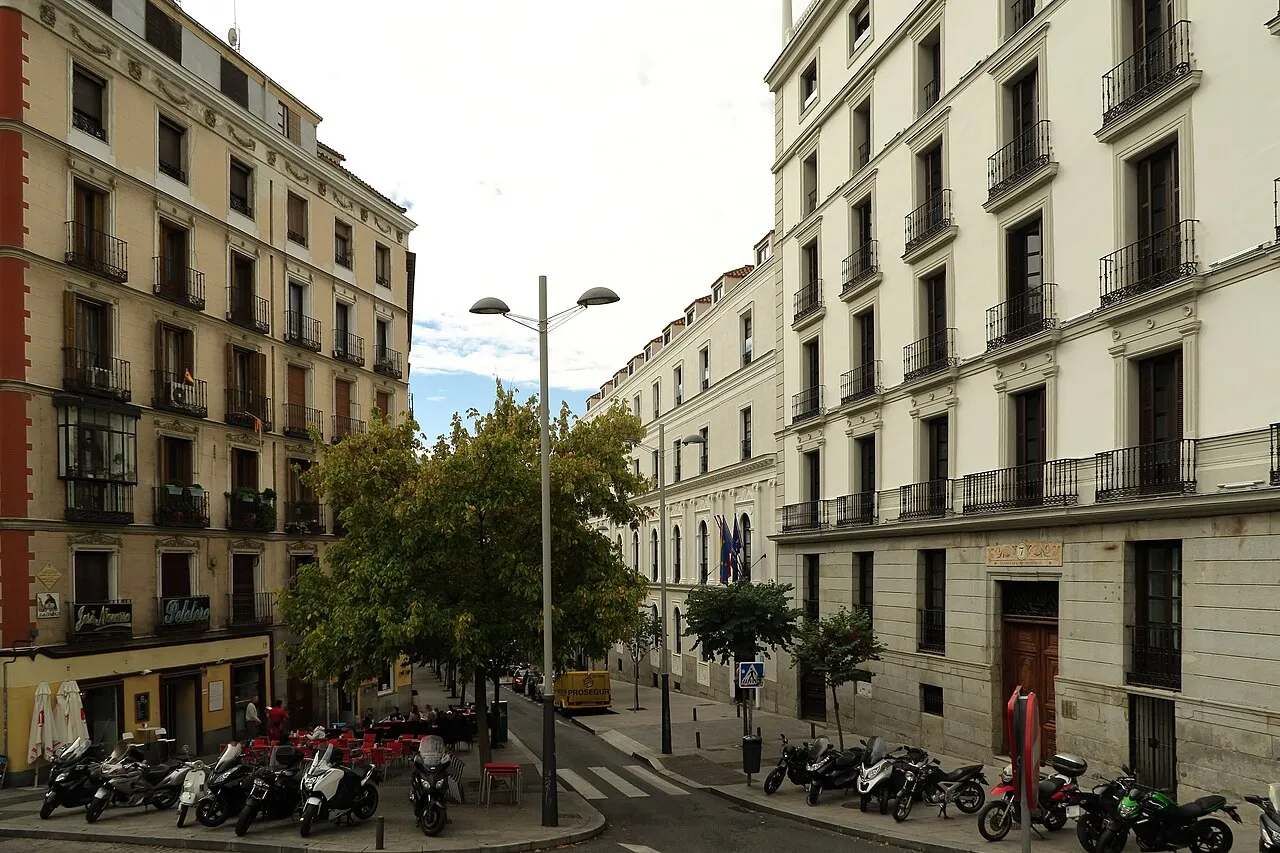
Where it all begins: at eight o'clock sharp the rocket goes off and the gate opens. Almost three hundred metres of slope with the bulls together and fresh.
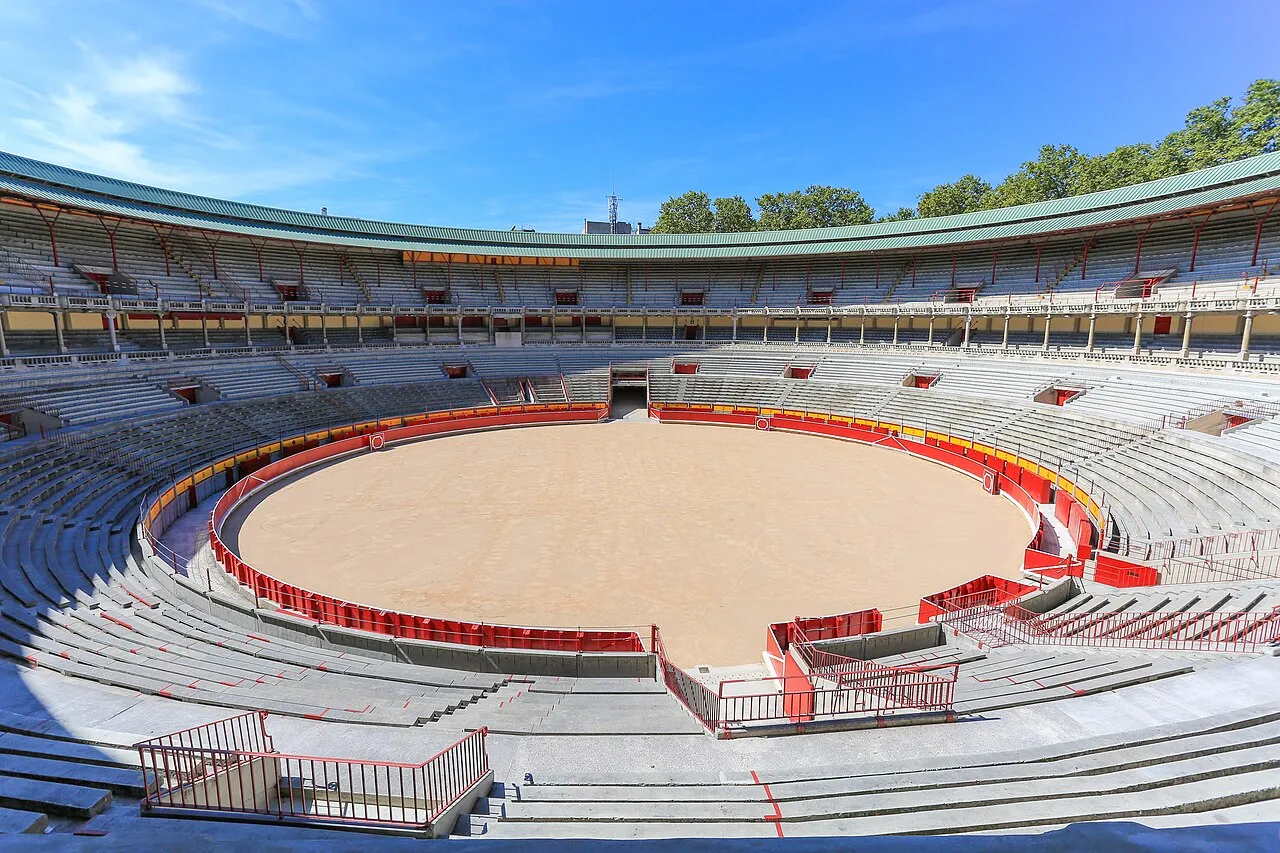
Where the encierro ends. Among the largest in the world by capacity: twenty thousand people in a city of two hundred thousand. With the bust of Hemingway alongside.
From 6 to 14 July, always on the same dates. They begin with the chupinazo at midday on the 6th from the town hall balcony and end at midnight on the 14th with “Pobre de mí” sung by candlelight in that same square. The encierro is run every morning at eight, from the 7th to the 14th.
Between two and three minutes. It is some eight hundred and fifty metres from the gate on the cuesta de Santo Domingo to the sand of the bullring. Less time than it takes to read this guide, and it is what the city waits for all year long.
The cuesta de Santo Domingo, at the start, because it is almost three hundred metres of rising slope that pushes you on, with slippery ground and the bulls together and fresh. And the Mercaderes bend, where the bulls skid and often fall against the fencing. The final callejón too, because of the pile-ups that form there.
Yes, it is free and there is no need to register, but there are rules that carry fines: you must be of legal age, not be drunk, not run in the opposite direction, not carry rucksacks or bundles and not take photos or videos while you run. The police pull anyone who does not comply off the route before the rocket goes off.
It is not an official uniform and it does not come from the Middle Ages: it caught on in the nineteen thirties, when the first peñas adopted white with a red sash and neckerchief and the whole city copied the idea. Tradition adds that the red recalls the martyrdom of San Fermín, who was beheaded.
Since 1974, when the municipal by-law that expressly forbade it was lifted. They have run without restriction ever since, although they are still a minority. That is why the Monument to the Encierro, with its nineteen life-size figures, does not show a single one: the sculpture also portrays a period.
The moving of the bulls, on the afternoon before each encierro, from the corrals at El Gas to those at Santo Domingo. It is done in silence, almost in the dark, with no crowd shouting and the streets empty: it is the exact opposite of the encierro and very few outsiders know about it.
Because in 1591 the city changed it for the weather. The feast of San Fermín fell on 10 October, with rain and cold, while the cattle fair and the bullfights were held in summer. It was decided to put it all together on 7 July, and that purely practical move accidentally invented the Sanfermines.
Download Viavoy and walk Pamplona offline, whenever you like.

Keep reading