1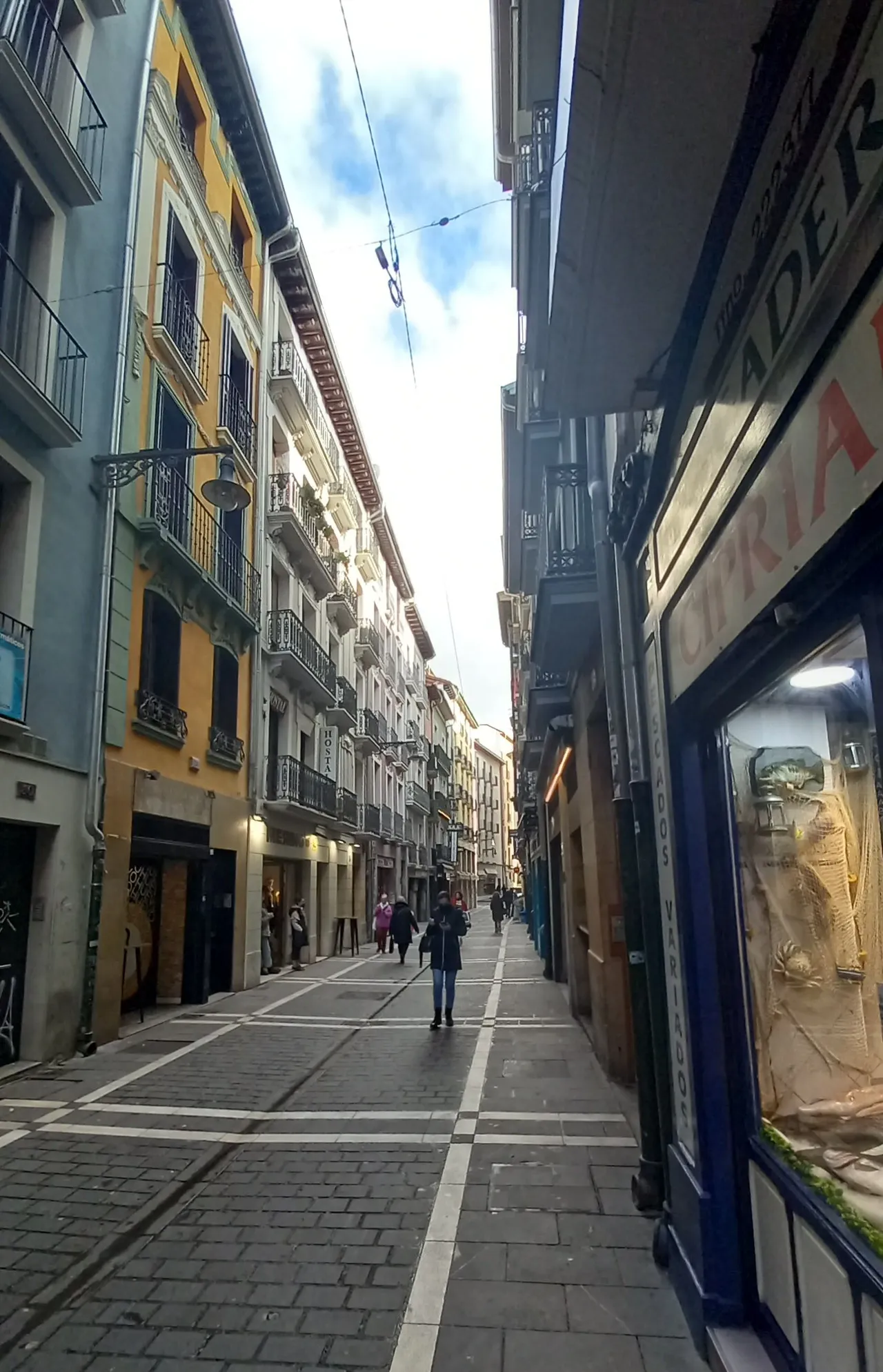
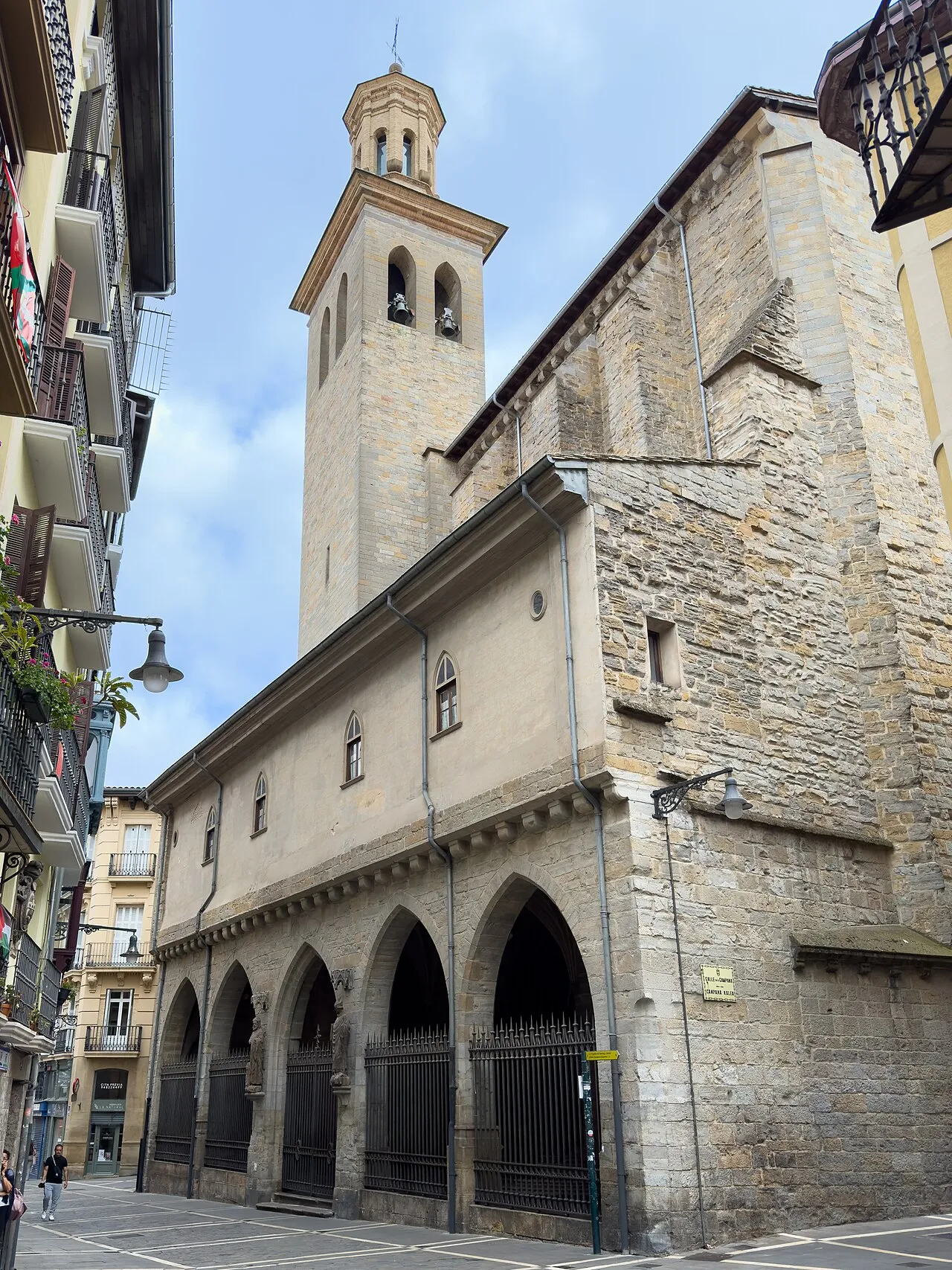
Calle San Nicolás
📍 Old town
One of the corners of the poteo triangle, with the fortress-church of the same name at one end. It smells of red wine and freshly carved ham.
A ritual with strict rules, three streets that form a triangle, and a river plain that grows artichokes and asparagus with denominations of their own.
🎧 On the walk Pintxos and life in the Old TownIn Pamplona you do not go out to dinner, you go out for the poteo: bar to bar with a txikito in one hand and a pintxo in the other. It has unwritten and fairly strict rules, it is concentrated in three streets of the old town, and it leans on one of the finest market gardens in Europe.
The poteo is concentrated in three streets of the old town: San Nicolás, its continuation San Gregorio and la Estafeta. They are right next to each other and form the circuit through which the city moves when it wants to eat standing up and talk loudly.
The txikito is the key to making the system work: a small glass of wine, barely a couple of mouthfuls. Since it holds little, you finish it quickly, you pay little and you move on to the next bar. The quantity is set by the number of stops, not by the size of the glass.
The unwritten rules are clear: one drink and one pintxo per bar, and on to another place. Settling in at one counter for the whole night is considered a waste of the system, because every bar does something better than the rest and you have to go and get it.
Outside July, the best moment is Saturday lunchtime or the early evening on a weekday. During the Sanfermines these streets are simply impassable.
One of the corners of the poteo triangle, with the fortress-church of the same name at one end. It smells of red wine and freshly carved ham.
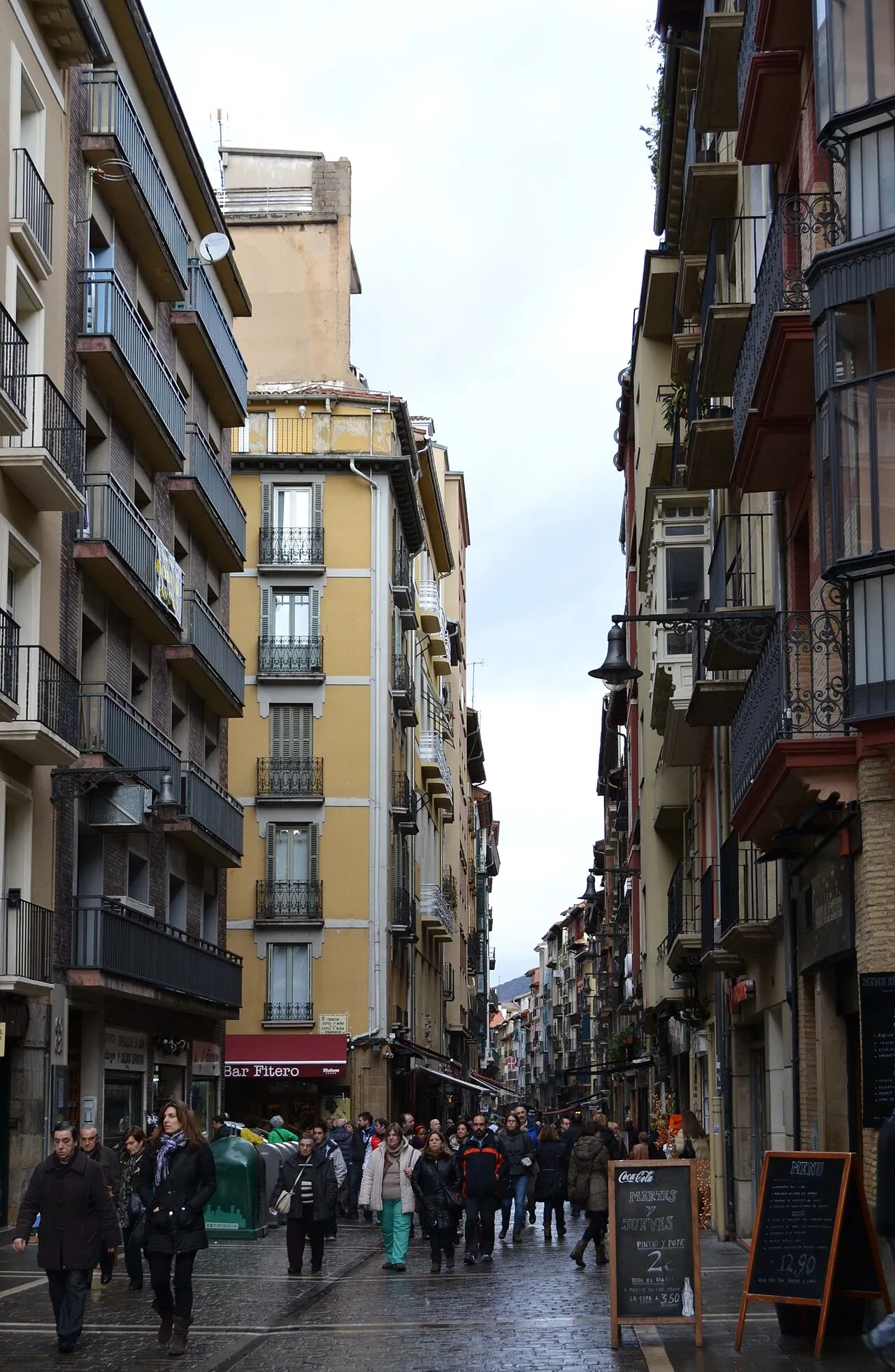
The legendary stretch of the encierro, the bull run, is also — outside the festival — one of the best pintxo streets in the city: three hundred metres of counters in a row.
Download the app and discover Pamplona offline, whenever you like. Take the walking tour Pintxos and life in the Old Town with a local guide in your ear.
Find out more about Viavoy →What sets the Navarrese pintxo apart from its Basque cousin is the vegetables. The Ebro river plain produces vegetables of exceptional quality, with several denominations and geographical indications of their own.
The Tudela artichoke, Navarre asparagus, cardoon and the piquillo pepper from Lodosa are the four great ones, and they appear on the counters in every imaginable form: griddled, battered, in menestra, a braise of mixed vegetables, or stuffed.
The Navarrese menestra is a dish in its own right and a trial by fire: if the produce is not top quality, there is nowhere to hide. In season — spring for asparagus and artichokes — it is among the best things you can eat in Spain.
Then come the classics of the counter: txistorra, a fresh pork sausage with paprika that is cooked on the griddle and eaten in bread; ajoarriero, flaked salt cod with pepper and tomato; and migas de pastor, the shepherd's fried breadcrumbs.
And in meat, lamb and chuletillas al sarmiento, little chops grilled over vine shoots, as well as game stews in season.
The wine carries the Navarre denomination of origin, with garnacha and tempranillo as the main grapes. Its rosés were for decades the best in Spain and are still excellent, as well as very reasonably priced.
Rioja also comes into play, since its vineyards begin less than an hour to the south, around Viana (Navarre) and Logroño, so on the counters of Pamplona the two denominations coexist perfectly naturally.
To sit down and eat, the plaza del Castillo is the city's great drawing room: almost fourteen thousand square metres of arcades and long-established cafés, including the Café Iruña, opened in 1888, where Hemingway drank.
And an alternative to the old town: the Ensanche district, around the avenida de Carlos III, has more formal and less crowded restaurants, with the same cooking and without the density of the old town.
A note on timing: here people have lunch and dinner relatively early, and the midday aperitif — above all on Saturdays — is the big hour. Arriving at half past two means arriving late for the best of the day.
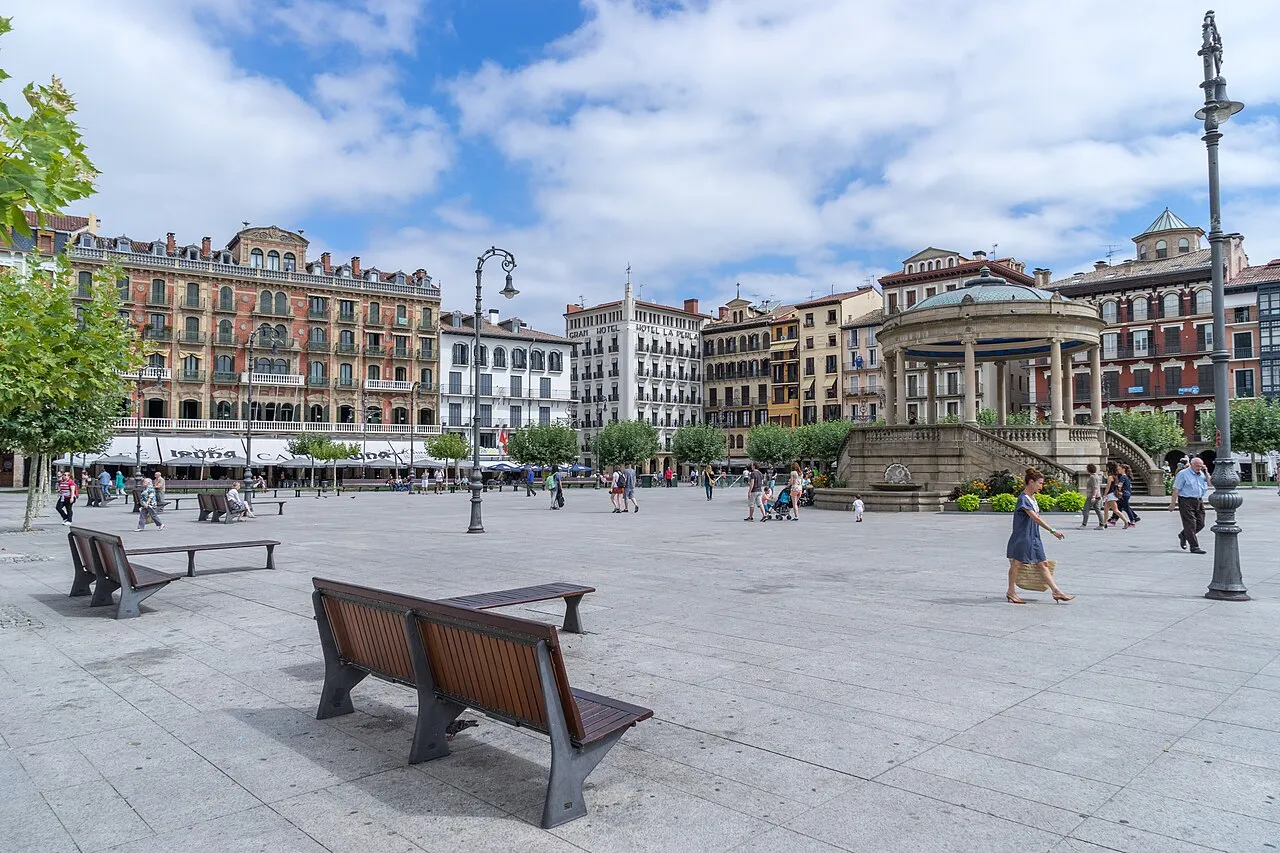
The city's great drawing room, with arcades and long-established cafés. This is where the Café Iruña is, opened in 1888, where Hemingway drank.
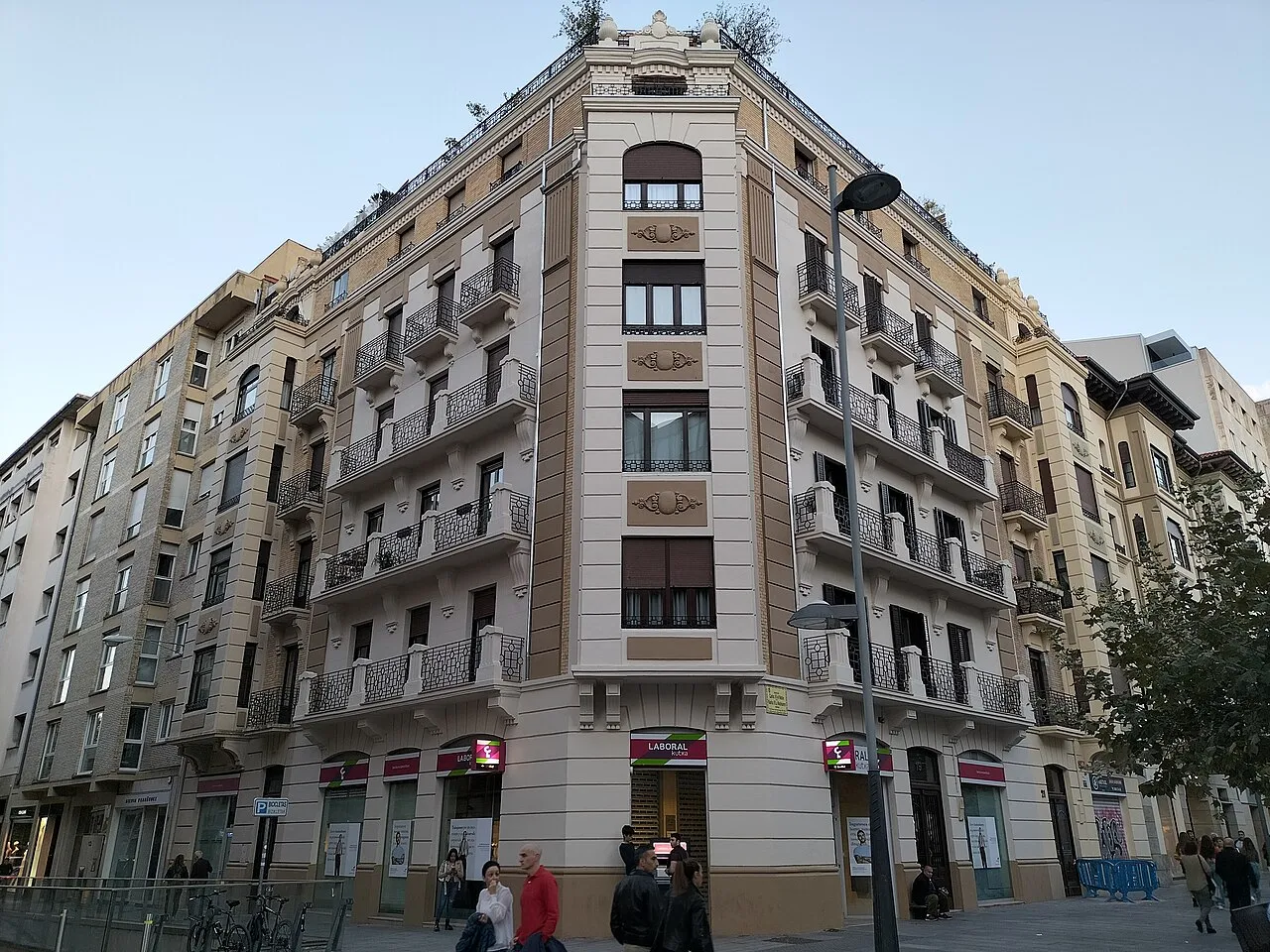
The alternative to the old town: more formal and less crowded restaurants, with the same cooking and without the density of the three streets.
The ritual of going from bar to bar with a txikito — a small glass of wine — in one hand and a pintxo in the other. It has fairly strict unwritten rules: one drink and one pintxo per bar, never two, and on to another place. It is not about settling in at one counter, it is about circulating.
A small glass of wine, barely a couple of mouthfuls, and that is the whole point of it. Since it holds little, you finish it quickly, you pay little and you move on to the next bar, which is exactly what the poteo is about. The quantity is set by the number of stops, not by the size of the glass.
In three streets of the old town: San Nicolás, its continuation San Gregorio and la Estafeta. They are right next to each other and the whole city moves through them when it wants to eat standing up. Outside July the best moment is Saturday lunchtime or the early evening on a weekday.
The vegetables. The Ebro river plain produces vegetables of exceptional quality with denominations of their own — the Tudela artichoke, Navarre asparagus, cardoon, the piquillo pepper from Lodosa — and they appear on the counters in every form: griddled, battered, in menestra or stuffed.
Spring, above all April and May for the white asparagus of Navarre, and from autumn to spring for the Tudela artichoke. In those weeks the Navarrese menestra is among the best things you can eat in Spain, and it is also a trial by fire: if the produce is not top quality, there is nowhere to hide.
The Navarre denomination of origin, with garnacha and tempranillo as the main grapes; its rosés were for decades the best in Spain and are still excellent and cheap. Rioja too, since its vineyards begin less than an hour to the south, so the two coexist naturally on the counters.
Yes: the Ensanche district, around the avenida de Carlos III, has more formal and considerably less crowded restaurants, with the same cooking and without the density of the three streets in the old town. It works especially well for a sit-down dinner at the weekend.
Download Viavoy and walk Pamplona offline, whenever you like.

Keep reading