1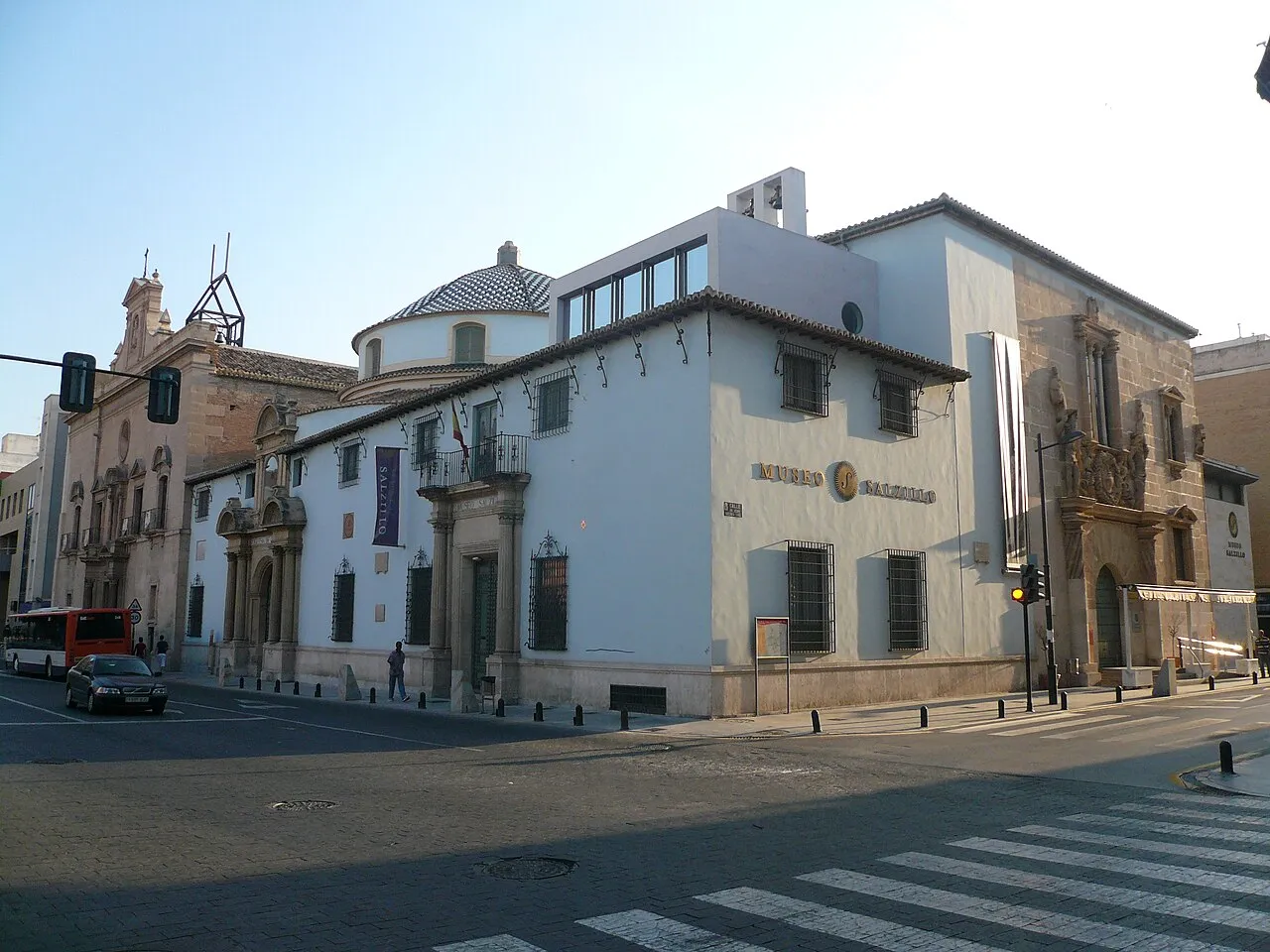
Salzillo Museum
📍 Plaza de San Agustín
The heart of Murcia's Holy Week. A long hour, and set aside a specific while for the Belén alone.
The greatest sculptor of the Spanish Baroque has a museum of his own, a round church conceived as a case and a procession that sets off before dawn every Good Friday.
🎧 On the walk Salzillo, Jesús and Santa ClaraFrancisco Salzillo carved in polychrome wood the faces with which Murcia prays every Good Friday, and he did it with a command of gesture that places him among the three or four peaks of Spanish religious statuary. His work is still in the city, in the building it was made for, and it still goes out into the street.
The Church of Jesús, raised between 1675 and 1696, is one of the very few circular churches in Spain. And its shape is not a whim: radial chapels open around the nave, like the spokes of a wheel, and in each one a paso, a processional group, rests.
In other words, the whole building was conceived as a permanent display case for the brotherhood's Holy Week (Semana Santa). Normally the pasos are kept in storerooms; here the architecture was put at the service of the rite, which makes the whole thing a case study.
From this door, in the small hours of Good Friday, sets off the Procession of the Salzillos, the one with the nazarenos in purple robes, “los moraos”, the purple ones. It is the most important date in the city's calendar and the one that explains Murcia best.
The route inside takes you from Salzillo's workshop and his Belén to the pasos that go out into the street: the Prayer in the Garden, the Arrest, the Flagellation, the Fall, and that Nazareno with the cross on his shoulder and a gaze that breaks your heart.
The heart of Murcia's Holy Week. A long hour, and set aside a specific while for the Belén alone.
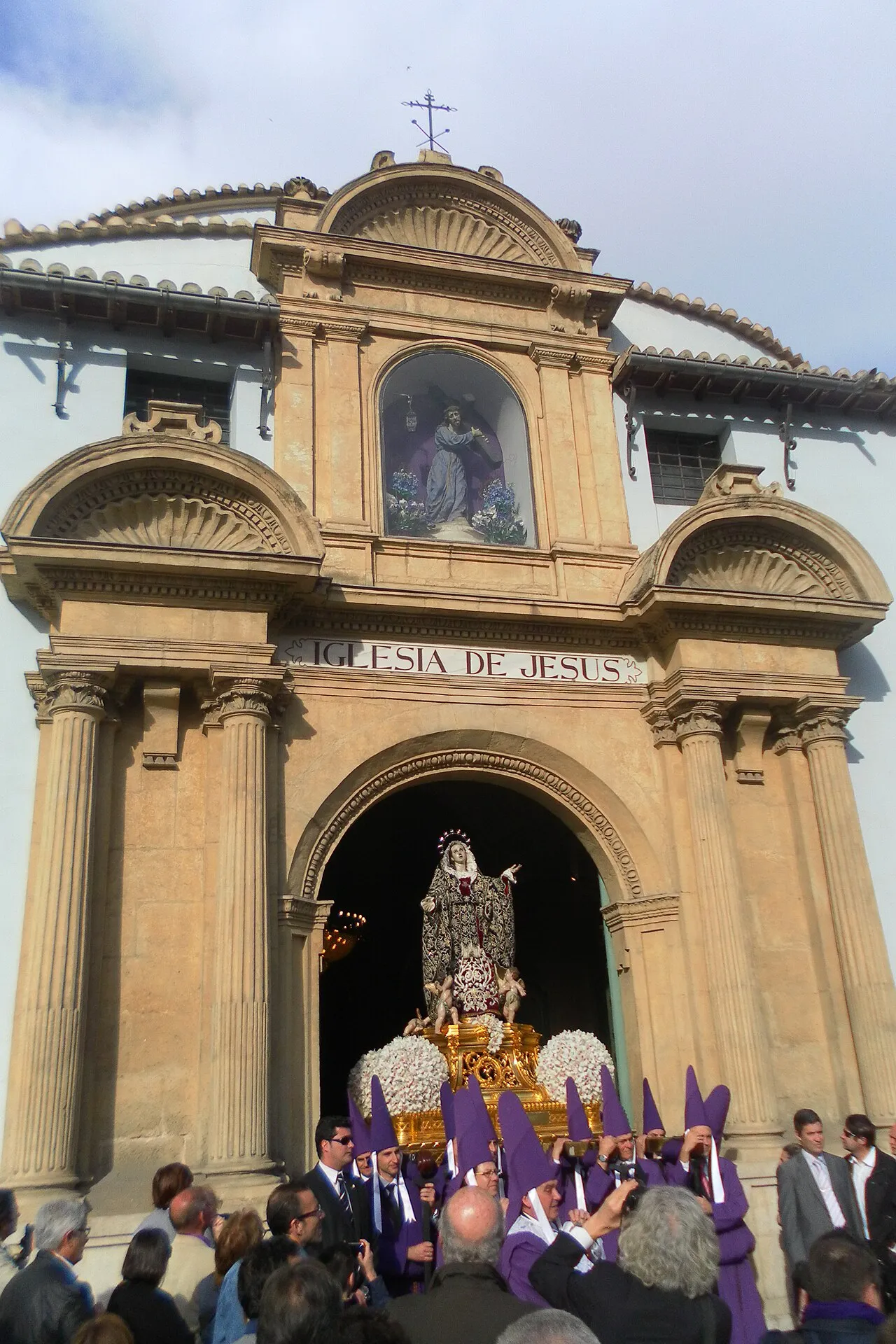
A round church of 1675-1696, with radial chapels where each paso rests. This is where “los moraos” set off from in the small hours of Good Friday.
Download the app and discover Murcia offline, whenever you like. Take the walking tour Salzillo, Jesús and Santa Clara with a local guide in your ear.
Find out more about Viavoy →The greatest piece is “The Prayer in the Garden”, from 1754, with an angel that looks about to take off to comfort an exhausted Christ. Many consider it his masterpiece, and you only have to look at the folds of the cloak to understand why.
Spanish processional statuary is a genre that barely exists outside the Peninsula: polychrome wooden sculpture meant to be seen in movement, at night, by candlelight and from below. That conditions everything, from the gesture to the polychromy.
Salzillo belongs in that first rank alongside Gregorio Fernández, Martínez Montañés and Alonso Cano, and he is the only one of the four whose work can be seen almost complete in a single building in his own city.
And the technical detail that explains everything: the pasos are hollow, emptied out inside with glued cloth. That way an enormous group can be carried on shoulders through narrow streets without breaking anyone's back. The structure was designed for its use from the start.
The other jewel of the museum is the Belén, the nativity scene: more than five hundred tiny figures he modelled between 1776 and 1783 for a nobleman of the city. A whole world of shepherds, markets and little houses in miniature, with every small face different from the last.
And there is the interesting part: although it tells the birth of Christ, Salzillo dressed his shepherds as eighteenth-century Murcian peasants and set them walking through landscapes that recall the huerta, not the Holy Land.
He modelled the world in front of him. That is why you can recognise costumes, trades and even faces from the Murcia of his time, and why the Belén works as a first-rate ethnographic document as well as a work of art.
You can spend half an hour hunting for details and a new one always turns up. Many people end up giving it more time than the big pasos, and that is a perfectly reasonable decision.
The other Salzillo in the city, together with his father Nicolás's, is in the church of El Carmen, on the other side of the river: an Inmaculada by Francisco and a Virgen del Carmen attributed to Nicolás, canonically crowned in 2008.
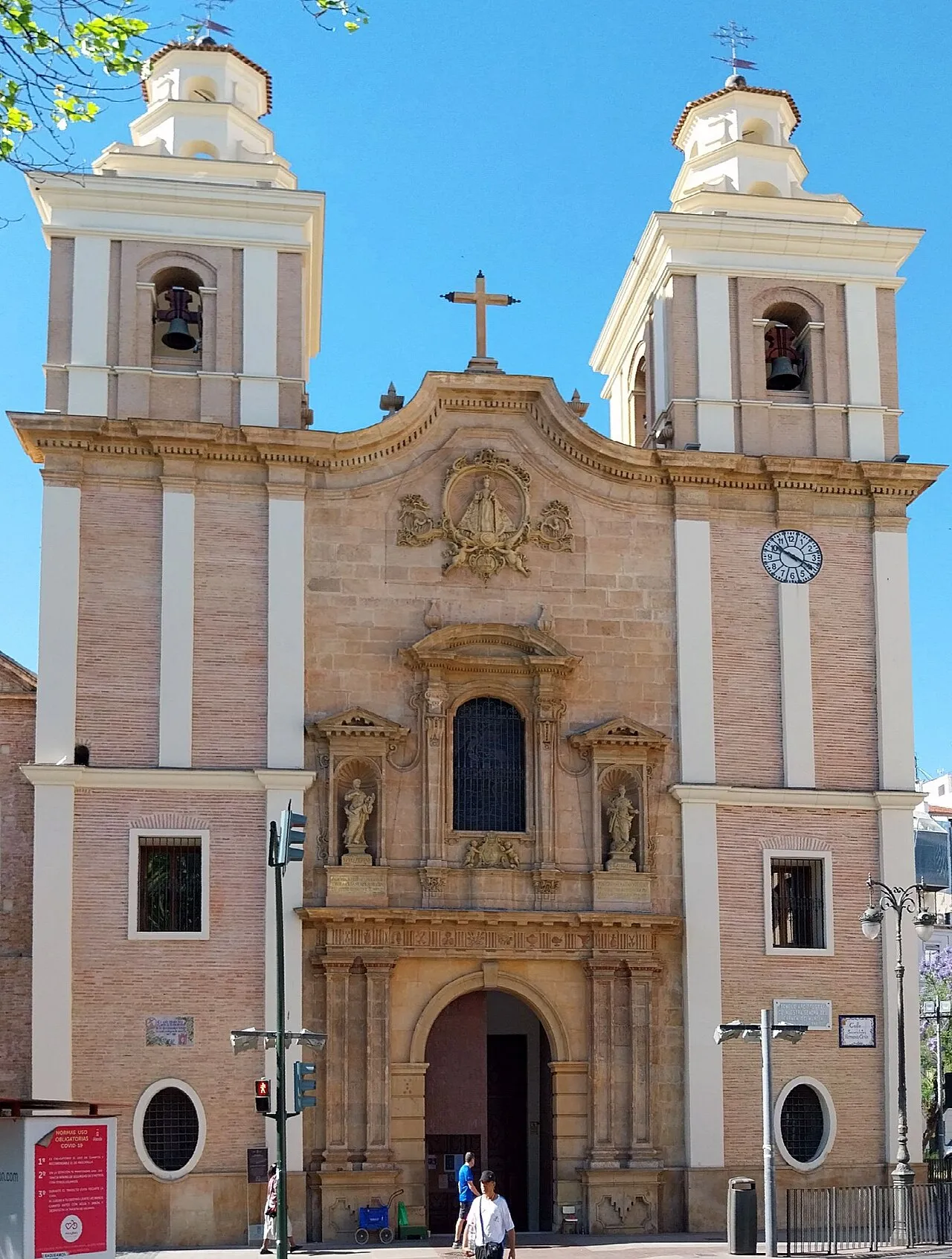
It holds an Inmaculada by Francisco Salzillo, a Virgen del Carmen attributed to his father Nicolás and the Cristo de la Sangre by Nicolás de Bussy, from 1693.
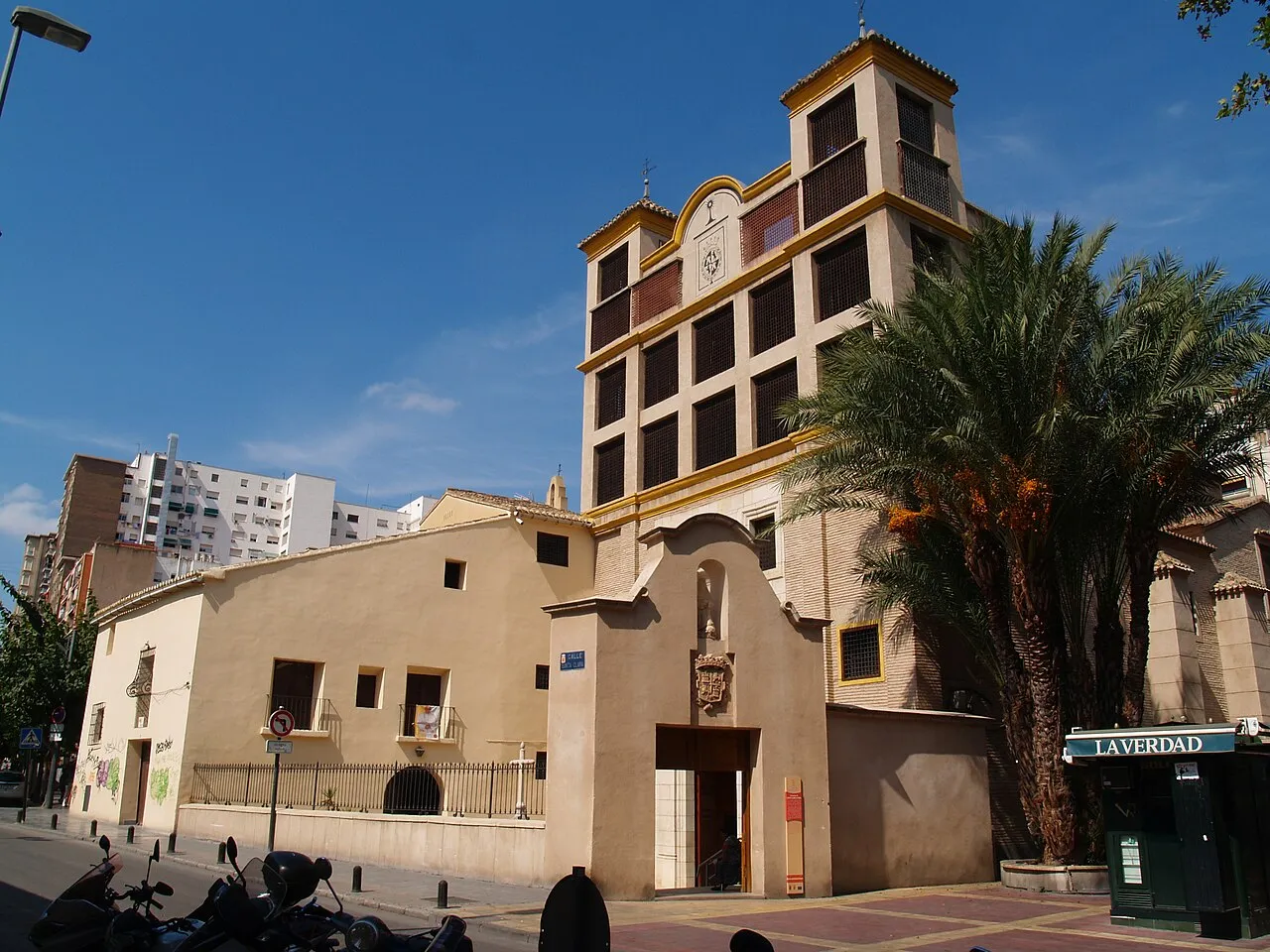
On the same route: a thirteenth-century Islamic palace under a convent of enclosed Poor Clares. The most surprising visit in the city.
An eighteenth-century Murcian sculptor, considered one of the greatest image-makers of the Spanish Baroque, on a level with Gregorio Fernández, Martínez Montañés and Alonso Cano. He specialised in processional statuary: polychrome wooden carvings made to go out in Holy Week. Murcia devotes a whole museum to him.
Out of pure practical necessity: many figures are emptied out inside, with glued cloth and polychrome wood, so they weigh as little as possible. That way an enormous group can be carried on shoulders through the narrow streets of the district without injuring the costaleros. It is processional engineering as much as sculpture.
Because it was conceived as a case for the pasos. Radial chapels open around the circular nave, like the spokes of a wheel, and in each one a processional group rests. It is an uncommon case of architecture designed to serve one specific rite.
That although it tells the birth of Christ, Salzillo dressed his shepherds as eighteenth-century Murcian peasants and set them walking through landscapes that recall the huerta, not the Holy Land. There are more than five hundred figures, every face different, and it works as an ethnographic document as well as a work of art.
For most people, “The Prayer in the Garden”, from 1754, with an angel that looks about to take off to comfort an exhausted Christ. You only have to look at the folds of the cloak and the arrangement of the figures to understand why. It is in the Salzillo Museum, on the plaza de San Agustín.
The procession that leaves the Church of Jesús in the small hours of Good Friday, with the nazarenos in purple robes that Murcia calls “los moraos”, carrying on their shoulders the carvings that rest in the museum the rest of the year. It is the most important date in the city's calendar.
In the church of El Carmen, on the other side of the river, an Inmaculada by Francisco Salzillo is kept, and a Virgen del Carmen attributed to his father, Nicolás Salzillo, canonically crowned in 2008. In the same church there is also the Cristo de la Sangre by Nicolás de Bussy, from 1693, another impressive carving.
Download Viavoy and walk Murcia offline, whenever you like.

Keep reading