1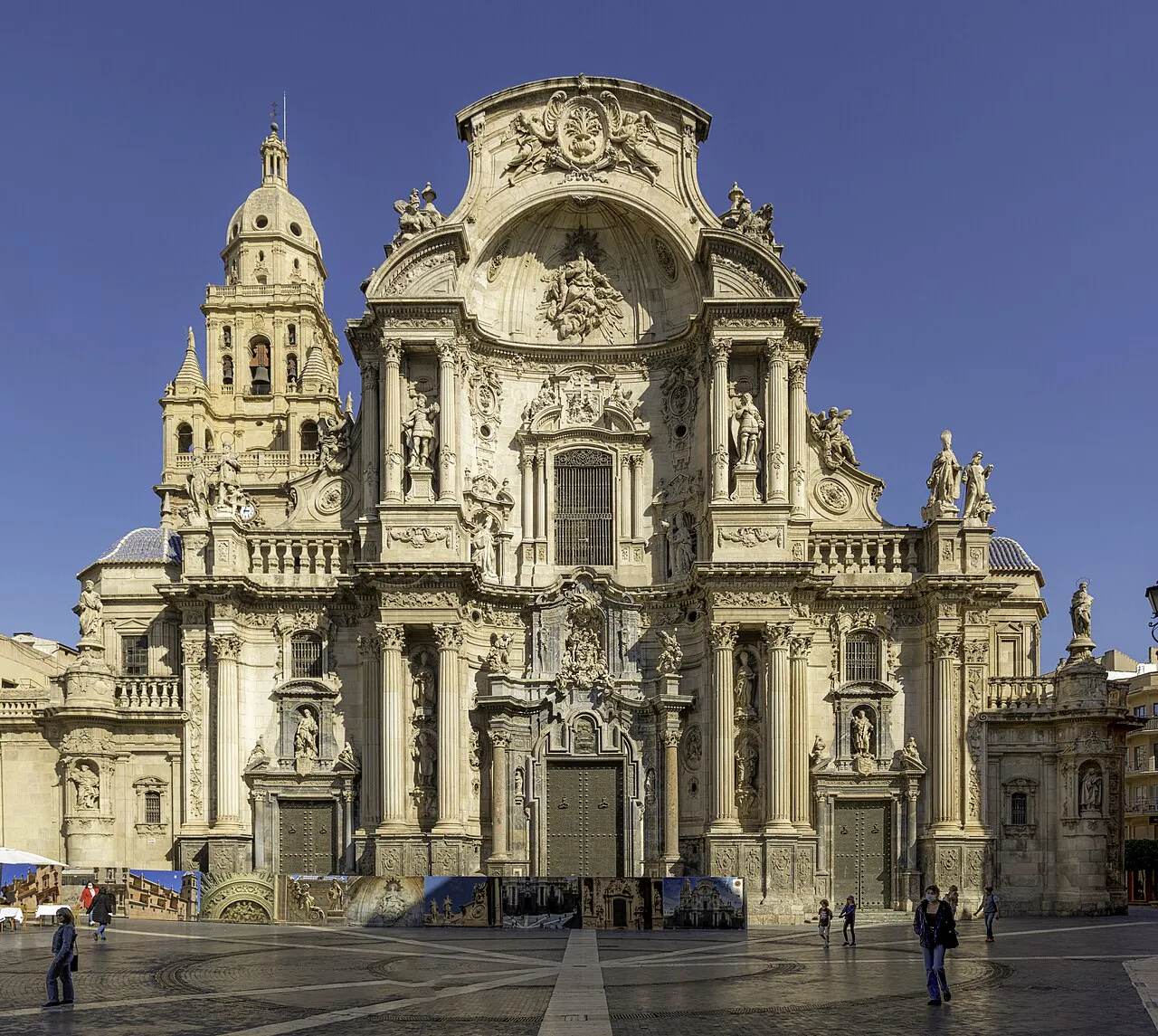
The imafronte of the Cathedral
📍 Plaza del Cardenal Belluga
Raised between 1737 and 1754 by Jaime Bort, on the commission of Cardinal Belluga. Stand right in front of it to feel the concavity.
Behind the most theatrical Baroque imafronte in Spain there is a Gothic nave, the heart of Alfonso X and a star vault that takes your breath away.
🎧 On the walk The Cathedral, Belluga and the Baroque heartFew Spanish buildings deceive you so thoroughly from the outside. Murcia Cathedral presents the visitor with one of the most spectacular façades of the European Baroque, and behind it keeps a Gothic church two centuries older, one of the finest funerary chapels on the Peninsula and a tower that took almost three hundred years to finish.
It was raised between 1737 and 1754 on the commission of Cardinal Belluga, to a design by Jaime Bort. The idea is explicit: to take the language of the altarpiece, the most spectacular piece of furniture in a Baroque interior, out onto the façade, so that the whole city could see it.
The result has real depth: planes that advance and recede, free-standing columns, niches and saints, without a single flat surface where the eye can rest. It is urban stage design in the most literal sense.
The concave curve is what makes it unique. Instead of presenting itself as a frontal plane, the imafronte opens like a great niche, wrapping around whoever stands in front of it and pushing them towards the door.
And right at the top, where almost nobody looks, are the saints of the house: the Virgin crowning the whole and, in the side niches, Fulgentius and Florentina, brother and sister and patron saints of Murcia, with Leander and Isidore.
Raised between 1737 and 1754 by Jaime Bort, on the commission of Cardinal Belluga. Stand right in front of it to feel the concavity.
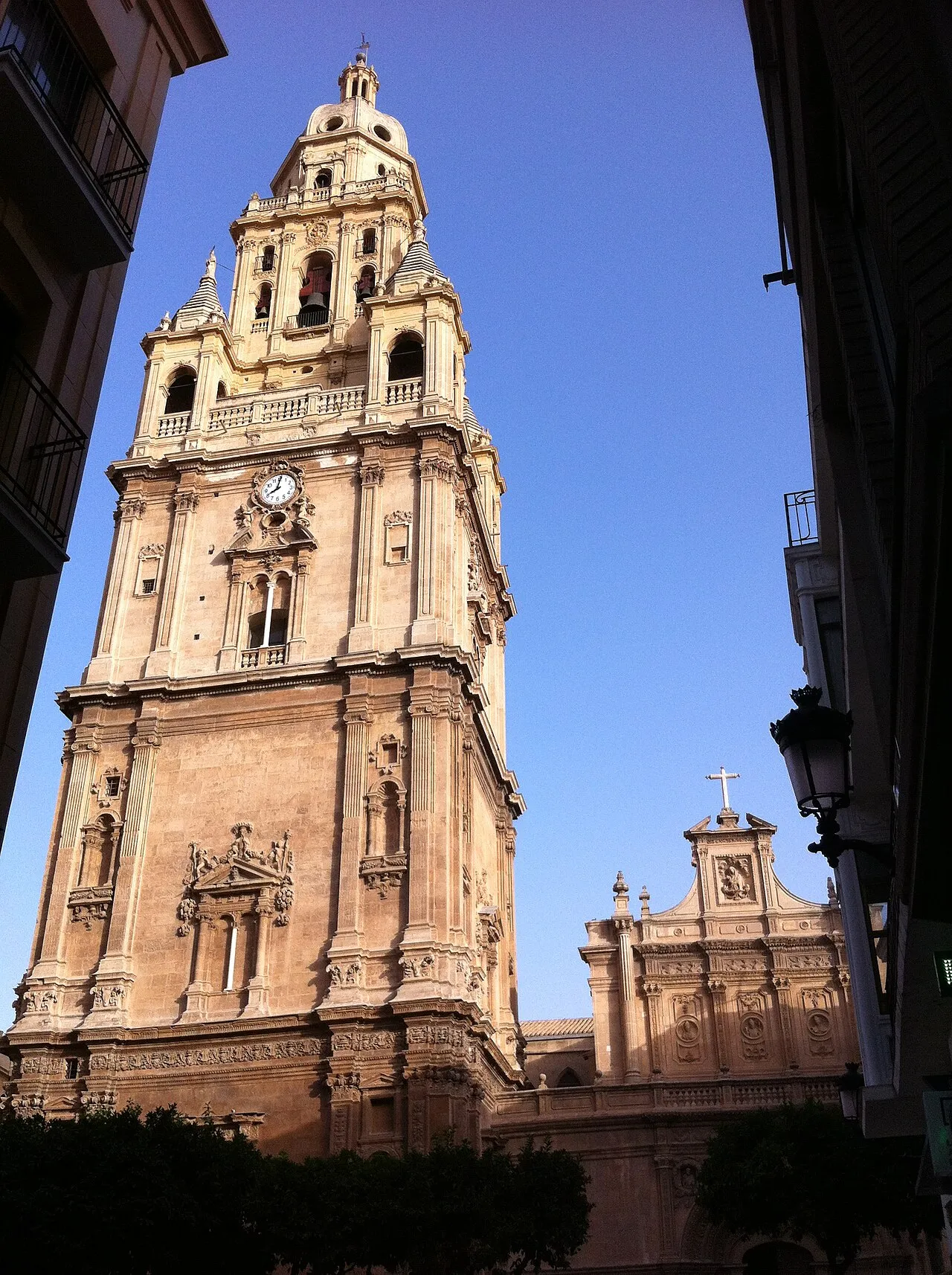
Ninety-three metres, almost ninety-eight with the weathervane. Begun in 1519 and finished in 1793, with two hundred years of standstill in between.
Download the app and discover Murcia offline, whenever you like. Take the walking tour The Cathedral, Belluga and the Baroque heart with a local guide in your ear.
Find out more about Viavoy →Crossing the door means changing century. The nave is Gothic, from the fourteenth and fifteenth centuries, with ribbed vaults and a structural sobriety that has nothing to do with the theatricality outside. That contrast is the best architecture lesson the city offers.
Under the high altar lies the heart of Alfonso X the Wise, who expressly asked to be buried in part here out of the affection he felt for the city he had brought into Castile. It is one of the most unusual royal deposits in Spain.
The artistic jewel is the Chapel of Los Vélez, the funerary chapel of the marquises of that title, with a star vault of extraordinary complexity: Flamboyant Gothic of the most ambitious kind built on the Peninsula, with exterior decoration that looks embroidered in stone.
It is completed by the choir, moved here from another church, the Cathedral Museum and the climb up the tower.
The tower is some ninety-three metres high, almost ninety-eight with the weathervane, and is among the tallest in Spain. It was begun in 1519, in the middle of the Renaissance, and was not finished until 1793.
The first stage, the plainest, was raised by the Italian Jacobo Florentino and continued by Jerónimo Quijano, with that measured Renaissance flavour. Then the work stopped for almost two centuries, because the tower threatened to lean: the ground in Murcia is alluvial and the weight posed a real problem.
In the eighteenth century it was finished off with the belfry stage and the spire, by then fully Baroque. That is why, looking at it from bottom to top, you read the history of Spanish architecture in a single object.
And its bells were not decorative: they warned of the floods of the Segura, rang the alarm in wars and festivities and marked the irrigation turns in the huerta, so that each farmer knew when his water was due. High up there is also a Conjuratorio, from which a priest would come out to conjure away storms and plagues of locusts.

Rafael Moneo, the first Spanish Pritzker winner, answered the Baroque opposite with a stone screen ordered like a musical score. And it opens no door onto the square.
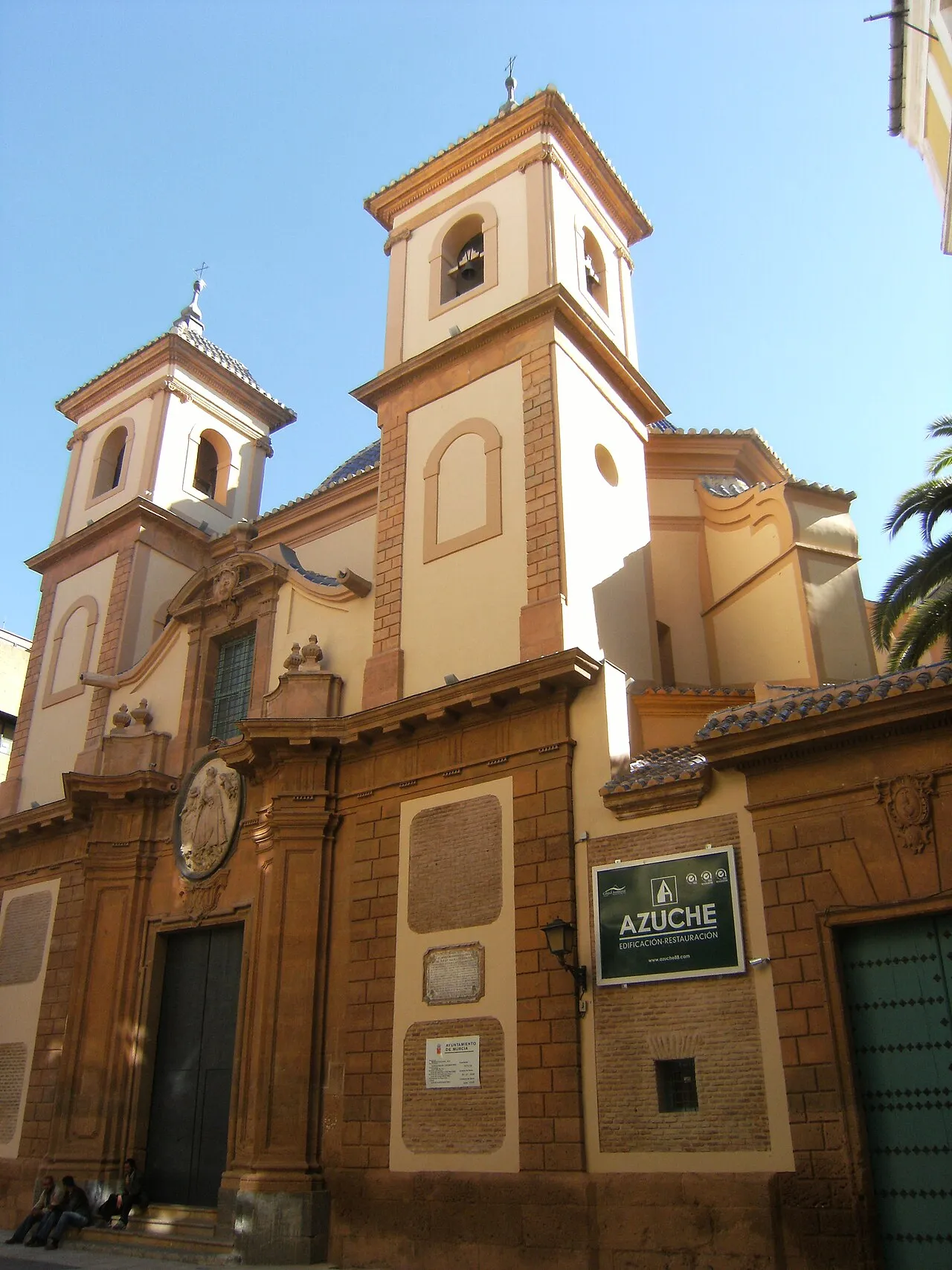
An oval plan of 1745-1781 over the alcázar of the Muslim kings. You can see the remains of the palace and its wall under the floor.
Because it is concave: it curves inwards like a great niche or a pair of open arms, something very rare in a façade. When you stand in front of it, the stone wraps around you and pushes you visually towards the door. It is one of the most effective stage devices of the Spanish Baroque.
It was drawn by the architect Jaime Bort and raised between 1737 and 1754 on the commission of Cardinal Belluga, the great political and religious figure of the Murcia of his time. The idea was to take onto the façade the language of the altarpiece, the most spectacular piece of furniture inside a Baroque church.
Yes, and that is the great contrast of the building. Behind the eighteenth-century Baroque stage set there is a Gothic nave from the fourteenth and fifteenth centuries, with ribbed vaults and a sobriety that has nothing to do with what you see outside. Crossing the door means changing century.
Yes, under the high altar, by the express wish of the king himself. Alfonso X the Wise, who brought Murcia into Castile, asked for his heart to rest in this cathedral out of the affection he felt for the city. It is one of the most unusual royal deposits in Spain.
Almost three centuries: it was begun in 1519 and not finished until 1793, with a pause of almost two hundred years in between because the tower threatened to lean. The ground in Murcia is alluvial and the weight posed a real problem of settlement. That is why it changes style as you go up: Renaissance below, Baroque at the top.
For far more than calling people to Mass. They warned of the dreaded floods of the Segura when the river ran wild, rang the alarm in wars and festivities, and marked the irrigation turns in the huerta, so that each farmer knew when his water was due. The tower did not decorate the city: it organised it.
The funerary chapel of the marquises of Los Vélez, and the artistic jewel of the interior: it has a star vault of extraordinary complexity and exterior decoration that looks embroidered in stone. It is Flamboyant Gothic of the most ambitious kind built on the Peninsula and deserves a while of its own.
Download Viavoy and walk Murcia offline, whenever you like.

Keep reading