1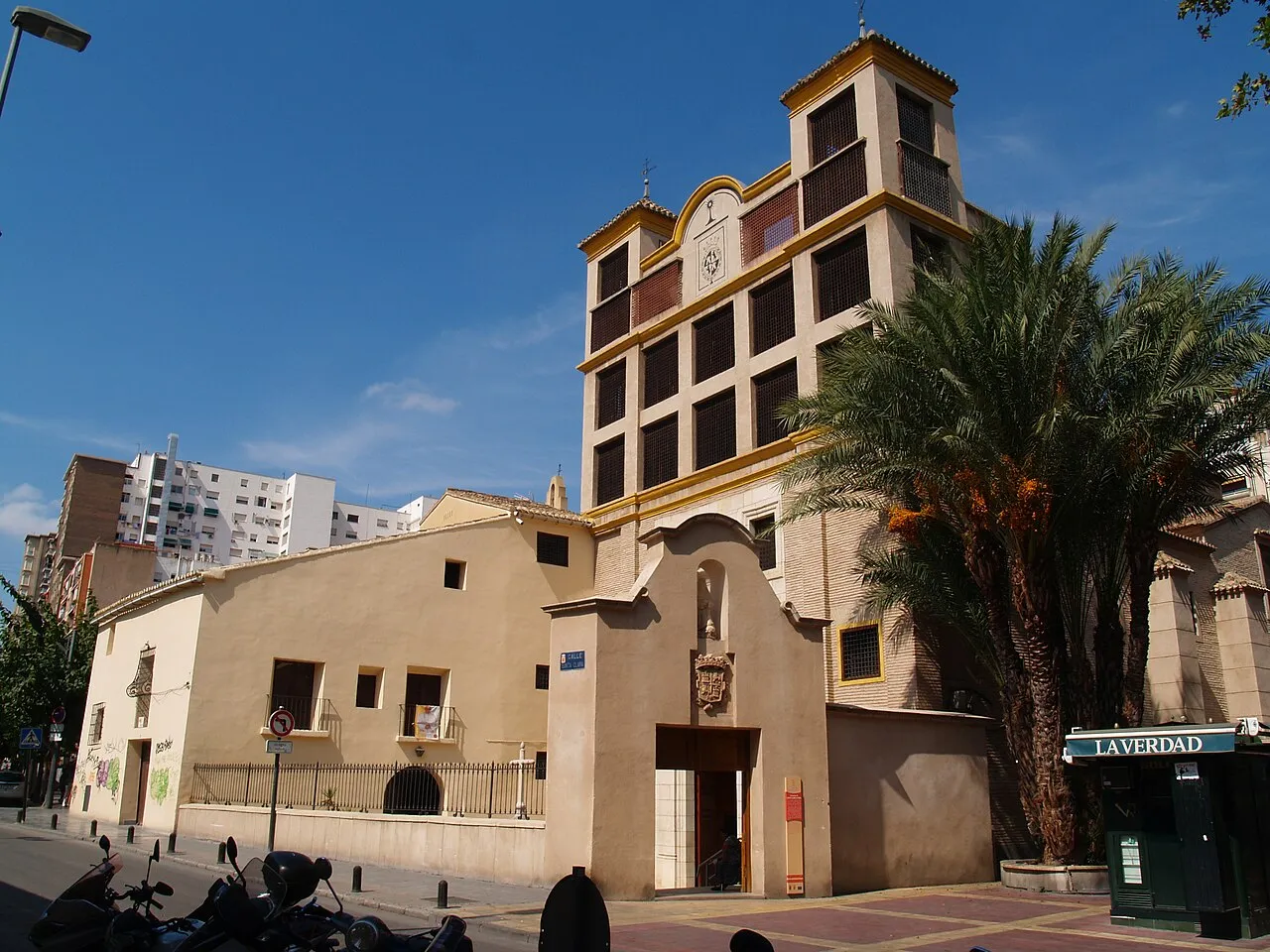
Monastery of Santa Clara la Real
📍 Gran Vía Alfonso X
A thirteenth-century Islamic palace, later a Castilian royal alcázar and from the fourteenth century a convent of enclosed Poor Clares. A long hour's visit.
Before 1266 this was one of the great cities of al-Andalus. Its mark is not on view: it is underneath, and in two places you can go down and see it.
🎧 On the walk Salzillo, Jesús and Santa ClaraMurcia was founded by the Muslims in the ninth century and for four centuries was one of the richest cities in al-Andalus, with an irrigation system that still works and a silk industry that held up its economy. Almost nothing of that city is left standing, but a fair amount is left underneath.
Under the Monastery of Santa Clara la Real beats the Alcázar Seguir, the pleasure palace of the Muslim kings of Murcia, from the thirteenth century, with courtyards, a pool and plasterwork of remarkable delicacy.
When the Christians arrived, after the conquest of 1266, the palace became a royal alcázar: the kings of Castile reused the residence of their predecessors almost unchanged, which is what was almost always done.
And in the fourteenth century the Poor Clares turned it into a convent, which is still alive today with an active enclosure. Three cities stacked in a single building, with a religious community living on top of an Andalusi palace for six hundred years.
The palace came to light in excavations and restorations in the last decades of the twentieth century: lifting floors and digging test pits brought out the courtyards, the pool and the plasterwork. The complex opened as a museum only this century, and the route takes you from the Andalusi hall to the nuns' choir without leaving the building.
A thirteenth-century Islamic palace, later a Castilian royal alcázar and from the fourteenth century a convent of enclosed Poor Clares. A long hour's visit.
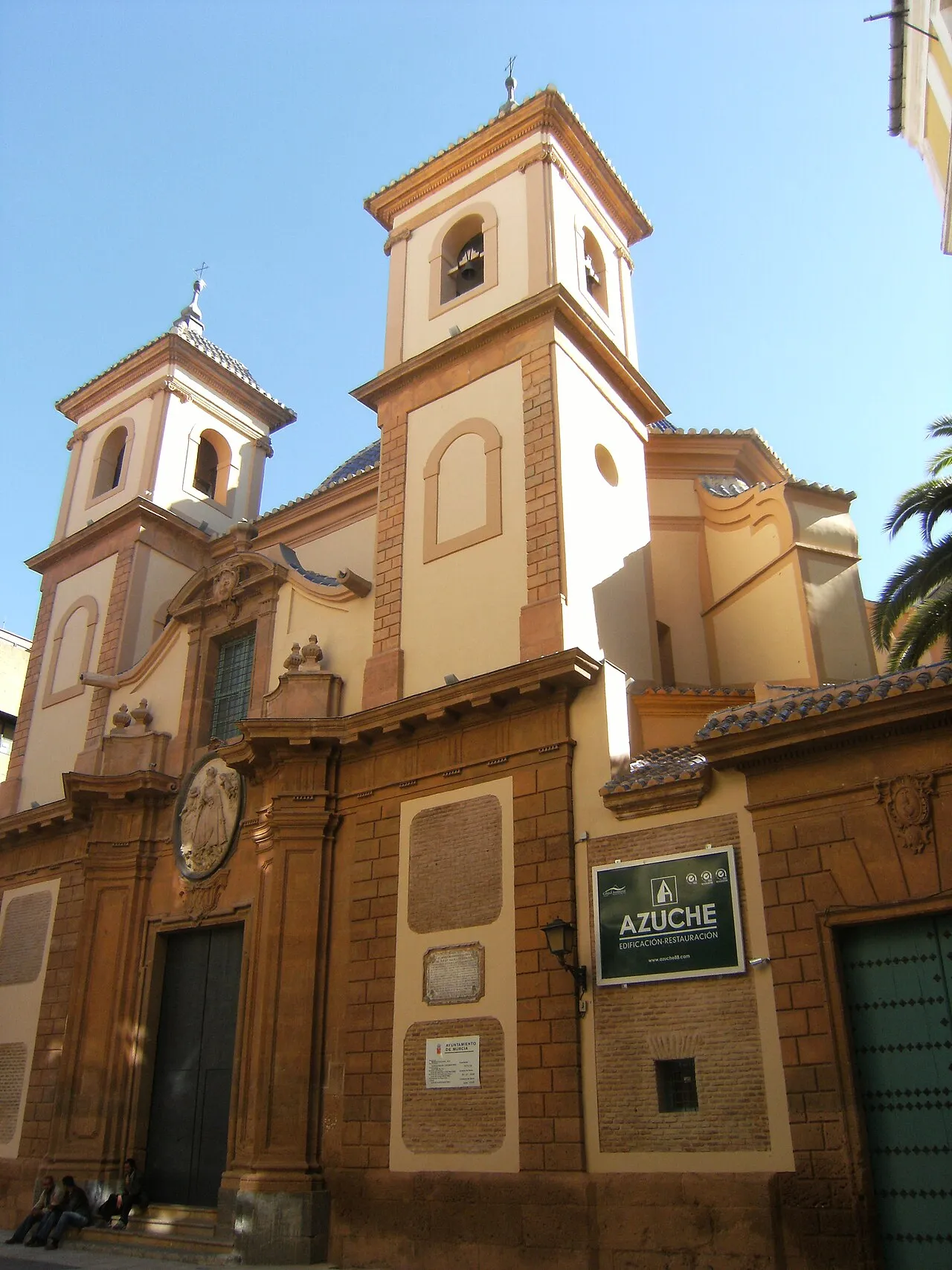
Over the main alcázar of the Muslim kings. Here Alfonso X ordered the first Christian church in the city to be built, dedicated to Santa María.
Download the app and discover Murcia offline, whenever you like. Take the walking tour Salzillo, Jesús and Santa Clara with a local guide in your ear.
Find out more about Viavoy →The other point is the Church of San Juan de Dios, next to the cathedral, and its story is even more symbolic: it stands on the site of the main alcázar, the centre of power when the city was Muslim.
When Alfonso X took Murcia in the thirteenth century, it was right here, inside the alcázar precinct, that he ordered the first Christian church in the city to be built, dedicated to Santa María. Planting the first church in the palace of the previous power was the clearest way of saying who was in charge now.
Today the church also works as a museum: you can see the archaeological remains of the alcázar and a stretch of the wall that defended it, right there, under your feet, living alongside a Baroque building on an oval plan raised between 1745 and 1781.
The third visible remnant is next to the church of Santa Eulalia, at the eastern end of the old town: a stretch of the medieval and Islamic wall that closed the city.
Even though the buildings disappeared, two Andalusi things still work. The first is the irrigation system: the network of acequias that shares out the water of the Segura across the huerta is of Arab origin and is still in use, with a customary court, the Consejo de Hombres Buenos, that settles disputes over water.
The second is the street plan. After the conquest, the medina was not demolished: it was divided into collaciones, parish districts each with its own church, and those parishes organised neighbourhood life for centuries. The Islamic plan survived intact underneath.
Even today the districts of the old town are identified by their parishes — Santa Eulalia, San Andrés, San Nicolás, San Miguel — and that map is the direct mark of the division of 1266. Walking along the Trapería is walking along a converted souk.
And silk, which was the economic base of Andalusi Murcia, went on being so for centuries under Christian rule: the huerta raised the worms and the city became one of the silk capitals of Spain. Hence the name of the street of the traperos, the cloth merchants.
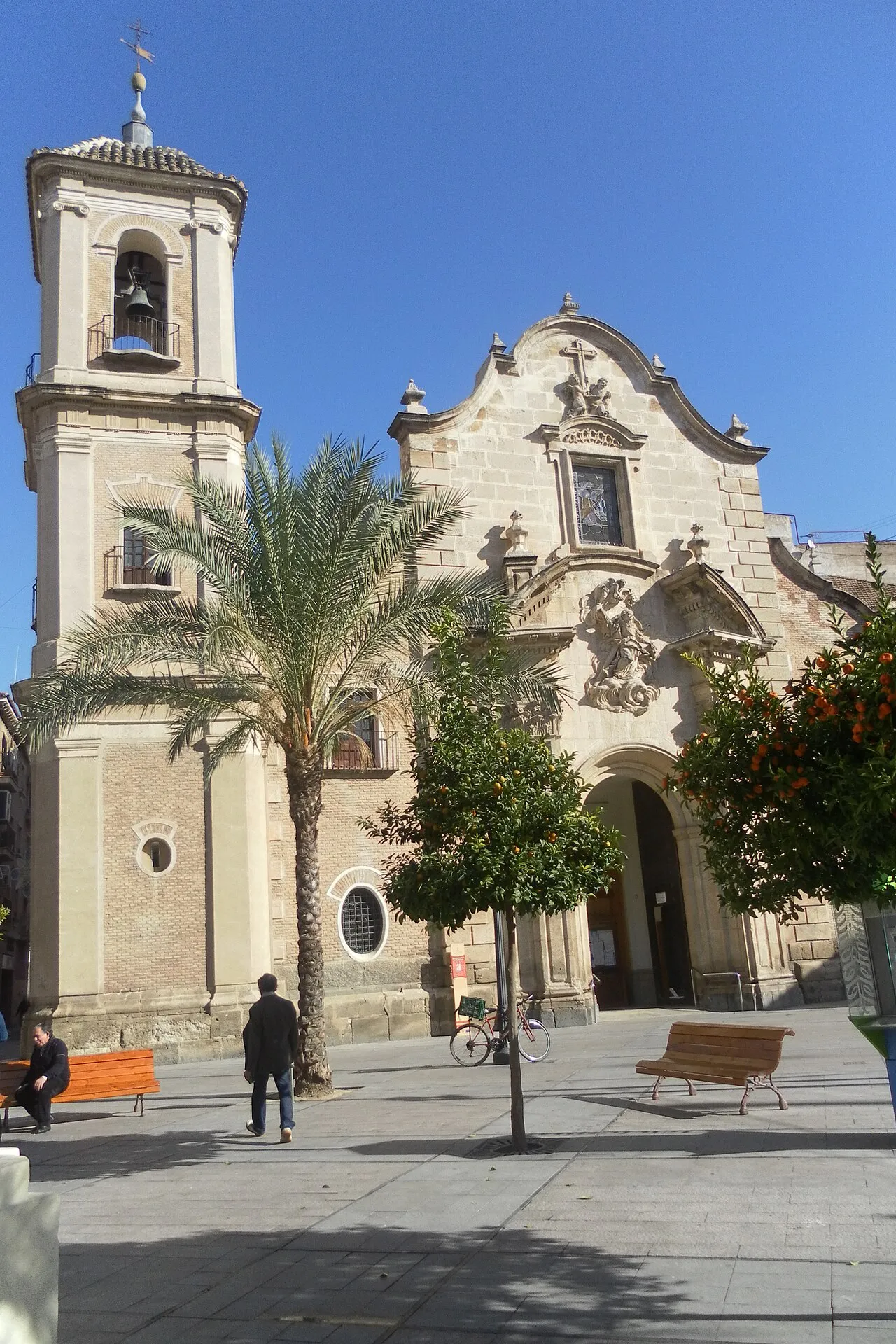
It gave its name to one of the collaciones into which the medina was divided after the conquest. Beside it a stretch of medieval and Islamic wall survives.
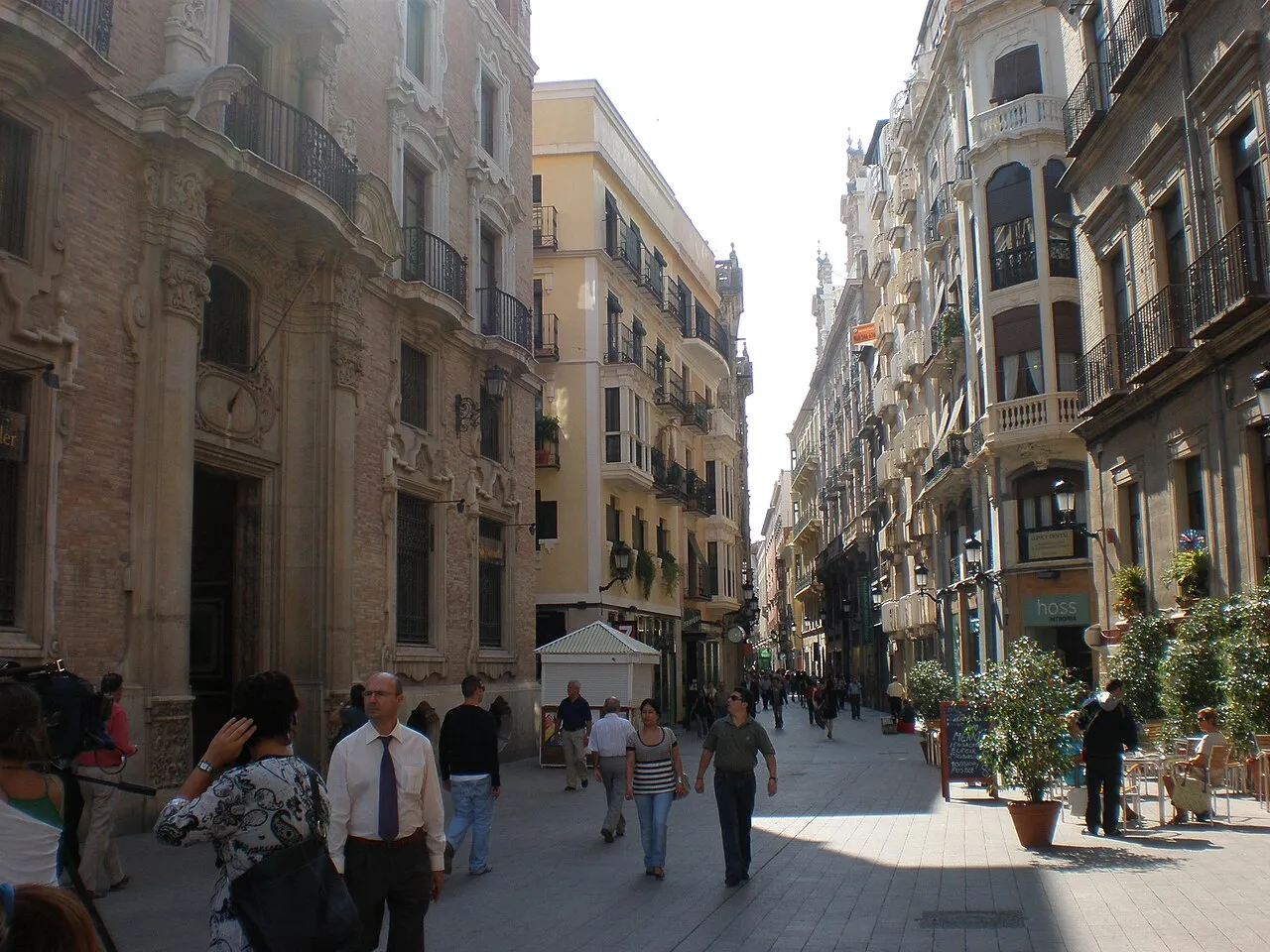
The souk of the cloth merchants, turned into the main street after 1266. Murcia lived on silk for centuries.
In the ninth century, by the Muslims, and for four centuries it was one of the richest cities in al-Andalus, capital of a taifa and centre of an extremely rich agricultural territory thanks to its irrigation system. The Christian conquest came in 1266, with the troops of Jaime I of Aragon.
In two main places: under the Monastery of Santa Clara la Real, where there is a thirteenth-century pleasure palace with courtyards, a pool and plasterwork; and under the Church of San Juan de Dios, on the site of the main alcázar, where remains of the palace and a stretch of its wall survive.
In excavations and restorations in the last decades of the twentieth century. Lifting floors and digging test pits brought out the courtyards, the pool and the Andalusi plasterwork that the Poor Clares had been guarding for six centuries without ever fully seeing it. The complex opened as a museum only this century.
The parish districts into which the medina was divided when the city passed into Christian hands in 1266. Each had its own church and organised neighbourhood life for centuries. It is an important detail: the Muslim city was not demolished, it was redistributed, and its plan survived intact under the new division.
Yes, and it is one of the most remarkable continuities in Spain. The network of acequias that shares out the water of the Segura across the huerta is of Arab origin and is still in use, with a customary court — the Consejo de Hombres Buenos — that settles disputes over water and is recognised as intangible heritage.
For two reasons: the huerta, watered by a system of acequias that multiplied the productivity of a plain that was already fertile in itself; and silk, which was the base of its economy. The huerta raised the worms and the city became one of the great silk centres, a business that went on being decisive after the conquest.
Not much, but yes. The best preserved stretch is next to the church of Santa Eulalia, at the eastern end of the old town, with remains of the Islamic fortification that closed the city. A stretch can also be seen under the Church of San Juan de Dios, forming part of the alcázar precinct.
Download Viavoy and walk Murcia offline, whenever you like.

Keep reading