1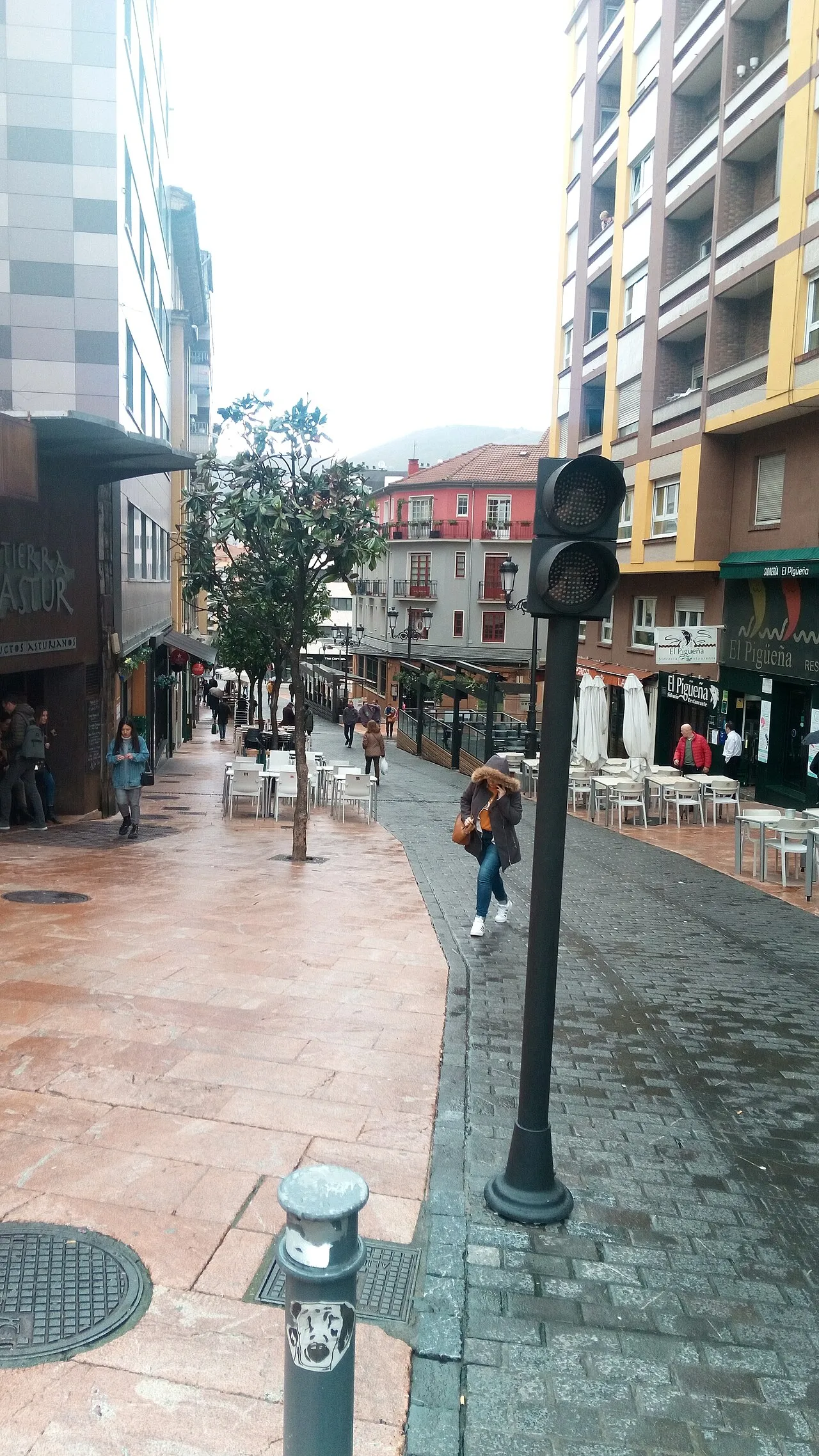
Calle Gascona
📍 Edge of the old town
The Bulevar de la Sidra, the cider boulevard: more than a dozen sidrerías, cider houses, one after another. On Thursdays outside the summer the old cider-house songs are sung.
A ritual with rules of its own, a whole street devoted to it, cheeses that ripen in caves and one day of the year when the entire city eats exactly the same thing.
🎧 On the walk El Fontán, Gascona and the street sculpturesIn Asturias cider is not served, it is escanciada, poured from a height; it is not ordered for one person, it is shared; and it is not sipped, it is downed in one. Understanding that ritual is half the trip, because it organises the whole social life of a city that also cooks very well.
The background sound of calle Gascona is unmistakable: the stream of cider falling from on high against the rim of the glass. It is not a show, it is technique: natural Asturian cider has no added gas and needs to take in air to express itself.
The practical consequence is that you have to drink it at once, before it goes flat. That is why only a little is poured each time — a culín — and it is downed in one, not sipped.
And a finger is always left in the glass, the culete, to rinse the rim you have drunk from before passing it to the next person. It is thrown on the floor or into the sidrería's channel, and that is where the smell of apple that greets you on the way in comes from.
Cider is not ordered for one person: it is shared. One bottle, one glass going round from hand to hand, and conversation without looking at the clock. Drinking from your own glass here is considered, quite simply, odd.
The Bulevar de la Sidra, the cider boulevard: more than a dozen sidrerías, cider houses, one after another. On Thursdays outside the summer the old cider-house songs are sung.
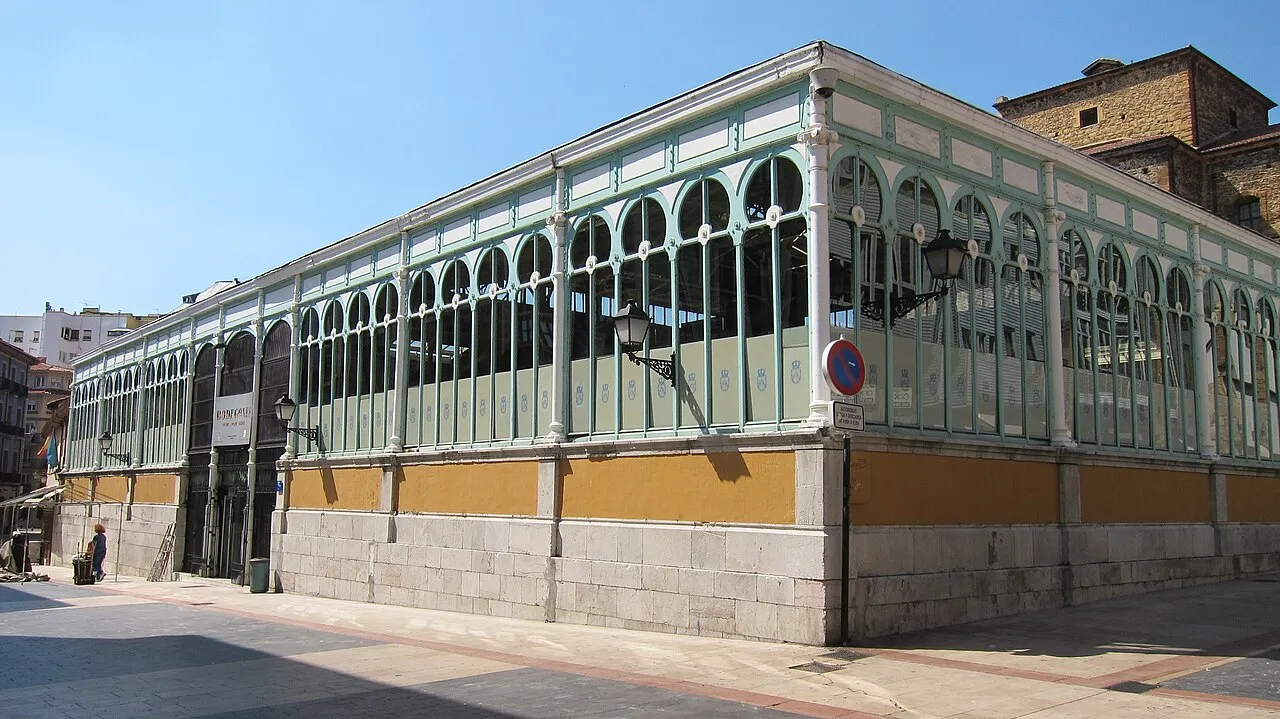
The stomach of Oviedo since medieval times, in an iron and glass hall from 1882-1885. This is where the cheeses and the fabes are.
Download the app and discover Oviedo offline, whenever you like. Take the walking tour El Fontán, Gascona and the street sculptures with a local guide in your ear.
Find out more about Viavoy →Fabada is the flagship dish, and its secret lies in the faba: not just any bean, but a variety with a long, flat, buttery grain, very fine skinned and protected by its own geographical indication. That is why it melts in the mouth instead of staying whole and hard.
The cheeses are the other great chapter, and Asturias has one of the greatest varieties in the world for its size. Cabrales is the most famous: it is sharp from all the blue mould in it, and it ripens for months in natural mountain caves. The designation of origin requires it: if it has not been through the cave, it cannot be called Cabrales.
Then there are Gamonéu, Afuega'l Pitu and Casín, among many others. It is worth asking at the Mercado del Fontán, where the sellers explain each one with pleasure.
Cachopo is the modern dish that has taken over the world: two veal escalopes with ham and cheese inside, breaded and fried, of a size that defies any reasonable appetite. It is not old, but it is today the most exported culinary mark of Asturias.
And for fish, everything from the Cantabrian: pixín, monkfish, virrey and oricios, sea urchins, in season. The coast is half an hour away and it shows on the menus.
Every 19 October Oviedo celebrates El Desarme, which recalls an episode of 1836 in which some Carlist troops were disarmed while the city, so the story goes, kept them entertained with food.
Today it is commemorated by eating, and with an exact, non-negotiable menu: chickpeas with salt cod and spinach, callos, tripe stew, and rice pudding. No variations. That day the whole city eats the same thing and the restaurants fill to bursting.
It is one of the most rigid and best loved gastronomic traditions in Spain. If you are travelling on those dates you have to book in advance, and it is worth doing.
For the rest of the year, calle Gascona is the cider area, and the streets around the plaza del Fontán and the Constitución are where you eat sitting down.
One useful note: in the sidrerías you eat in raciones and everything is shared. Ordering individual plates breaks the logic of the place, just as asking for your own glass does.
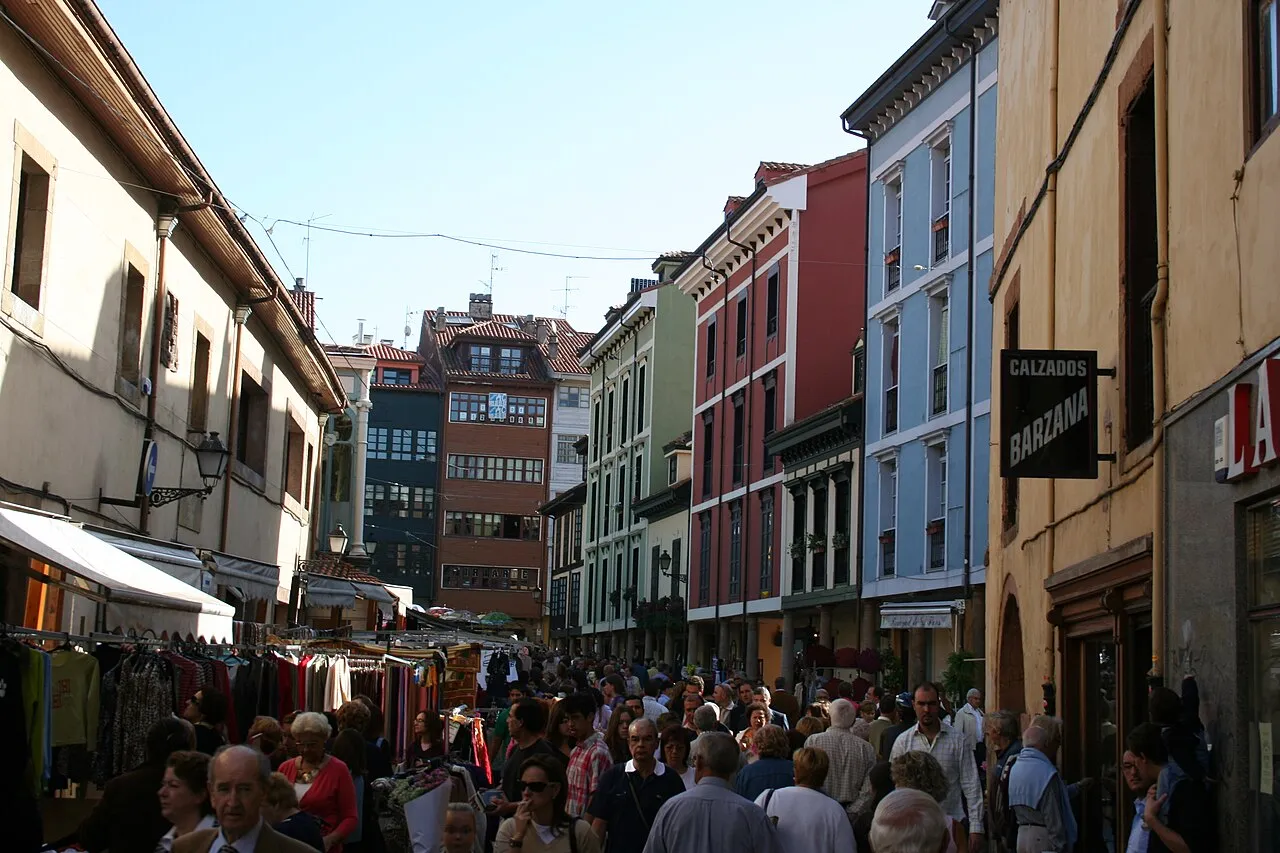
The social heart of the old town, arcaded and right beside the market. Vermut territory and a place to eat sitting down, five minutes from Gascona.
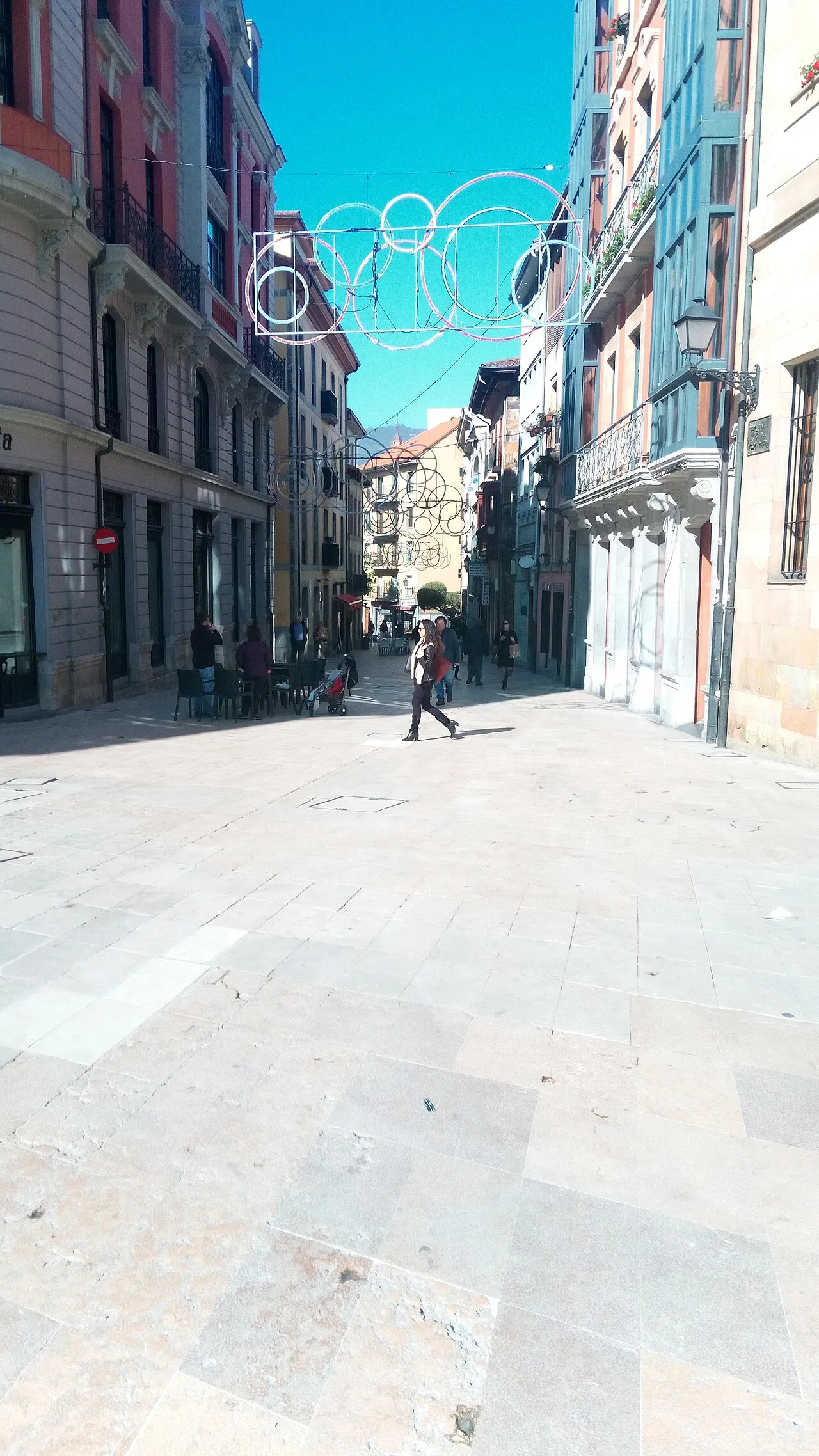
The civic drawing room of Oviedo, and where El Desarme is celebrated every 19 October: chickpeas with cod, callos and rice pudding, with no variations.
Because natural Asturian cider has no added gas. As it falls through the air and strikes the rim of the glass it breaks up, takes in air and its aroma wakes up: here they call it espalmar. That is why you have to drink it at once, before it goes flat, and why only a small amount is poured each time.
The finger of cider always left in the glass. It is there to rinse the rim you have drunk from before passing it to the next person, because the glass is shared and goes round. It is thrown on the floor or into the sidrería's channel, and that is where the smell of apple that greets you on the way in comes from.
You can, but it is odd and it marks you out as an outsider. Cider is ordered by the bottle and shared: a single glass going round from hand to hand, with the pourer serving a culín each time. The logic of the place is conversation and a shared rhythm, not individual drinking.
That they are not ordinary beans: the Asturian faba is a variety with a long, flat, buttery grain, very fine skinned and protected by its own geographical indication. That is why in a good fabada the faba melts in the mouth instead of staying whole and hard, which is the difference between a good dish and a mediocre one.
Because it ripens for months in natural mountain caves, where the constant humidity and temperature make those blue moulds grow. The designation of origin requires it to be cured there: if it has not been through the cave, it cannot be called Cabrales. Asturias also has many others: Gamonéu, Afuega'l Pitu, Casín.
Two veal escalopes with ham and cheese inside, breaded and fried, of a size that defies any reasonable appetite. It is not an old dish, but it has become the most exported culinary mark of Asturias and it is on practically every menu in the region.
A gastronomic festival that Oviedo celebrates every 19 October, recalling an episode of 1836 in which some Carlist troops were disarmed while the city kept them entertained with food. It is commemorated by eating an exact, non-negotiable menu: chickpeas with salt cod and spinach, callos and rice pudding.
Download Viavoy and walk Oviedo offline, whenever you like.

Keep reading