Nine days, a paper figure that burns on the estuary at the end and a festival the residents themselves designed in 1978. What a comparsa is, what a txosna is and how to get around.
The Aste Nagusia is not an old patron saint's festival: in its present form it was born in 1978, and that date explains almost everything. Bilbao was coming out of forty years of official programmes and decided to reinvent its festival from below, with an open competition of ideas won by a proposal from the neighbourhoods. Out of that came the comparsas, the txosnas and Marijaia, and that is why this is a festival run in large part by the people of Bilbao themselves.
Marijaia, the paper figure with raised arms who presides over the festival, is burned on the estuary on the last night in front of thousands of people. The artist Mari Puri Herrero designed her in 1978, and she has been remade every year since.
A festival designed by open competition
1978, and a neighbourhood proposal that won.
The starting point is unusual. In the late seventies the city council called an open competition of ideas to renew a festival that had lost its pulse, and the winning proposal came from a group of residents and put forward something quite radical: that the festival should be organised by grassroots associations instead of by the administration.
That is how the comparsas were born: neighbourhood groups that share out the programme, put up their own stands and form a federation that negotiates with the city council. Today there are around thirty, and each has its own character, its own regular crowd and its own txosna, which is what those stands are called.
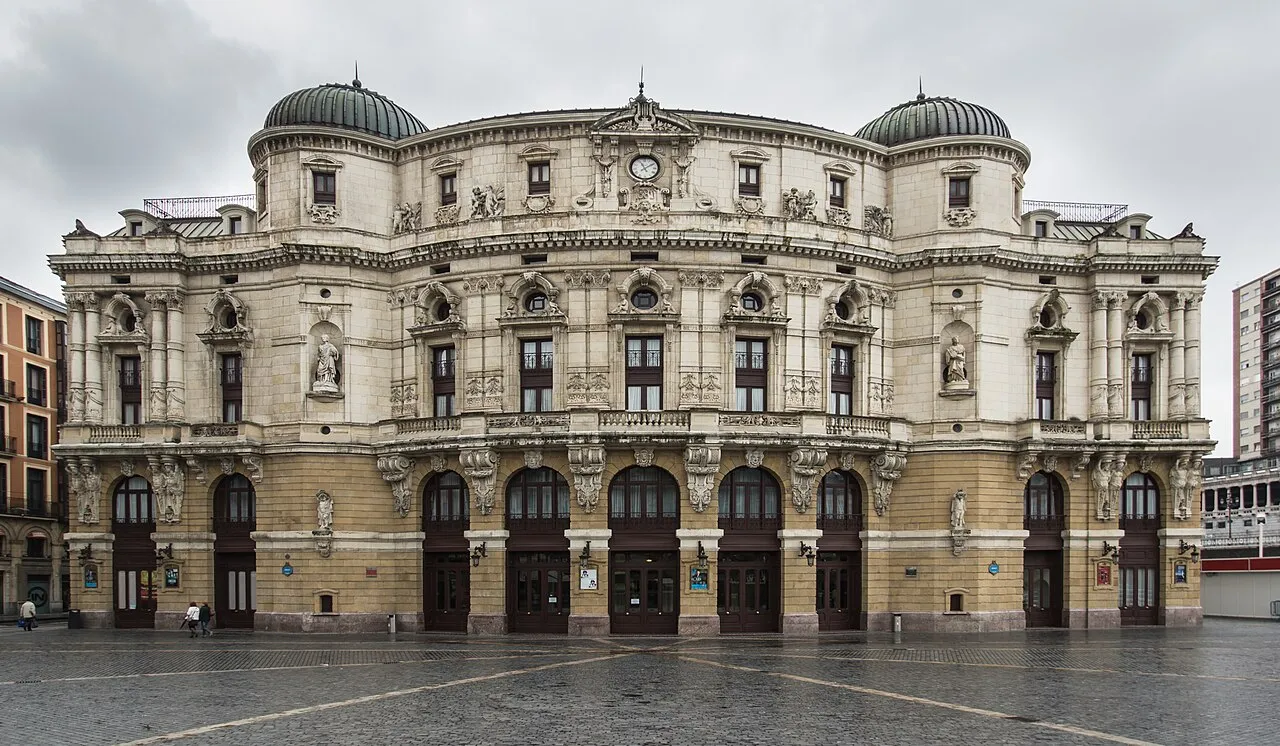
The main setting is the Arenal, next to the Teatro Arriaga, where the txosnas and the stages are concentrated, but the festival spills over into the Casco Viejo and much of the Ensanche. It runs for nine days, starting on the Saturday after 15 August.
The practical consequence of this model is that the Aste Nagusia has far more free programming and far less separation between visitor and local than other big Spanish festivals. You pay for your drink and little else.
The heart of the festival: this is where the comparsas' txosnas and the main stages are concentrated, and where almost everything starts. The Arriaga presides over the scene, and its square is where the pregón and the chupinazo — the opening speech and the rocket that launch the nine days — take place.
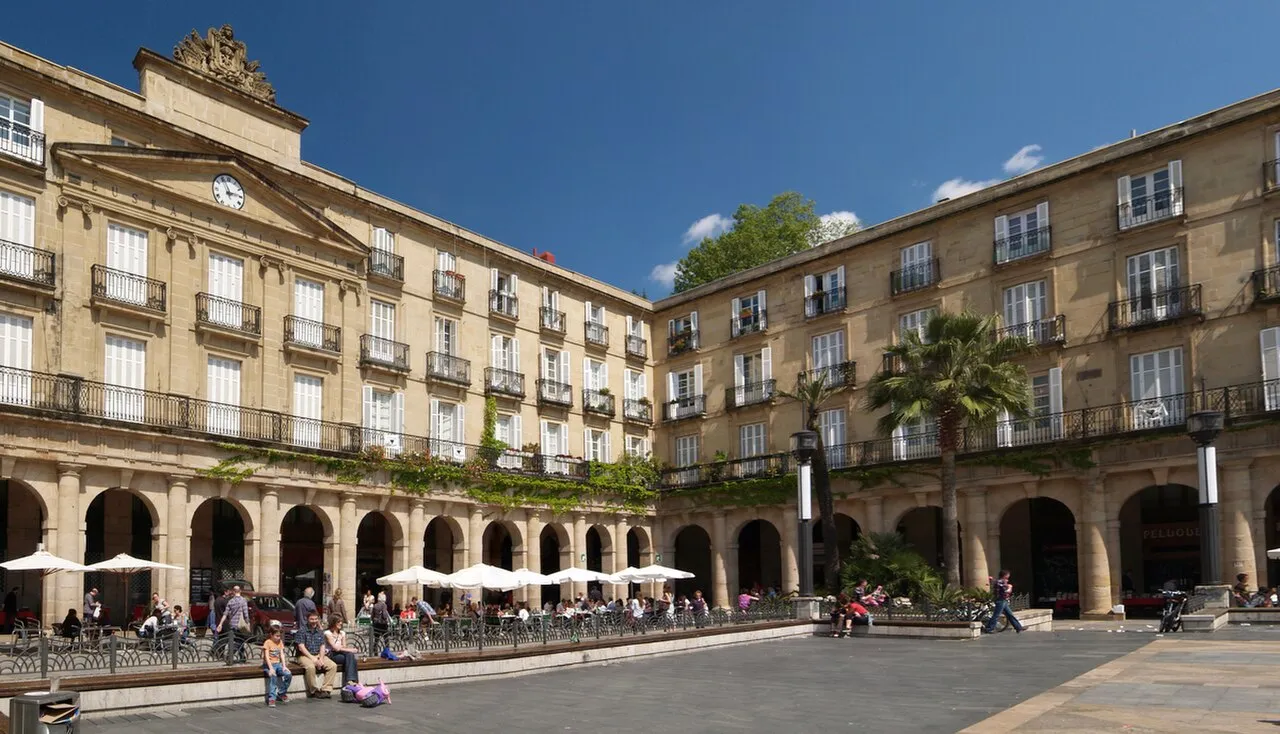
During the Aste Nagusia the neighbourhood works to another rhythm, with the bars of the Plaza Nueva and of calle Somera overflowing and activity that barely stops. It is also where moving around is hardest at the peak hours of the night.
Download the app and discover Bilbao offline, whenever you like. Take the walking tour The Old Town and the Seven Streets with a local guide in your ear.
Marijaia is the figure who presides over everything: a huge woman, made of paper and wood, with her arms raised and a broad smile. The Bilbao artist Mari Puri Herrero designed her in 1978 and her name means something like lady of the festival. She appears on the balcony of the Arriaga at the start and is burned on the estuary at the end.
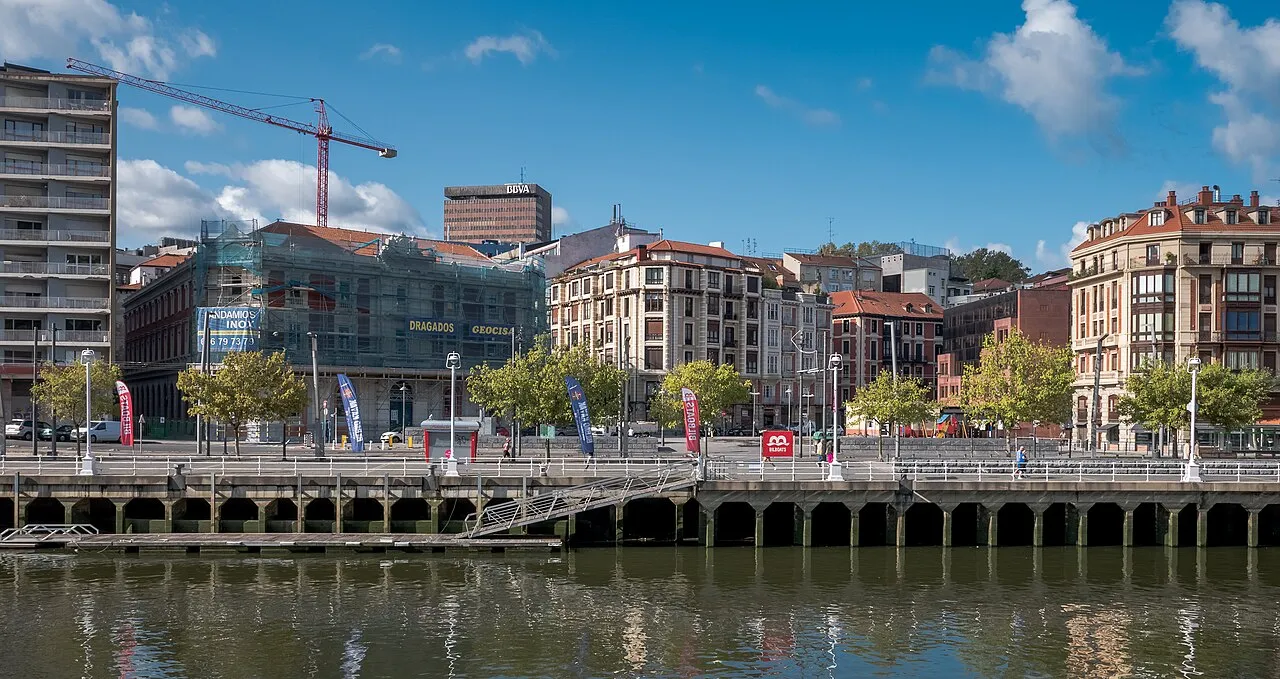
The daily programme combines very different things. There is an international fireworks competition over the estuary almost every night, with teams from several countries competing, and it is what draws the biggest crowds: the banks fill up an hour beforehand and the City Hall bridge is one of the best spots.
By day there is Basque rural sport — stone lifting, log chopping, stone dragging — displays by bertsolaris, who improvise sung verses on subjects handed to them, and programming for children. There are also bullfights at Vista Alegre, which in Bilbao still keep their audience.
And there is a great deal of free music on the comparsas' stages, with line-ups that tend towards rock, punk and music in Basque. Each txosna programmes its own thing, so the atmosphere changes quite a lot from one to the next.
How to get around that week
The first thing is to accept that the city is full. Accommodation prices rise sharply and it is worth booking well in advance; sleeping in the Casco Viejo or on the Arenal means noise until dawn, so anyone looking for rest will do better in the upper Ensanche or in Indautxu.
Public transport puts on extra services and the metro runs all night during the festival, which solves the journey back to your accommodation without depending on taxis. The Barik card works exactly as usual and is the most convenient way to get around.
For the fireworks, the best spots are the banks of the estuary by the City Hall and by the Campo Volantín, and you need to be there at least half an hour early. You can see them from Artxanda too, from above and with far fewer people, although the effect is less enveloping.
And a useful note for anyone travelling on those days without any intention of living the festival: museums and monuments open as normal and in the morning the city is quiet. The Aste Nagusia is above all a night-time affair, so the usual visits remain perfectly possible.
An alternative for watching the fireworks from above, with the whole estuary in view and far fewer people than on the banks. The effect is less enveloping but the panorama makes up for it, and the funicular runs extended hours during the festival.
One of the key pedestrian crossings during the festival, and a good point to cross between the two banks avoiding the most congested stretches of the Arenal. At night it is lit up and the view of the estuary from the middle of the bridge is one of the best.
It starts on the Saturday after 15 August and lasts nine days, so the exact dates change every year. It is the city's Semana Grande, its big week, and it coincides with the busiest moment of the summer, with the city practically full and accommodation at noticeably higher prices.
Who is Marijaia?
The figure who presides over the festival: a huge woman made of paper and wood, with her arms raised, designed by the Bilbao artist Mari Puri Herrero in 1978. Her name means something like lady of the festival. She appears on the balcony of the Teatro Arriaga on the first day and is burned on the estuary on the last night.
What are the comparsas and the txosnas?
The comparsas are neighbourhood associations that organise a good part of the festival programme, a model born from the open competition of 1978. Each one puts up its txosna, a stand with its own bar and its own stage on the Arenal. There are around thirty, and each has its own character, its own crowd and its own musical line-up.
How much does it cost to go to the Aste Nagusia?
Entry to the festival is free and a good part of the programme — concerts in the txosnas, rural sport, bertsolaris, fireworks, children's activities — costs nothing. You pay for drinks, for food and for the ticketed shows such as the bullfights. The real expense is usually the accommodation, which shoots up on those days.
Where are the fireworks best seen from?
On the banks of the estuary by the City Hall and along the Campo Volantín promenade, arriving at least half an hour early because they fill up. From the Artxanda viewpoint you see them from above and with far fewer people, although the enveloping effect is lost. The funicular runs extended hours on those days.
Can you visit Bilbao as normal during the festival?
Yes. The Aste Nagusia is above all a night-time affair and in the mornings the city is quiet, with museums and monuments open as usual. What you have to accept is how hard it is to move around the Arenal and the Casco Viejo from the afternoon onwards, and the noise if you are sleeping in those areas.
Practical information
WhenNine days, starting on the Saturday after 15 August.
WhereThe Arenal as the epicentre, and the whole thing spilling across the Casco Viejo and the Ensanche.
PriceA good part of the programme is free. You pay for drinks and for the ticketed shows.
FireworksInternational competition over the estuary almost every night. Arrive half an hour early.
Getting aroundNight metro and extra services all week. Barik card.
Where to stayBook a long way ahead. The upper Ensanche and Indautxu are quieter.
On the map
🎧 With Viavoy
Walk Bilbao and listen at your own pace
Download Viavoy and walk Bilbao offline, whenever you like.