Bilbao la Vieja and San Francisco: from the port to heaven
The mining and working-class neighbourhood of the left bank, today the arts district. A walk that starts on the quay where the iron came down and ends up above, at the basilica of Begoña.
Crossing the San Antón bridge takes two minutes and changes the world. On the bank opposite is the Bilbao of the postcards; on this one, the neighbourhood built for the people who worked in the mines and in the port, and which went through very hard decades when industry left. Today it is the most mixed part of the city, with the most independent art scene, and it still has its tensions and makes no attempt to hide them.
The public lift to Begoña, entered from calle Esperanza, climbs the slope to the basilica in less than a minute. It is ordinary city transport and almost no visitor knows it exists.
The quay where the iron came down
From river port to arts district.
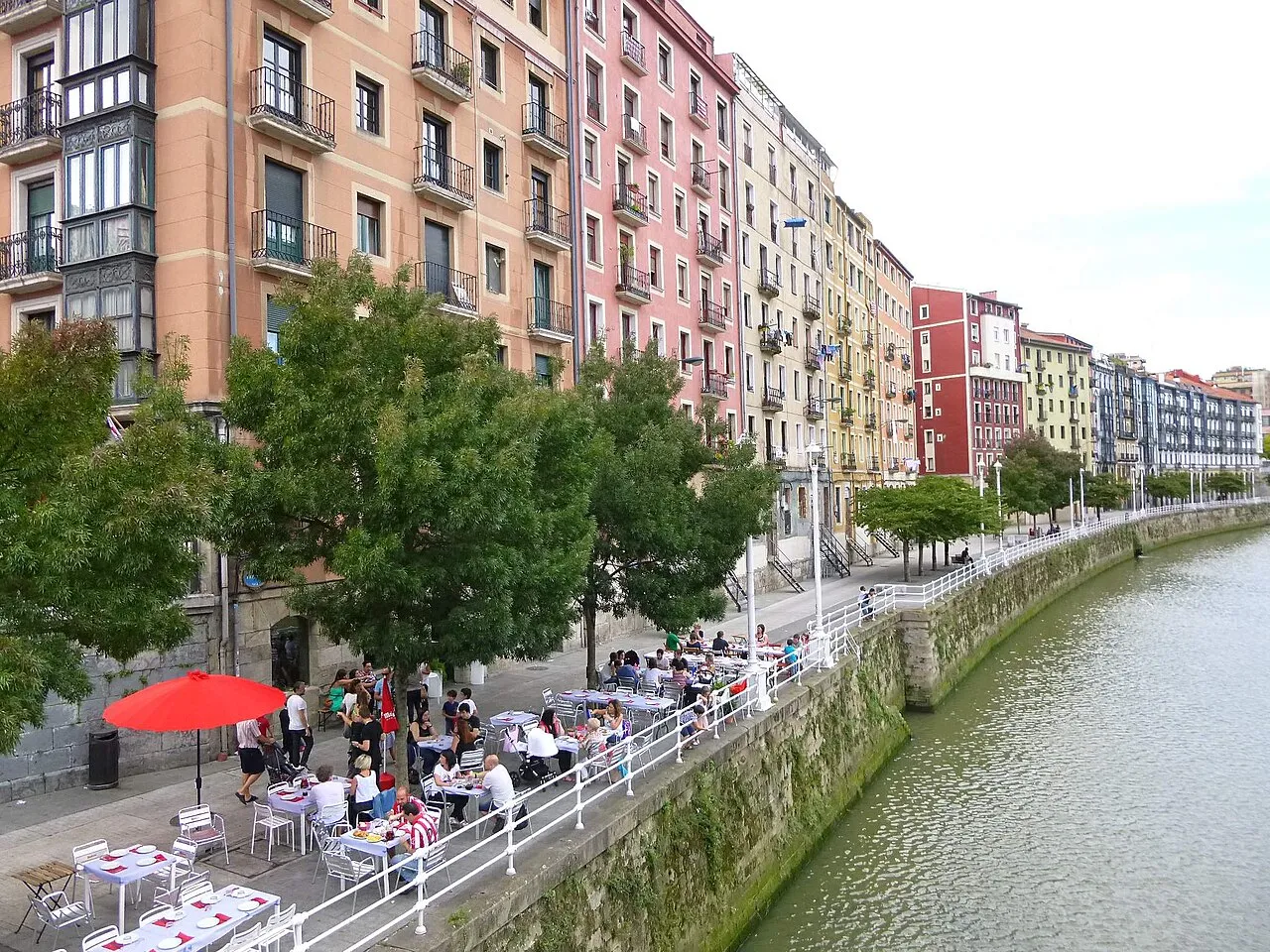
The Marzana quay starts at the San Antón bridge and ends at the Ribera bridge, and that stretch is exactly the historic border between old Bilbao and the one that came afterwards. A century ago this was continuous labour: barges loaded with ore, dockers, cranes and the noise of a river port working flat out.
The reason Bilbao could be a great port without being on the coast is that the Nervión estuary is river water mixed with sea water and rises and falls with the tide twice a day. Ships came up on the incoming tide and unloaded in the middle of the city. The ore from the mines of Bizkaia left from here for England.
When the activity moved downstream, these ground floors were left empty and cheap, and that attracted the usual thing: artists' studios, small galleries, publishing houses, music venues. The process was spontaneous, not planned from above, and that is why it has a very different texture from Abandoibarra.
Today there are terraces along the parapet with the Casco Viejo right opposite, and it is probably the best place in the city for doing nothing and watching the water go by.
The heart of what is called the arts district, with galleries and small venues occupying the old port ground floors. With industry working flat out the Nervión became one of the most polluted rivers in Europe; the clean-up began in the eighties and today there is life in the water again.
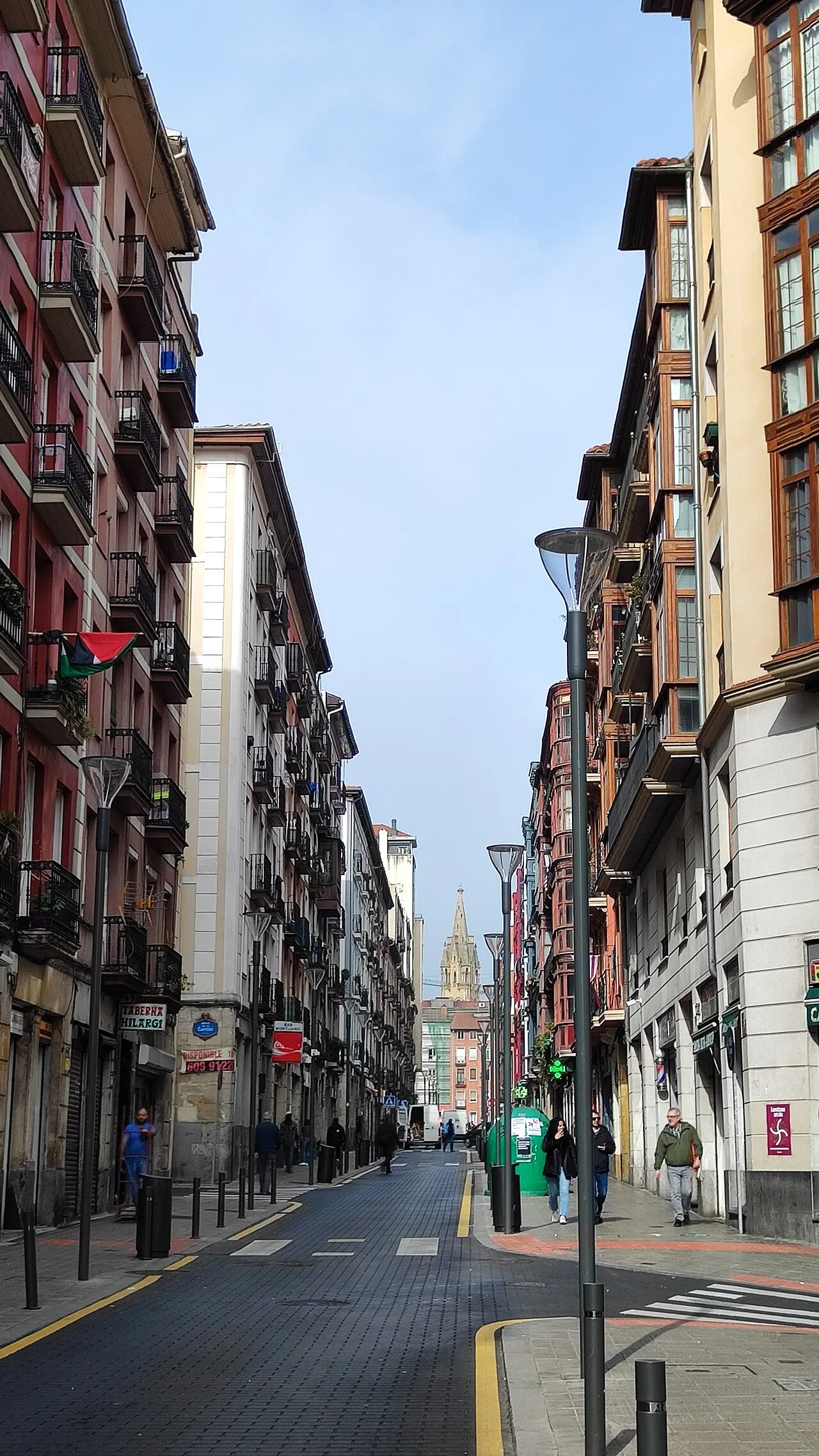
The most mixed street in Bilbao, with shops from half a dozen countries, and the one that best tells you what this neighbourhood has been over the last fifty years. It has been through very hard times and still has its contrasts, but it is also the liveliest street in the city.
Large-format murals spread over the blind walls of the neighbourhood, many of them born from residents' initiatives rather than from institutional festivals. You can walk round them in half an hour and they are part of how this area has been rebuilding its own image.
Download the app and discover Bilbao offline, whenever you like. Take the walking tour Old Bilbao, San Francisco and the Ría with a local guide in your ear.
The name Bilbao la Vieja is misleading, because this is not the old Bilbao: the medieval town is opposite. What was here were iron mines worked on this slope since very early times, and that is where the place name comes from, tied to the mine workings that filled this side of the valley.
When heavy industry took off in the nineteenth century, this neighbourhood filled up with workers' housing built fast and cheap on the slope, to house the people arriving from all over Spain to work. The density, the lack of services and the difficult topography marked the place for generations.
The industrial restructuring of the eighties hit harder here than anywhere else in the city, and to the loss of jobs were added problems of urban decay and of drugs that the neighbourhood dragged behind it for years. Telling that is part of understanding it, and the residents tell it without dressing it up.
The recovery has been slow, driven by residents and a good deal less photogenic than the one on the other bank. Today the lifelong population, migrant communities from half a dozen origins and the art circuit live side by side, with the normal frictions of a neighbourhood whose value is rising.
The climb to Begoña
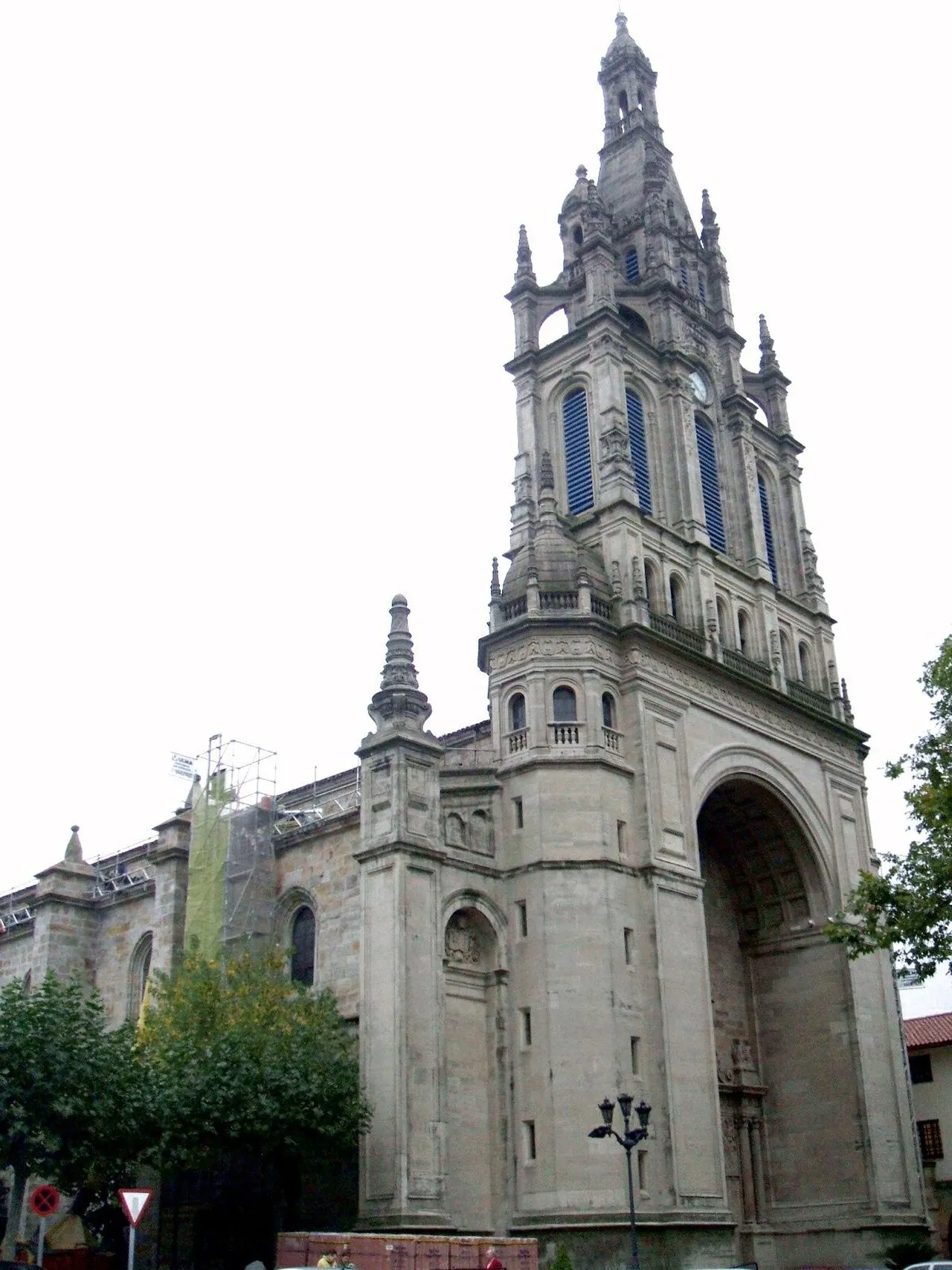
The walk ends up above, and the contrast with the starting point is the best thing about it. The basilica of Begoña crowns the height above the Casco Viejo, on the spot where tradition places the apparition of the Virgin more than five centuries ago, and it is the most loved church in the town.
The people of Bilbao call it the house of the Amatxu, the little mother, and that is not a pious formula but the normal way of referring to their patron. The Gothic body was raised between 1511 and 1621 and the neo-Gothic tower was finished in 1928: a good four centuries between the base and the top.
There are two ways up. The historic one is the Calzadas de Mallona, a stairway of more than three hundred steps that starts beside the plaza de Unamuno and that whole generations have climbed. The comfortable one is the public lift on calle Esperanza, which settles the slope in less than a minute.
What works is to go up in the lift and come down by the Calzadas, which are a pleasure downhill and come out straight into the Casco Viejo. From the quay to the basilica, the full walk takes a good hour and there is no other in Bilbao that crosses so many layers of the city.
It received the title of basilica from the Pope in 1908, in recognition of centuries of pilgrimage. This was where the so-called Sucesos de Begoña took place in 1942, a grenade attack as people were leaving a Carlist event that caused a considerable internal crisis within the Franco regime itself.
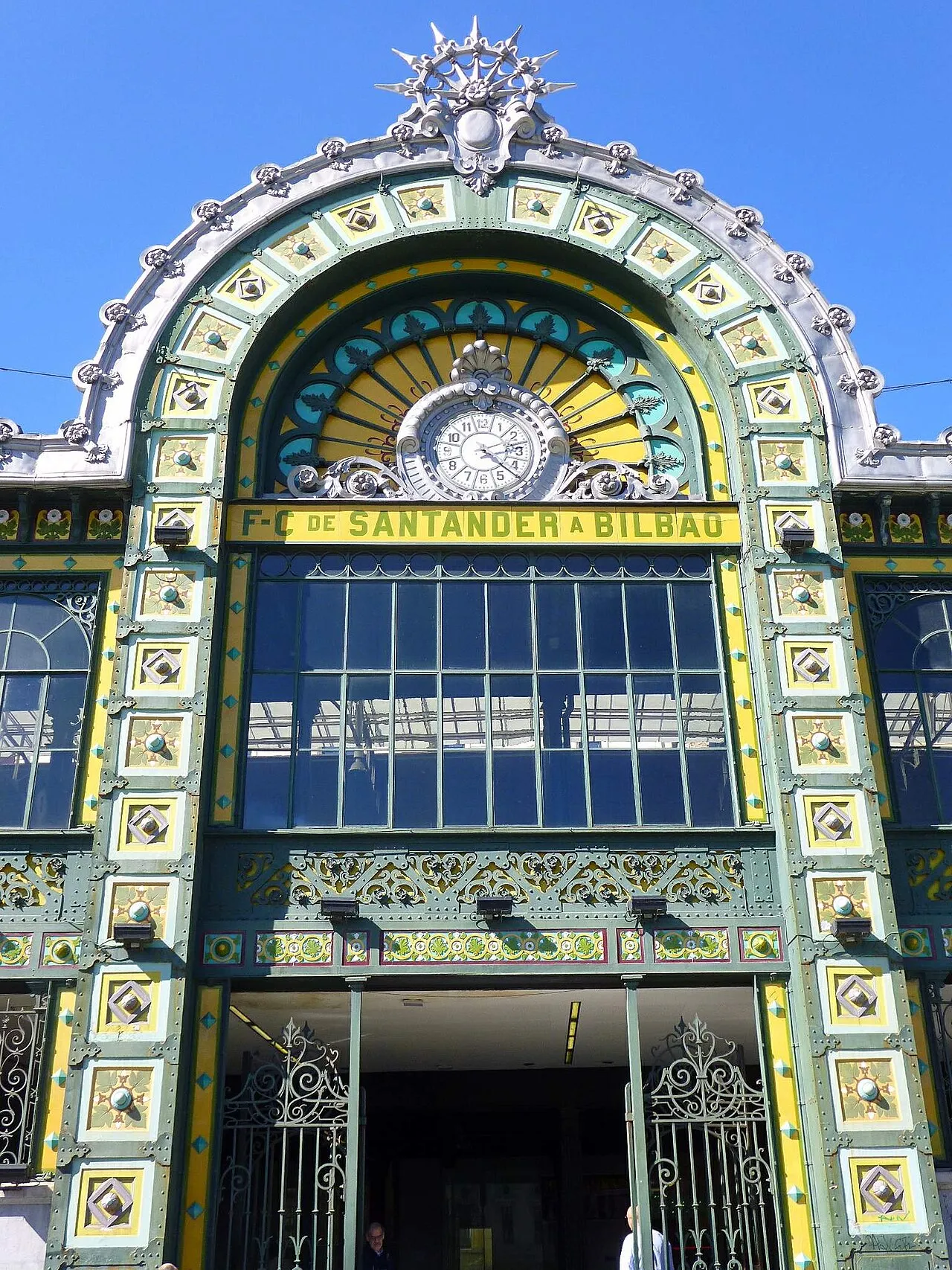
An Art Nouveau gem from 1902 with a façade of iron and polychrome glass, the work of Severino Achúcarro, one of the engineers of the Ensanche. It is a working railway station and a great many people walk past it without lifting their eyes to see it.
Why is it called Bilbao la Vieja if the old town is opposite?
The name does not refer to the age of the neighbourhood as a settlement but to the mine workings that were exploited on this slope from very early times. The medieval town, with the Siete Calles, is on the opposite bank. It is a very common confusion and the place name misleads almost everybody.
Is the neighbourhood safe?
It is a living neighbourhood, with a very diverse population and contrasts it does not hide. For years it dragged behind it problems of urban decay after the industrial restructuring, and that past is part of its recent history. Today the usual route — the Marzana quay, San Francisco, the climb to Begoña — is busy and unremarkable, with the precautions of any urban area.
How do you get up to the basilica of Begoña?
There are two ways. The Calzadas de Mallona, a stairway of more than three hundred steps that starts beside the plaza de Unamuno, which is the historic route. And the public lift entered from calle Esperanza, which climbs the slope in less than a minute and is ordinary city transport. The best thing is to go up in the lift and walk down.
What is the arts district?
The name given to the concentration of galleries, artists' studios, publishing houses and music venues that occupied the old port ground floors of the Marzana quay when they were left empty and cheap. It was a spontaneous process, not a planned one, and that is why it has a different texture from the regeneration of Abandoibarra.
How long does the full walk take?
A good hour from the Marzana quay to the basilica of Begoña, with stops to look at the murals and at calle San Francisco. If you add time on the terraces by the quay or a round of pintxos, it is a half-afternoon plan. It is the route in Bilbao that crosses the greatest number of different layers of the city.
Is it worth it if I only have two days?
Yes, and it works very well as an alternative plan if the day is foggy and there is no point going up to Artxanda. It is the part of Bilbao that looks least like the postcard image and the one that best explains where the money that built everything else came from. It is also two minutes from the Casco Viejo.
Practical information
WhereLeft bank of the estuary, facing the Casco Viejo. You cross by the San Antón bridge.
Getting thereMetro Casco Viejo and cross the bridge, 2 minutes.
DurationA good hour from the quay to the basilica, with stops.
Getting up to BegoñaPublic lift from calle Esperanza, or the Calzadas de Mallona, more than 300 steps.
EatingTerraces along the parapet at Marzana. A less touristy pintxo circuit.
Watch outIt is a living neighbourhood with contrasts, not a museum piece.
On the map
🎧 With Viavoy
Walk Bilbao and listen at your own pace
Download Viavoy and walk Bilbao offline, whenever you like.