Bilbao in 2 days: the estuary, the titanium and the Siete Calles
Guggenheim and Abandoibarra on the first day, Casco Viejo and Artxanda on the second. With the 1915 funicular, the public lift nobody knows about and where the real pintxos are speared.
Bilbao organises itself, because everything hangs from the estuary. One bank has the nineteenth-century Ensanche and the city reinvented in the nineties; the other, the medieval town of 1300 and the working-class neighbourhoods. The bridges stitch them together and the walk along the water is flat from end to end, so two days are enough without rushing. The only thing to decide is which day you go up the hill, because in fog you see nothing.
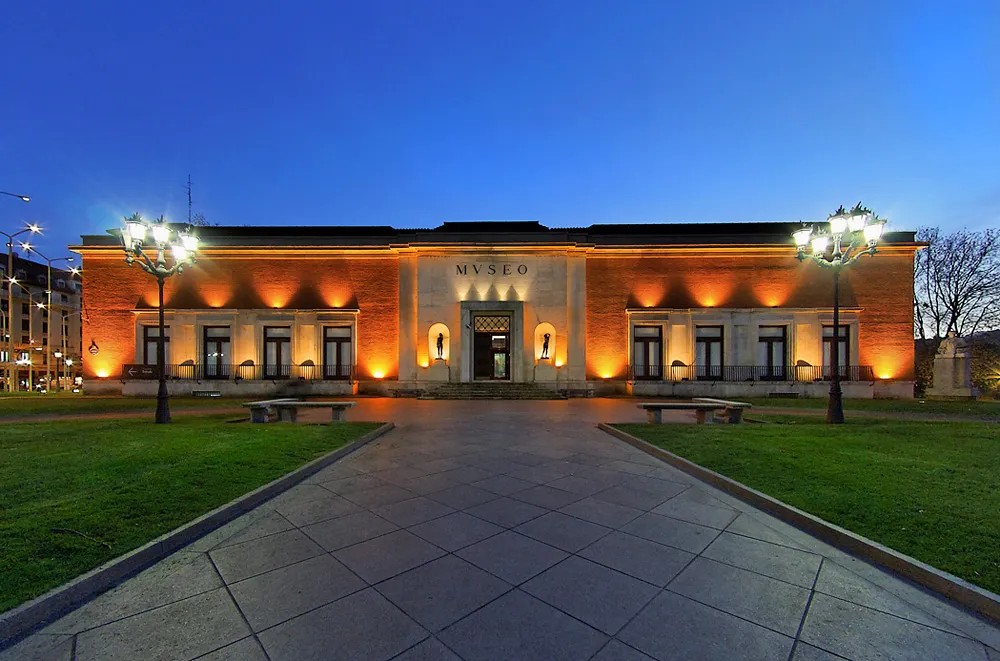
The Museum of Fine Arts is five minutes from the Guggenheim, holds eight centuries of collection and keeps slots of free entry. It is the museum the people of Bilbao genuinely love, and almost every visitor walks straight past it.
Day 1, morning: the Guggenheim and what stands outside it
Book a time slot and arrive early.
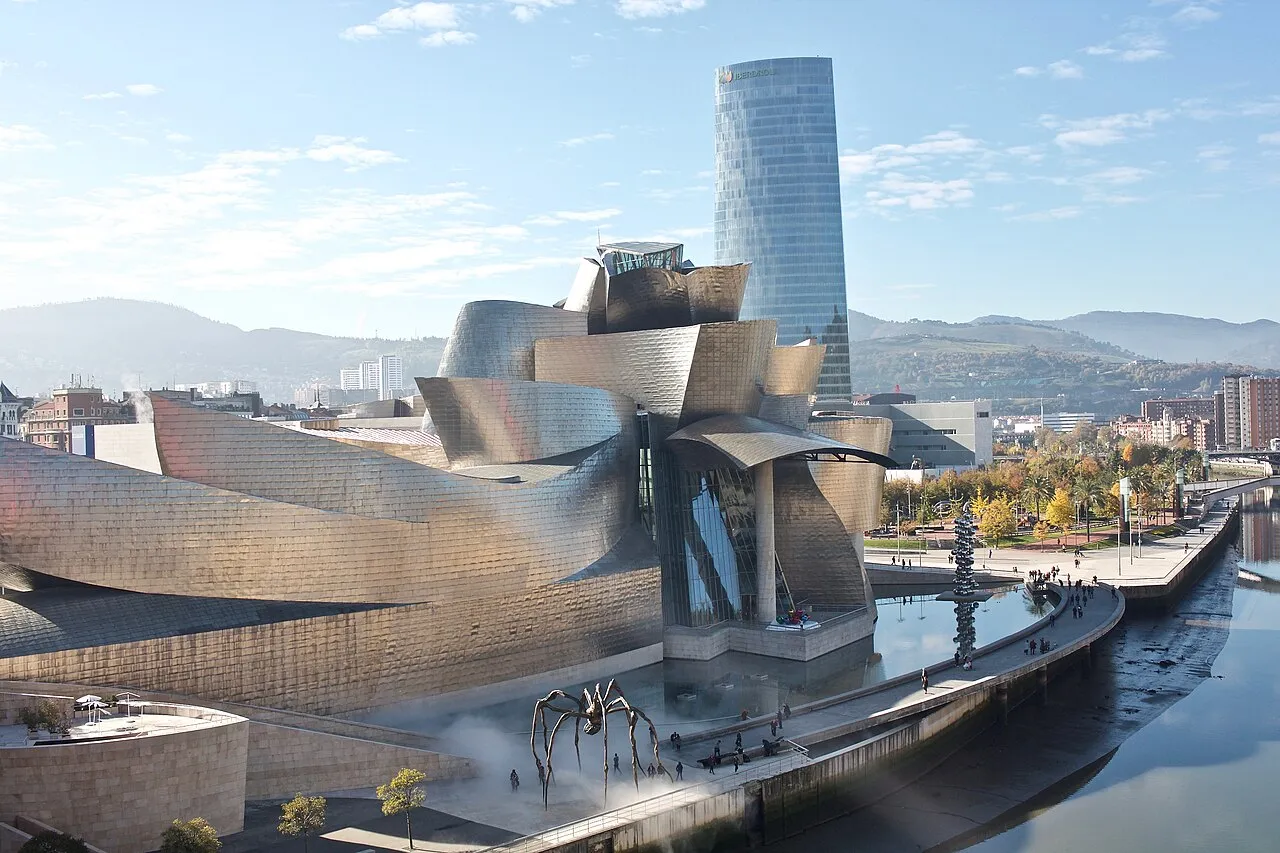
Start with the museum, and before going in spend twenty minutes walking around it. The thirty-three thousand titanium sheets that clad it are half a millimetre thick and are mounted like scales, never entirely flat: that is why the surface vibrates instead of reflecting and the building changes colour with every cloud.
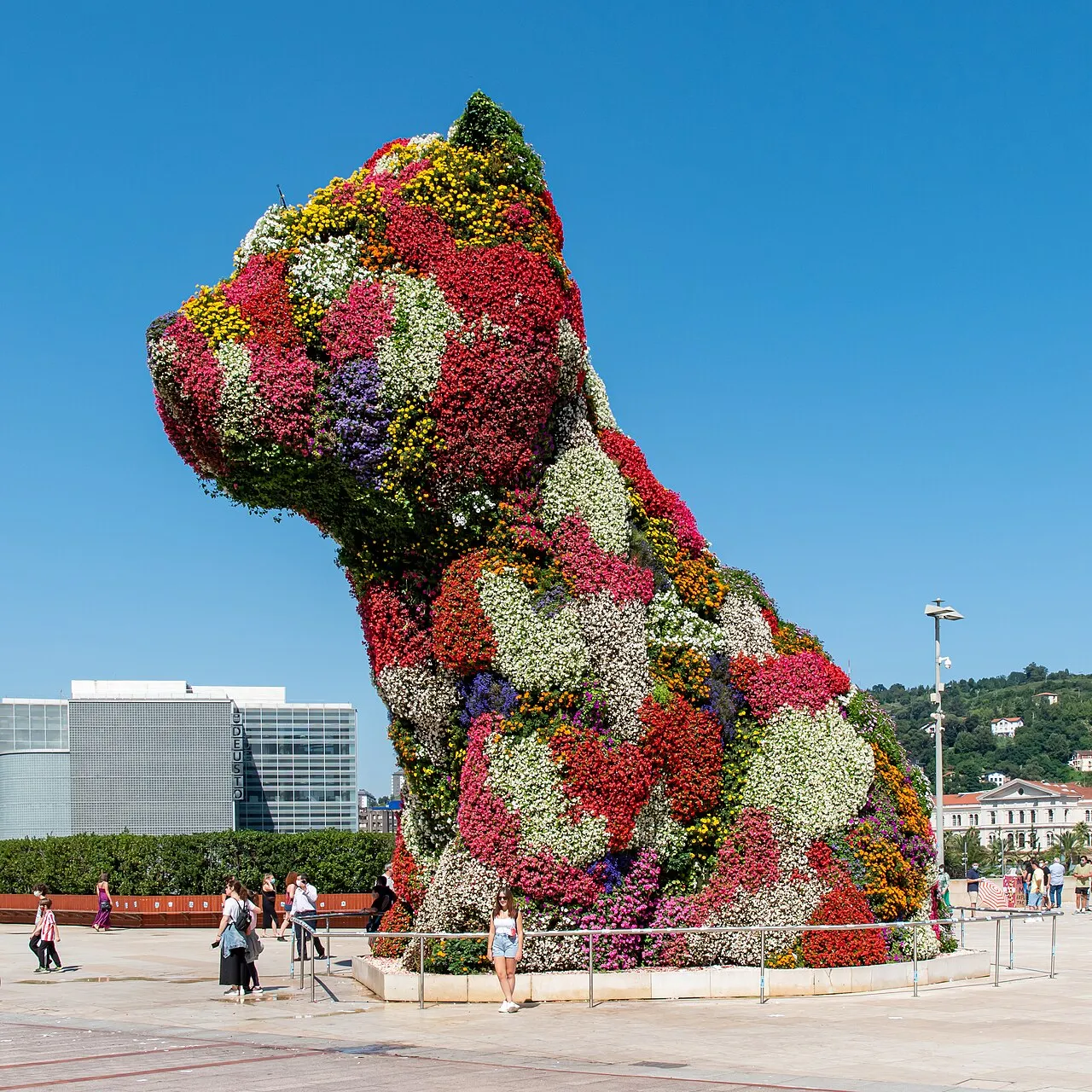
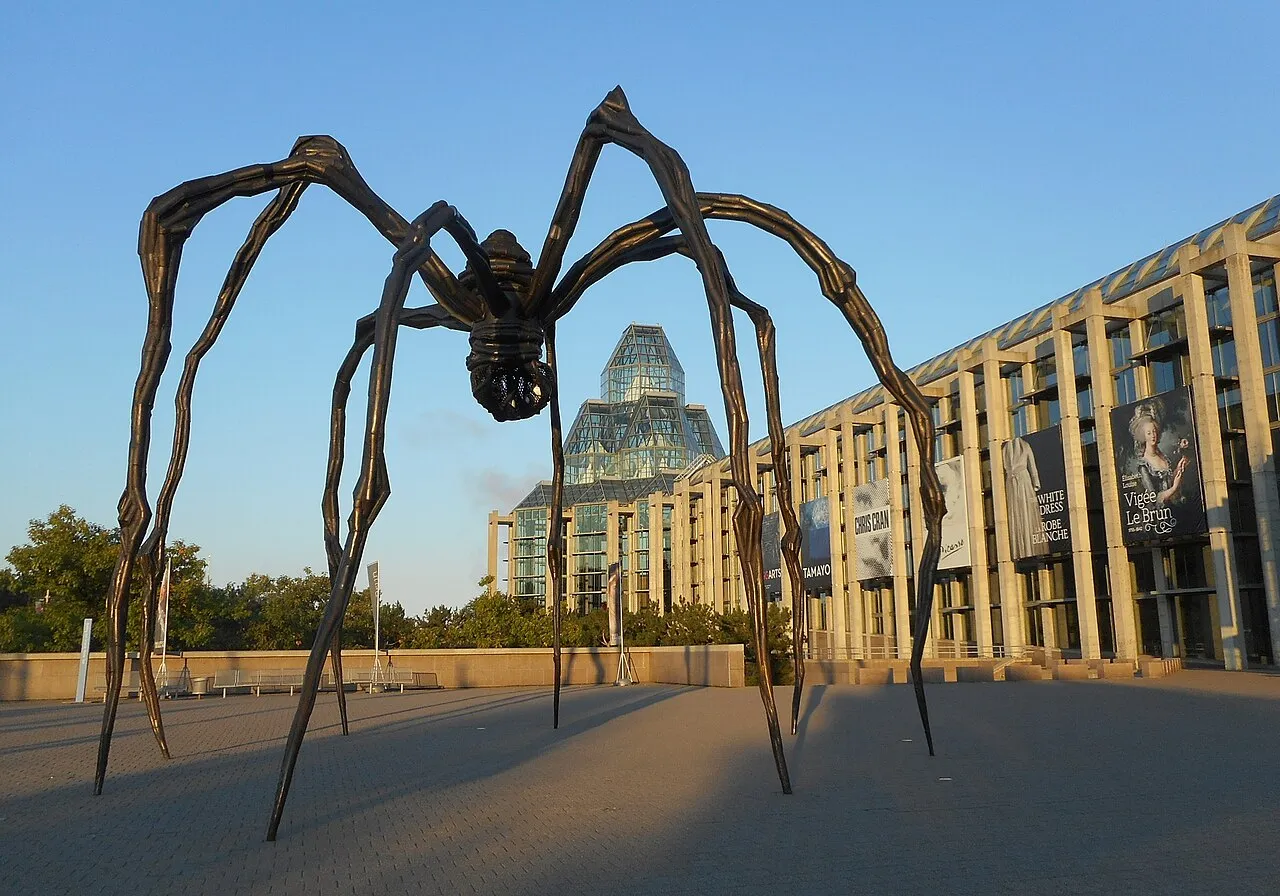
There is as much outside as inside, and it is free. Puppy watches over the steps from the city side, Maman plants itself on the terrace facing the water, and under the La Salve bridge stands a red arch by Daniel Buren. Every so often, in addition, an installation by Fujiko Nakaya wraps the base of the building in thick fog for a few minutes.
Inside, go straight to the long gallery in the east wing, where Richard Serra's “The Matter of Time” stands: spirals of rusted steel taller than a person that you walk through from the inside. The physical disorientation as you walk between them is exactly the work, and it would not fit in almost any other museum in the world.
Allow two and a half hours if there are two temporary exhibitions, which is what really justifies the ticket: the museum's own collection is modest and rotates. Check the programme before you buy.
Opened in October 1997 and the work of Frank Gehry, who could not have built it without aeronautical design software able to translate his hand-twisted models into buildable parts. Titanium was chosen because the price of the material had fallen. Book a time slot.
Thirteen metres of puppy made of tens of thousands of living flowers with internal irrigation, replanted twice a year. It is older than the museum: it arrived from Sydney as a temporary loan and the city never gave it back. Beside it, a plaque remembers the ertzaina, the Basque police officer, murdered days before the opening.
Nine metres of spider with twenty marble eggs hanging in the sac between its legs. Bourgeois made it as a homage to her mother, who restored tapestries: weaving and patiently repairing was the point. She sculpted it when she was around ninety. Walk around it: from the front it looks symmetrical and it is not.
Follow the riverside walk westwards. All of Abandoibarra was port and shipyard thirty years ago, and the route ends at the Palacio Euskalduna, a mass of Corten steel conceived as the last ship of the yard that stood on this plot. Its closure in the eighties brought strikes and pitched battles; today a symphony orchestra plays there.
Halfway along, turn off into the Doña Casilda park and go into the Museum of Fine Arts. Eight centuries of collection, with El Greco, Goya and Zurbarán, the finest Basque painting there is and a genuine Gauguin painted in Arles in 1888, in the months when he was sharing a house with Van Gogh.
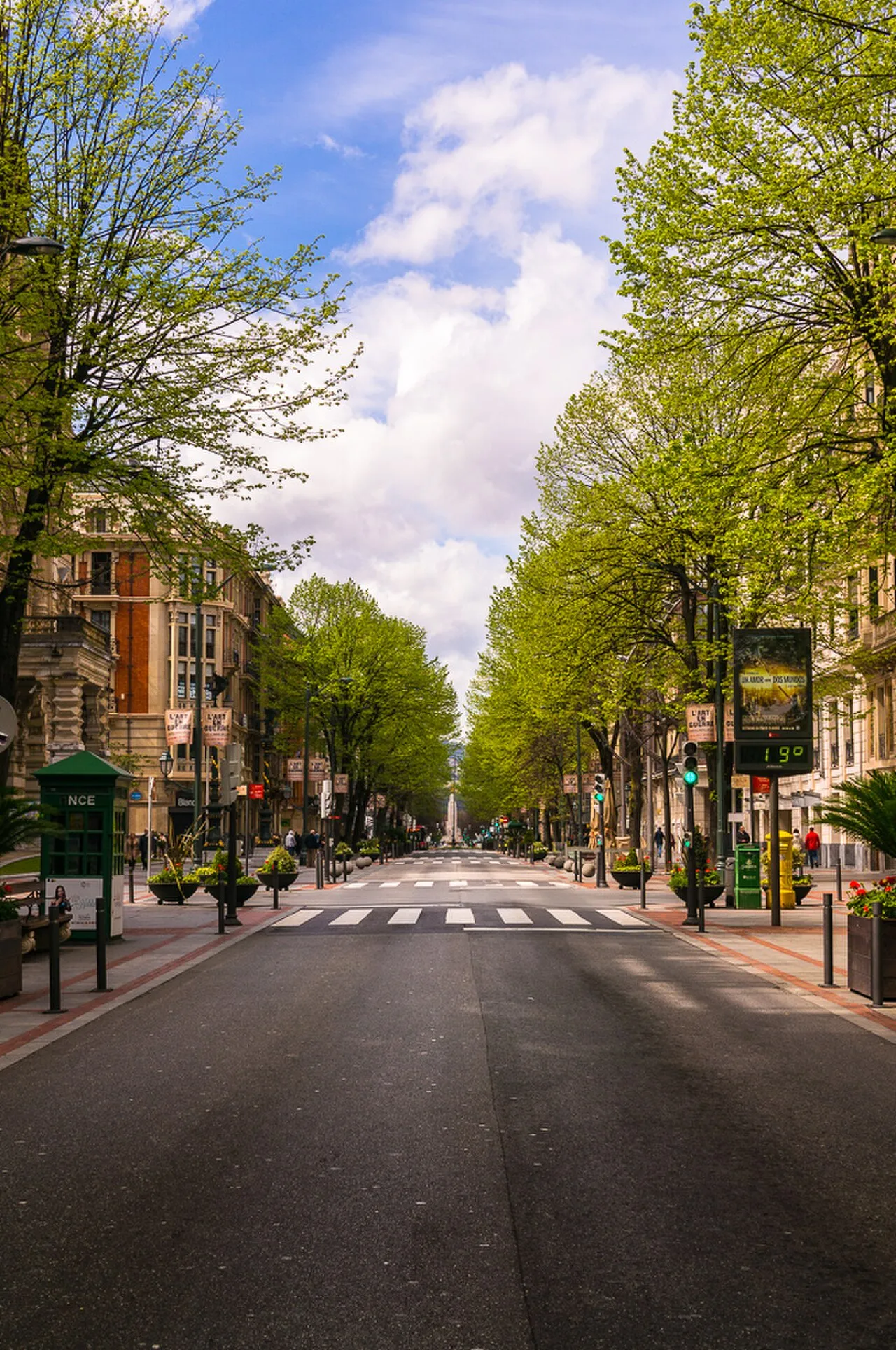
Then go up into the Ensanche along the Gran Vía, laid out in 1876 over market gardens. Its engineers designed a Bilbao so large that they were taken for dreamers, and the city ended up filling every block. On the Plaza Moyúa, look closely at the Palacio Chávarri: no two of its windows are the same.
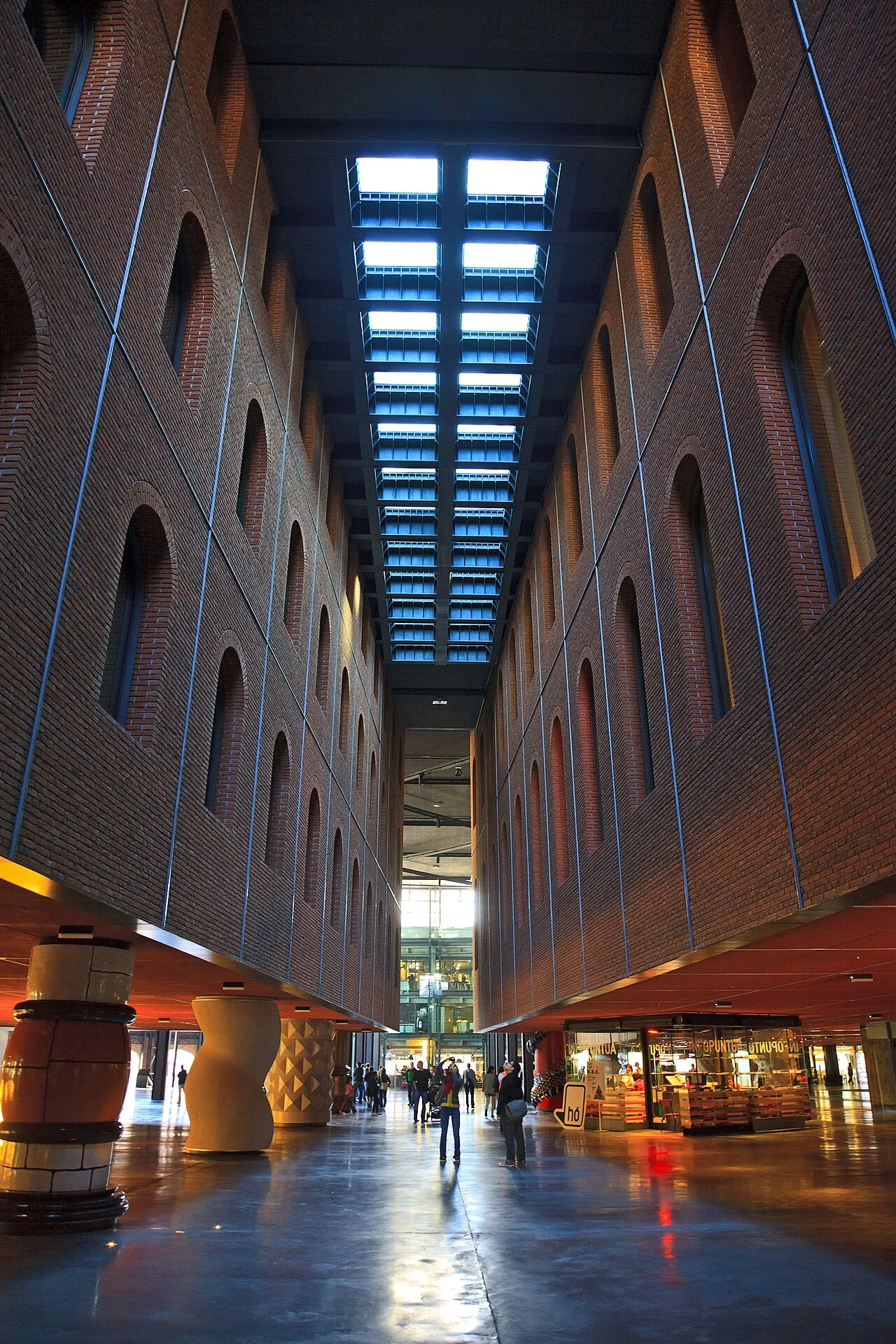
And finish at the Azkuna Zentroa, which everyone still calls the Alhóndiga. It was the municipal wine warehouse of 1909, and Philippe Starck hollowed it out leaving only the shell, to fit three buildings inside it suspended on forty-three columns. Each one was designed by a different artist and not one is repeated.
Its origins go back to 1908 and its collection is the oldest and deepest in the Basque Country. It is being greatly extended to a design by Norman Foster, the same man who designed the metro entrances that people here call fosteritos. It keeps generous slots of free entry.
Forty-three columns, no two alike, holding up three suspended buildings, with a library, cinemas and a glass-bottomed swimming pool from which you watch people swimming above your head. The ground floor is public and free: you cross it, you sit in it, and you do not have to buy anything.
The axis that iron money built in order to admire itself, with the Palacio de la Diputación Foral, the seat of the provincial council, as proof of how much you had to spend to prove a point. It carries the name of the lord who in 1300 signed the charter that turned a few houses beside the estuary into a town.
Cross to the other bank and change century. The Casco Viejo is the Siete Calles, the founding layout of 1300: three streets first and four later, parallel and joined by alleys, squeezed between the church and the water. Walking them one by one takes twenty minutes and is the way to see how big Bilbao was before iron.
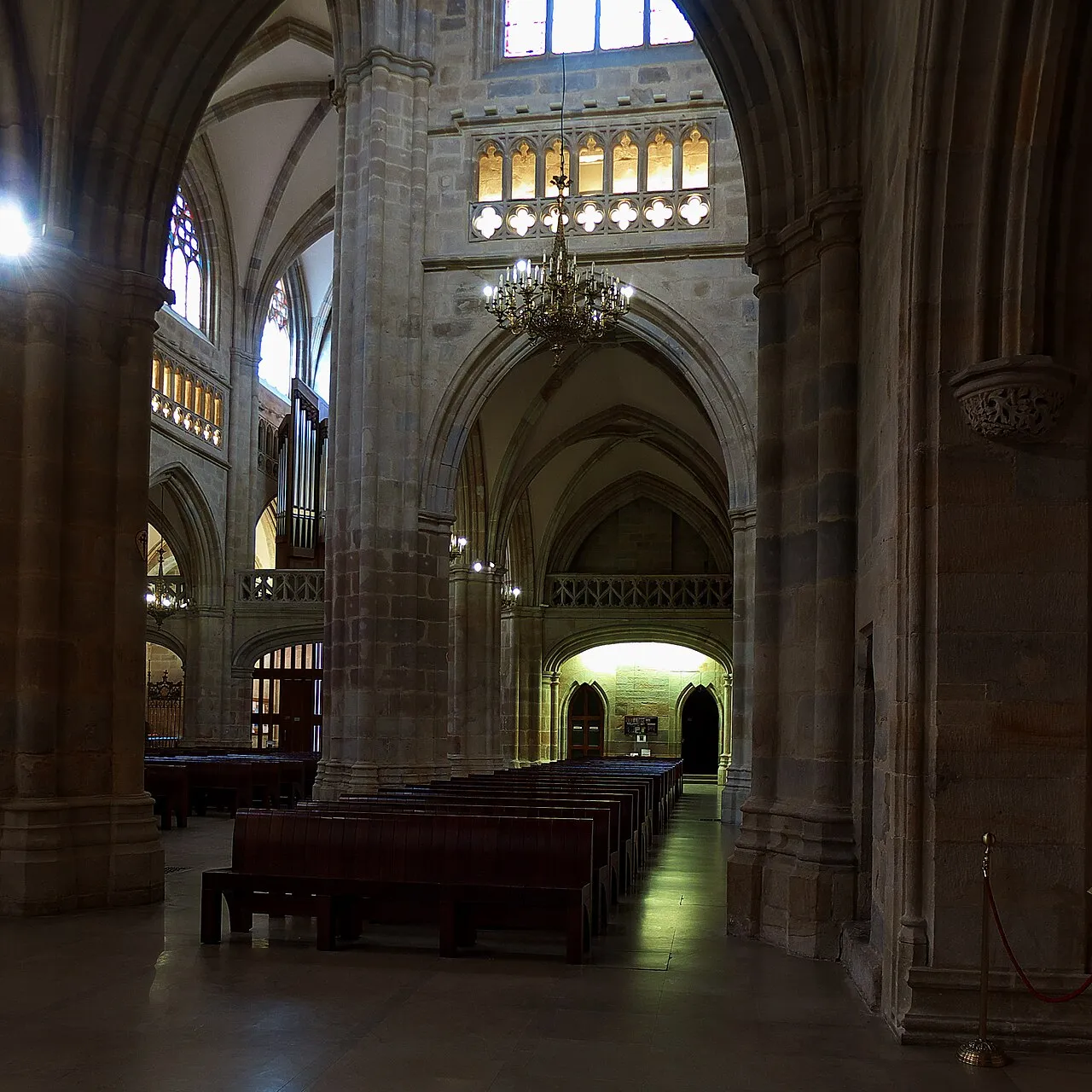
At the centre stands the Cathedral of Santiago, which for almost six hundred years was not a cathedral but the parish church of merchants and sailors: it was not raised until 1949, when the diocese was finally created. Its dedication comes from the Camino del Norte, the northern Way of St James, which crosses the town, and there are scallop shells marked all over the neighbourhood if you know how to look for them. Do not skip the cloister.
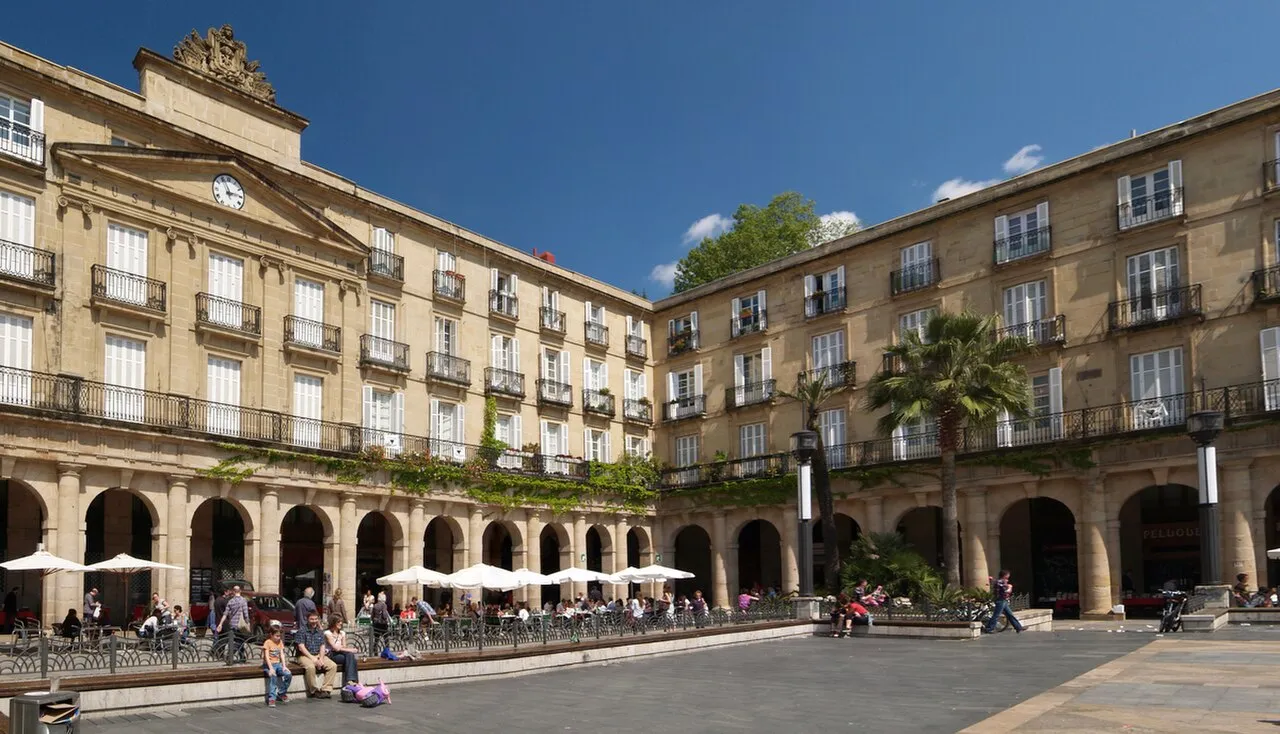
Two minutes away opens the Plaza Nueva, a rectangle closed by sixty-four arcades that looks only inwards. It took thirty years to build, between Carlist Wars and lack of funds. On Sunday mornings there is a market of stamps, coins and old books; the rest of the week, pintxos.
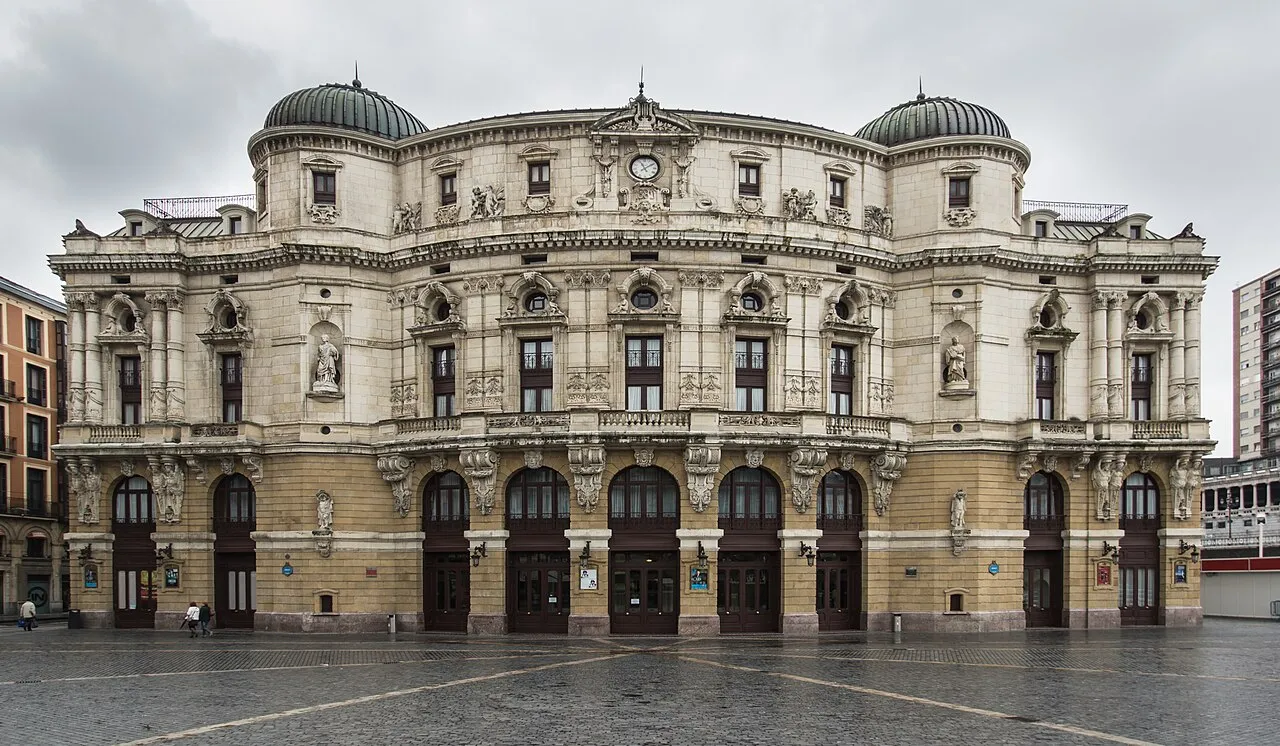
Finish at the Mercado de la Ribera, beside the water, and come out onto the Arenal to see the Teatro Arriaga. Its declared model was the Paris opera house. It burned out inside in 1914 and was flooded in the 1983 floods, and it is still standing: that sums up the local character rather well.
Fourteenth and fifteenth-century Gothic with a neo-Gothic tower and façade from the nineteenth, put up after a fire. The genuinely old parts are inside and along the flanks. The fifteenth-century cloister, hidden on the south side, is one of the few truly silent corners of the old town.
An enclosed market square with identical façades on all four sides and access only through the corner arches. Behind one of its balconies sits Euskaltzaindia, the Royal Academy of the Basque Language: while people eat pintxos downstairs, upstairs they decide how a word is spelled.
Neo-Baroque, from 1890, by the same architect as the City Hall. It carries the name of Juan Crisóstomo de Arriaga, a child prodigy from Bilbao whom Paris compared to Mozart and who died at nineteen. You see it whole, and reflected, from the opposite bank.
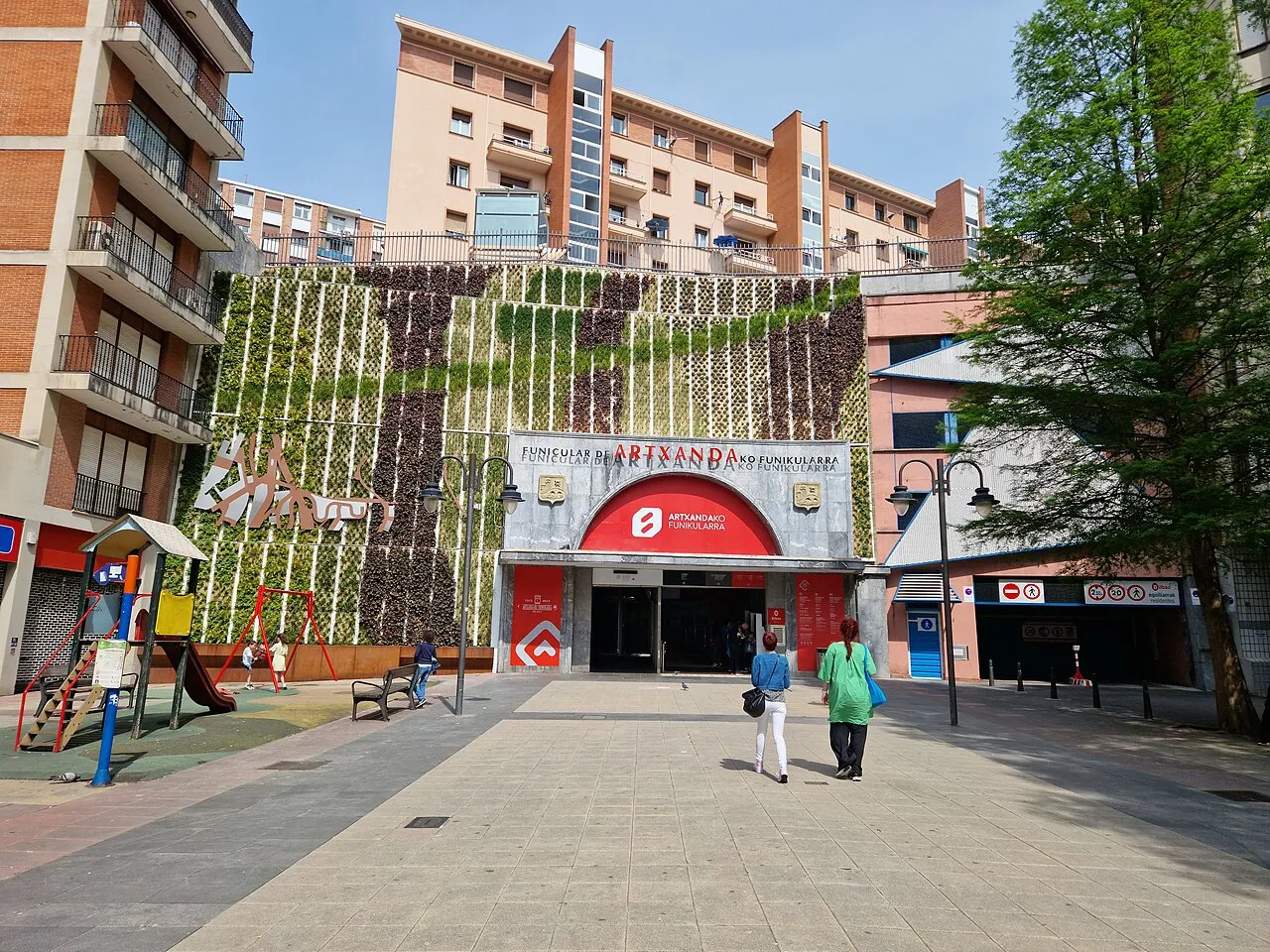
Go up to Artxanda on the funicular, which has run since 1915 and climbs two hundred and twenty-six metres of height in a little over three minutes. It was closed in 1976 for lack of profitability and was nearly lost; today it is ordinary city transport and the people who live on the slope use it daily.
At the top, from the railing of the viewpoint, you understand Bilbao all at once: the city lying at the bottom of a valley closed in by hills, with the estuary winding between the buildings. That is where the habit of calling it “el bocho”, the hole, comes from. It is an open park with picnic areas, so you can stretch the afternoon out.
Check whether there is fog before you go up, because with low mist you see absolutely nothing. If the day is closed in, swap the plan for Bilbao la Vieja: the Marzana quay, on the left bank, where the iron ore came down on its way to England and where the arts district is today.
That walk ends up above, at the basilica of Begoña, the house of the Amatxu, the little mother. You climb by the Calzadas de Mallona, more than three hundred steps, or by the public lift on calle Esperanza, which almost no visitor knows about and settles the slope in a minute. From the port to heaven in an hour.
Two cabins counterbalanced by cable: when one goes up the other comes down. The floor is stepped inside because the gradient is around forty-five per cent. Stand by the rear window on the way up, which is where you appreciate how the city shrinks.
For decades this was where courting couples came up to have their Sunday photograph taken, almost a rite. From here you can pick out the titanium of the Guggenheim, the towers of the Ensanche, the rooftops of the Casco Viejo and, on the far side of the hill, the Txorierri valley.
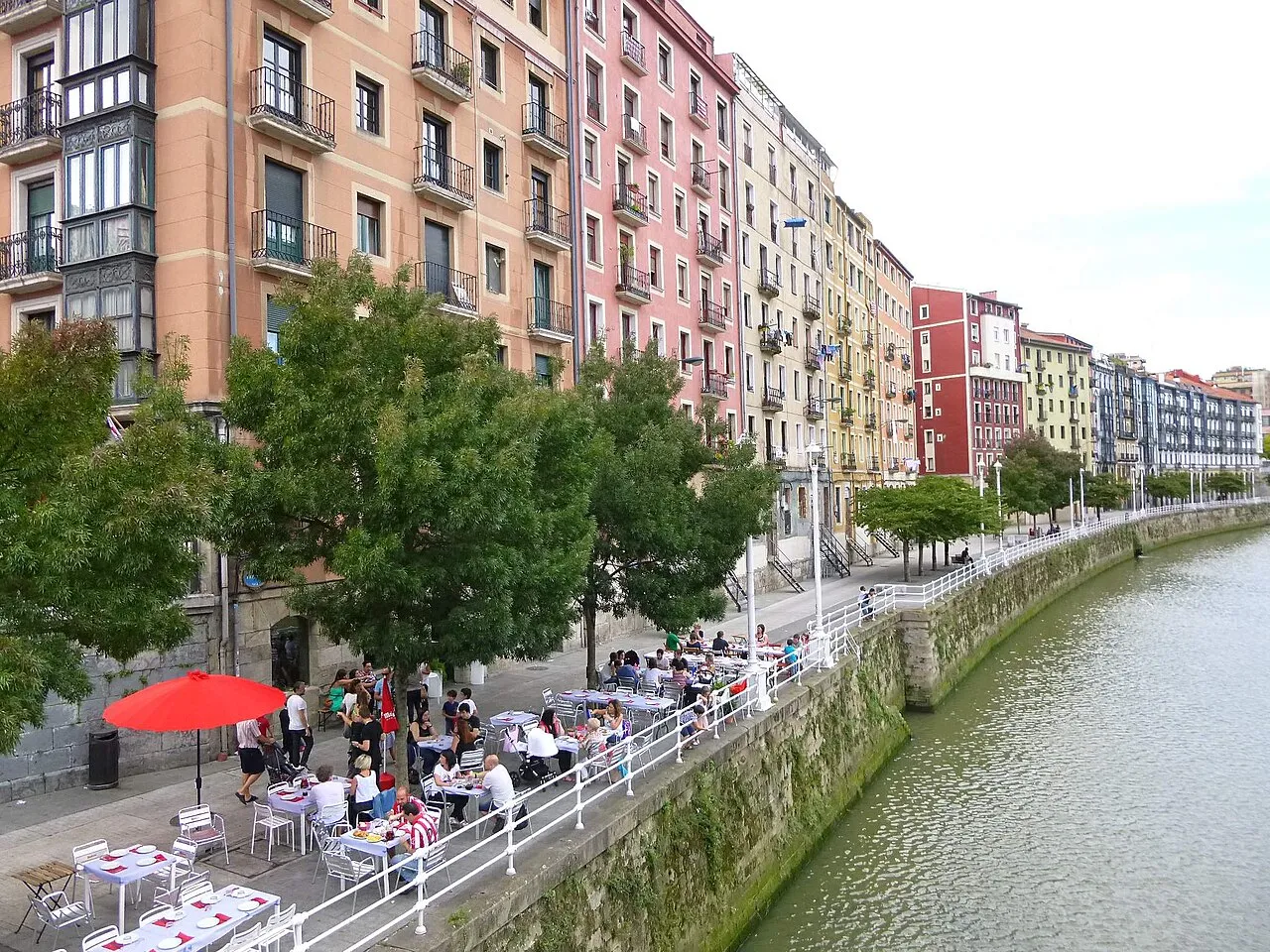
It runs from the San Antón bridge to the Ribera bridge and marks the historic border between old Bilbao and industrial Bilbao. When industry left it was dead, and workshops and galleries occupied it spontaneously. Terraces along the parapet with the Casco Viejo opposite.
Yes, comfortably. The city is compact and everything hangs from the estuary: one bank has the Ensanche and the reinvented Bilbao, the other the medieval Casco Viejo. Two days cover the Guggenheim, Abandoibarra, the Ensanche, the Siete Calles, Artxanda and Bilbao la Vieja. With a third day you can add the Museum of Fine Arts at leisure and a trip out to Getxo.
Do you have to book a ticket for the Guggenheim?
It is strongly advisable, above all in high season and at weekends, because it works by time slots. The exterior and the sculptures around it — Puppy, Maman, the Buren arch — are free and can be seen at any hour, so you can walk around the building even if you do not go inside.
Is it worth going up to Artxanda?
Yes, and it is the best way to understand the geography of the city: Bilbao tucked into the bottom of a valley closed in by hills. You go up by funicular in a little over three minutes from the plaza del Funicular. The one warning is to check first whether there is fog, because with low mist you see nothing from the top.
Which is the best neighbourhood to stay in?
The Ensanche, around Moyúa and Abando, leaves everything ten or fifteen minutes away on foot and has the best metro connections. The Casco Viejo is more picturesque and cheaper, but it is noisy at night, above all from Thursday to Sunday. Abandoibarra is quieter and is right next to the museum.
Where do you eat the best pintxos?
In the Casco Viejo, with the Plaza Nueva and calle Somera as the epicentre, and on calle Ledesma and around Diputación in the Ensanche. The system is to have one or two per bar and keep moving. In Bilbao many pintxos are ordered hot and off the menu, not just taken from the counter: ask what they make to order.
Do you need a car?
No, and it gets in the way. Parking in the centre is expensive and awkward, and the metro, tram and bus network covers everything with a single card. Hiring a car only makes sense if the trip includes outings along the Bizkaia coast or inland, such as San Juan de Gaztelugatxe or Urdaibai.
Practical information
Getting thereAirport 15 minutes from the centre by bus. Bus to San Sebastián in an hour.
Getting aroundMetro, tram, funicular and bus on a single Barik card. The centre is flat and walkable.
TicketsGuggenheim with a booked time slot. The Museum of Fine Arts keeps generous free slots.
When to goMay to September. The Aste Nagusia, in August, fills the entire city.
EatingPintxos in the Casco Viejo and on calle Ledesma. Many are ordered hot, off the menu.
If it rainsIt rains more than 150 days a year. Keep the Museum of Fine Arts, the Azkuna Zentroa and the Euskal Museoa in reserve.
On the map
🎧 With Viavoy
Walk Bilbao and listen at your own pace
Download Viavoy and walk Bilbao offline, whenever you like.