The whole of Bilbao fitted into seven streets until the nineteenth century. What is on each one, where the cloister nobody visits is and why the Plaza Nueva looks only inwards.
It is hard to believe looking at the city today, but for five hundred years the whole of Bilbao was seven parallel streets squeezed between a church and the water. That is what they are called, the Siete Calles, and they are still exactly where they were: three were laid out with the founding in 1300 and another four were added shortly afterwards. Everything else — the Ensanche, the titanium, the bridges — came once iron changed the scale of the business.
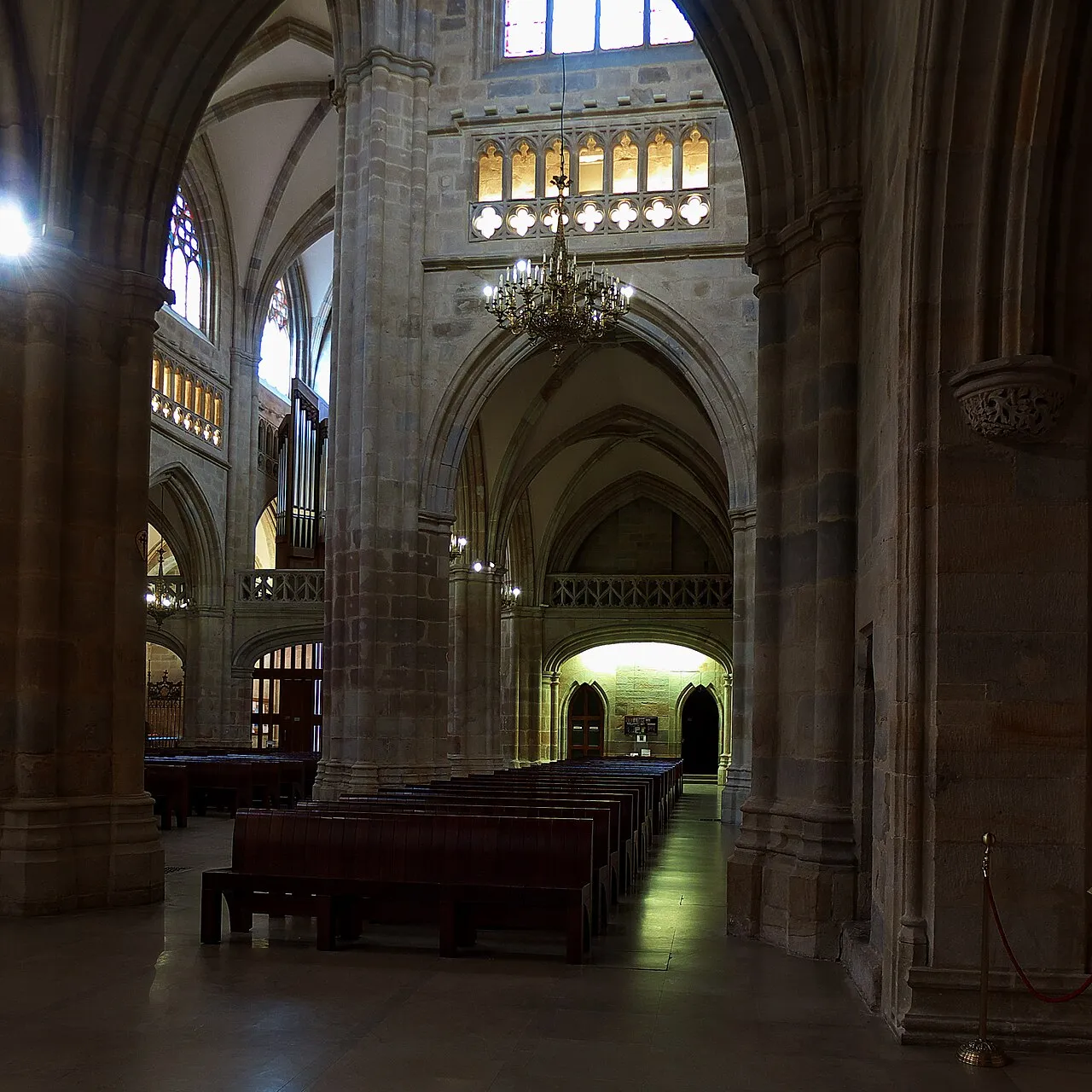
The fifteenth-century Gothic cloister of the Cathedral of Santiago, hidden on its south side, is one of the few truly silent corners of the old town. It is two minutes from the pintxo bars and almost nobody goes in.
The Siete Calles, one by one
Twenty minutes to walk them all.
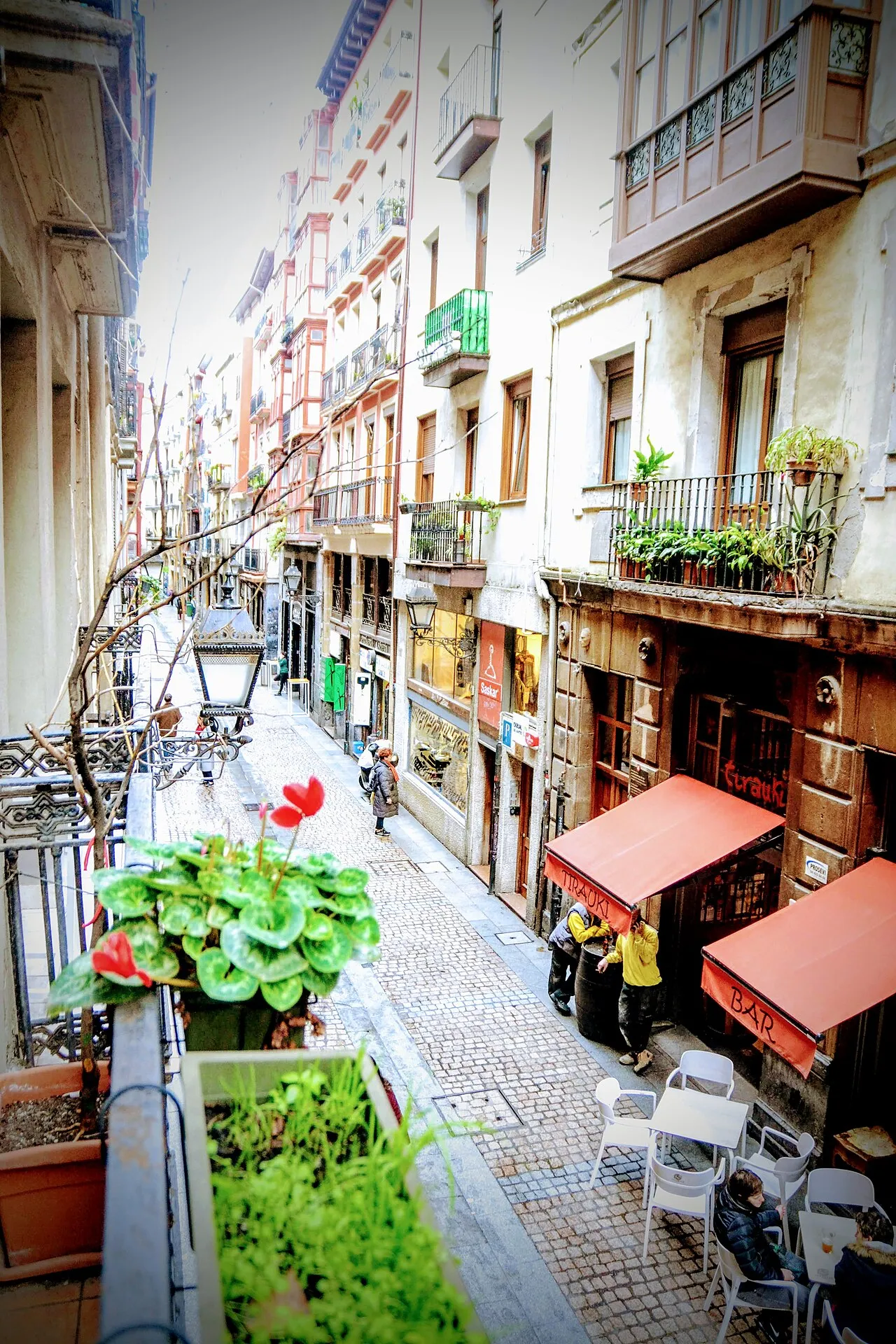
Somera, Artekale and Tendería are the three original ones, those of the founding charter of 1300. Belostikale, Carnicería Vieja, Barrenkale and Barrenkale Barrena were added later. They all run parallel to one another and perpendicular to the estuary, joined by narrow alleys called cantones.
The names tell you what was done on each one. Tendería was the shops, Carnicería Vieja exactly what its name says, Artekale the middle street — arte means between in Basque — and Barrenkale the inner one. It is a map of the guilds, legible without any explanatory sign.
Somera is today the street with the highest density of bars per square metre in the neighbourhood and has a very different atmosphere from the rest, younger and noisier. Tendería and Artekale keep more traditional shops. Walking them all one by one takes about twenty minutes, and it is the best exercise for understanding the scale of the original town.
At the centre of the grid stands the Cathedral of Santiago, and that is the logical order: the church first, the streets afterwards, hanging from it down towards the water. It is the pattern of almost any medieval town in the north of the peninsula.
The oldest building standing in Bilbao. For almost six hundred years it was the parish church of merchants and sailors, and it was only raised to cathedral in 1949, when the diocese was created. Fourteenth and fifteenth-century Gothic, with a neo-Gothic tower and façade from the nineteenth put up after a fire.
The oldest and today the liveliest, with a density of bars no other street has. The atmosphere is younger and noisier than in the rest of the old town, and from Thursday to Sunday night it is another thing altogether. A good place to start a round of pintxos.
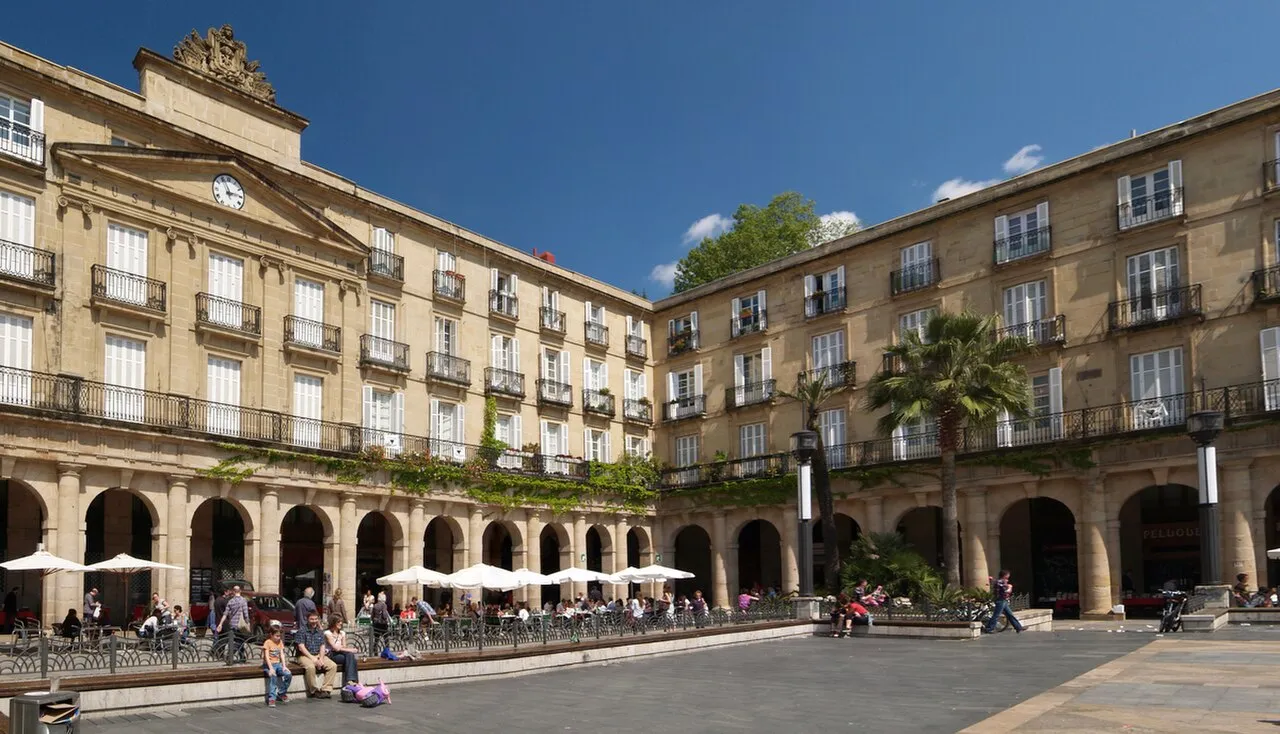
Sixty-four arcades closing a perfect rectangle that looks only inwards, because it was born as a market square with the trading protected under the colonnades. It took thirty years to build, from 1821 to 1851, between Carlist Wars and lack of funds.
Download the app and discover Bilbao offline, whenever you like. Take the walking tour The Old Town and the Seven Streets with a local guide in your ear.
The Plaza Nueva is the surprise of the neighbourhood because you do not see it coming: you arrive through a narrow alley and all at once an enormous rectangle of ochre stone opens up, with continuous colonnades on all four sides and absolutely identical façades, without a single balcony to break the rhythm.
That closedness is deliberate. It was born as an enclosed market square, with the market under cover to protect it from the rain — which here never stops — and with only four entrances at the corners, which also made it easy to control. It is the type of the Castilian plaza mayor translated into neoclassical language.
On Sunday mornings it changes trade: it fills with tables of stamps, old coins, old books, badges, collectors' cards, records and plants. It is the best loved collectors' market in the city and it works like a communal attic. It starts early and packs up at midday.
And there is a detail almost nobody knows: behind one of its balconies sits Euskaltzaindia, the Royal Academy of the Basque Language. While people downstairs are spearing pintxos and raising a glass, upstairs they are deciding how a word in Basque is correctly spelled.
The market, the theatre and the water's edge
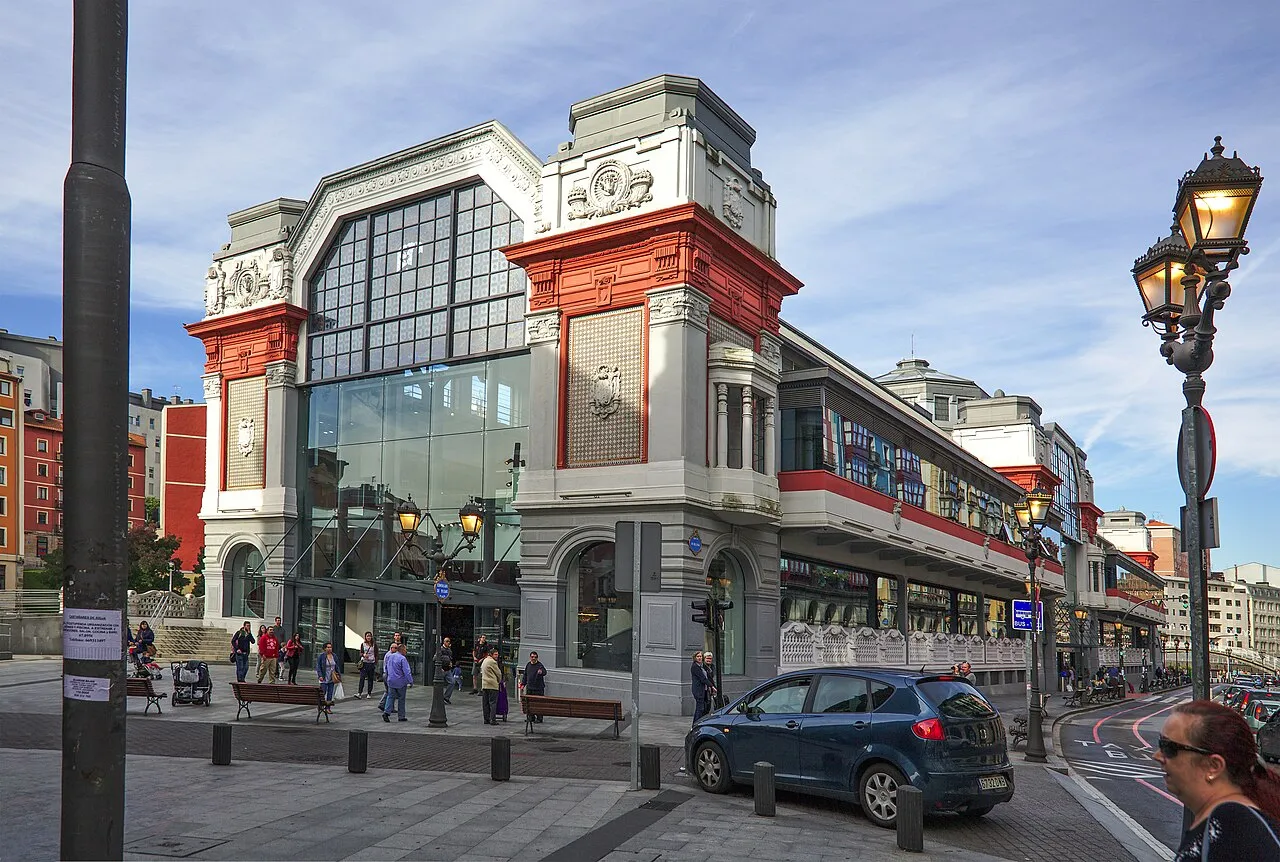
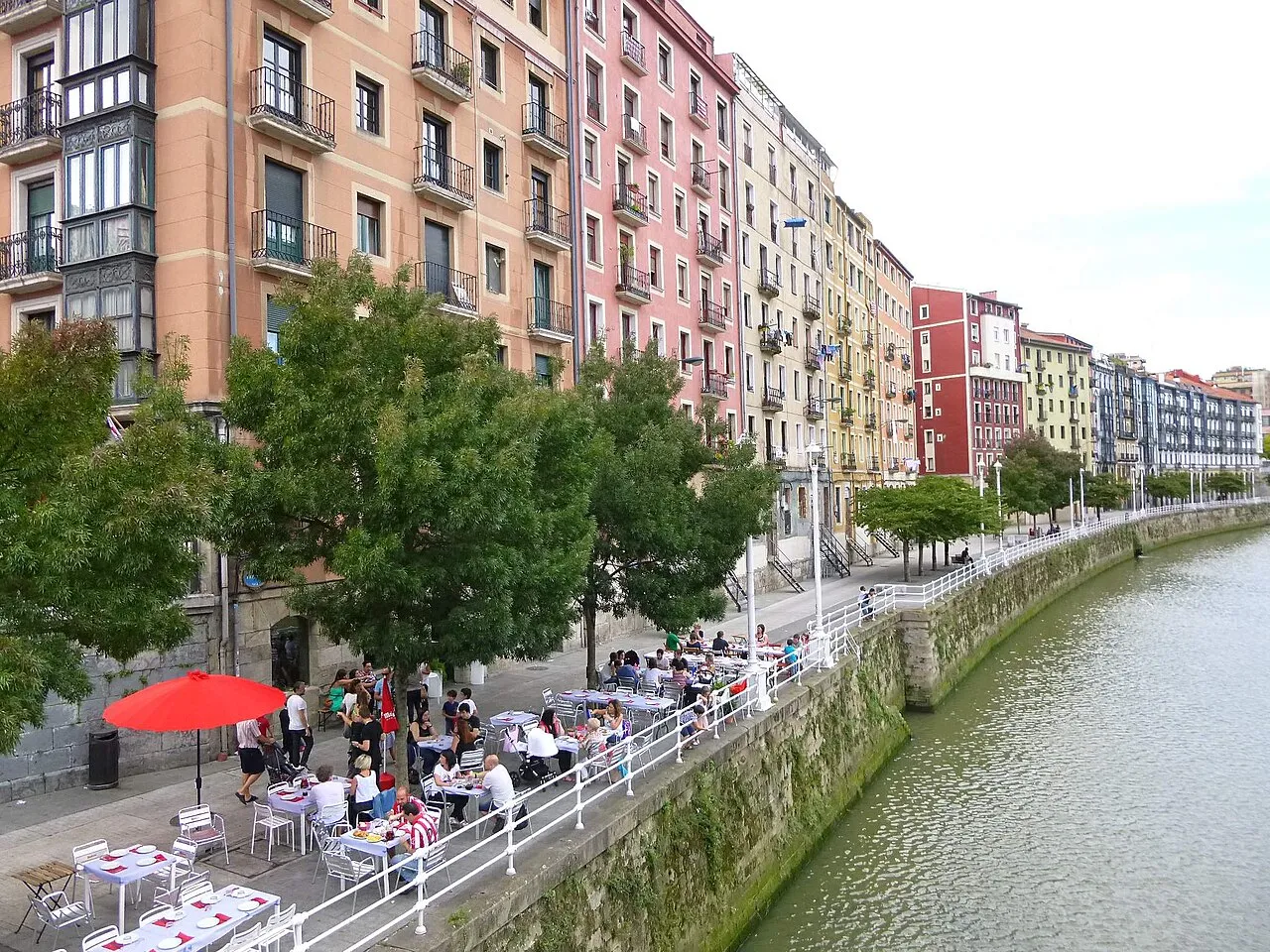
On the estuary side, the old town ends at the Mercado de la Ribera, a Rationalist building from the thirties put up on the same site where there has been a market since the Middle Ages. It is one of the largest covered markets in Europe and on its ground floor there is a very busy run of bars.
A step away stands the church of San Antón, with its bridge, which appears on the coat of arms of Bilbao alongside the wolf of the Haro family. That group of church and bridge is the official symbol of the town and one of the most photographed points on the bank.
At the other end, the old town opens onto the Arenal, which was literally that: a sandbank on which the town gradually won ground from the water. There stands the iron bandstand, where bands play on Sundays, and opposite it the Teatro Arriaga.
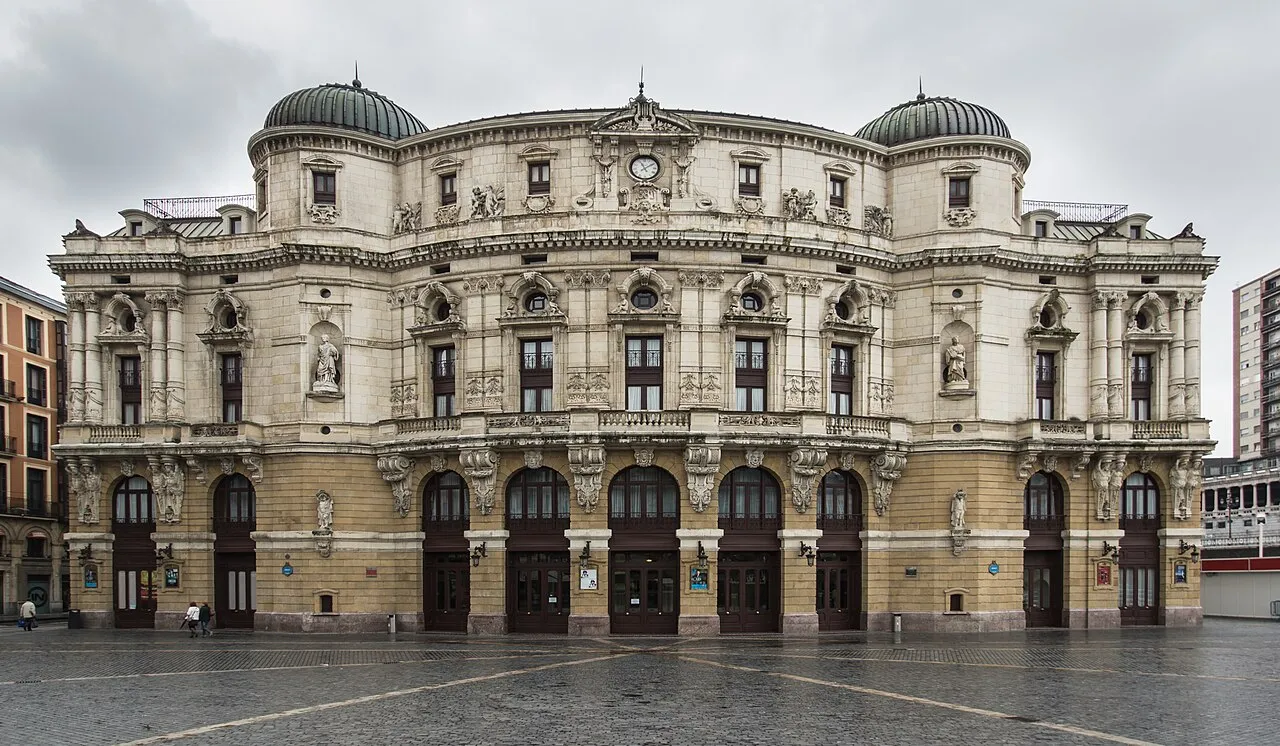
The Arriaga is neo-Baroque, from 1890, with the Paris opera house as its declared model. It burned out inside in 1914 and was left several metres under water in the floods of August 1983. It is best seen from the opposite bank, reflected in the water.
By Joaquín Rucoba, the same architect as the town's City Hall. It carries the name of Juan Crisóstomo de Arriaga, a child prodigy from Bilbao whom Paris compared to Mozart and who died at nineteen. It reopened in 1986 after the flood and is the city's public theatre.
A Rationalist building from the thirties on a site with a market since the Middle Ages, and one of the largest covered markets in Europe. On the ground floor there is a run of bars and tasting stalls that gets very busy at midday.
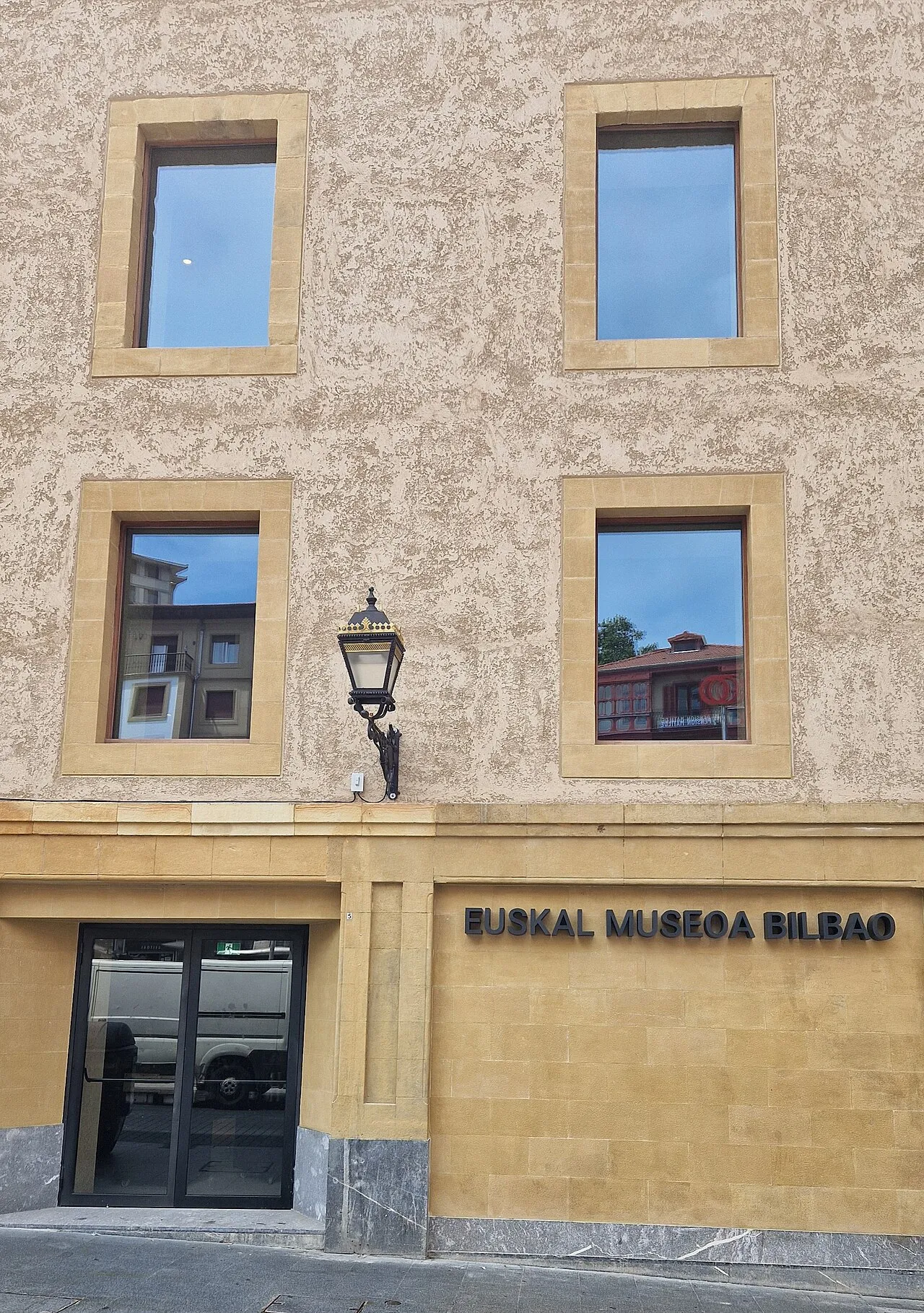
The Basque museum, in a former Jesuit college with a cloister. It brings together the ethnography, archaeology and history of Bizkaia, and holds the Mikeldi Idol, a prehistoric stone sculpture in the shape of an animal holding a disc. A good stop for a rainy day.
Somera, Artekale and Tendería are the three original ones, laid out with the founding of the town in 1300. Belostikale, Carnicería Vieja, Barrenkale and Barrenkale Barrena were added afterwards. They run parallel to one another and perpendicular to the estuary, joined by alleys called cantones, and their names say which guild occupied each one.
How long does it take to see the Casco Viejo?
A good two hours cover the Siete Calles, the cathedral with its cloister, the Plaza Nueva and the Mercado de la Ribera. If you add the Euskal Museoa and a while over pintxos, half a day. It is a very compact neighbourhood and completely pedestrian, so there is no dead time getting from one place to the next.
Why does the Plaza Nueva have no outward-facing façades?
Because it was born as an enclosed market square: the trading went under the colonnades, protected from the rain, and the precinct had only four entrances at the corners, which made it easy to control. It is the type of the Castilian plaza mayor translated into the neoclassical language of the nineteenth century.
When is the market in the Plaza Nueva?
On Sunday mornings. It fills with tables of stamps, old coins, old books, badges, collectors' cards, records and plants, and it is the best loved collectors' market in the city. It starts early and packs up at midday, so it is worth going before twelve.
Is it worth going into the Cathedral of Santiago?
Yes, above all for the fifteenth-century Gothic cloister, hidden on the south side, which is one of the few truly silent corners of the neighbourhood and which almost no visitor gets to see. The church itself is the Gothic of a merchant town, sober and without great display, with a tower and façade from the nineteenth century.
Is it noisy for sleeping?
From Thursday to Sunday, quite. Above all around calle Somera and the Plaza Nueva, where the atmosphere stretches on into the small hours. It is the cheapest and most picturesque neighbourhood to stay in, but anyone looking for rest will do better in the Ensanche, ten minutes away on foot and with better metro connections.
Practical information
WhereRight bank of the estuary, between the Arenal and the Mercado de la Ribera.
Getting thereMetro Casco Viejo. Tram stop Arriaga. The whole neighbourhood is pedestrian.
DurationA good two hours with the cathedral and the market; half a day with museums.
Sunday marketPlaza Nueva, Sunday mornings. It packs up at midday.
EatingSomera and Plaza Nueva for pintxos. The Mercado de la Ribera, at midday.
If it rainsThe colonnades of the Plaza Nueva and the Euskal Museoa take care of the morning.
On the map
🎧 With Viavoy
Walk Bilbao and listen at your own pace
Download Viavoy and walk Bilbao offline, whenever you like.