San Sebastián in 2 days: the bay, the old town and the wind
Parte Vieja and Monte Urgull on the first day, the western walk to the Peine del Viento on the second. With the free rooftop nobody knows about and why the Peine is better seen in bad weather.
Donostia is small and you can walk all of it, almost always on the flat and almost always beside the water, so two days are more than enough. The structure is simple: a closed bay with the old town at one end, the ensanche behind it and, across the river, the rough beach. The only thing to decide is when to go up the hills, because they are the only stretches with a slope and because in fog they are no use at all.
Tabakalera has a rooftop viewpoint on its top floor with free entry and one of the best views in the city. It is not signposted from the street and almost no visitor goes up.
Day 1, morning: the Parte Vieja and Urgull
Start in the square and climb before lunch.
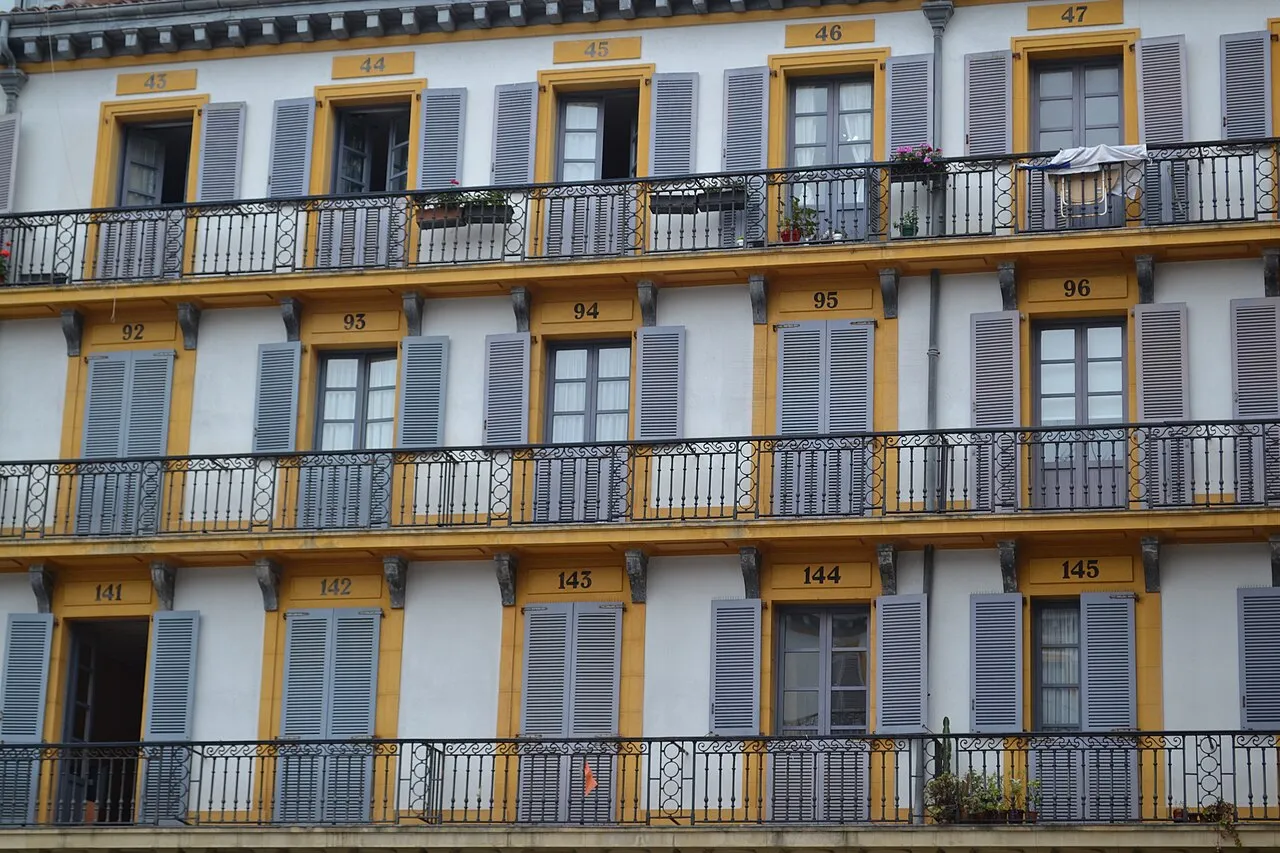
Start on the Plaza de la Constitución and look up: the numbers painted above each balcony are not house numbers, they are seat numbers. This square worked as a bullring and residents rented out their balconies as boxes on bullfight days. The numbering is still there, visible on almost all of them.
From there run the streets with the highest density of pintxo bars in the world, but that is for later. First, the basilica of Santa María del Coro with its Baroque doorway, the Church of San Vicente — the oldest building in the city — and calle 31 de Agosto, which is the only one that survived the fire of 1813.
That fire explains the shape of the neighbourhood: the Anglo-Portuguese troops who were liberating the town ended up sacking and burning almost all of it, and the Parte Vieja was rebuilt from scratch on a regular grid. That is why this old town does not have the medieval maze you expect.
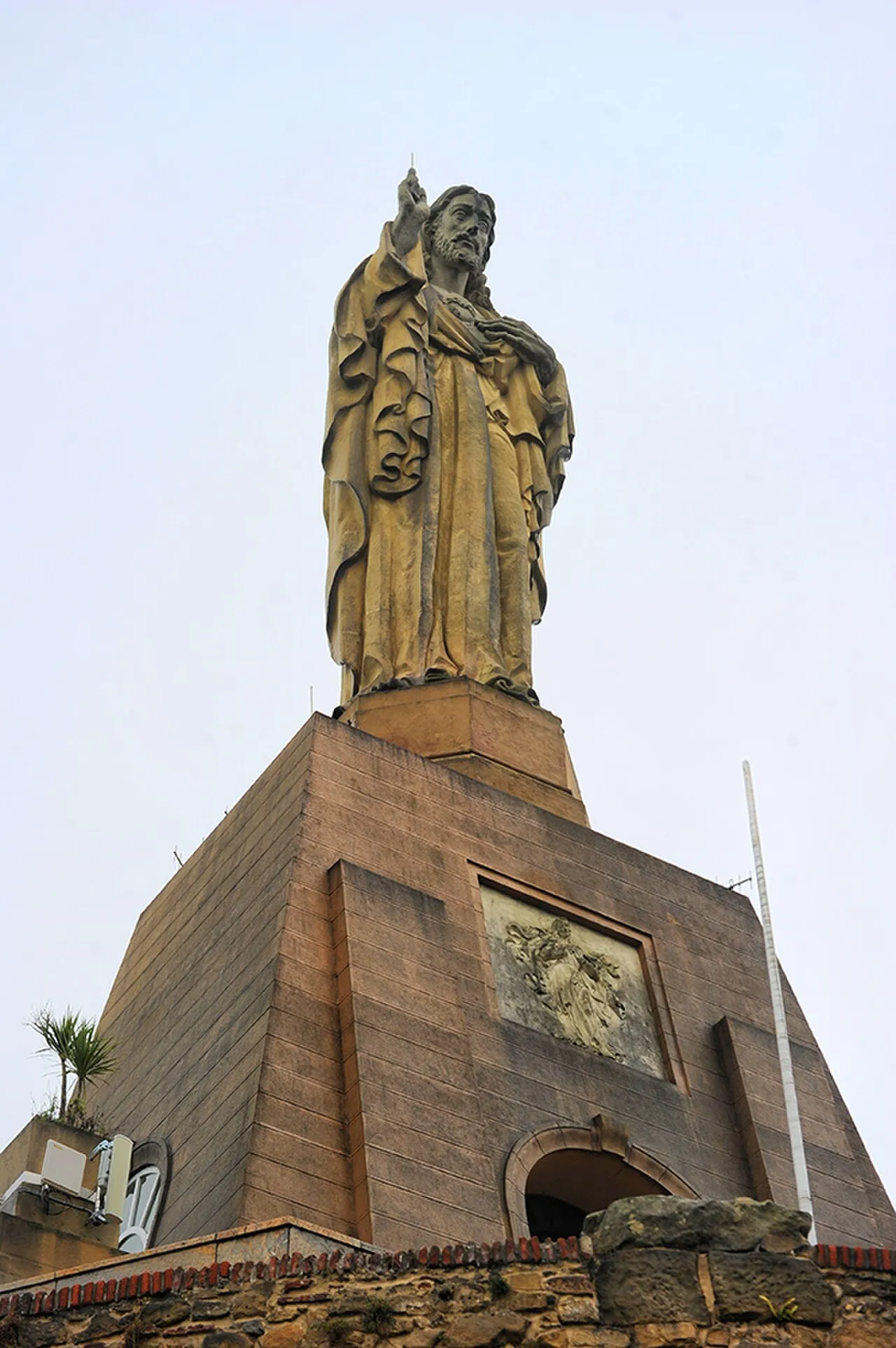
Then climb Monte Urgull behind the San Telmo Museum: twenty minutes of gentle, shaded slope between batteries of cannon, sentry boxes and walls from different periods. At the top, the statue of the Sacred Heart rises above the walls of the twelfth-century castle of La Mota.
An almost perfect square with colonnades and galleries, built in 1817 after the fire. The clock building was the Casa Consistorial, the town hall, until 1947, when the city council moved to the old Gran Casino by the beach. The Tamborrada starts here every 20 January.
Twelve metres of stone on top of eight centuries of fortress. Inside the castle is the Casa de la Historia, free, on the military past of the city. And one detail: the Heart does not look out to sea but towards the city, as if it wanted to embrace it rather than defend it.
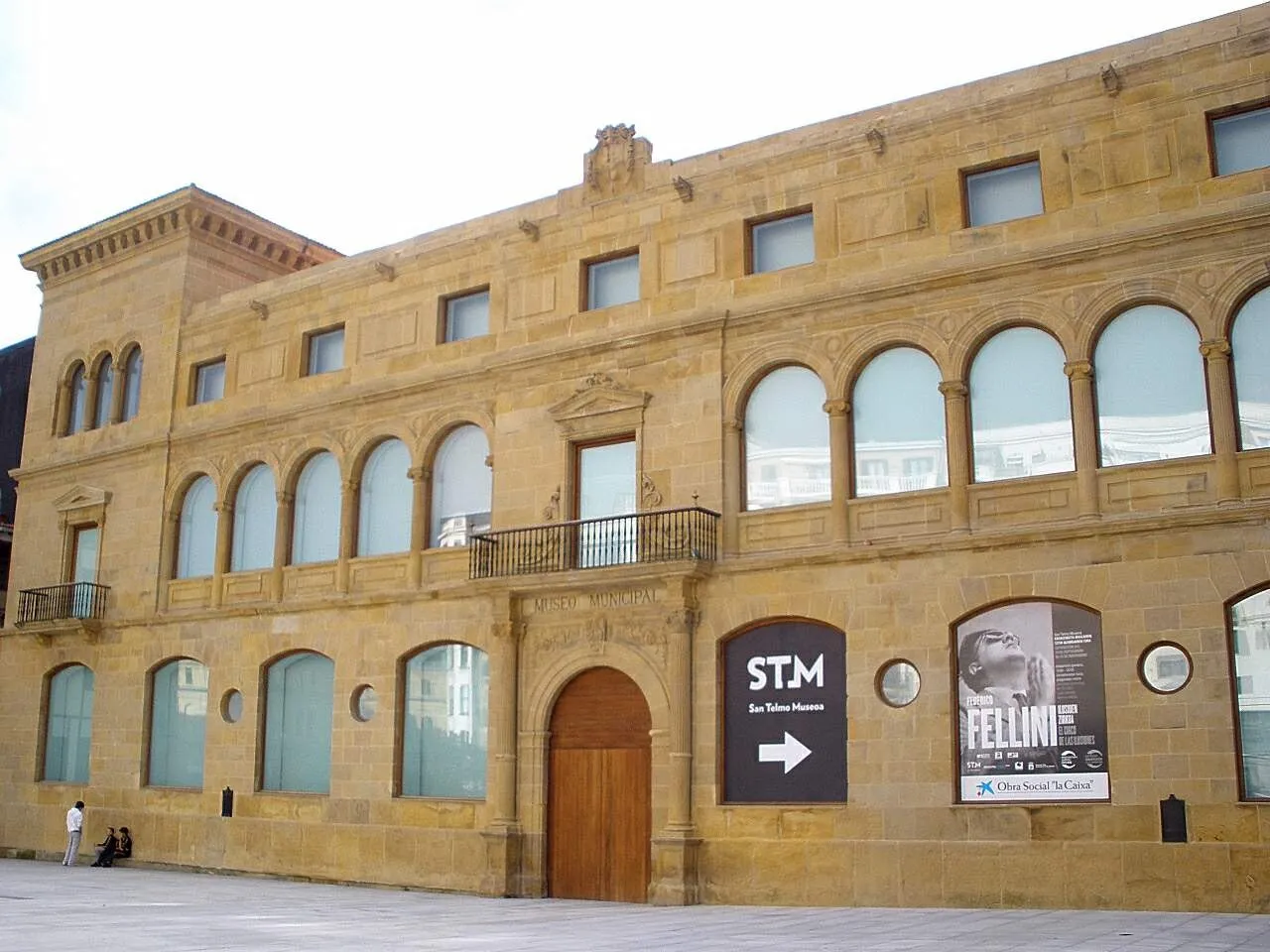
A sixteenth-century Dominican convent leaning on the rock of the hill, extended with a contemporary block whose perforated façade has plants growing through it. Inside, the history of Basque society and the Sert canvases that cover the old church. A good rainy-day plan.
Download the app and discover San Sebastián offline, whenever you like. Take the walking tour The Parte Vieja and Monte Urgull with a local guide in your ear.
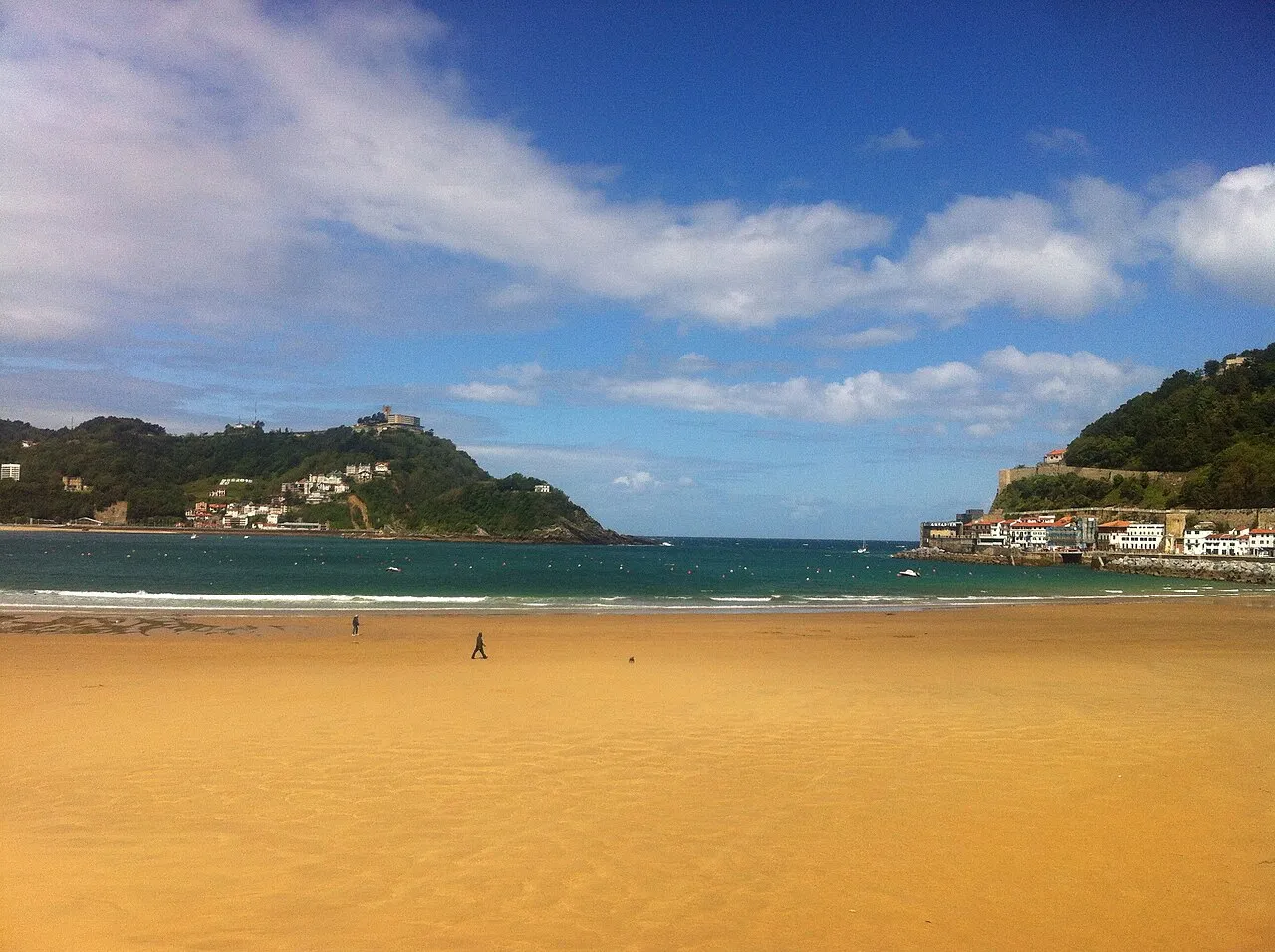
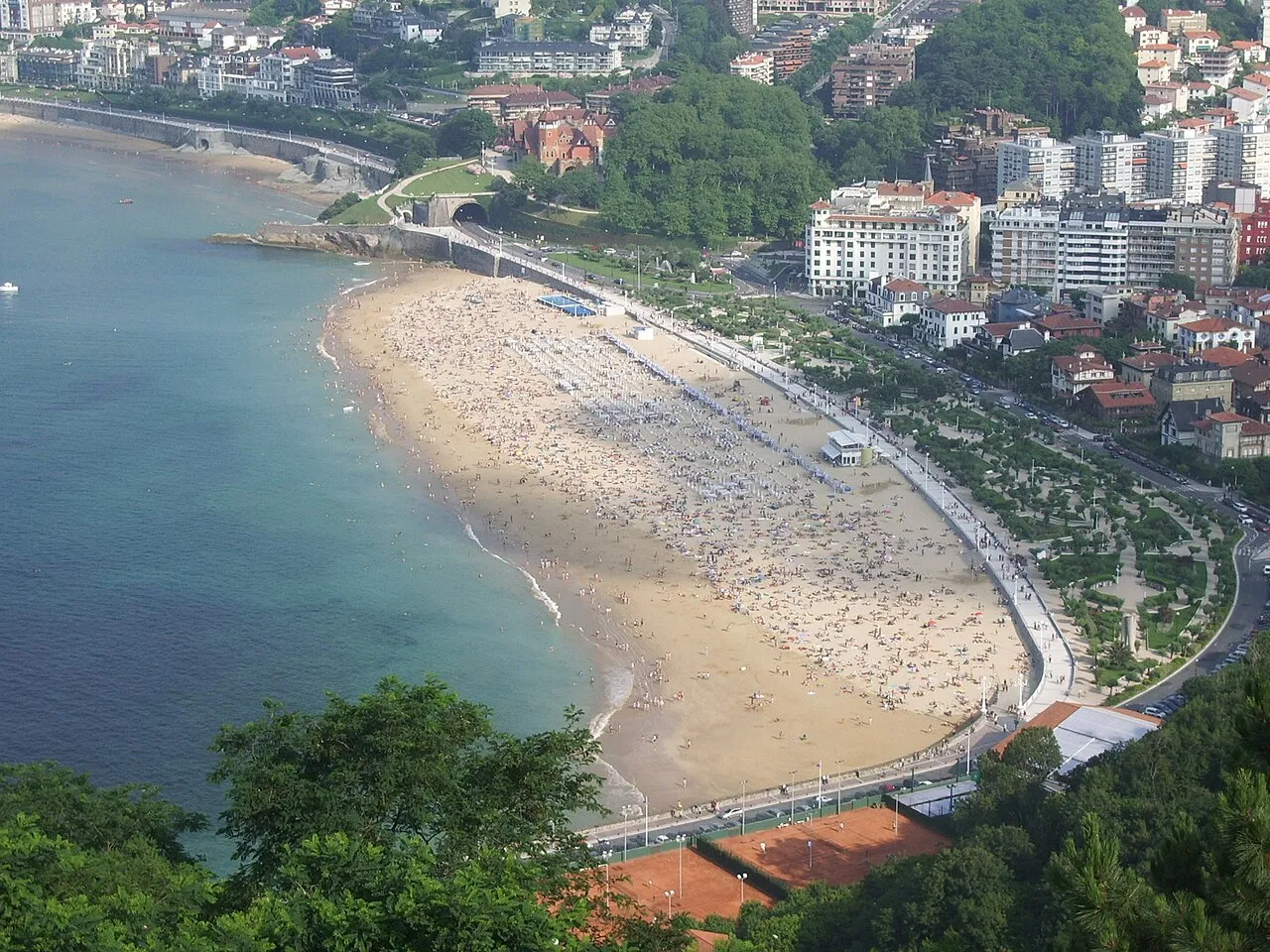
Come down off the hill by the fishing harbour, eat pintxos in the Parte Vieja and come out onto the Boulevard, which separates the old town from the ensanche. From there begins La Concha, the beach many consider the best city beach in Europe and which is, above all, the face of the city.
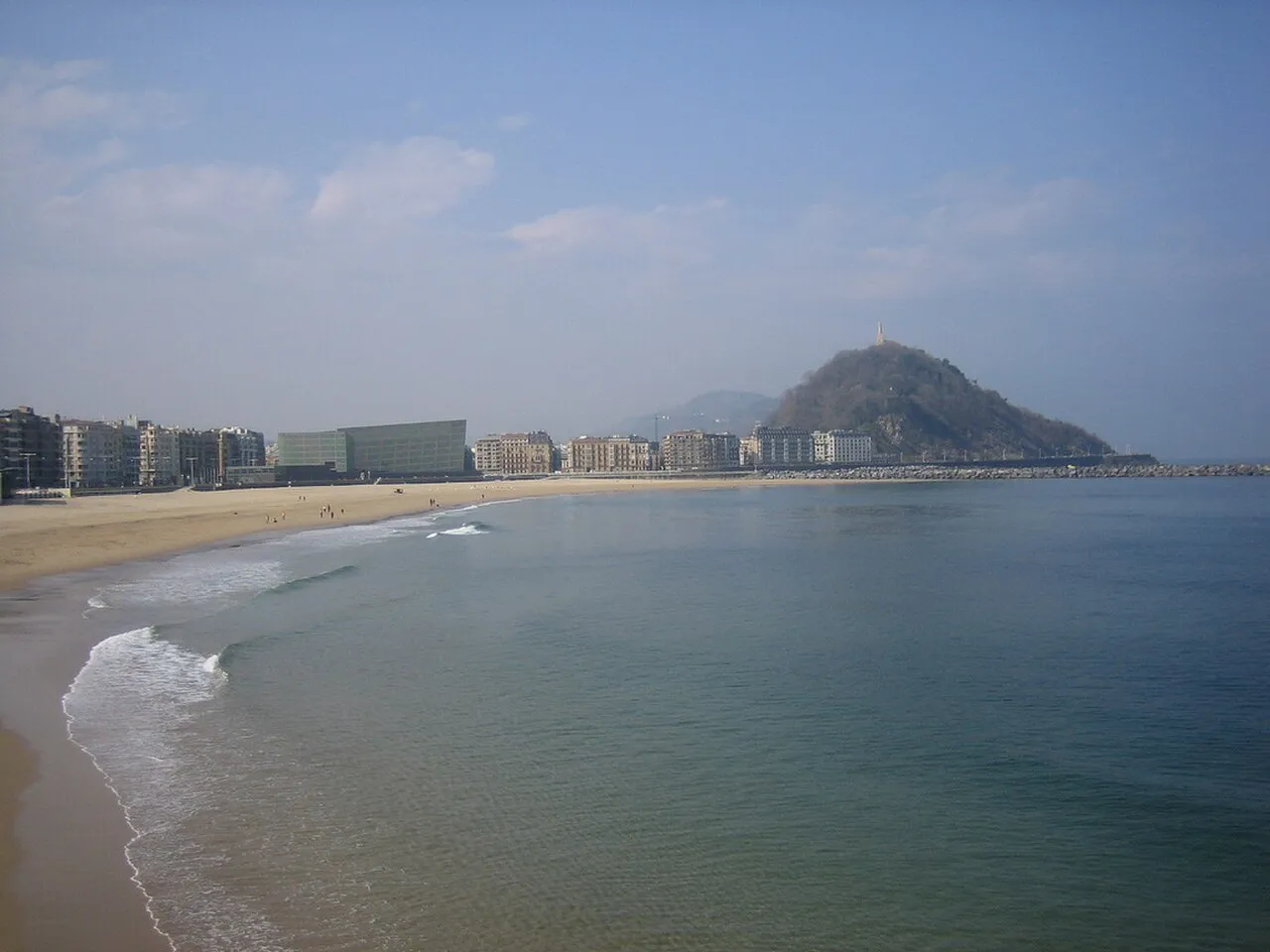
Its water is calm for a geographical reason: the bay is closed by two hills and Santa Clara island plugs its mouth. That natural shelter is exactly what allowed the Spanish summer holiday to be born here, when sea bathing was prescribed as a medical treatment.
Walk the whole promenade, two flat kilometres as far as Ondarreta. On the way, the white railing of 1910, whose profile is then repeated in lamp posts and clocks all over the city; the balneario of La Perla; and the City Hall, which was the Gran Casino until gambling was banned in 1924.
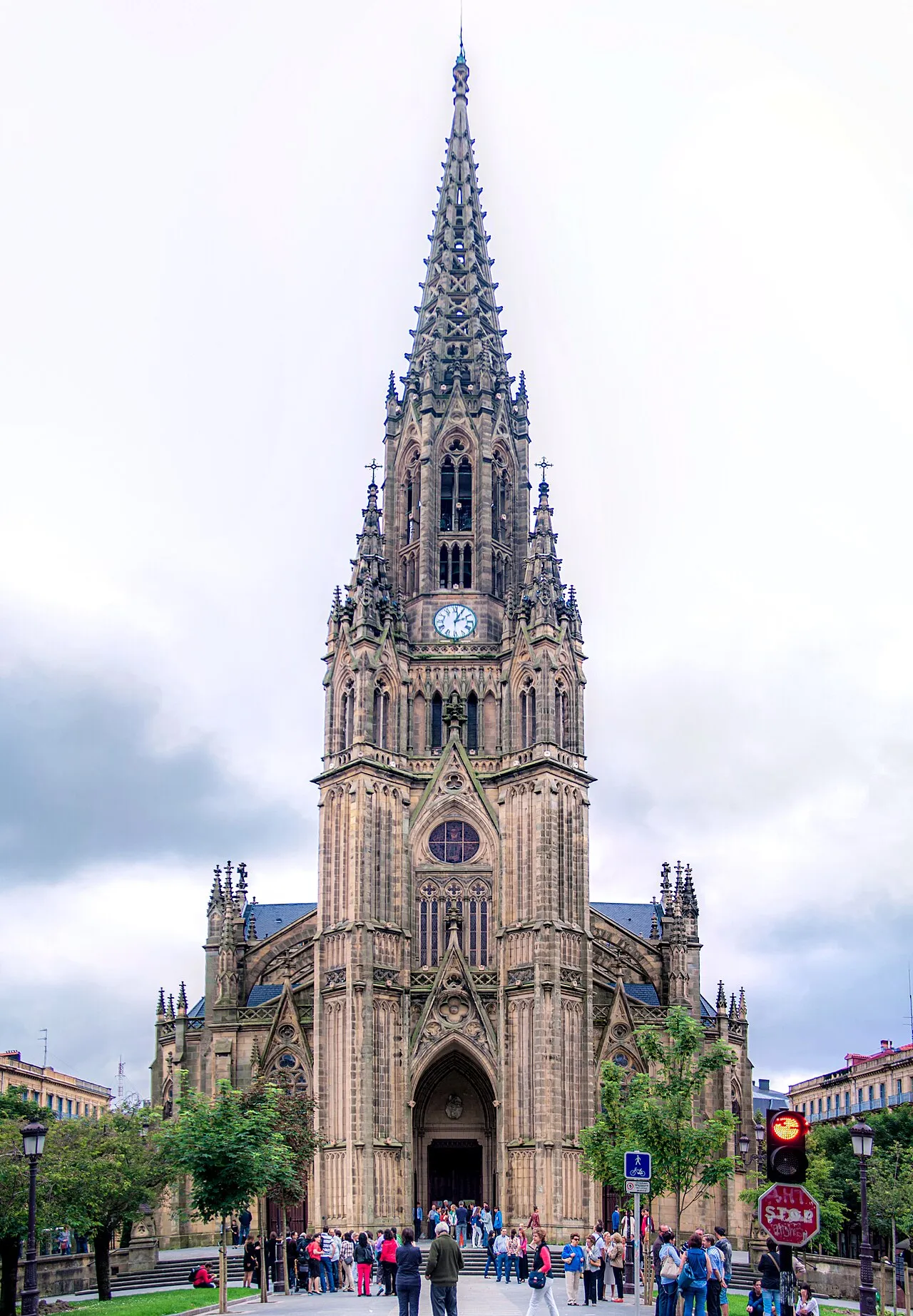
If there is time left in the afternoon, turn three blocks inland and look for the Buen Pastor Cathedral. Its spire is over seventy-five metres and it is still the tallest building in the city, but it lies off the beach-to-old-town axis and many people spend several days without seeing it.
At low tide an enormous, firm stretch of sand appears that you can walk along almost to the island; at high tide the water comes practically up to the wall. Look at the tide table before going down. Santa Clara island is visited by boat from the harbour in season, and almost nobody crosses.
Neo-Gothic, from 1897, with Cologne Cathedral as its declared model and sandstone from Monte Igueldo. Residents paid for a good part of it. It was not placed beside the beach but in the middle of the ensanche, with the streets converging on it: it is the piece that orders the bourgeois city.
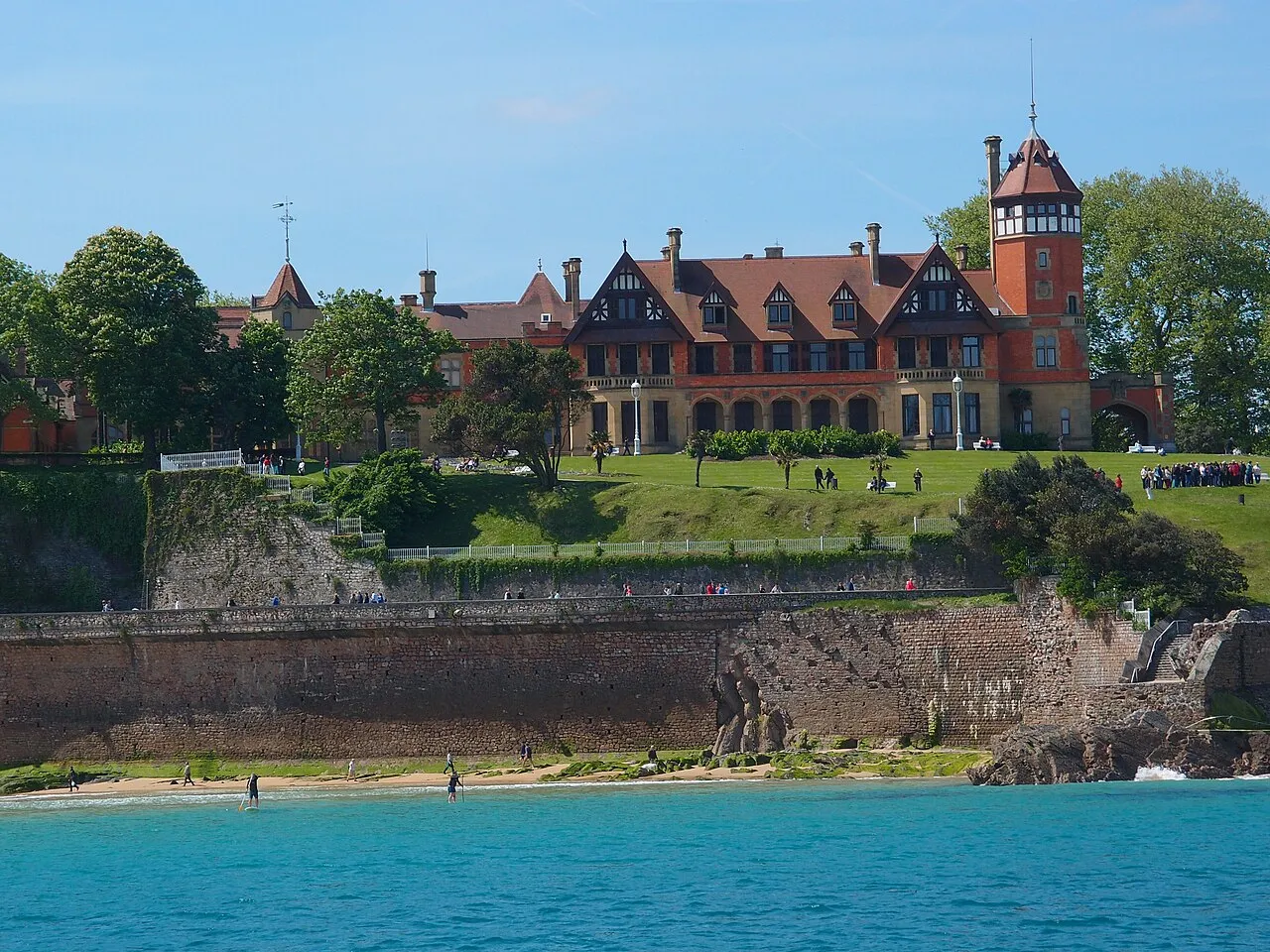
It looks like an English cottage because an English architect designed it for an Austrian queen who fell in love with this bay. The interior cannot be visited, but the gardens are free and from the rise you look down on La Concha on one side and Ondarreta on the other.
The second day is the walk westwards, and it is worth doing in order because it tells a story. First the Miramar gardens, going up over the rise instead of through the Pico del Loro tunnel: five minutes more and the best view of the bay you can get without climbing a hill.
That palace was built at the order of Queen María Cristina of Habsburg, and that personal decision changed the fate of the city: where the court went, the bankers, the diplomats and the grand hotels went too. In 1885 this was a garrison town and a fishing port; thirty years later, the most elegant summer destination in Spain.
Go down to Ondarreta, which is La Concha's little sister, with finer sand, fewer people and shaded gardens behind. Its name means literally sandy place, from the Basque ondar. And carry on to the end, where the Peine del Viento is.
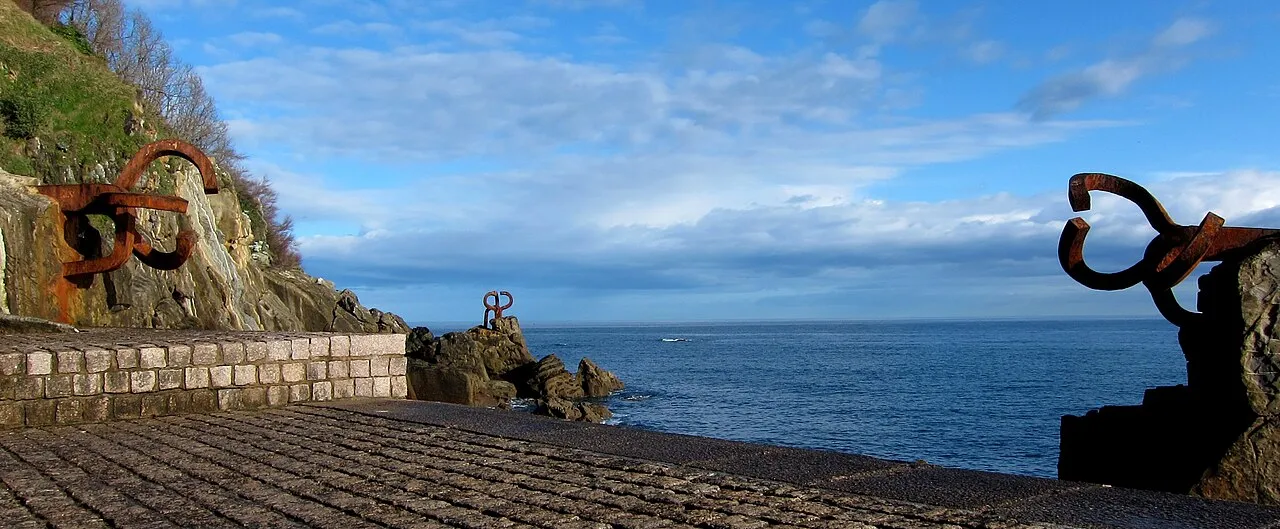
There it is worth knowing one thing: it is not one sculpture but three, spread over the rocks, and Chillida did not put them there to be looked at but so that they would comb the wind. Peña Ganchegui's pink stone square has holes through which, in a heavy sea, the water shoots out in columns of foam. With a flat sea you lose half of it.
Three pieces of ten tonnes each, forged in Legazpi and anchored into the living rock, unveiled in 1977. It is Peine del Viento XV: Chillida had spent almost thirty years turning the same idea over. The platform closes for safety in a storm.
The same calm water as La Concha, finer sand and considerably fewer people in high season. For years it was called the beach of the priests and the gentry, after the aristocracy who summered in the villas of the Antiguo neighbourhood. It has shaded gardens behind it.
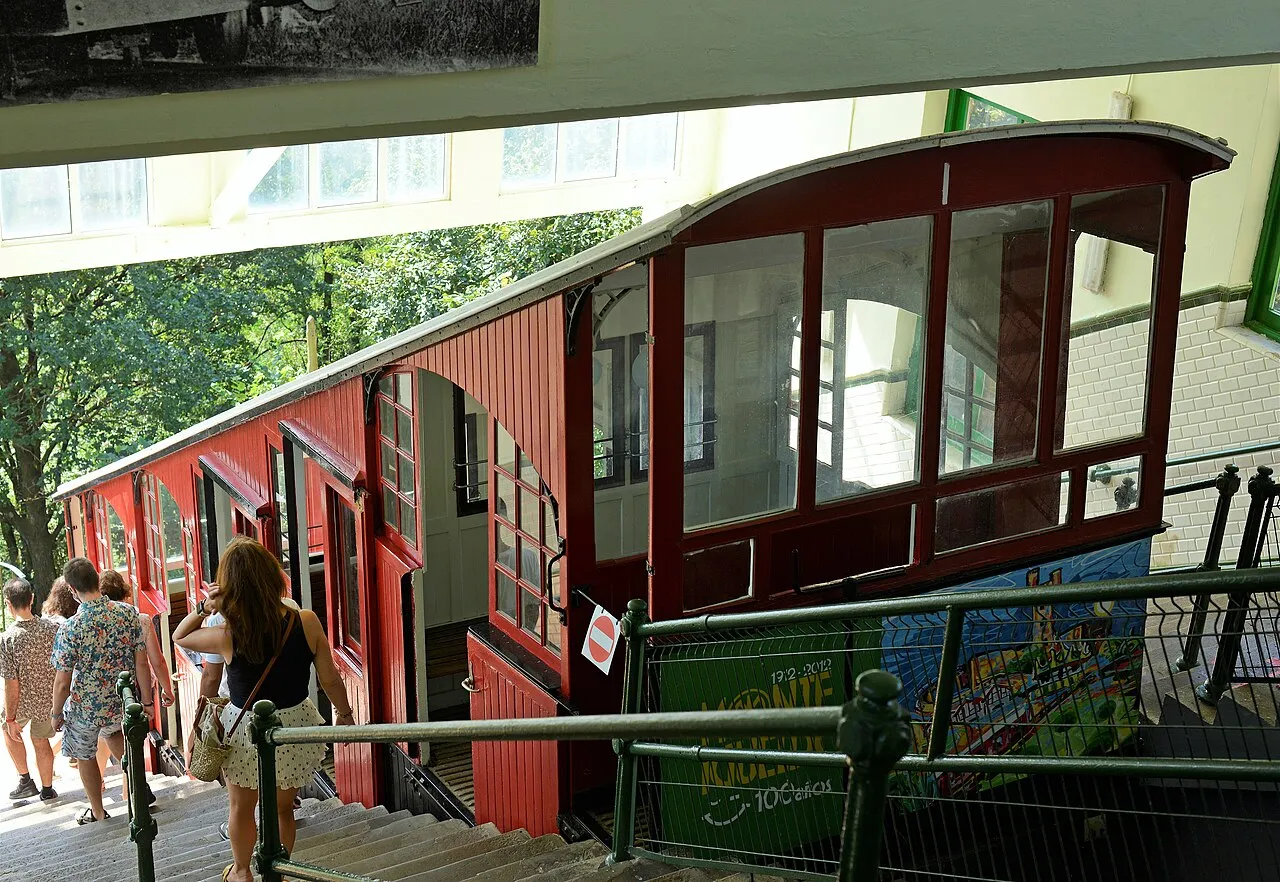
It has run since 1912 and climbs to the viewpoint from which you see the whole bay with the island in the centre: the classic image of the city. At the top there is a rather particular old funfair, but the view is worth it on its own.
Cross the river and change city. Gros is the young neighbourhood, with a more local crowd than the Parte Vieja, and its beach, the Zurriola, lies outside the sheltered bay: it takes the swell of the Cantabrian head on and is the sanctuary of surfing in San Sebastián. Two different seas ten minutes apart.
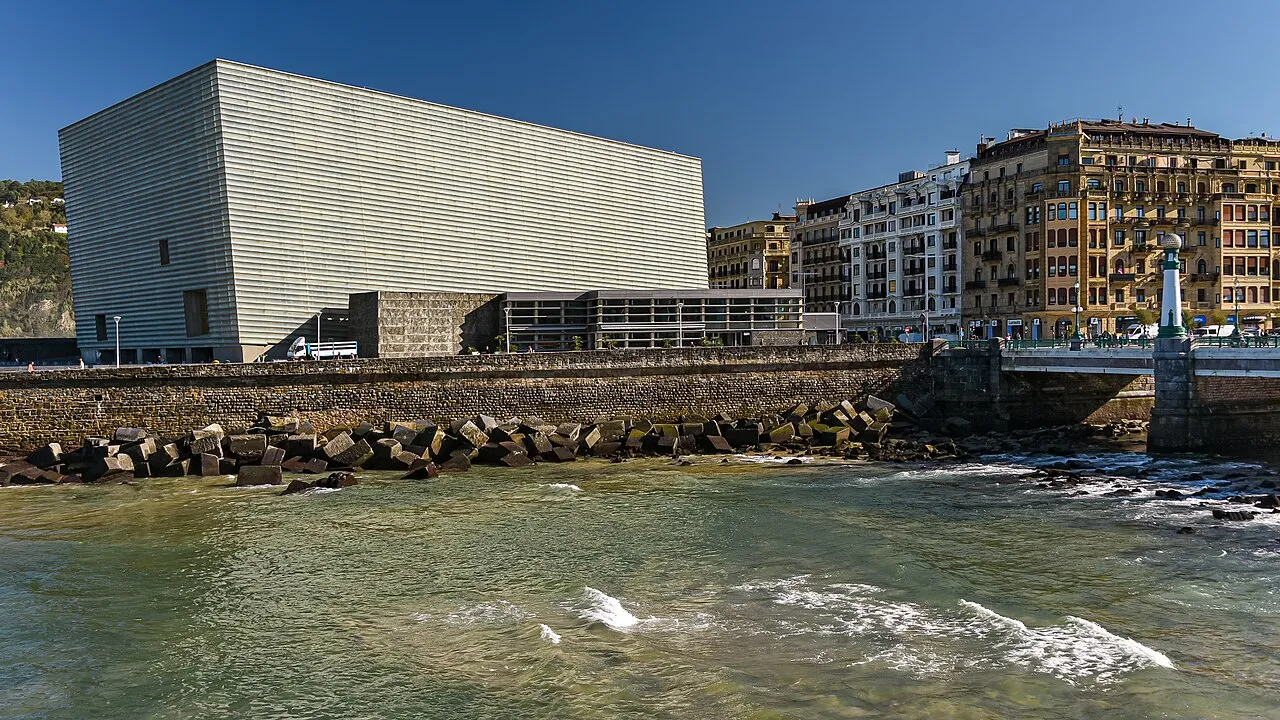
At the mouth of the river is the Kursaal, two leaning glass prisms that Rafael Moneo called beached rocks. He separated them deliberately so as not to close off the relationship between the sea and the city, and the curved double-skin glass filters the northern light, so the building changes colour through the day.
At the end of the beach, on the Sagüés point, is Néstor Basterretxea's Dove of Peace, placed there in 1980, one of the hardest years of the terrorism. It was not an ornament: it was a public statement at a moment when making one carried a cost.
And if there is time to spare or the weather turns, cross to Egia and go into Tabakalera, the old tobacco factory. A good part of the building is freely accessible, and on the top floor there is a free rooftop viewpoint almost nobody knows about. Next door is the Cristina Enea park, the best in the city, with peacocks roaming free.
It opened in 1999 on the site of the old Gran Kursaal, a Belle Époque casino that was left without a purpose when gambling was banned in 1924. The name is German and means cure hall, from when sea bathing was a medical treatment. At nightfall it lights up from inside.
Eight hundred metres of sand beaten by the open sea, with surf schools on the promenade itself and activity all year round. The present stretch of sand had to be regenerated with a breakwater: the storms of the twentieth century almost made it disappear. Watch the flags, which here really do matter.
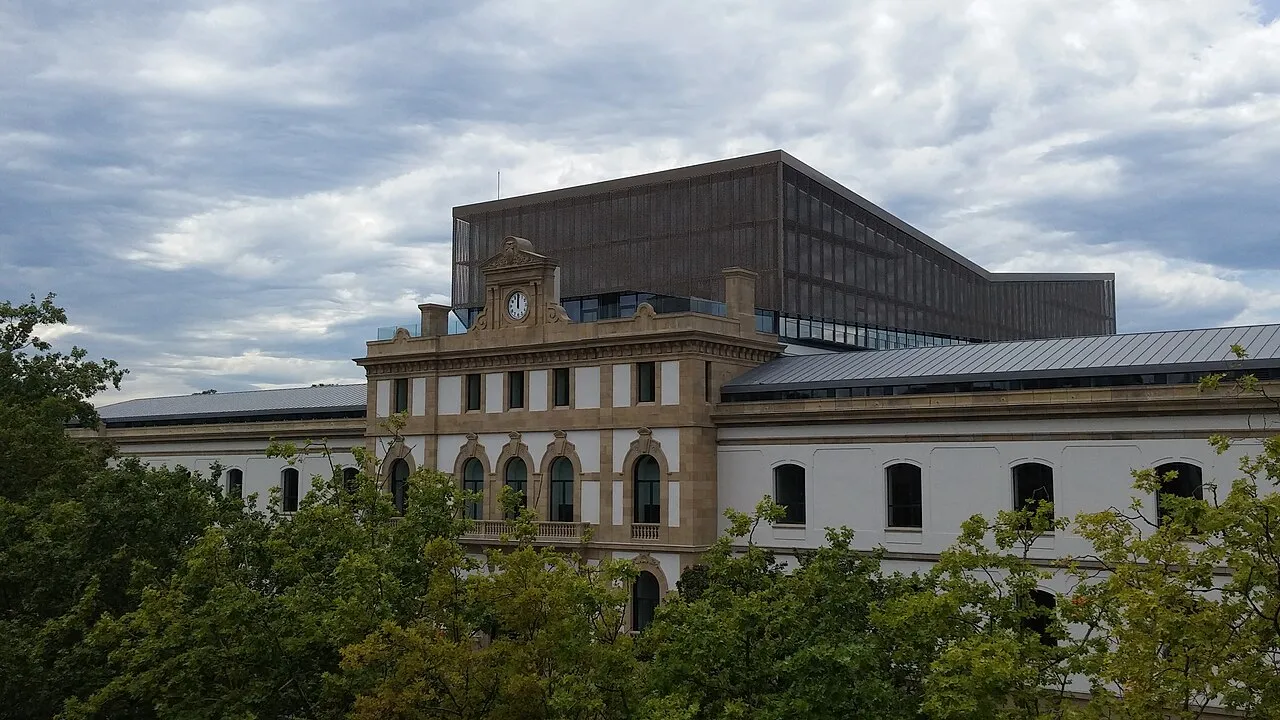
A tobacco factory for almost a century, with a largely female workforce and a strong union consciousness. It closed in 2003, stood empty for twelve years and reopened as a cultural centre in 2015. A media library and a library open to all, and the rooftop on the top floor.
Yes, comfortably. The city is small, flat and can be walked from end to end. Two days cover the Parte Vieja, Monte Urgull, the whole bay as far as the Peine del Viento, the Gros neighbourhood with the Zurriola and Tabakalera. With a third day you can fit in a trip to Pasaia or Hondarribia and an unhurried meal at an asador, a grill restaurant.
When is the Peine del Viento best seen?
With a moving sea, not with a flat one. The stone square around the sculptures has holes through which the water shoots out in columns of foam when a swell comes in, and that is the effect it was designed for. In a full storm the platform closes for safety, so the right point is a moderate swell.
Is it worth going up Monte Igueldo?
Yes, for the panorama of the whole bay with Santa Clara island in the centre, which is the classic image of the city and is not to be had from anywhere else. You go up on a funicular that has run since 1912, from the square next to the Peine del Viento. The funfair at the top is peculiar and optional.
What is the difference between La Concha and the Zurriola?
Geography. La Concha is inside a bay closed by two hills and with the island plugging its mouth, so the water is calm. The Zurriola lies outside that shelter, takes the swell of the Cantabrian head on and is the surfing beach. They are ten minutes' walk apart and they are two completely different seas.
Where should you stay?
The centre and the ensanche leave everything ten or fifteen minutes away on foot and are the most practical option. Gros is somewhat cheaper, has a better neighbourhood feel and is five minutes from the Parte Vieja across the bridge. The Parte Vieja is the most picturesque but also the noisiest at night.
Is it very expensive?
Quite, above all for accommodation and eating out, and in summer prices rise sharply. The compensation is that almost everything important is free: the beaches, Monte Urgull with its interpretation centre, the Miramar gardens, the Peine del Viento and the Tabakalera rooftop. And you do not need to spend on transport.
Practical information
Getting thereHondarribia airport 20 minutes away. Bilbao an hour by bus; Biarritz 45 minutes.
Getting aroundEverything on foot and flat beside the water. City bus for Igueldo and Egia.
FreeThe beaches, Monte Urgull, the Miramar gardens, the Peine del Viento and the Tabakalera rooftop.
TidesCheck the table: at high tide there is barely any sand left at La Concha.
EatingPintxos in the Parte Vieja and in Gros. One or two per bar and keep moving.
If it rainsThe San Telmo Museum, Tabakalera and the Aquarium at the harbour. It rains at any time of year.
On the map
🎧 With Viavoy
Walk San Sebastián and listen at your own pace
Download Viavoy and walk San Sebastián offline, whenever you like.
from 2,99 €· one-off payment
City Pass · 9,99 €3 days, all the tours in San Sebastián