The Parte Vieja of San Sebastián: one street survived the fire
Why the old town is a grid and not a maze, what happened in 1813 and what to look at on each street. With the climb up Monte Urgull and the only house left standing.
Anyone who walks into the Parte Vieja expecting the usual medieval maze gets a surprise: the streets are straight, parallel and regular, like a small grid slotted in under the hill. The explanation is that this neighbourhood is not medieval but from 1817, and that what was here before burned to the ground. Only one street survived the fire, and you can still walk along it.
Calle 31 de Agosto carries the date of the fire and is the only one left standing. Every 31 August the city walks it by candlelight alone, with the electric street lighting switched off.
What happened in 1813
A liberation that ended in sacking.
In August 1813, during the Peninsular War, the allied Anglo-Portuguese troops laid siege to San Sebastián to drive out the Napoleonic garrison. The city was taken, but what followed was not a liberation: the soldiers gave themselves over to looting and the city burned for days.
Of the whole walled precinct barely a few dozen houses were left standing, almost all of them on a single street, sheltered by the hill. The survivors gathered in a nearby village, Zubieta, and decided to rebuild the city from scratch on the same spot.
The new plan was laid out on a grid, with straight streets and regular blocks, following criteria of hygiene and circulation that had nothing left to do with medieval town planning. That is why this old town looks more like an extension in miniature than like an old town.
The street that survived is today called 31 de Agosto, after the exact date. Every year, on that night, the city walks it lit only by candles, with the electric lighting switched off, and it is one of the most sober and most moving events in the city's calendar.
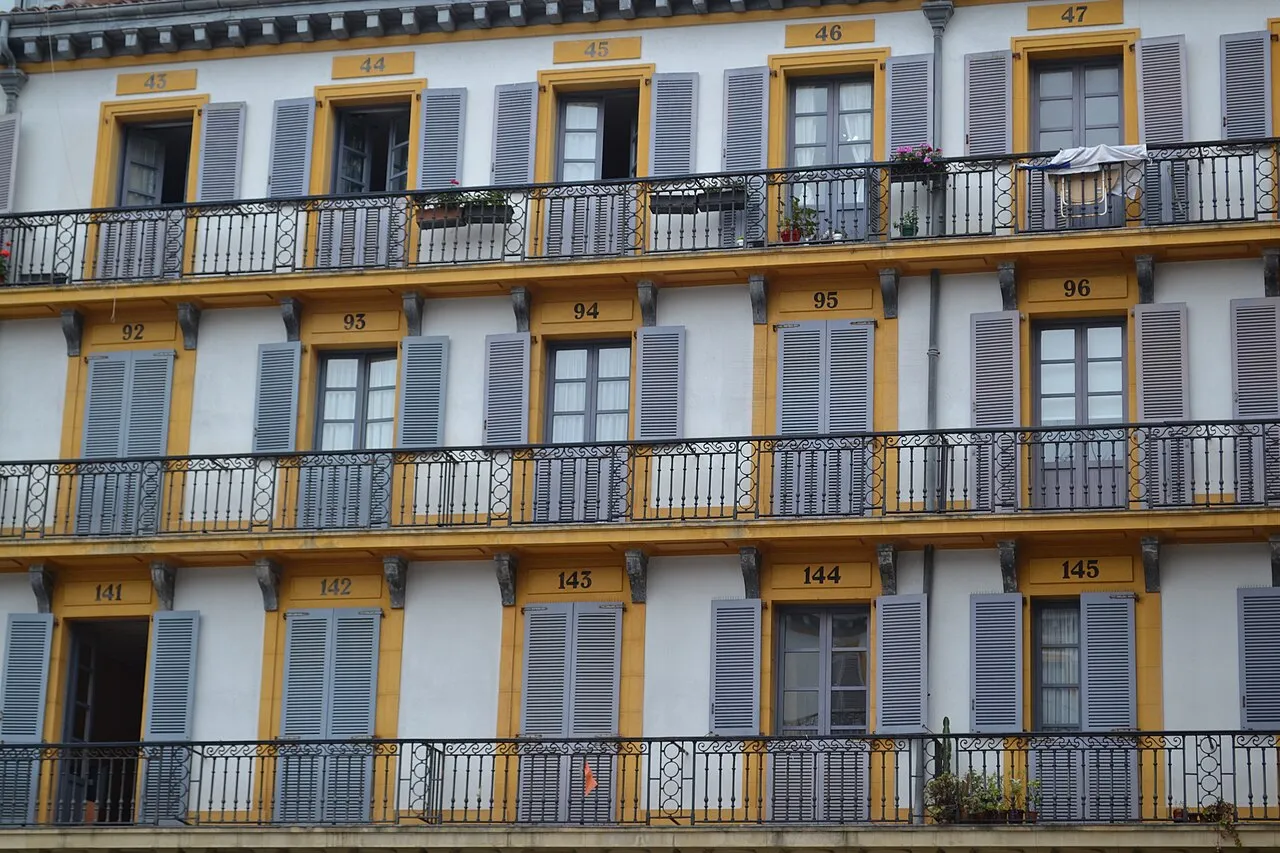
Built in 1817 as the centrepiece of the rebuilt neighbourhood, with colonnades below and galleries above. The numbers painted over the balconies were seats that residents rented out on bullfight days: the square worked as a bullring.
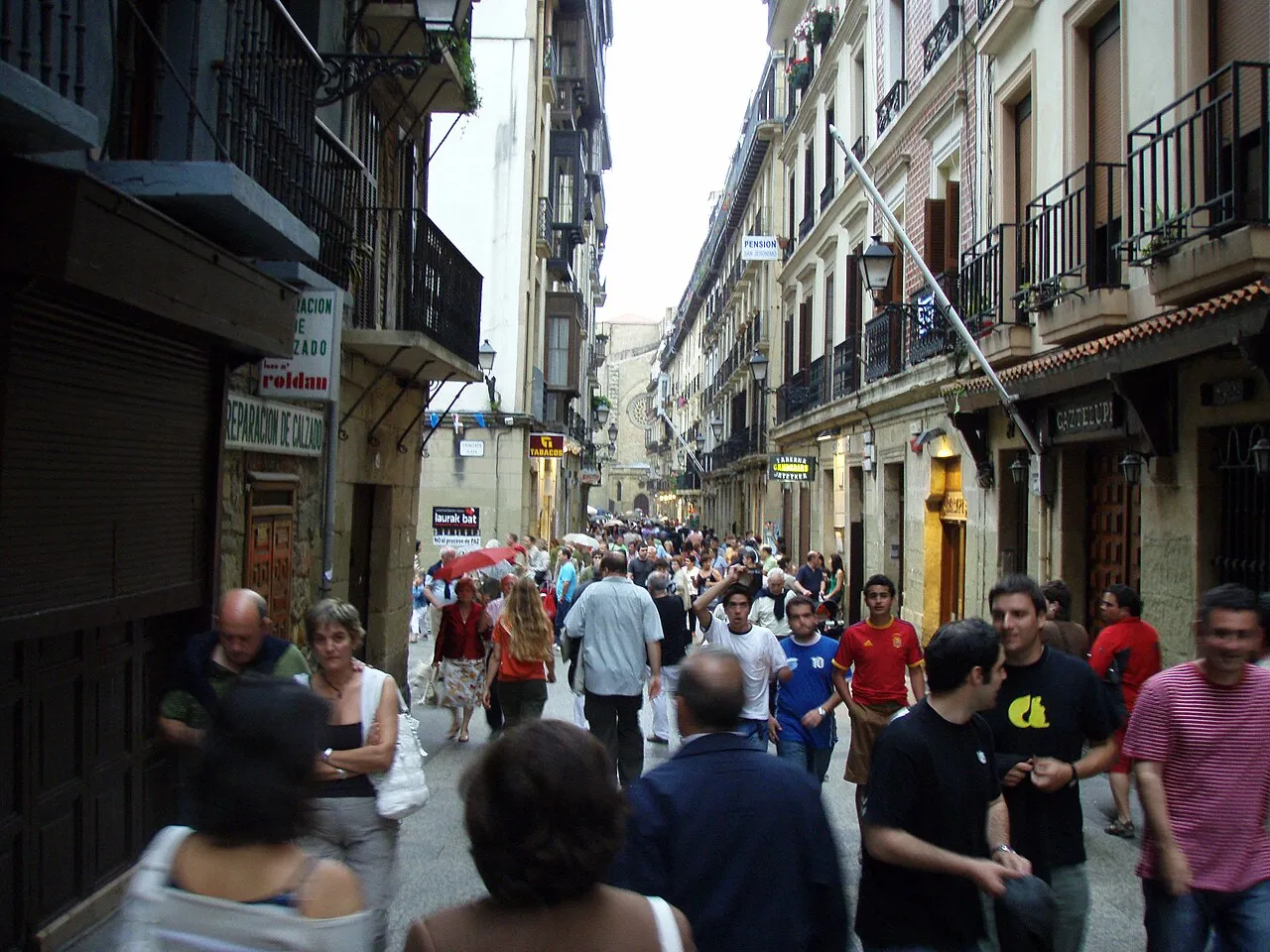
The only one that survived the fire, sheltered by the hill. On it stand the basilica of Santa María del Coro and the Church of San Vicente, the two religious buildings left standing, and today it holds some of the most veteran bars in the neighbourhood.
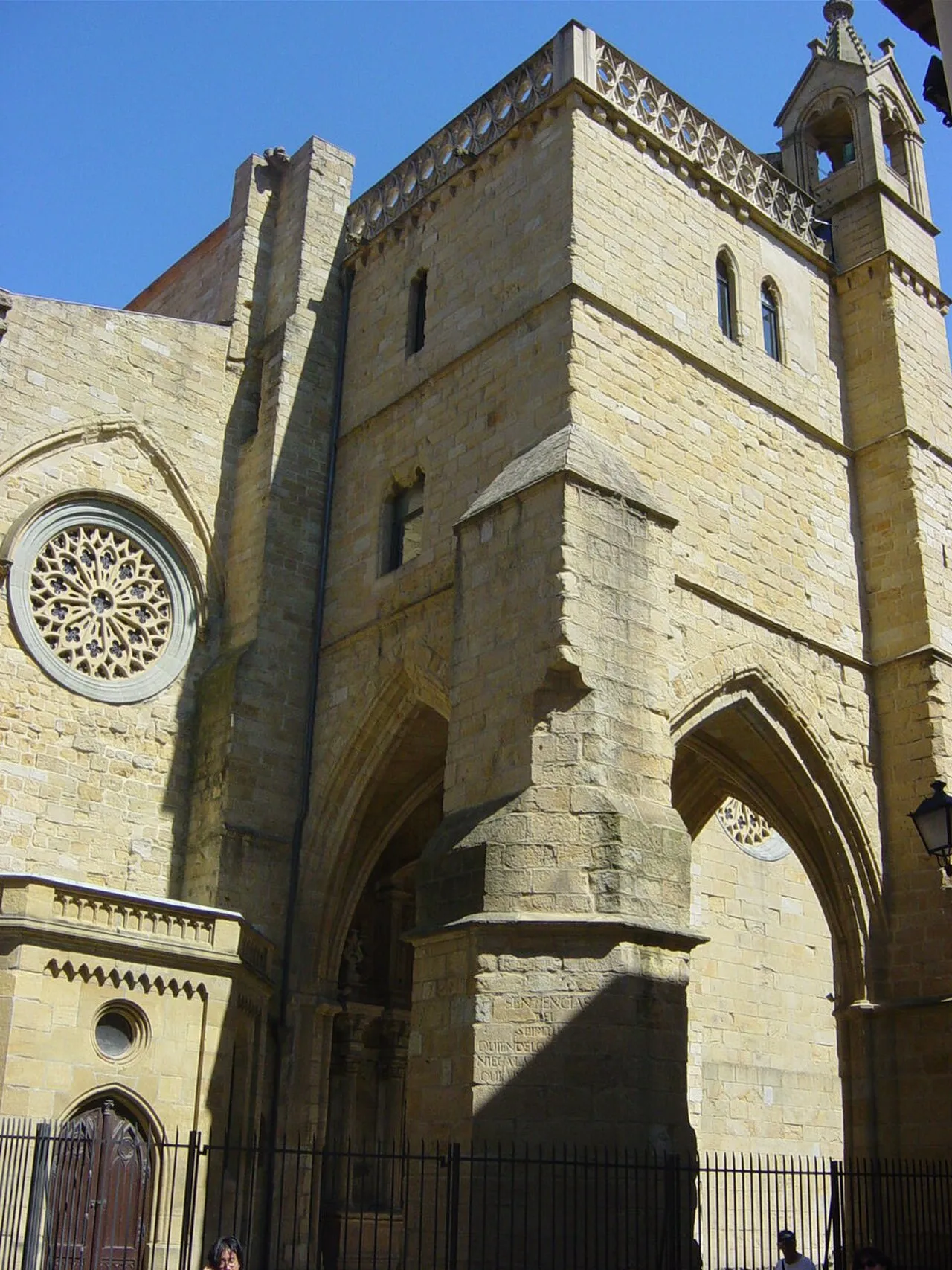
The oldest surviving building in the city, Gothic from the beginning of the sixteenth century, with a Renaissance high altarpiece in gilded wood. It survived the fire because of its position pressed against the hill, like the street around it. Free entry.
Download the app and discover San Sebastián offline, whenever you like. Take the walking tour The Parte Vieja and Monte Urgull with a local guide in your ear.
The neighbourhood is a rectangle barely three hundred metres a side and you can walk all of it in twenty minutes, so the point is not avoiding getting lost but knowing what you are looking at. The social axis is the Plaza de la Constitución; the religious one, calle 31 de Agosto with its two churches.
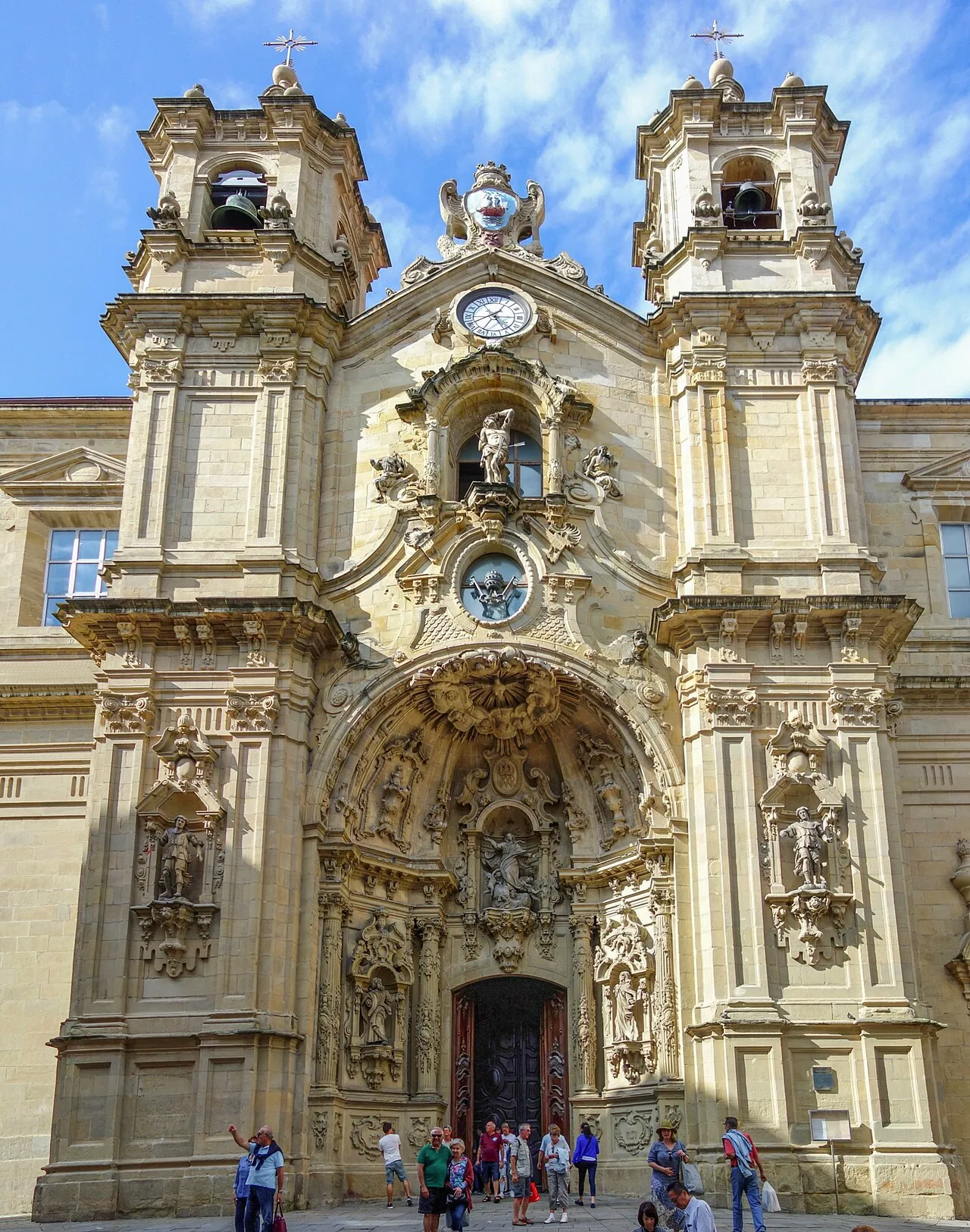
The basilica of Santa María del Coro closes the neighbourhood on the hill side and has a Baroque doorway out of all proportion to the size of the building, with an enormous niche above the opening. It is deliberately aligned with the Buen Pastor Cathedral, on the other side of the city: from its door you see the spire at the end of the street.
The San Telmo Museum occupies a sixteenth-century Dominican convent leaning literally on the rock of the hill, extended with a contemporary block whose perforated façade has plants growing through it. Inside are the history of Basque society and the great Sert canvases that cover the old church.
And to the north, the neighbourhood opens onto the fishing harbour, with the fish halls, the boats and the Aquarium at the end of the quay. It is the side that has changed least and where you can still see what this city did for a living before the court arrived.
Monte Urgull, which is the other half
The neighbourhood makes no sense without the hill that backs it, and it is not a park that became a fortress but a fortress that became a park. As you climb, batteries of cannon, sentry boxes, powder magazines and stepped walls from every period appear, from the medieval castle to the artillery defences of the eighteenth century.
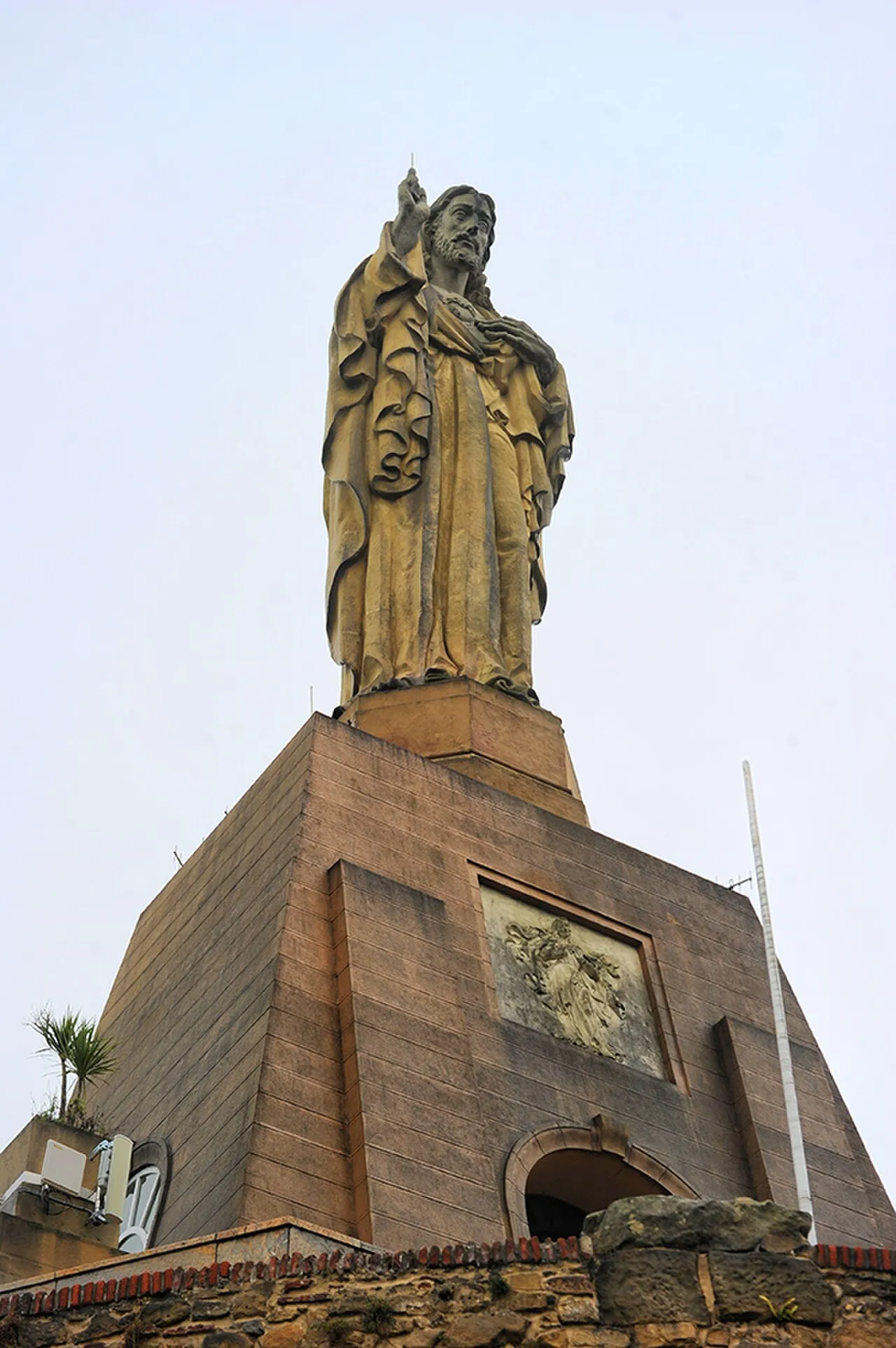
There are several paths up, the most direct from behind the San Telmo Museum, twenty minutes of gentle, shaded slope. At the top, the statue of the Sacred Heart rises above the walls of the castle of La Mota, whose core goes back to the twelfth century.
Inside the castle is the Casa de la Historia, a free interpretation centre that tells the military past of the city, including the siege of 1813. It is the best way to understand why the neighbourhood below has the shape it has.
And there is a corner almost nobody finds: the English cemetery, on the slope, where British soldiers fallen in the Carlist Wars are buried. It is small, it is somewhat hidden and it is one of the quietest places in the city.
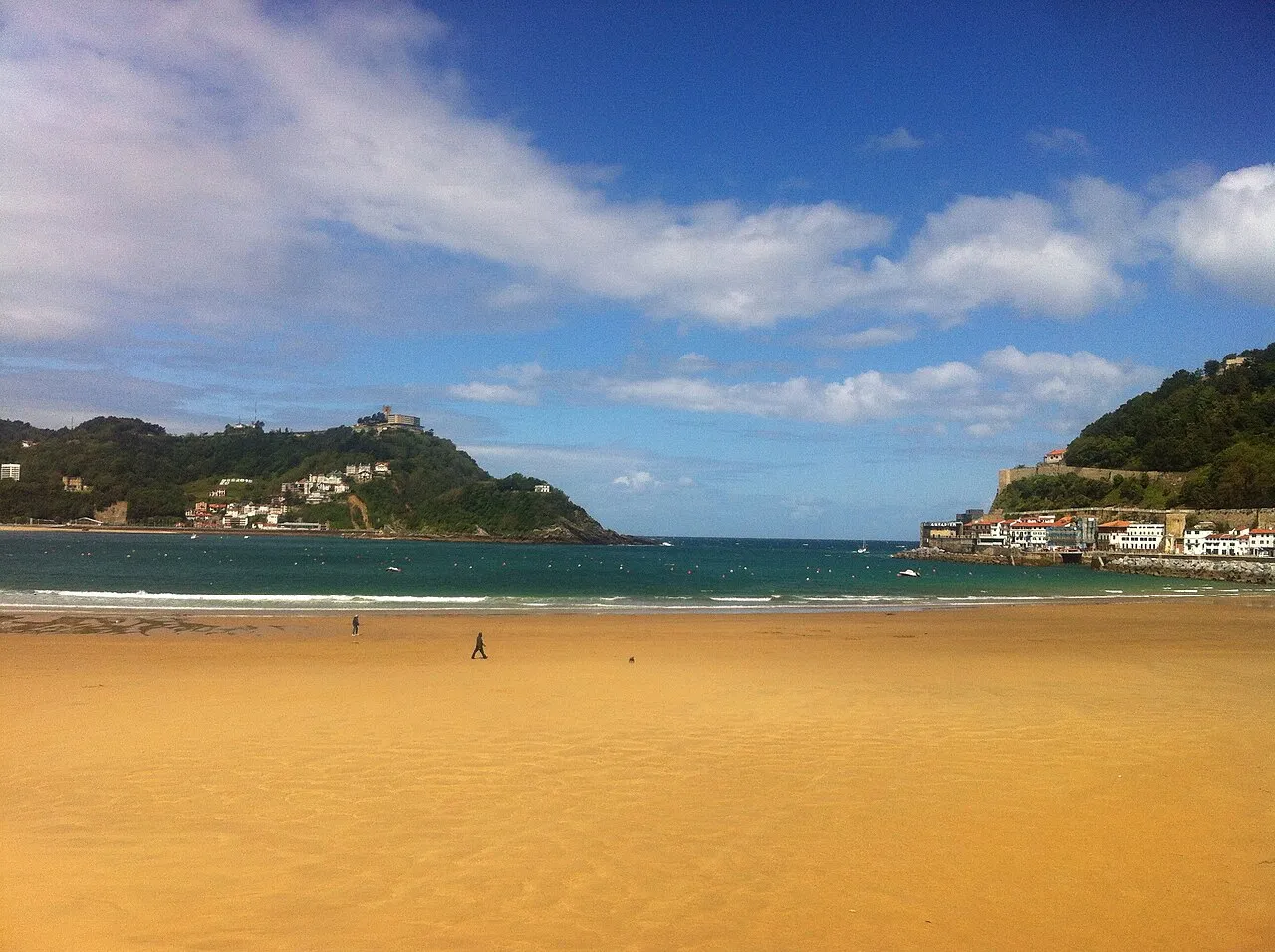
From the top you see the whole bay on one side and the mouth of the river with the Kursaal on the other. Looking down, you can make out perfectly the grid of the Parte Vieja, which is the visual proof that the neighbourhood was rebuilt from scratch.
A Baroque doorway out of all proportion to the size of the church, with an enormous niche above the opening. It is deliberately aligned with the Buen Pastor Cathedral, at the other end of the city: from its door you see the spire at the end of the street.
Fish halls, boats and the Aquarium at the end of the quay. It is the side of the neighbourhood that has changed least and where you see what the city did for a living before the court arrived. A good area for eating fish without entering the pintxo circuit.
Because it is not medieval: it was rebuilt from scratch in 1817 after the fire of 1813, when the Anglo-Portuguese troops liberating the city from the Napoleonic garrison ended up sacking and burning it. The new plan was laid out on a grid following criteria of hygiene, and that is why it looks like an extension in miniature.
What is calle 31 de Agosto?
The only street that survived the fire of 1813, protected by its position pressed against the hill, and which carries as its name the exact date of the disaster. On it stand the two churches that were left standing. Every 31 August the city walks it lit only by candles, with the electric lighting switched off.
How long does it take to see the neighbourhood?
The old town itself is a good two hours: the square, the two churches, calle 31 de Agosto and the harbour. With Monte Urgull and the San Telmo Museum, a full half-day. The neighbourhood is barely three hundred metres a side, so there is no dead time getting from one place to the next.
How do you get up Monte Urgull?
On foot, by several paths. The most direct starts behind the San Telmo Museum and takes about twenty minutes of gentle, shaded slope. You can also go up from the harbour or from the Paseo Nuevo, which skirts the hill on the sea side. Access is open and free, with park opening hours.
What is the Casa de la Historia?
A free interpretation centre installed inside the castle of La Mota, at the top of the hill, devoted to the military past of the city and to the siege and fire of 1813. It is short and well done, and it is the best way to understand why the neighbourhood below has the shape it has.
Is it a good area to stay in?
It is the most picturesque and the most central, but also the noisiest: the bar scene stretches on into the small hours, especially from Thursday to Sunday. Anyone looking for rest will do better in the ensanche or in Gros, both less than ten minutes away on foot and far quieter at night.
Practical information
WhereBetween the Boulevard and Monte Urgull, at the east end of the bay.
DurationTwo hours for the neighbourhood; half a day with the hill and San Telmo.
FreeMonte Urgull, the Casa de la Historia and the churches.
The climb20 minutes of gentle slope from behind the San Telmo Museum.
EatingThe highest density of pintxo bars in the world. One or two per bar.
Watch outIt is the noisiest area for sleeping, above all from Thursday to Sunday.
On the map
🎧 With Viavoy
Walk San Sebastián and listen at your own pace
Download Viavoy and walk San Sebastián offline, whenever you like.
from 2,99 €· one-off payment
City Pass · 9,99 €3 days, all the tours in San Sebastián