1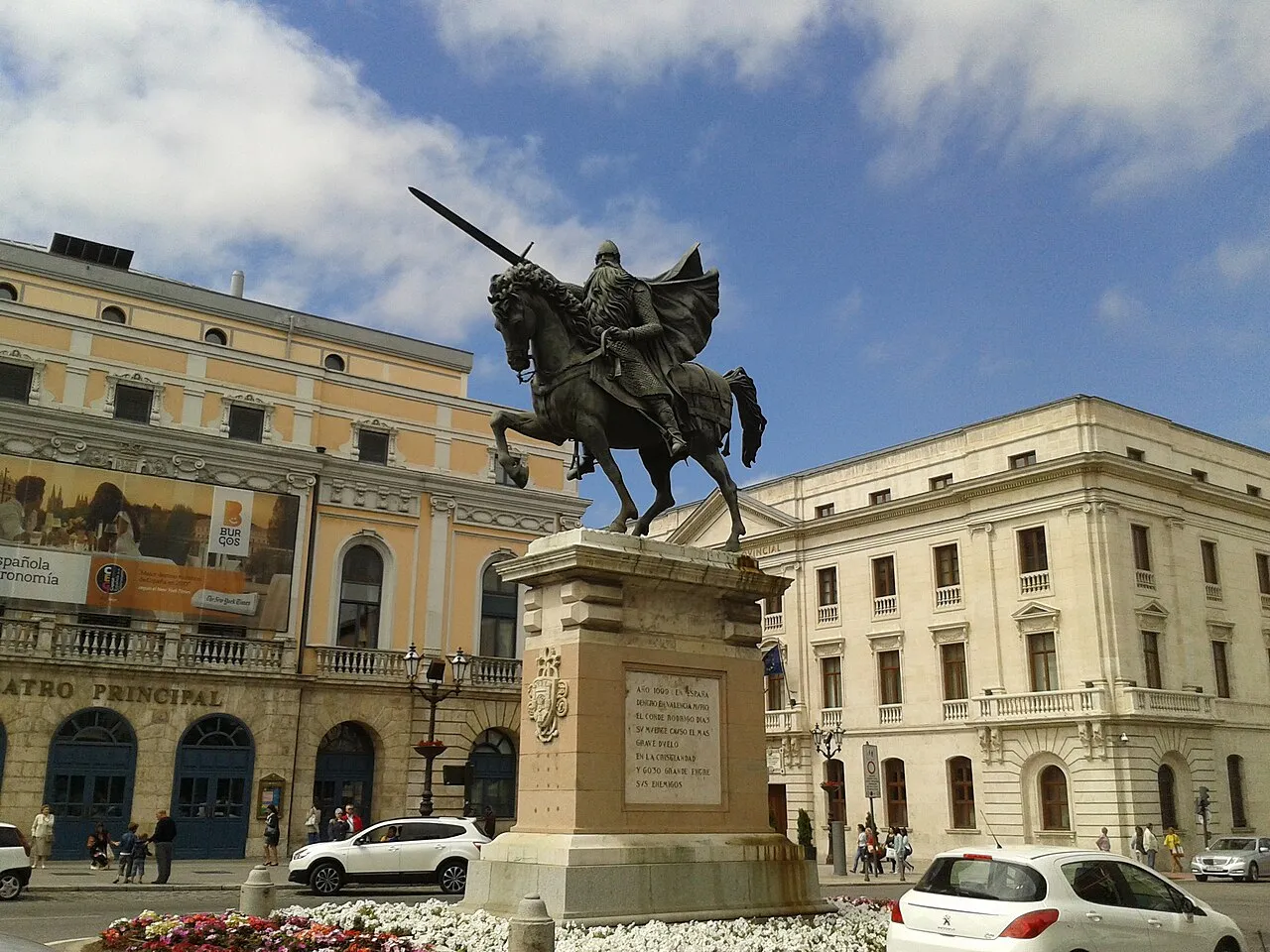
Statue of El Cid
📍 Beside the San Pablo bridge
By Juan Cristóbal, 1955. A warrior launched into the charge, looking towards the horizon of exile. Ten minutes, and cross the bridge afterwards.
An Arabic nickname, a Latin one, an exile that begins in these streets and the first great epic poem in Spanish. The city's five Cid stops.
🎧 On the walk El Cid, the Castle hill and the upper churchesBurgos claims El Cid entirely, and with reason: he was born a few kilometres away, the opening of the Cantar de Mío Cid, the Poem of the Cid, takes place in these streets and his bones rest beneath the lantern tower of the cathedral. This is the route, with the five stops where the character stops being legend and turns into stone.
The statue was sculpted by Juan Cristóbal in 1955, and the choice of moment is no accident: this is not a king seated on a throne, it is a warrior launched into the charge on Babieca, cloak and beard in the wind, sword raised.
And he is not looking at the ground: he is looking ahead, towards the horizon he rode off to in exile. Rodrigo Díaz was born in the village of Vivar, a few kilometres away, some time in the 1040s, and died in Valencia in 1099.
What is not always told is how he ended up: in 1094 he took Valencia after a brutal siege and governed it as an independent lord, neither Castile's nor the Muslims', for five years. He was, in fact, almost a king.
Then cross the San Pablo bridge, beside the statue: its parapets are flanked by figures of characters from the Cantar — Jimena, the Infantes of Carrión, bishop Jerónimo, Álvar Fáñez — which work as an index of the poem.
By Juan Cristóbal, 1955. A warrior launched into the charge, looking towards the horizon of exile. Ten minutes, and cross the bridge afterwards.
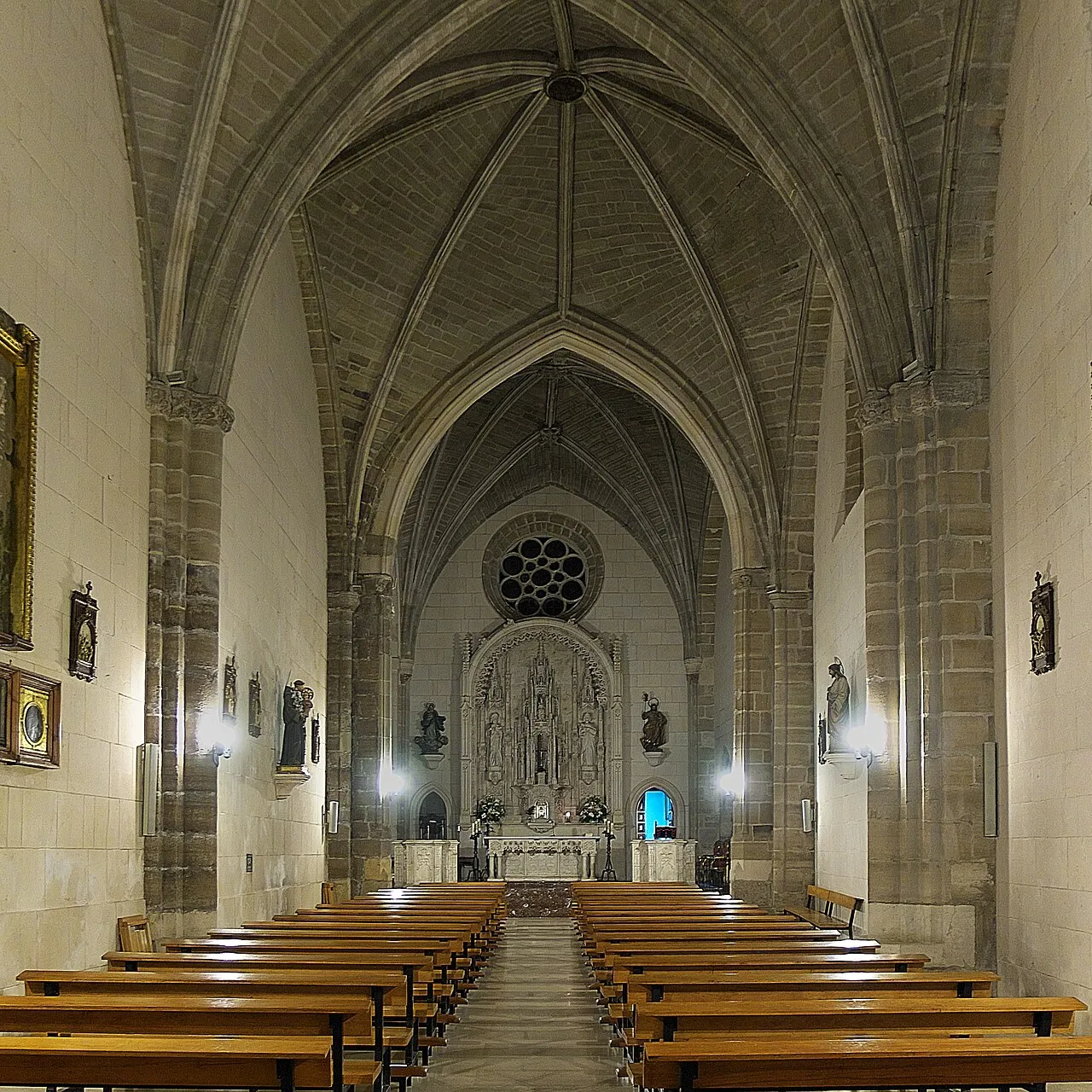
Where tradition places the Oath of Santa Gadea. Modest outside and in: what you visit here is a scene, not a building.
Download the app and discover Burgos offline, whenever you like. Take the walking tour El Cid, the Castle hill and the upper churches with a local guide in your ear.
Find out more about Viavoy →In 1072 king Sancho II of Castile is killed by treachery before the walls of Zamora, and the crown passes to his brother Alfonso, whom many suspect of having had something to do with it. In the church of Santa Águeda, which the people of Burgos call Santa Gadea, El Cid demands that he swear on the Gospels that he took no part in the crime.
And he does not ask him once: he makes him swear three times, looking him in the eye, humiliating the king in front of everyone. Alfonso swore, but he did not forget, and shortly afterwards he sent him into exile.
It is worth being honest: historians doubt that it happened quite like that. The real exile came around 1081 and for a more earthly reason — a military raid he carried out on his own account in the lands of Toledo, which paid tribute to the king — and because of enemies at court.
But the scene entered the ballad tradition, was learned by heart for centuries and passed into painting, theatre and cinema. That it is probably literary does not make it any less important: it is part of the Castilian imagination as much as any documented fact.
The Solar del Cid is three stone pillars set into the pavement, raised in 1784, marking where tradition placed his house. The coats of arms tell the story: the arms of El Cid, those of the city of Burgos and those of the monastery of San Pedro de Cardeña.
That third coat of arms has an explanation: Cardeña, on the outskirts, was almost his second home. When he rode out into exile he left doña Jimena and his two small daughters there, in the care of the monks.
In these same streets the tenderest scene of the Cantar takes place: the king had forbidden by letter that anyone give El Cid lodging or sell him food, and the doors closed as he passed. Then a girl of nine came out and explained to him in tears that they could not help him. El Cid understood, and rode on.
In the Arco de Santa María an authentic bone of El Cid is kept, a piece of arm, in the Sala de Poridad, the room where the town council met in secret. And his remains and those of doña Jimena rest beneath the lantern tower of the cathedral.
The Cantar de Mío Cid, from the twelfth or thirteenth century, is the first great epic poem in Spanish. Burgos does not claim El Cid for marketing: it claims him because the founding text of Spanish literature begins in these streets.
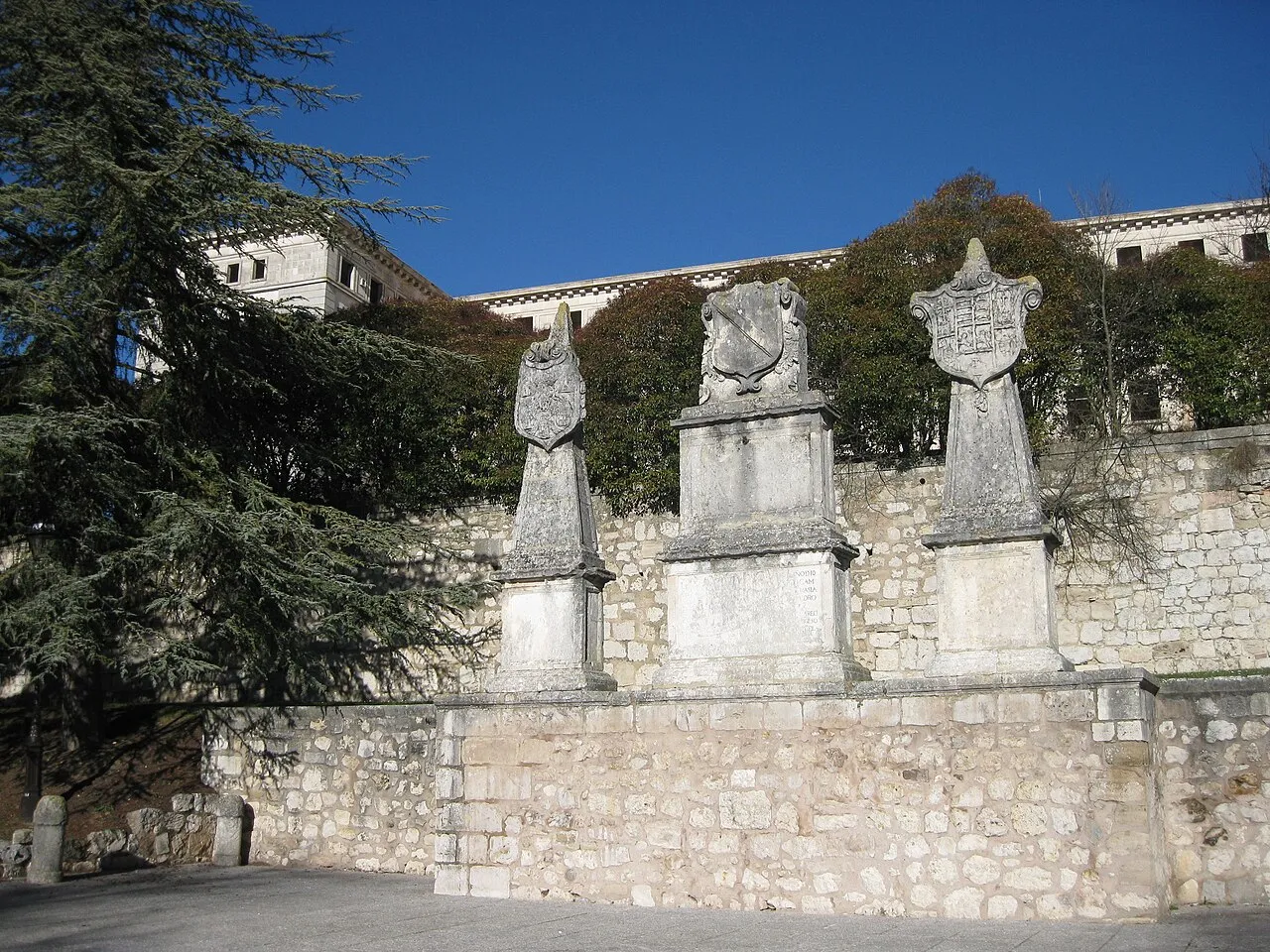
Three pillars from 1784 marking where his house stood, with the coats of arms of El Cid, of Burgos and of the monastery of Cardeña, which sheltered his family.
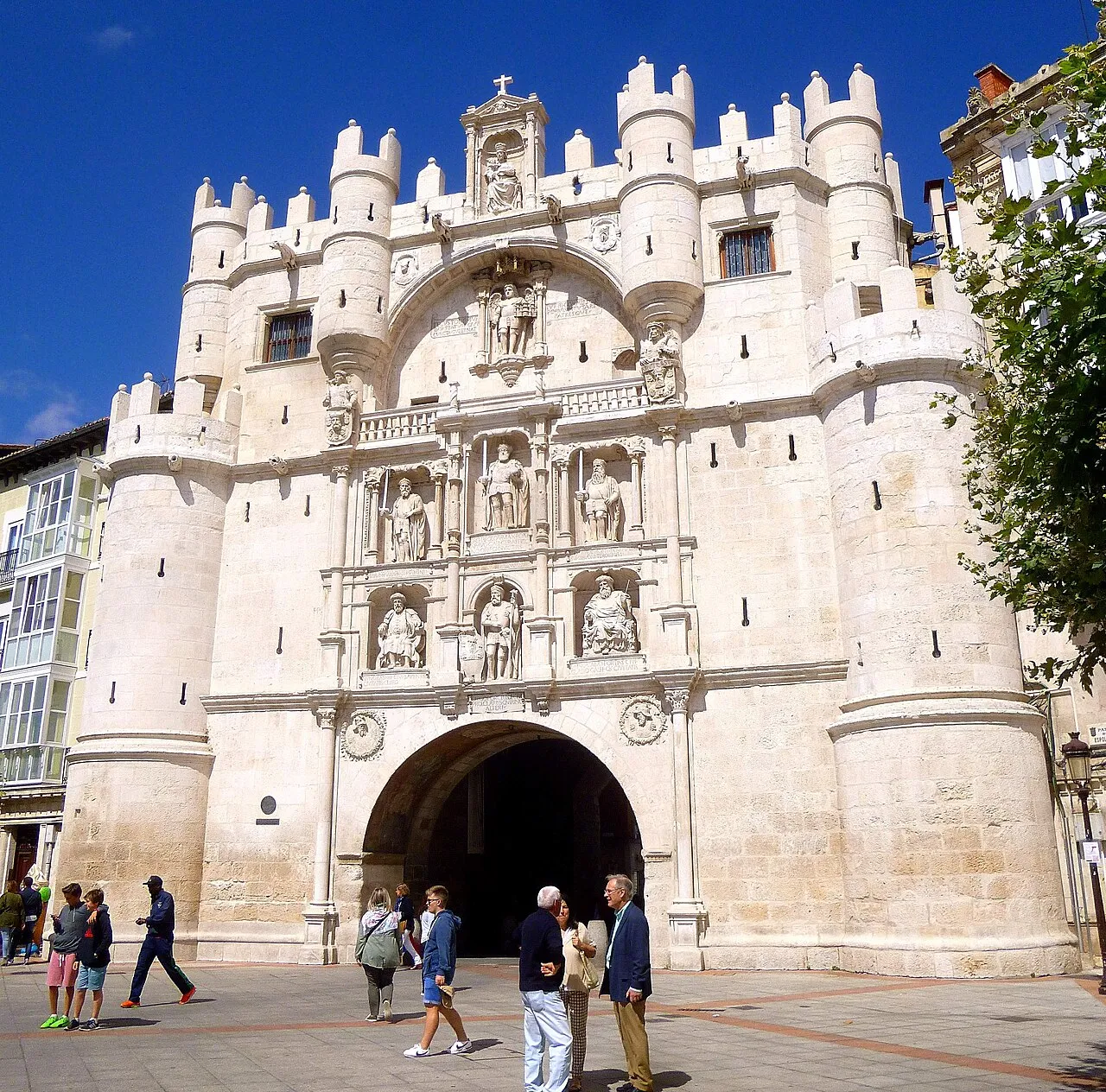
In its Sala de Poridad an authentic bone of El Cid is kept. And on the front, his statue escorting Charles V alongside Fernán González.
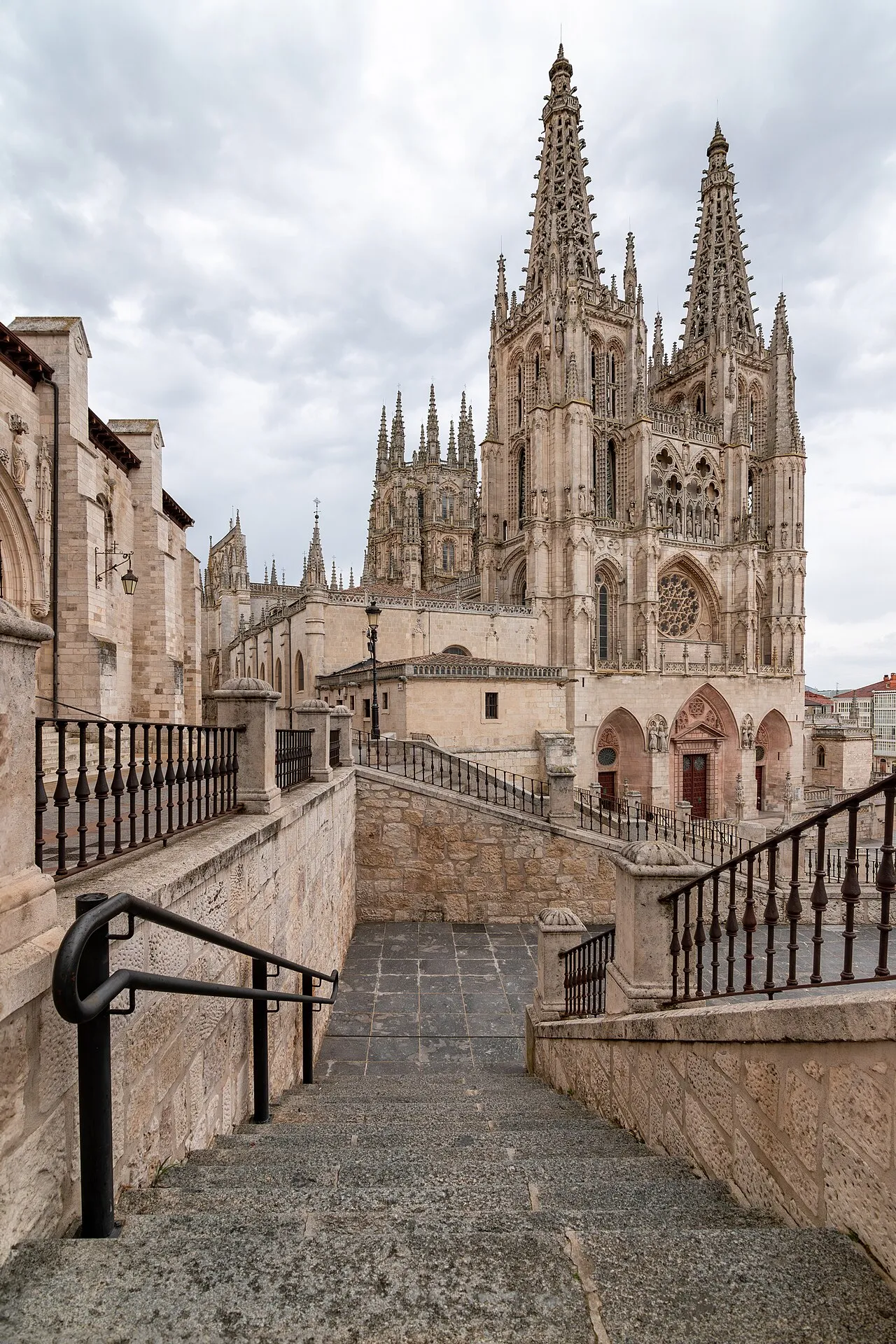
Beneath the lantern tower over the crossing rest El Cid and doña Jimena, moved there in the nineteenth century. It is the close of the Cid route.
In Vivar, a village a few kilometres from the city, some time in the 1040s, which is where the surname “de Vivar” comes from. He died in Valencia in 1099, far from home, but his remains and those of doña Jimena rest today beneath the lantern tower of Burgos Cathedral, moved there in the nineteenth century.
“Cid” is not Spanish: it comes from the Arabic sīdī, “my lord”. He earned it the hard way, because after his exile he served for years as military commander to the Muslim king of Zaragoza, and even his enemies respected him. The other nickname, “Campeador”, comes from the Latin campi doctor, “the one who wins on the field of battle”.
The scene in which El Cid demands that king Alfonso VI swear on the Gospels, three times and in front of everyone, that he took no part in the death of his brother Sancho II in 1072. Tradition places it in the church of Santa Águeda, which the people of Burgos call Santa Gadea. Alfonso swore, and shortly afterwards sent him into exile.
Historians doubt it. The real exile came a few years later, around 1081, for a more earthly reason: El Cid carried out a military raid on his own account in the lands of Toledo, which at the time paid tribute to the king, and he had enemies at court. The scene is tradition, ballad and popular memory rather than reliable chronicle.
Yes, a piece of arm, and it is kept in the Sala de Poridad of the Arco de Santa María, the room where the town council of Burgos met in secret. “Poridad” in old Castilian meant secrecy, what is kept private. His main remains are in the cathedral, beneath the lantern tower.
One of the most quoted pages of the Cantar de Mío Cid, and it happens in the streets of Burgos. The king had forbidden by letter that anyone give El Cid lodging or sell him food, and the doors closed as he passed. Then a girl of nine came out and explained to him in tears that they could not help him. El Cid understood and rode on his way.
It was almost El Cid's second home. When he rode out into exile he could not take his family on the adventure, so he left his wife, doña Jimena, and his two small daughters in the care of those monks. That is why the coat of arms of Cardeña appears on one of the pillars of the Solar del Cid, next to that of the city.
Download Viavoy and walk Burgos offline, whenever you like.

Keep reading