1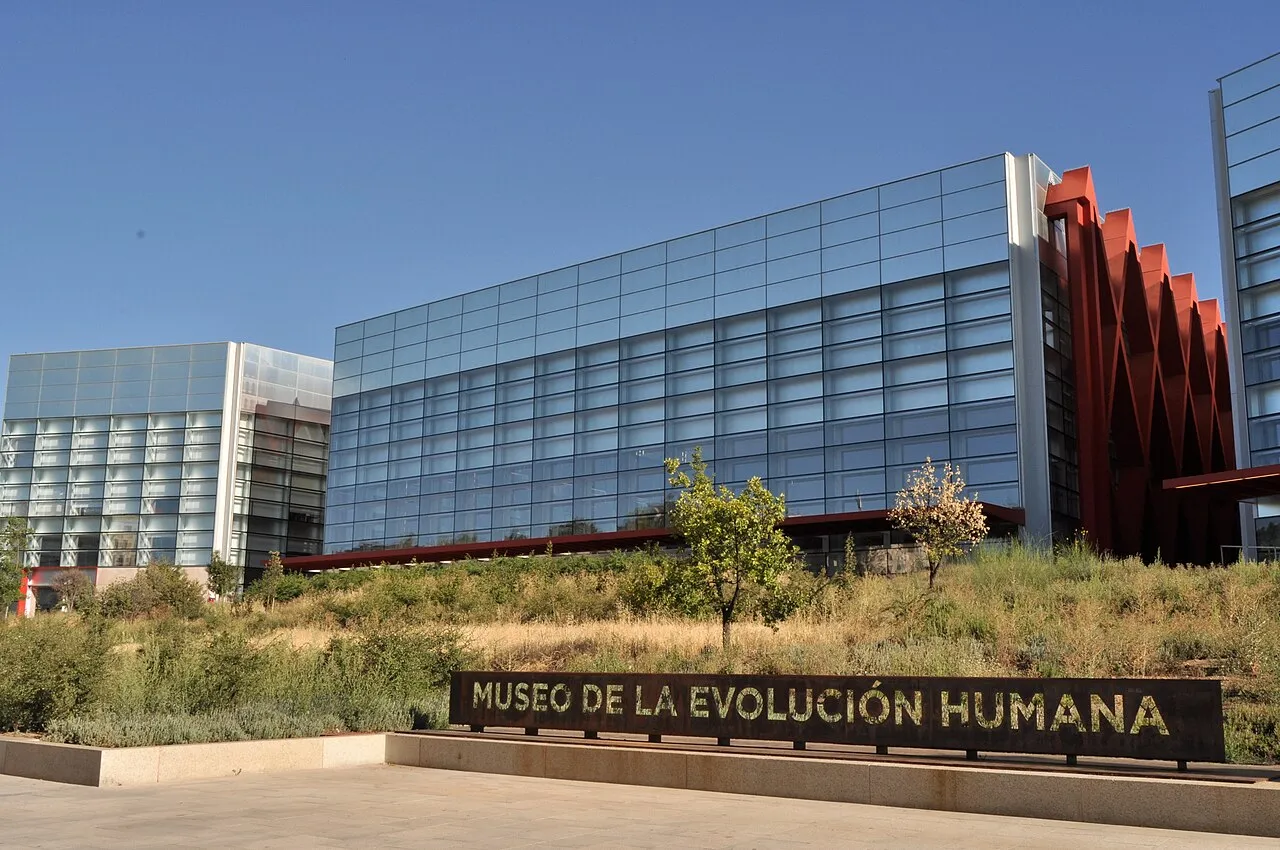
Museum of Human Evolution
📍 Paseo Sierra de Atapuerca, by the river
The original fossils from Atapuerca, in a glass and concrete building by Juan Navarro Baldeweg opened in July 2010. A good two hours.
The oldest Europeans we know of, seven thousand human bones in a fourteen-metre shaft and a red tool that may have been the first funerary offering in history.
🎧 On the walk The Arlanzón, the Espolón and the Evolution MuseumThere are few places in the world where you can see, at the same time, the most complete fossil human skull in existence and the possible first evidence of symbolic behaviour in the face of death. One of them is in Burgos, and the sites that made it possible are ten kilometres from the city.
At the Gran Dolina site, Homo antecessor appeared, almost a million years old: the oldest Europeans we know of. That find forced the textbooks on when and how humans reached Europe to be rewritten.
And in a fourteen-metre shaft called the Sima de los Huesos, the pit of bones, close to seven thousand human remains from around 430,000 years ago have been recovered: the largest accumulation of human fossils on the planet, with no point of comparison at any other site in the world.
From there comes Miguelón, the most complete skull in the world fossil record, named in 1992 in honour of the cyclist Miguel Induráin, who that year was sweeping the board in the Tour. It is in the Museum of Human Evolution and is one of the most reproduced pieces in textbooks all over the world.
Serious excavation began in 1978, led by the palaeontologist Emiliano Aguirre, and has not stopped for a single summer since: every season brings something new to light. The hills were declared a World Heritage Site in the year 2000.
The original fossils from Atapuerca, in a glass and concrete building by Juan Navarro Baldeweg opened in July 2010. A good two hours.
Download the app and discover Burgos offline, whenever you like. Take the walking tour The Arlanzón, the Espolón and the Evolution Museum with a local guide in your ear.
Find out more about Viavoy →Among the thousands of bones in the Sima a single tool appeared: a handaxe of red quartzite they call Excalibur. A beautiful object, and clearly different from the rest of the material at the site.
Many researchers read it as something placed there on purpose: perhaps the first funerary offering in the history of humankind. If that reading is right, it implies that 430,000 years ago there was already symbolic behaviour in the face of death.
That completely changes the idea of who our most distant ancestors were, because symbolic thought was for a long time considered a much more recent trait and exclusive to our own species.
The museum tells it well, without overstating: it presents the hypothesis, explains what it rests on and makes clear that it is still under discussion. That rigour is one of the things that makes it good.
The museum opened in July 2010, was designed by Juan Navarro Baldeweg with the light precisely in mind, and stands beside the river Arlanzón, ten minutes' walk from the cathedral across the bridge.
The visit takes a good two hours, or more if you go with children: the approach is very didactic and works well at every age. There is an entrance fee, at a modest price.
The sites are visited separately, ten kilometres to the east, with booking in advance and a guided visit. It is a completely different and complementary experience: there you see the railway trench and the cuts in the rock where everything appeared.
The museum is the tip of the iceberg of a larger complex: next to it is the Fórum Evolución, a conference centre and auditorium, and nearby the CENIEH, the national centre where scientists study, date and conserve the fossils.
On the same bank of the river is the Museum of Burgos, in two Renaissance palaces, with the Frontal de Silos, the altar frontal from Silos, and the tomb by Gil de Siloé. Between the two museums you cover everything from a million years ago to the Castilian Renaissance.
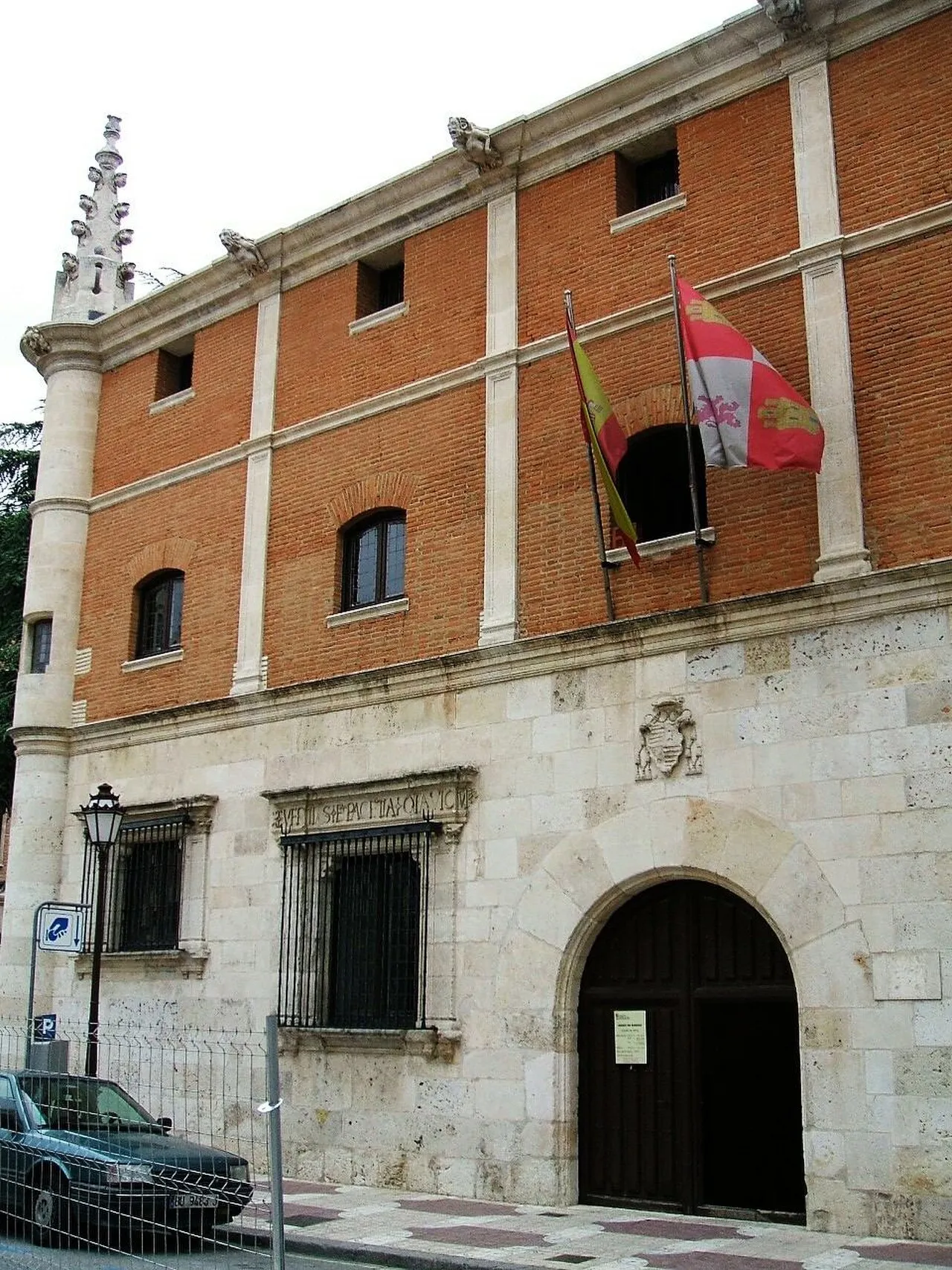
Ten minutes away, in two sixteenth-century palaces: the Frontal de Silos, the tomb by Gil de Siloé and an ivory casket carved in 1026.
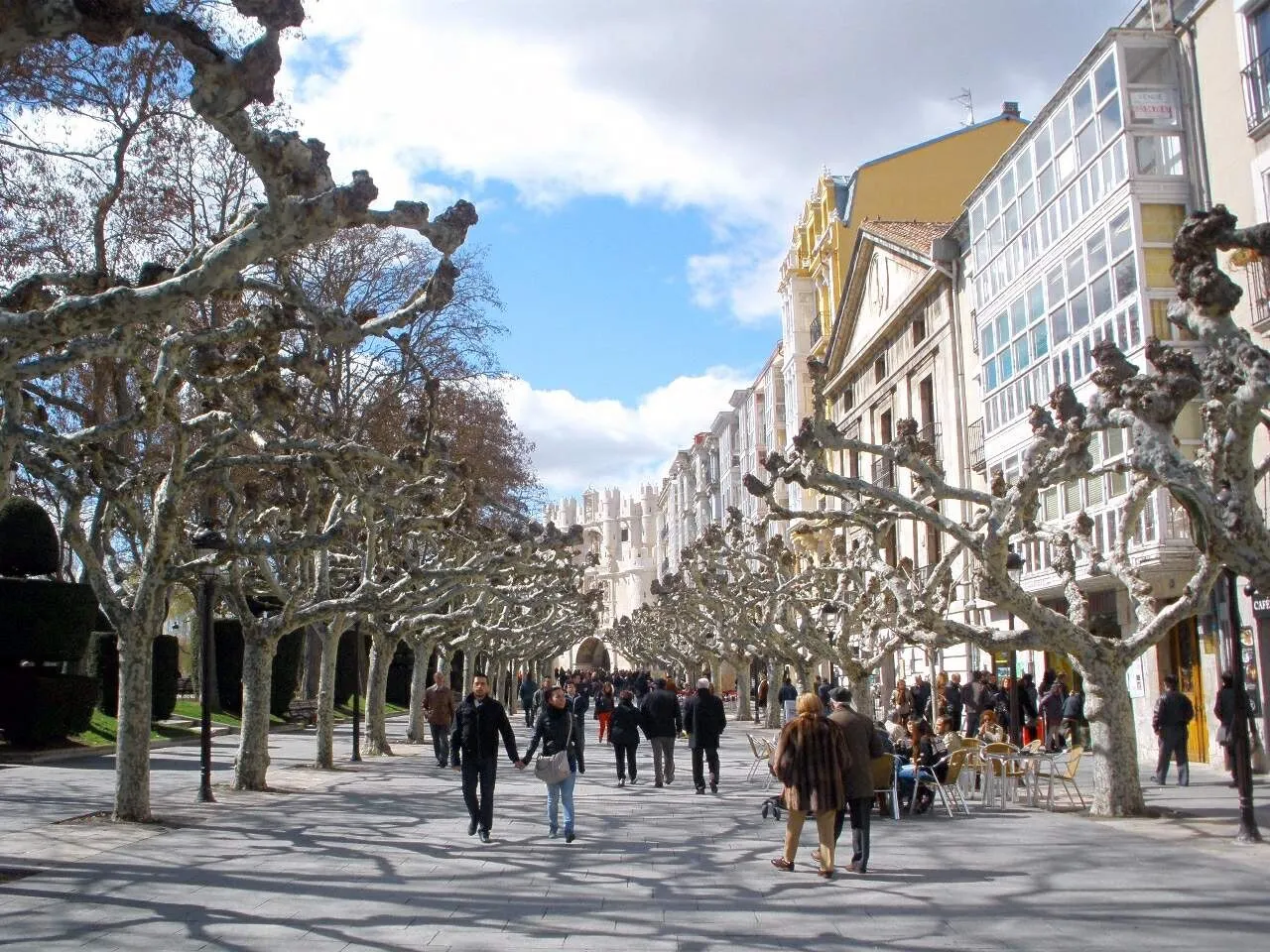
The natural route between the museum and the historic centre, under a vault of plane trees pruned and interwoven for more than a century.
A range of hills ten kilometres east of Burgos, declared a World Heritage Site in the year 2000, where the most important human fossils in Europe have been found. Serious excavation began in 1978 and has not stopped for a single summer since: every season brings something new to light.
A human species identified from the fossils at the Gran Dolina, almost a million years old: the oldest Europeans we know of. The find forced the textbooks on when and how humans reached Europe to be rewritten, since until then that arrival was placed much later.
A shaft fourteen metres deep inside the karst system of Atapuerca where close to seven thousand human remains from around 430,000 years ago have been recovered. It is the largest accumulation of human fossils on the planet, with no point of comparison at any other site in the world.
The most complete skull in the world human fossil record, recovered from the Sima de los Huesos. He was named that in 1992 in honour of the cyclist Miguel Induráin, who that year was sweeping the board in the Tour de France. He is on show in the Museum of Human Evolution and appears in textbooks all over the world.
A handaxe of red quartzite, the only tool to have appeared among the thousands of bones in the Sima. It is a beautiful object and clearly different from the rest of the material, and many researchers read it as something placed there on purpose: perhaps the first funerary offering in the history of humankind.
Yes, with booking in advance and a guided visit. They are ten kilometres east of Burgos and the experience is very different from the museum: there you see the railway trench that laid the caves open and the cuts in the rock where everything appeared. Ideally you combine museum and sites.
By chance, and thanks to the railway. At the end of the nineteenth century an English mining company cut a great trench through the hills with pick and dynamite for a railway that was to bring coal and iron out of the Sierra de la Demanda. That line worked for only a few years, but the cut laid open the caves filled with sediment.
Download Viavoy and walk Burgos offline, whenever you like.

Keep reading