1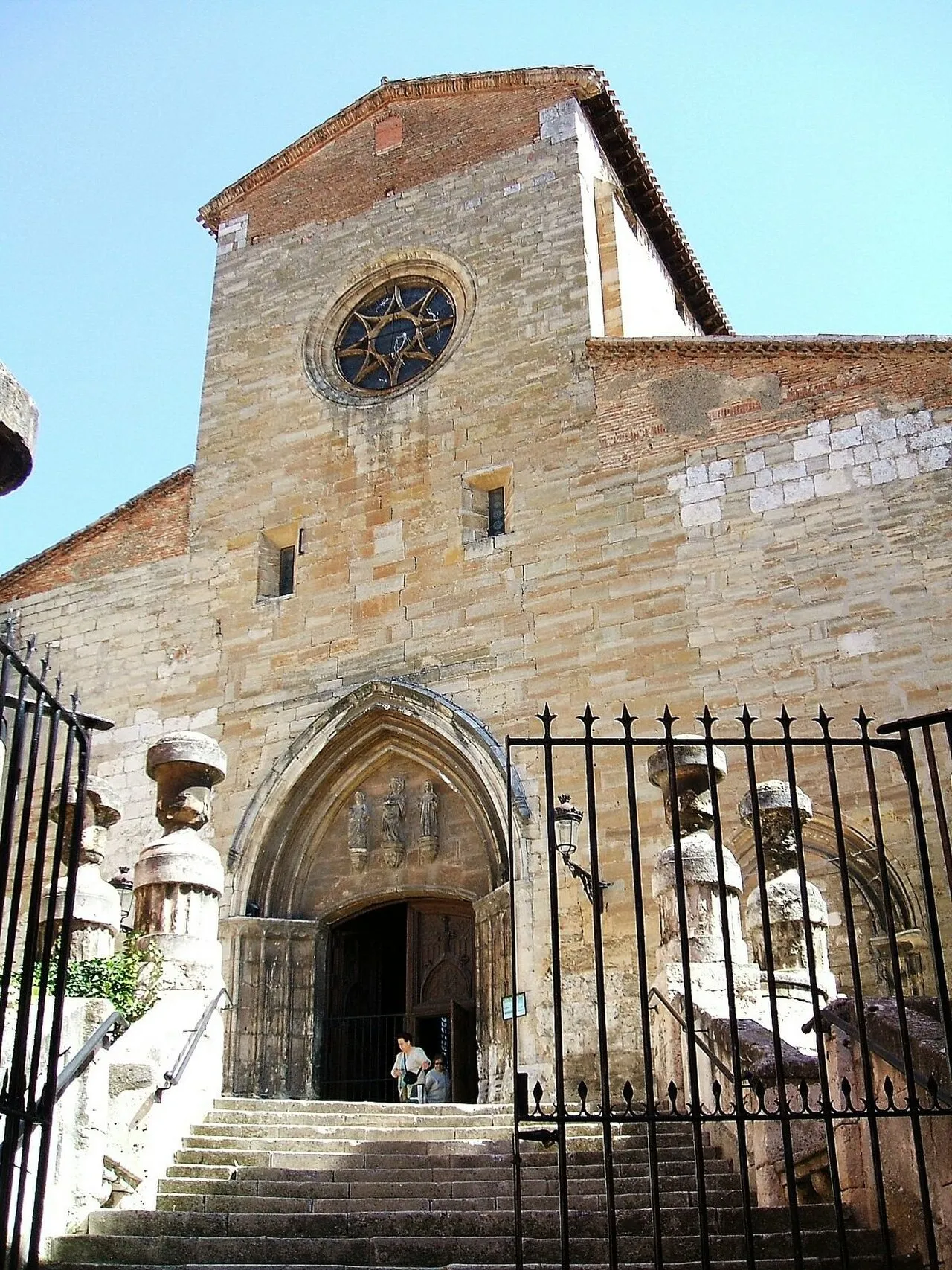
Church of San Gil Abad
📍 Upper part of the old town
The merchants' church: austere outside, dazzling inside. Each powerful family paid for its chapel and they competed over which was the most lavish.
How the merino sheep turned a city on the meseta into the commercial capital of Castile, and why you can still see that in its churches and its palaces.
🎧 On the walk El Cid, the Castle hill and the upper churchesNothing that makes Burgos great — the cathedral, the palaces, the altarpieces — makes sense without one animal: the merino sheep. Its extremely fine wool left from here on its way to Flanders, and that business turned a city on the meseta into the financial centre of Castile for two centuries.
The merino gave a wool of a fineness no other European breed matched, and the Flemish and Italian weavers needed it. Castile had the monopoly and guarded it jealously: for centuries it was forbidden, on pain of death, to take merino sheep out of the kingdom.
The system rested on transhumance: enormous flocks moving along drove roads from north to south with the seasons, organised by the Concejo de la Mesta, an institution with royal privileges that came to hold considerable political power.
Burgos was the knot. The wool passed through here on its way to the northern ports and to Flanders, and here the transport, the marine insurance and the financing of the operations were arranged. A merchant from Burgos could be richer than a nobleman.
To manage that volume, in 1494 the Catholic Monarchs created the Consulado de Burgos, the first great commercial court in Castile, with its own jurisdiction over merchants' disputes. It was the model from which other Spanish and American consulados later came.
The merchants' church: austere outside, dazzling inside. Each powerful family paid for its chapel and they competed over which was the most lavish.
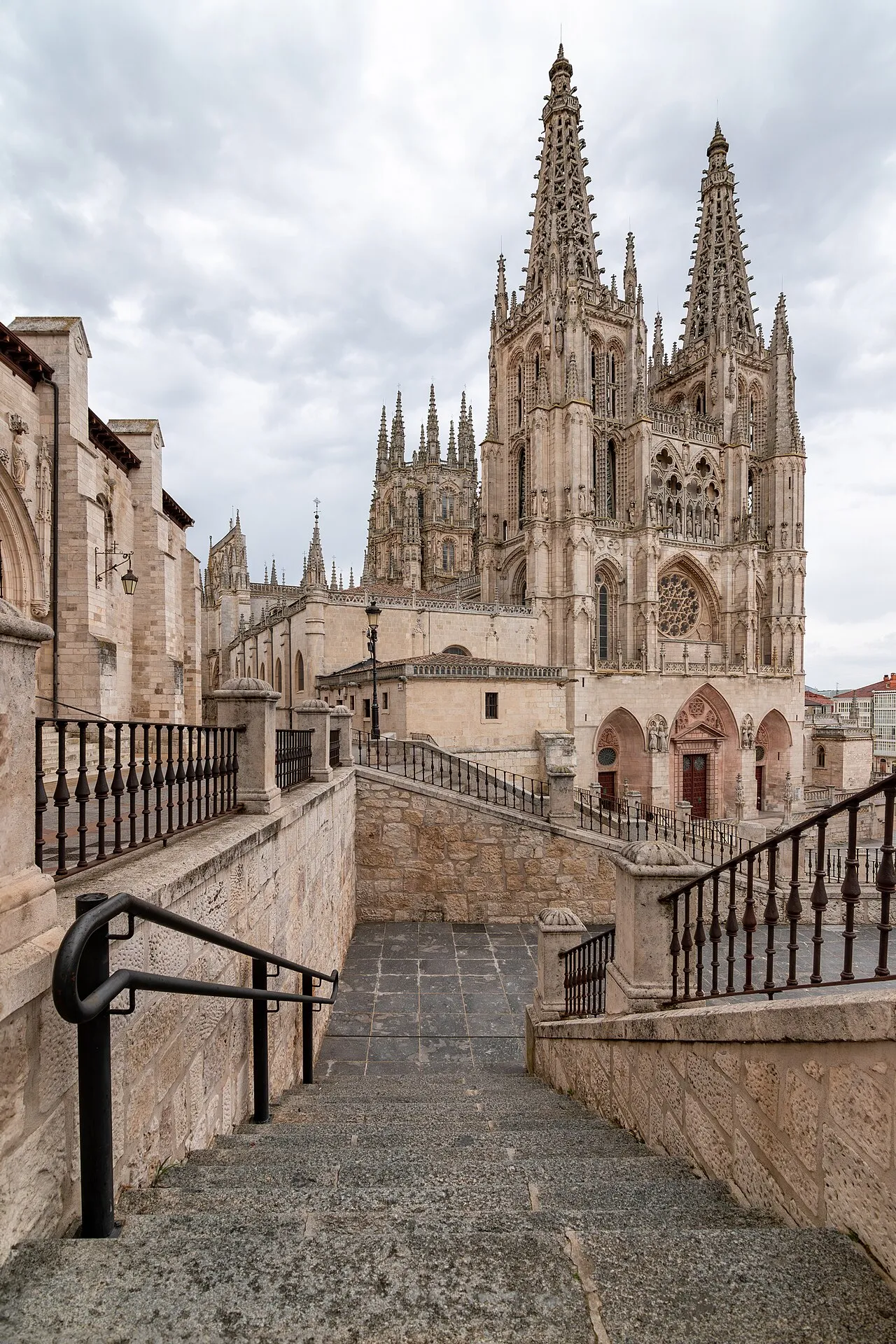
This business paid for a good part of it. Foundation stone in 1221, when Burgos was the head of Castile and one of its richest cities.
Download the app and discover Burgos offline, whenever you like. Take the walking tour El Cid, the Castle hill and the upper churches with a local guide in your ear.
Find out more about Viavoy →The place where it reads best is the church of San Gil. From outside it is sober, closed, almost a fortress; inside it is one of the most dazzling interiors in the city, with side chapels that are almost churches in themselves.
The reason is that this was the merchants' quarter, and the strong traders paid for their chapels here: to show off and to secure a good place in heaven. Every family wanted its own and they competed over which was the most lavish.
That contrast between outside and inside is no accident: this is how the medieval city kept its wealth, without displaying it in the street. It is a lesson in calculated discretion that repeats in several buildings in Burgos.
The other clear case is the church of San Nicolás de Bari, whose stone altarpiece — the best in Spain in its category — was paid for by a merchant, Gonzalo López de Polanco, who is buried by the entrance with his wife.
And on the Plaza de Vega, on the other side of the river, the Hospital of La Concepción was founded by another merchant, Diego de Bernuy, to take in the sick and the destitute. A private individual putting up a hospital: that only happens where there is a lot of private money.
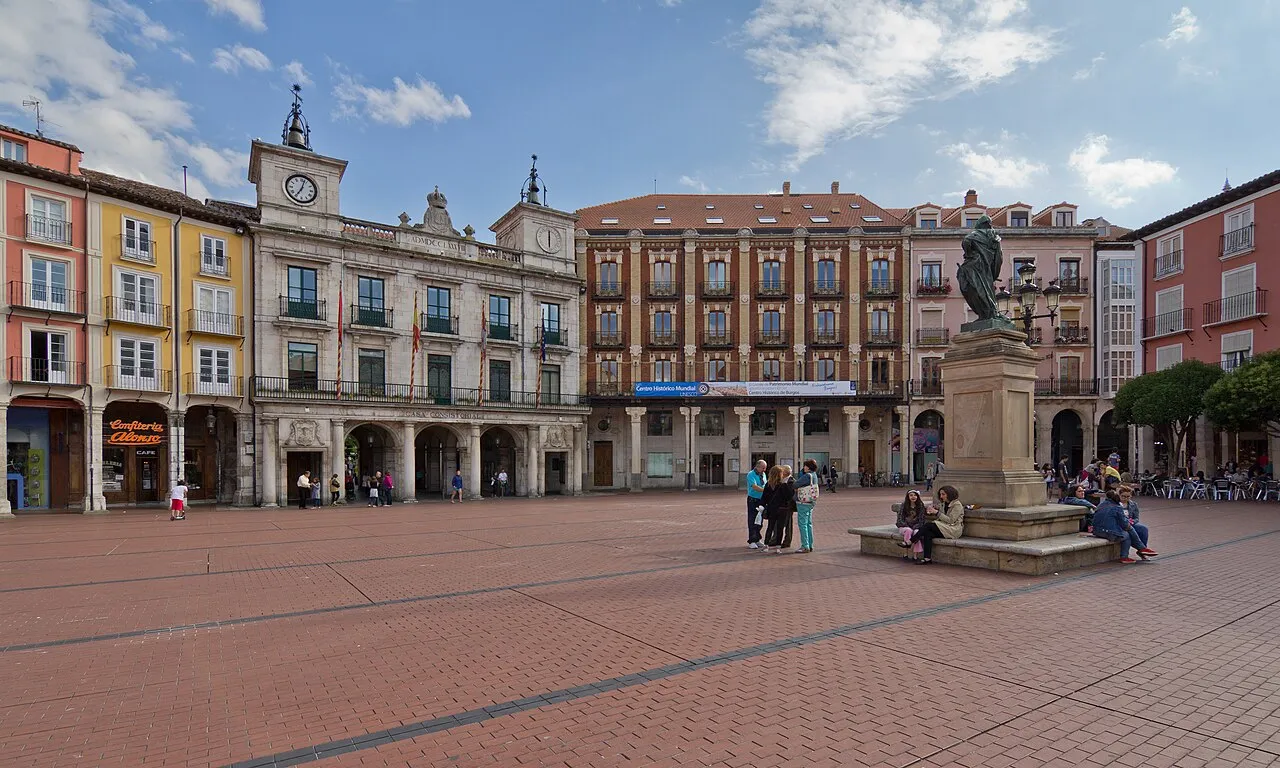
The nobility did not stand aside. The Casa del Cordón was commissioned at the end of the fifteenth century by the Constables of Castile, the Velasco family, on the square that was the city's great market: they planted themselves where the money beat.
And the Chapel of the Constables, in the cathedral, was commissioned by the same family, in 1482, as their burial place: so big and so tall that it looks like a cathedral inside another one, with tombs of Carrara marble.
All that money attracted talent. A bishop brought Juan de Colonia from Germany in the middle of the fifteenth century, and his family — his son Simón, his grandson Francisco — signed the best of the city for three generations: the cathedral spires, the chapel, the Casa del Cordón, the altarpiece at San Nicolás and the front of the Arch of Santa María.
The decline came later. The shift of trade towards the Atlantic and towards other ports, the crisis of the Castilian textile industry against European competition and the loss of political weight left Burgos turned into a provincial city.
But the stone stayed. And that is why Burgos today has a monumental density out of proportion to its size: it is the city it once was, frozen at the moment when wool paid for everything.
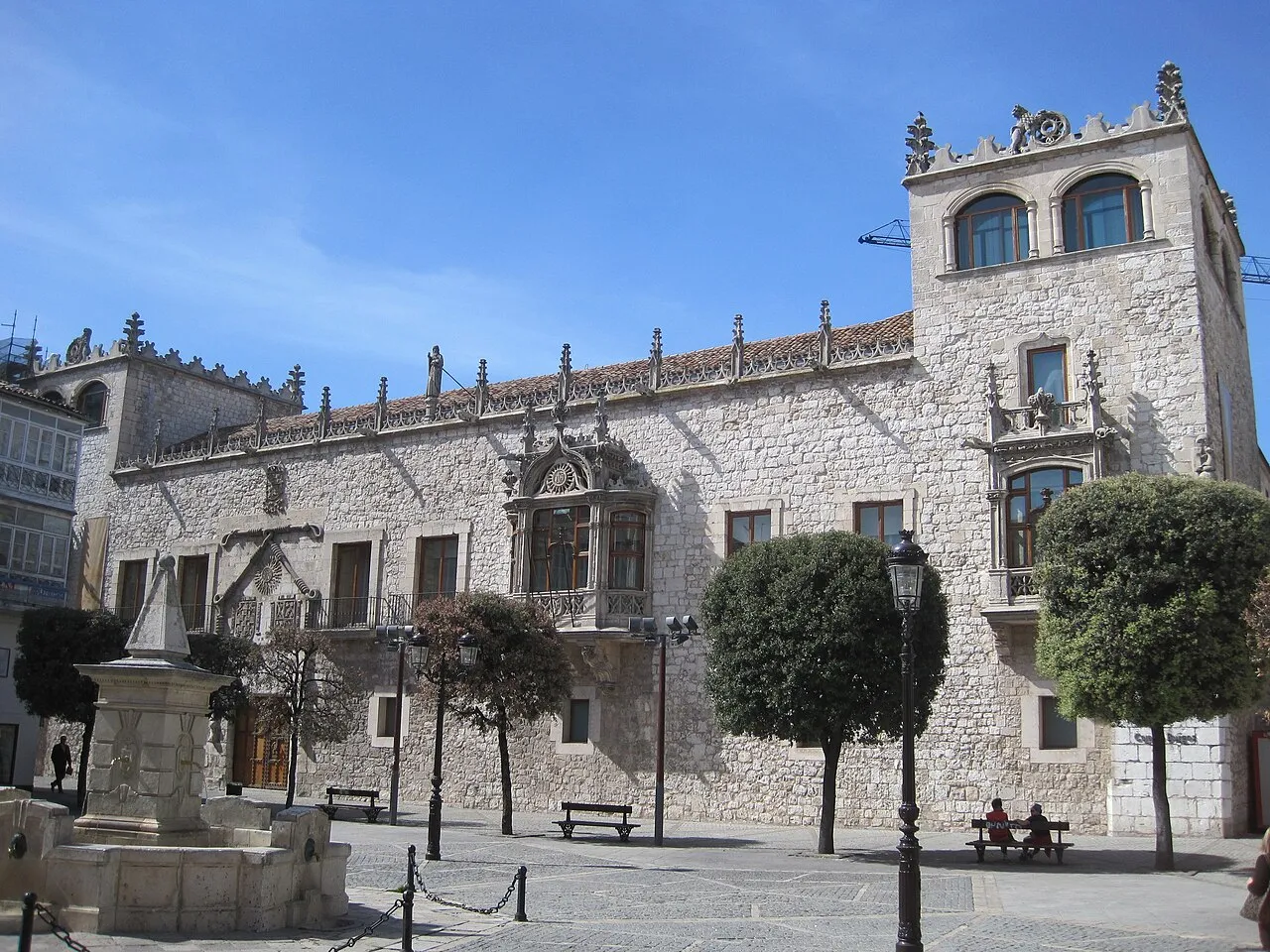
The palace of the Constables of Castile, on the square that was the great market. Here they received Columbus in 1497.
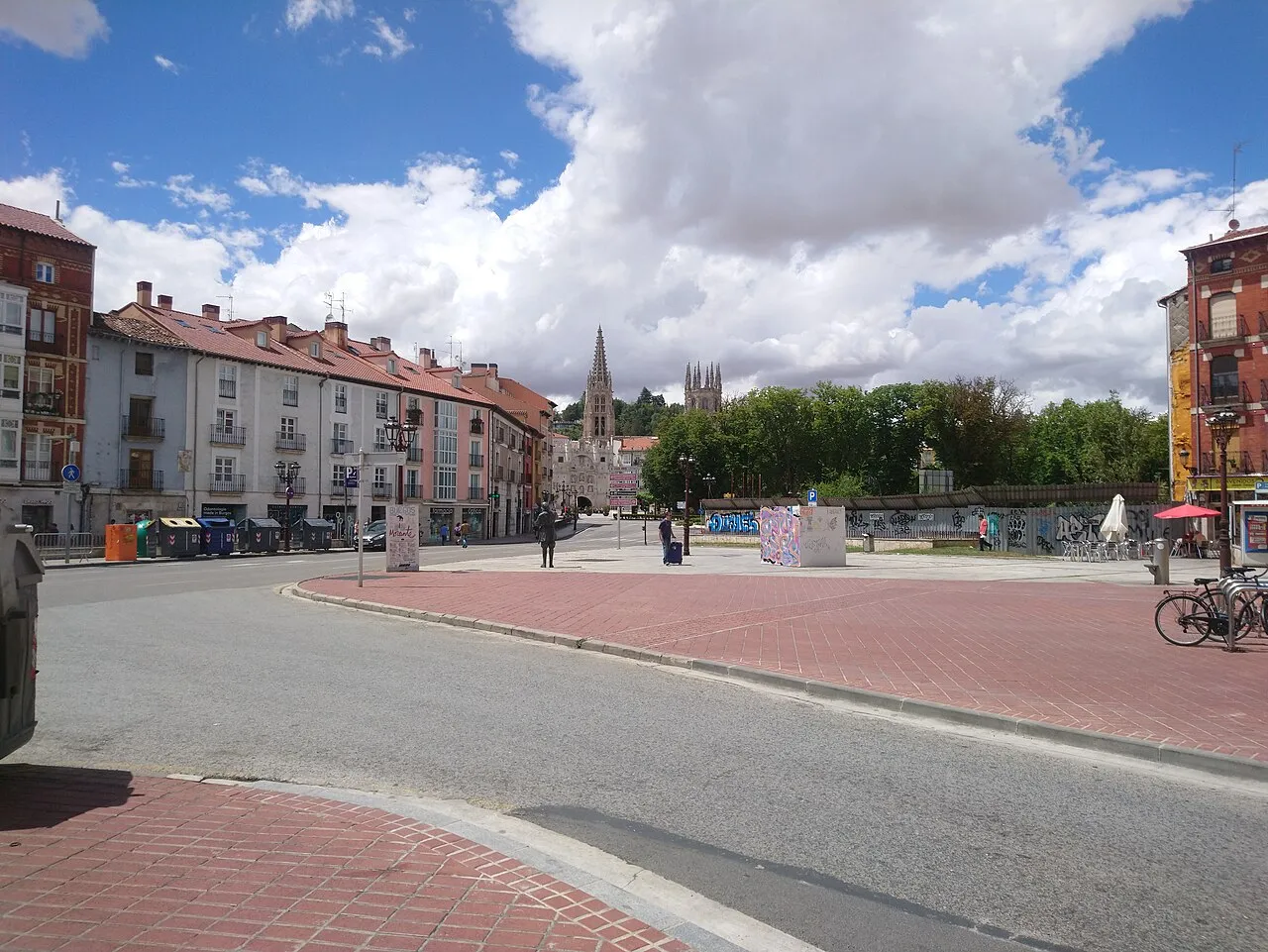
Here a merchant, Diego de Bernuy, founded an entire hospital in the sixteenth century. That only happens where there is a lot of private money.
For its fineness: no other European breed reached that quality, and the Flemish and Italian weavers needed it. Castile had the monopoly and guarded it jealously: for centuries it was forbidden, on pain of death, to take merino sheep out of the kingdom, so that other countries could not breed them.
A commercial court created in 1494 by the Catholic Monarchs, the first great merchants' court in Castile, with its own jurisdiction over routes, marine insurance and disputes between traders. It was the model from which other Spanish and American consulados later came.
In the monumental density, which is out of proportion to the present size of Burgos. You see it especially in the church of San Gil, austere outside and dazzling inside because the merchants paid for their chapels; in the stone altarpiece at San Nicolás, funded by a trader; and in the Casa del Cordón and the Chapel of the Constables.
Because this is how the medieval city kept its wealth: without displaying it in the street. The outer wall is bare and almost fortress-like, and the interior is a forest of star vaults with chapels that each powerful family wanted more lavish than the neighbour's. It is calculated discretion, not lack of means.
A family of German architects brought by a bishop in the middle of the fifteenth century. “Colonia” is the Spanish name for the city of Köln, Cologne, where Juan came from. For three generations — him, his son Simón and his grandson Francisco — they signed the best of Burgos, from the cathedral spires to the altarpiece at San Nicolás.
The system of moving enormous flocks along drove roads from north to south with the seasons, seeking summer pasture in the mountains and winter pasture in the south. It was organised by the Concejo de la Mesta, an institution with royal privileges that came to hold considerable political power in Castile.
Through a combination of factors: the shift of trade towards the Atlantic and towards other ports, the crisis of the Castilian textile industry against European competition and the city's loss of political weight. But the stone stayed, and that is why Burgos still keeps today the monumental scale of what it once was.
Download Viavoy and walk Burgos offline, whenever you like.

Keep reading