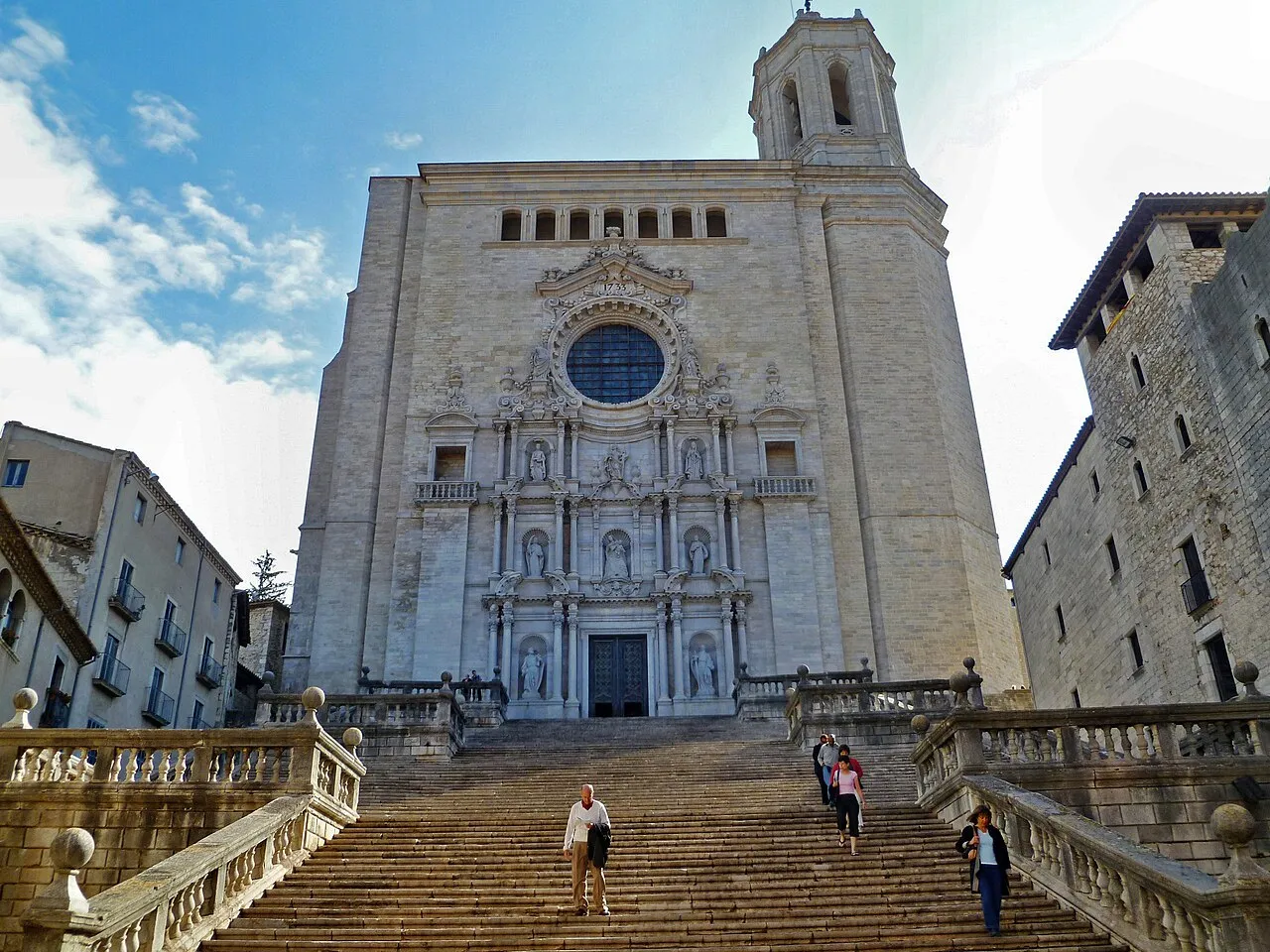
Cathedral stairway
One of the fixed and most spectacular installations of every edition: the ninety Baroque steps turned into a floral piece that from below looks like a carpet. It is the image that appears in all the coverage of the event.

Every May, private courtyards, stairways and monuments that are closed the rest of the year open up decorated with flowers. It is the most beautiful moment of the year and also the most crowded.
🎧 On the walk Monumental Girona: the cathedral, the Jewish Call and the Onyar housesFor one week in May, Girona becomes something else. More than a hundred spaces in the old town — courtyards of private houses, stairways, cloisters, churches, stretches of the wall — open to the public decorated with floral installations, many of them the work of artists and design studios. And a good part of those spaces cannot be visited on any other day of the year.
The exhibition was born in 1954 as a modest flower show and has grown until it occupies practically the whole old town. Today it is the event of the year in the city and one of the events of its kind with the greatest reach in Spain.
The approach has changed over time. It is no longer just about placing flowers: a good part of the installations are contemporary pieces, with design, stage-set and sometimes social-critique approaches, signed by architecture studios, art schools and collectives.
It is organised into signposted routes, with an official map, and it is free: there is no ticket to get into the spaces. It can be done in one long day or spread over two, and the pace is set by the queues at the most in-demand places.
One of the fixed and most spectacular installations of every edition: the ninety Baroque steps turned into a floral piece that from below looks like a carpet. It is the image that appears in all the coverage of the event.
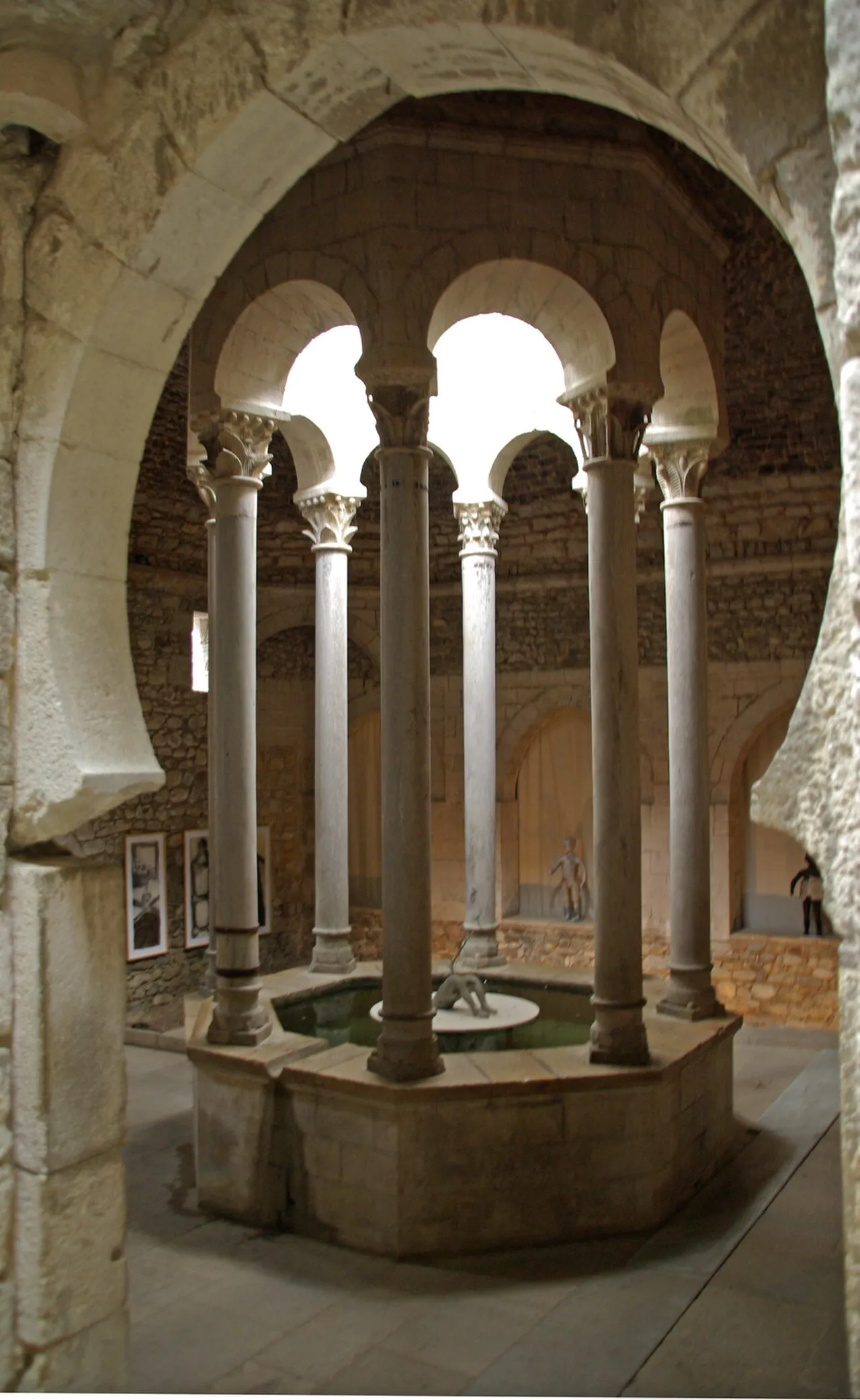
One of the spaces that works best with a floral installation: the half-light, the water in the pool and the light falling from the octagonal lantern compose a setting that needs very little to be memorable.
Download the app and discover Girona offline, whenever you like. Take the walking tour Monumental Girona: the cathedral, the Jewish Call and the Onyar houses with a local guide in your ear.
Find out more about Viavoy →The good is obvious: you get into places you cannot see the rest of the year. Inner courtyards of noble houses in the Call, private stairways, closed cloisters, private gardens beside the wall. For anyone interested in the architecture of the city, that week is worth three ordinary visits.
The awkward part too. Girona multiplies its population those days and the old town, which is narrow and all uphill, becomes completely saturated. There are queues at the smaller spaces, and walking the streets of the Call at midday can be maddening.
Accommodation is the other problem: it sells out well in advance and prices rise considerably, both in the city and in the surrounding area. Anyone who wants to go has to book months ahead, and anyone who has not can consider going there and back from Barcelona by AVE on the same day.
The strategy that works is to get up early. The routes open early and the first hour and a half is completely different from the rest of the day. After lunch and until closing time the flow drops again, though never as much.
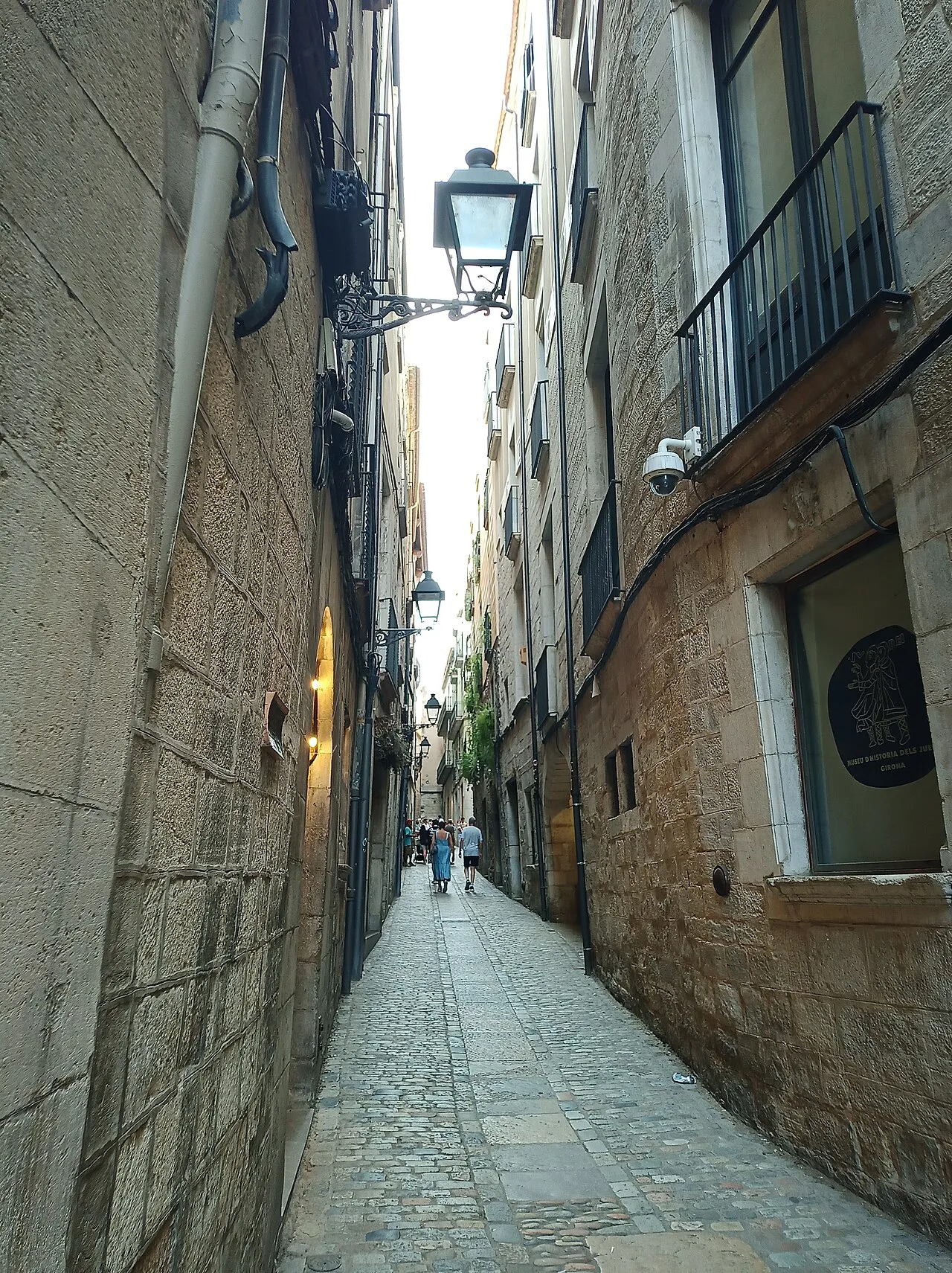
Where the effect of the week is most noticeable: inner courtyards of houses that have been closed all year open up with floral installations, and the quarter, already a labyrinth, is walked with a considerable density of people. Getting up early makes the difference here.
A floral exhibition that occupies the old town of Girona for one week in May. More than a hundred spaces — private courtyards, stairways, cloisters, churches, stretches of the wall — open to the public with floral installations, many of them contemporary pieces signed by design studios and art schools.
No, it is free. It is organised into signposted routes with an official map and there is no ticket to get into the spaces. What there is are queues at the smallest and most in-demand places, above all at the private courtyards of the Call, which are the ones most people want to see.
One week in May, with dates that vary each year, so it is worth checking the official calendar before planning. It was born in 1954 as a modest flower show and has grown until it became the event of the year in the city.
If you are interested in the architecture of the city, very much: it is the only week when you can enter inner courtyards, stairways and private gardens in the old town that are closed the rest of the year. In exchange, the city becomes completely saturated and the old town is narrow and all uphill.
By getting up early. The routes open early and the first hour and a half is completely different from the rest of the day. After lunch the flow drops somewhat again, though never as much. And if you cannot find accommodation, you can go there and back from Barcelona by AVE on the same day: it is 38 minutes.
The Fires de Sant Narcís, at the end of October and beginning of November, which are the city's main festival, with concerts, barracas and a far more local atmosphere than that of Temps de Flors. And outside events, spring and autumn are the best seasons to visit, with no queues.
Girona works just as well the rest of the year, with the advantage that there are no queues. Spring and autumn are the best seasons: the old town is all slope and stone, and summer in the Empordà is humid and quite hot.
The monumental spaces that are always open — the cathedral, the Arab Baths, Sant Pere de Galligants, the wall and the Call — more than fill a day's visit, and some of them are enjoyed more without installations mounted on top of them.
The other notable date on the calendar is the Fires de Sant Narcís, at the end of October and beginning of November, the city's main festival, with concerts, barracas music tents and a completely local atmosphere that Temps de Flors, far more touristy, no longer has.
And at any time of year, the best free plan is still the same: go up onto the wall at sunset and walk the wall walk with the city on one side and the Pyrenees behind.
Download Viavoy and walk Girona offline, whenever you like.