The Jewish Call of Girona: six hundred years and an expulsion
One of the best-preserved Jewish quarters in Europe, the Kabbalistic school that made it famous across the whole Mediterranean and the accidental mechanism that saved it from demolition.
Almost all the Jewish quarters of Spain disappeared. They were demolished, rebuilt or diluted into the urban fabric until only the name of a street was left. Girona's is the exception, and not because of a conservation decision but because of the opposite: because after 1492 nobody took care of it for five centuries.
The Call was preserved because it was forgotten. It is the same mechanism that preserves an archaeological site: what is not used is not rebuilt.
A community of real weight
The Jewish community of Girona is documented from the ninth century and became one of the most important in the Crown of Aragon. It lived in the heart of the old town, on the line of the ancient Roman road, and had its own synagogue, school, kosher butcher, bathhouse and cemetery on the hill of Montjuïc in Girona.
What distinguishes it is its intellectual level. In the thirteenth century Girona was one of the great centres of the Kabbalah, the mystical current of Judaism, with a school of its own whose prestige spread across the whole Mediterranean. Texts that remain central to that tradition were written and commented on here.
Its greatest figure was born in these streets around 1194: Moshe ben Nahman, known as Nahmanides or, among Christians, Bonastruc ça Porta. He was a rabbi, physician, philosopher and Kabbalist, and an authority recognised well beyond his community.
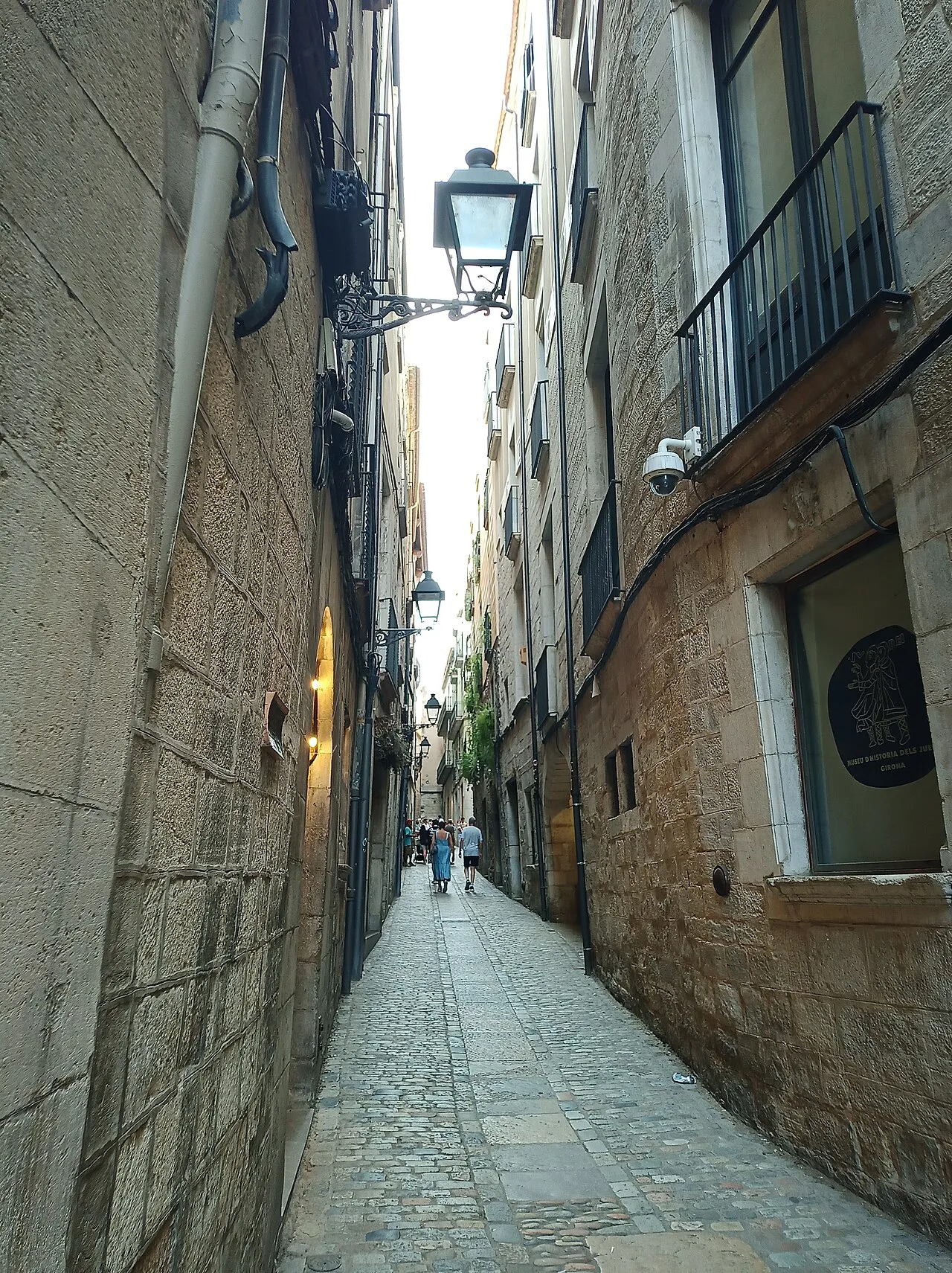
The axis of the quarter and the line of the ancient Roman road that crossed the city from north to south. On both sides opens the labyrinth of alleys, arches and stairways, almost all dead ends, that makes the Call a place unlike any other old quarter.
The Disputation of Barcelona, and the beginning of the end
In 1263, Jaume I summoned Bonastruc ça Porta to Barcelona for a public disputation in which he had to defend Judaism against the Christian theologians, with the king himself presiding. It was a classic institutional trap: the community could not refuse, but winning was not a safe option either.
He did it with such brilliance that his position became untenable. Instead of a reward, he ended up having to go into exile, to the Holy Land, where he died. It is an episode that sums up well the situation of Jewish communities under royal protection: conditional tolerance, always revocable.
The decline accelerated afterwards. The anti-Jewish assaults of 1391, which swept through half the peninsula, struck the Jewish Quarter of Girona with violence, and its inhabitants had to take refuge in the Torre Gironella, at the top of the wall, watching their quarter burn from above.
From then on the community was increasingly shut in, with the streets walled up and life under surveillance. Many of the passageways and arches you walk through today are the physical consequence of that progressive enclosure, not of the original urban layout.
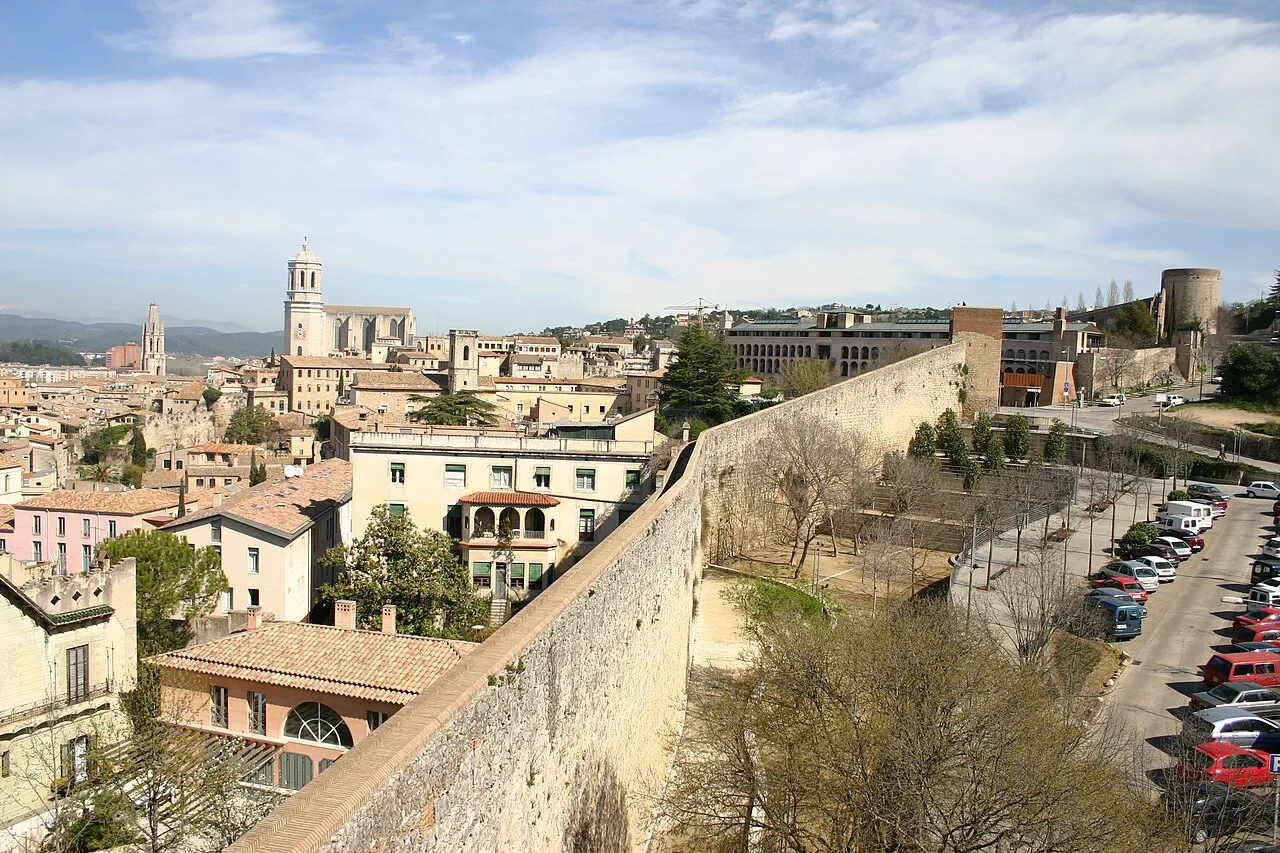
This is where the Jews of Girona climbed to take refuge during the assaults of 1391, and from the top they watched the quarter they had just left burn. Today it is the best viewpoint in the city, with free access along the wall walk.
The expulsion decree of 1492 emptied the quarter. The houses were occupied, the entrances were blocked up and the Call was absorbed into the Christian fabric for almost five hundred years, hidden beneath plaster and partition walls. When recovery began in the twentieth century, it appeared intact.
Today it is walked freely and without a ticket. The key is not to stay on the Calle de la Fuerza: you have to get into the side alleys, which are narrow, stepped and almost all dead ends, and where the quarter keeps its original scale.
The Museum of Jewish History, on the Calle de la Fuerza itself, occupies one of the buildings of the old Call and puts in order everything you see outside: daily life, the trades, the Kabbalistic school and the end. It also holds a collection of gravestones from the cemetery of Montjuïc.
And it is worth coming back at night. With the street lamps lit, without groups and with the echo of footsteps in the alleys, the Call works in a way that at midday and with people around is impossible.
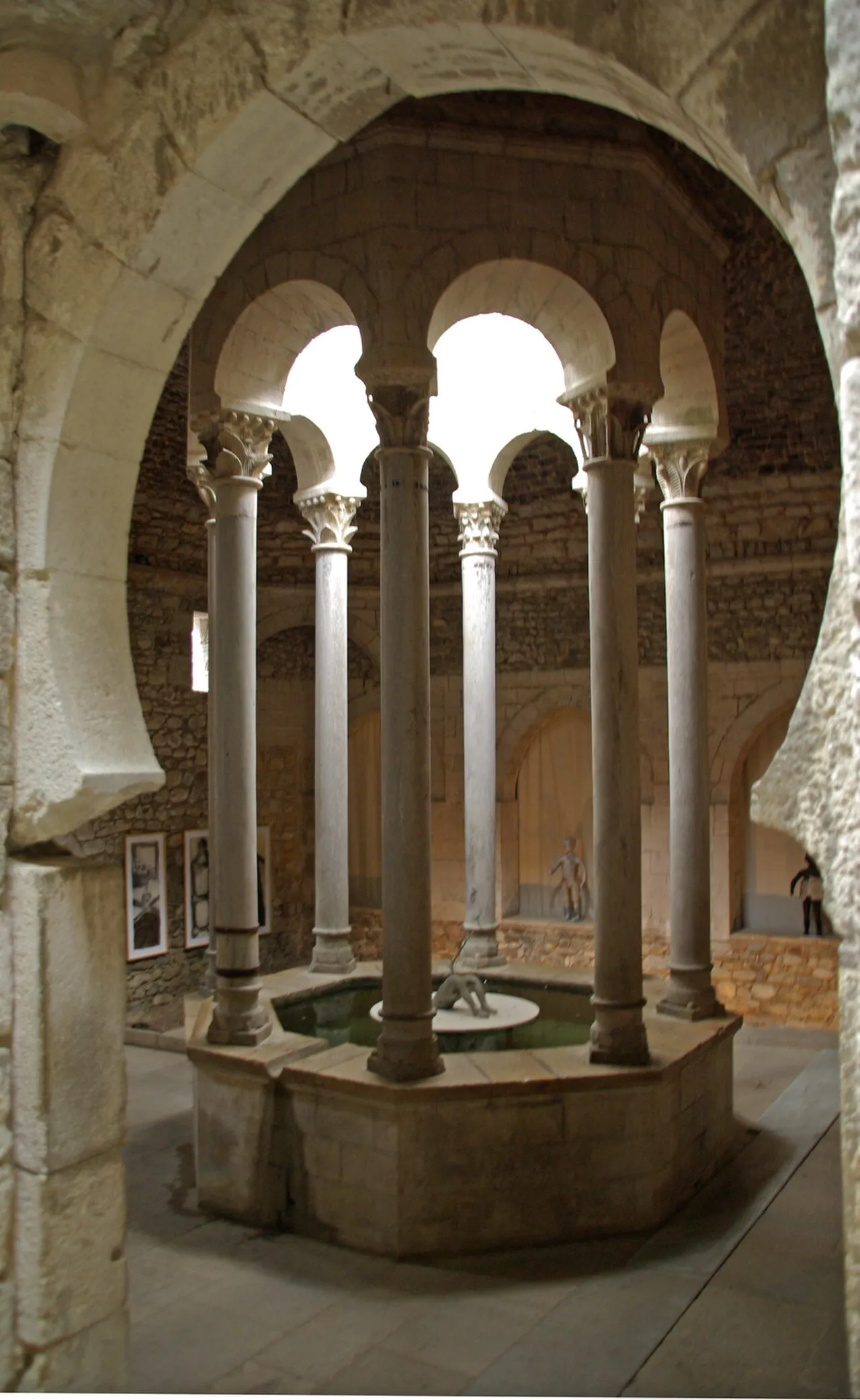
In the same old town and from the same period as the Call at its peak: around 1194. They were neither Jewish nor Arab, but Christians copying the best model available, and that pragmatism says a good deal about how medieval coexistence really worked.
Through neglect. After the expulsion of 1492 the houses were occupied, the passageways were blocked up and the quarter was absorbed beneath plaster and partition walls for almost five centuries. Not being an active area of the city, it did not suffer the rebuilding that would have erased its structure. It is the same mechanism that preserves an archaeological site.
Where does the word Call come from?
It is usually explained from the Hebrew qahal, meaning community or assembly: the quarter was, literally, the community. Another etymology links it to the Latin callis, a narrow alley. Both describe well what you walk through, and the two are used interchangeably.
Who was Bonastruc ça Porta?
The Christian name of Moshe ben Nahman, or Nahmanides, born in the Call around 1194: rabbi, physician, philosopher and Kabbalist, and an authority recognised well beyond his community. In 1263 Jaume I summoned him to the Disputation of Barcelona to defend Judaism before the Christian theologians, and he ended up exiled in the Holy Land.
What was the Disputation of Barcelona?
A public debate held in 1263 before Jaume I in which Bonastruc ça Porta had to defend Judaism against the Christian theologians. It was an institutional trap: the community could not refuse, but winning was not safe either. He did it with such brilliance that his position became untenable and he had to go into exile.
What happened in 1391?
A wave of anti-Jewish assaults swept through half the peninsula and struck the Jewish Quarter of Girona with violence. Its inhabitants took refuge in the Torre Gironella, at the top of the wall, watching the quarter burn from above. From then on the community was increasingly shut in, with the streets walled up and life under surveillance.
Can you visit the synagogue?
It is not preserved as such. The Museum of Jewish History occupies one of the buildings of the old Call, on a site linked to the last synagogue complex, and explains the life of the community, the trades and the Kabbalistic school, as well as holding a collection of gravestones from the city's Jewish cemetery.
Practical information
WhereCalle de la Fuerza and its labyrinth of alleys, in the heart of the old town.
TicketsThe quarter is free to walk through. The Museum of Jewish History, around 4 €.
How to walk itGet into the side alleys, do not stay on the main street.
Best momentAt night, with the street lamps lit and without groups.
The figureBonastruc ça Porta, born here around 1194. Kabbalist, physician and exiled after the disputation of 1263.
FootwearSlopes, stairs and cobbles along the whole route.
On the map
🎧 With Viavoy
Walk Girona and listen at your own pace
Download Viavoy and walk Girona offline, whenever you like.