Girona in a day: the Call, the cathedral and the walls
An extremely dense old town you can cover in a single day: coloured houses over the river, an intact Jewish quarter, the widest Gothic nave in the world and a wall walk with views of the Pyrenees.
Girona fits comfortably into a day, and that is misleading: within that square kilometre there is a Roman wall, a medieval Jewish quarter, twelfth-century baths, a cathedral with a world record and a river lined with coloured houses leaning over the water. The city is 38 minutes from Barcelona by AVE, which makes it the best-resolved day trip in Catalonia.
Start at the river and finish on the walls. The morning light belongs to the houses on the Oñar and the sunset light to the wall walk: doing it the other way round wastes both.
Morning: the river and the climb to the cathedral
Two and a half hours.
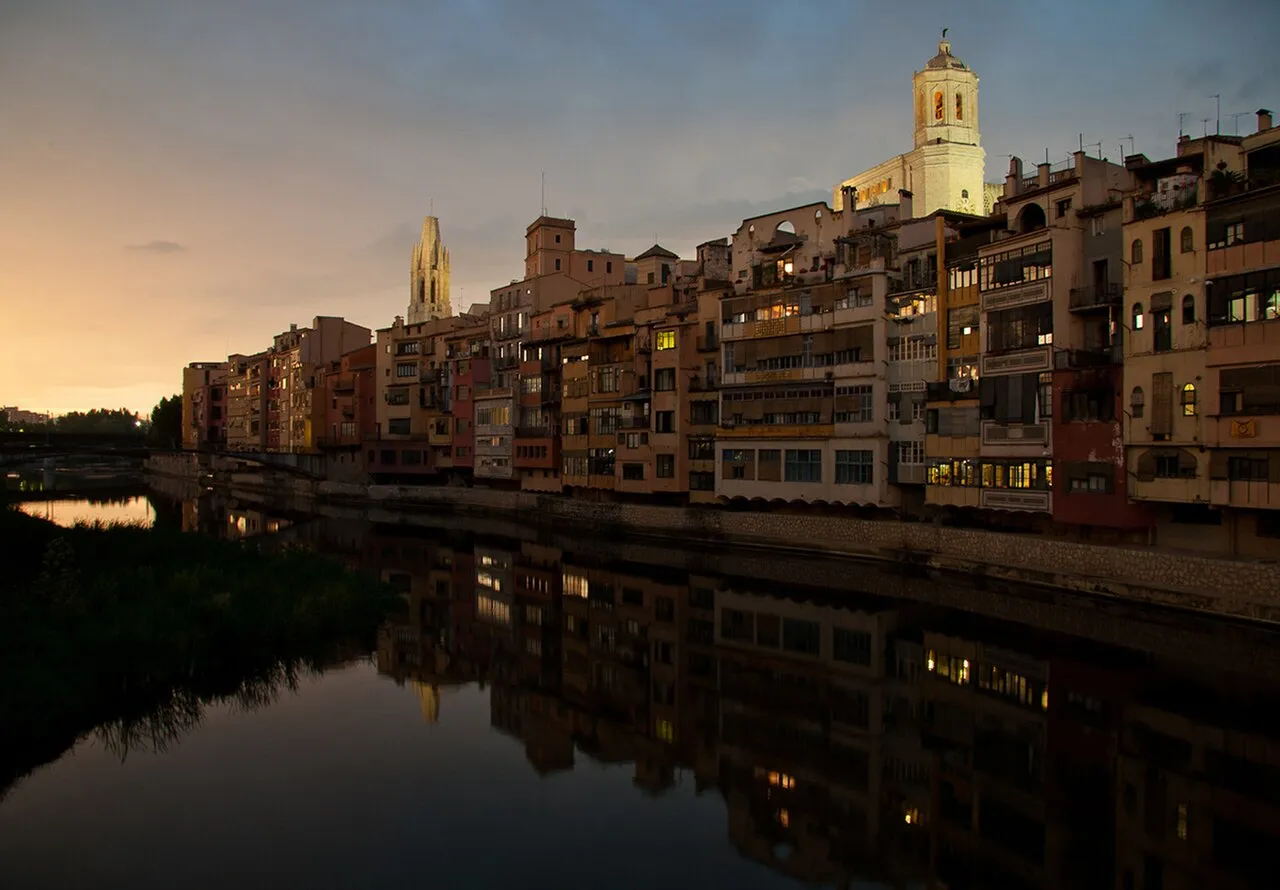
Start on the bridges over the Oñar. From the Puente de las Pescaderías Viejas — a metal structure built by the Eiffel company — and from the Puente de Piedra you can see the houses on the Oñar, painted in ochres, reds and yellows and leaning straight over the water. It is the most recognisable image of the city and the best light is first thing in the morning.
Cross into the old town and go up the Rambla de la Libertad and the streets that climb towards the cathedral. The whole route is uphill, with steps and cobbles, and that verticality is part of Girona's character: there is not a single flat street in the old town.
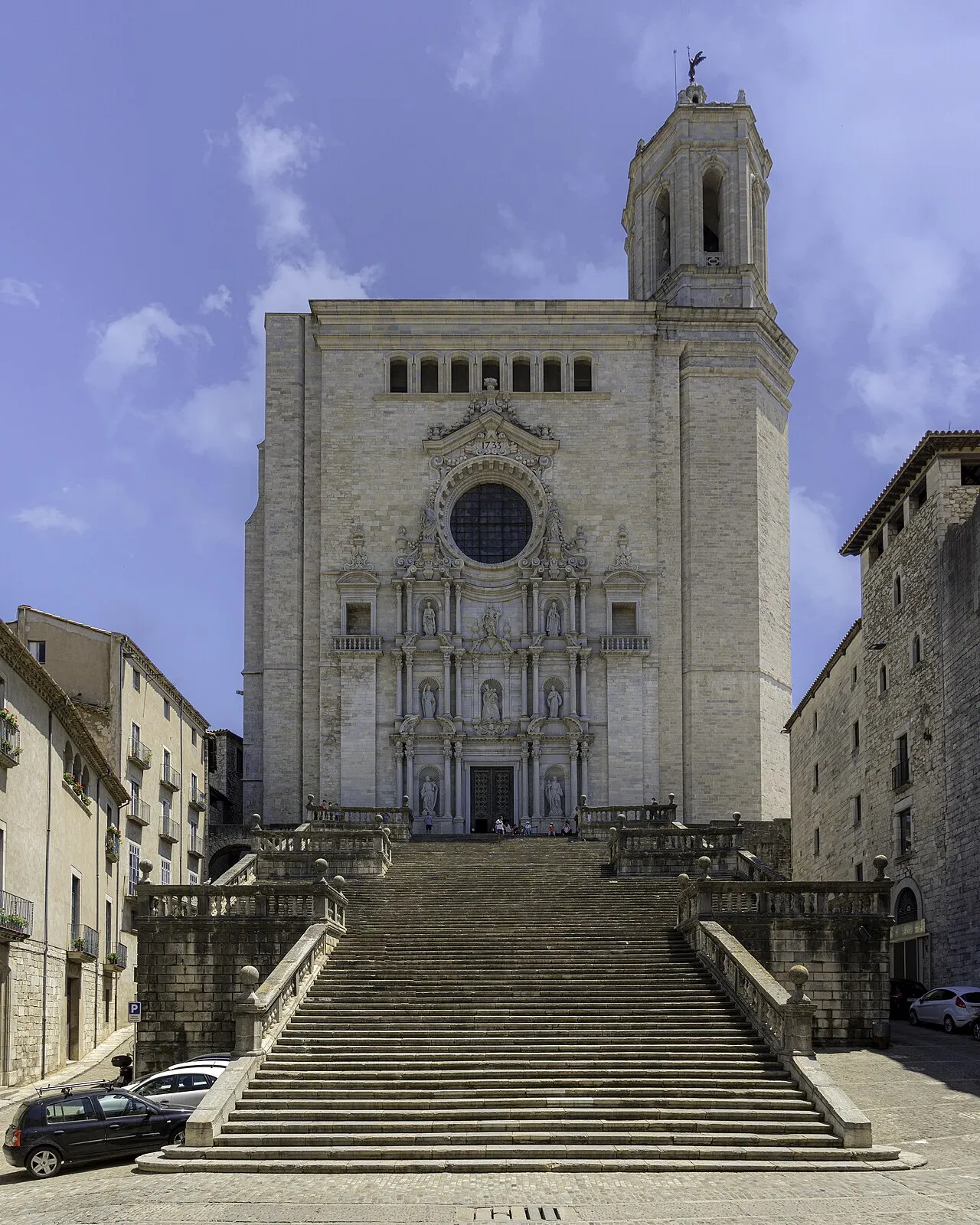
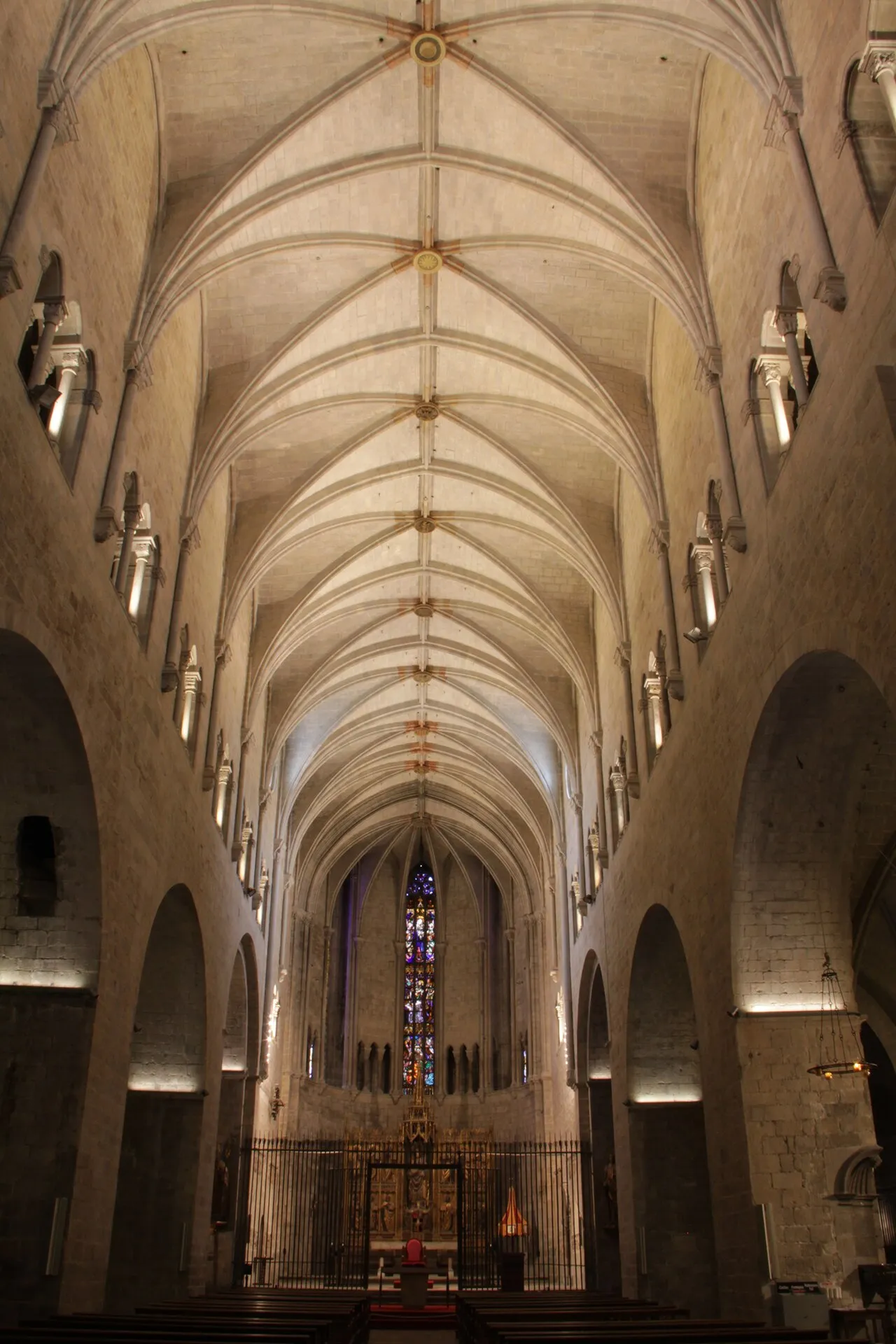
The cathedral is approached from its Baroque stairway of ninety steps, one of the most photographed images in Catalonia. Inside it holds a record: the widest Gothic nave in the world, twenty-three metres with no intermediate supports, a structural decision that in its day was put to a panel of experts because nobody was sure it would hold.
In the chapter museum is the Tapestry of Creation, a Romanesque embroidery from the eleventh or twelfth century of extraordinary iconographic richness. It is the piece that justifies the ticket on its own.
Painted in ochres, reds and yellows and leaning straight over the water. They are seen from the Puente de las Pescaderías Viejas and from the Puente de Piedra. The best light is first thing in the morning, when the sun hits the façades head on.
A Baroque stairway of ninety steps and, inside, the widest Gothic nave in the world: twenty-three metres with no intermediate supports. In the chapter museum, the Tapestry of Creation, a Romanesque embroidery that justifies the ticket on its own.
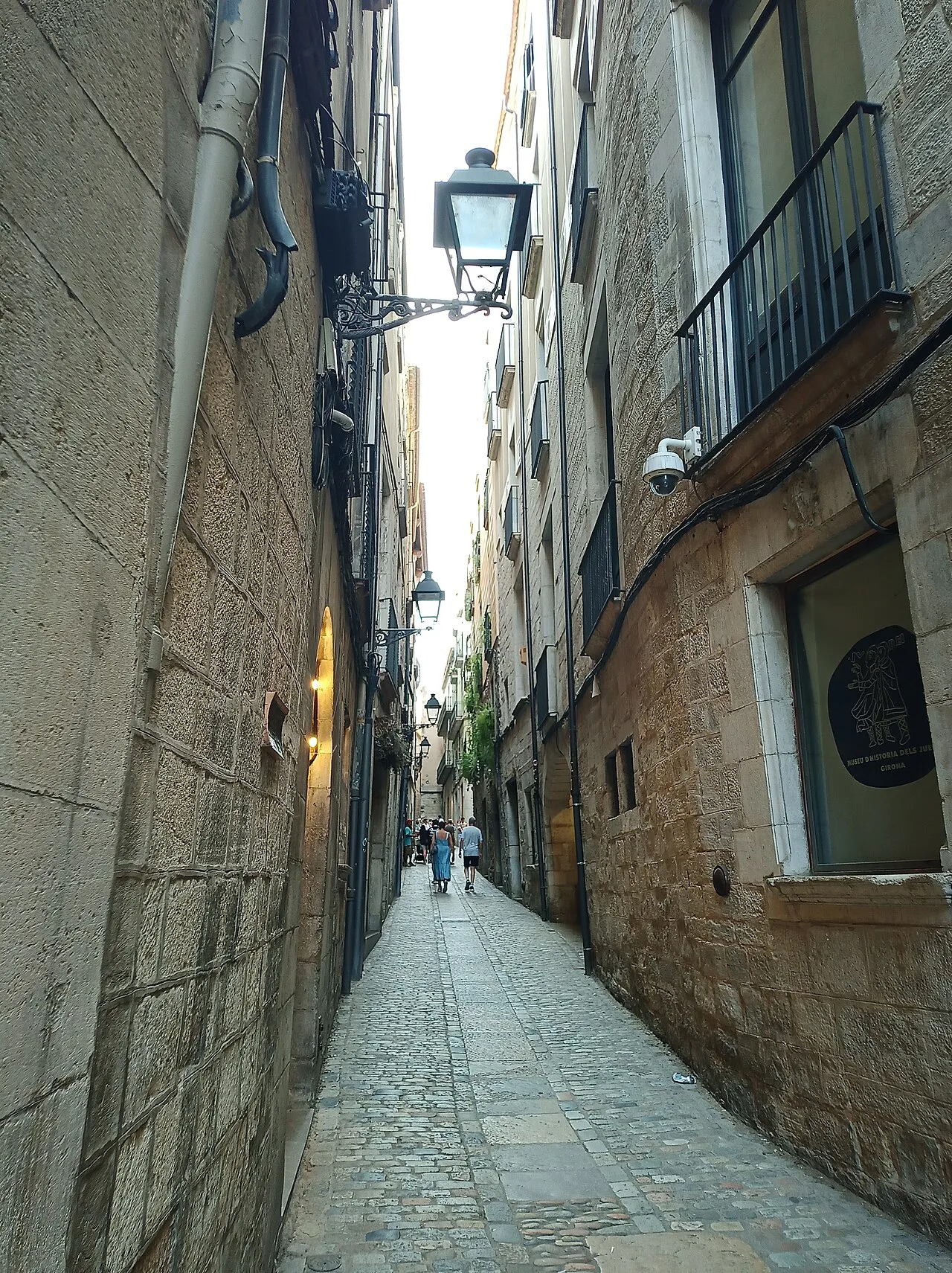
The Call is one of the best-preserved Jewish quarters in Europe and occupies the heart of the old town. Its axis is the Calle de la Fuerza, which follows the line of the old Roman road, and on both sides opens a labyrinth of narrow alleys, arches and stairways, almost all of them dead ends.
For more than six hundred years this was home to a community that in the thirteenth century was one of the great centres of the Kabbalah, with a school renowned across the Mediterranean. Its greatest figure, Bonastruc ça Porta, defended Judaism at the Disputation of Barcelona of 1263 before Jaume I and ended his life exiled in the Holy Land.
After the expulsion of 1492 the houses were occupied, the passageways were blocked up and the quarter was absorbed under the plasterwork for almost five centuries. That neglect was its salvation: when it was recovered, it appeared intact, without the alterations it would have suffered had it remained an active area.
The Museum of Jewish History, on the Calle de la Fuerza itself, puts in order everything you see outside and keeps a collection of gravestones from the city's Jewish cemetery. It is worth the ticket.
Get lost in the side alleys, almost all of them dead ends and with stairways. And come back at night, with the street lamps lit and without groups: that is when the quarter really works. All uphill and on cobbles.
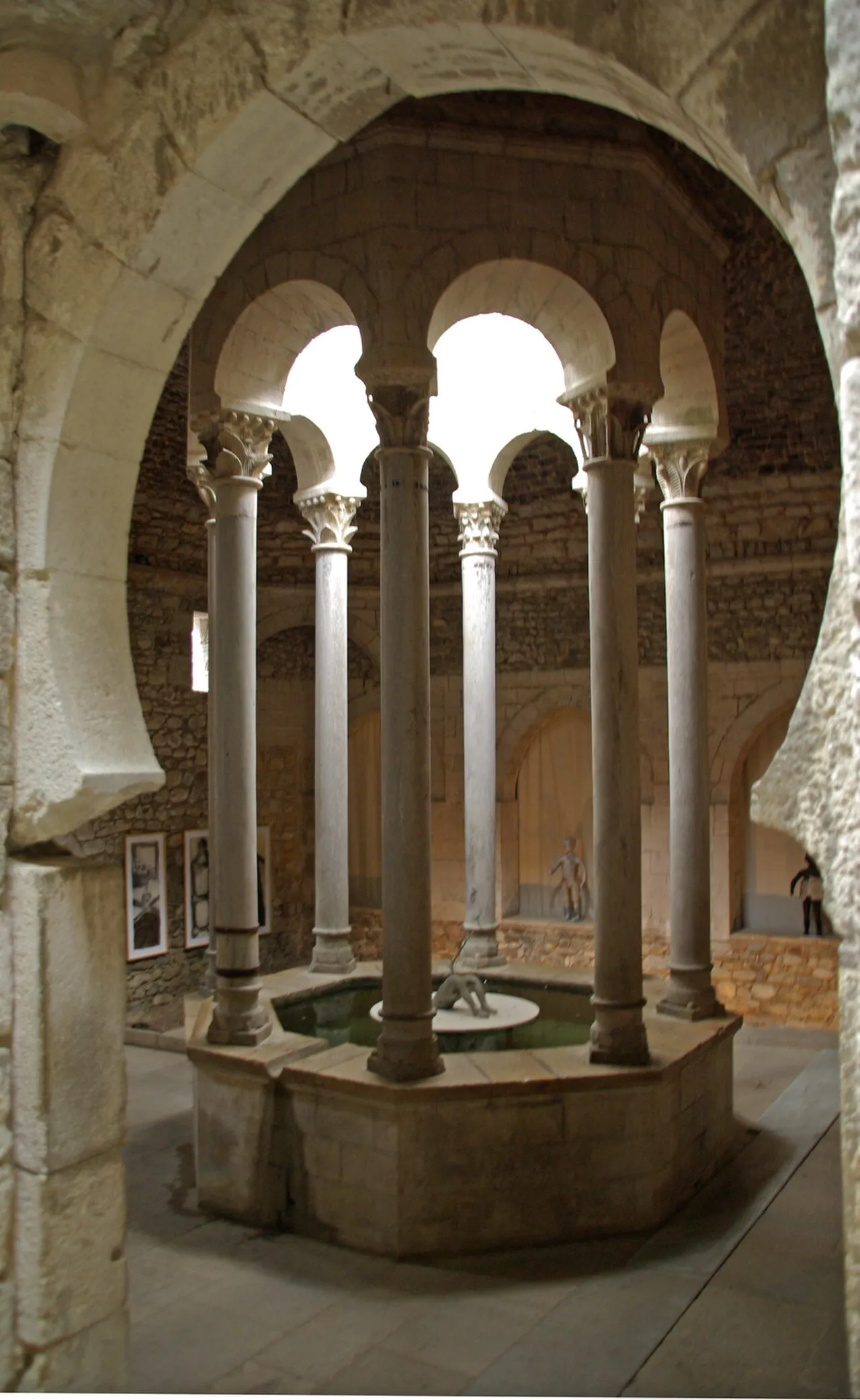
There is little Arab about them: they date from around 1194 and copy the Roman and Islamic model because it was the best of its time. The changing room, with its eight-column pavilion and the lantern above the pool, is best seen with the sun high.
Head down towards the northern part of the old town, passing under the Portal de Sobreportes, the gate of Roman origin. There you find the basilica of San Félix — with its bell tower cut short ever since lightning took off the spire in 1581, and eight Roman sarcophagi set into the presbytery — and the Arab Baths.
Carry on to Sant Pere de Galligants, a twelfth-century Romanesque monastery with a magnificent cloister that today houses part of the Archaeology Museum. It is the least busy part of the old town and one of the most beautiful.
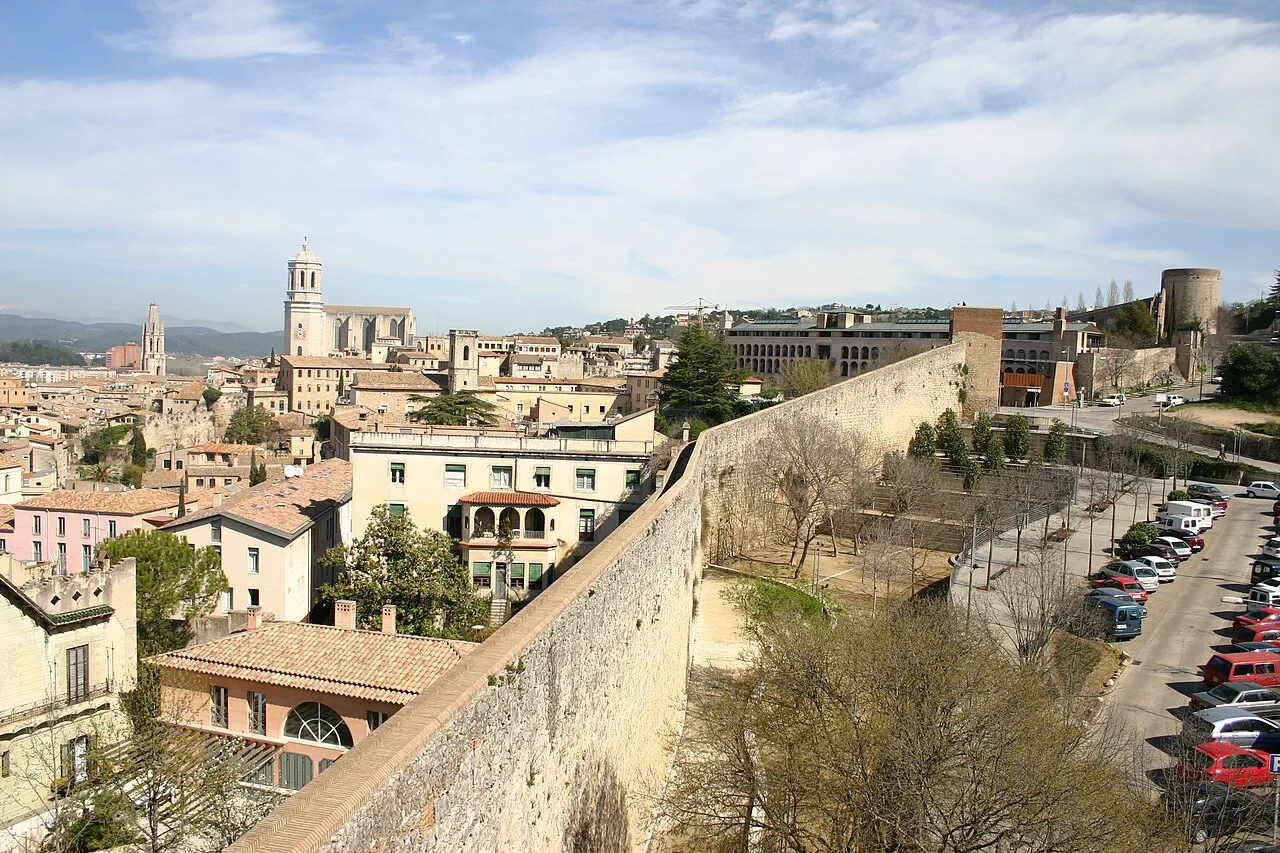
And go up onto the walls from the Jardines de los Alemanes. The wall walk runs along the parapet for about forty minutes, with several towers you can climb, and from the Torre Gironella you see the whole old town with the Pyrenees behind if the day is clear.
Finish the night in the Call or on the Rambla, and if you still have energy, go back to the bridges: the houses on the Oñar lit up and reflected in the water are the other image to take home.
Girona's first cathedral, raised outside the walls over the tombs of the martyrs. Its truncated bell tower is the visual reference point of the old town from anywhere. Give your time to the presbytery: the Roman sarcophagi are the thing to see.
A Roman layout reinforced by the Carolingians and extended in the fourteenth century. You walk it along the top and it is free. At sunset, with the low light over the rooftops, it is the best moment of the day in Girona.
Yes, and comfortably. The old town is a square kilometre and everything is covered on foot: the Jewish Call, the cathedral, San Félix, the Arab Baths, the walls and the houses on the Oñar. With a second day you can add the Cinema Museum, the Casa Masó, Sant Pere de Galligants and a trip to the Costa Brava or Besalú.
Is it worth going from Barcelona just for the day?
It is one of the best day trips you can make from Barcelona: 38 minutes by AVE, and the old town starts ten minutes on foot from the station. You can leave first thing, see it all at your own pace and come back after dinner without any rush.
Where is the photo of the coloured houses taken from?
From the Puente de las Pescaderías Viejas, a metal structure built by the Eiffel company, and from the Puente de Piedra. The houses on the Oñar are painted in ochres, reds and yellows and lean straight over the water. The best light is first thing in the morning, when the sun hits the façades head on.
What is special about Girona Cathedral?
It has the widest Gothic nave in the world: twenty-three metres with no intermediate supports, a structural decision so risky that at the time it was put to a panel of experts because it was not clear it would hold. And its chapter museum keeps the Tapestry of Creation, an extraordinary Romanesque embroidery.
Do you have to pay for the walls?
No, access to the wall walk is open and free. You go up from the Jardines de los Alemanes or from around the cathedral, the full route takes about forty minutes and there are several intermediate exits so you can fit it to the time you have. Sunset is the best moment of the day.
What is there near Girona?
Besalú, with its medieval bridge and its old Jewish ritual bath, half an hour away; the Costa Brava — Calella de Palafrugell, Cadaqués, Begur — less than an hour away; and Figueres with the Dalí Theatre-Museum, forty minutes away. All of which makes Girona a good base for several days.
Practical information
DurationA full day. With two you can fit in museums and a trip to the Costa Brava or Besalú.
Getting thereAVE from Barcelona in 38 minutes. It is the best-resolved day trip in Catalonia.
The orderRiver in the morning, Call at midday, walls at sunset. The light is in charge.
FreeThe walls, the Call, the houses on the Oñar and the bridges over the river.
FootwearAll uphill, with steps and cobbles. There is not a flat street in the old town.
EatingSuquet, rice dishes, mar i muntanya and xuixos. The Rambla area and the old town.
On the map
🎧 With Viavoy
Walk Girona and listen at your own pace
Download Viavoy and walk Girona offline, whenever you like.