1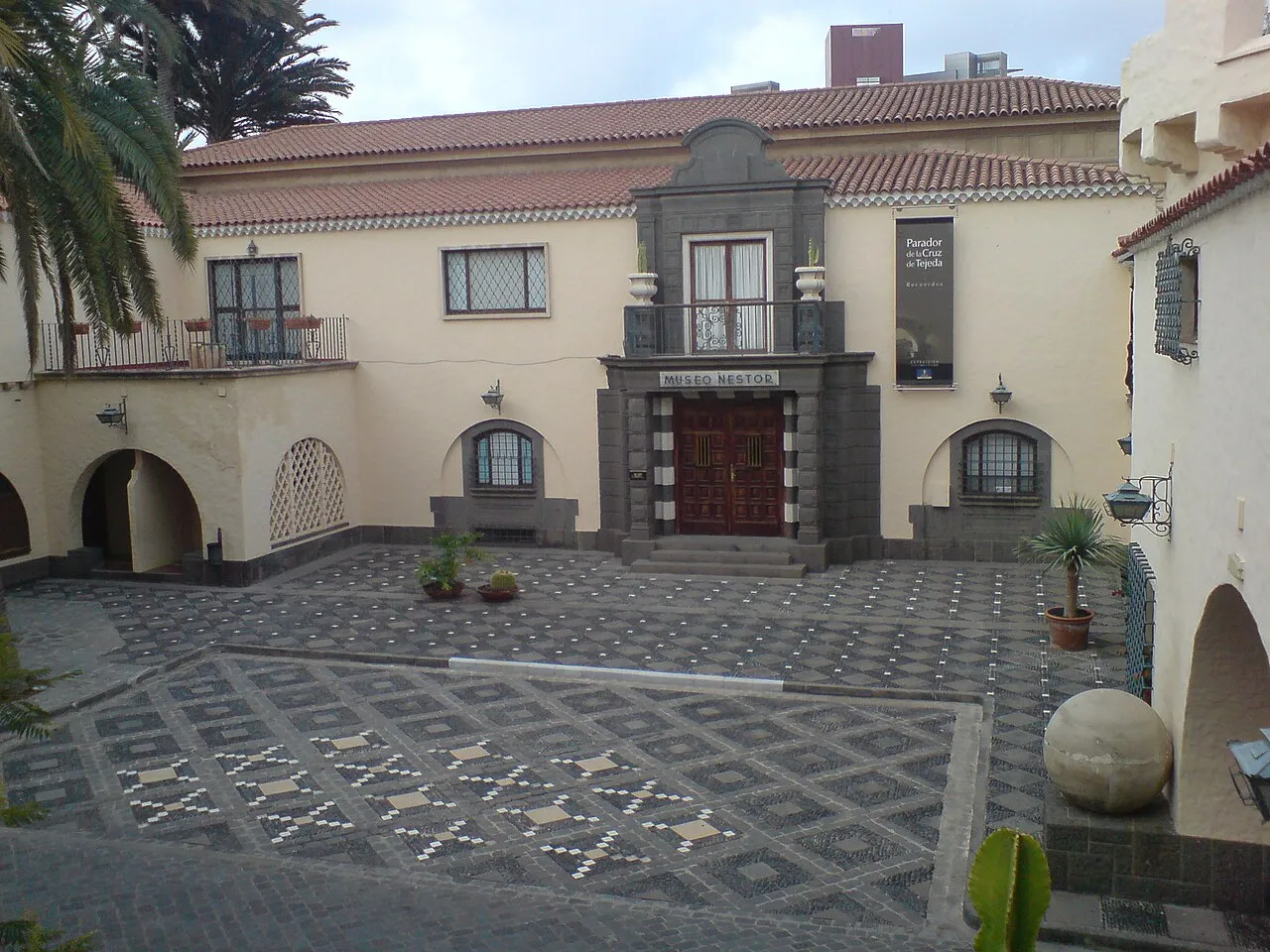
Néstor Museum
📍 Pueblo Canario, Parque Doramas
The Poem of the Atlantic, the Poem of the Earth and the rest of his work. Cheap entry and forty-five minutes that call for calm.
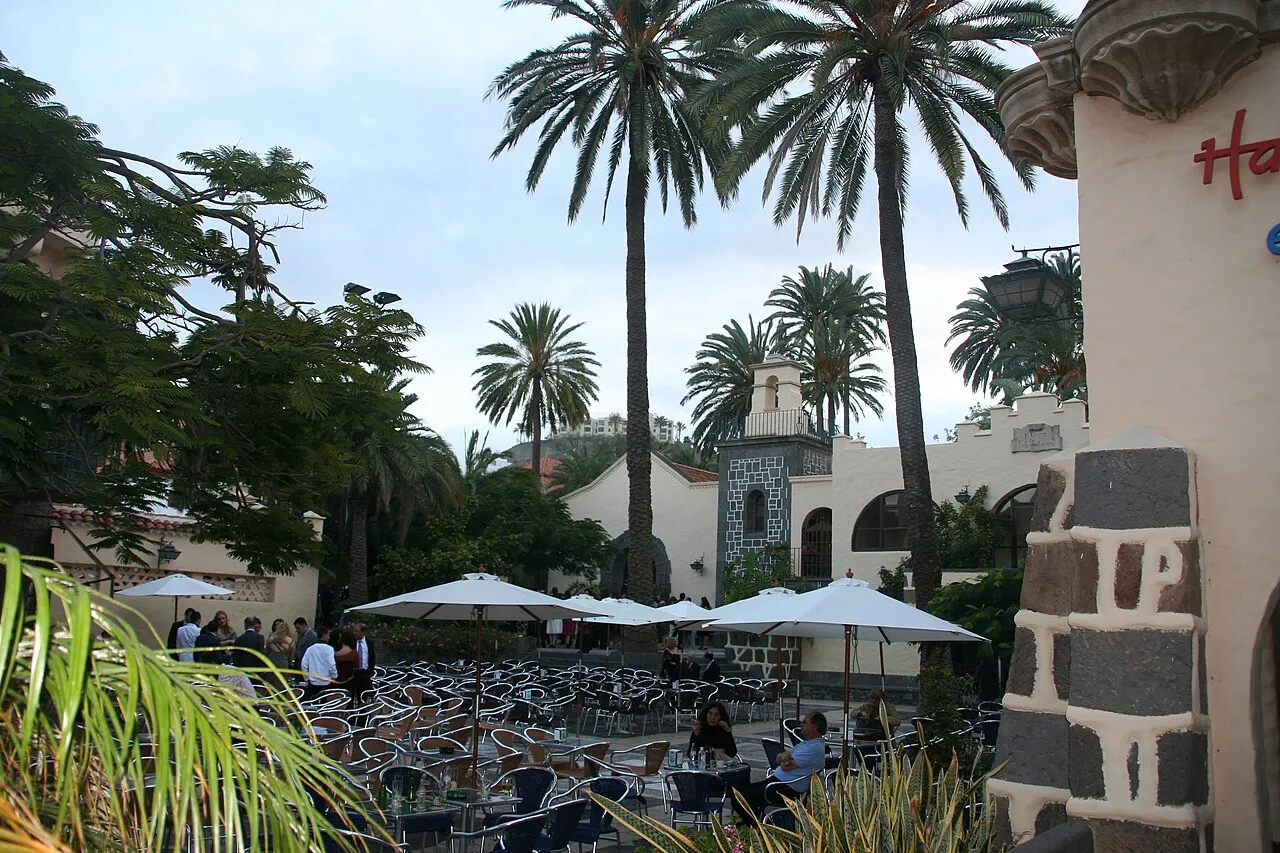
A Symbolist painter and a Rationalist architect set out to manufacture an aesthetic of their own for the islands. A good part of what people photograph in Las Palmas today is their work.
🎧 On the walk Ciudad Jardín, Doramas Park and the Canarian VillageNéstor Martín-Fernández de la Torre was a painter and his brother Miguel an architect, and between them they moulded the modern face of Las Palmas. The residential neighbourhood, the great park, the rebuilt theatre and a traditional village that never existed: all of it came out of the same double head.
Néstor was a Symbolist and Art Nouveau painter, he travelled across Europe, he triumphed in Madrid, Barcelona and London, and he came back to his island with an obsession: to create an aesthetic identity of its own for Canarian things, different both from the picturesque of tourism and from imitation of the mainland.
His most ambitious paintings are the Poem of the Atlantic and the Poem of the Earth, where the sea and the landscape of the islands turn almost into mythology: bodies and waves intertwined in intense colours, with a contained eroticism and a mixture of fantasy and rootedness that resembles nothing else.
The Poem of the Atlantic is not a single canvas but a cycle conceived as a symphony of the sea, with the ocean in different moods. Afterwards he wanted to do the same with the land. He finished neither of them: he died in 1938, aged fifty-one.
And he was much more than an easel painter: he designed costumes, theatre sets and furniture, and he tried to invent an architectural style of his own, the neocanario, so that the island's houses and hotels would have a stamp. All of that can be seen today at the Néstor Museum.
The Poem of the Atlantic, the Poem of the Earth and the rest of his work. Cheap entry and forty-five minutes that call for calm.
An invented traditional village: Néstor devised it in 1937 and his brother Miguel built it. On Sundays there is folk music in the costumes he designed.
Download the app and discover Las Palmas offline, whenever you like. Take the walking tour Ciudad Jardín, Doramas Park and the Canarian Village with a local guide in your ear.
Find out more about Viavoy →Miguel Martín-Fernández de la Torre trained in Madrid, was the first municipal architect of Las Palmas and brought modern architecture to the island. His signature is all over the city.
From 1922 he drew Ciudad Jardín, taking his inspiration from the English garden cities that Ebenezer Howard had imagined at the end of the nineteenth century: one- and two-storey houses with a garden front and back, tree-lined streets, chamfered corners and little squares with trees.
The Doramas Park is also his, opened in 1950 when the city council bought from the English some gardens that had been private until then, in order to open them to everyone.
And so is the reconstruction of the Pérez Galdós Theatre after the fire of 1918, completed between 1925 and 1928. That is where the two brothers worked together most visibly: he provided the building and Néstor the frescoes, the stained glass and the canvases of the Saint-Saëns salon.
It is hard to find another comparable case in Spain of two brothers moulding the face of a city like this, each from his own discipline and with a shared aesthetic project.
The work that best sums up the project is the Pueblo Canario: whitewashed walls, balconies of tea wood, wooden lattices and a cobbled square that look like they belong to a traditional village. They do not. It is a perfect stage set, an invented village.
Néstor devised it in 1937 as a “living exhibition” of Canarian customs, and Miguel built it in the neocanario style, mixing vernacular, religious and military architecture from all over the archipelago. It reproduces no real village: it distils many of them to manufacture an ideal image.
Néstor never saw it finished: he died in 1938 and the complex was not opened until 1956. Almost twenty years between the idea and the reality.
And it is still alive: on many Sundays, in that square, folk groups dance the isa, the folía and the malagueña to the sound of the timple, in the traditional costumes Néstor himself designed. That was exactly what he wanted: that Canarian culture should not be a thing for display cases, but something that is danced and sung.
The same language can be seen at the Hotel Santa Catalina, a few metres away, whose present building is a reconstruction from the thirties with towers, balconies and courtyards in a regionalist key.
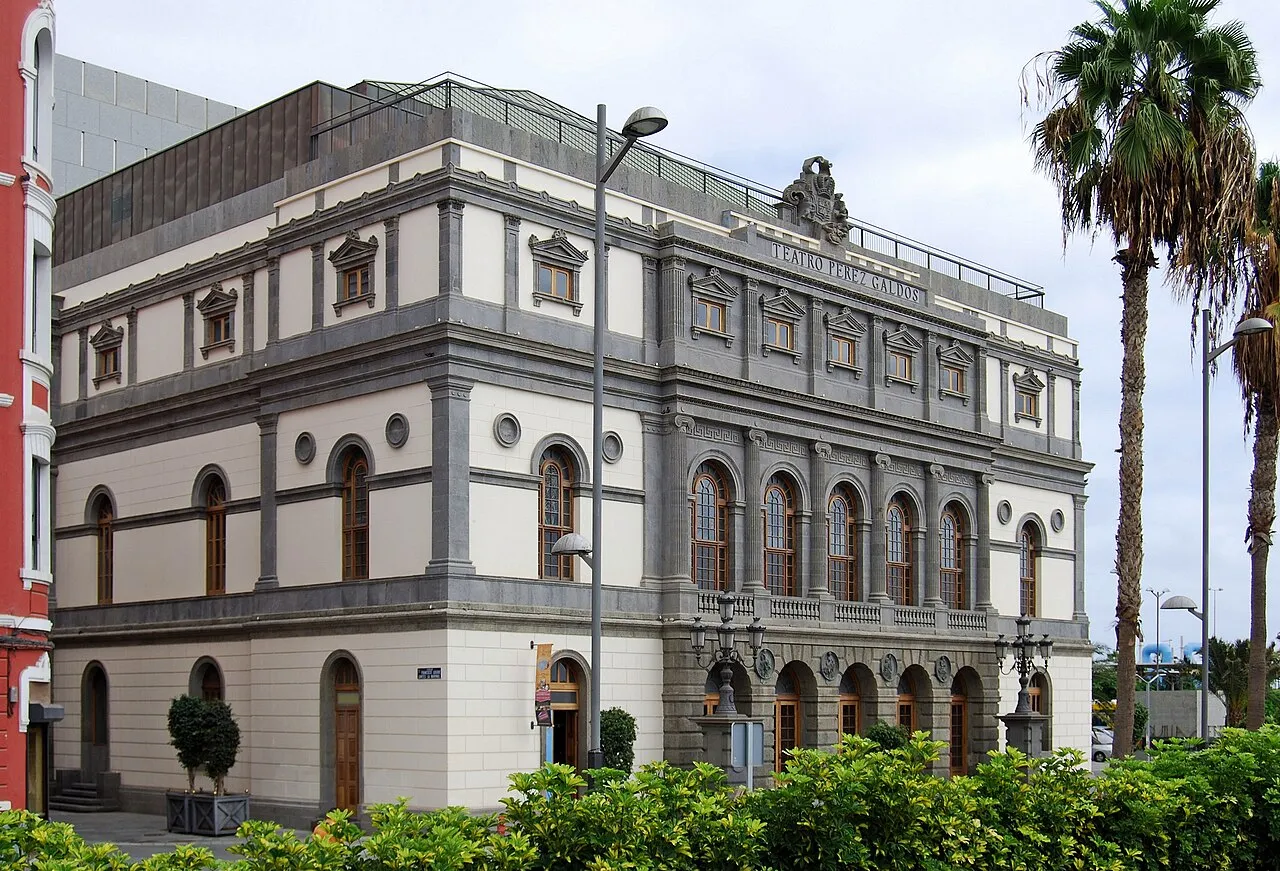
Where the two brothers worked together: Miguel rebuilt the building after the fire of 1918 and Néstor signed the frescoes, the stained glass and the canvases.
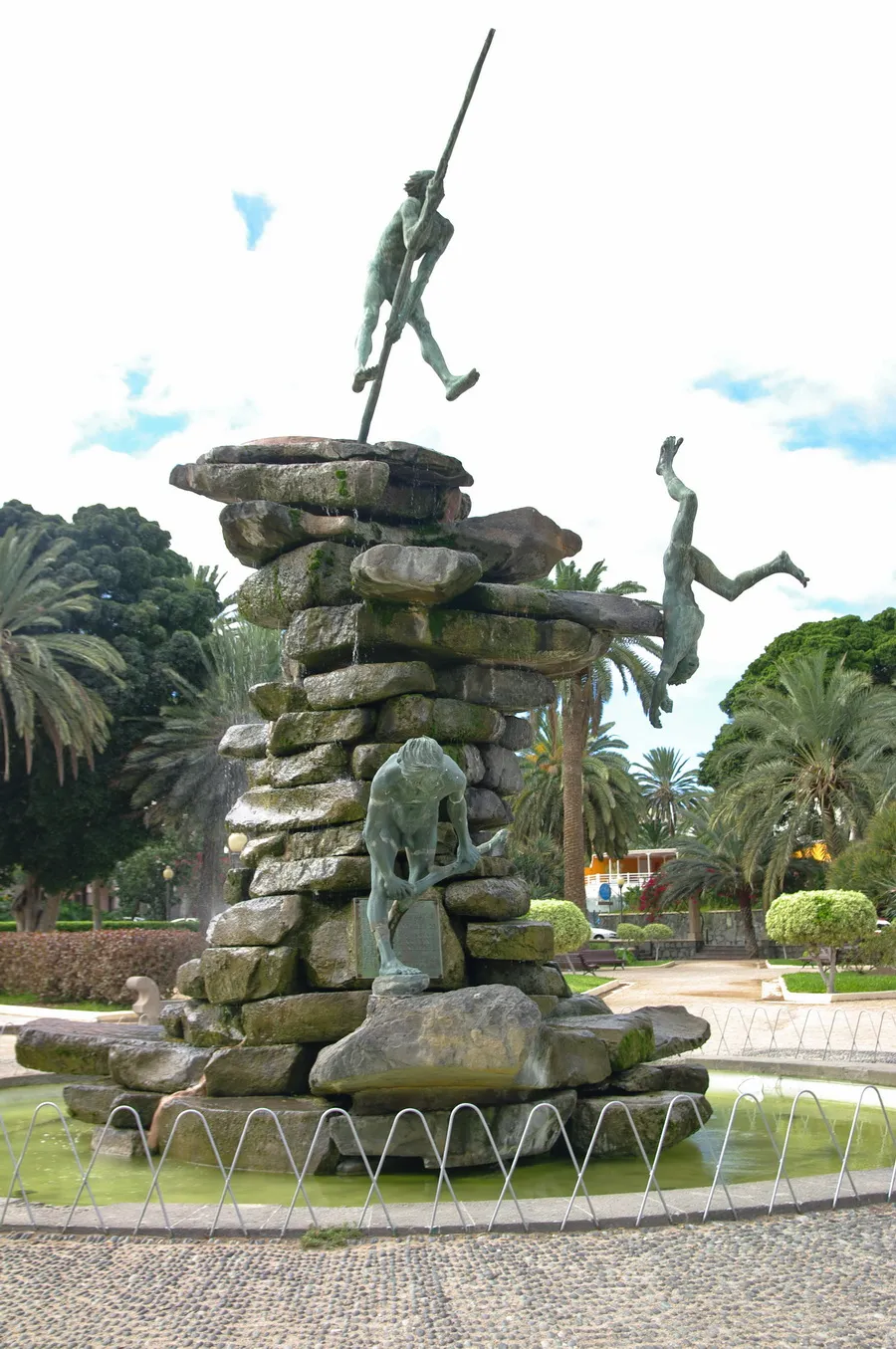
Designed by Miguel and opened in 1950, when the city council bought some private gardens from the English in order to open them to the public.
Probably the most important Canarian artist of the twentieth century: a Symbolist and Art Nouveau painter who triumphed in Madrid, Barcelona and London and came back to his island obsessed with creating an aesthetic identity of its own for Canarian things. As well as painting, he designed costumes, sets and furniture, and he devised an architectural style, the neocanario.
An architectural language that sought to give a stamp of their own to the islands' houses and hotels, mixing elements of the archipelago's vernacular, religious and military architecture: whitewashed walls, balconies of tea wood, lattices, towers. Néstor devised it and his brother Miguel built it, and its most complete example is the Pueblo Canario.
No, and that is what makes it interesting. It is an invented village: Néstor devised it in 1937 as a “living exhibition” of Canarian customs and his brother Miguel built it, distilling elements of many real villages to manufacture an ideal image. Néstor died in 1938 and the complex was not opened until 1956.
Néstor's two most ambitious painting cycles. The first is conceived as a symphony of the sea, with the ocean in different moods, from calm to storm; with the second he wanted to do the same with the landscape of the land. He finished neither of them: he died in 1938, aged fifty-one.
He was the first municipal architect of Las Palmas and brought modern architecture to the island. His are the plan for Ciudad Jardín from 1922, inspired by the English garden cities, the Parque Doramas of 1950, the Pueblo Canario and the reconstruction of the Teatro Pérez Galdós after the fire of 1918.
Most visibly, at the Teatro Pérez Galdós: Miguel rebuilt the building between 1925 and 1928 after the fire of 1918, and Néstor signed the interior decoration, with the ceiling frescoes, the Art Nouveau stained glass and the canvases of the Saint-Saëns salon. Also at the Pueblo Canario, devised by one and built by the other.
The isa, cheerful and skipping; the folía, slow and heartfelt, almost a lament; and the malagueña, with that air arrived from the southern mainland that here became its own. All to the sound of the timple, the small five-stringed Canarian instrument with a bulging body. The costumes the groups wear were designed by Néstor himself.
Download Viavoy and walk Las Palmas offline, whenever you like.

Keep reading