1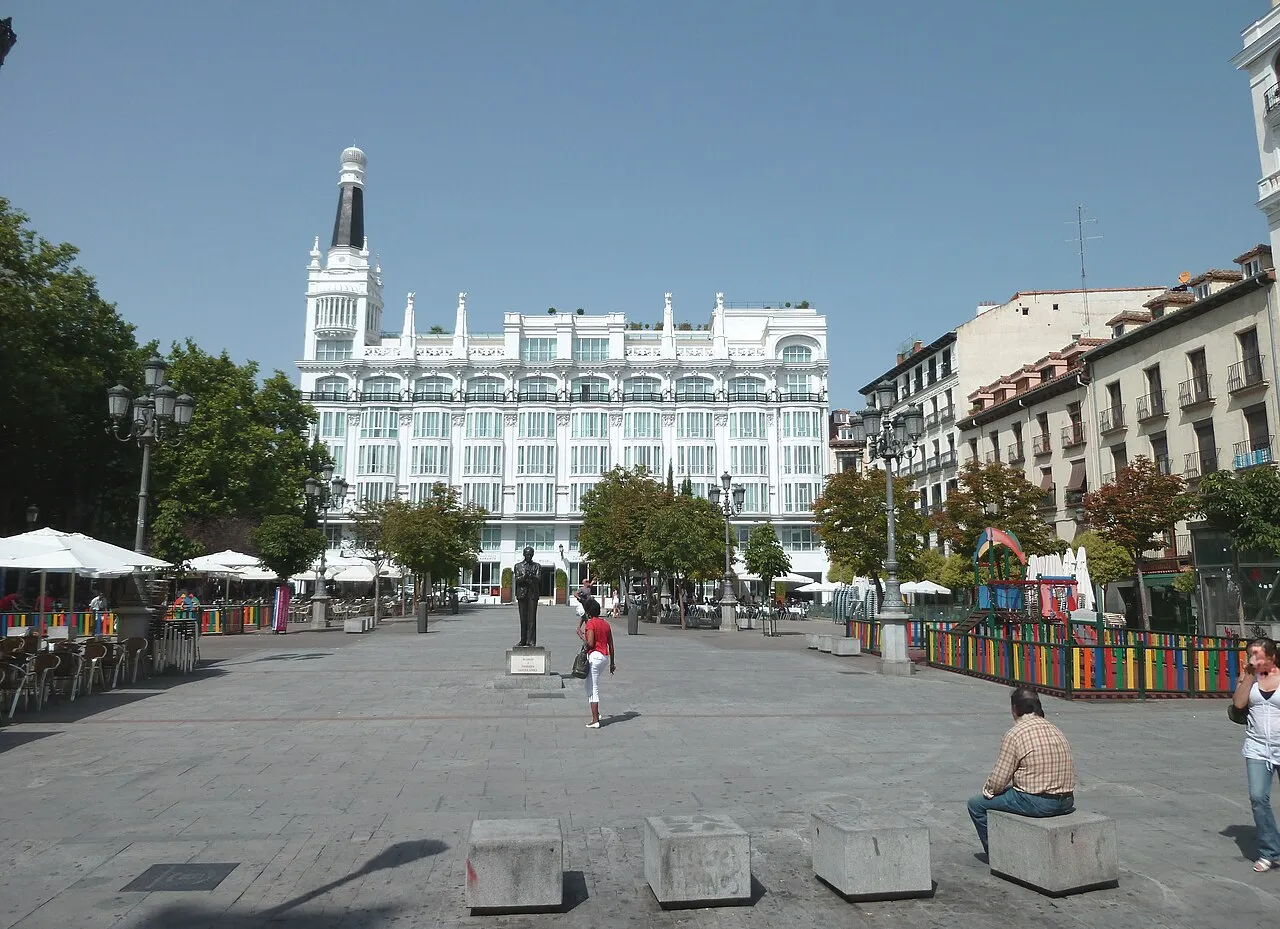
Plaza de Santa Ana
📍 Vegueta
The heart of the founding quarter, with the cathedral and the city hall facing each other. In front, eight bronze dogs, for the Latin etymology of “Canarias”.
One day for Vegueta and Triana, another for the harbour and Las Canteras. The two cities that fit inside this city, in the order that works.
🎧 On the walk Vegueta: the Cathedral, Columbus and the founding quarterLas Palmas is really two cities stuck together and very different from each other, separated by five kilometres. To the south, the founding quarter of 1478 with the cathedral of the Canary Islands and first-rank museums. To the north, the isthmus of the harbour, with three kilometres of urban beach. Trying to mix them into a single day is the most common mistake.
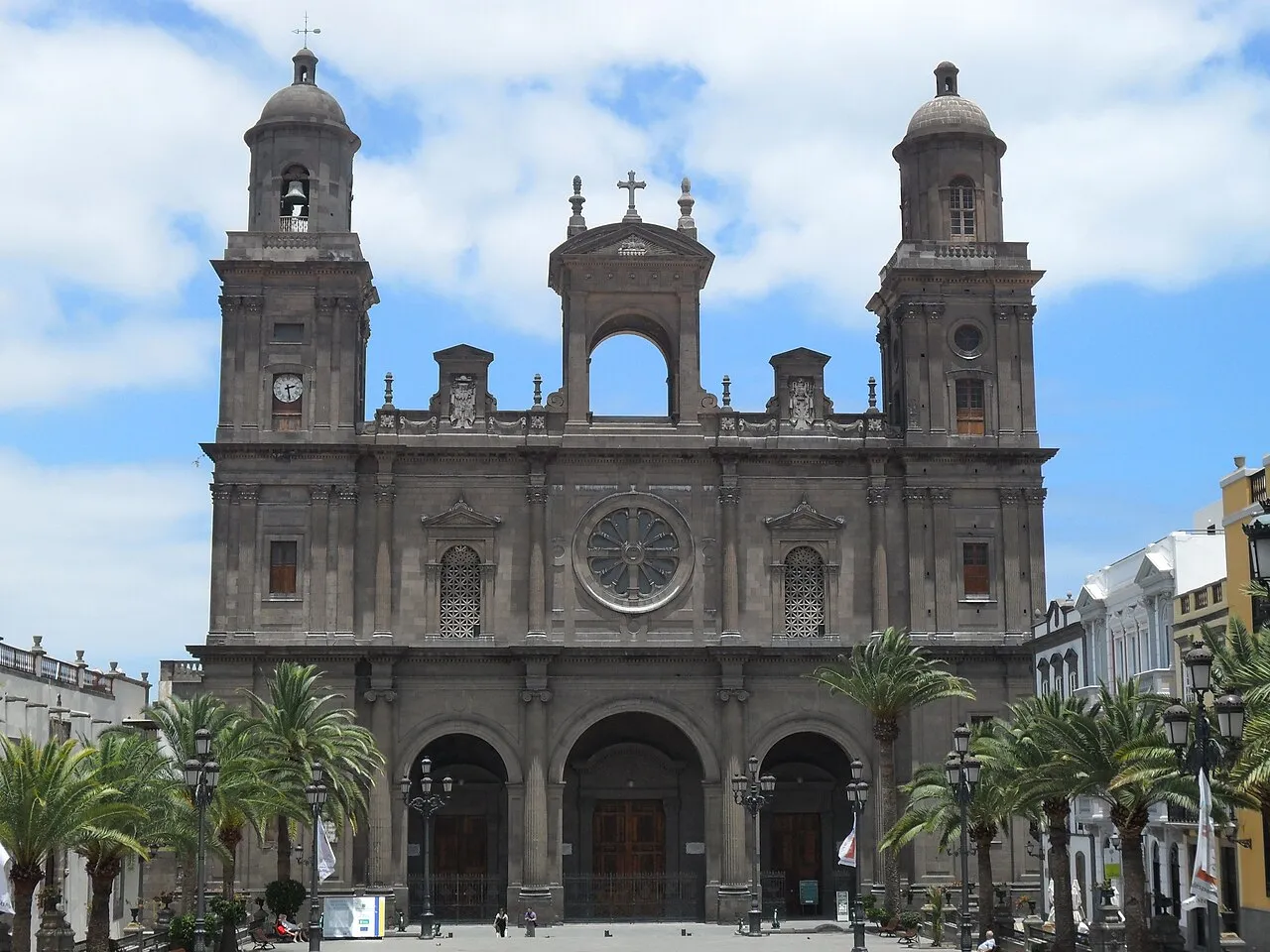
Start in the Plaza de Santa Ana, laid out in 1478 with the cathedral at one end and the Casas Consistoriales, the city hall, at the other. That layout later crossed the Atlantic and was repeated in dozens of cities in America: it is, in a way, a mother square.
Go into the cathedral and, above all, go up the tower: there is a lift, and from the bell tower Vegueta unfolds whole, with the roofs, the ravine and the sea. Do it at the start, because from up there you grasp the layout of the quarter all at once. Next to it is the Patio de los Naranjos, the cloister, with the Diocesan Museum.
Then the main event: El Museo Canario, three minutes away. It holds the largest collection in the world of remains of the island's ancient inhabitants — hundreds of skulls and mummies, idols and pintaderas — assembled from 1879 by a doctor whose book ended up on the Church's Index of Forbidden Books.
Close the morning at la Casa de Colón, with its shadowy courtyards, and at the CAAM, where Sáenz de Oíza kept the stone façades and hollowed out the interior to fit a contemporary art museum inside.
The heart of the founding quarter, with the cathedral and the city hall facing each other. In front, eight bronze dogs, for the Latin etymology of “Canarias”.
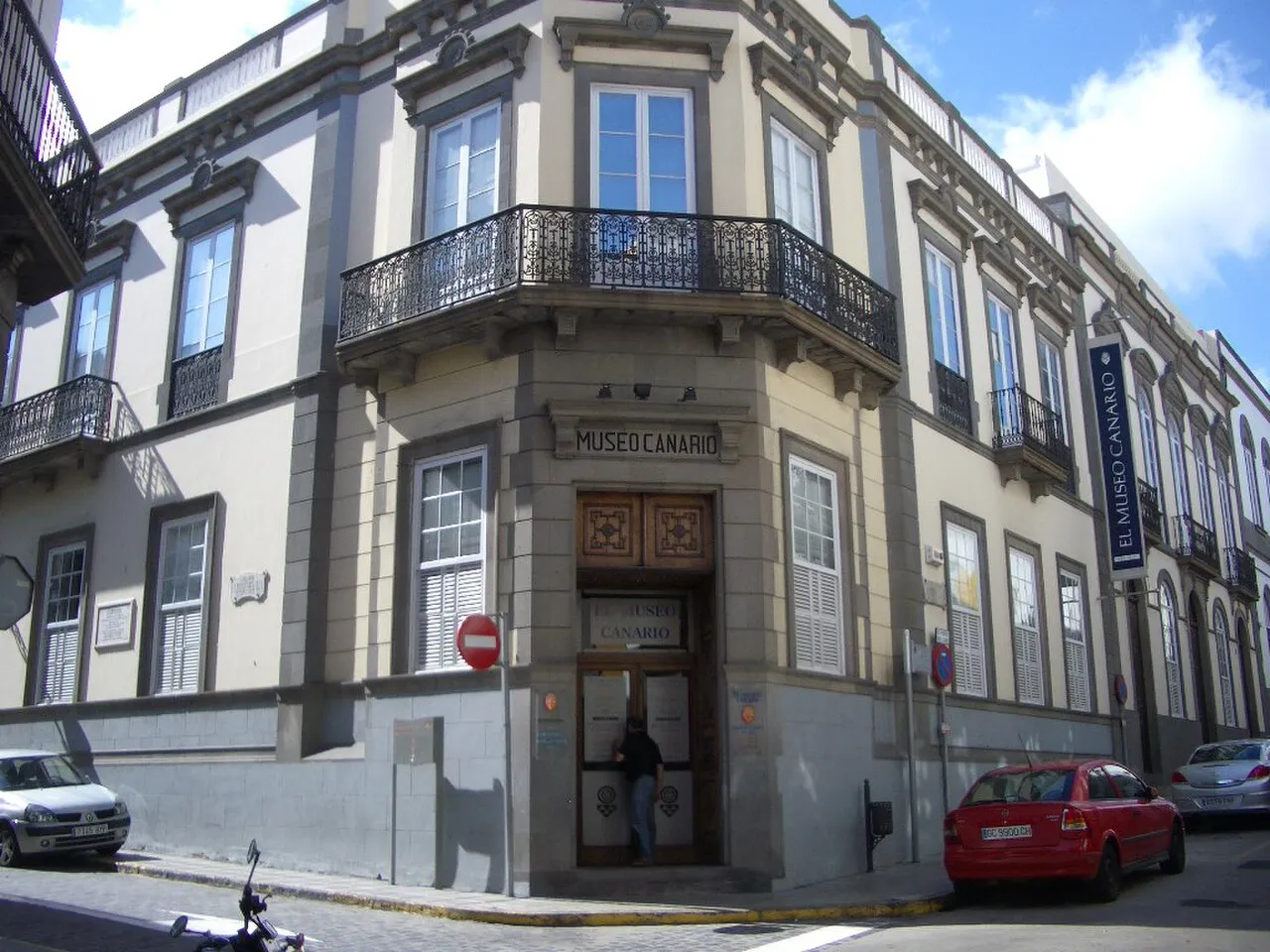
The largest collection in the world of remains of the ancient Canarians. A good hour, taken slowly: this is what changes the way you look at the island.
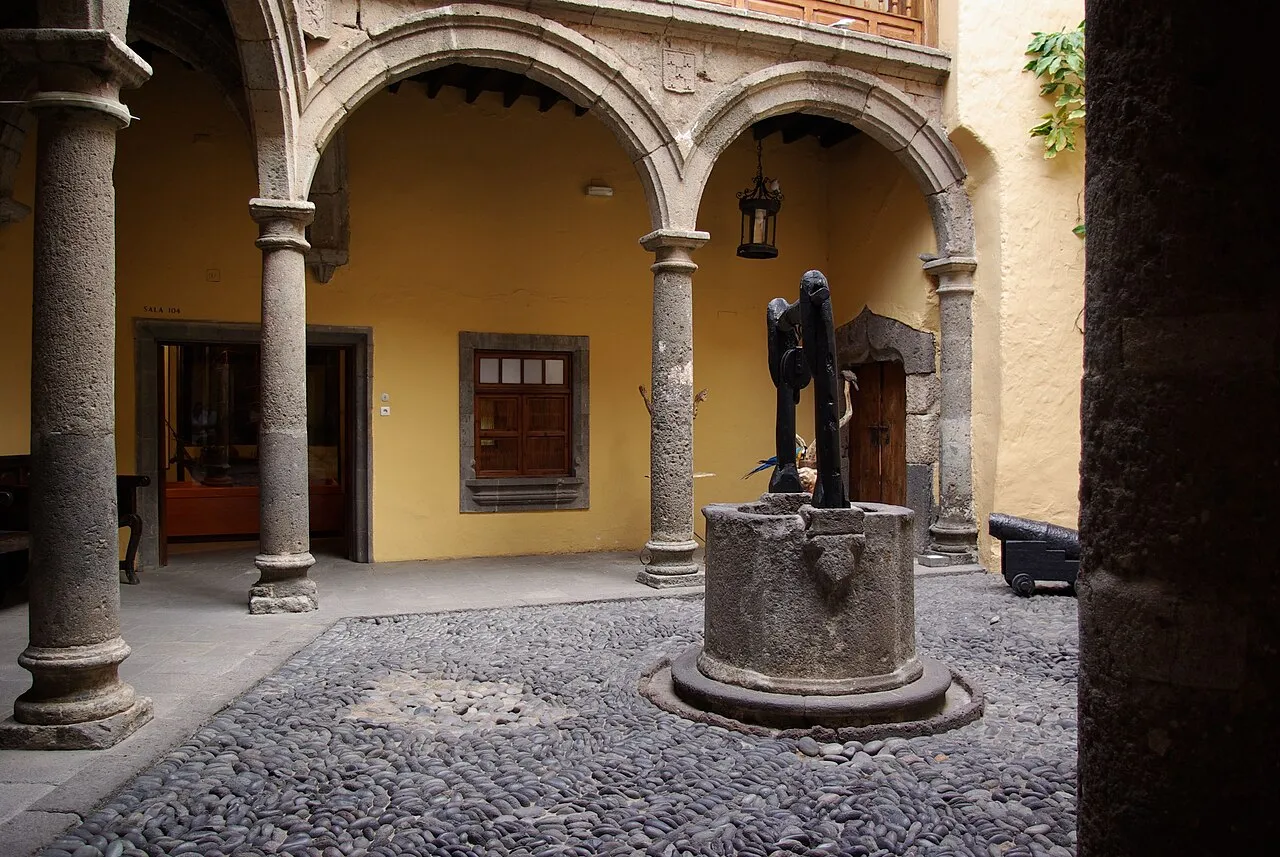
The old Casa del Gobernador, the governor's house, with courtyards and Mudéjar coffered ceilings. Cheap entry and one of the most charming corners in the city.
Download the app and discover Las Palmas offline, whenever you like. Take the walking tour Vegueta: the Cathedral, Columbus and the founding quarter with a local guide in your ear.
Find out more about Viavoy →Cross the Guiniguada ravine and begin at the Pérez Galdós Theatre. It opened in 1890 with La Traviata, burned out completely inside in 1918 and was rebuilt up to 1928, and there lies the jewel: the frescoes, the stained glass and the canvases of the Saint-Saëns salon were signed by the painter Néstor Martín-Fernández de la Torre. None of it can be seen from the street.
Carry on along the Calle Mayor de Triana, the island's commercial artery, and lift your eyes from the shop windows: there is an extraordinary collection of Art Nouveau façades from the early twentieth century. It was paid for first by cochineal, an insect from the prickly pears that yielded an extremely expensive red dye, and afterwards by bananas.
On calle Cano is the Casa-Museo de Pérez Galdós, where the writer was born on 10 May 1843 and lived until he was nineteen, when he sailed for Madrid never to return, or almost never. It keeps his furniture, his instruments and the study from his house in Santander, moved piece by piece.
Finish in the parque de San Telmo, where the sea used to reach: this is where the old quay stood, the one thousands of Canarians sailed from towards Cuba and Venezuela. In the park is the monument to Galdós by Victorio Macho, seated looking at the Atlantic he crossed.
Start at the La Luz Castle, the oldest fortress in the Canary Islands: a stone tower from 1494 that drove off Drake and Hawkins in 1595. It defended the water's edge, but the Puerto de la Luz took so much ground from the water that today it has been left inland. It houses the foundation of the sculptor Martín Chirino.
Carry on to the Santa Catalina Park, the city's meeting point for a century and a half, and to the Elder Museum, a science museum where you touch everything, installed in the old banana warehouse of a British shipping line.
Then a detour that pays off: Ciudad Jardín, the neighbourhood that Miguel Martín-Fernández de la Torre drew from 1922 taking his inspiration from the English garden cities. There you find the Doramas Park, the Hotel Santa Catalina — opened in 1890, the oldest in the Canary Islands — and the Pueblo Canario, which looks like a traditional village and was in fact invented by the painter Néstor in 1937.
And close the day at Las Canteras: more than three kilometres of very fine sand protected by a natural reef. Walk the whole promenade to the Alfredo Kraus Auditorium, planted like a lighthouse where the sand surrenders to the rocks, and stay for the sunset.
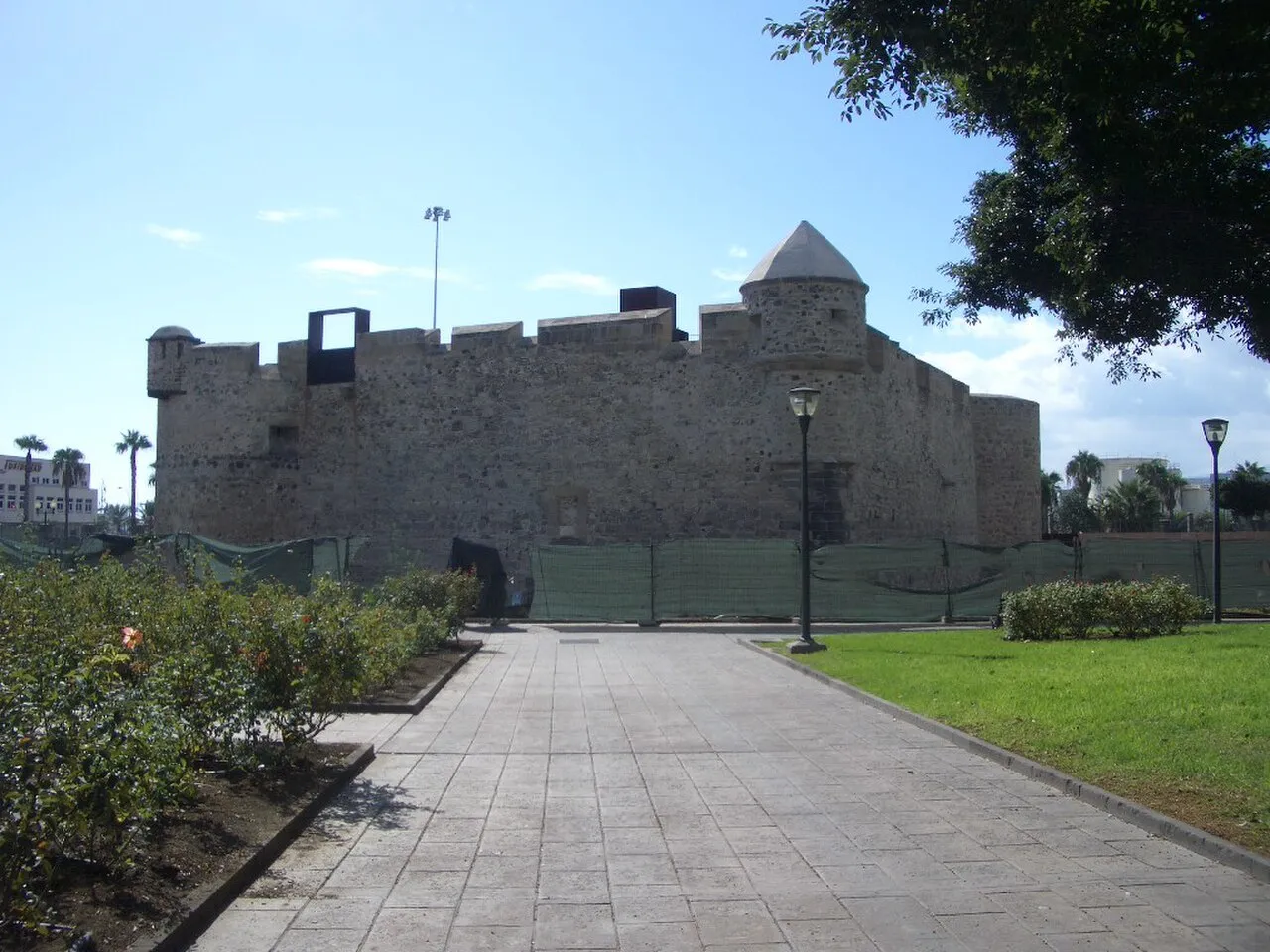
The oldest fortress in the Canary Islands, from 1494. It drove off Drake in 1595 and today houses the foundation of the sculptor Martín Chirino.
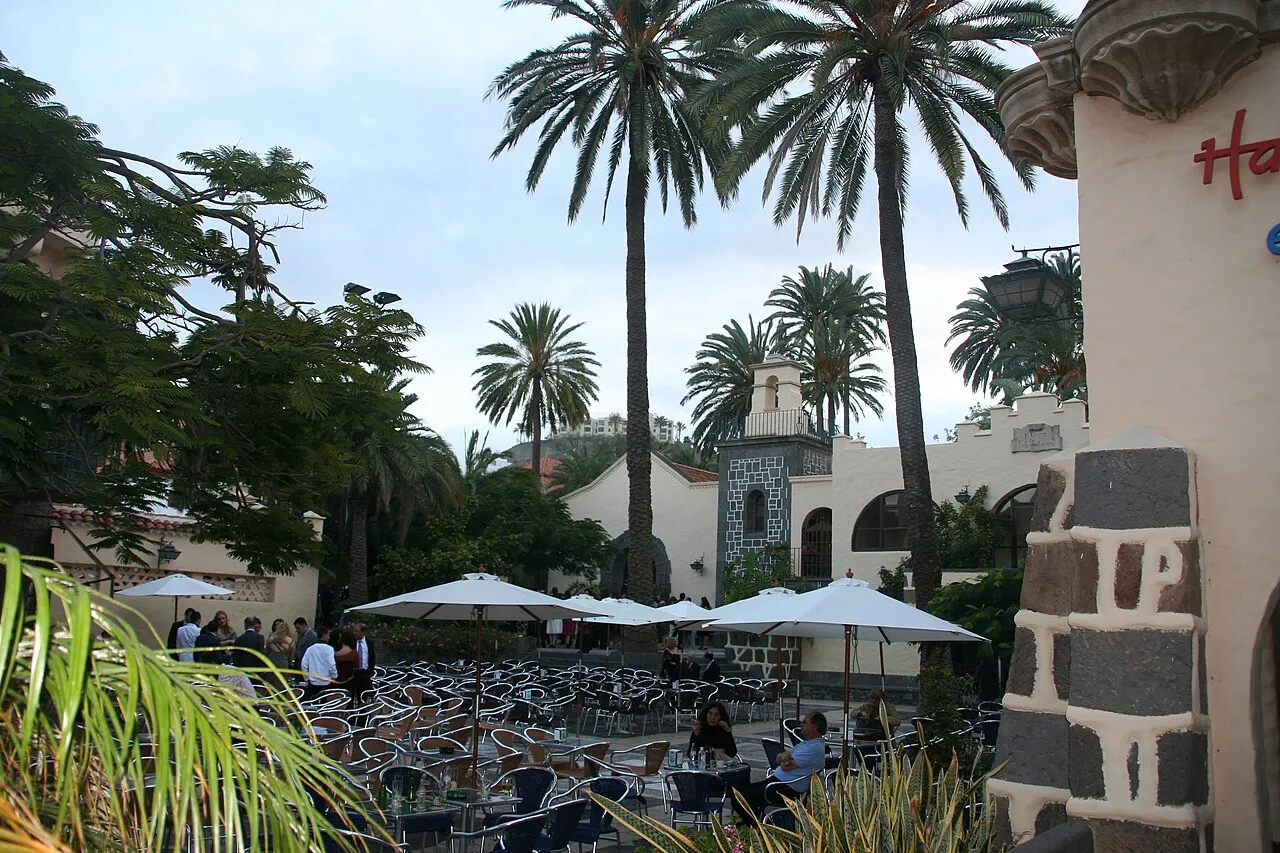
A traditional village that never existed: the painter Néstor devised it in 1937. On Sundays there are folk groups in the costumes he designed.
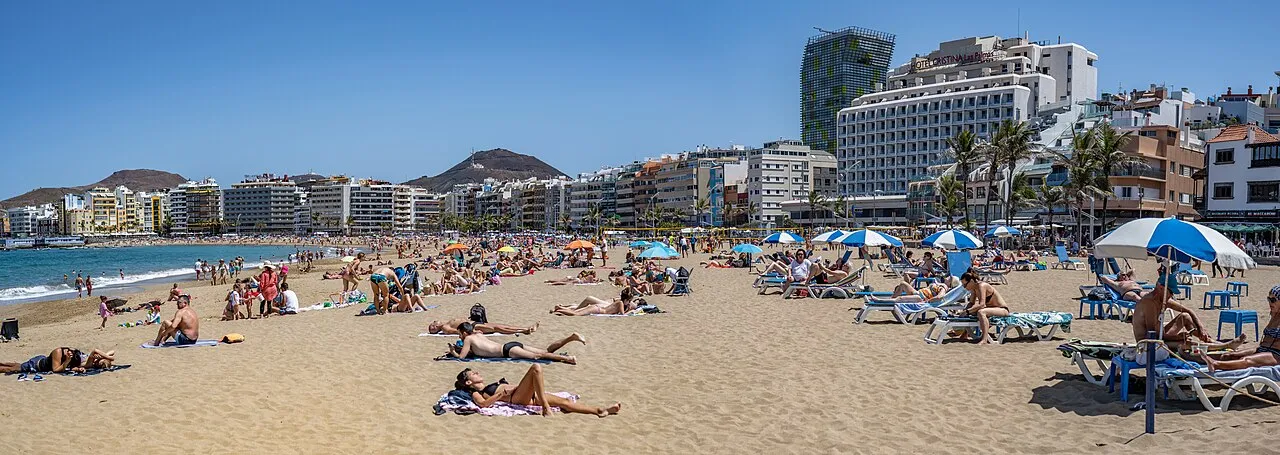
Three kilometres of sand inside the city, with the reef of La Barra leaving the water like a lake. At low tide you can walk on top of it.
Two full days. The city is really two areas separated by five kilometres: Vegueta and Triana to the south, the harbour and Las Canteras to the north. Each of them fills a day, and mixing them into a single day is the most common mistake because a lot of time is lost travelling between them.
El Museo Canario, in Vegueta: it holds the largest collection in the world of remains of the ancient inhabitants of Gran Canaria, with hundreds of skulls and mummies. And the window of the Auditorio Alfredo Kraus, a hundred square metres open to the Atlantic right behind the orchestra. Both are experiences that are not repeated anywhere else.
By guagua — that is what buses are called in the Canary Islands — from the San Telmo station, which is at the end of Triana and is the city's great hub. It is about five kilometres and services are frequent. You can do it on foot, but it is a long walk and the middle stretch is not very interesting.
Very much, and there is a lift. From the bell tower you see the whole of Vegueta with its flat roofs, the Guiniguada ravine, the sea and the modern city in the distance. It is worth doing at the start of your visit to the quarter, because from up there you grasp its layout all at once and everything that comes afterwards makes more sense.
In the morning, like all markets. It is the oldest in the Canary Islands, built around 1856, and it is organised as a central courtyard ringed by galleries, almost like a cloister. There are stalls where you can sit down to eat with what you have just bought at the one next door, which is the best way to use it.
Yes, and it is one of the best urban beaches in the world for it. A submerged reef called La Barra breaks the swell before it reaches the shore and leaves a good part of the water with almost no undertow. At the southern end, at La Cícer, where the barrier does not protect, the waves arrive whole and it is a surf zone.
Las Palmas has an unusual density of museums for its size: El Museo Canario, the Casa de Colón, the CAAM and the Diocesan Museum in Vegueta; the Casa-Museo de Galdós in Triana; the Elder Museum in the harbour, and the Néstor Museum in Ciudad Jardín. That gives you two indoor days without repeating anything.
Download Viavoy and walk Las Palmas offline, whenever you like.

Keep reading