1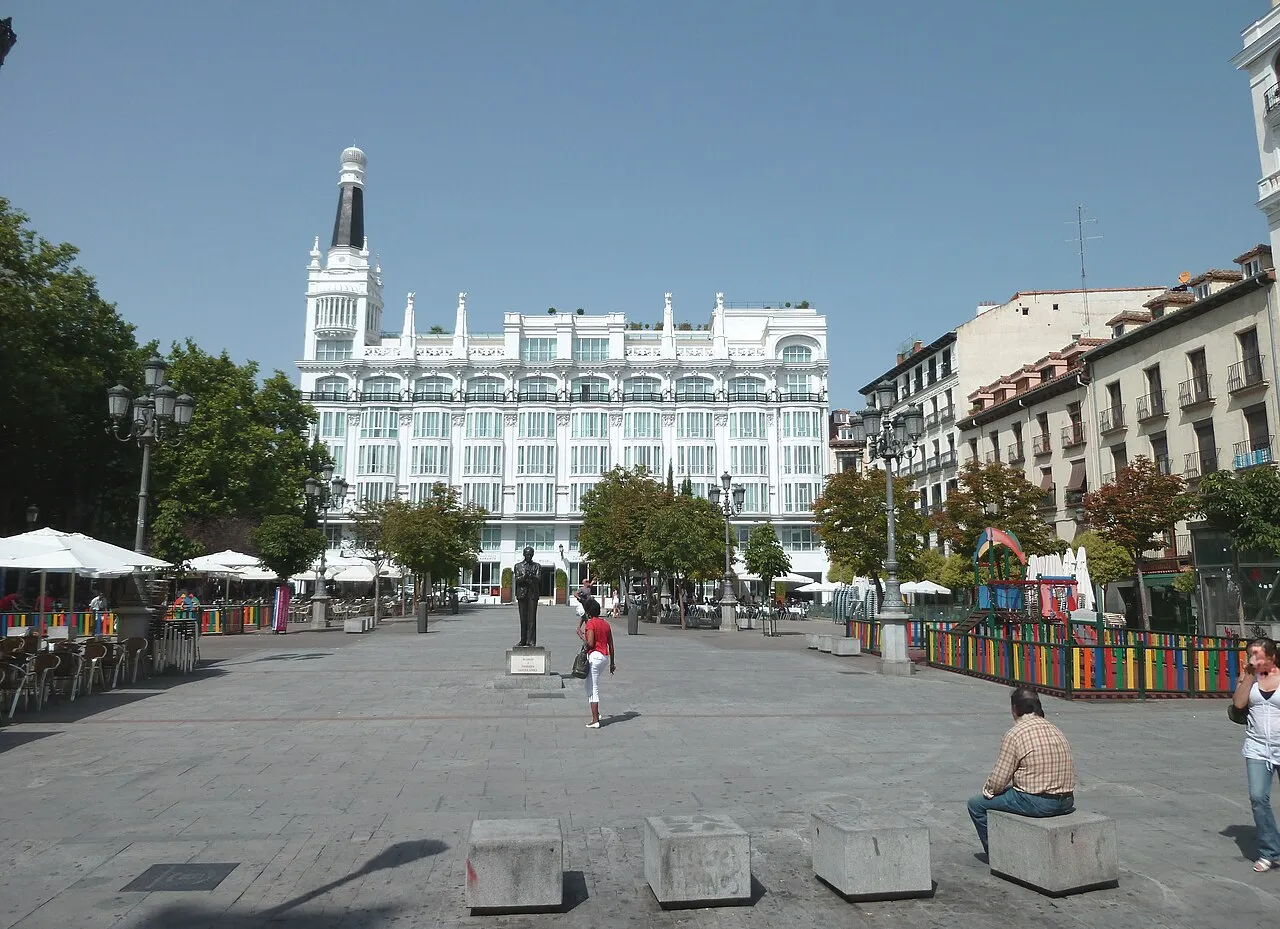
Plaza de Santa Ana
📍 The heart of Vegueta
Laid out in 1478 with the cathedral and the city hall facing each other. The layout that was afterwards repeated in dozens of cities in America.
A main square with the church at one end and government at the other, laid out here before any Spanish city existed in the New World.
🎧 On the walk Vegueta: the Cathedral, Columbus and the founding quarterVegueta is the quarter where the Castilians founded Las Palmas in 1478, fourteen years before Columbus crossed the Atlantic. And it is not just a pretty old town: its urban layout — a rectangular main square, the church on one side, civil power on the other — became the template with which dozens of cities were afterwards founded in America.
The Plaza de Santa Ana is a clear rectangle with the cathedral at one end and the Casas Consistoriales, the city hall, at the other, facing each other head on. God and municipal government, with the public space in between.
It was among the first main squares conceived with such an explicit layout, and the model travelled: it became the urban pattern of Spanish colonial foundation in America and was repeated, with variations, from Mexico to the Río de la Plata.
That this happened here is no accident. The Canary Islands were the laboratory of Castilian Atlantic expansion: conquest, the division of land, evangelisation and the founding of cities were all rehearsed here before being applied to the American continent.
In front of the cathedral there are eight bronze dogs lying on pedestals, the most photographed sculpture in the city. They allude to one of the classical etymologies of the name Canarias, which Pliny the Elder linked to the big dogs — canes — that the Romans found here.
Laid out in 1478 with the cathedral and the city hall facing each other. The layout that was afterwards repeated in dozens of cities in America.
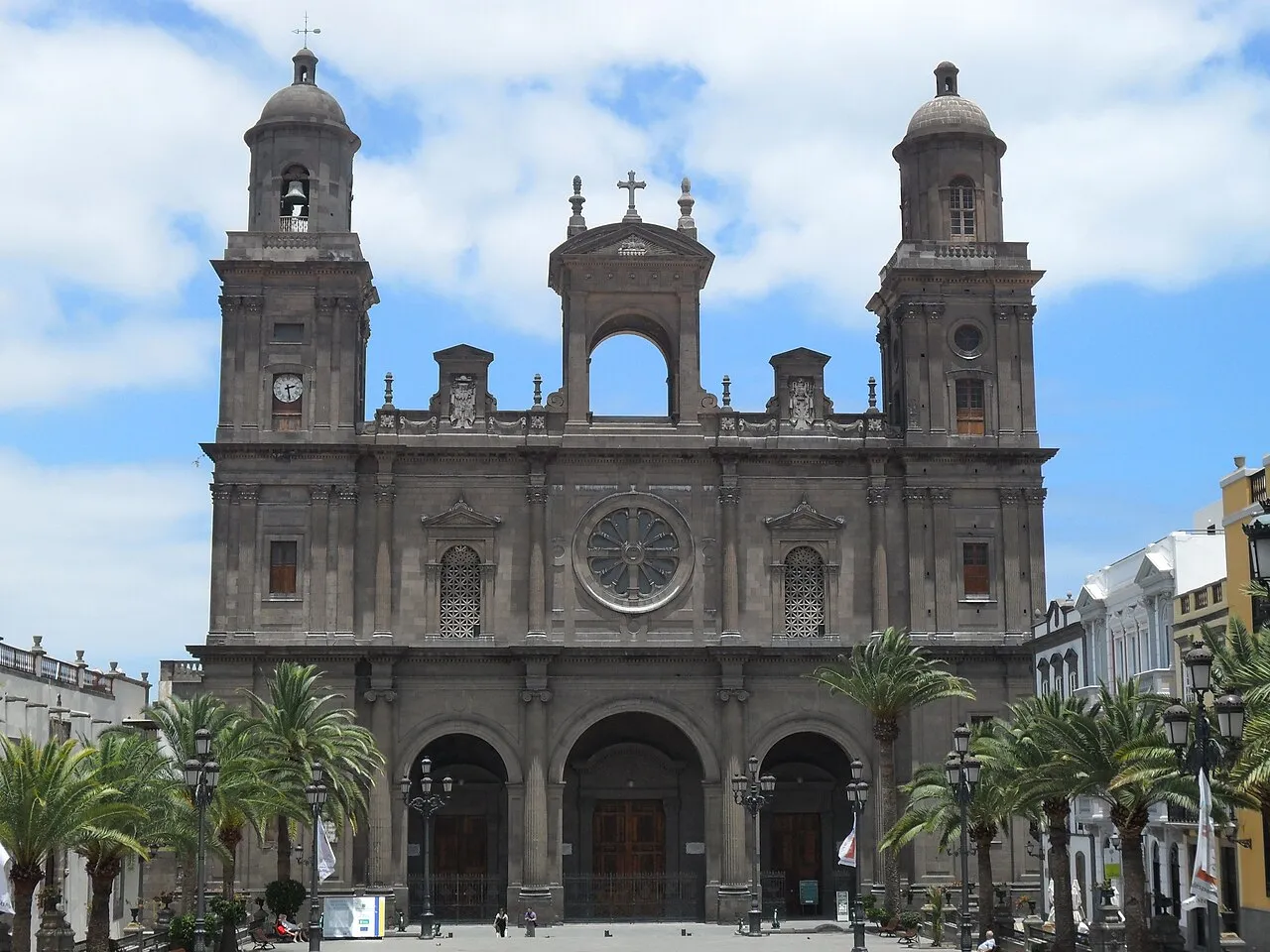
The cathedral of the whole archipelago: Gothic inside with columns like stone palm trees, Neoclassical outside. There is a lift to the tower.
Download the app and discover Las Palmas offline, whenever you like. Take the walking tour Vegueta: the Cathedral, Columbus and the founding quarter with a local guide in your ear.
Find out more about Viavoy →The cathedral was begun around 1500, with the city just founded, and was not considered finished until the nineteenth century. Almost four centuries, and that is why it works as a book of architecture: Gothic inside, Neoclassical outside.
The interior is the surprising part: very tall columns that open at the top into ribs like stone palm trees. The façade, more severe, is from the end of the eighteenth century and is tied to José Luján Pérez, the father of Canarian sculpture, born in 1756 into a very humble family in a village in the north.
There is a lift to the bell tower, and from up there Vegueta unfolds whole. It is the best panorama of the quarter and it is worth doing at the start of the visit.
Attached to the church opens the Patio de los Naranjos, the cloister, which is a direct inheritance from the mosques of al-Andalus: courtyards where the faithful waited among orange trees before going in to pray. The Diocesan Museum is arranged around it, with Flemish panel paintings that arrived by sea when the islands were a stop on Atlantic trade routes.
The city suffered what any stronghold on the route to the Indies suffered. In 1595 Francis Drake tried and left empty-handed; in 1599 Pieter van der Does's Dutch fleet took it, sacked it and set it on fire, and a good part of what stood here burned.
El Museo Canario, founded in 1879 by the doctor Gregorio Chil, holds the largest collection in the world of remains of the island's ancient inhabitants. It is the most impressive visit in the quarter and the one that most changes the way you look at Gran Canaria.
La Casa de Colón was in fact the Casa del Gobernador, the governor's house. Tradition says Columbus stayed here in 1492 and there is no document to prove it, but the stopover did happen: they repaired the Pinta's rudder and changed the Niña's sails for square ones. Its shadowy courtyards are among the best things in the city.
On the same street is the CAAM, where Sáenz de Oíza kept the stone façades and hollowed out the interior to fit inside a contemporary art museum with a tricontinental vocation: to look at art from the Atlantic, between Europe, Africa and America.
And the corner almost nobody sets foot in is the Plaza del Espíritu Santo, with a fountain sheltered under a small stone pavilion — one of the very few roofed fountains in Hispanic architecture — paid for by the neighbours through public subscription in the nineteenth century. Here all you hear is the water.
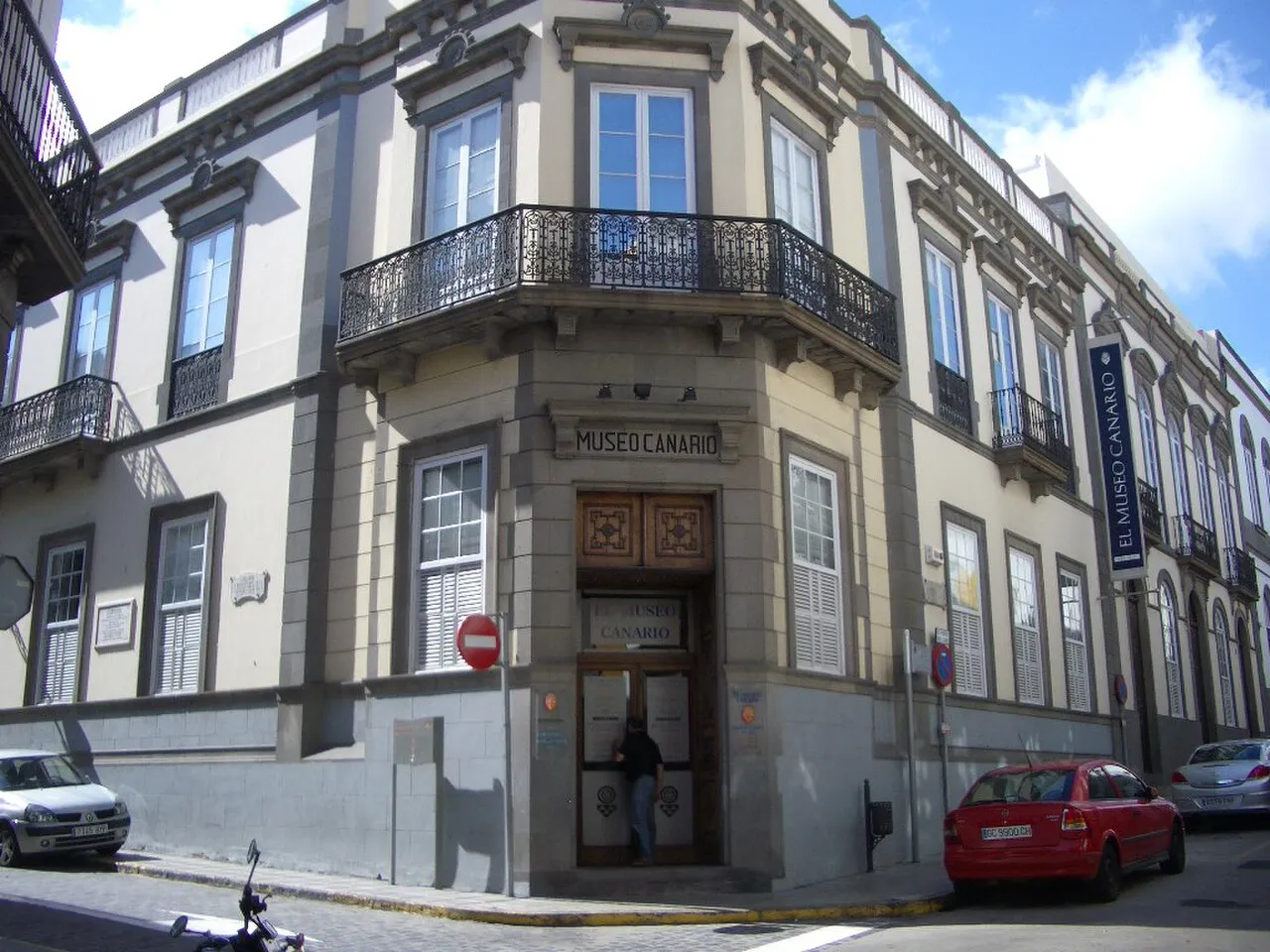
Founded in 1879. Hundreds of skulls, mummies, idols and pintaderas of the ancient Canarians, in the largest collection in the world.
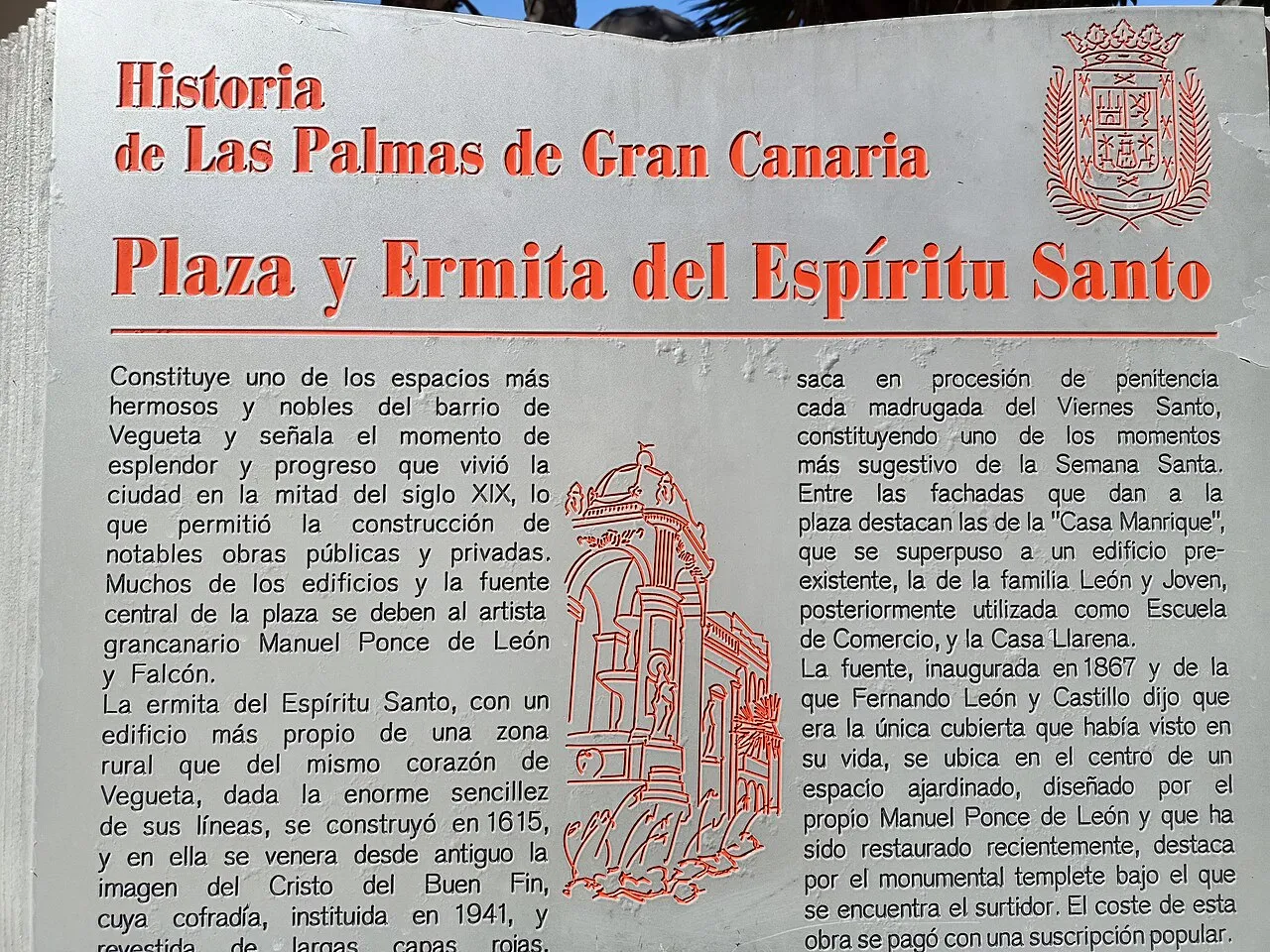
A fountain sheltered under a small stone pavilion, one of the very few in Hispanic architecture. The quietest corner of the old town.
On 24 June 1478, the feast of San Juan, when the Castilian captain Juan Rejón pitched the camp of conquest among a palm grove and named it el Real de Las Palmas. The city's name comes from those palm trees. It was not yet a city, it was a fort: the squares and the churches came later.
Because its layout — a rectangular square with the church at one end and civil power at the other — was among the first to be applied so explicitly, and it afterwards crossed the Atlantic and became the urban pattern of Spanish colonial foundation in America. The Canary Islands worked as the laboratory of that expansion.
Almost four centuries. It was begun around 1500, with the city just founded, and was not considered finished until the nineteenth century. That is why it is like a book of architecture: the interior is Gothic, with columns that open at the top like stone palm trees, and the outer façade is Neoclassical, from the end of the eighteenth century.
Eight hounds lying on pedestals in front of the cathedral, and the most photographed sculpture in the city. They allude to one of the classical etymologies of the name Canarias, which Pliny the Elder linked to the big dogs the Romans found on these islands. It is a disputed theory, but the dogs are also on the archipelago's coat of arms.
There is no document to prove it. The building was in fact the Casa del Gobernador, the residence of those who ruled the newly conquered island. What is documented is that the fleet made a stop in Gran Canaria in 1492 to repair the Pinta's rudder and change the Niña's sails for square ones.
A long half-day if you do the outdoor walk with one or two entrance tickets, and a full day if you visit every museum: El Museo Canario, the Casa de Colón, the CAAM and the Diocesan Museum, as well as the cathedral and its tower. It is a compact and entirely pedestrian quarter.
During the feast of Corpus Christi, the streets and the square of Vegueta are covered with ephemeral carpets made of dyed salt, flowers and volcanic sand, over which the procession then passes. It is one of the city's most spectacular traditions and it draws thousands of people every year.
Download Viavoy and walk Las Palmas offline, whenever you like.

Keep reading