1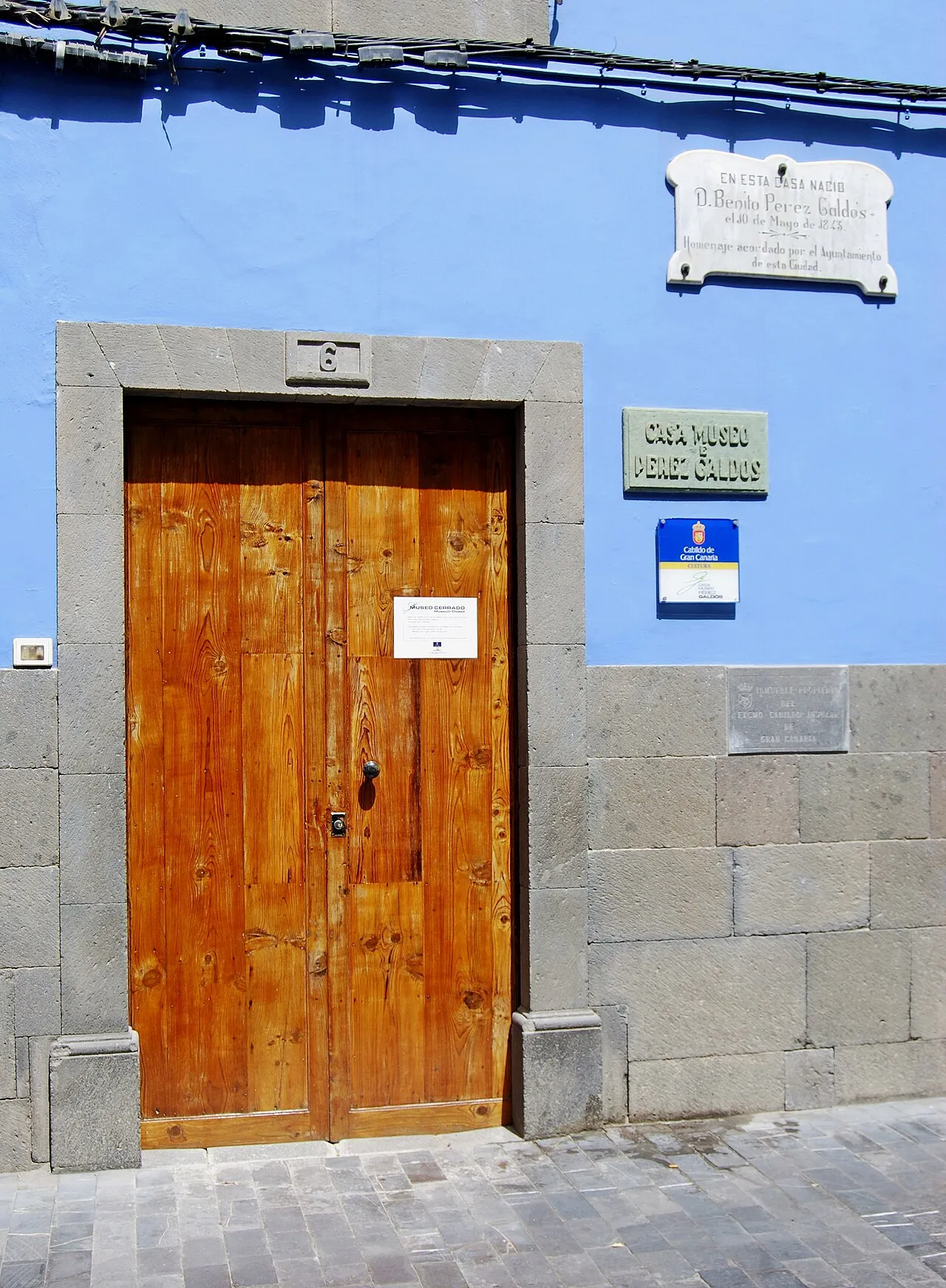
Pérez Galdós House-Museum
📍 Calle Cano, Triana
Where he was born on 10 May 1843. It keeps his furniture, his musical instruments and the study from his house in Santander, moved piece by piece.
He left at nineteen and hardly ever came back, but the city has him everywhere. Three stops for understanding the most important novelist after Cervantes.
🎧 On the walk Triana, the Theatre and the Gran Canaria of GaldósBenito Pérez Galdós was born in Triana in 1843, left for Madrid in 1862 and became the total chronicler of nineteenth-century Spain. The city that watched him leave gave his name to its theatre while he was still alive, keeps the house where he was born as a museum, and sat him down in bronze looking at the Atlantic he crossed.
Galdós was born in this Canarian house with a courtyard and wooden balconies on 10 May 1843, the youngest of ten siblings. Here he ran about, read his first books, drew and looked at the sea, and here he lived until he was nineteen.
In 1862 he sailed for Madrid, officially to study law. Biographers point to another, more novelistic reason: he was in love with a cousin, the one the family called “Sisita”, and that romance did not please them at all. Putting the Atlantic in between seemed the best cure.
He never practised as a lawyer. In Madrid he wrote the forty-six Episodios Nacionales — a novelised history of the whole of Spain — as well as Fortunata y Jacinta, Doña Perfecta, Marianela and Misericordia. Only Cervantes stands ahead of him in the Spanish novel.
He was strongly tipped for the Nobel around 1912 and they blocked him: his play Electra had attacked the power of the Church and earned him influential enemies who moved heaven and earth against his candidacy. He died in Madrid in 1920, almost blind and still dictating.
Where he was born on 10 May 1843. It keeps his furniture, his musical instruments and the study from his house in Santander, moved piece by piece.
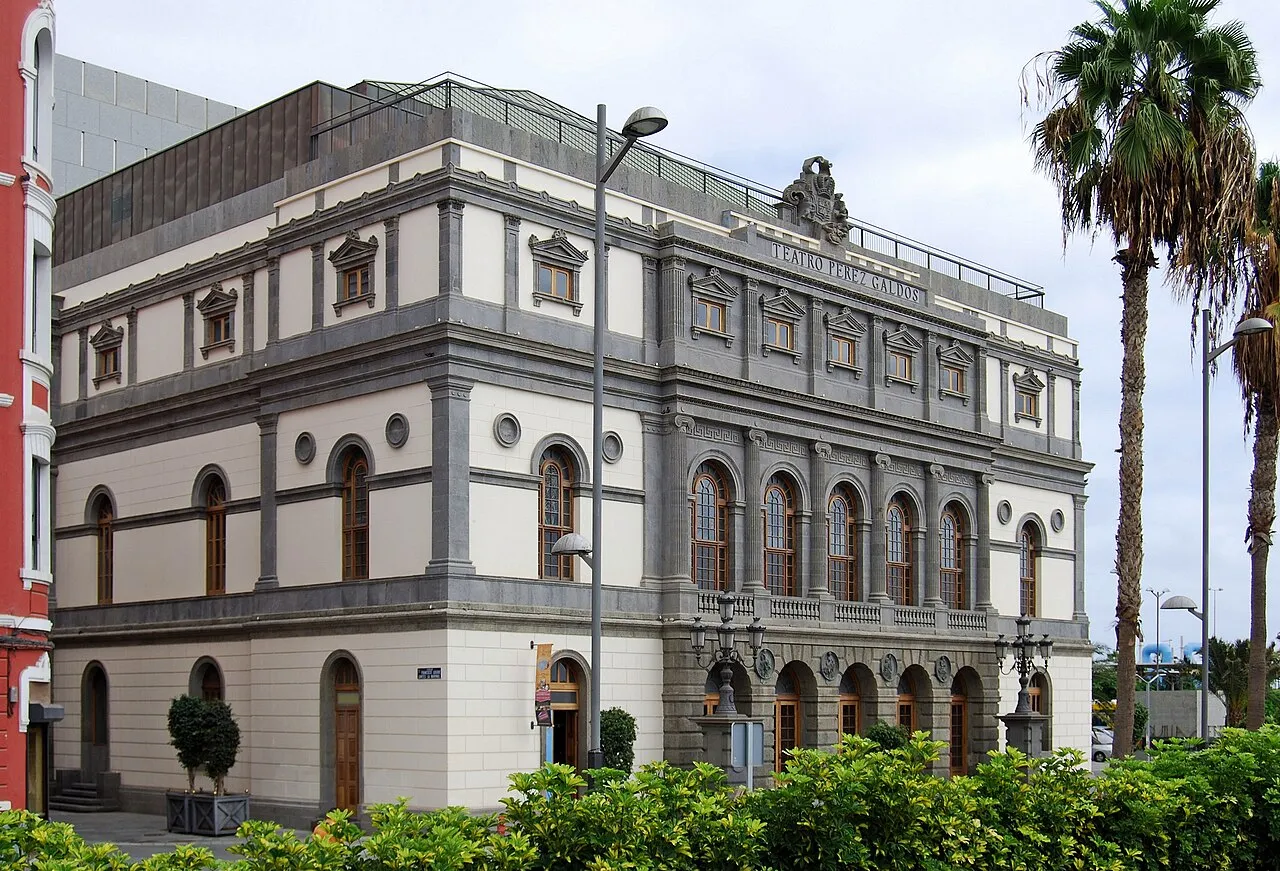
Opened in 1890 with La Traviata. It burned to the ground in 1918 and was rebuilt up to 1928, with interior decoration by the painter Néstor.
Download the app and discover Las Palmas offline, whenever you like. Take the walking tour Triana, the Theatre and the Gran Canaria of Galdós with a local guide in your ear.
Find out more about Viavoy →The Pérez Galdós Theatre was designed by Francisco Jareño y Alarcón, the works dragged on from 1867 and it opened in 1890 with Verdi's La Traviata. It was not born with this name: first it was the Teatro Nuevo, then the Teatro Tirso de Molina, and only in 1902 was it renamed.
On 28 June 1918 a devastating fire destroyed the entire wooden interior. The façade deceives: what is inside is reconstruction, completed between 1925 and 1928 by the architect Miguel Martín-Fernández de la Torre.
And there lies the jewel: the interior decoration was signed by his brother, the painter Néstor Martín-Fernández de la Torre. The ceiling frescoes, the Art Nouveau stained glass and the canvases of the Saint-Saëns salon are his, an outpouring of colour and Canarian fantasy that cannot be seen from the street.
The salon is named after Camille Saint-Saëns, the French composer who fell in love with Gran Canaria and spent several winters here across the turn of the two centuries, sometimes incognito, hidden under the name “Sannois” so that nobody would recognise him.
The theatre reopened on 28 May 1928 with Aida and it is still beating: every year it hosts the city's opera festival, and in 2007 it was the first theatre in Spain to stage Wagner's complete tetralogy in a single week.
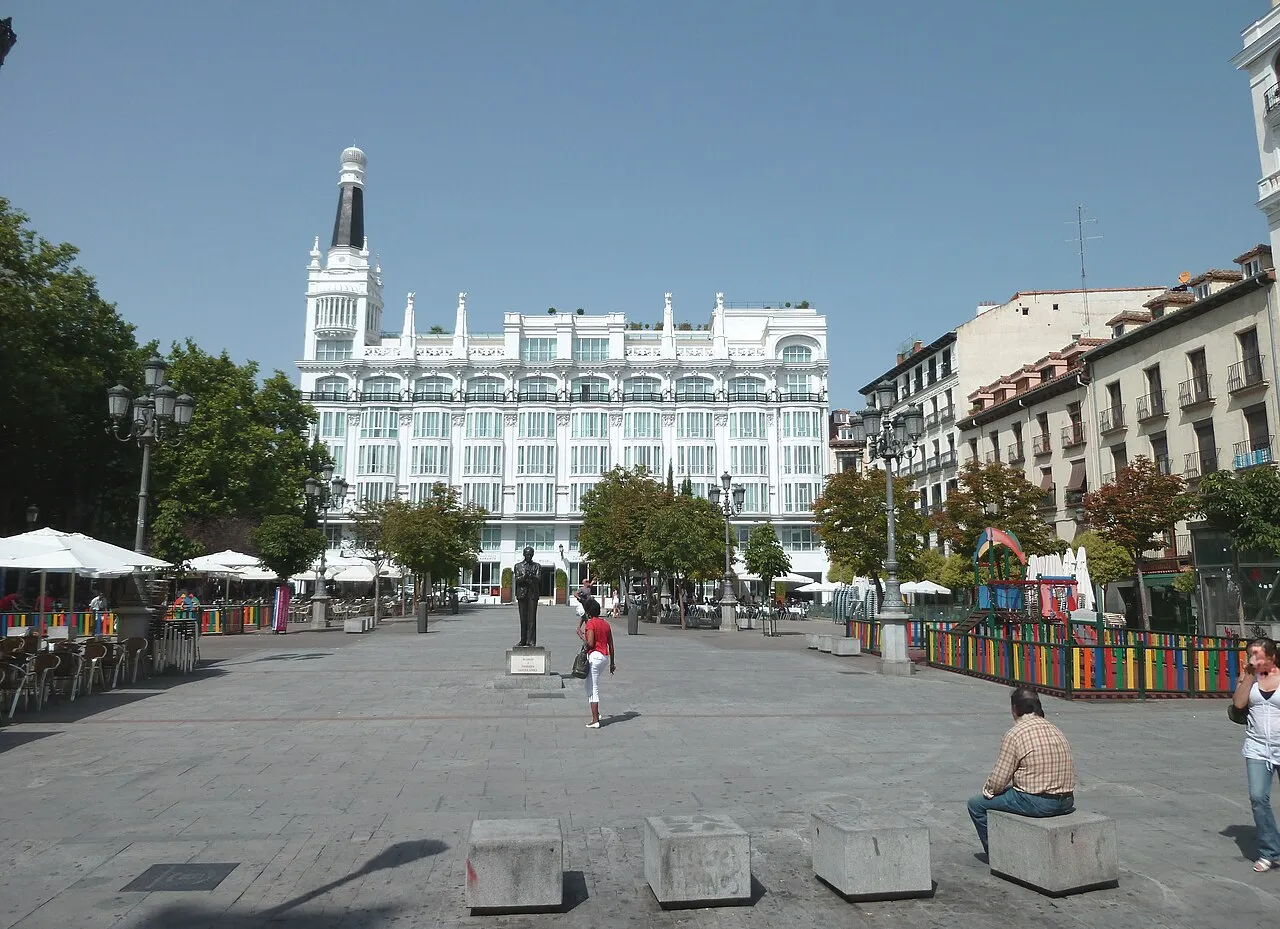
The third stop is Victorio Macho's monument, unveiled on 28 September 1930: a seated figure, head tilted and gaze lost on the horizon. Chroniclers of the time immediately compared it to Rodin's The Thinker.
The lovely detail is the orientation. Macho wanted Galdós to sit looking at the Atlantic, “like a lighthouse”, facing the sea the writer crossed at nineteen never to return, or almost never.
For decades it stood on the old quay, exactly where those who were leaving used to embark. In 1960 it was moved to the parque de San Telmo, which is built on the infill of that same landing stage: thousands of Canarians set sail from here for Cuba and Venezuela.
The route is completed by strolling the Calle Mayor de Triana, the bourgeois city Galdós knew as a child, which filled with Art Nouveau façades just as he was triumphing in Madrid.
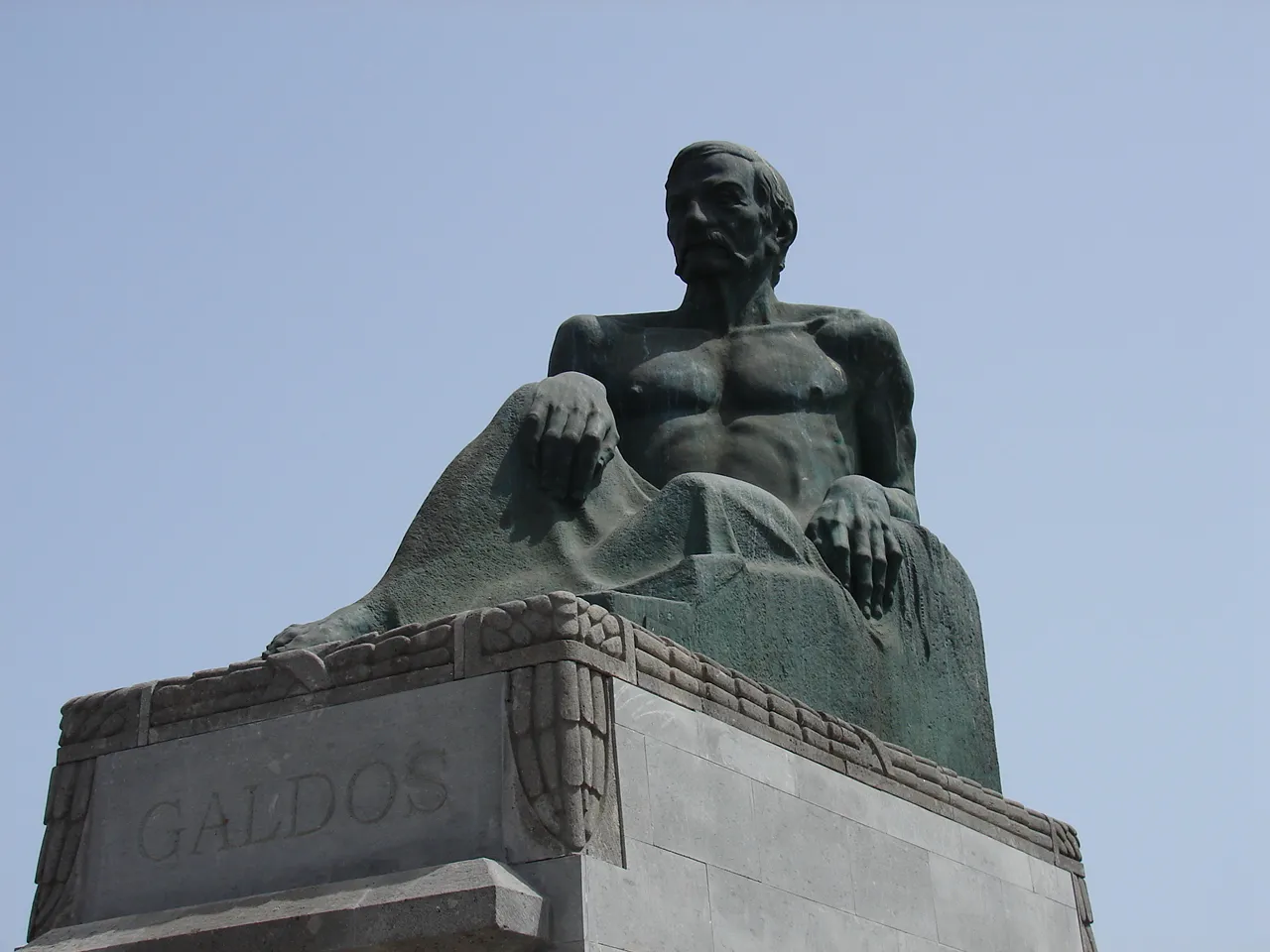
By Victorio Macho, 1930. Seated, looking at the Atlantic “like a lighthouse”. It stood on the old quay until 1960.
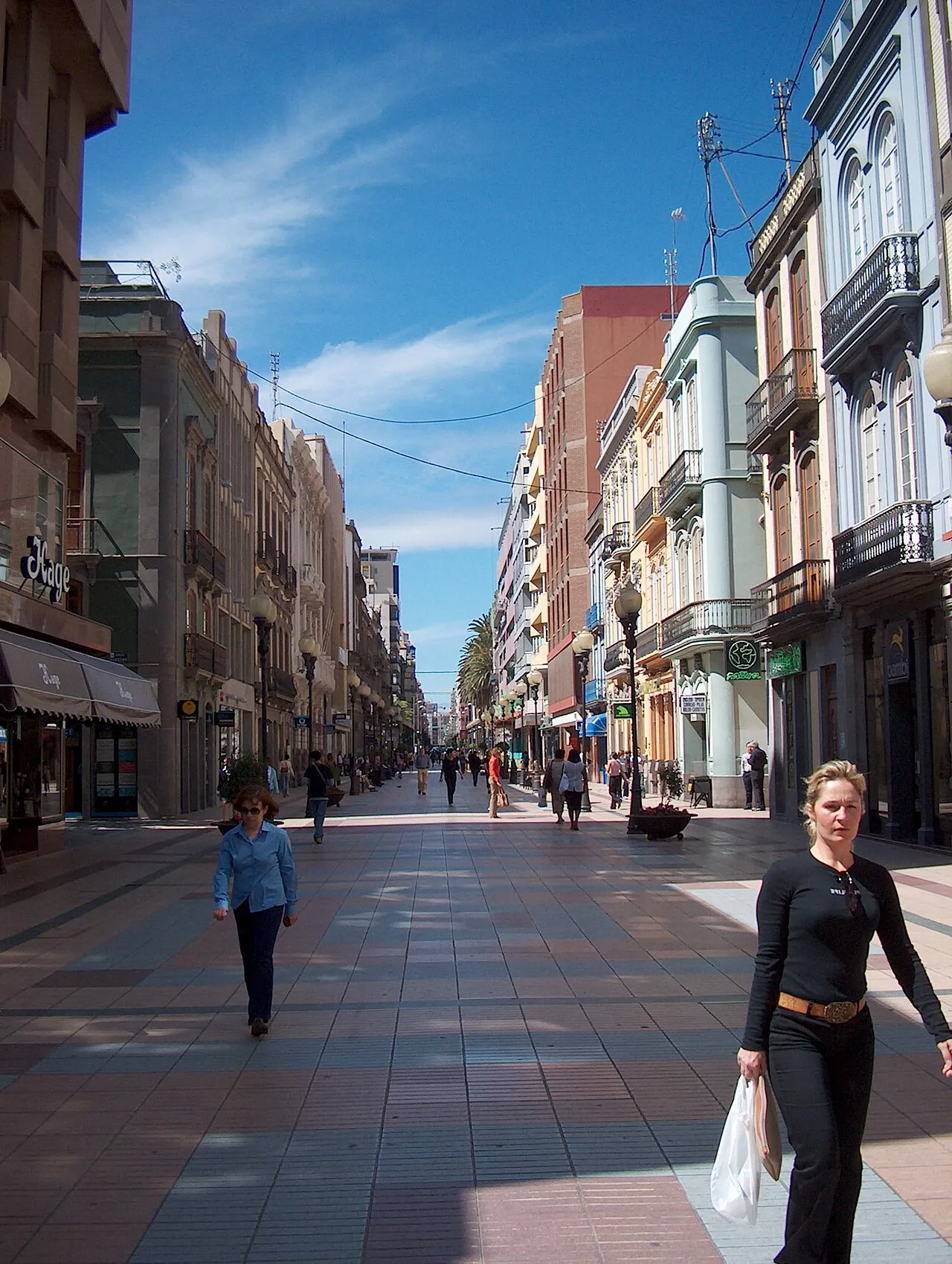
The bourgeois city Galdós knew as a child, today an open-air Art Nouveau museum. Lift your eyes from the shop windows.
In a house on calle Cano, in Triana, on 10 May 1843, the youngest of ten siblings. He lived there until he was nineteen, when in 1862 he sailed for Madrid. The house has been a museum since 1961 and keeps his furniture, his personal belongings and his musical instruments.
Officially, to study law in Madrid. But biographers tell another, more novelistic reason: the young Benito was in love with a cousin, the one the family called “Sisita”, and that romance did not please them at all. Putting the Atlantic in between seemed the best cure. He never practised as a lawyer.
He was strongly tipped, above all around 1912, but they blocked him. His play Electra had attacked the power of the Church and earned him very influential enemies who moved heaven and earth to keep the prize from ending up in the hands of a declared anticlerical. The campaign against him was intense and effective.
No. It opened in 1890 as the “Teatro Nuevo”, then it was the “Teatro Tirso de Molina”, and only in 1902 was it renamed in honour of Galdós, who at the time was alive and at the peak of his fame after the political scandal of Electra. Naming a theatre after an author who was still alive was a declaration of local pride.
The surprise is in the decoration: the ceiling frescoes, the Art Nouveau stained glass and the canvases of the Saint-Saëns salon were signed by the painter Néstor Martín-Fernández de la Torre during the reconstruction that followed the fire of 1918. None of it can be seen from the street, so going in on a guided visit is very much worth it.
After the French composer Camille Saint-Saëns, who fell in love with Gran Canaria and spent several winters here across the turn of the nineteenth and twentieth centuries. Sometimes he came incognito, hidden under the name “Sannois” so that nobody would recognise him, looking for the climate, the calm and the light of the island.
Because the sculptor Victorio Macho explicitly wanted it that way: Galdós seated looking at the Atlantic “like a lighthouse”, facing the sea the writer crossed at nineteen never to return, or almost never. For decades the sculpture stood on the old quay, exactly where those who were leaving used to embark.
Download Viavoy and walk Las Palmas offline, whenever you like.

Keep reading