The Mudéjar of Zaragoza: first-rate architecture in brick
A complete decorative language developed because there is no good stone in the Ebro valley. Where the towers are, what to look at on them and at what time, because the design is made out of shadow.
Aragonese Mudéjar is a declared World Heritage Site and it is probably the best European example of how a material limitation can produce a style. There are no nearby quarries of good stone here, so the alarifes — master builders in the Andalusi tradition who carried on working after the Christian conquest — developed a complete language out of brick.
Go in the middle of the morning or at the end of the afternoon. The Mudéjar design is produced by shadow: the brick is laid proud of the surface and needs raking light. At midday the towers flatten out and the motif disappears.
How it works technically
Shadow, ceramic and repetition.
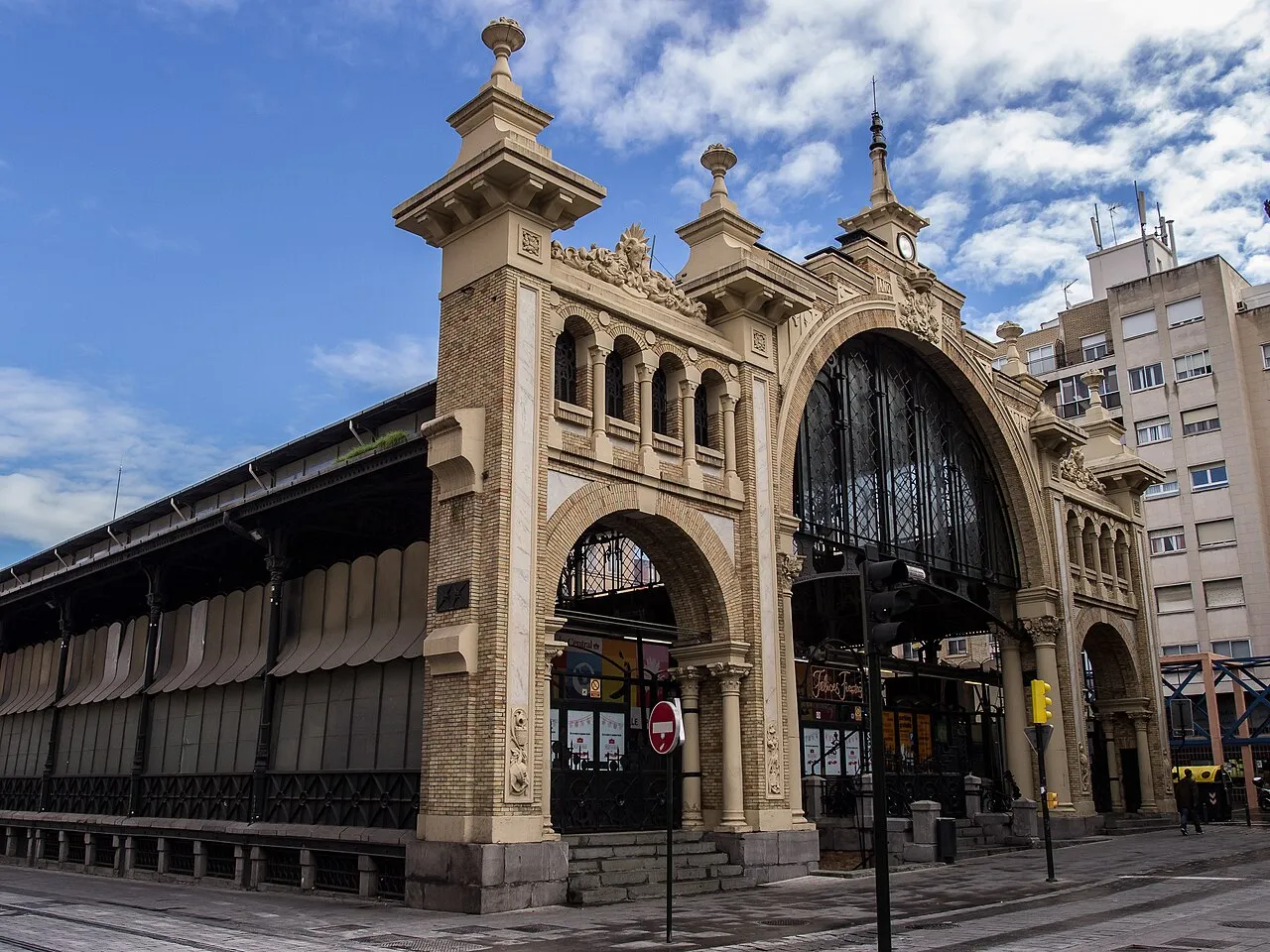
The principle is simple and very effective: the bricks are laid projecting out of the plane of the wall, proud of it, so that light striking from the side creates shadow and with it the design. The motif is not painted or carved: it is built with the masonry itself.
To that are added glazed tiles in green and white set into the gaps, which bring in colour and shine, and in some cases ceramic in the shape of a star or a diamond. The combination of matt brick and shiny glaze multiplies the effect.
The repertoire of motifs is limited but it combines in endless ways: diamonds, eight-pointed interlace, interlaced blind arcading, friezes of corner-set brick, sebka panels. On a single tower several different registers are layered as you go up, so that each stretch has its own design.
And there is one fact worth bearing in mind: all of this was done with the cheapest material available, by parishes with no great income and with local labour. Aragonese Mudéjar is architecture of the very first rank made on a modest budget, and that is what makes it exceptional.
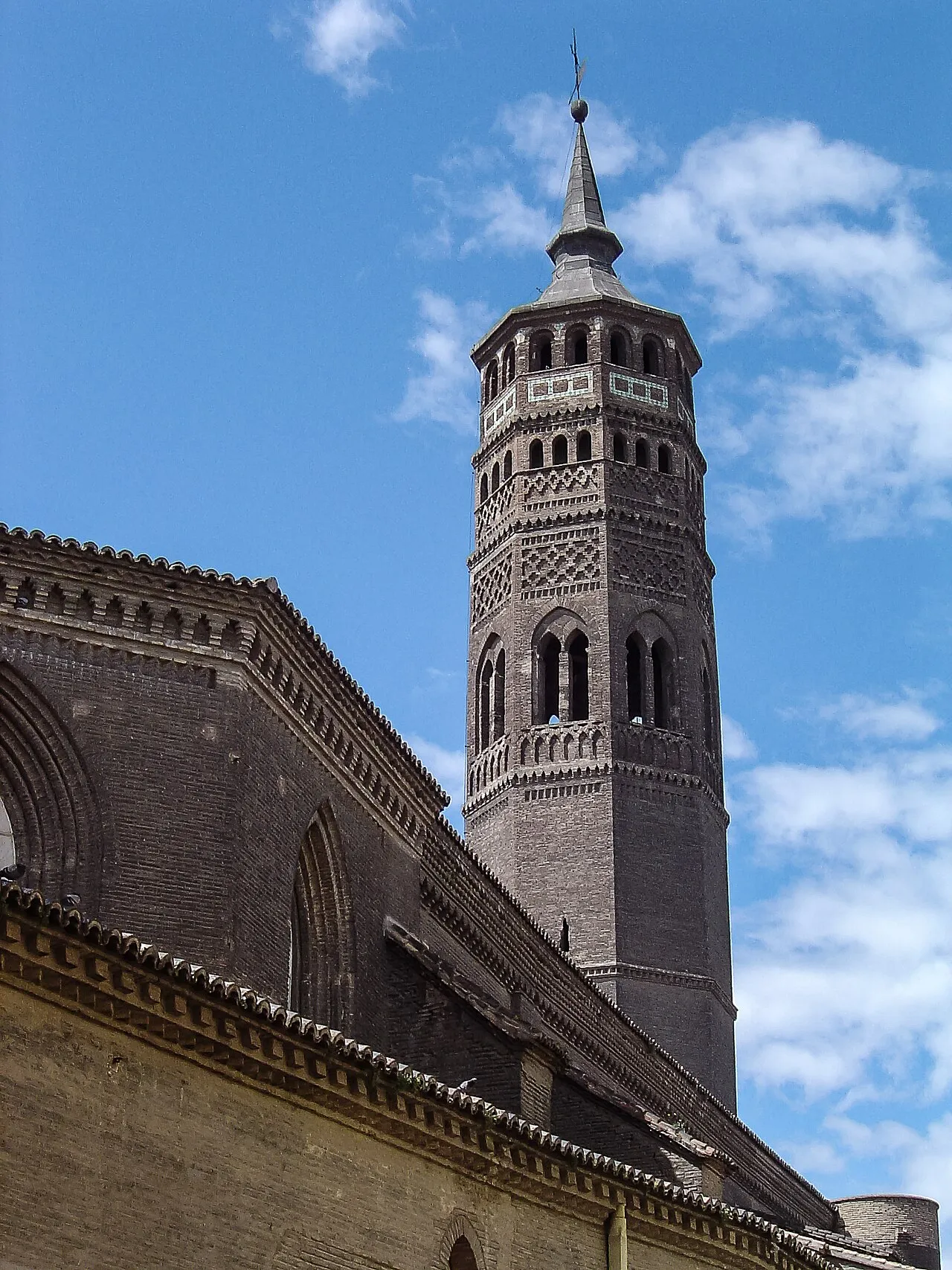
Probably the most beautiful tower in the city: octagonal, with diamonds, eight-pointed interlace, blind arcading and friezes layered in successive registers. It is almost a catalogue of the Aragonese repertoire on a single shaft. The interior has very restricted hours, but the tower can always be seen.
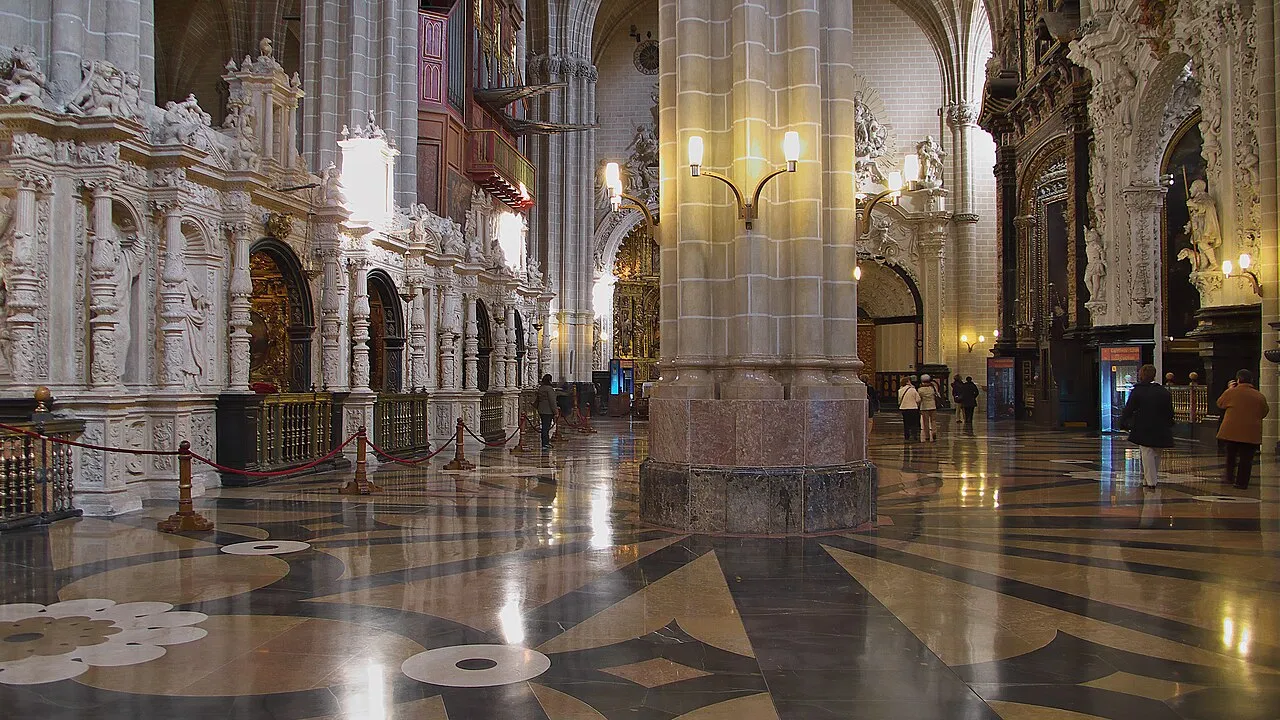
They call it the third cathedral. Its fourteenth-century octagonal tower has a tower-within-a-tower structure, with the staircase between two concentric shells, a scheme inherited directly from Almohad minarets. Inside, an altarpiece by Damián Forment.
The first is the Magdalena tower, in the east of the old town, and probably the most beautiful. It is octagonal and layers several registers of different decoration, with inset tiles, on a shaft that works as a sample book of the style. The neighbourhood around it keeps its medieval street plan and is the liveliest in the old town.
The second is San Pablo, in the barrio de El Gancho, to the west. Its added interest is structural: two concentric octagonal shells with the staircase between them, a scheme that comes directly from Almohad minarets. And it stands in a church that for size and quality deserves the nickname of third cathedral.
And the third is not a free-standing tower but a wall: that of the parroquieta of la Seo, on the side that faces the street. It is a fourteenth-century panel of brick and ceramic that covers the whole surface like a tapestry, and it is the most refined Mudéjar piece in the city.
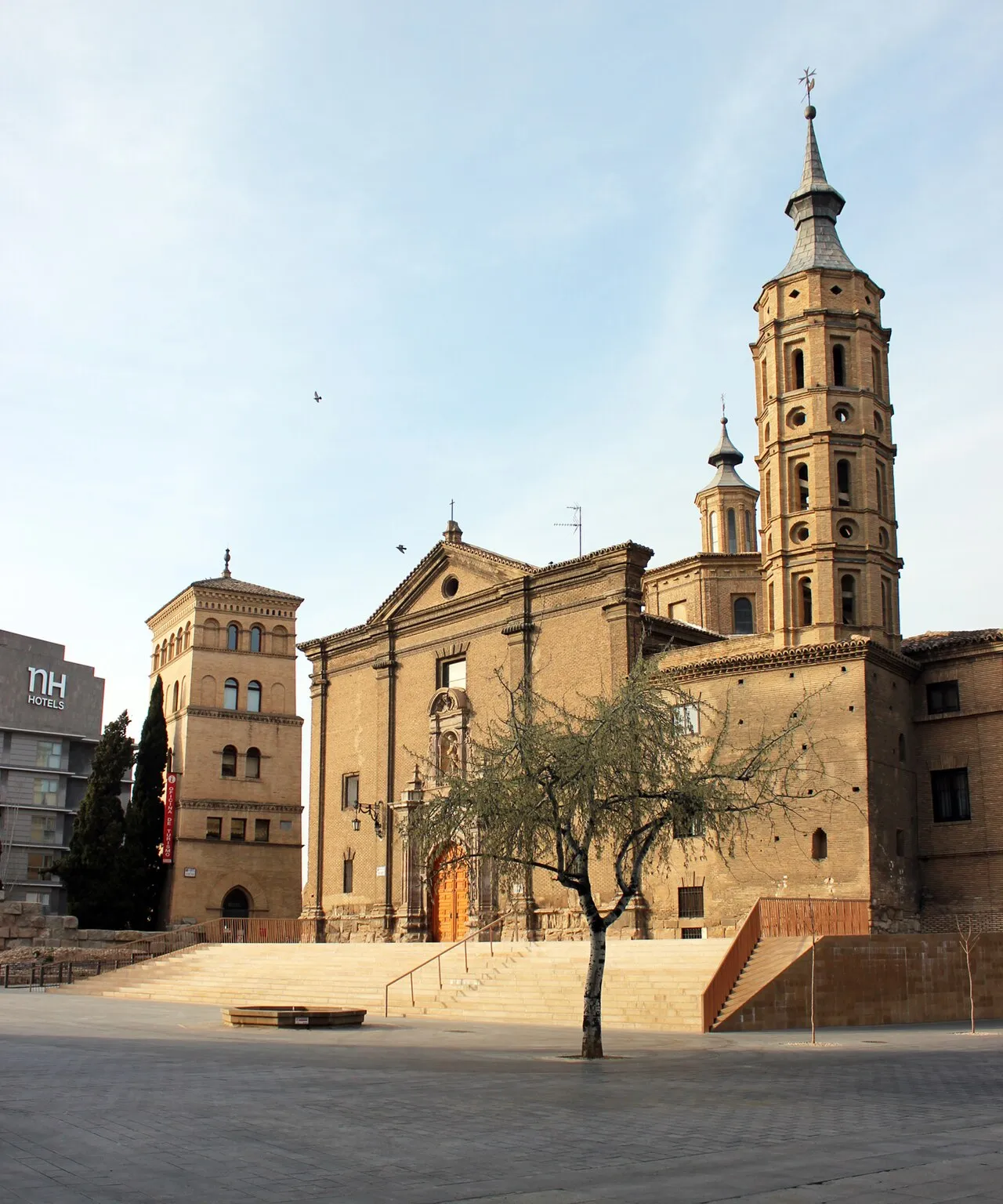
There is a fourth that is worth it for another reason: the tower of San Juan de los Panetes, on the Plaza del Pilar, which is visibly leaning because the ground has settled on alluvial soil. How much the lean shows changes a lot depending on the angle you look from.
Why the Mudéjar is a World Heritage Site
The UNESCO listing recognises the Mudéjar of Aragon as a whole, not one isolated work, and that decision makes sense: what is protected is a complete cultural phenomenon, the survival of Andalusi techniques in Christian territory for centuries after the conquest.
The alarifes who made these towers were, in many cases, Mudéjar in the literal sense of the word: Muslims who stayed on in Christian territory keeping their religion and their trade. They worked for cathedral chapters, parishes and nobles, and their language became the region's own style.
That continuity lasted until the sixteenth century, long after it had disappeared in other parts of the peninsula, and it produced an enormous body of work spread across the whole of Aragon: besides Zaragoza, there are exceptional towers in Teruel, Calatayud, Tarazona and dozens of villages in the Jalón and Jiloca valleys.
For the visitor who is only passing through Zaragoza, the three pieces in the old town are enough to understand the phenomenon. But if the trip takes in the province, Teruel has four Mudéjar towers that can compete with any of these.
Its outer Mudéjar wall, the one of the parroquieta, is the most refined piece in the city: brick laid proud of the surface and glazed ceramic covering the whole surface like a tapestry. It is on the side that faces the street, not the square, and a great many people never see it.
Its octagonal tower is visibly leaning because of differential settlement of the foundations on alluvial ground. From some points on the square you hardly notice and from others it is obvious. The best angle is from the Torreón de la Zuda side.
The architectural language developed by the alarifes of Andalusi tradition who carried on working in Christian territory after the conquest, using brick laid proud of the surface and glazed ceramic to create decoration through light and shadow. It was born of a material limitation — there is no good stone in the Ebro valley — and it is listed as a World Heritage Site as a whole.
Why do you have to see it at a particular time?
Because the design is not painted or carved: it is built with the brick itself, laid projecting out of the plane of the wall, so that raking light creates shadow and with it the motif. At midday, with the sun high, the towers flatten out visually and a good part of the decoration stops reading.
Which are the most important towers in Zaragoza?
The one on the church of La Magdalena, in the east of the old town, probably the most beautiful; the one on San Pablo, in the barrio de El Gancho, with a tower-within-a-tower structure inherited from Almohad minarets; and the parroquieta wall of la Seo, which is not a tower but is the most refined piece in the city.
Can you visit the interiors?
With difficulty: both La Magdalena and San Pablo have very restricted hours tied to services and it is easy to find them closed. The towers, which are what you have to see, can be appreciated from the street at any hour and without paying anything. La Seo does have wide visiting hours and a paid ticket.
Why is the tower of San Juan de los Panetes crooked?
Differential settlement of the foundations: it was raised near the old bed of the Ebro, on soft and uneven alluvial ground, and the ground gave way irregularly over time. It is the same mechanism as the case of Pisa, on another scale. It has been like that for centuries without the building falling.
Is there more Mudéjar in Aragon?
A great deal, and the UNESCO listing covers the regional whole, not isolated works. Besides Zaragoza, there are exceptional towers in Teruel — four of them, which can compete with any of these — in Calatayud, in Tarazona and in dozens of villages in the Jalón and Jiloca valleys.
Practical information
The key threeThe Magdalena tower, the San Pablo tower and the parroquieta wall of la Seo.
Best timeMid-morning or last thing: the design is made out of shadow and needs raking light.
FreeAll the towers can be seen from the street. The interiors have restricted service hours.
La SeoIts Mudéjar wall is on the side that faces the street, not the square. You have to walk round it.
CuriosityThe tower of San Juan de los Panetes leans, and it shows more from some angles than from others.
BeyondIf the trip carries on through Aragon, Teruel has four towers that can compete with these.
On the map
🎧 With Viavoy
Walk Zaragoza and listen at your own pace
Download Viavoy and walk Zaragoza offline, whenever you like.
from 2,99 €· one-off payment
City Pass · 9,99 €3 days, all the tours in Zaragoza