The Fiestas del Pilar: the biggest flower offering in the world
Hundreds of thousands of people filing past for a whole day to build a mantle of flowers several storeys high. What happens each day, where to stand and what you need to know before booking.
In the week of 12 October, Zaragoza celebrates its patron saint's day and the national holiday at the same time, something that happens in no other Spanish capital. The central event is the Ofrenda de Flores, the flower offering, and it is worth understanding its scale before you come: it is not a parade with floats, it is a continuous line of people that lasts all day.
The city fills up completely and accommodation sells out months in advance. If your trip coincides with these dates, you have to book very early or sleep outside the city.
The Ofrenda de Flores
12 October, all day.
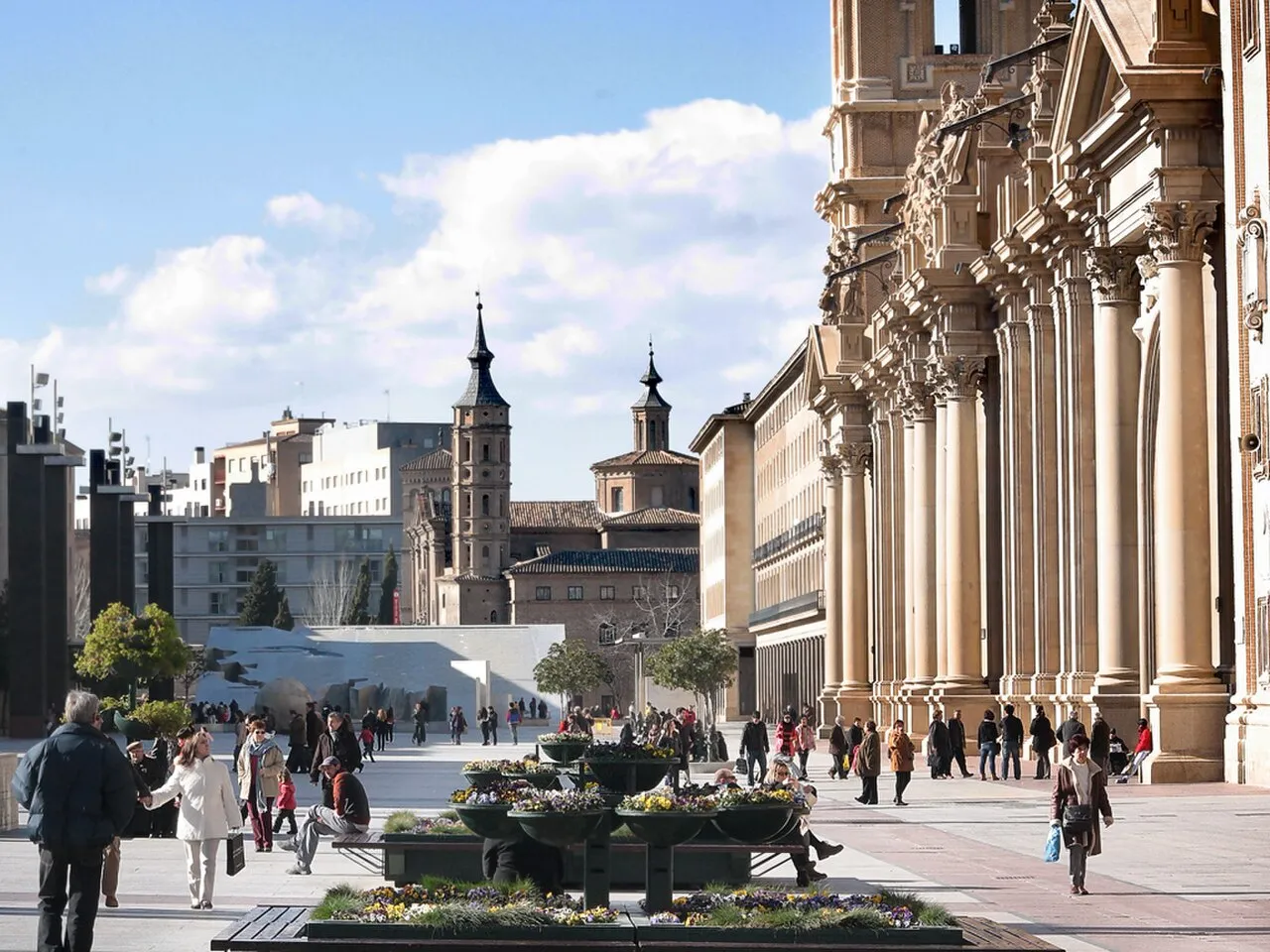
Hundreds of thousands of people file across the Plaza del Pilar all day long, many of them in regional dress from all over Spain and from Latin American countries, each carrying a bunch of flowers. The line moves without a break from first thing in the morning until well into the night.
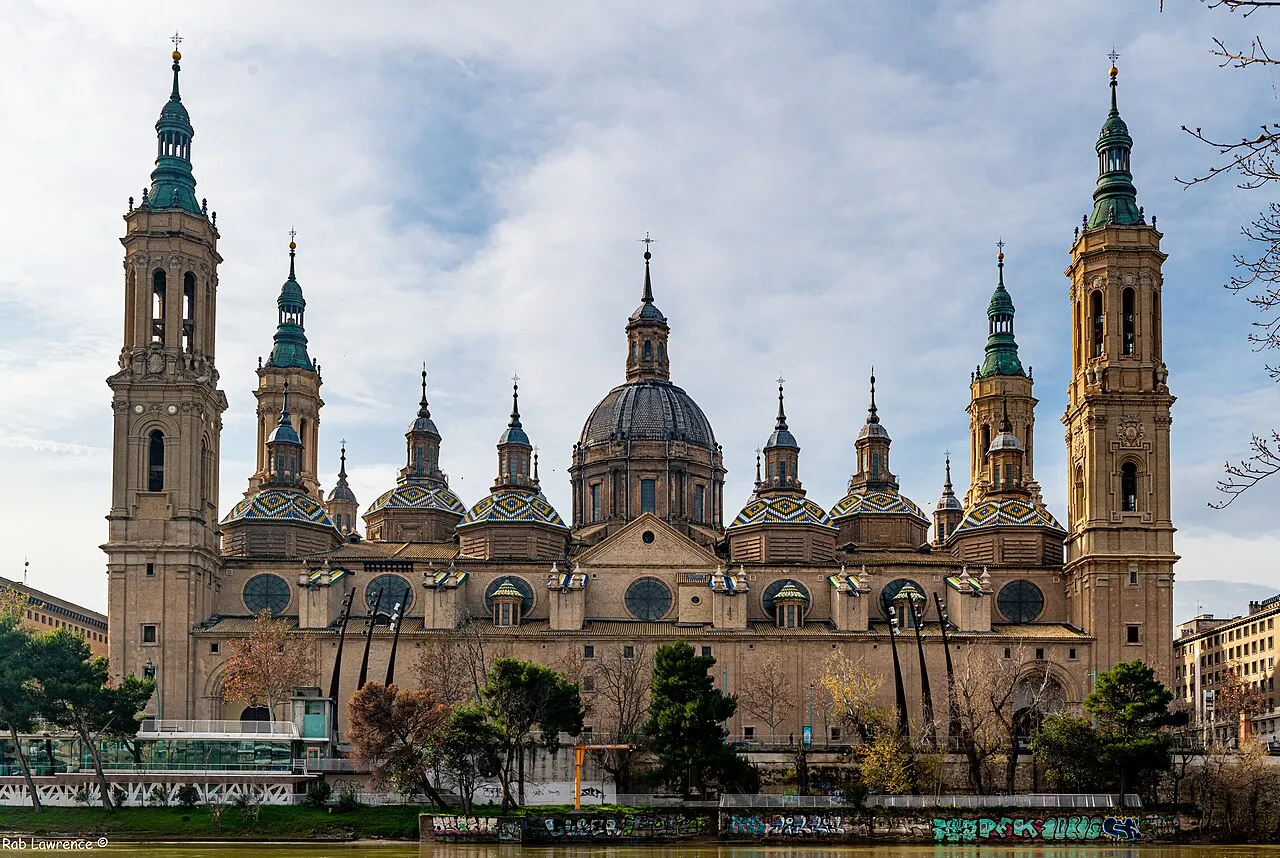
Those flowers build a mantle over a pyramidal structure several storeys high raised in front of the basilica, with an image of the Virgin at the top. The mantle takes shape over the course of the day, and seeing it complete means waiting until late afternoon.
It is probably the most crowded flower offering in the world, and its participatory character is what defines it: there is no separation between spectators and participants, because most of the people filling the square are in the line. Anyone can join in by bringing a bunch of flowers.
The flowers are not thrown away afterwards. They are taken off the mantle and distributed to hospitals, care homes and community centres around the city over the following days, which gives the operation a fairly reasonable second life given the volume.
Fifty thousand square metres that fill up completely during these days. The structure of the mantle is put up in front of the basilica and grows over the course of the 12th. To see it complete you have to wait until late afternoon.
During the festivities the church runs at a different rhythm, with continuous masses and queues for the kiss of the column that stretch out considerably. If what you want is to see Goya's domes in peace, choose another date.
Download the app and discover Zaragoza offline, whenever you like. Take the walking tour El Pilar, La Seo and the Ebro riverfront with a local guide in your ear.
The festivities last a little over a week and the 12th is only the high point. The programme takes in concerts on several stages spread around the city, with wide line-ups and a good part of the programming free, and activities in the neighbourhoods.
There is a second, less known offering that is much loved locally: the Ofrenda de Frutos, in which the Aragonese comarcas, the local districts, present their farm produce in baskets and traditional dress. It is smaller, more unhurried and considerably easier to enjoy than the flower one.
The Rosario de Cristal, which parades at night, is another of the singular events: floats and lanterns built in glass and lit from within, some of them from the nineteenth century, which move through the centre producing a very particular effect.
And there is Aragonese tradition in concentrated form: jotas, gigantes y cabezudos — the giants and big-heads, who chase children down the street with inflated bladders, to delight or terror depending on the child — dance, the Aragonese ritual dance, and rural sports competitions.
How to organise yourself
The first warning is accommodation: the city fills up completely, prices rise sharply and everything sells out months in advance. Anyone deciding to come on these dates has to book very early or accept sleeping outside the city and travelling in.
The second is getting around. Large parts of the centre are closed off, the tram changes its routes and moving through the old town at certain hours is practically impossible. It is worth checking the official programme and planning journeys with time to spare.
The third is about expectations: if the point of the trip is to see the monuments in peace, these are not the dates. The basilica runs at a different rhythm, the museums fill up and the old town is taken over. The festivities are a plan in themselves, not an add-on to a normal sightseeing visit.
And a note on 12 October: the commemoration of that date is now a matter of debate in Spain and in the Americas because of what it means for the indigenous peoples of the continent. In Zaragoza the celebration is above all a local patron saint's one, but the coincidence exists and it is worth knowing about.
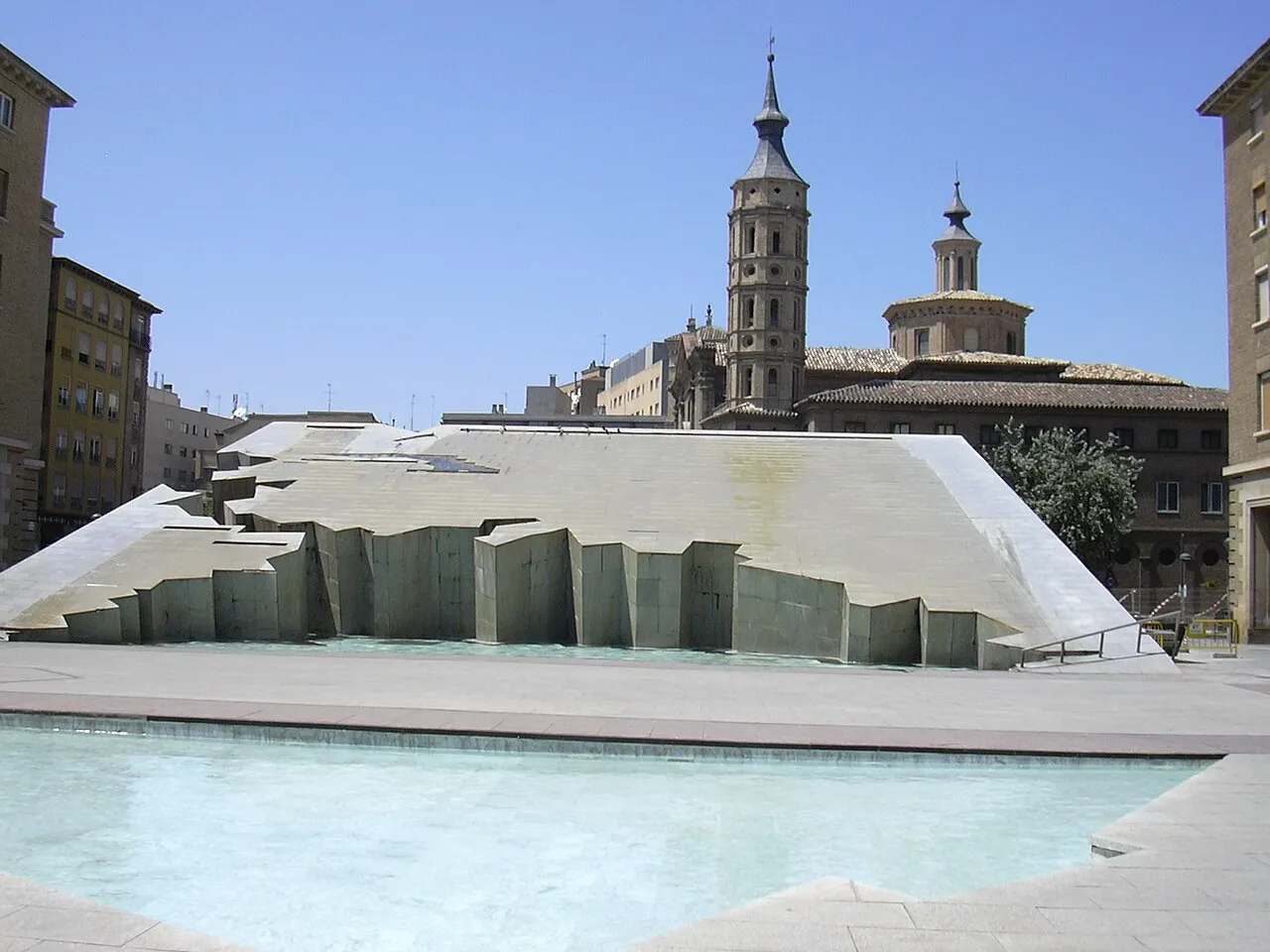
The monument with the map of Spanish America drawn in water, opened in 1991 as the fifth centenary approached. It is here precisely because of the coincidence on 12 October of the patron saint's day and the national holiday, unique in Spain.
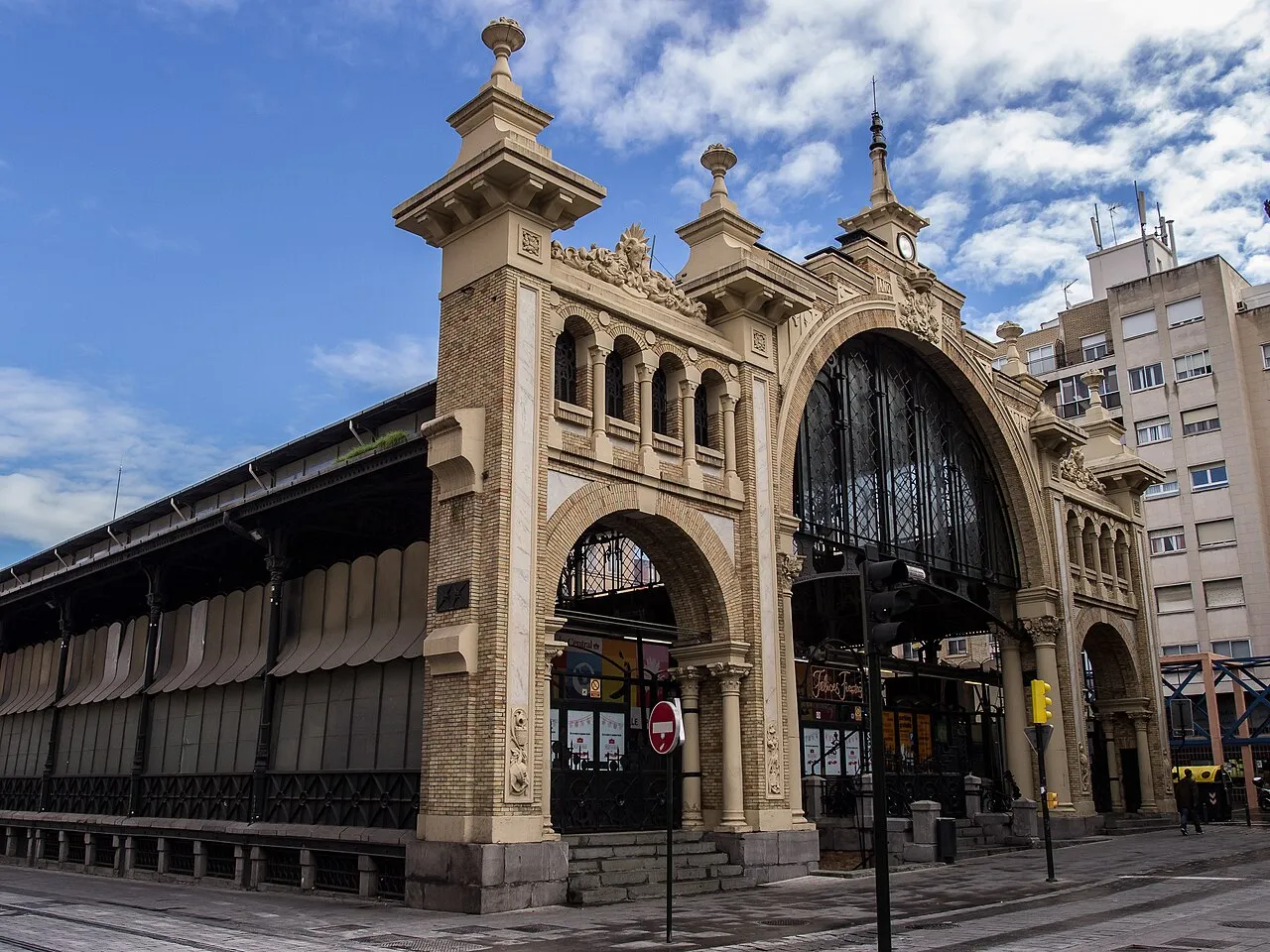
During the festivities the tapas district works on another scale, with queues, different prices and difficulty moving around. Outside those dates, Zaragoza is one of the most reasonable Spanish capitals for eating and drinking.
In the week of 12 October, the day of the patron saint of Zaragoza, which also coincides with the Spanish national holiday: it is the only capital where both celebrations fall on the same day. The festivities last a little over a week and the 12th is the high point, with the Ofrenda de Flores taking up the whole day.
What is the Ofrenda de Flores?
A continuous parade in which hundreds of thousands of people, many in regional dress from all over Spain and from Latin American countries, carry a bunch of flowers to the Plaza del Pilar. Those flowers build a mantle over a pyramidal structure several storeys high in front of the basilica. It is the biggest flower offering in the world.
Can you take part if you are from elsewhere?
Yes. Anyone can join the line with a bunch of flowers, and in fact most of the people filling the square that day are taking part, not watching. There is no strict separation between public and parade, and that participatory character is what defines the event.
What happens to all those flowers?
They are not thrown away. Once the mantle is taken apart, the flowers are removed and distributed over the following days to hospitals, care homes and community centres around the city. Given the volume that piles up, that second life is fairly reasonable and it is part of the usual organisation of the event.
Is it worth travelling on those dates?
If what interests you is the festival, very much: it is one of the most crowded and most participatory celebrations in Spain. If what interests you is the monuments, no: the city fills up completely, the basilica runs at a different rhythm with long queues, the centre is closed off and getting around is hard. They are two different trips.
What else is there besides the offering?
Concerts on several stages with a good part of the programming free; the Ofrenda de Frutos, in which the comarcas present their produce and which is more unhurried and easier to enjoy; the Rosario de Cristal, with glass floats and lanterns lit from within that parade at night; and jotas, gigantes y cabezudos and rural sports.
Practical information
WhenThe week of 12 October. The Ofrenda de Flores is on that day and lasts the whole day.
The mantleIt takes shape over the course of the day. To see it complete, late afternoon.
Taking partAnyone can join the offering with a bunch of flowers. There is no separation between public and parade.
Where to stayIt sells out months ahead and prices rise a lot. Book very early or sleep outside the city.
Getting aroundLarge parts of the centre are closed off and the tram changes routes. Check the official programme.
ExpectationsThese are not dates for seeing monuments in peace. The festivities are a plan in themselves.
On the map
🎧 With Viavoy
Walk Zaragoza and listen at your own pace
Download Viavoy and walk Zaragoza offline, whenever you like.
from 2,99 €· one-off payment
City Pass · 9,99 €3 days, all the tours in Zaragoza