Eating in Santiago: octopus, shellfish and almond tart
Why the octopus is called á feira and not gallega, where to buy the real tarta de Santiago and which streets are worth avoiding. With the market that is the best stop in the city.
Galicia has one of the best larders in Europe and Santiago is its administrative capital, not its port, which produces a curious situation: the finest produce in the country arrives here but the city does not produce it. The practical consequence is that you eat very well, and that the difference between a good place and a bad one is almost always in the raw material, not in the cooking.
The Mercado de Abastos is the second most visited place in the city after the cathedral and it is still a real market. Several stalls will have what you buy cooked for you in the premises next door.
Pulpo á feira, and why it is called that
It is not pulpo a la gallega.
The correct name is pulpo á feira, fair-day octopus, and it describes its origin exactly: it was cooked at the cattle fairs of inland Galicia, where the octopus arrived dried from the coast because that was the only way to transport it before industrial refrigeration. Calling it pulpo a la gallega is what people do outside.
The technique has strict rules. It is boiled in a copper pot, it is “frightened” — dipped into and out of the boiling water three times before the final cooking, so that the skin does not come away — it is cut with scissors on a wooden plate and dressed with oil, coarse salt and paprika, sweet or hot.
The wooden plate is not folklore: it absorbs the excess water and keeps the octopus at temperature. And whoever cooks it is called a pulpeiro or a pulpeira, a trade with a name of its own that is handed down in families from the Melide district and thereabouts.
It comes with cachelos, boiled potato, and you eat it with a wooden toothpick, not a fork. And with local wine in a cunca, that white ceramic cup without a handle that is the traditional Galician vessel.
1
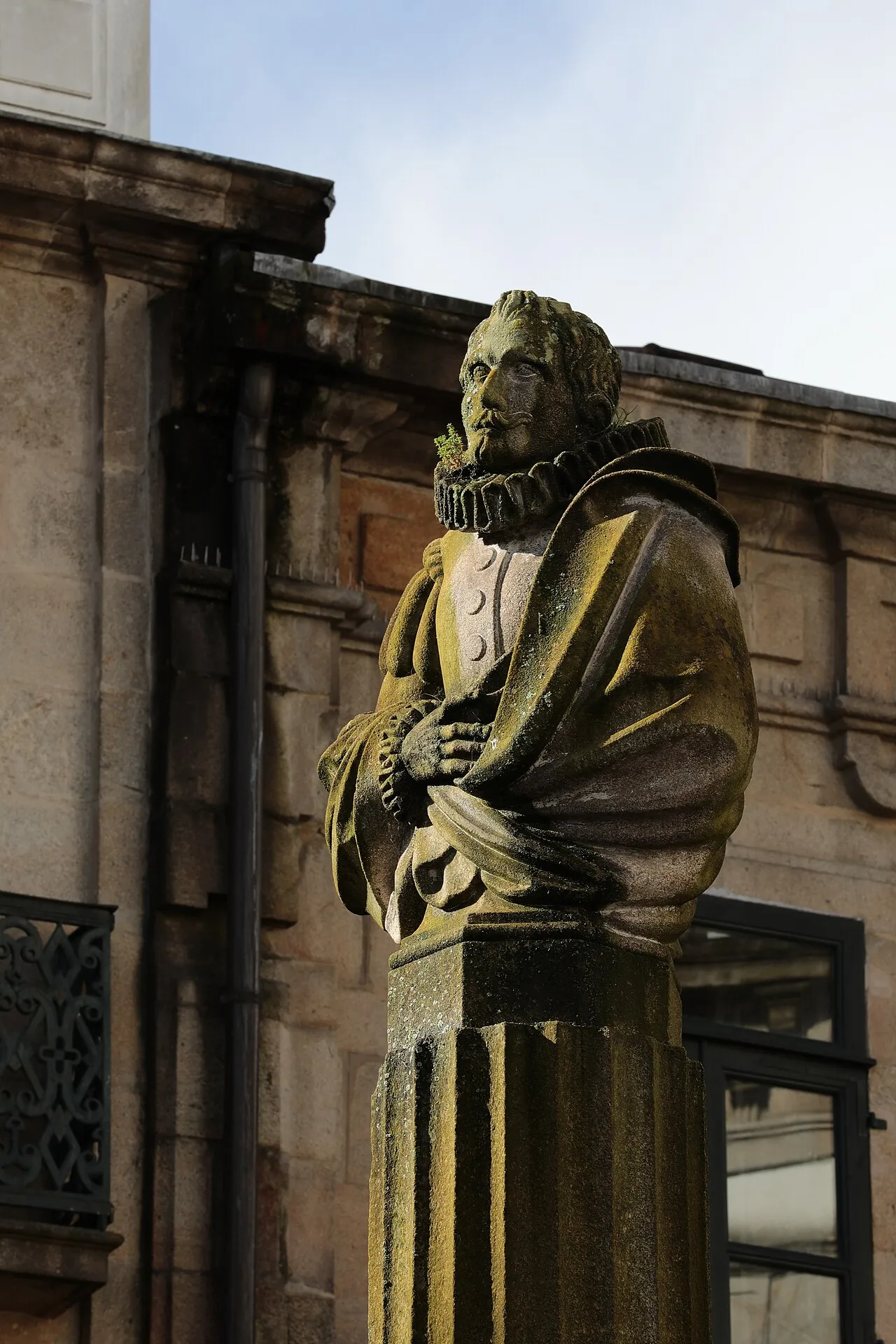
The area around the Mercado de Abastos
📍 Rúa das Ameas, next to the Praza de Cervantes
The market occupies eight stone halls built in the forties on a site that has worked since the Middle Ages. It is the second most visited place in the city and it is still a real market, with countrywomen selling their own produce. It closes in the middle of the afternoon and does not open on Sundays.
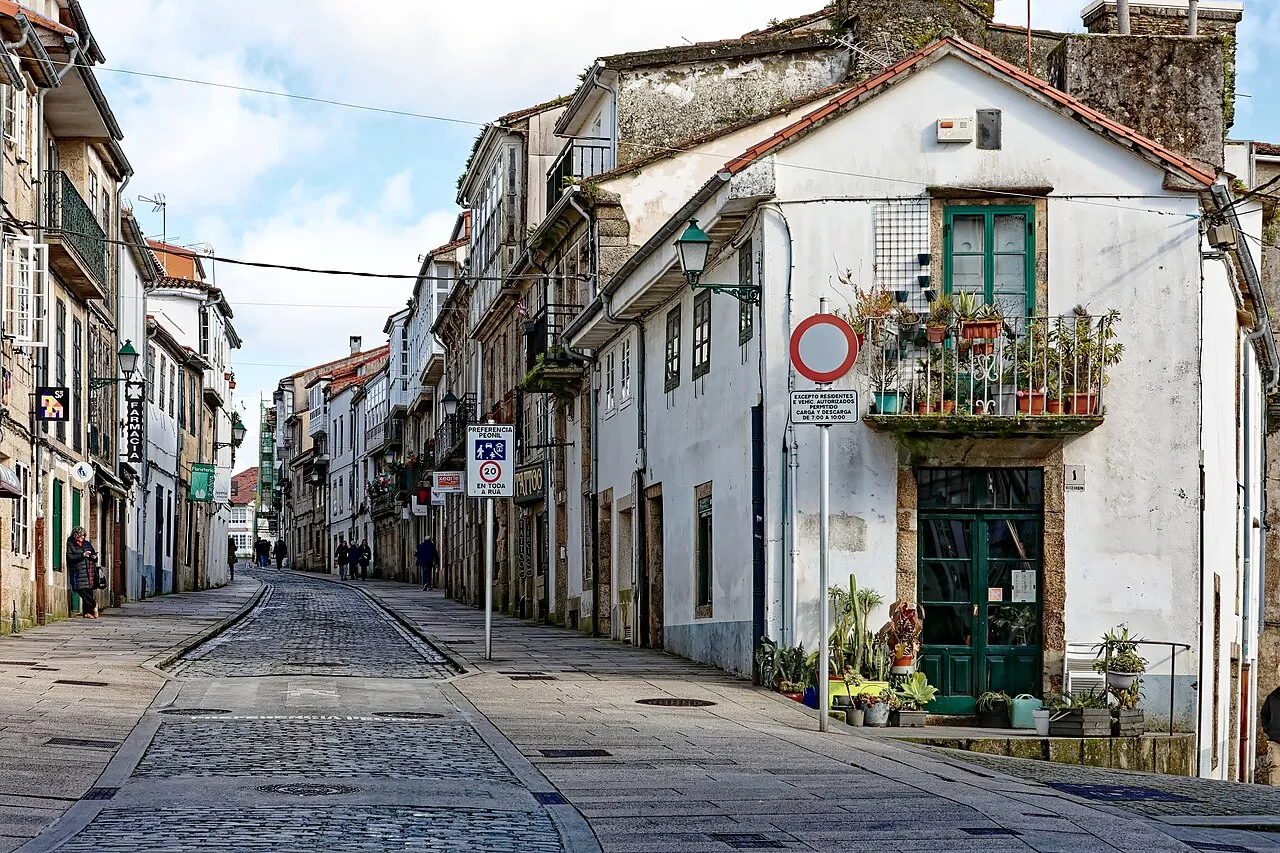
The tapas circuit most visitors never find, because they stay in the rúas of the centre. Bars with character, a local crowd and prices that are still not old-town prices. Ten minutes from the Obradoiro, walking down towards the Porta do Camiño.
Shellfish is the strong argument and the best from the rías arrives here: scallops — the pilgrim's shell, served gratinéed with its onion and breadcrumbs — razor clams, cockles, queen scallops, percebes, goose barnacles, in season, and spider crab. Prices vary enormously with the time of year and it is worth asking before you order.
The Galician empanada is the other classic and has little to do with the empanadilla, the small turnover: it is a thin, large pastry, baked whole and cut into portions, filled with zorza, with bonito, with salt cod and raisins or with cockles. A good one has a juicy filling and pastry that does not fall apart.
The pimientos de Padrón are grown twenty minutes from here and work according to the saying: some are hot and some are not, and there is no way of knowing until you bite them. The good season runs from June to September; outside it they come from greenhouses and are a good deal hotter.
And the meat, which in Galicia matters as much as the sea: ternera gallega, Galician beef with its own denomination, lacón con grelos in winter — salt pork shoulder with turnip tops — and cocido gallego, which in the weeks of carnival is the dish the whole city eats.
The tarta de Santiago, and where to buy it
The traditional recipe uses only ground almond, sugar, egg and lemon zest: no flour, no butter, no raising agent. That simplicity is what makes it easy to adulterate, and in the shops on the tourist circuit the version with flour and less almond is everywhere.
The cross of Santiago dusted in icing sugar on top is not medieval, it is a commercial convention that settled in the middle of the twentieth century and that today is what identifies the product. The tart itself is far older and is documented from the Middle Ages onwards.
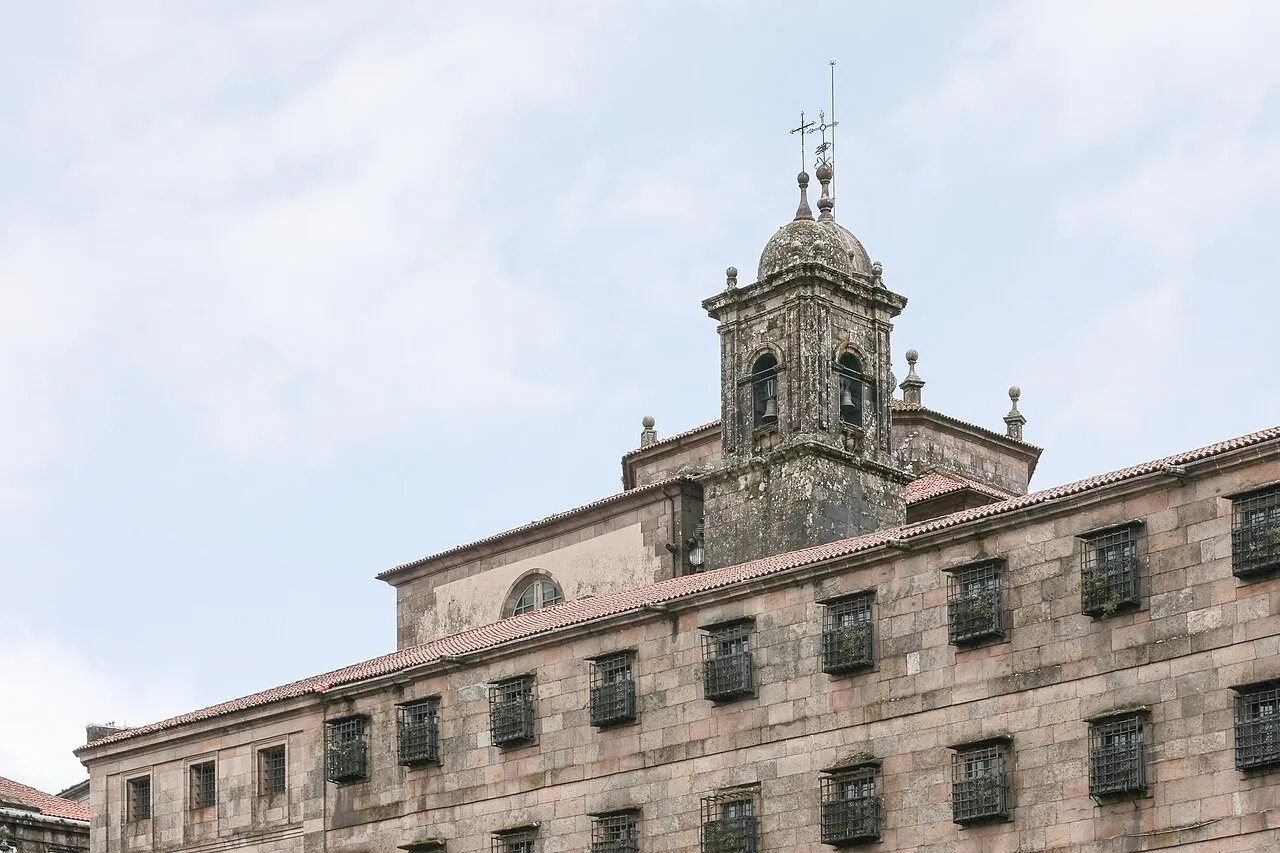
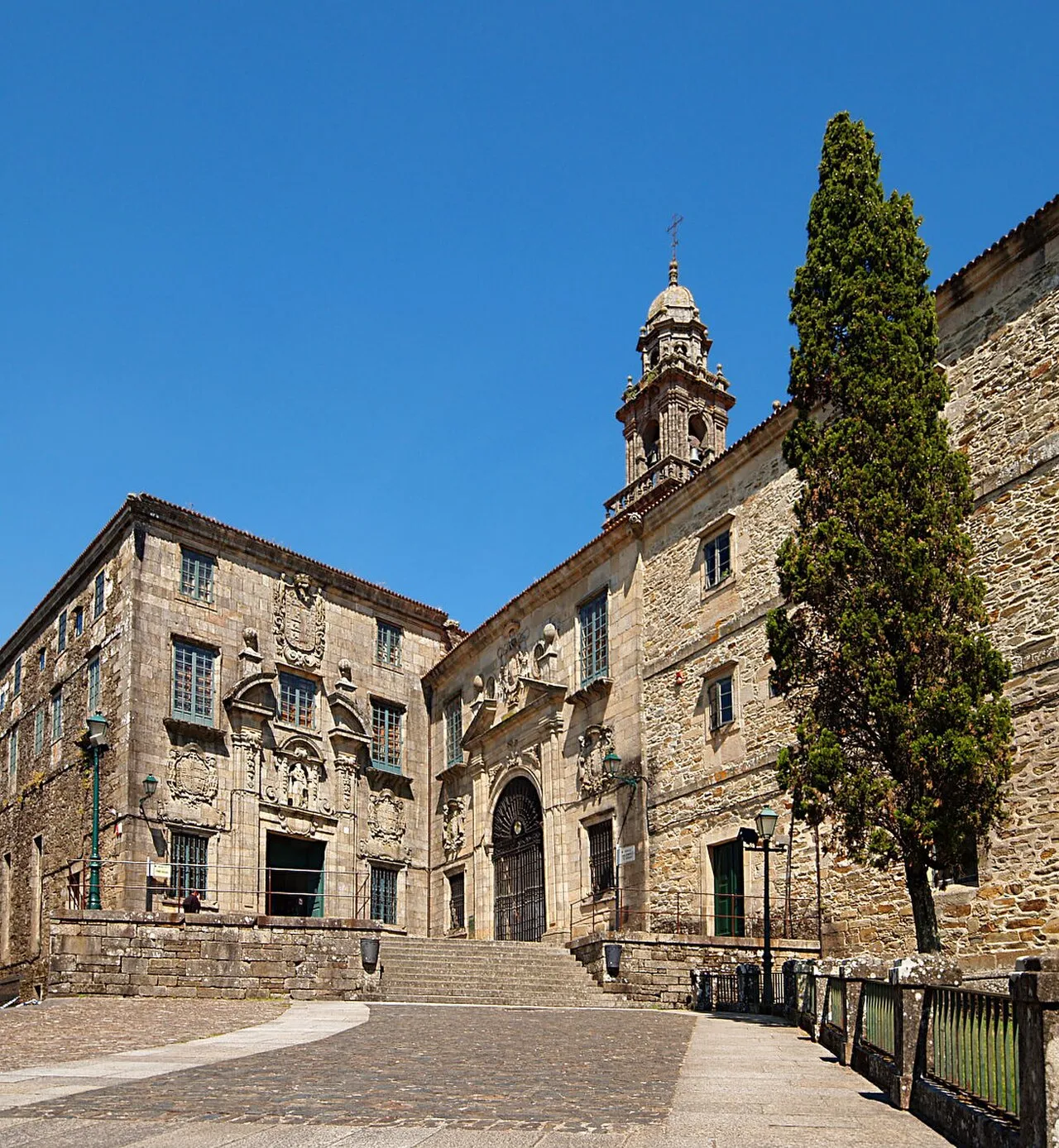
The best possible purchase is in a place almost nobody uses: the torno, the revolving hatch, of the monastery of San Paio de Antealtares, on the Praza da Quintana. Through a revolving wooden window, the enclosed Benedictine nuns sell the sweets they make themselves, without anyone seeing anyone's face.
As a practical rule: if the tart is tall, springy and soft, it has flour in it. The good one is low, dense, slightly grainy and tastes of toasted almond above everything else. And it costs what almonds cost, so be suspicious of prices that are too good.
Look in the wall, at street level, for the small revolving wooden window. You speak through it, you leave the coins, the tray turns and comes back with freshly made almond tart. A centuries-old transaction, voice against voice, without a single face. Variable opening hours.
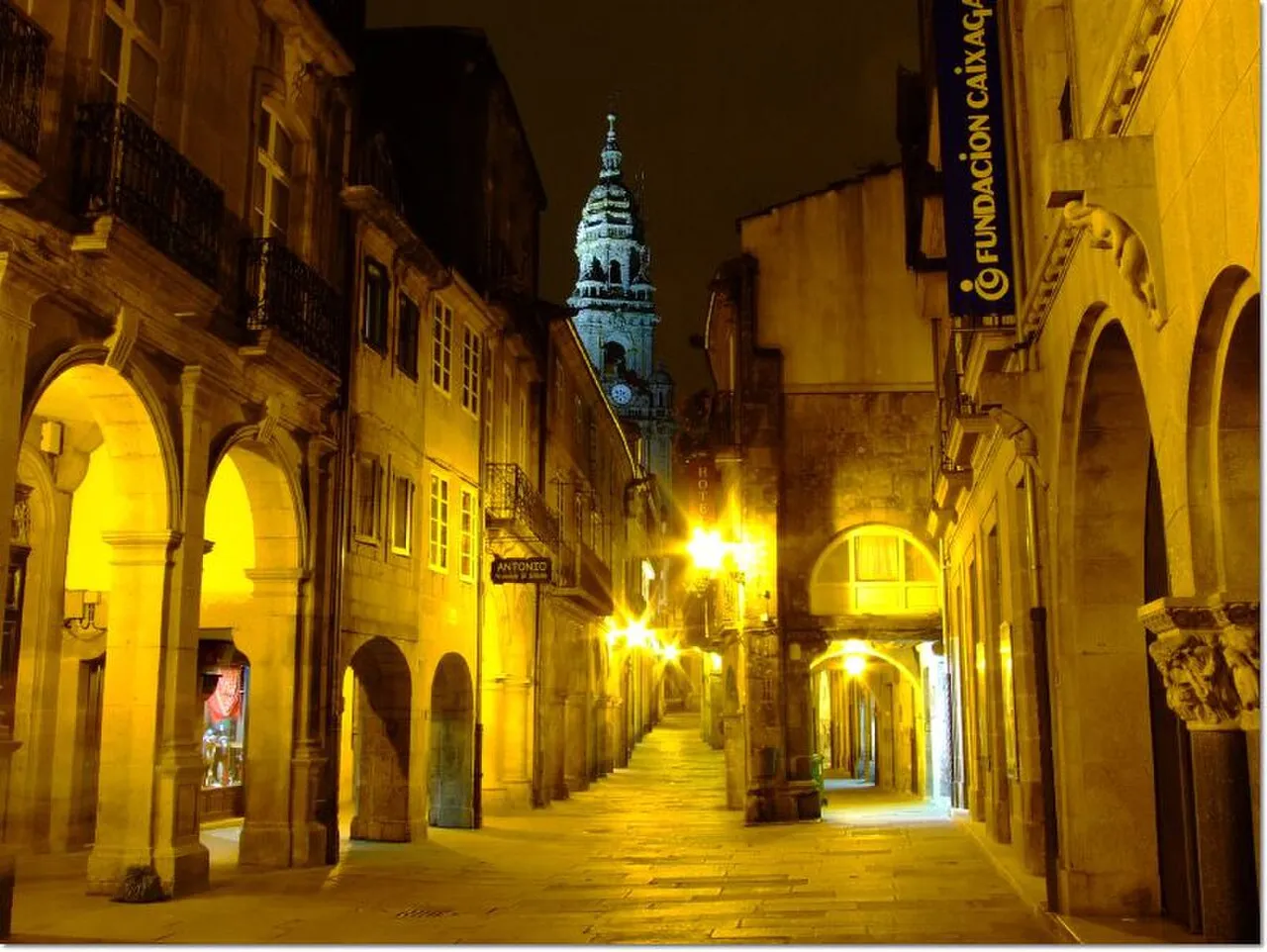
The two streets with the most restaurants in the city, next to the Obradoiro, and also where tourist pressure shows most. You eat well in several places, but it is worth reading the menu and being wary of laminated menus with photographs and of anyone trying to pull customers in at the door.
Why is it called pulpo á feira and not pulpo a la gallega?
Because it was cooked at the cattle fairs of inland Galicia, where the octopus arrived dried from the coast, which was the only way of transporting it before industrial refrigeration. Á feira means of the fair. Calling it pulpo a la gallega is what people do outside Galicia; here nobody says it that way.
How do you tell a good tarta de Santiago?
The traditional one uses only ground almond, sugar, egg and lemon zest, with no flour and no raising agent. That is why it is low, dense and slightly grainy, with the taste of toasted almond dominant. If it is tall, springy and soft, it has flour in it. The icing-sugar cross is a commercial convention from the twentieth century, not an old feature.
Where do you buy the best tart?
In bakeries in the old town and, above all, at the torno of the monastery of San Paio de Antealtares, on the Praza da Quintana: a revolving wooden window through which the enclosed Benedictine nuns sell the sweets they make themselves. The hours are variable, so you have to try your luck.
Is the Mercado de Abastos worth it?
Very much. It is the second most visited place in Santiago after the cathedral and, even so, it is still a real market, with countrywomen selling their own produce. Several stalls will cook what you buy in the premises next door. It closes in the middle of the afternoon and does not open on Sundays.
Is food expensive in Santiago?
It depends a lot on the area and on the produce. Shellfish has very variable prices depending on the season and it is worth asking before you order, above all with percebes and spider crab. The rest of the cooking — octopus, empanada, cocido, meat — is reasonably priced. The Rúa de San Pedro and the area around the market are the cheapest parts.
Which areas are best avoided?
None in particular, but one kind of place is: those displaying laminated menus with photographs and those trying to pull customers in at the door, very common in the streets around the Obradoiro. In those same streets there are also excellent restaurants, so the rule is to read the menu before you sit down.
Practical information
The dishPulpo á feira, cut with scissors on a wooden plate and with paprika. Eaten with a toothpick.
ShellfishScallops, razor clams, cockles, percebes and spider crab. Ask the price before you order.
MarketMercado de Abastos, on the Rúa das Ameas. It closes in the middle of the afternoon and does not open on Sundays.
The sweetTarta de Santiago made only with almond. The best, at the torno of San Paio de Antealtares.
DrinkingAlbariño from the Rías Baixas or ribeiro. Local wine is served in a cunca.
WhereRúa de San Pedro and around the market for the local scene; Franco and Rúa Nova, with judgement.
On the map
🎧 With Viavoy
Walk Santiago de Compostela and listen at your own pace
Download Viavoy and walk Santiago de Compostela offline, whenever you like.
from 2,99 €· one-off payment
City Pass · 9,99 €3 days, all the tours in Santiago de Compostela