Obradoiro, Praterías, Quintana and Inmaculada: four façades, four styles and four ways of telling the same story. The twenty-minute walk that explains the building from the outside.
The Cathedral of Santiago has the peculiarity of being surrounded by four squares, one on each side, and each one with a different façade, from a different period and with a completely different character. Walking right round it takes twenty minutes and is, without exaggeration, the best way to understand the building without going inside it.
Start at the Obradoiro and turn anticlockwise: Praterías, Quintana and Inmaculada. Each square is at a different level because the cathedral sits on a considerable slope.
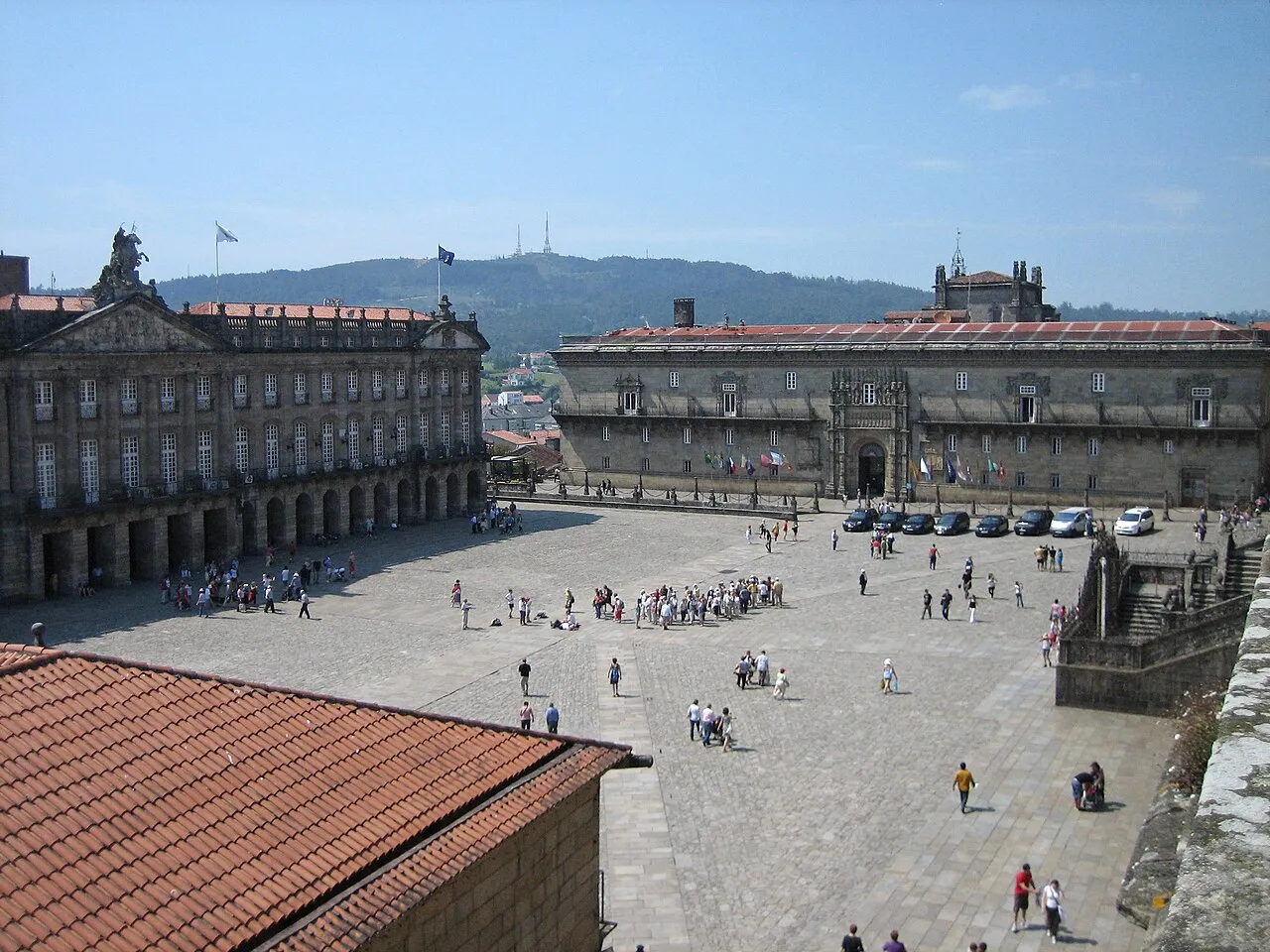
Obradoiro: the Baroque and the four powers
The end of the Camino.
It is the most monumental and the one everybody knows. The façade was raised by Fernando de Casas Novoa around 1740 as a stone curtain set up in front of the Romanesque church, to protect it from the rain and dazzle the pilgrim. It is one of the peaks of the Spanish Baroque.
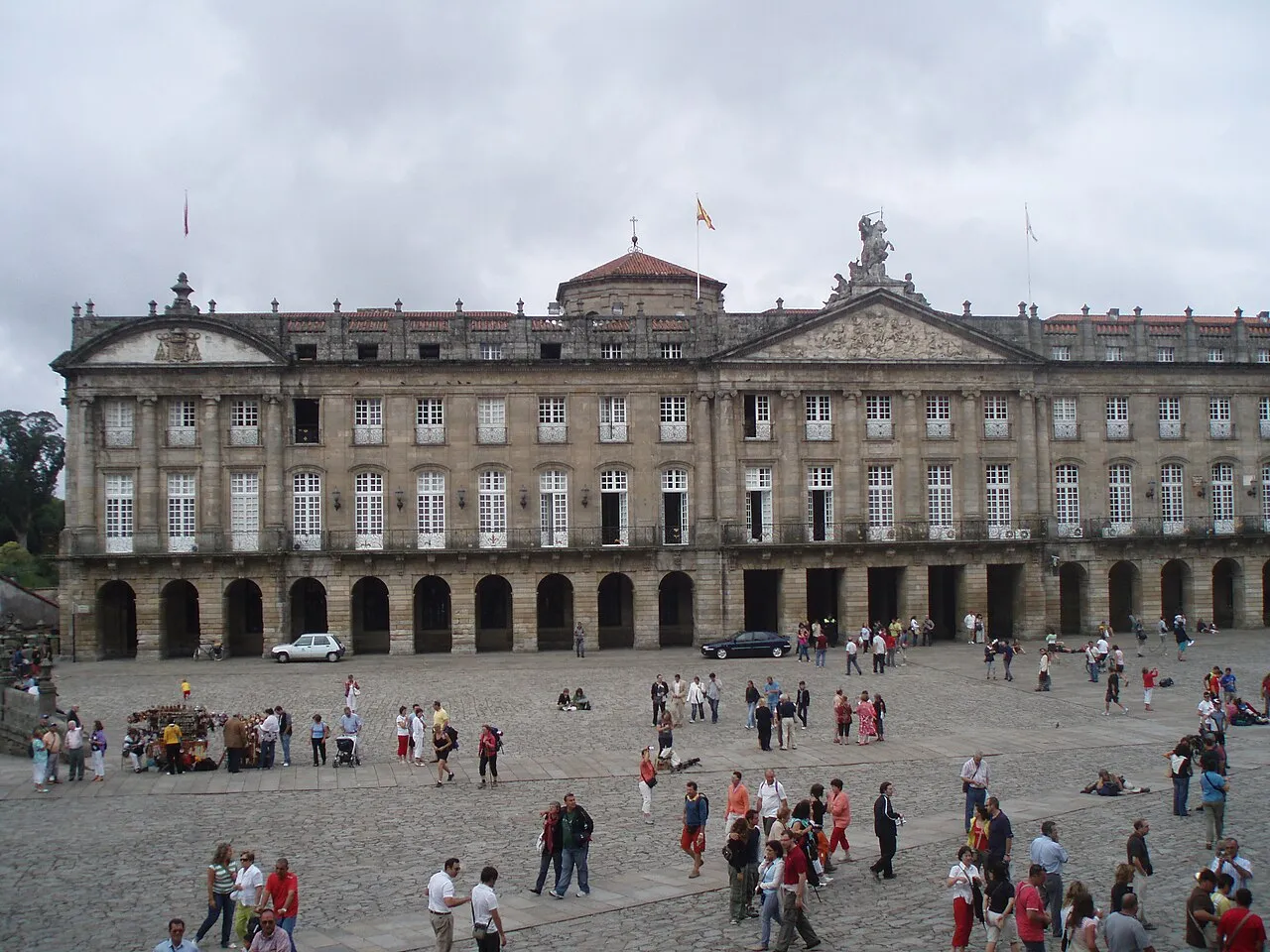
What is interesting about the square is that its four sides correspond to four different powers, each in its own style. The cathedral, obviously. Opposite, the Pazo de Raxoi, eighteenth-century neoclassical, seat of the city council and of the presidency of the Xunta: civil power.
On one side, the Hostal dos Reis Católicos, founded in 1499 by Isabella and Ferdinand as a hospital for pilgrims and today a parador hotel, considered one of the oldest hotel establishments still in operation in the world. Its Plateresque doorway deserves a separate stop.
And on the other, the Colexio de San Xerome, with a Romanesque doorway reused from an earlier building and fitted into a later structure: university power. Four institutions closing the same space, each one saying its piece.
Obradoiro means workshop in Galician, and it is literal: during the centuries of building work this open space was occupied by the stonemasons, with the half-carved blocks and the noise of the chisels. When they finished, the name stayed. This façade is engraved on the one, two and five cent coins.
Eighteenth-century neoclassical, commissioned by archbishop Raxoi as a seminary for confessors and today the seat of the city council and of the presidency of the Xunta. Its pediment carries a relief of the battle of Clavijo and, above it, a Santiago Matamoros, St James the Moor-slayer, on horseback.
Download the app and discover Santiago de Compostela offline, whenever you like. Take the walking tour The Cathedral and the Four Plazas with a local guide in your ear.
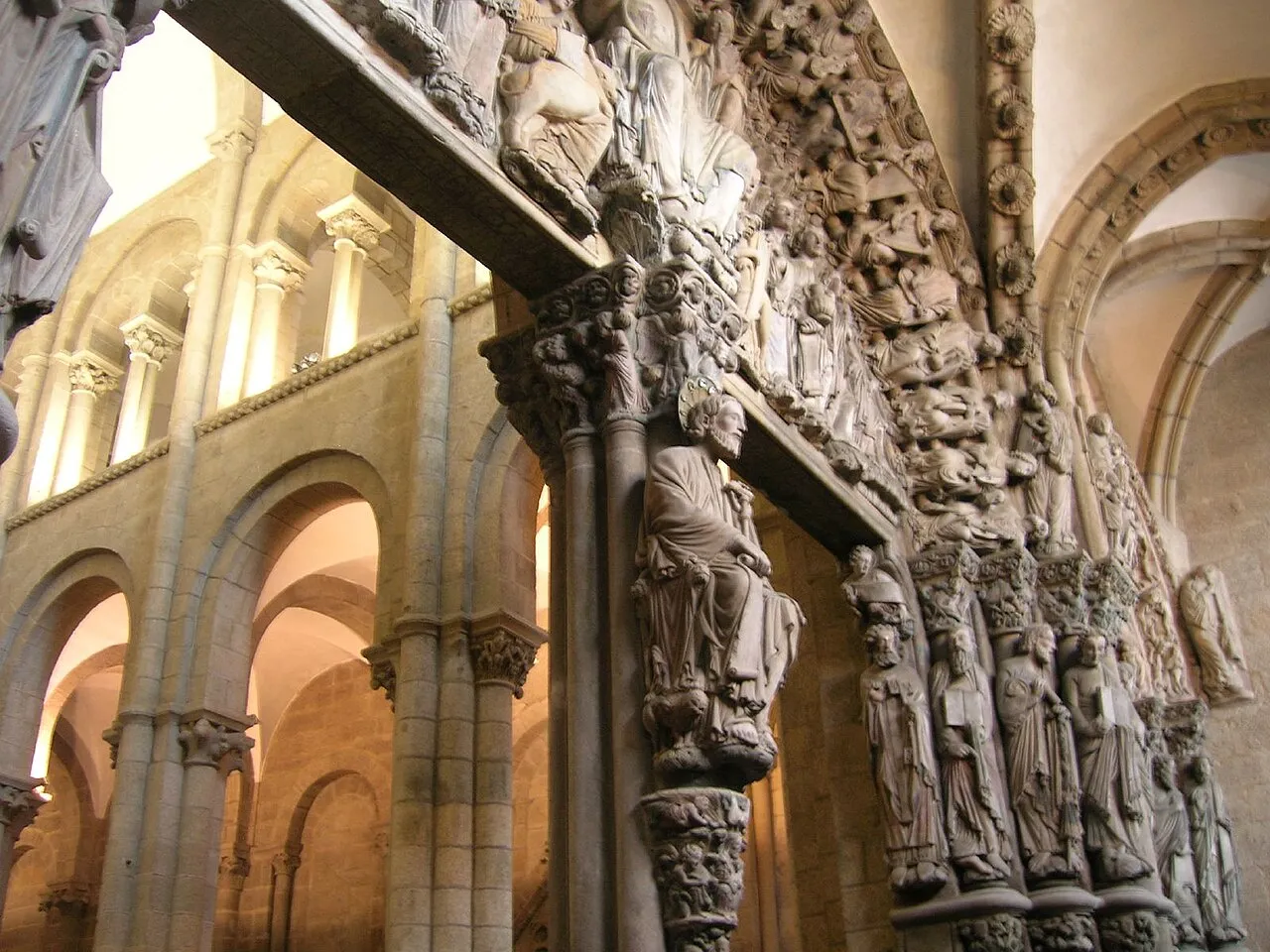
Praterías is the original Romanesque façade still on view, from the twelfth century, and its name comes from the silversmiths' workshops that occupied the arcades for centuries. Even today a few silversmiths' shops remain in the area, in a rare case of guild continuity of almost nine hundred years.
In the centre is the fountain of the horses, from the nineteenth century, and above the façade the Clock Tower, the Berenguela, the work of Domingo de Andrade, the same architect as the triple spiral staircase in Bonaval. Look on the doorway for the figure known as the Santa de las dos cabezas, the saint with two heads, one of the most discussed pieces of the whole ensemble.
The Quintana is the most theatrical of the four. A great flight of steps divides it into two levels with names of their own: the Quintana de Vivos, of the living, above and the Quintana de Mortos, of the dead, below, the latter so called because it occupies the site of the cathedral's old cemetery.
This is where the Porta Santa is, the Holy Door, walled up except in a Holy Year, when 25 July falls on a Sunday. And there is a phenomenon people look for at dusk: on the wall of the monastery opposite a shadow is cast that recalls the silhouette of a pilgrim with a bordón, a pilgrim's staff, and that only forms in a certain light.
Inmaculada, and where the city comes in
The fourth square, the Inmaculada or Azabachería, has the most discreet façade of the four: neoclassical from the end of the eighteenth century, raised after a fire destroyed the earlier Romanesque doorway. It is the one fewest people photograph and the one with the most daily traffic.
The name Azabachería comes from the workshops of azabache, jet, that shiny black stone from which the figures of Santiago that pilgrims bought as souvenirs were carved. For centuries it was the city's characteristic guild and there are still workshops at work.
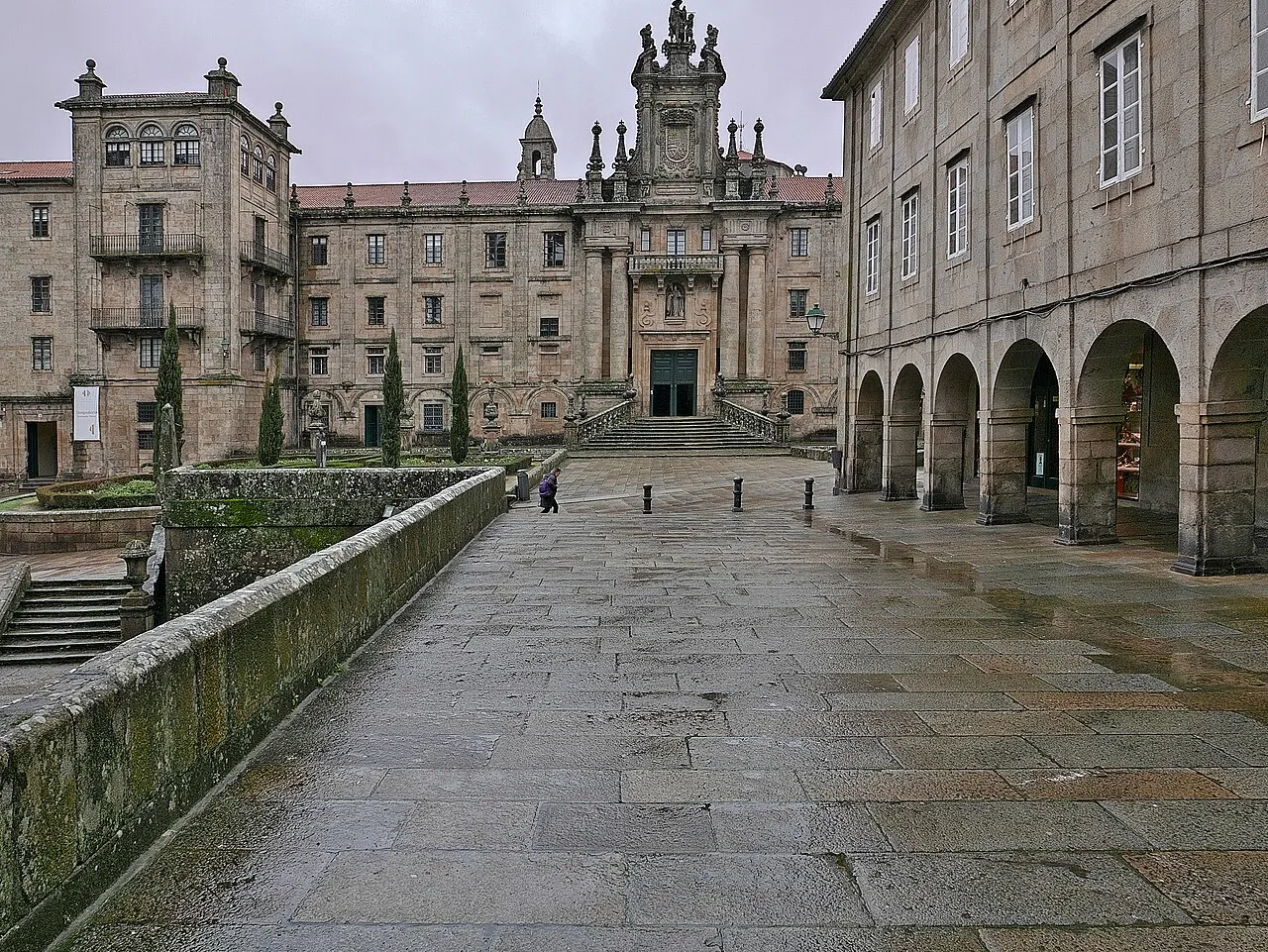
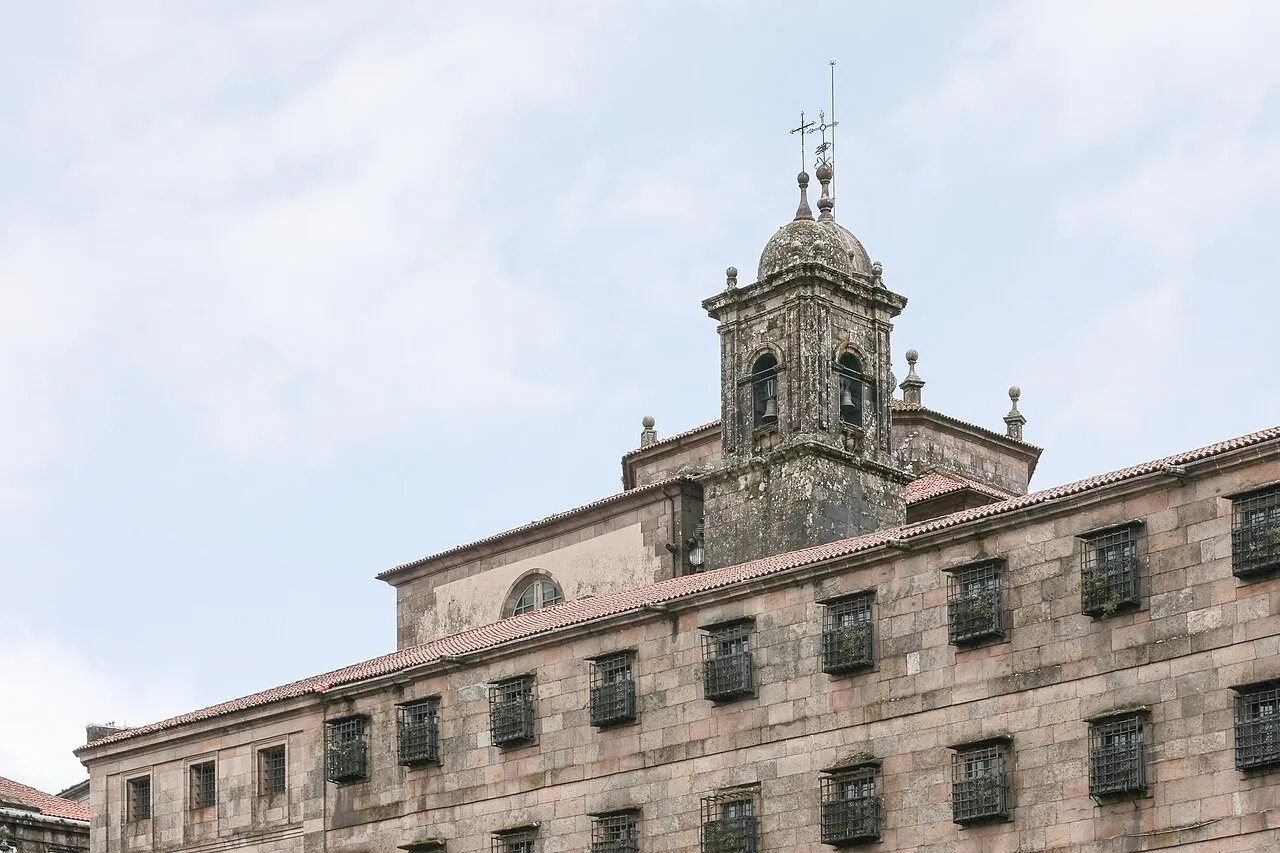
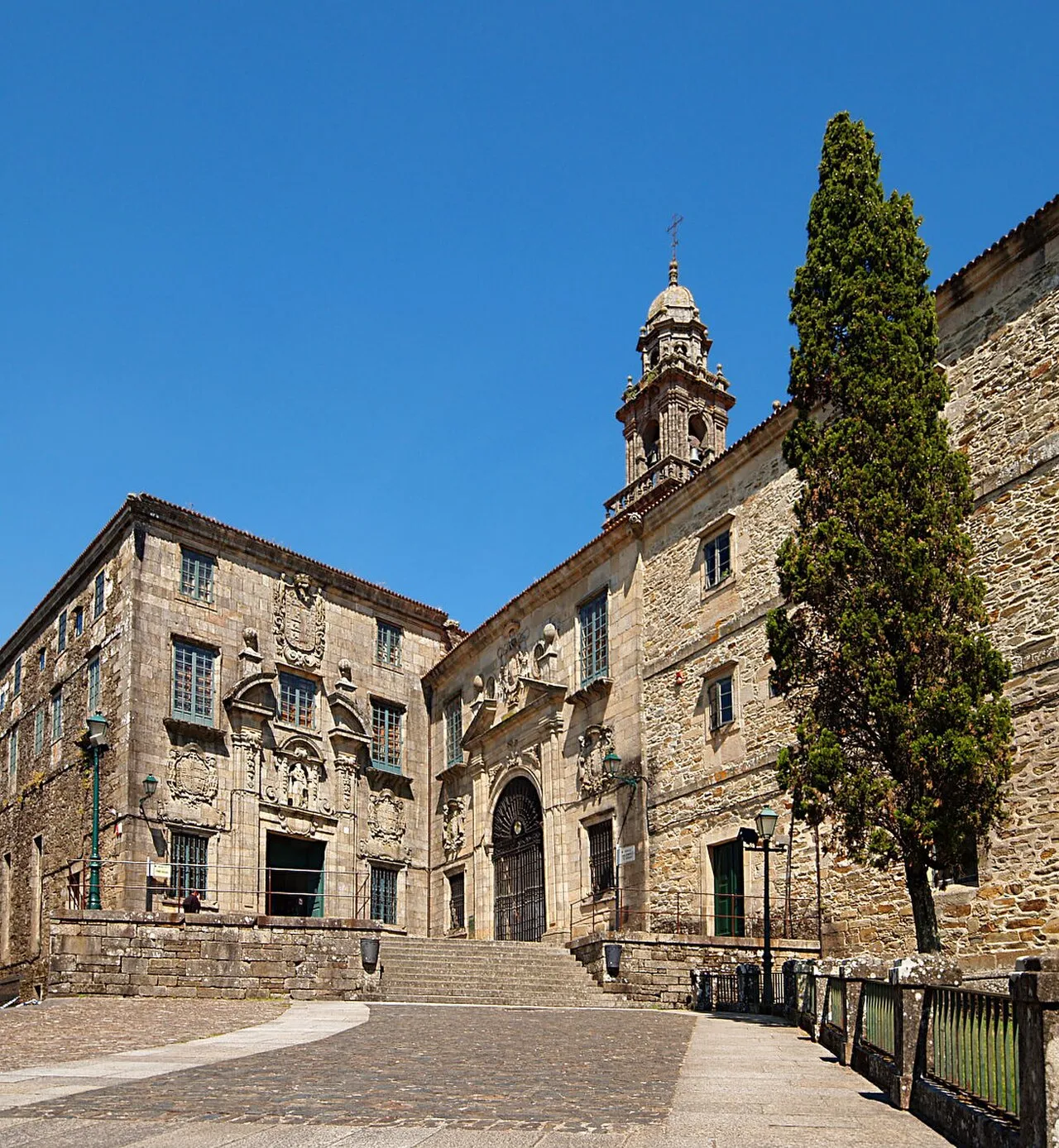
Facing it rises the bulk of the monastery of San Martiño Pinario, the second largest building in Santiago after the cathedral, with an outsized Baroque façade and an interior very few people visit despite being thirty metres from the cathedral.
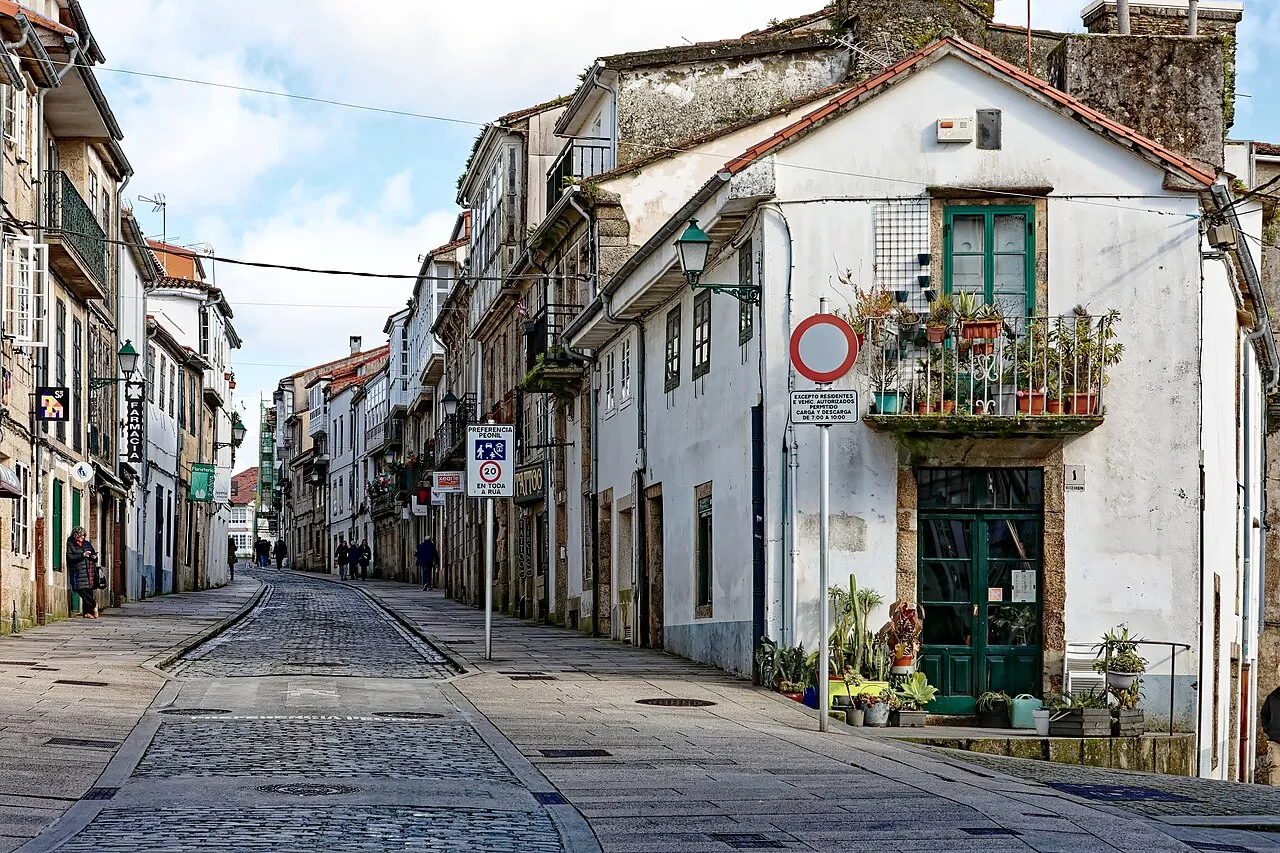
This square is where the pilgrims of the Camino Francés traditionally came in, walking down from the Porta do Camiño along the rúas of the north. In other words: the least showy façade of the cathedral is the one the people who came on foot arrived by.
3
The Mosteiro de San Martiño Pinario
📍 Praza da Inmaculada
The second largest building in the city after the cathedral, with an outsized Baroque façade and interior altarpieces of overwhelming density. It stands thirty metres from the cathedral and very few people go in, which makes it one of the best visits in Santiago.
It closes the Quintana with a very long wall and almost no windows, the frontier of the enclosure. Look for the torno at street level: a revolving window through which the Benedictine nuns sell the sweets they make themselves, without anyone seeing anyone's face.
What are the four squares of the Cathedral of Santiago?
Obradoiro to the west, with the Baroque façade; Praterías to the south, with the only original Romanesque façade on view; Quintana to the east, divided into two levels and with the Porta Santa; and Inmaculada or Azabachería to the north, neoclassical and the way the pilgrims of the Camino Francés traditionally came in.
How long does it take to walk round the cathedral?
Twenty minutes at a slow pace, and it is the best exercise for understanding the building from the outside. Each square is at a different level because the cathedral sits on a considerable slope, so the walk includes flights of steps and changes of height that are part of the experience.
Which is the oldest façade?
The Praterías one, Romanesque from the twelfth century and the only one of the four preserved on view as it was built. Its name comes from the silversmiths' workshops that occupied its arcades for centuries, and even today a few silversmiths' shops remain in the area: a guild continuity of almost nine hundred years.
What are the Quintana de Vivos and the Quintana de Mortos?
The two levels into which a great flight of steps divides the Praza da Quintana. The lower one is called de Mortos, of the dead, because it occupies the site of the cathedral's old cemetery, and the upper one de Vivos, of the living. It is the most theatrical of the four squares and the one where the Porta Santa is.
What is azabache and why does it give a square its name?
A shiny black stone, a kind of fossil lignite, from which the figures of Santiago that pilgrims bought as souvenirs were carved. The guild of azabache workers was characteristic of the city for centuries and occupied the streets of that area, hence the name Azabachería. There are still workshops at work.
Is it worth going into San Martiño Pinario?
Very much so, and almost nobody does. It is the second largest building in Santiago after the cathedral, it stands thirty metres from it and its interior has Baroque altarpieces of overwhelming density and remarkable choir stalls. Standing in the shadow of the cathedral, it receives a tiny fraction of the visitors.
Practical information
RouteObradoiro, Praterías, Quintana and Inmaculada. Twenty minutes going round the cathedral.
FreeThe four squares are public and always open.
PrateríasThe only original Romanesque façade on view, from the twelfth century.
QuintanaTwo levels with names of their own. The Porta Santa is here, walled up except in a Holy Year.
NearbySan Martiño Pinario, on the Inmaculada: the city's second building and almost nobody goes in.
Best timeDawn or late in the day. In the middle of the morning they are full of groups.
On the map
🎧 With Viavoy
Walk Santiago de Compostela and listen at your own pace
Download Viavoy and walk Santiago de Compostela offline, whenever you like.
from 2,99 €· one-off payment
City Pass · 9,99 €3 days, all the tours in Santiago de Compostela