1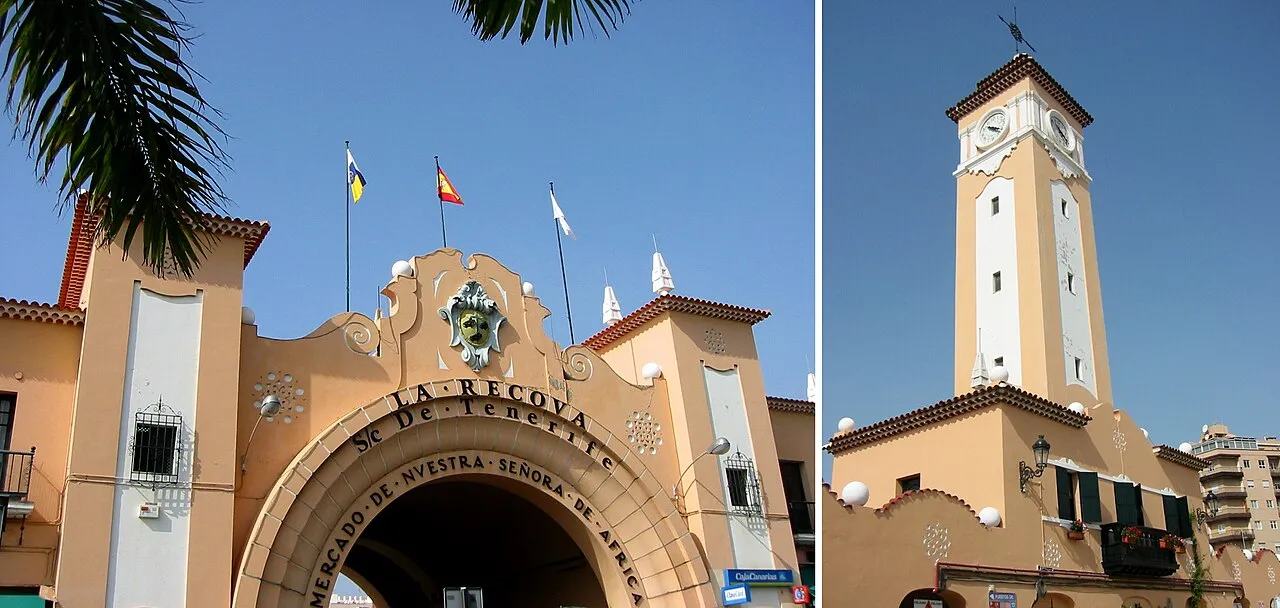
Market of Nuestra Señora de África
📍 Beside the ravine
“La Recova” to everyone here. Neocolonial, from 1944, with a central courtyard and galleries. Canarian cheese, gofio, old potato varieties and fish of the day.
Potato varieties brought from America in the sixteenth century that survive here, toasted flour older than the conquest and goat cheeses that barely leave the islands.
🎧 On the walk García Sanabria Park and the África MarketCanarian cooking does not resemble any other Spanish cooking, and the reason is geographical: these islands were a thousand kilometres closer to America than the mainland during the centuries in which what Europe ate was being decided. The result is a larder with ingredients that are everyday nowhere else in the country.
Papas arrugadas, wrinkled potatoes, are the emblematic dish: small potatoes boiled unpeeled with a lot of salt, until the water evaporates and the skin is left wrinkled and covered in a fine crust of salt. They are eaten whole, with the skin on, and dipped.
The interesting part is the varieties. The old Canarian papas descend from tubers brought from America in the sixteenth century, and many of them have practically disappeared in their place of origin: here they are still grown on small mountain plots, with names such as papa negra, bonita or borralla.
The mojos are the two sauces that come with almost everything. Mojo rojo, or picón, has dried pepper, garlic, cumin, oil and vinegar, and goes with meat. Mojo verde, with coriander or parsley, goes with fish. They are served separately, in a bowl, and you dip.
And the fish, in a harbour capital, is the most reliable thing on any menu: vieja, cherne, sama, and the chicharro, the abundant, cheap fish that was the basis of the diet of the city's fishermen and that gave the people of Santa Cruz their nickname, chicharreros.
“La Recova” to everyone here. Neocolonial, from 1944, with a central courtyard and galleries. Canarian cheese, gofio, old potato varieties and fish of the day.
Download the app and discover Santa Cruz de Tenerife offline, whenever you like. Take the walking tour García Sanabria Park and the África Market with a local guide in your ear.
Find out more about Viavoy →Gofio is toasted cereal flour — millo, wheat or barley — and it is the oldest food in the Canary Islands: it was eaten by the guanches, the island's indigenous population, before anyone arrived from Europe. It is one of the very few elements of that culture that survived intact.
It is used in a thousand ways: kneaded with broth, sprinkled over a stew, whisked with milk or banana, in desserts. At first it is disconcerting, and then it turns out to be fairly addictive. Ordering it is the quickest way to eat something genuinely pre-Hispanic.
The cheeses are the other great chapter. Canarian cheeses are mostly goat's cheese, with their own denominations on several islands, and they are eaten fresh, semi-cured or smoked. Very little of it leaves the archipelago, so it is one of those things you can only try here.
In stews, rancho canario and puchero, with chickpeas, meat and vegetables; and sancocho, salted fish with papas and mojo, which is a Holy Week dish. And for dessert, bienmesabe, with almond and honey, and frangollo, once again based on millo.
To drink, Canarian wines, which are living through an excellent moment. They are grown on volcanic soil, with vineyards that on some islands grow in pits dug into the ash, and the varieties — listán negro, malvasía, marmajuelo — are not found anywhere else.
The Market of Nuestra Señora de África is the first compulsory stop, and in the morning: it is where you see the whole larder at once and where the sellers explain what each thing is. After midday it drops off a lot.
To sit down, the old town area around calle del Castillo and its parallel streets has real Canarian cooking at reasonable prices, with the advantage of being on the same route as the Plaza de España and the Carta Palace.
The La Noria area and the streets beside the ravine, near the TEA and the Church of la Concepción, concentrate terraces and an evening atmosphere. It is where the city goes out.
A useful note: in the Canary Islands restaurant prices tend to be somewhat lower than on the mainland, and IGIC — the local tax — is lower than mainland VAT. Eating well here works out reasonably.
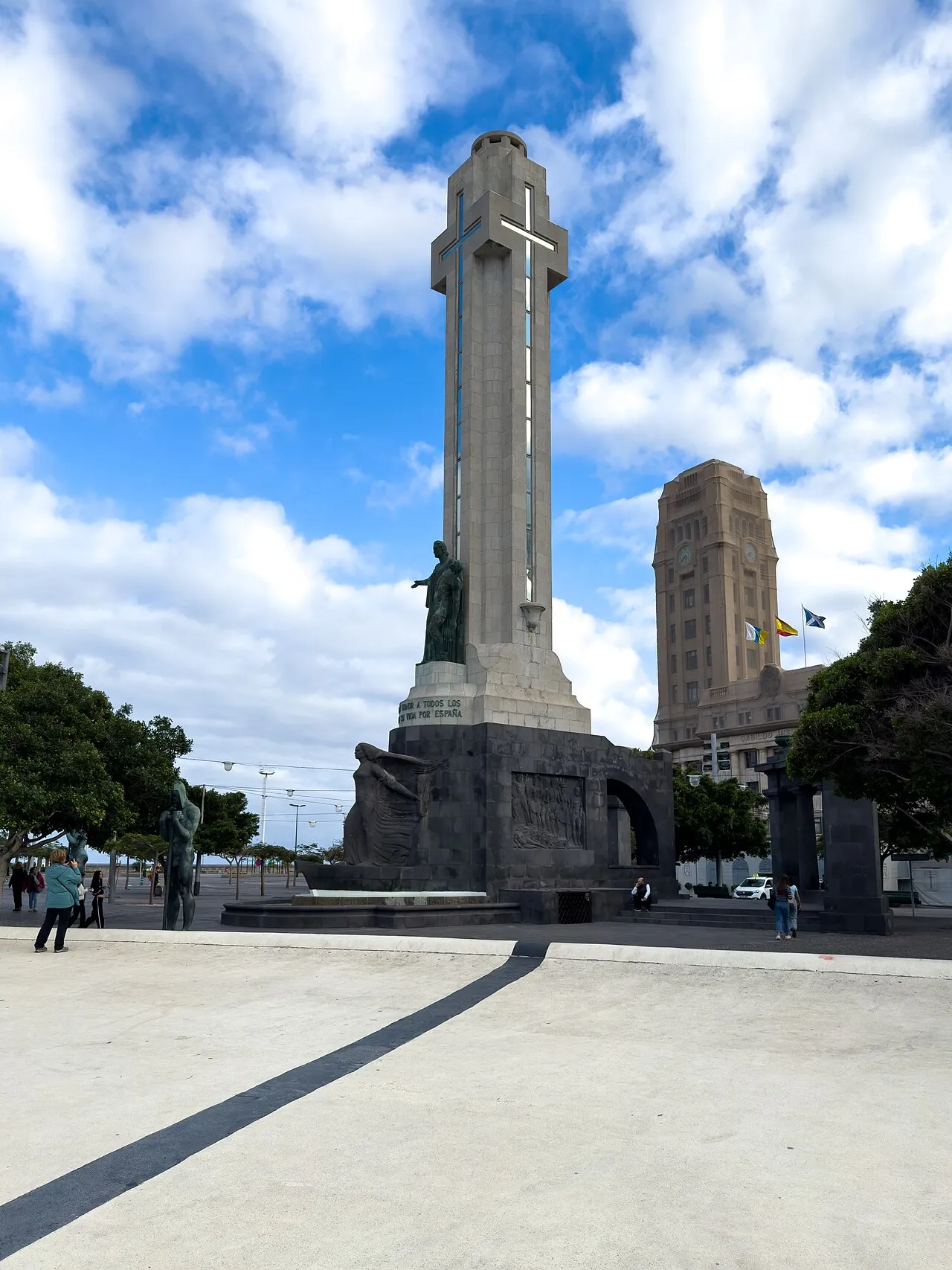
The starting point of the old town, with the restaurant streets a step away. Around calle del Castillo is the reasonably priced Canarian cooking.

The La Noria area, around it, concentrates terraces and an evening atmosphere. It is the neighbourhood where the city goes out.
Small potatoes boiled unpeeled with a lot of salt, until the water evaporates and the skin is left wrinkled and covered in a fine crust of salt. They are eaten whole, with the skin on, dipped in mojo. Many of the varieties used descend from tubers brought from America in the sixteenth century that have almost disappeared in their place of origin.
Mojo rojo, or picón, has dried pepper, garlic, cumin, oil and vinegar, and traditionally accompanies meat and the papas. Mojo verde has coriander or parsley and goes with fish. They are served separately, in a bowl, and the local rule is simple: you dip, you do not pour it over the top.
Toasted cereal flour — millo, wheat or barley — and the oldest food in the Canary Islands: it was eaten by the guanches, the indigenous population, before the European conquest. It is one of the very few elements of that culture that survived intact. It is taken kneaded with broth, sprinkled over a stew, whisked with milk or in desserts.
After the chicharro, an abundant, cheap fish that was the basis of the diet of the city's fishermen. It began as mockery from neighbouring La Laguna, then the capital and a genteel city, and the people of Santa Cruz ended up adopting it with pride, which is the usual fate of well-aimed nicknames.
Very much so, and it is living through an excellent moment. It is grown on volcanic soil, with vineyards that on some islands grow in pits dug into the ash to protect them from the wind, and the varieties — listán negro, malvasía, marmajuelo — are not found anywhere else. It is one of the things most worth trying here.
The La Recova market in the morning, to understand the larder. To sit down, the old town streets around calle del Castillo have real Canarian cooking at reasonable prices. And the La Noria area, beside the ravine, concentrates terraces and an evening atmosphere: it is where the city goes out.
It tends to be somewhat cheaper than on the mainland, among other reasons because IGIC, the local indirect tax, is lower than mainland VAT. In a capital like Santa Cruz, moreover, most restaurants work for people from the city and not for passing tourism, which helps the value for money a good deal.
Download Viavoy and walk Santa Cruz de Tenerife offline, whenever you like.

Keep reading