1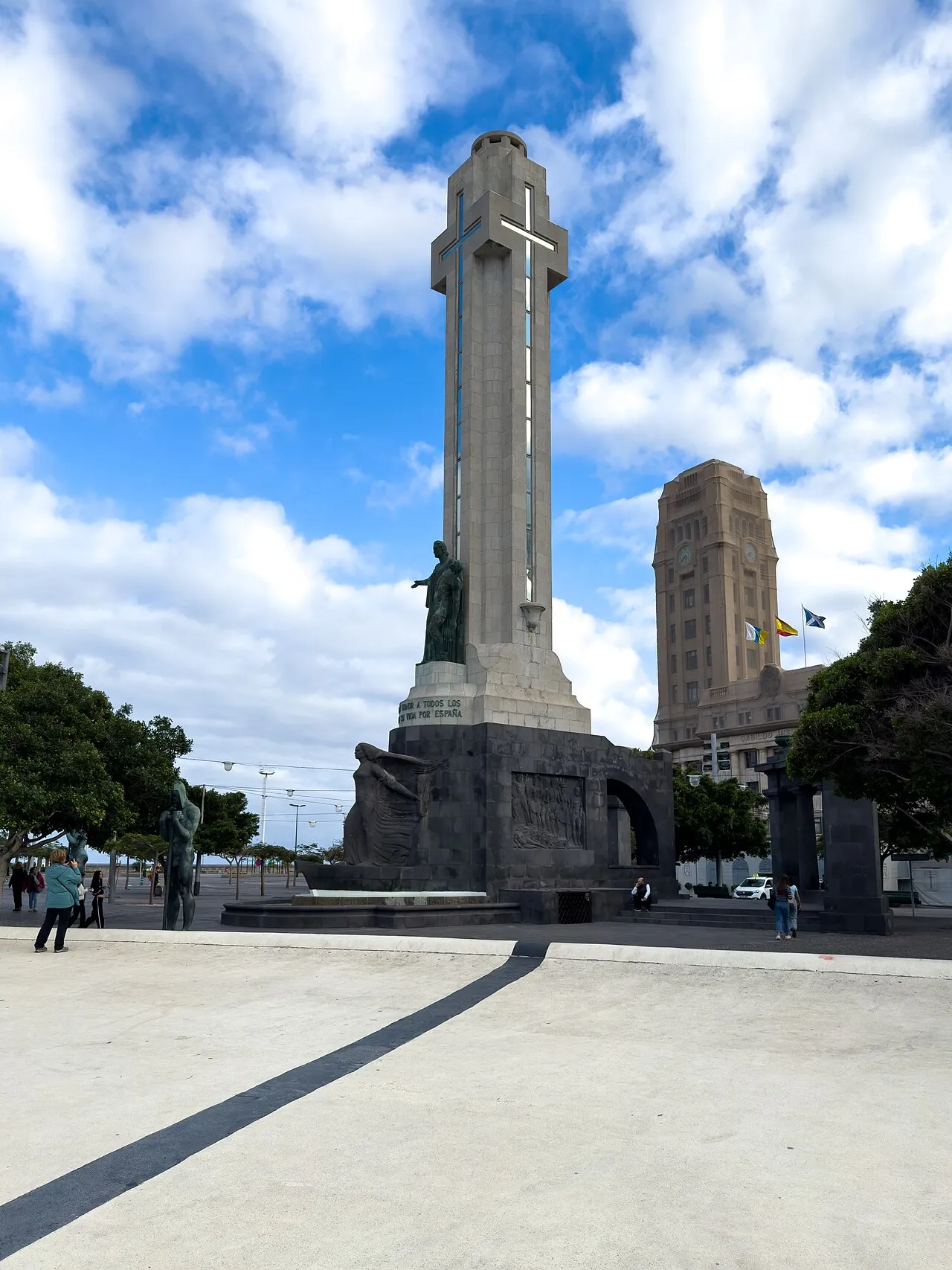
Plaza de España
📍 Facing the harbour
The largest square in the Canary Islands, with a salt-water lake by Herzog & de Meuron. The compulsory starting point and a hub for guaguas, the local buses, and the tram.
A castle buried under the main square, Calatrava's white wave and a palm garden built on the old rubbish tip. All on foot, in a single day.
🎧 On the walk Plaza de España, La Concepción and the centreAlmost everyone lands in Tenerife and shoots off towards the Teide or towards the south, and Santa Cruz stays a name on the map. It is a shame with an easy remedy: the capital has a long day's worth of things that resemble nothing else you see in the rest of Spain. This is the route, in the order that works.
Start in the Plaza de España, which is the largest in the whole archipelago and has at its centre an artificial lake of salt water pumped from the Atlantic, signed in 2006 by Herzog & de Meuron, the Swiss architects of the Tate Modern.
And before going on, go down. Under this square is the San Cristóbal Castle, the fortress that defended the harbour from the sixteenth century, demolished in 1928 and found again during the works of 2006. Its black stone walls are preserved in an underground gallery reached from the very ground you are standing on. Almost nobody goes down, and it is the most interesting thing in the centre.
Carry on to the plaza de la Candelaria and stop at the Carta Palace, of 1721-1752, the best Baroque civil architecture in the Canary Islands. Look into the courtyard of tea wood: three centuries intact thanks to the resin of the Canary pine.
Continue along calle del Castillo, the pedestrian commercial artery, to the Guimerá Theatre, the oldest in the islands, from 1851. And end the morning at the Church of la Concepción, where they keep the cross that Alonso Fernández de Lugo planted on the beach in 1494 and that gave the city its name.
The largest square in the Canary Islands, with a salt-water lake by Herzog & de Meuron. The compulsory starting point and a hub for guaguas, the local buses, and the tram.
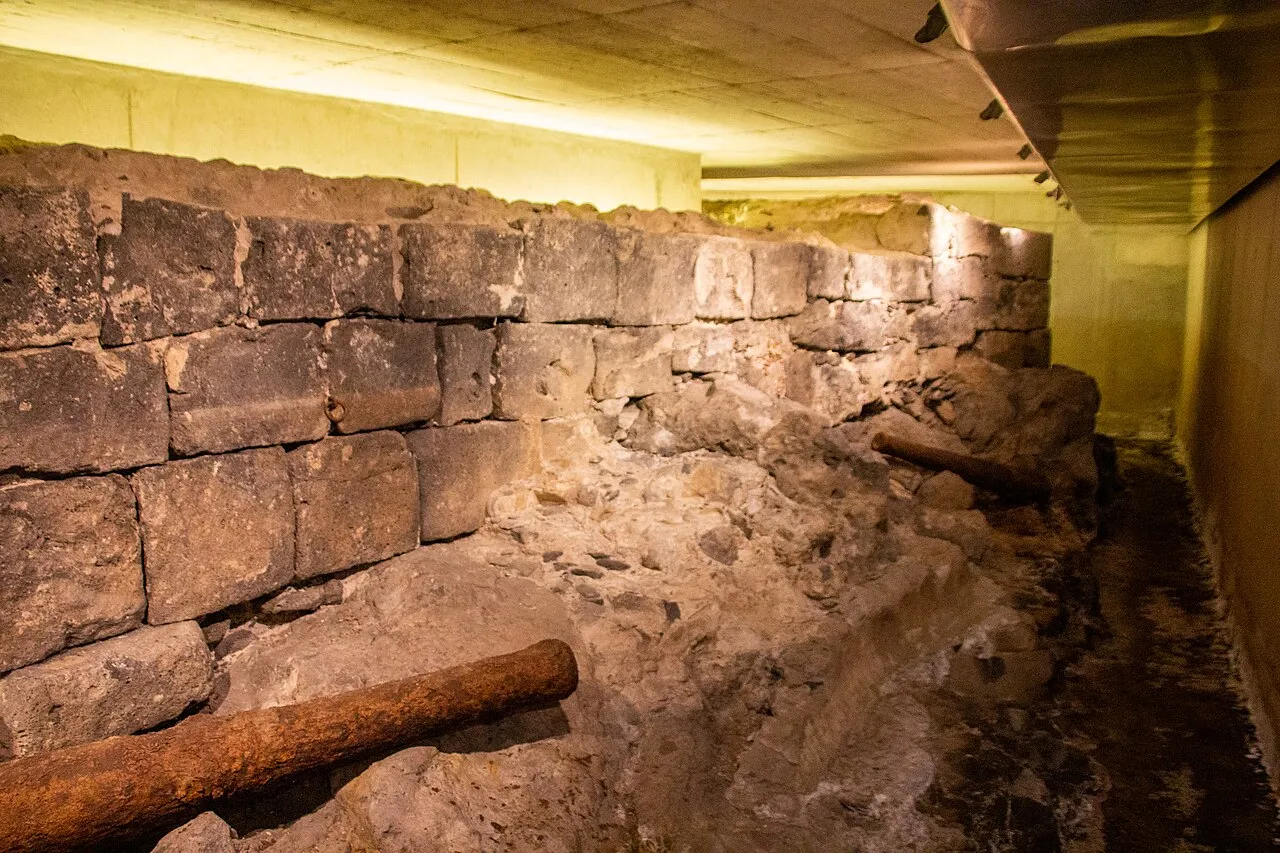
A sixteenth-century fortress preserved in situ in an underground gallery. Inside, the cannon El Tigre. Half an hour and entry usually free.
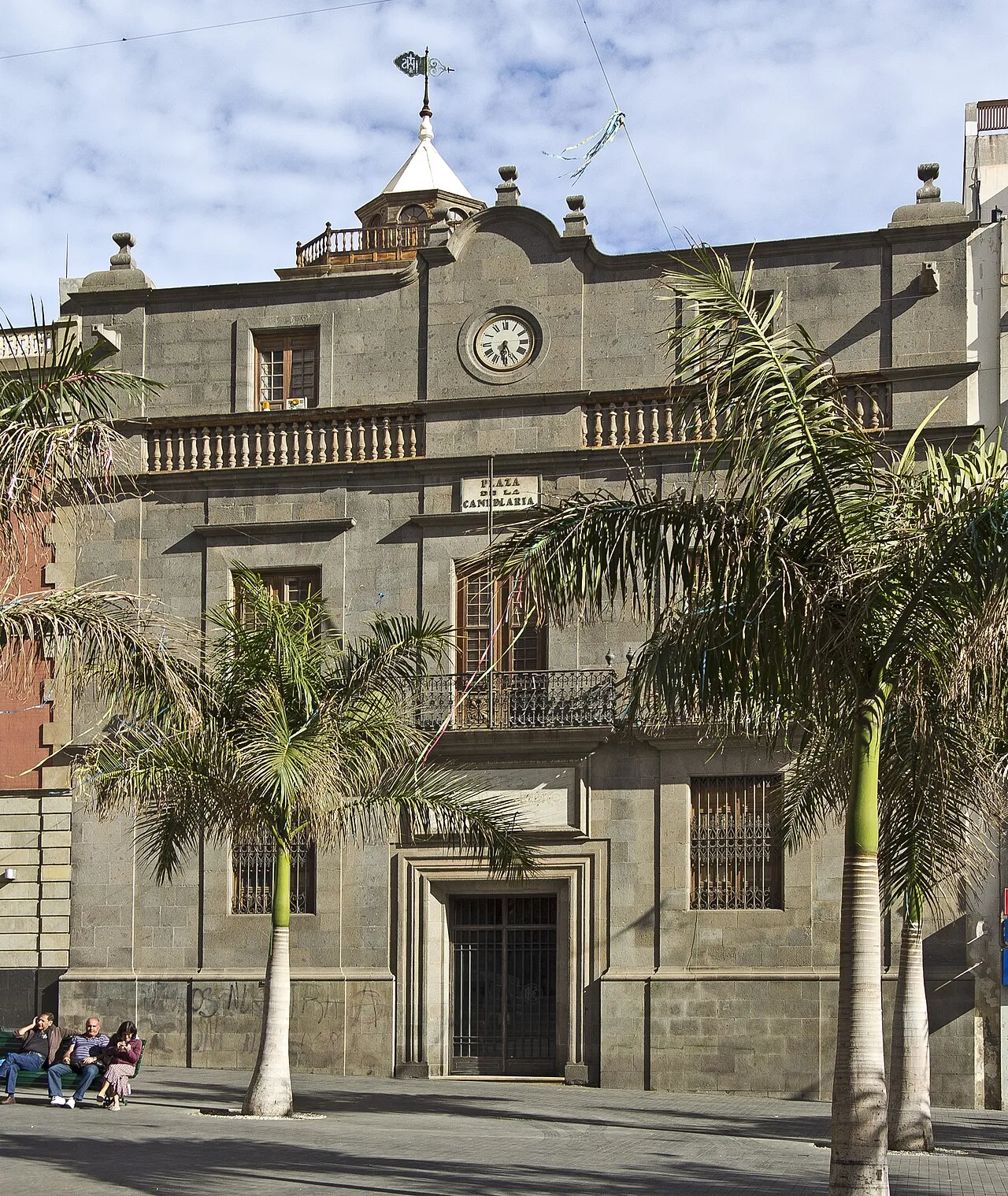
Canarian Baroque of 1721-1752, with a courtyard of tea wood. The city's first listed building, in 1947. Today a cultural space and information point.
Download the app and discover Santa Cruz de Tenerife offline, whenever you like. Take the walking tour Plaza de España, La Concepción and the centre with a local guide in your ear.
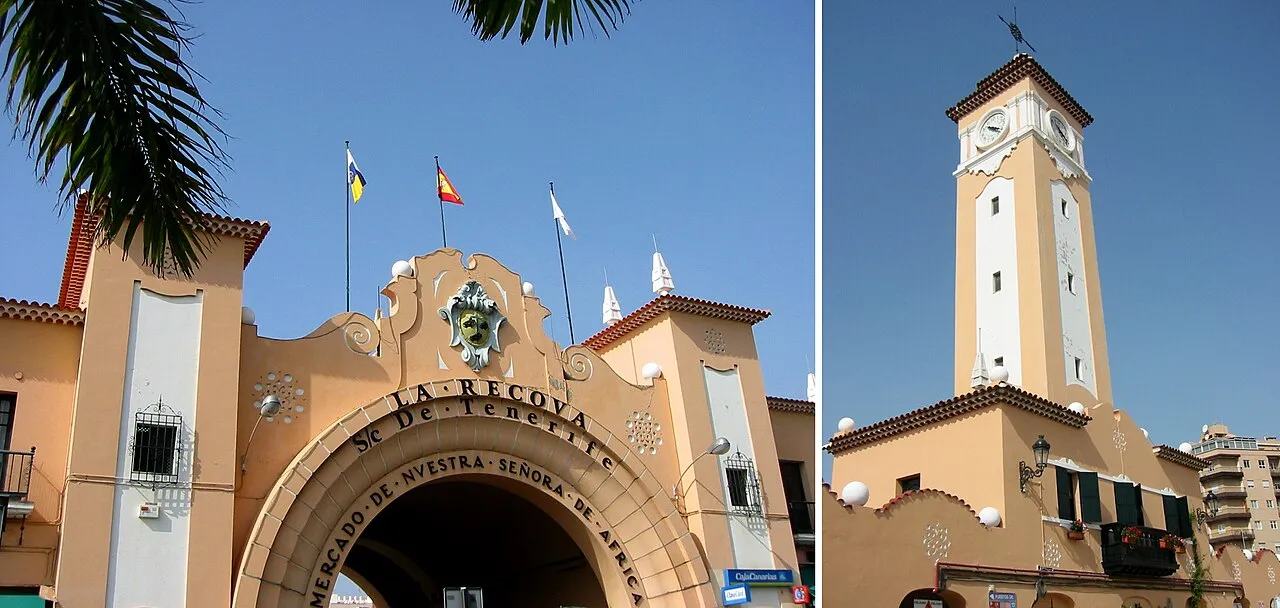
Find out more about Viavoy →In mid-morning, the Market of Nuestra Señora de África — “La Recova” to everyone here —, Neocolonial, from 1944, with a central courtyard and arcaded galleries. It is the place where you understand how this city eats: Canarian goat's cheese, gofio, bananas from the island and old potato varieties brought from America in the sixteenth century.
Important: it works in the morning and drops off quite a lot after midday. If you leave it for the afternoon, you miss it.
If you have time to spare before lunch, climb up to the García Sanabria Park, the largest urban garden in the Canary Islands, with more than sixty-seven thousand square metres of dragon trees, palms and tropical species in the open air, and contemporary sculptures scattered among the trees since an international exhibition in 1973.
On the way is the Masonic Temple, which was the largest Masonic centre in Spain: sphinxes and Egyptian columns on the façade, decades of abandonment after the Civil War, and today visitable with limited capacity. It is one of the few genuine Masonic temples that can be seen in the country.
The afternoon belongs to the shoreline, and it begins at the Tenerife Auditorium. Santiago Calatrava's great white wave, opened in 2003, rests on only two points and is clad in trencadís. Walk right round it: it changes completely with the angle.
Follow the promenade towards the San Juan Bautista Castle — the Castillo Negro, from 1641-1644, with walls a metre and a half thick — and the César Manrique Maritime Park, the salt-water pools that the Lanzarote artist never saw finished: he died in 1992 and the park opened in 1995.
End the day at the Palmetum, twelve hectares with more than four hundred species of palm arranged by continent. It is built on the city's old municipal rubbish tip, sealed and replanted, and it opened to the public in 2014.
The Palmetum viewpoint is the best possible ending: from up there you take in the whole seafront with the Auditorio and the Santa Cruz Towers in the same frame, and the Atlantic behind.
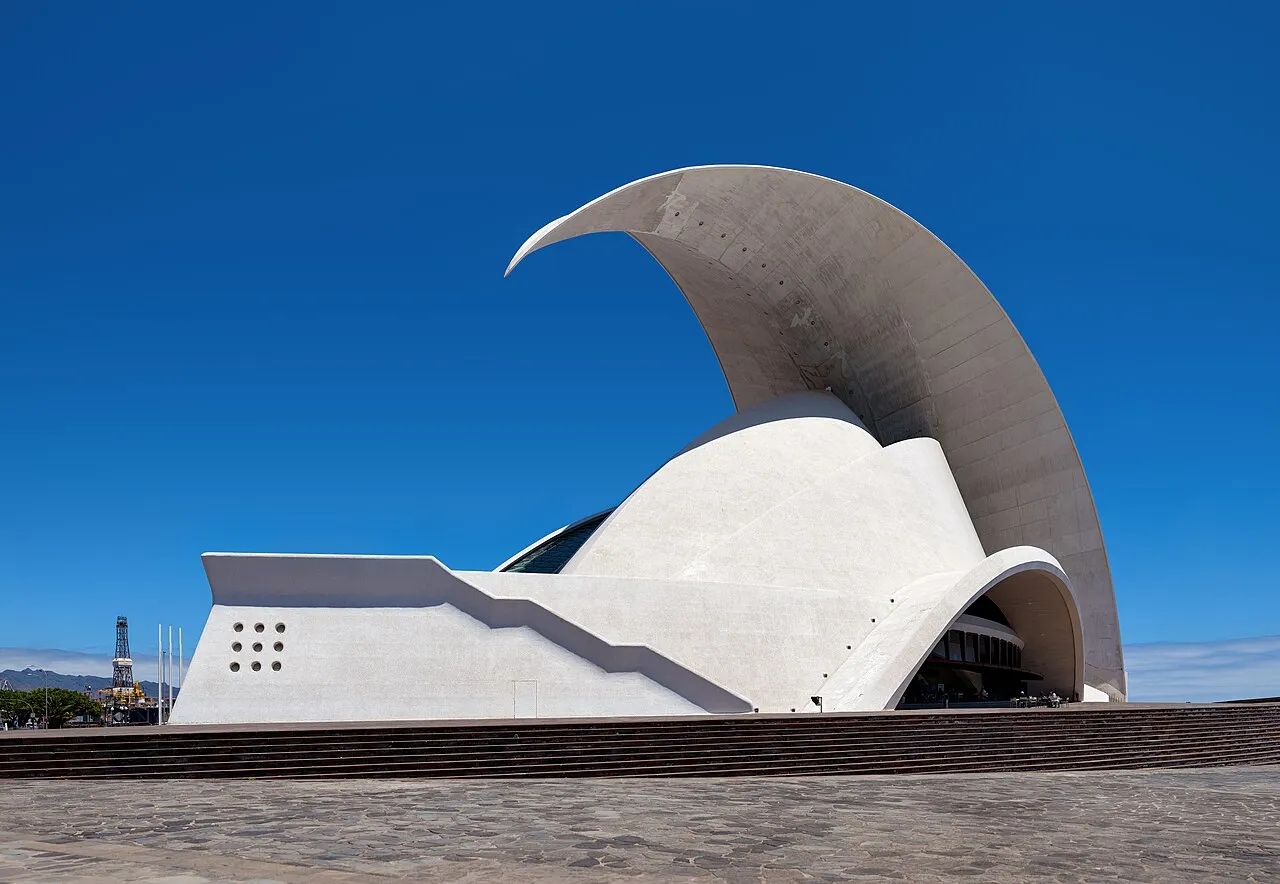
The Calatrava work that turned the city into an icon. They call it the Sydney of the Atlantic. With its own Symphony Orchestra and opera company.
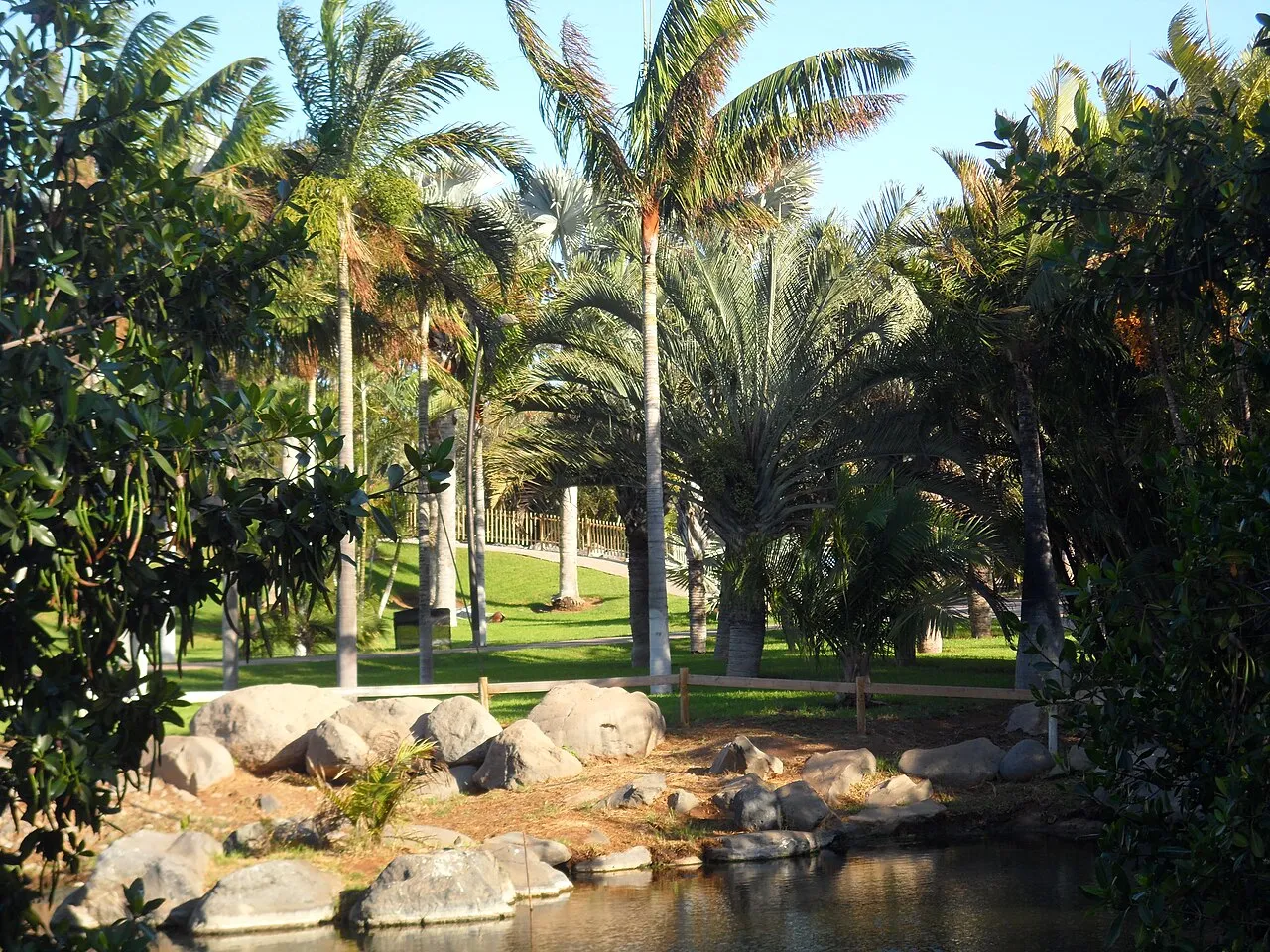
Twelve hectares of tropical palms on the old municipal rubbish tip. An hour and a half, and climb to the viewpoint: it is the best close to the day.
Yes, with room to spare. The old town is compact and the seafront is walked along a flat, continuous promenade. A full day covers the Plaza de España with the buried castle, the Palacio de Carta, the Teatro Guimerá, la Concepción, the market, the Auditorio, the Parque Marítimo and the Palmetum. With two days the Parque García Sanabria and the Masonic Temple fit in without hurrying.
Going down to the underground gallery of the Castillo de San Cristóbal, under the Plaza de España. It is a sixteenth-century fortress found again in 2006 and preserved in situ, with the cannon El Tigre inside, and most people cross the square without knowing it is there. After that, Calatrava's Auditorio and the Palmetum.
No. Practically everything is done on foot: the old town is small and the coastal promenade is flat and continuous. The city also has a tram and a dense network of guaguas — that is what buses are called in the Canary Islands — to cut the stretch to the Palmetum or the climb to the park.
Very little. The buried castle and the Military History Museum are usually free, the TEA is around 7 €, and the Palmetum and the Parque Marítimo have modest tickets. The squares, the market, the Parque García Sanabria and the outside of the Auditorio are free. Check current opening hours, which in several places are limited.
Any: the climate is mild all year and there is no bad season. February is special because of the Carnival, one of the biggest in the world and twinned with Rio's, but it means a full city and accommodation booked well in advance. Outside those weeks, the capital is quiet even in summer.
The La Recova market, in mid-morning, is the best place to understand what people eat here: Canarian goat's cheese, gofio, old potato varieties and fish of the day. To sit down, the old town area around calle del Castillo and the parallel streets has reasonable prices and real Canarian cooking.
Very much, and for two reasons. One botanical: it brings together more than four hundred species of palm from all over the planet, arranged by region, and it is one of the most important collections in Europe. The other urban: it is built on the old municipal rubbish tip, sealed and replanted, and it is the best Spanish example of a city turning its worst face into an asset.
Download Viavoy and walk Santa Cruz de Tenerife offline, whenever you like.

Keep reading