1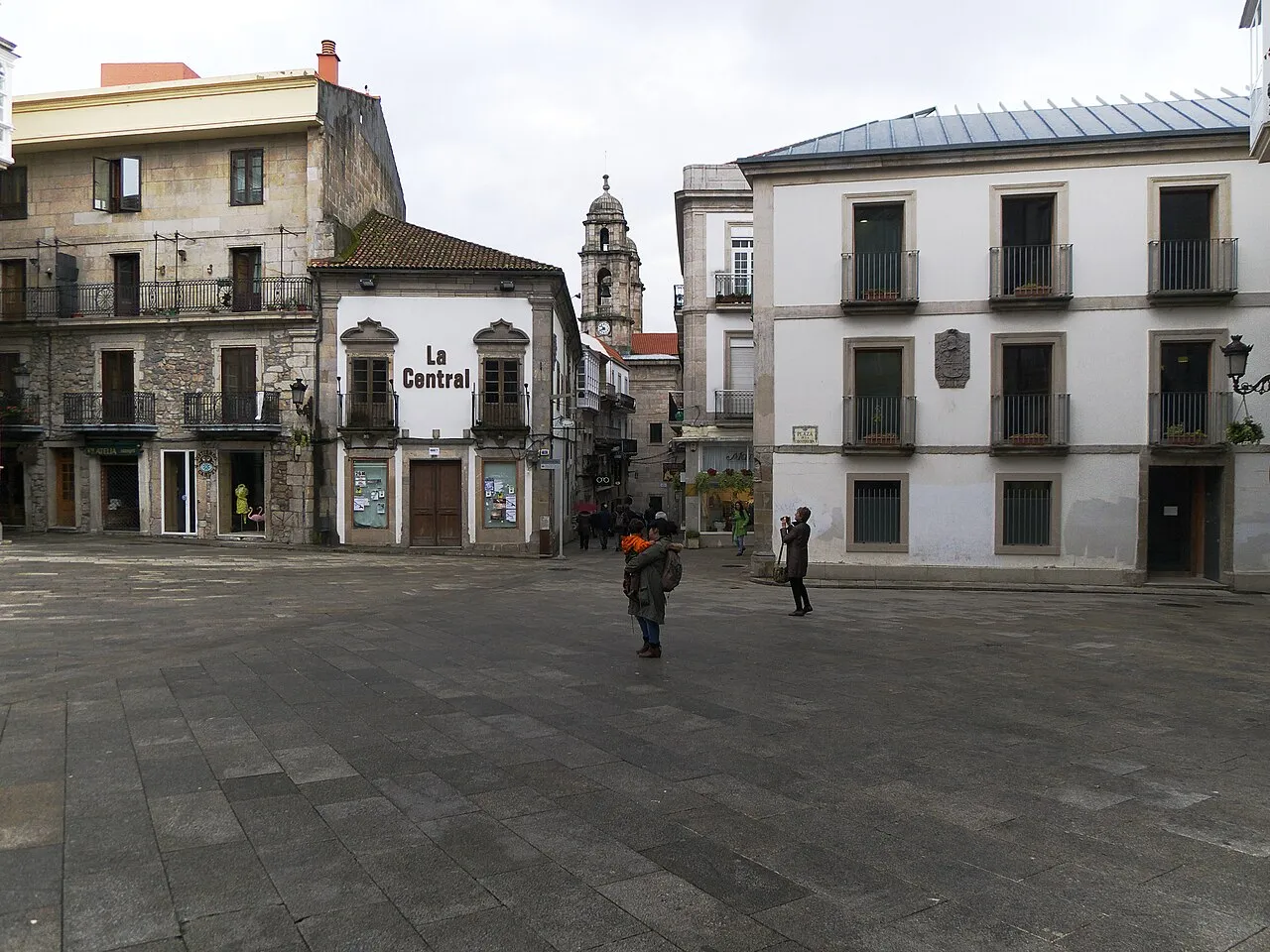
Praza da Constitución
📍 Heart of the Casco Vello
Arcades, wrought-iron balconies and the best terraces in the old quarter. The city market stood here for more than a century.
A quarter that steps down from the centre to the water, with the church that was blown apart in 1809 and the fishing port where it all began.
🎧 On the walk The Old Town, the Concathedral and A PedraThe Casco Vello can be walked in a little over an hour, and in that time you go from a bourgeois main square to a fishermen's quarter with medieval arcades, heading downhill the whole way. This is the old Vigo, the one that existed before the city burst its walls and grew rich on the sea.
The quarter begins at Porta do Sol, which is not a gate but a threshold: above it, the bourgeois new town in dressed granite; below, the alleys that tumble down towards the port. Presiding over it is el Sireno, Francisco Leiro's 1991 sculpture, which divided the people of Vigo and is today their icon.
Five minutes downhill lies the Praza da Constitución, the quarter's open-air drawing room: stone arcades, wrought-iron balconies and terraces. For more than a century the city's main market beat beneath those arches, with the shouting of the market women and the baskets spilling over.
It was called Praza da Vila and Praza Real before taking the name of the 1812 Constitution of Cádiz, “La Pepa”, so nicknamed because it was proclaimed on 19 March, the feast of St Joseph. That coming and going of names is in itself a reading of nineteenth-century political history.
One of its buildings housed the old Concello, the town hall, now turned into the Casa Galega da Cultura. And every Good Friday the Santo Encontro is held here, when the images of the Virgin and of Christ “meet” in the middle of the crowd.
Arcades, wrought-iron balconies and the best terraces in the old quarter. The city market stood here for more than a century.
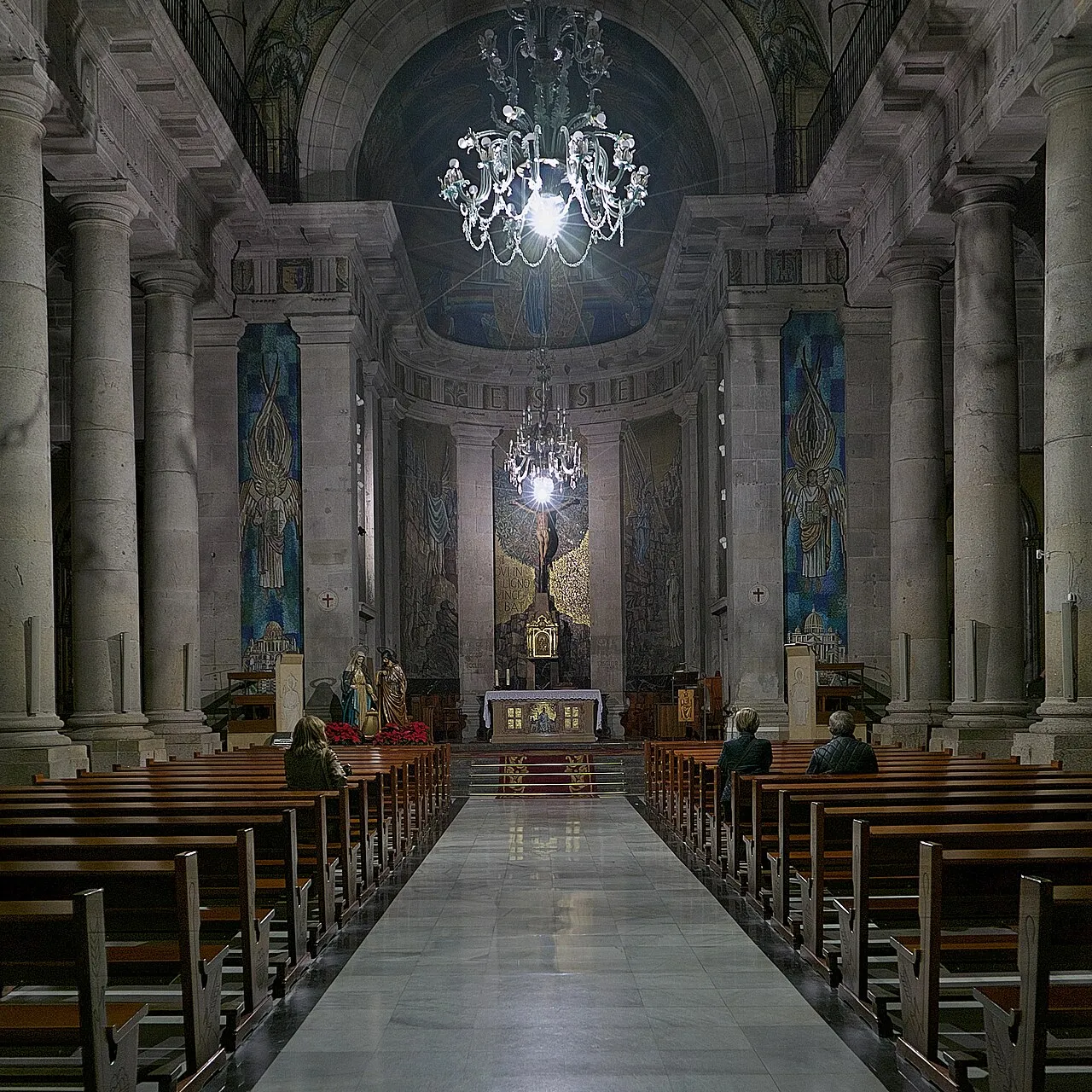
“A Colexiata” to everyone here. Neoclassical, 1816-1838, built after the explosion that destroyed the Gothic church in 1809. It holds the Cristo de la Victoria.
Download the app and discover Vigo offline, whenever you like. Take the walking tour The Old Town, the Concathedral and A Pedra with a local guide in your ear.
Find out more about Viavoy →Vigo was occupied by the French and was still a town closed in by walls. On 28 March 1809 the people of Vigo stormed the enclosure through the Porta da Gamboa, and many of those in the front line were men of the sea from O Berbés.
The story goes that an old sailor called Carolo fell dead trying to hack the gate down with an axe, and that it was the soldier Bernardo González del Valle, known as Cachamuiña after his home parish in Ourense, who managed to force it open. That day the French surrendered.
Vigo was the first city in Spain to free itself from the invader, although Galicia had to finish the job by June of that year, at the battle of Ponte Sampaio, at the entrance to the ría.
But 1809 also left an enormous wound in the city's heritage: that same year a powder magazine near the Castro blew up and destroyed the city's old Gothic church. The co-cathedral you see today, neoclassical and as solid as a fortress, was built afterwards, between 1816 and 1838.
Every late March the Casco Vello dresses up as 1809 for the Festa da Reconquista, with a period market, re-enactments of the assault and the streets full for a whole weekend. It is one of the most participatory historical festivals in Galicia.
Going down from the co-cathedral you reach A Pedra, the popular soul of the quarter: the market that has always been there and the row of stone tables where the ostreiras have been selling oysters in the open air for more than a century, in a trade that passes from mother to daughter.
Watch the ground as you go down: stone worn smooth and polished by millions of footsteps, with slopes and steps. For centuries the traffic of the port came up and down here, with women carrying baskets of fish on their heads. That gradient is the umbilical cord between the ría and the city.
And at the bottom, right against the water, O Berbés: stone arcades under which nets were mended and wicker creels woven, around a port documented since the twelfth century. Until not so long ago, the water came almost up to the door.
Out of this handful of humble houses grew one of the great ports of the world, and the push came from outside: the Catalan salting merchants who from the eighteenth century set up factories here to salt sardines, followed by the canneries that filled Vigo with tins, shipyards and shipowners.

The oyster street and the lifelong market. A dozen opened on the spot with one stroke of the knife, lemon, and eaten standing up. On Sundays, a flea market.
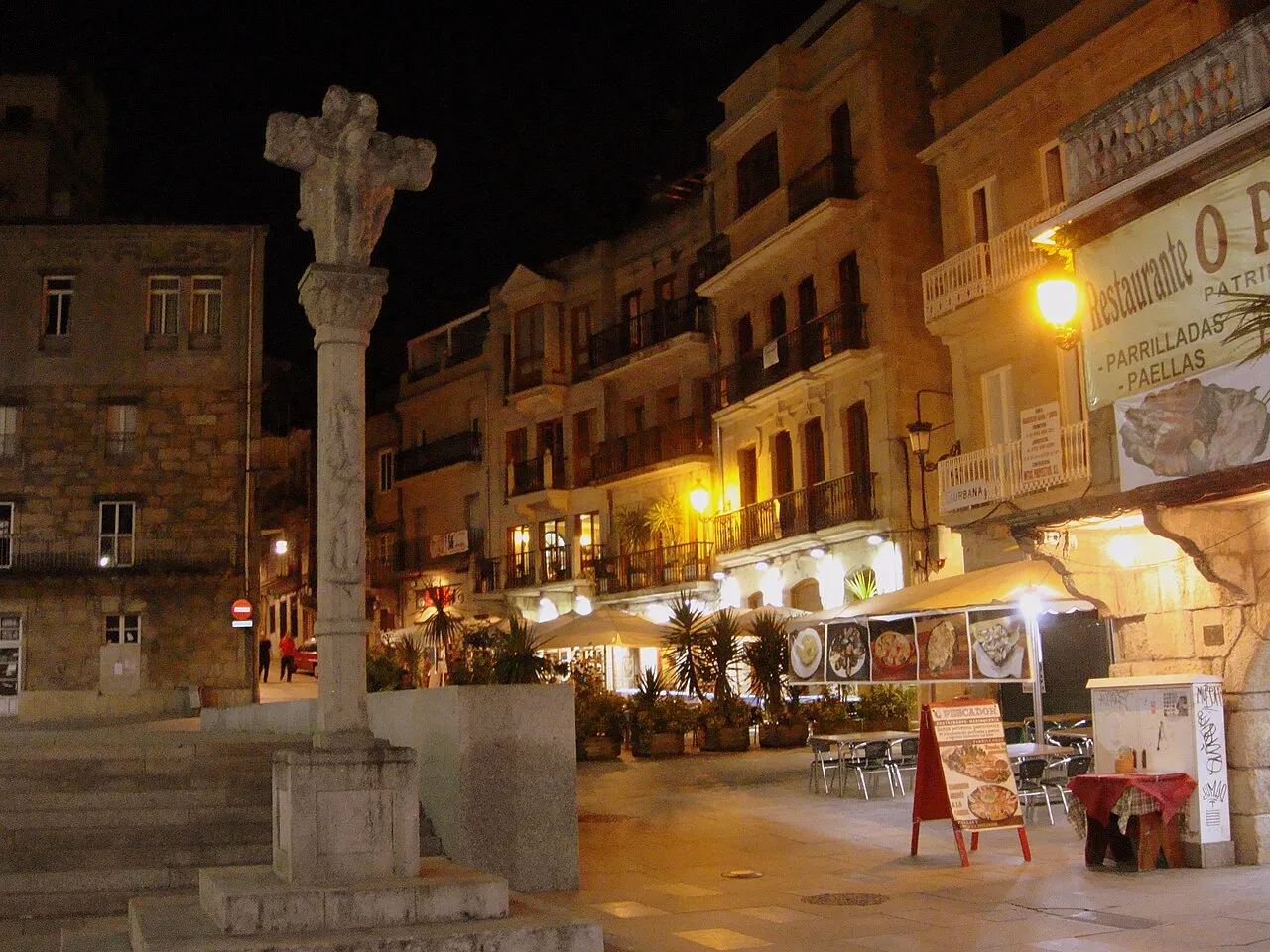
Stone arcades around the old port of San Julián, documented since the twelfth century. This is where nets were mended and creels were woven.
A little over an hour for the outdoor walk, and about two if you go into the co-cathedral and stop to eat oysters at A Pedra. It is a small and very vertical quarter: it steps down from the centre to the water, so the best thing is to do it top to bottom, starting at Porta do Sol.
Because on 28 March 1809 the people of Vigo rose up and stormed the walls through the Porta da Gamboa, and the French surrendered that same day. Many of those in the front line were men of the sea from O Berbés. Galicia, however, was not entirely free until June, at the battle of Ponte Sampaio.
It was blown apart in 1809, when a powder magazine near the Castro exploded during the war against the French. It was a Gothic church and it was lost completely. The co-cathedral you see today, neoclassical and clean-lined, was built afterwards, between 1816 and 1838, the work of Melchor de Prado y Mariño.
Because before it became a co-cathedral it was for centuries a collegiate church: an important church which, without being a bishop's seat, had its own chapter of canons who governed it and sang the offices daily. The rank sank so deep into local speech that the nickname survived the promotion of 1959, when the diocese came to be called Tui-Vigo.
The annual commemoration of the liberation of 1809, in late March. The Casco Vello dresses in period costume for a whole weekend, with a nineteenth-century market, re-enactments of the assault on the walls and thousands of people in costume. It is one of the most participatory historical festivals in Galicia and completely changes a visit to the quarter.
No. The quarter went through decades of decline, but it has been undergoing a thorough rehabilitation for years and is today one of the liveliest areas of the city, with small shops, artists' studios and street art everywhere. The precautions are the usual ones for any urban old town.
A Pedra, without a doubt: the street where the ostreiras have been opening oysters on open-air stone tables for more than a century. After that, the arcades of O Berbés, which are the visible trace of the fishing port documented since the twelfth century out of which the whole city grew.
Download Viavoy and walk Vigo offline, whenever you like.

Keep reading