1
A Pedra: the market and the ostreiras
📍 Casco Vello, going down to the port
The oyster street and the market that has always been there. They set up mainly at midday. On Sundays there is also one of the most famous flea markets in Galicia.
A trade passed from mother to daughter for more than a century, a ría that produces shellfish like few others on the planet, and a port that invented frozen fishing.
🎧 On the walk The Old Town, the Concathedral and A PedraIn Vigo you eat shellfish as in few places in the world, and not because of fashion: because of geology. The Rías Baixas are river valleys invaded by the sea, with sheltered water and extremely high biological productivity, and this city has been living off that for eight hundred years. Start with the oyster street.
In A Pedra, the quarter right against the water, there is a row of open-air stone tables where a group of women have been selling oysters for more than a century. The trade has passed from mother to daughter for generations and it still works exactly the same way.
On the map the street is the Rúa da Pescadería, but you will struggle to find anyone from Vigo who calls it that: to everyone it is “the oyster street”. It is one of those cases where the popular name beats the official one hands down.
The oysters come mostly from the ría itself, where they grow at a speed and to a size that surprise anyone who knows French Atlantic oysters. They are eaten raw, with a squeeze of lemon, and that is that: sauces are not the style here.
Next door is the Mercado da Pedra, the market that has always been there, with the best of the ría gleaming on the ice and served almost always by women who have spent half a lifetime behind the counter. It is the best possible introduction to the Galician larder.
The oyster street and the market that has always been there. They set up mainly at midday. On Sundays there is also one of the most famous flea markets in Galicia.
Download the app and discover Vigo offline, whenever you like. Take the walking tour The Old Town, the Concathedral and A Pedra with a local guide in your ear.
Find out more about Viavoy →Batea mussels are the other emblem. The bateas are floating wooden platforms hung with ropes on which mussels grow, and you can see them perfectly from the Castro viewpoint. Galicia produces a very substantial share of the world's mussels, and almost all of it comes out of these rías.
Then come razor clams, queen scallops, cockles and percebes, the goose barnacles prised off rock beaten by the sea in one of the most dangerous trades there is. And pulpo á feira: boiled octopus, cut with scissors, with olive oil, coarse salt and pimentón, served on a wooden plate.
Galician empanada is both a table dish and a picnic dish: thin pastry, filled with queen scallops, tuna, salt cod with raisins or meat, and a fried onion base that is the key to all of it. And the fish of the day, which here comes from one of the most important fish markets on the planet.
To drink, albariño from the Rías Baixas, probably the best Spanish white to go with shellfish, or a ribeiro in a jug if you prefer the more traditional gesture. And for pudding, tarta de Santiago with its cross in icing sugar, or filloas.
A note on the shellfish: the season matters. The cold months are the good ones for almost everything, and at Christmas prices shoot up out of sheer demand. Outside those weeks, eating shellfish in Vigo works out far better value than people assume.
The obvious axis is the Casco Vello, between the Praza da Constitución — which has the best terraces under the stone arcades — and the slopes dropping down to O Berbés, where the sailors' taverns are concentrated.
On Sundays, A Pedra and its streets fill up with a flea market famous across Galicia, and the whole quarter turns into a party of people rummaging among the stalls. Combining the flea market with oysters is the Vigo Sunday plan par excellence.
Nearby is the Mercado do Progreso, opened in 1908 with an iron and glass structure, heir to the old open-air market on the main square. It is another good place to look at produce and eat without ceremony.
And it is worth remembering where all this comes from: the port of Vigo is one of the largest fishing ports in the world and frozen fishing was invented here, when José Fernández López founded Pescanova in 1960 with the idea of freezing fish on board. When you eat hake anywhere in Spain, it very probably passed through here.
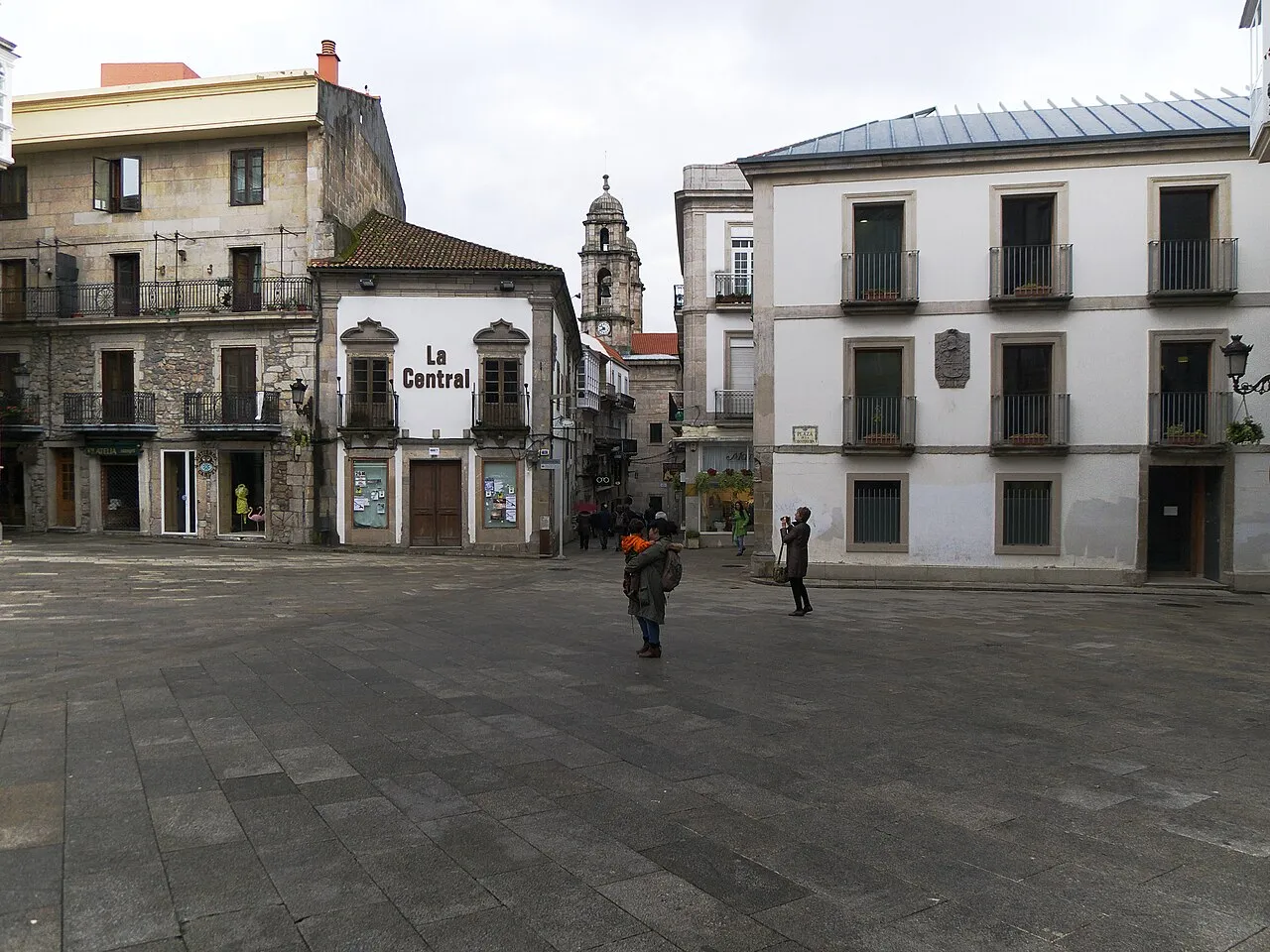
The best terraces in the old quarter, under stone arcades. At vermouth hour it smells of olives and shellfish.
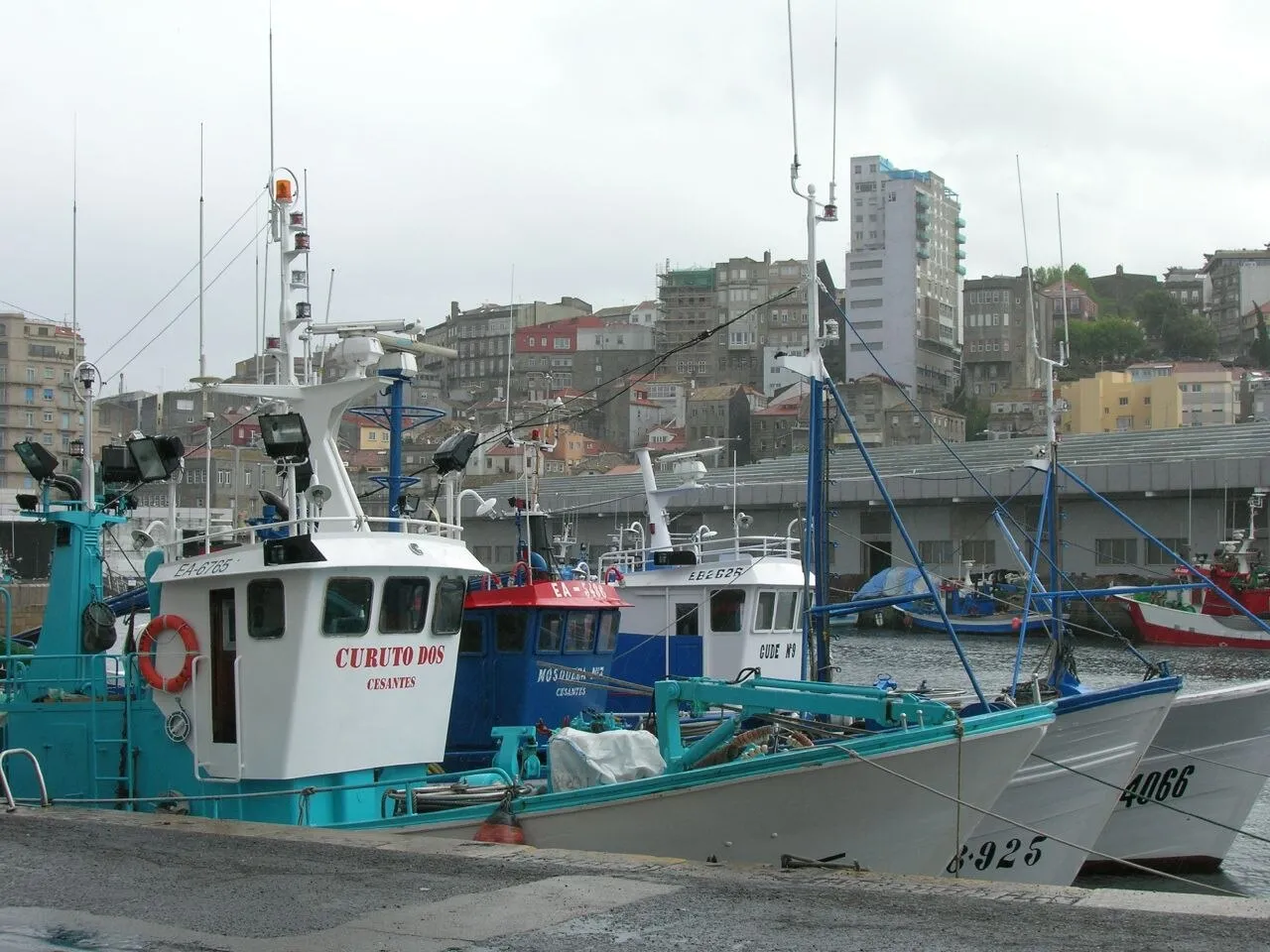
One of the largest fishing ports in the world and the birthplace of frozen fishing. Every night before dawn the market moves a quantity of fish that takes your breath away.
On the Rúa da Pescadería, in the A Pedra area, which everyone calls the oyster street. A group of women have been selling them there for more than a century on open-air stone tables, in a trade that passes from mother to daughter. You buy a dozen, they open them on the spot with one sharp stroke of the knife, you squeeze lemon over them and eat them standing up.
Mainly at midday, which is when the quarter is up and running and the market is working. On Sundays the area also fills up with a flea market famous across Galicia, and combining the flea market with oysters is the Vigo Sunday plan par excellence.
Mussels raised on bateas, floating wooden platforms hung with ropes on which the shellfish grow. You can see them perfectly from the Castro viewpoint. Galicia produces a very substantial share of the world's mussels and almost all of it comes out of these rías, thanks to their sheltered water and extremely high biological productivity.
Less than people assume, if you choose the date well. The cold months are the good ones for shellfish, but at Christmas prices shoot up out of sheer demand. Outside those weeks, and eating in the Casco Vello or O Berbés rather than in tourist areas, it works out good value.
Albariño from the Rías Baixas, probably the best Spanish white to go with shellfish: dry, with lively acidity and plenty of aroma. The more traditional alternative is a ribeiro served in a jug or in a ceramic cunca, which is the age-old gesture in Galicia.
Boiled octopus, cut with scissors into rounds and served on a wooden plate with olive oil, coarse salt and pimentón, sweet or hot. The name comes from the fairs: it was the dish the pulpeiras prepared at Galician markets and romerías, and it is traditionally eaten with bread and wine from a jug.
Because it is one of the largest fishing ports in the world and because frozen fishing was invented here: José Fernández López founded Pescanova in Vigo in 1960 with the idea of freezing fish on board, the moment it came out of the water. That made it possible to fish for months on very distant grounds and transformed the world's fishing economy.
Download Viavoy and walk Vigo offline, whenever you like.

Keep reading