La Macarena and the Alameda: the Seville where people live
The Almohad wall, the city's most beloved Virgin, the Baroque of San Luis, a palace reclaimed by its neighbours and the oldest public promenade in Spain. All in the northern half, the one that doesn't appear on the postcards.
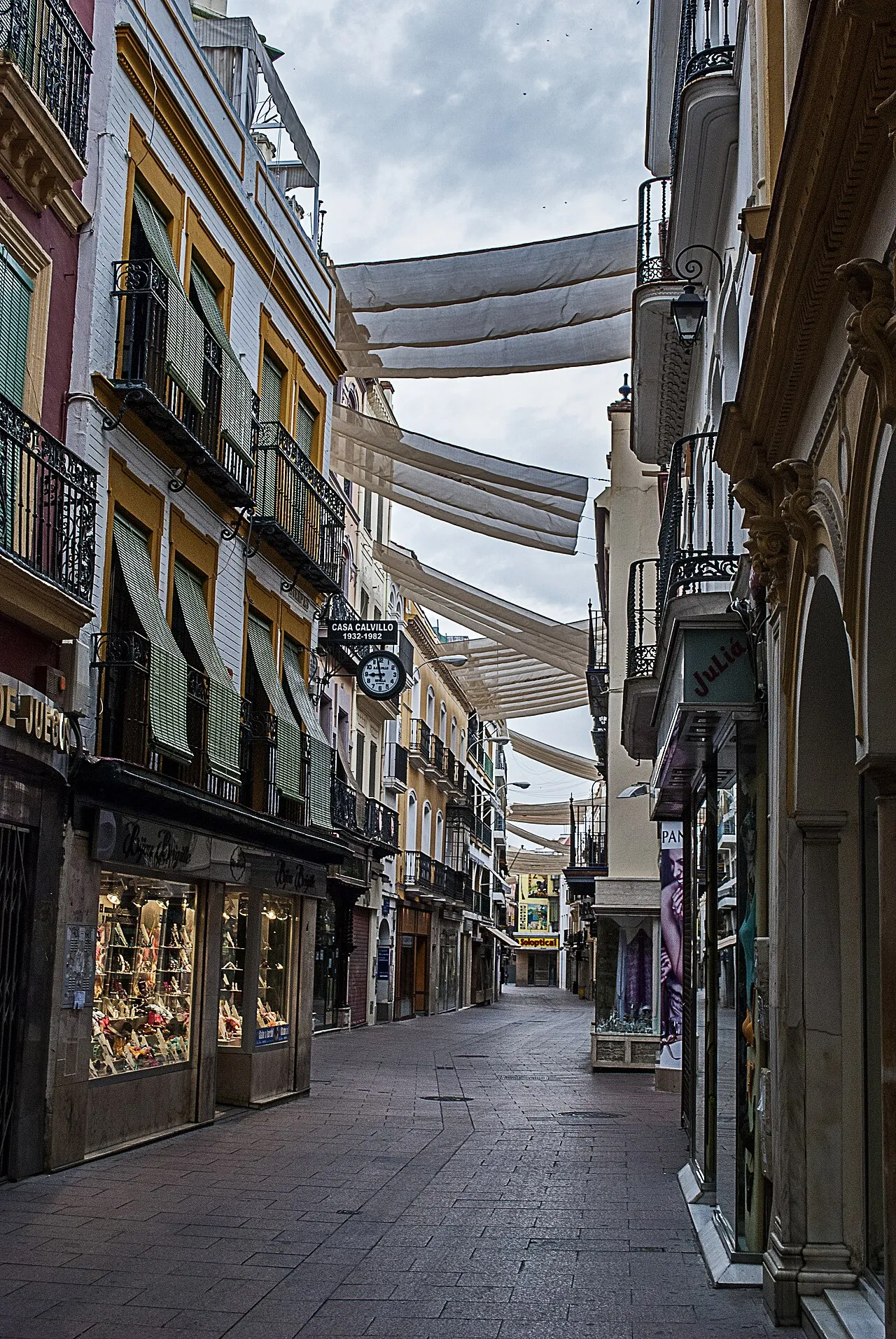
North of the Setas, Seville changes temperature. The wheeled suitcases disappear, prices drop, the streets narrow and the city fills up again with people who live here. It is the axis running from the Macarena wall to the Alameda de Hércules along calle San Luis, and it concentrates some of the most impressive things in the city — the only wall still standing, the finest Baroque church, the oldest public promenade in Spain — with a fraction of the visitors of the monumental centre.
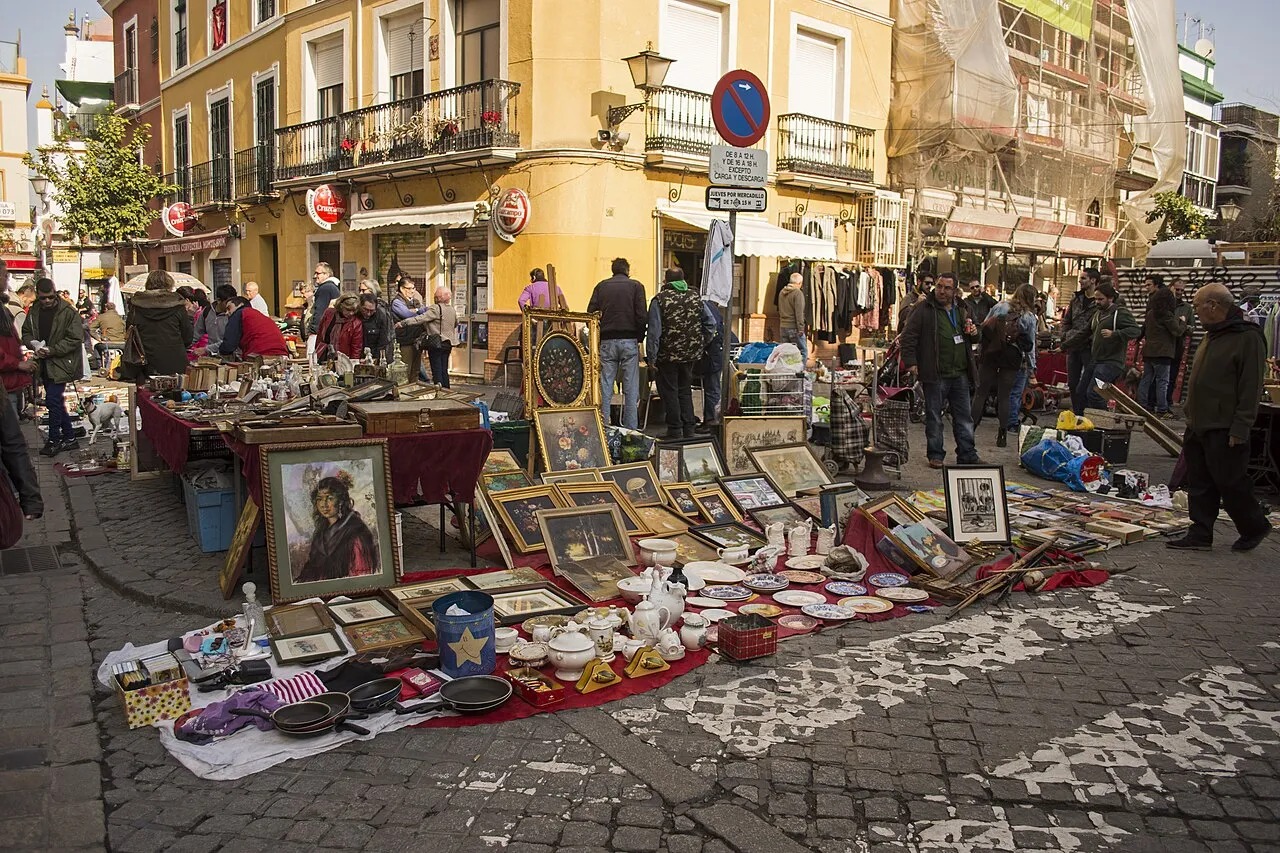
If your visit falls on a Thursday morning, change your plan and come: on calle Feria they set up El Jueves, a flea market documented since the thirteenth century.
What remains of the wall
Seville was surrounded by six kilometres of wall with more than a hundred towers and a dozen gates, raised by the Almoravids and reinforced by the Almohads in the twelfth century. It withstood fifteen months of siege in 1248. And in the nineteenth century the city knocked almost all of it down, between 1858 and 1873, because it got in the way of traffic, expansion and hygiene.
Of all that, three gates and a single continuous stretch remain: four hundred metres between the Puerta de la Macarena and the Puerta de Córdoba, with seven or eight towers. It is here, and you can walk the whole of it along the outer pavement. Almost nobody does, and it is one of the strangest and most rewarding walks in the city.
Look at the texture of the wall: it is Almohad tapial, rammed earth between wooden formwork, and the horizontal lines you see are literally the imprint of the boxes. It is not cladding or a restoration: it is the original building technique, exposed to the sun for eight hundred years.
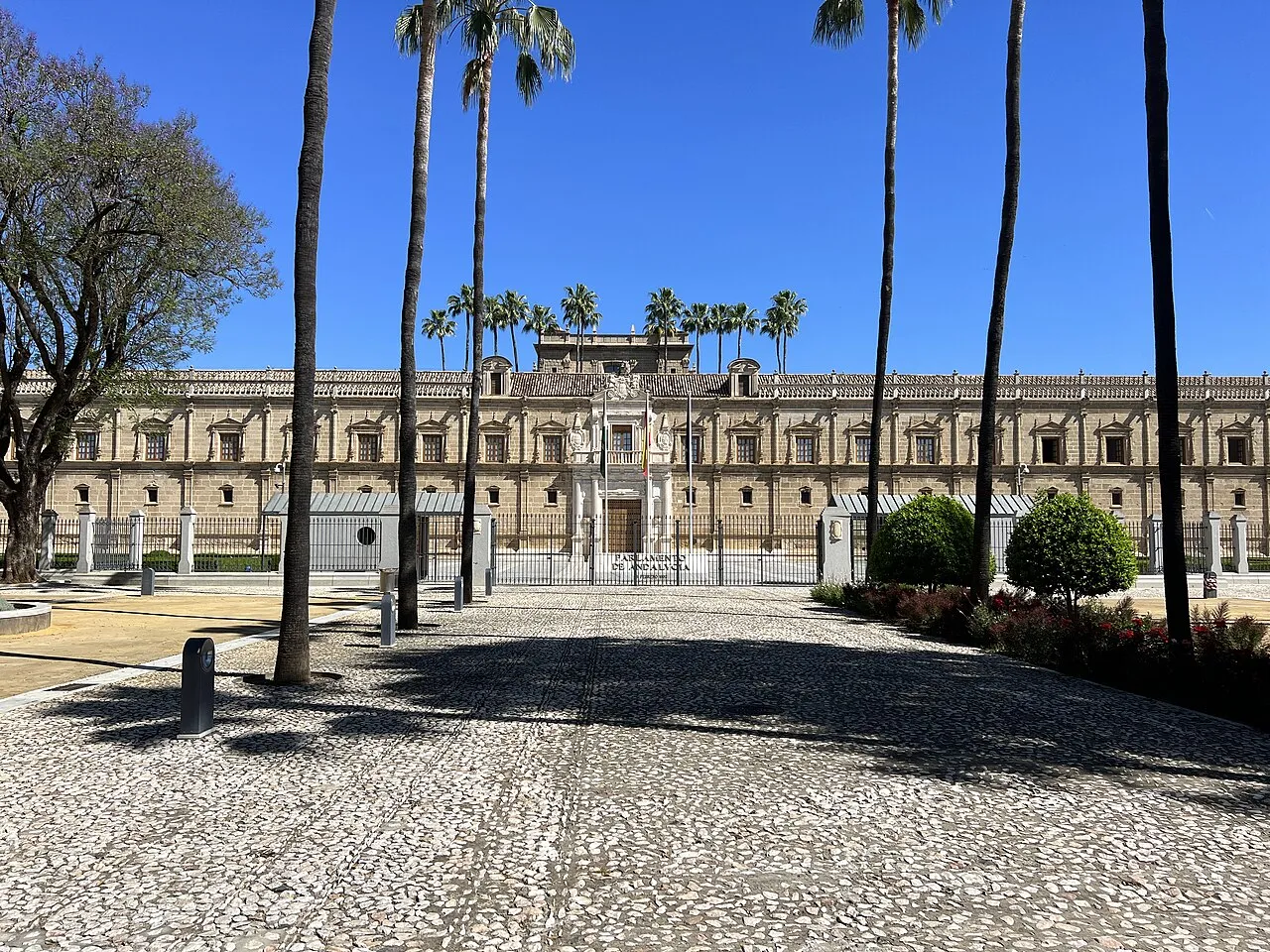
Opposite, closing the scene, is the façade, more than a hundred and fifty metres long, of the former Hospital de las Cinco Llagas, today the Parliament of Andalusia. No other spot in Seville concentrates eight centuries so clearly in a single glance.
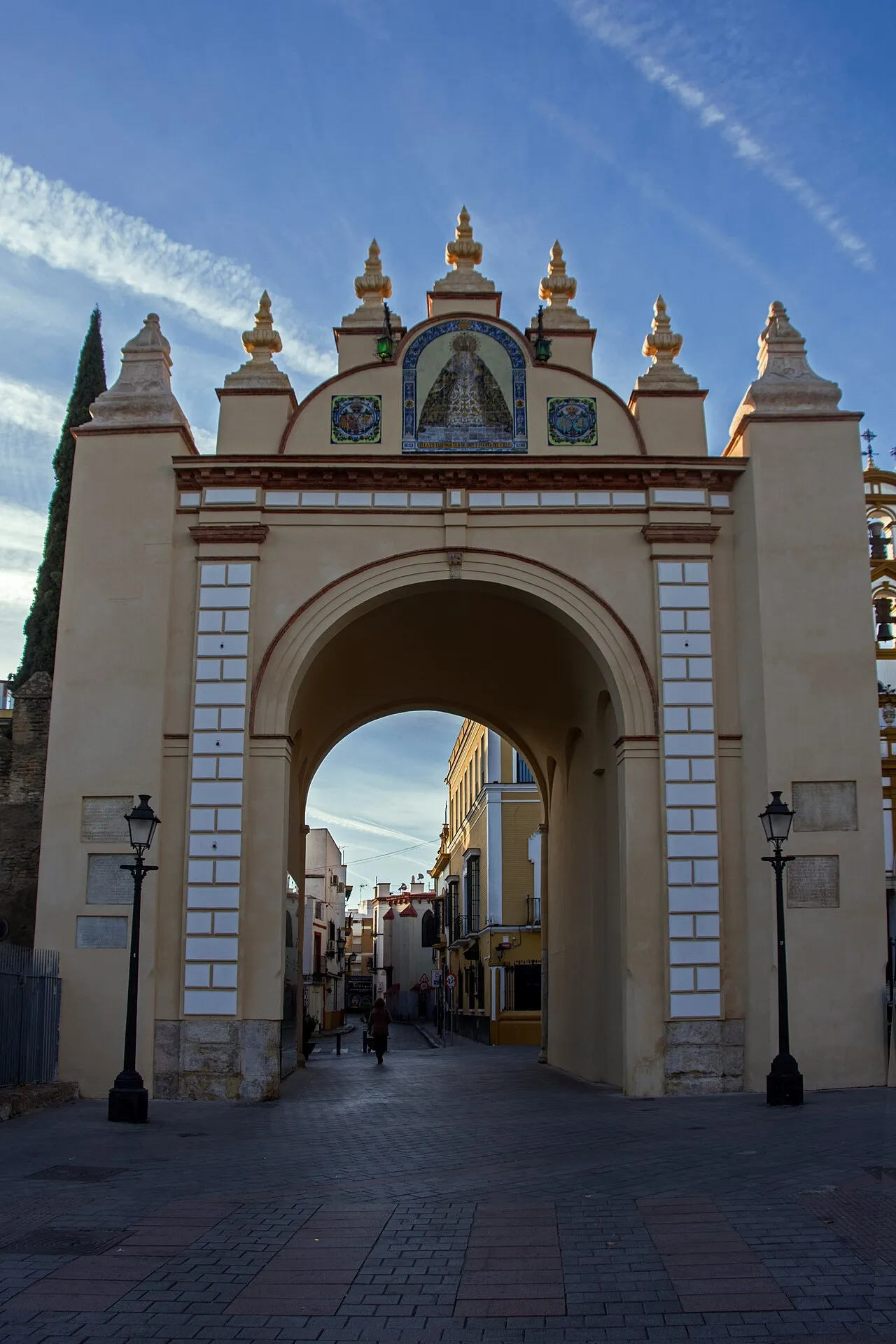
The most beautiful of the three gates that survived the demolition, and the only continuous stretch of wall the city has left. Through this arch the kings entered on their solemn visits, beneath triumphal arches raised for the day. The tapial you see is from the twelfth century and has never stopped being out in the open.
One of the largest buildings of the Spanish Renaissance, founded in 1500 by Catalina de Ribera to treat poor women and built from 1546 around almost ten courtyards. Since 1992 it has been the seat of the Andalusian Parliament: the deputies debate beneath the vault of the hospital church. There are free guided visits with booking.
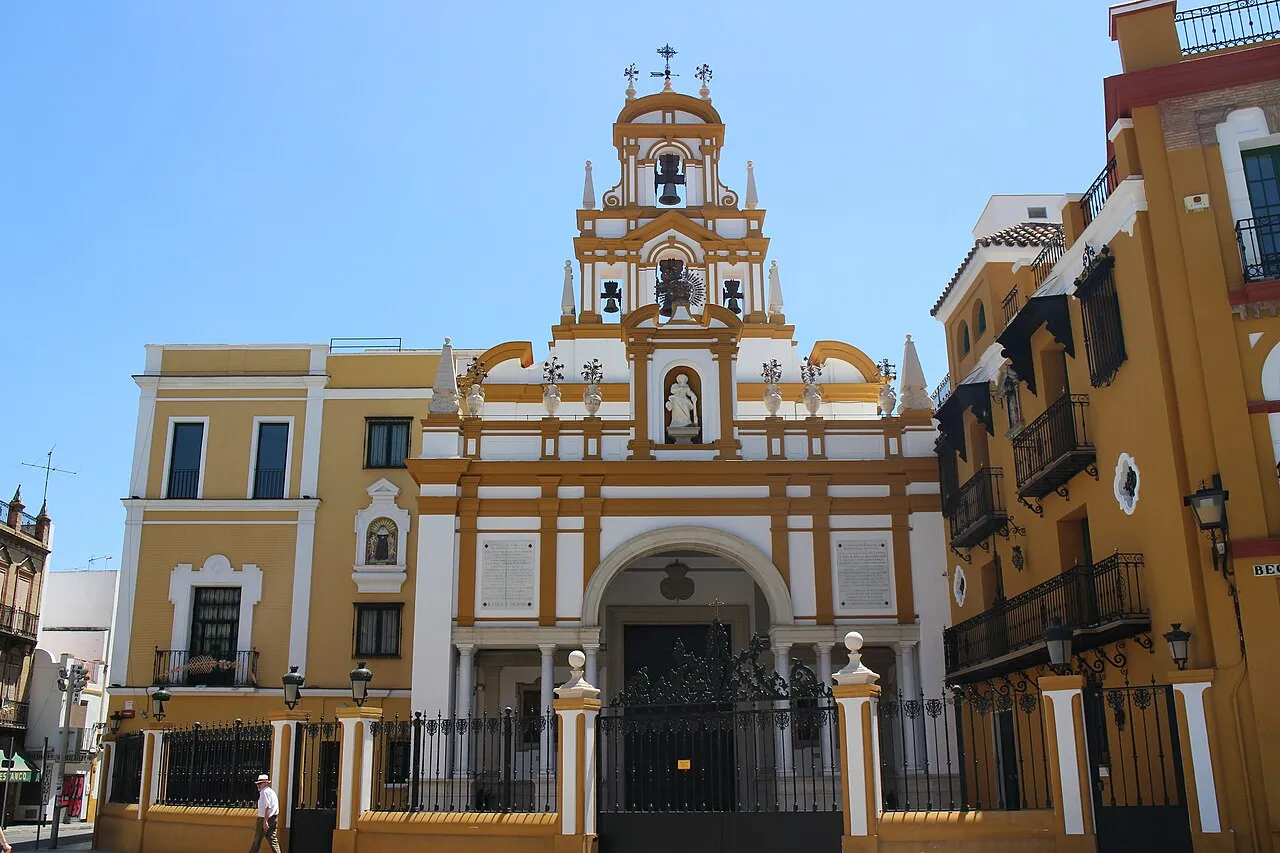
Inside is Seville's most beloved image: a Baroque carving from around 1680, officially anonymous and attributed by many to Luisa Roldán, with five crystal tears on her face. She has been dressed in mourning only once in her history, in 1920, when the bullfighter Joselito el Gallo died. The basilica is free; the museum of mantles and crowns is paid separately.
From the arch to the Alameda is twenty minutes and a good few centuries.
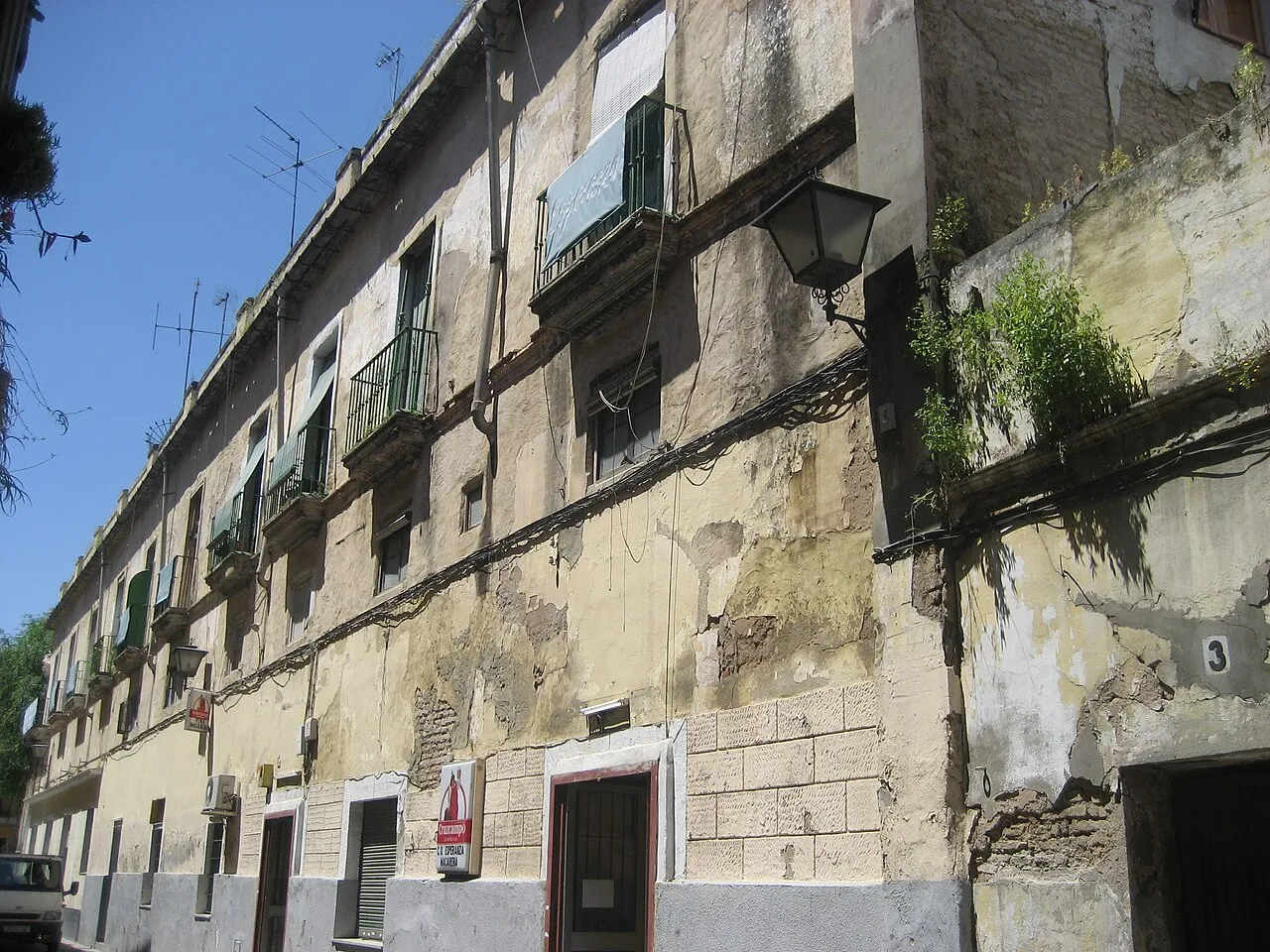
Calle San Luis is the backbone of the Macarena and one of the longest and most lived-in streets of the old town. It runs down from the wall to the Alameda passing convents, corralas, old-fashioned taverns and neighbourhood shops, and at its midpoint is what is probably the finest church in Seville after the Cathedral.
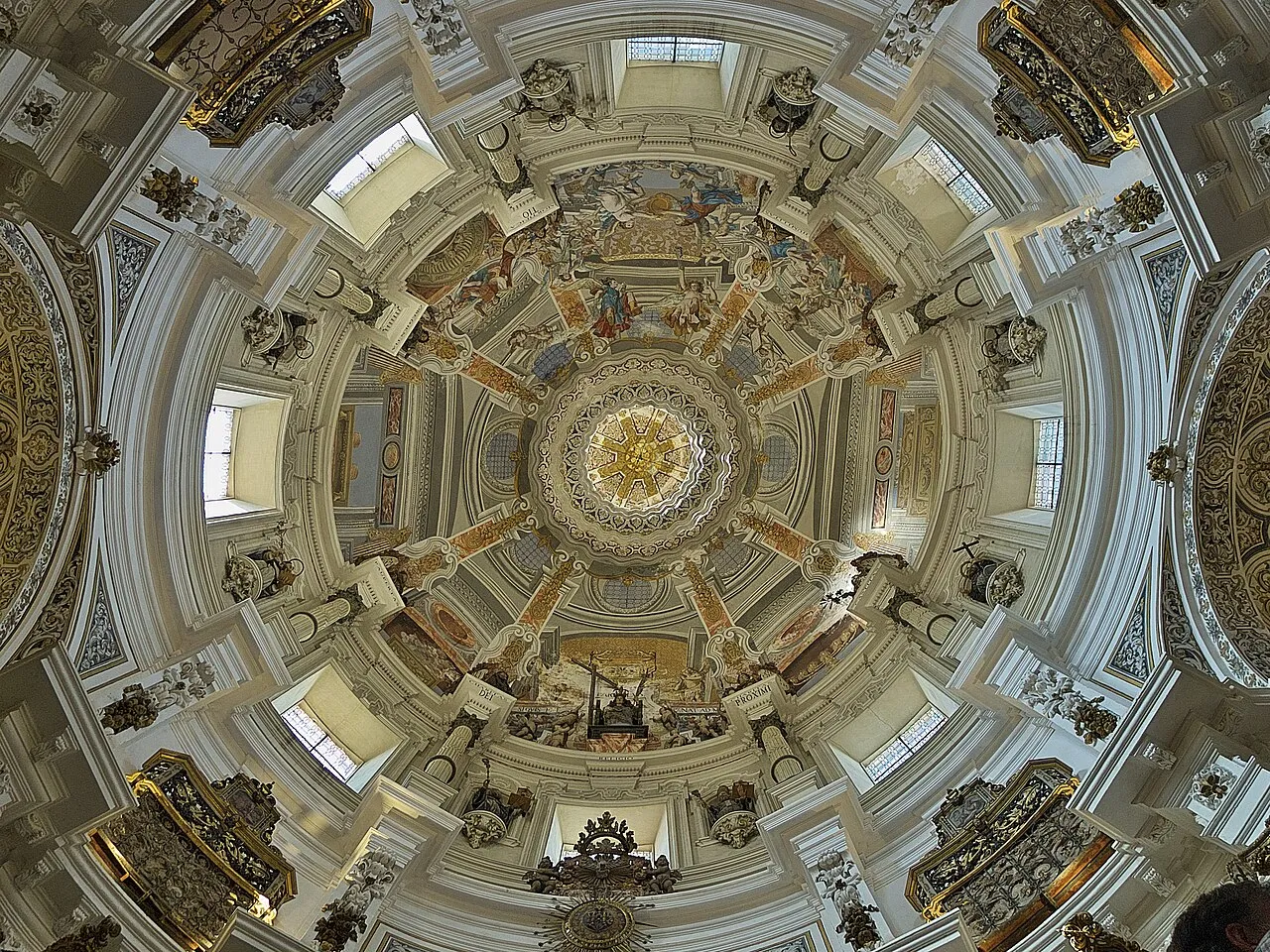
San Luis de los Franceses is the masterpiece of Leonardo de Figueroa, the architect who taught this city to do Baroque in brick, tile and plaster. It was built between 1699 and 1730 as the church of the Jesuit novitiate, and thirty-seven years after it was finished Charles III expelled the Jesuits from Spain and they never set foot in it again.
The façade, with its Solomonic columns and its concave-convex movement, is the closest thing to Borromini there is in Andalusia. The interior is a circular plan beneath a very high dome painted by Lucas Valdés, son of Valdés Leal, with every Jesuit saint in the catalogue. It is designed to be seen from one exact point on the floor, with your head tilted back. Stand there.
A little further down, the street opens onto the plaza del Pumarejo, and there the neighbourhood changes register: from architecture to community.
The jewel of Sevillian Baroque, built between 1699 and 1730 by Leonardo de Figueroa for the Jesuit novitiate. Circular plan, a dome painted from top to bottom by Lucas Valdés, gilded altarpieces, domestic chapel and crypt. Free entry, but with limited hours and frequent closures: check before you go up.
An eighteenth-century mansion that was a palace, a Napoleonic barracks, an orphanage, a school and a corrala with more than sixty families inside. In the early 2000s there were plans to turn it into a hotel; the neighbours organised, occupied it and got it declared a Bien de Interés Cultural, a listed heritage site, in 2003. Today it is a community space with taverns and workshops.
The oldest food market in Seville, with fish stalls that have been in the same family for generations. On Thursday mornings, El Jueves is set up around it, a flea market documented since the thirteenth century and probably the oldest in Spain: books, records, tools, ceramics and quite a lot of junk.
The Alameda: four and a half centuries of promenade
At the end of the route an enormous tree-lined rectangle opens up, with terraces on all four sides: the Alameda de Hércules, created in 1574 and considered the oldest surviving public garden and tree-lined promenade in Spain. Before that date this was a dead arm of the Guadalquivir, a lagoon that rotted every summer.
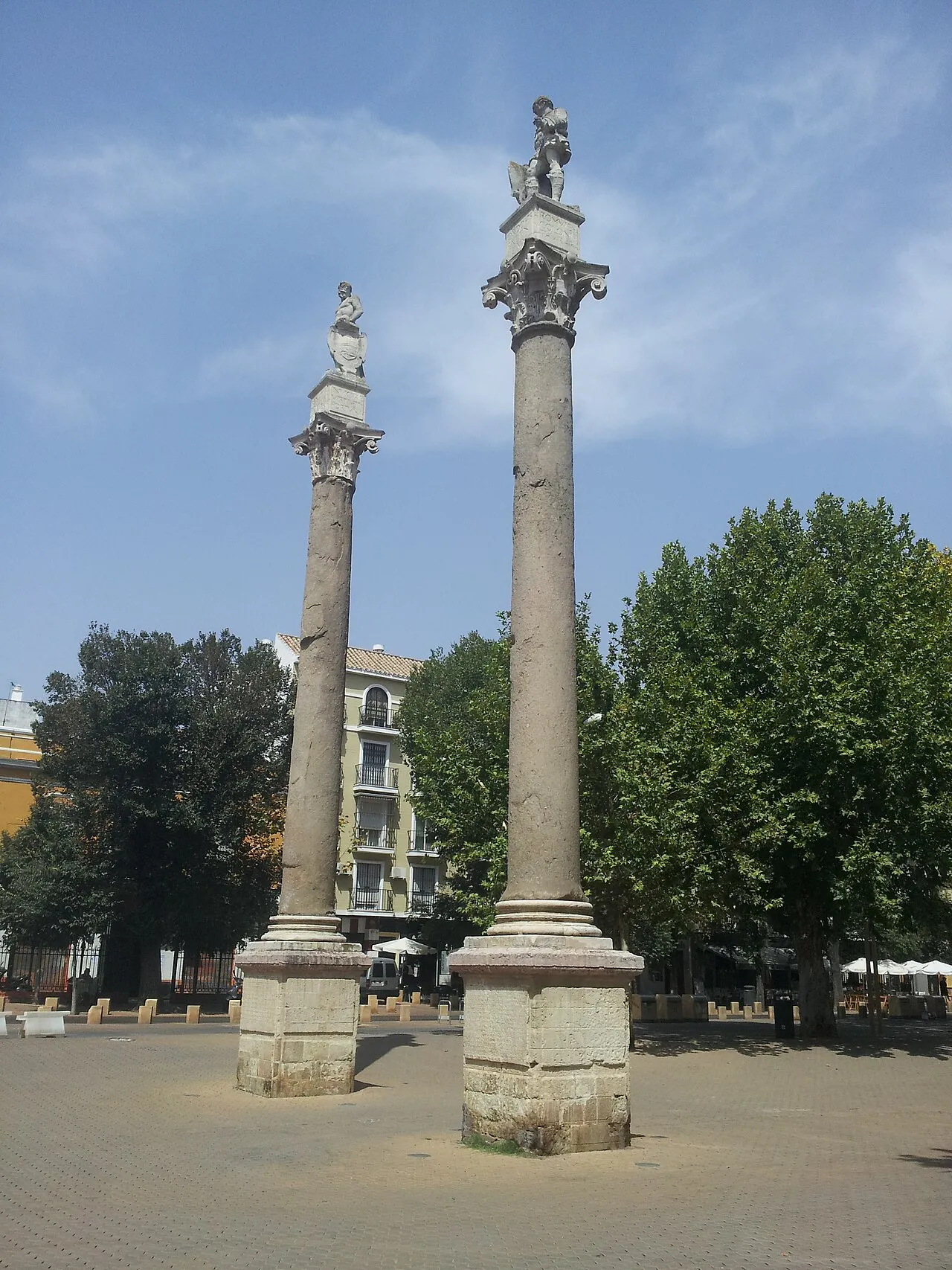
The two columns at the southern end are genuinely Roman, brought from a temple on calle Mármoles, where three still stand. On top were placed Hercules, the city's mythical founder, and Julius Caesar, who gave it its walls. Those at the northern end, with lions, are from the eighteenth century.
During the nineteenth and twentieth centuries the Alameda had a very bad reputation: seedy taverns, prostitution and a decline that families avoided at night. The redevelopment of the mid-2000s changed everything, and today it is the most mixed area of Seville, with an established LGBT scene, live music, old taverns and families with children sharing the same pavement at ten at night.
It is also the best place in the centre to have lunch and dinner without falling into the tourist circuit. The surrounding streets — Amor de Dios, Calatrava, Feria — concentrate market cooking and old-fashioned bars at noticeably lower prices than around the Cathedral.
Created in 1574 by draining a lagoon: the oldest surviving public tree-lined promenade in Spain and one of the first in Europe. Today it is the bohemian heart of the city, with terraces at all hours and the two Roman columns presiding over the southern end, with Hercules and Julius Caesar on top.
One of the most prestigious bars in the city and a perfect example of what happens in this neighbourhood: serious tapas cooking, with award-winning dishes, served in a street tavern where you have to queue standing up. No bookings at the bar. Going early, or very late, is the only strategy that works.
Is the Macarena neighbourhood in Seville worth visiting?
Yes, and for two very specific reasons. First, because it concentrates things that are nowhere else: the only stretch of Almohad wall the city has left, Seville's most venerated Virgin and the finest Baroque church in the old town. And second, because it is the half of Seville where people still live, with neighbourhood prices and without the pressure of the monumental centre. It is twenty-five minutes on foot from the Cathedral.
What is there to see in the Alameda de Hércules?
The promenade itself, which is the oldest surviving public garden in Spain: it was created in 1574 by draining a dead arm of the Guadalquivir. At the southern end there are two genuine Roman columns, brought from a temple on calle Mármoles, with the statues of Hercules and Julius Caesar on top. And all around, the most mixed and liveliest area of the city, with terraces, live music and food considerably more affordable than in the centre.
How much does it cost to enter the Basílica de la Macarena?
The basilica is free and you can go in freely outside service times. The museum, which holds the embroidered mantles, the crowns and the trappings of the procession float, has a separate ticket for about 5 €. If you are interested in embroidery or want to understand the Sevillian brotherhood phenomenon, it is worth it; if not, seeing the image in her altarpiece is enough.
Can you visit the Parliament of Andalusia?
Yes, and it is free. The Parliament organises guided visits through the former Hospital de las Cinco Llagas, which take in the courtyards, the state rooms and the plenary chamber, installed in the sixteenth-century hospital church. You need to book in advance and fit in with the institutional calendar, but it is one of the least known and most surprising visits in Seville.
What is El Jueves on calle Feria?
A second-hand market that is set up every Thursday morning on calle Feria, next to the oldest food market in the city. It is documented since the thirteenth century, which probably makes it the oldest flea market in Spain. Books, records, tools, ceramics and quite a lot of junk are sold, and the atmosphere is worth more than the goods.
Is the Macarena neighbourhood safe?
Yes, it is a normal, busy residential neighbourhood, with the life of any inhabited area in the centre of a capital city. As in every tourist city, the usual attention to wallets is advisable in crowded areas, especially at the Thursday market and on the Alameda terraces late at night. Nothing that doesn't apply equally on calle Sierpes.
How to do it and when
The natural route is north to south: take the bus to the Macarena, see the wall, the arch and the basilica, walk down calle San Luis to San Luis de los Franceses and the Pumarejo, and finish at the Alameda. It is about twenty-five minutes of actual walking and between three and four hours with stops.
Doing it the other way round also works and has one advantage: you end up at the Macarena and return to the centre by bus with tired legs, instead of on foot. But you lose the best possible ending, which is sitting in the Alameda at sunset.
The only tricky timetable is that of San Luis de los Franceses, which opens in limited slots and often closes for events. Check before organising your day around that visit: it is the most impressive on the route and the easiest to find closed.
And a warning about dates: during Holy Week, in the early hours of Good Friday, the Macarena goes out in procession and this whole neighbourhood becomes something else. If you are travelling on those days, don't plan anything else for that night.
Practical information
Getting thereBuses C1, C2 and 13 to the Macarena; 25 minutes on foot from the Cathedral along calle San Luis.
DurationBetween three and four hours with stops. The actual walking is 25 minutes.
What costs moneyOnly the Macarena museum, about 5 €. The wall, basilica, San Luis, Pumarejo and Alameda are free.
Tricky opening hoursSan Luis de los Franceses opens in limited slots and often closes for events. Check beforehand.
The best dayThursday morning, to coincide with the flea market on calle Feria.
Where to eatThe Alameda and adjacent streets: Amor de Dios, Calatrava and Feria. Considerably cheaper than the monumental centre.
On the map
🎧 With Viavoy
Walk Seville and listen at your own pace
Download Viavoy and walk Seville offline, whenever you like.
from 2,99 €· one-off payment
City Pass · 9,99 €3 days, all the tours in Seville