The best viewpoints in Seville: where to see the city from above
What to see · Seville

The best viewpoints in Seville: where to see the city from above

The Giralda, the Setas, the Torre del Oro and the ground-level spots that give the best view of all. Which ones you pay for, which are free and what time to go to each.

9 min read · Updated for 2026
🎧 On the walk The Cathedral, the Giralda, and the Royal Alcázar

Seville is a flat, low city, with no hills and very few tall buildings, and that has a consequence you will be grateful for: from any elevated point you can see practically everything. You don't need to climb much to command the whole old town. Here are the viewpoints that deserve the time and the money, the ones that are free, and also a few that are not viewpoints in the strict sense but give the best view of the city: the ones at ground level, on the other side of the river.

The best time is always the same: the half hour before sunset. Seville is a city of brick and albero, and in low light everything turns orange.

The three you pay for

And all three are worth it, though for different reasons.

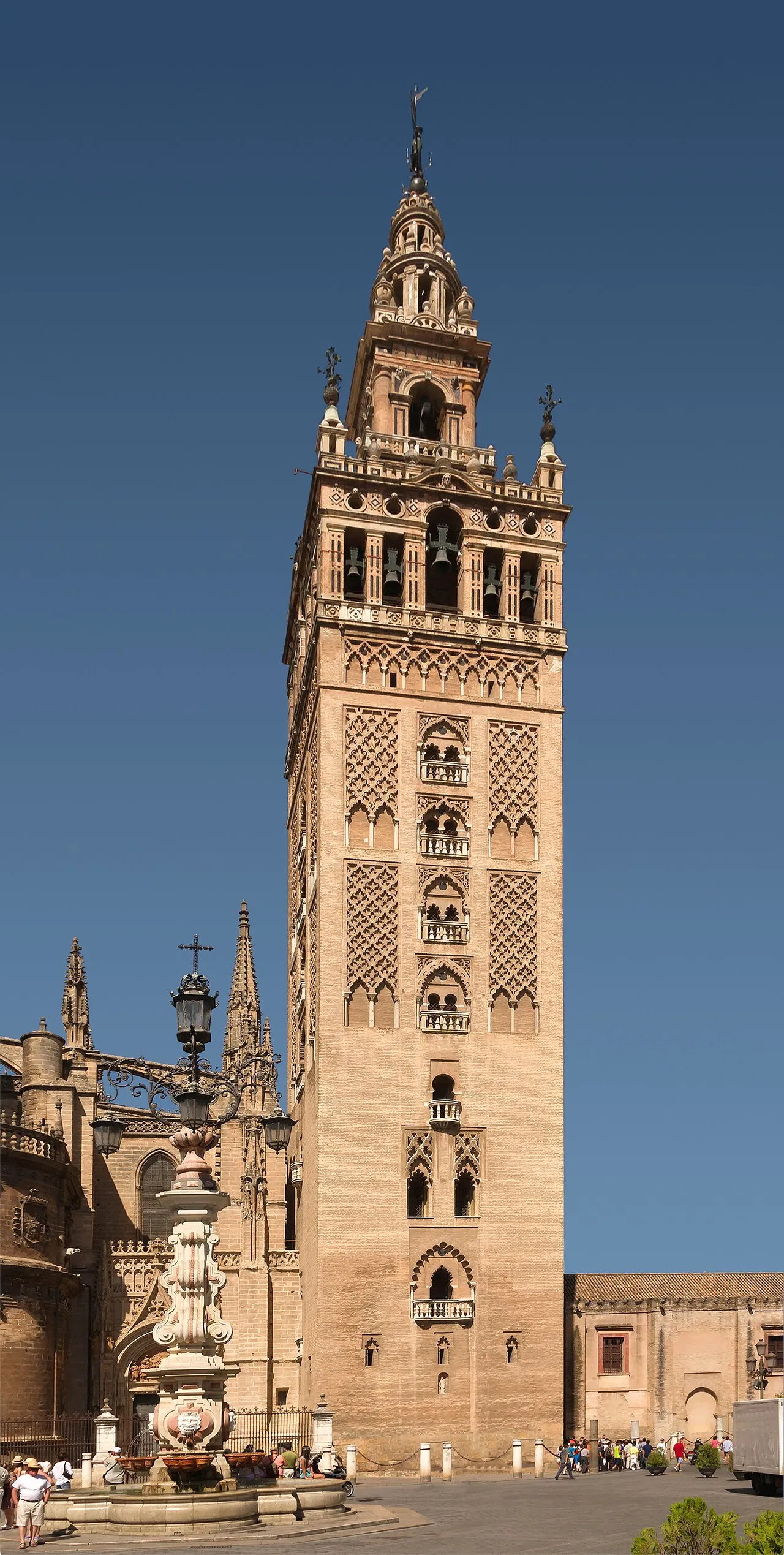
The Giralda is the historic viewpoint and the one that gives the highest view of the old town. Its advantage is not only the height: it is the only one from which you see the Cathedral straight down, with the flying buttresses, the vaults and the Patio de los Naranjos turned into a green grid right below. It is included in the Cathedral ticket, so in practice it costs nothing extra.

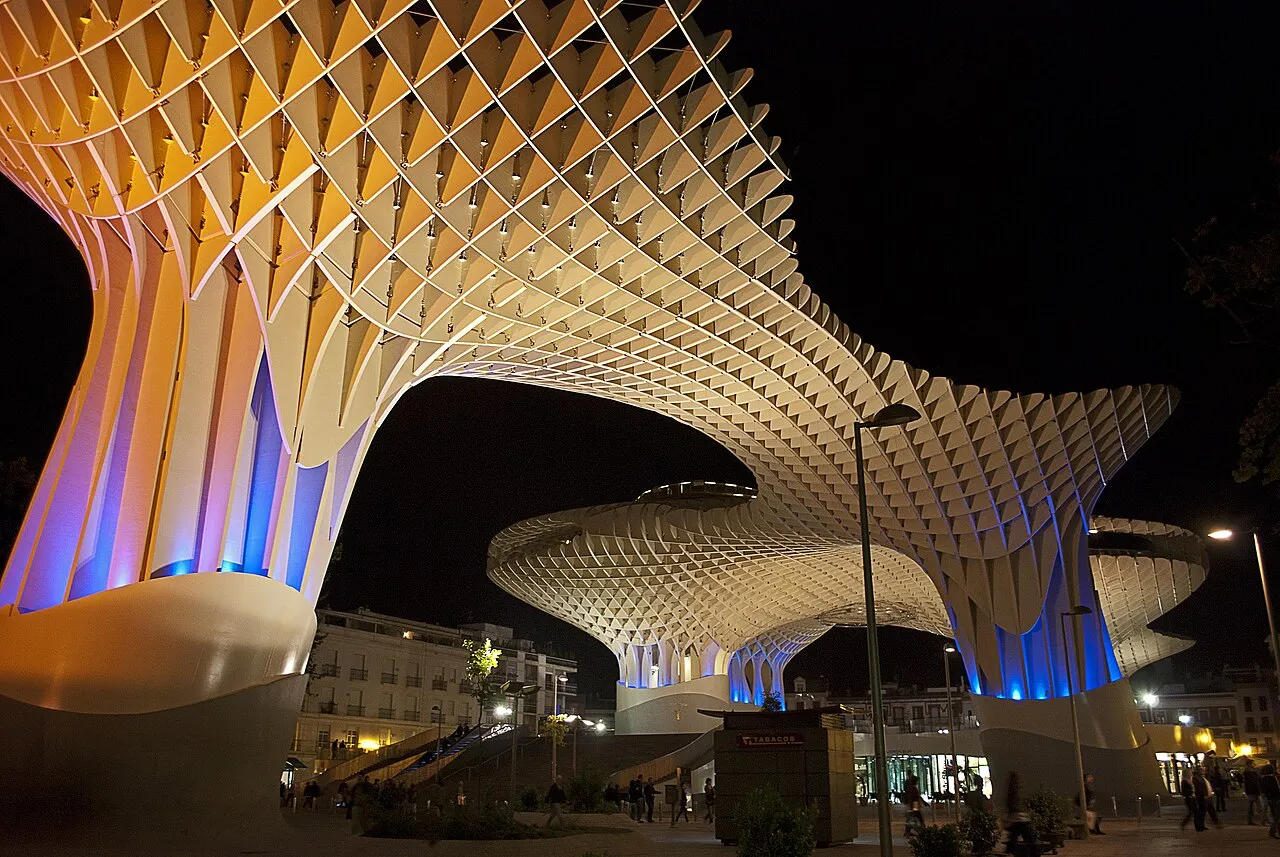
The Setas offer something else: an undulating walk along the top of a wooden structure, with the Giralda outlined in the middle distance and the rooftops of the centre spreading out around you. It is not the highest point, but it is the one from which you best understand the shape of the historic centre, which is impossible to perceive from the ground.

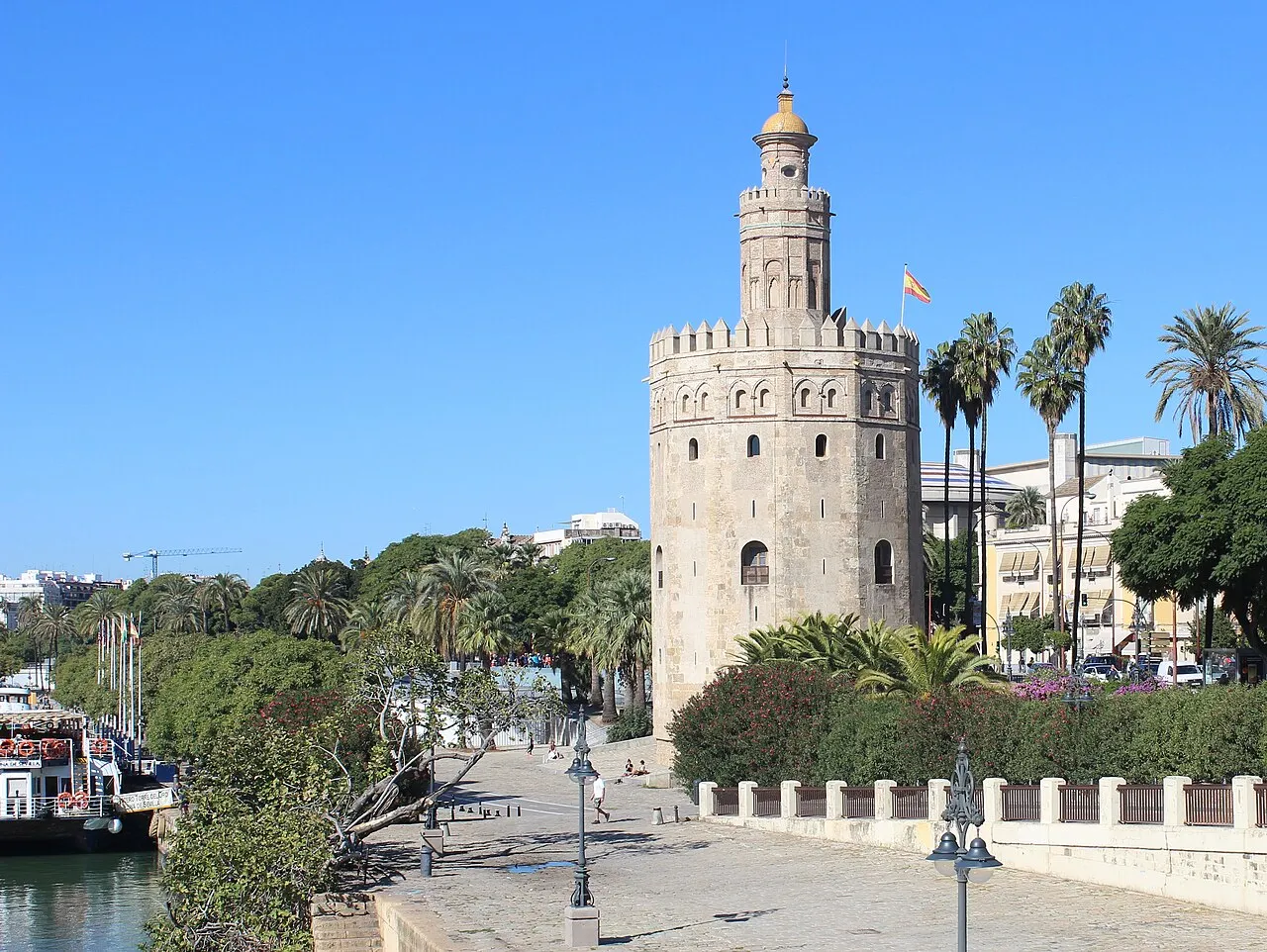
And the Torre del Oro, which is by far the cheapest and the least crowded. Its terrace is low, at about thirty-six metres, but it looks directly onto the river: from there you see the meander of the Guadalquivir, the Triana bridge and the whole frontage of the opposite bank. Entry to the Maritime Museum costs a few euros and on Mondays it is free.

1The Giralda

The Giralda

📍 Seville Cathedral · included in the ticket

Ninety-seven metres of Almohad minaret turned into a bell tower. You go up thirty-five ramps with no steps until the final stretch, designed for the muezzin and wide enough for a horse. At the top, the best view is downwards: the whole Cathedral seen from its own bell tower. Twenty minutes, and better first thing than mid-afternoon.

2Las Setas

Las Setas

📍 Plaza de la Encarnación

The largest wooden structure in the world, the work of Jürgen Mayer, opened in 2011 after a monumental controversy. The viewpoint is an undulating walk along the top, with the Giralda in the background and the entire old town below. In the basement, the Antiquarium preserves the Roman houses that appeared when the foundations were dug.

3Torre del Oro

Torre del Oro

📍 Paseo de Cristóbal Colón · bank of the Guadalquivir

An Almohad albarrana tower from 1220, built to close off the river with a chain. Today it houses the Maritime Museum and its terrace is the cheapest viewpoint in the city, with a direct view over the meander, the Triana bridge and the opposite bank. Entry for a few euros and free on Mondays.

🎧 With Viavoy

Explore Seville at your own pace

Download the app and discover Seville offline, whenever you like. Take the walking tour The Cathedral, the Giralda, and the Royal Alcázar with a local guide in your ear.

Find out more about Viavoy →

The free ones: the river and the rooftops

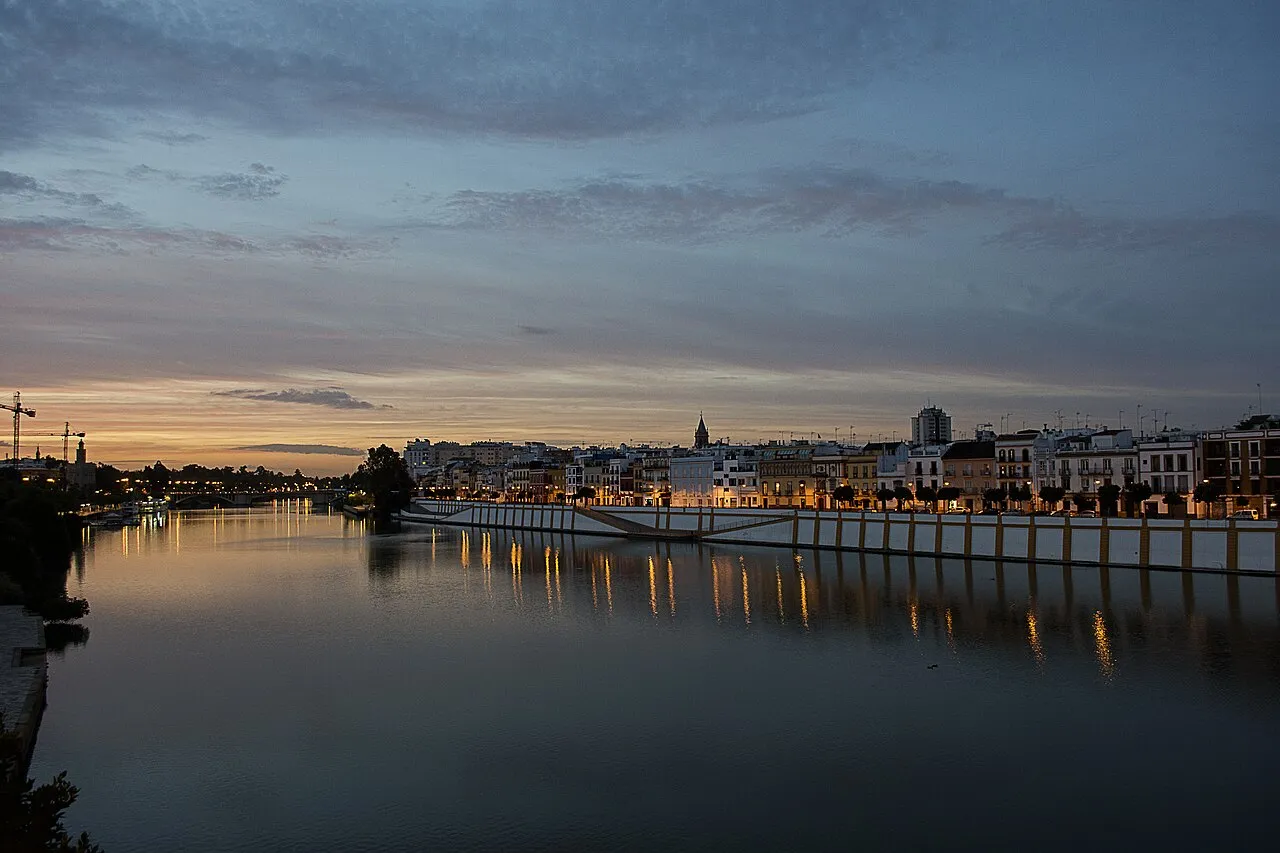
The best view of Seville is not up high: it is on the Triana bank. From Calle Betis you see the city in profile and complete — the Torre del Oro, the Maestranza and the Giralda peeking out behind — with the river in front acting as a mirror. It costs nothing, you can stay as long as you like and in the last hour of the afternoon it has no rival.

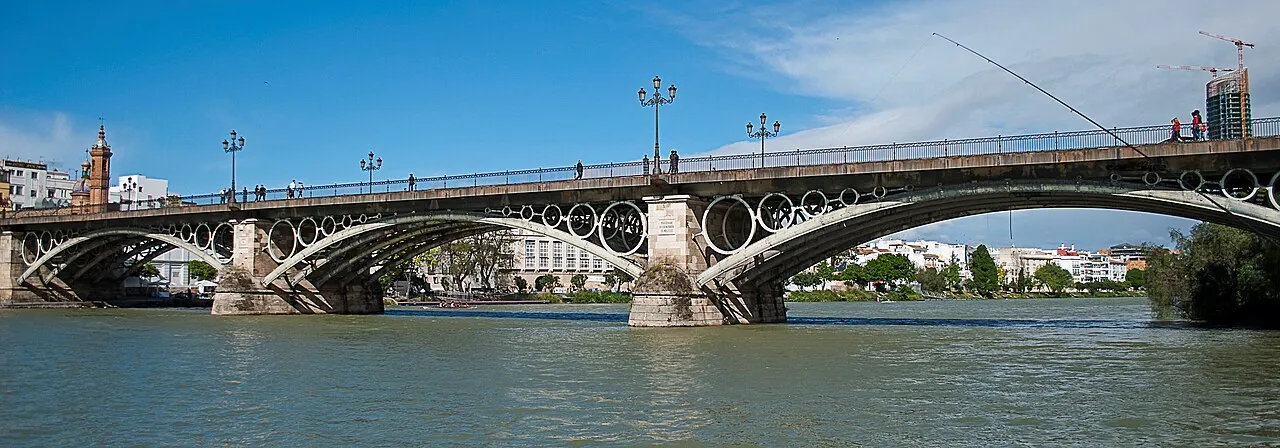
The Isabel II bridge works in a similar way but at right angles: from the middle of the deck you see the river in both directions, with the Torre del Oro on one side and the curve towards La Barqueta on the other. Crossing it on foot at sunset and coming back at night, with the Giralda lit up in the background, is the same walk done twice and in two different cities.

And then there are the rooftops. Quite a few hotels in the centre have a top-floor terrace open to the public, with a direct view of the Cathedral, and some don't require a minimum spend. It is a category that changes names every season, so rather than a list a rule is more useful: look up around the avenida de la Constitución and calle Zaragoza, ask and go up.

4Calle Betis

Calle Betis

📍 Triana, right bank of the Guadalquivir

The coloured façades lined up on the nineteenth-century retaining wall, and opposite the whole city posing. It is the only view of Seville that fits the Torre del Oro, the Maestranza and the Giralda in at the same time. At sunset, with the light hitting the opposite bank and the reflection on the water, it is the image of the city that stays with you.

5Isabel II Bridge

Isabel II Bridge

📍 Between El Arenal and Triana

The oldest surviving iron bridge in Spain, from 1852, copied from the Pont du Carrousel in Paris, which was demolished in the thirties. From the middle of the deck you see the Guadalquivir in both directions. It takes three minutes to cross and it is worth doing twice: by day towards Triana and by night on the way back.

Two unusual viewpoints almost nobody uses

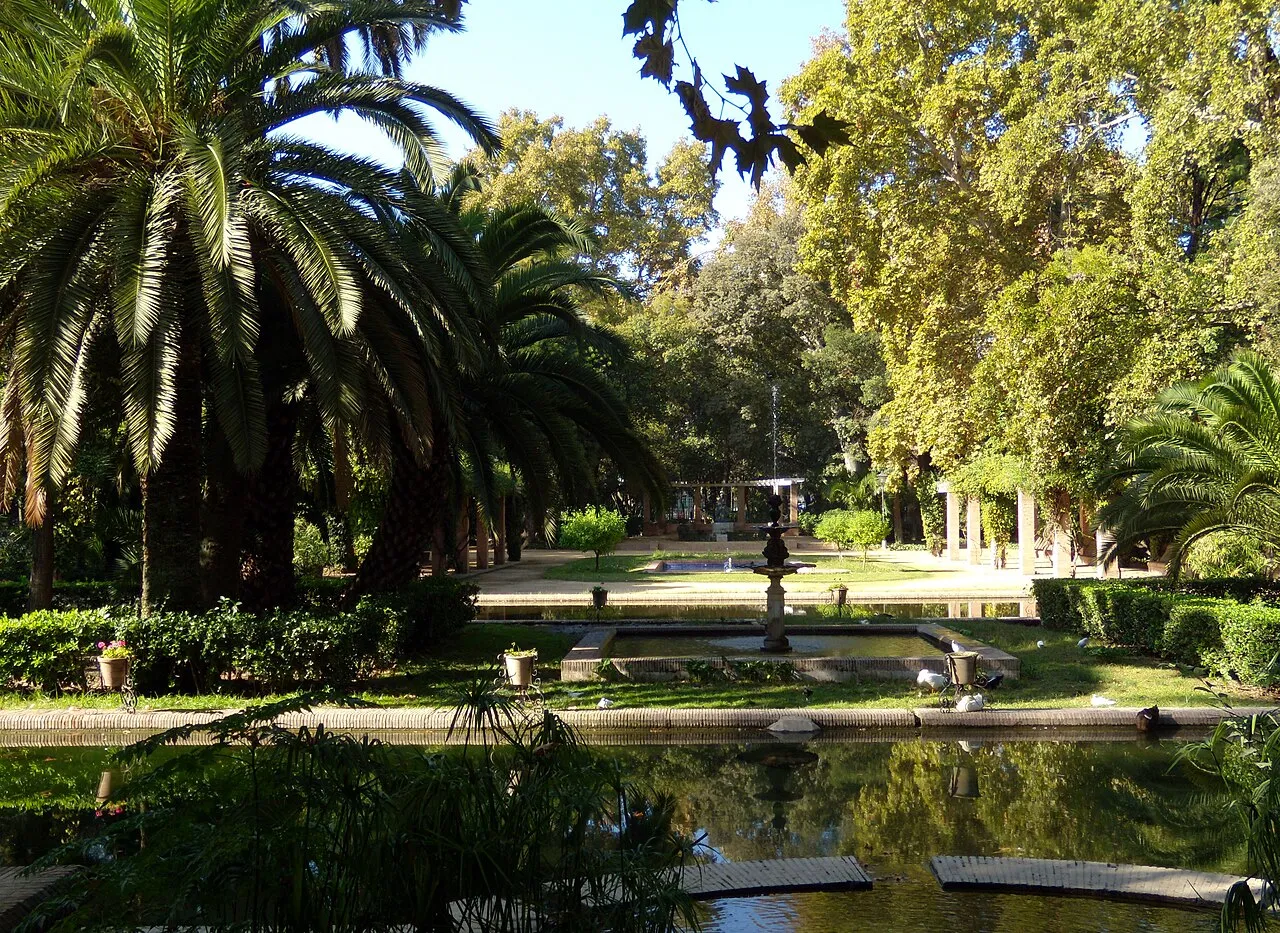
The Monte Gurugú, inside the Parque de María Luisa, is an artificial hill with a waterfall and a small viewpoint at the top from which you see the park above the treetops. You won't see the city, you will see the garden, which is exactly why it is worth it: it is the only spot from which you understand its size and its layout.

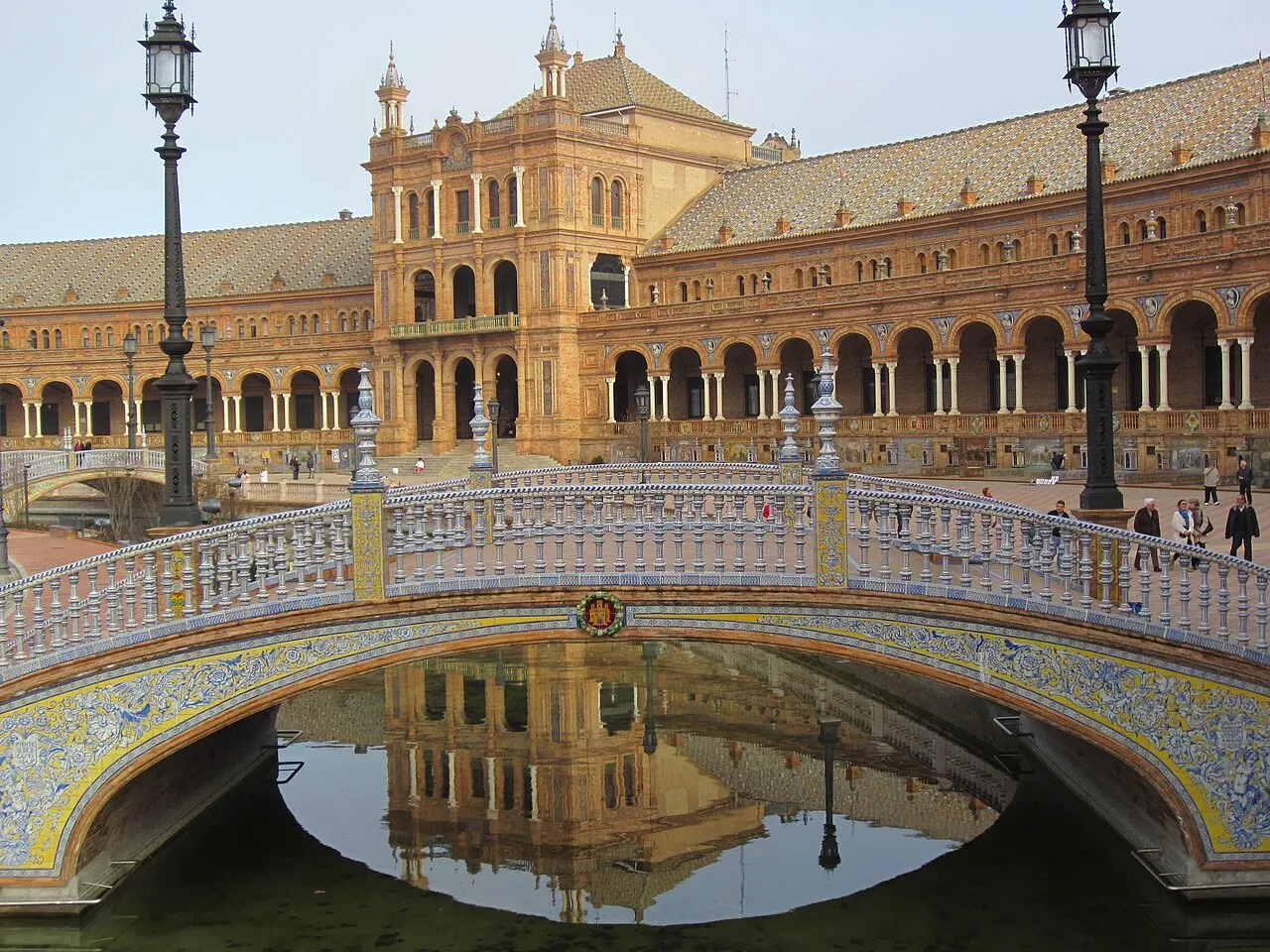
And the upper gallery of the Plaza de España, when it is accessible. Walking the semicircle from above completely changes your perception of the whole: you see the entire canal, the four bridges, the central fountain and the full curve of the building, something that never happens from the ground because the gallery itself hides half of it from you.

There is a third option that people dismiss and shouldn't: the roof terrace of the shopping centre next to the Plaza de la Encarnación and the terraces of some public buildings, which open on open-door days. It is a matter of checking the municipal calendar when you are in the city.

6Parque de María Luisa

Parque de María Luisa

📍 Between the Plaza de España and the Plaza de América

The private gardens of the Palacio de San Telmo until the Infanta María Luisa Fernanda donated them to the city in 1893. The Monte Gurugú, an artificial hill with a waterfall, is the only spot from which you see the park above the trees. With peacocks roaming free and guaranteed shade, it is the part of Seville you can set foot in at three in the afternoon in August.

7Plaza de España

Plaza de España

📍 Av. Isabel la Católica · Parque de María Luisa

The hundred-and-seventy-metre semicircle that Aníbal González built for the 1929 Exposition, open towards the river like an embrace towards the Americas. From the upper gallery, when it is accessible, you see the complete canal, the four bridges and the entire curve of the building: a perspective that doesn't exist from the ground.

Frequently asked questions

What is the best viewpoint in Seville?

It depends on what you want to see. For the highest view of the old town, the Giralda, which is also the only one from which you see the Cathedral itself straight down. To understand the shape of the city, the Setas. And for the most beautiful image of Seville, curiously, neither of the two: Calle Betis, at ground level on the Triana bank, with the whole centre opposite and the river acting as a mirror.

How much does it cost to go up the Setas in Seville?

Entry to the viewpoint is around 15 € and includes an audiovisual experience; the Antiquarium, the Roman site in the basement, is paid separately. The price has gone up quite a lot compared with the early years, so it is worth checking on the official website before going. If you are on a tight budget, the terrace of the Torre del Oro costs a few euros and is free on Mondays.

Are there free viewpoints in Seville?

Yes, and they are among the best. Calle Betis and the Isabel II bridge give the most complete view of the city without paying anything. The Monte Gurugú, inside the Parque de María Luisa, offers a panorama of the garden above the trees. And several hotel rooftops in the centre open to the public with a view of the Cathedral, some with no minimum spend: it is worth asking.

Can you climb the Giralda with reduced mobility?

The climb has almost no steps: it is thirty-five wide, gently sloping ramps, which makes it far more accessible than any bell tower with a spiral staircase. Even so, the route is long, there are a few steps in the final stretch and access is from inside the Cathedral. It is worth checking the specific conditions on the official website before counting on it.

What time is Seville best seen from above?

In the half hour before sunset, without question. Seville is a city of brick, albero and tiles, materials that turn orange in low light, and the effect on the rooftops and on the Giralda is hard to exaggerate. The exception is the Torre del Oro: as it faces west, at that hour you will have the sun in your face, so there it is better to go mid-morning.

Where do you take the best photo of the Giralda?

There are three spots that work and none of them is the obvious one. The Plaza Virgen de los Reyes gives the classic, full-length view, but it is the most photographed in the world. The south-west corner of the Plaza del Triunfo, at sunset, gives the best framing with no cables or lampposts in the way. And from Calle Betis, on the other side of the river, the tower peeks out above the rooftops of El Arenal in a composition with the Torre del Oro and the Maestranza that you can't get anywhere else.

What time to go to each one

The Giralda, first thing in the morning. From eleven onwards the bell chamber fills up, there are queues for the windows and the light falls vertically, which is the worst possible for photographing rooftops.

The Setas, in the last slot of the day. The wood turns golden in the low sun, the Giralda is outlined against the sky and the city lights up while you are up there. It is when the queue is longest and it is worth it all the same.

The Torre del Oro, mid-morning, which is when the sun hits the Triana bank head-on. At sunset, from there, you will have the sun in your face and every photo will come out backlit.

And Calle Betis, half an hour before sunset and until the lights come on. That is, without question, the best moment of the day in Seville, and it costs nothing: you just have to be in the right place at the right time.

Practical information

GiraldaIncluded in the Cathedral ticket, around 12 €. Thirty-five ramps and seventeen steps at the end. Better first thing.
Las SetasViewpoint around 15 €, with an audiovisual experience. Antiquarium separate. Better at sunset.
Torre del OroMaritime Museum for a few euros, free on Mondays. Low terrace but with a direct view of the river.
Calle BetisFree, always accessible. The best view of the city and it is not up high.
Monte GurugúInside the Parque de María Luisa, free. A view over the garden, not over the city.
Best time overallThe half hour before sunset, at any of them.
On the map

🎧 With Viavoy

Walk Seville and listen at your own pace

Download Viavoy and walk Seville offline, whenever you like.

from 2,99 €· one-off payment
City Pass · 9,99 €3 days, all the tours in Seville
Find out more about Viavoy →
Viavoy app

Keep reading

More articles

Itineraries

Seville in 2 days: the itinerary that really works

What to see

Cathedral, Giralda and Real Alcázar: how to visit Seville's big three

Neighbourhoods

Triana: a guide to the neighbourhood that thinks it is a city apart

Neighbourhoods

La Macarena and the Alameda: the Seville where people live