Cathedral, Giralda and Real Alcázar: how to visit Seville's big three
Which ticket to buy, what order to do them in, how much time you really need and what to look for inside so you don't leave feeling you only saw corridors.
They fit within two hundred metres and UNESCO declared them a World Heritage Site together in 1987: the Cathedral with the Giralda, the Real Alcázar and the Archivo General de Indias. That concentration is a stroke of luck and also a trap, because almost everyone tries to do them on the same day, at the same time and without having booked, and ends up spending half the morning in queues. This guide exists to avoid exactly that: which ticket to buy, in what order, how long each one really takes and what is worth looking for once inside.
Book the Alcázar online several days in advance. It is the monument in highest demand in Seville and the free slots sell out weeks ahead.
Tickets: what you pay and what is included
They are two separate tickets and there is no official combined ticket for the two monuments. The Real Alcázar costs around 15 €, with a separate supplement if you want to see the Cuarto Real Alto, the rooms the royal family still uses. The Cathedral is around 12 € and includes the climb up the Giralda.
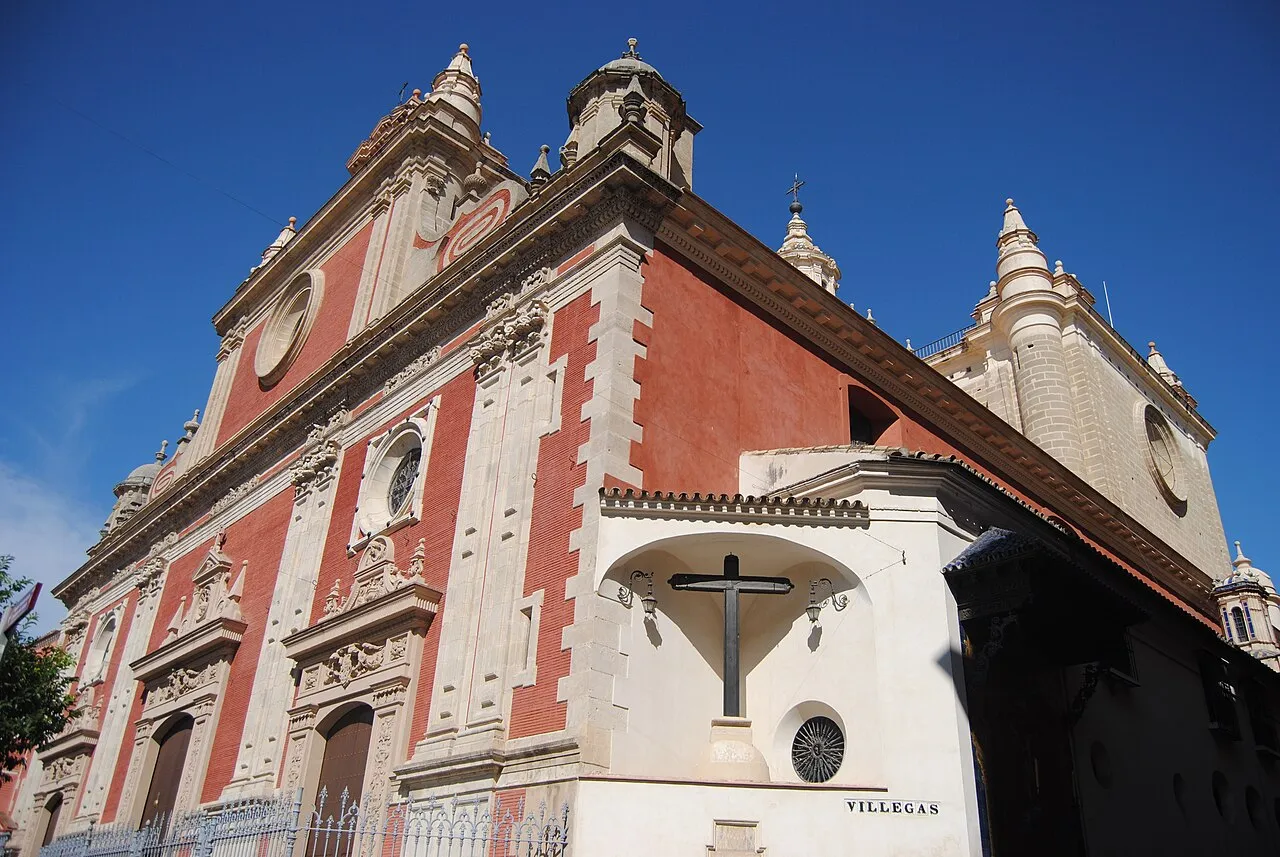
The detail almost nobody takes advantage of: the Cathedral ticket also includes the Iglesia Colegial del Salvador, the city's second church, which is ten minutes away on foot. If you buy the ticket and don't go there, you are leaving money on the table.
Both monuments have free entry slots, usually in the last hour of certain days, and both require prior online booking. They sell out immediately: if you are travelling in spring or during Holy Week, count on booking weeks ahead or simply paying for a normal ticket.
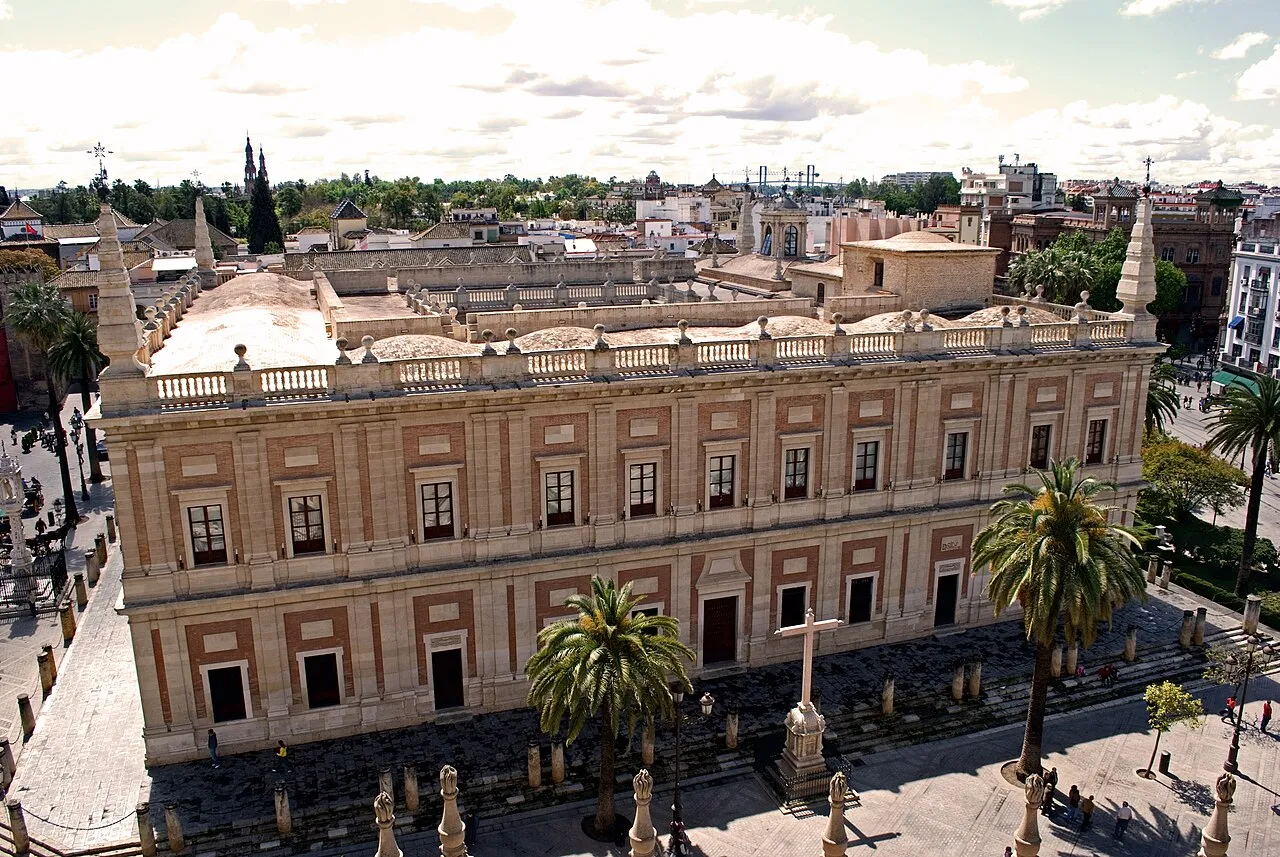
The Archivo General de Indias, the third monument of the ensemble, is free and needs no booking. It closes on Mondays.
Alcázar early, Cathedral mid-morning, Giralda before you leave.
The Alcázar first, and at the first slot of the day. It is the monument that copes worst with crowds: the courtyards are enclosed spaces, the route has bottlenecks and the gardens, in summer, become unbearable from eleven onwards. At half past nine they are almost empty.
The Cathedral handles people far better because it is simply enormous: five naves that absorb groups without anyone noticing. That is why it works well mid-morning or at midday, when the rest of the city is bursting at the seams.
The Giralda last, from inside the Cathedral. It is about twenty minutes to go up, look and come down, and it is best done while your legs are still fresh. If you leave it to the end of the day, after seven hours of walking, the thirty-five ramps feel long even though they are gentle.
Between one and the other there is a three-minute walk, so there is no need to leave wide gaps between booked time slots. With two hours for the Alcázar and an hour and a half for the Cathedral and Giralda, your morning is sorted.
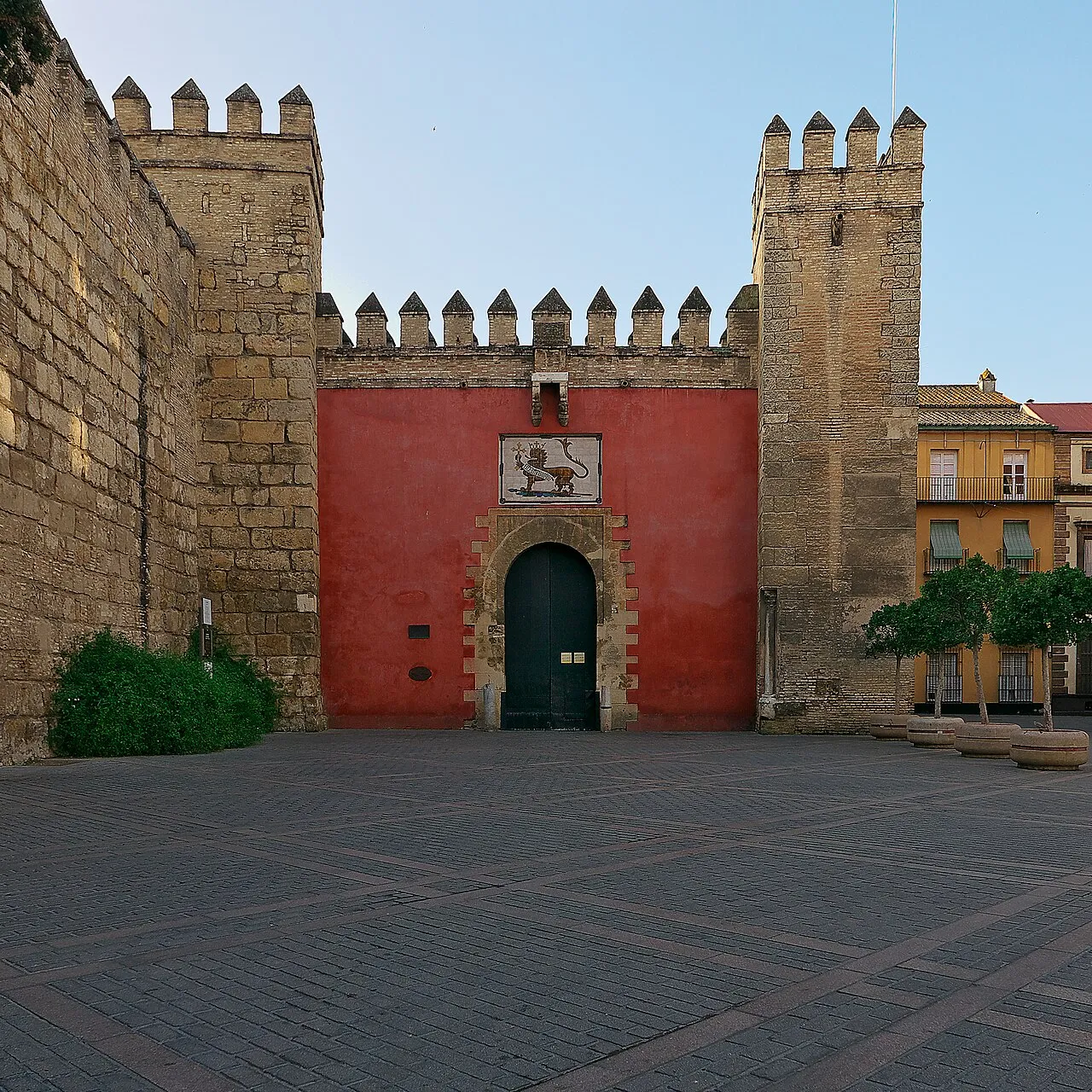
📍 Entrance through the Puerta del León, Plaza del Triunfo
The oldest royal palace still in use in Europe: a thousand years of continuous building, from the tenth-century Umayyad fortress to the rooms where the royal family still stays. The jewel is the Mudéjar palace that Pedro I built around 1364 with craftsmen lent by the Nasrid sultan of Granada, with plasterwork praising a Christian king in Arabic. Two hours minimum, three if you want to explore the gardens properly.
📍 Av. de la Constitución · access through the Puerta del Príncipe
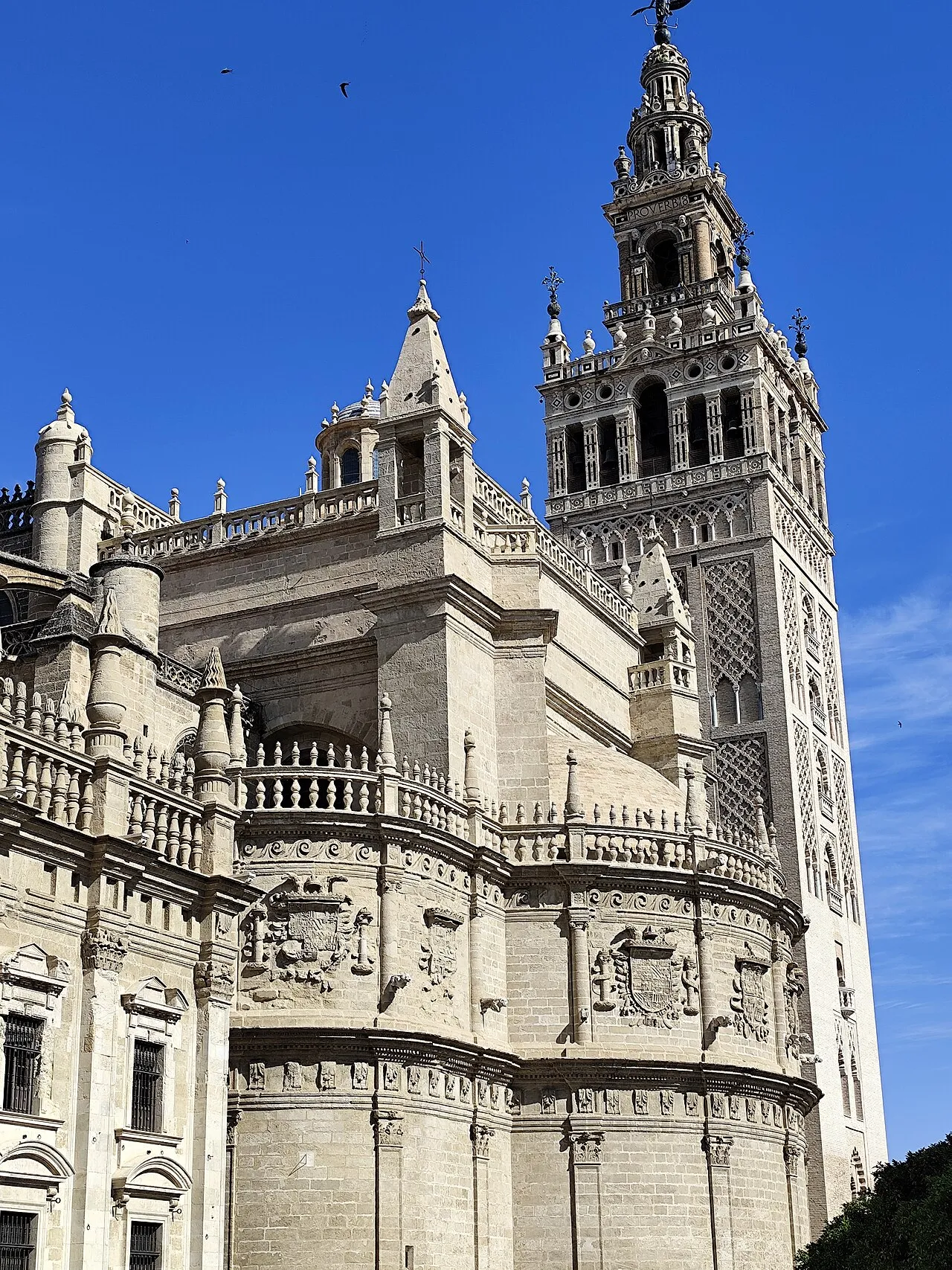
The largest Gothic cathedral in the world, built between 1401 and 1506 on the floor plan of the Almohad mosque, which explains its very rare sense of horizontal space. Inside: the largest altarpiece in Christendom, the tomb of Columbus held up by four heralds and an elliptical chapter house with an Immaculate Conception by Murillo in the vault. An hour and a quarter to see it without rushing.
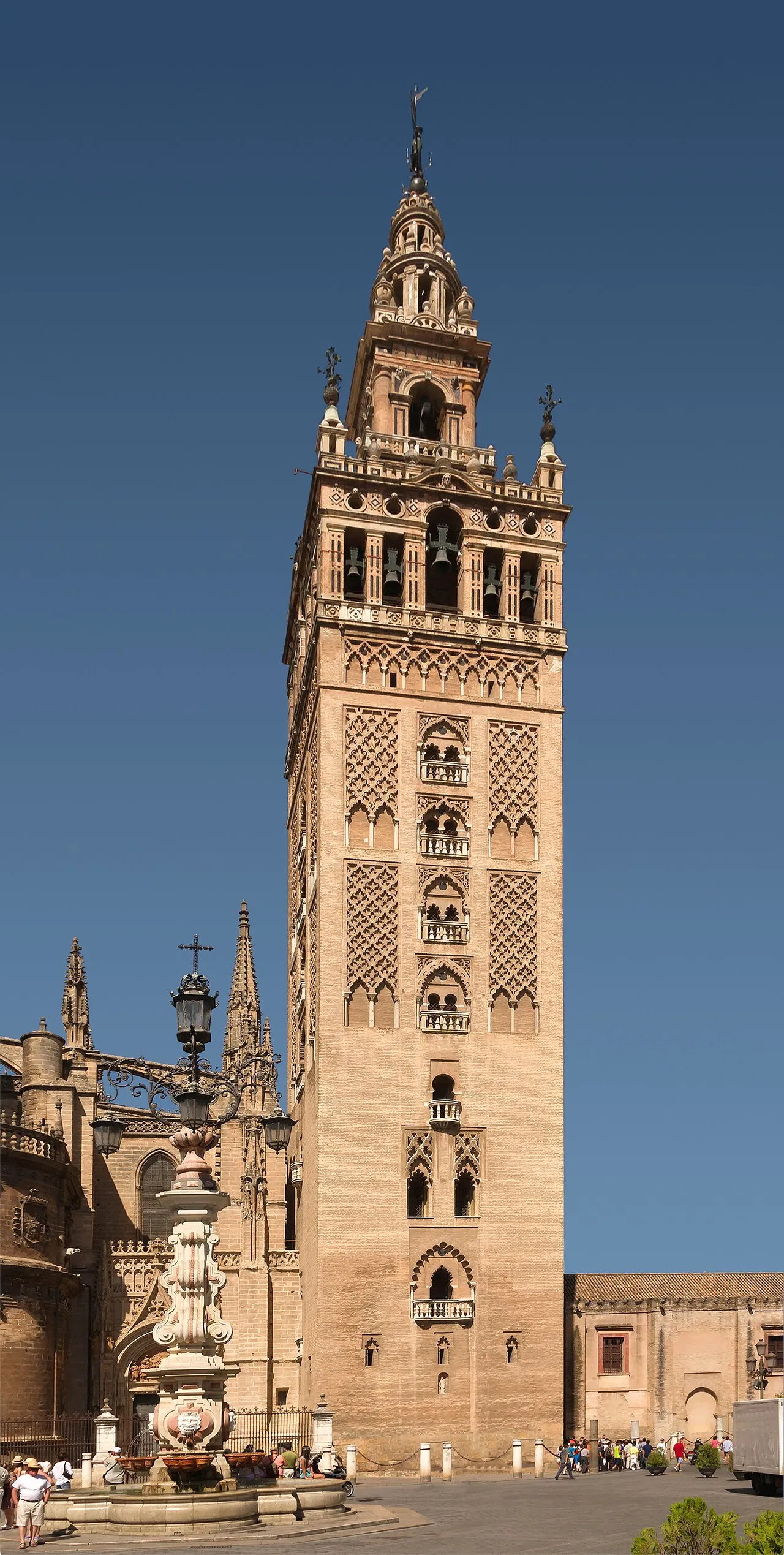
An Almohad minaret from around 1184 turned into a bell tower, with thirty-five ramps instead of stairs: the most comfortable climb among Europe's great bell towers. At the top, the best view is not the rooftops in general but the one that drops straight down onto the Cathedral itself, the only way to grasp its real size. Twenty minutes.
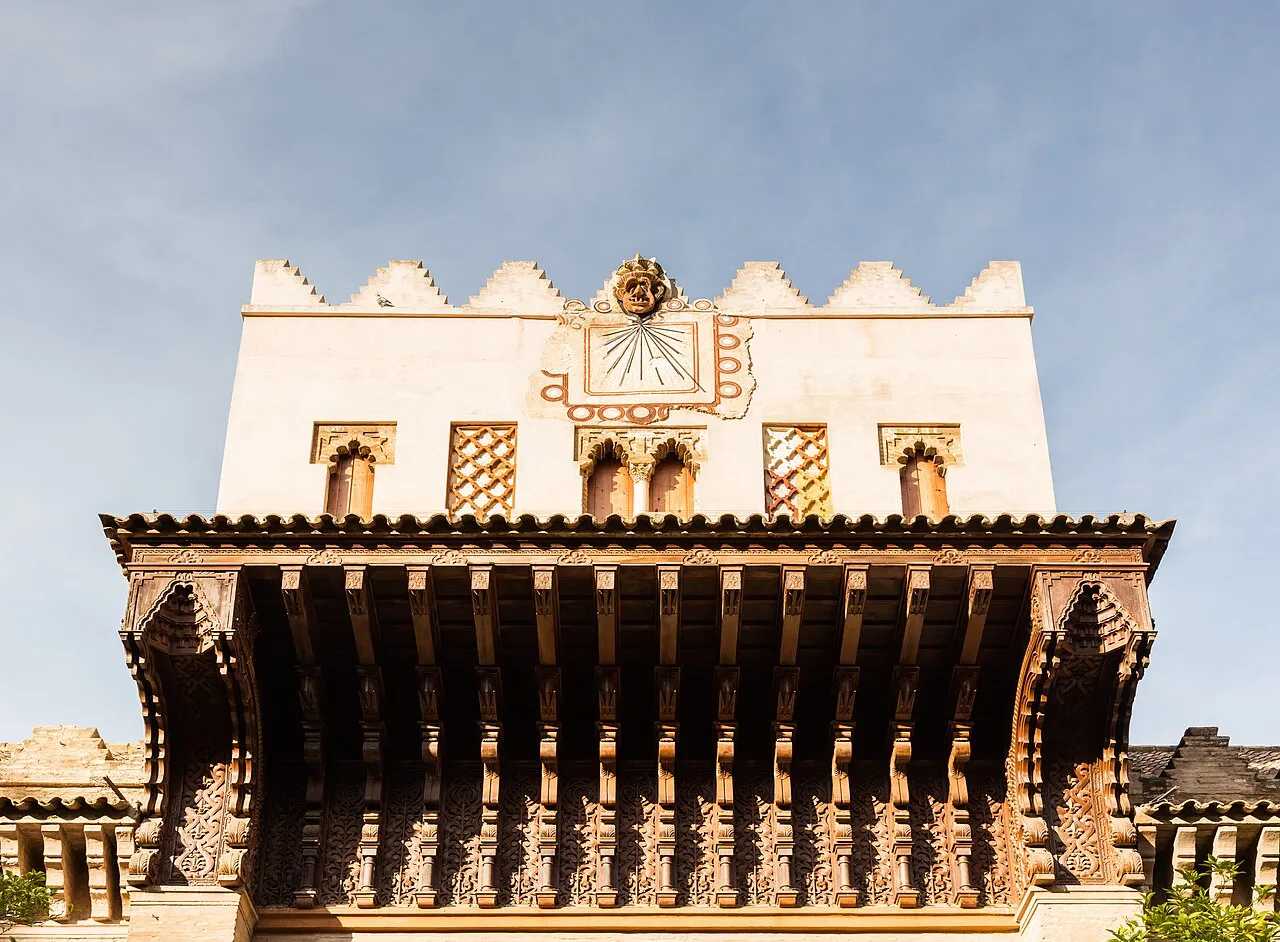
The façade of King Don Pedro's palace, in the Patio de la Montería, is the first serious stop. Read it slowly: tiles, plasterwork and wood combined with an inscription in Arabic praising the Castilian monarch. It is the direct result of the alliance between Pedro I and Muhammad V of Granada, who lent him the craftsmen who were working on the Alhambra.
The Patio de las Doncellas keeps the central pool that was recovered in the excavations of 2004, after centuries hidden beneath a Renaissance pavement. The Salón de Embajadores, beneath its golden half-orange dome, is probably the most dazzling interior in the city, and it is worth looking up for a good while.
The Patio de las Muñecas, much smaller, was the private area, and its name comes from some tiny little faces carved at the base of two arches. Finding them is the obligatory game of any visit: they are lower down than people look.
And the gardens, which are almost another visit: seven hectares with the Mercury pond, the Grutesco gallery raised on the old wall, the hedge maze and the so-called baths of María de Padilla, actually Gothic rainwater cisterns with an acoustic that makes everyone lower their voice without anyone asking.
What to look for inside the Cathedral
Four things, and let the rest come on its own.
The main altarpiece is better seen from the transept than pressed up against the grille: forty-five carved and gilded scenes, begun in 1482 by the Fleming Pieter Dancart and finished almost a century later. It is the largest altarpiece in the Christian world and it pays to look at it for a good two minutes rather than photographing it and moving on.
The tomb of Columbus, next to the Puerta del Príncipe, has a detail almost nobody sees: the herald of the kingdom of León carries a lance that pierces a pomegranate, symbol of the conquest of the last Muslim kingdom on the peninsula in 1492. The remains arrived here from Havana in 1898, after crossing the Atlantic twice.
The chapter house, elliptical in plan, is one of the finest pieces of the Spanish Renaissance and is usually empty because it lies off the obvious route. In the vault there is an Immaculate Conception by Murillo.
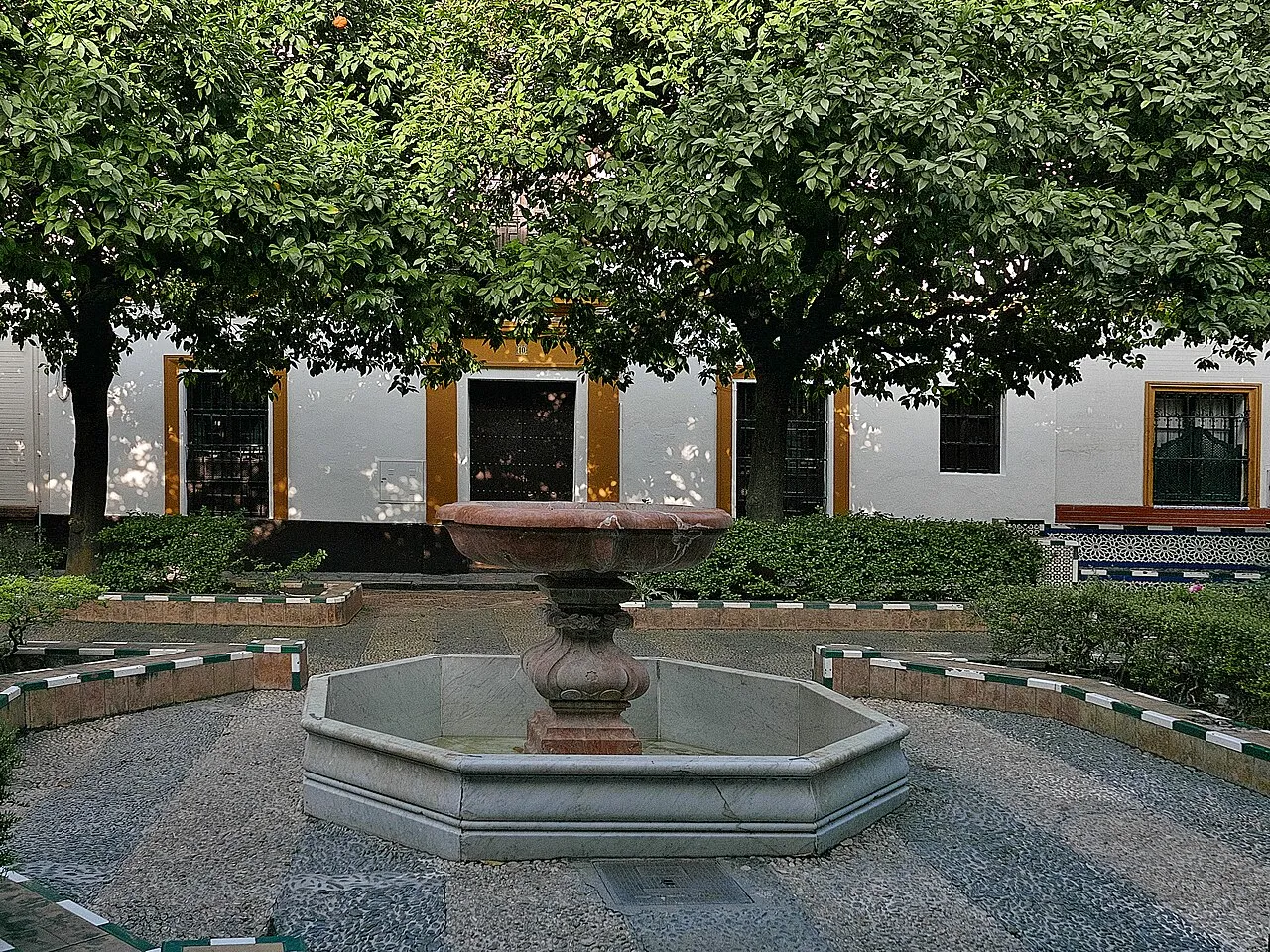
And the Patio de los Naranjos, which you reach through a side door. It is the oldest part of the ensemble, with the Visigothic fountain reused by the Almohads and the irrigation channels still in use. It is also the only place with shade, water and somewhere to sit.
The ablution courtyard of the Almohad mosque, with the orange trees in a grid and the irrigation channels still working eight centuries later. The bronze door knockers are among the finest pieces of Islamic metalwork preserved anywhere in the world, and from the ceiling hangs the Lagarto, a wooden crocodile that recalls a thirteenth-century Egyptian embassy.
The third monument of the World Heritage ensemble and the one almost everyone skips. Eighty million pages on the American empire in a building by Juan de Herrera, the architect of El Escorial. Free entry, cool air, silence and not a single queue: the best possible pause between the other two visits.
📍 Plaza del Salvador · included in the Cathedral ticket
Seville's second church and the oldest place of worship in continuous use in the city: there has been a mosque here since the year 829, and the base of its minaret is still built into the present tower. Inside, the Cristo de la Pasión by Martínez Montañés. And you have already paid for it with the Cathedral ticket.
Is there a combined ticket for Seville Cathedral and the Alcázar?
There is no official combined ticket: they are two separate tickets, managed by different bodies, and they have to be bought separately. What the Cathedral ticket does include is the climb up the Giralda and the visit to the Iglesia Colegial del Salvador, which is ten minutes away on foot. Third-party packages bundling several visits are around, but they usually work out dearer than buying each ticket on its official website.
How much time do you need to see the Cathedral and the Alcázar?
Taking it calmly: two hours for the Alcázar, or three if you are going to explore the gardens properly; an hour and a quarter for the Cathedral and about twenty minutes more to go up and down the Giralda. In total, between three and a half and four and a half hours. You can do both in one long morning if you book consecutive slots, because they are three minutes' walk from each other.
Can you get into the Alcázar and the Cathedral for free?
Yes, both have free entry slots, usually in the last hour on certain days of the week, and in both cases you need to book online in advance. The problem is availability: those places sell out weeks ahead, especially in spring. The Archivo General de Indias, on the other hand, is always free and needs no booking.
Which is better to see first, the Cathedral or the Alcázar?
The Alcázar, and at the first slot of the day. It is the one that copes worst with crowds, because its courtyards are enclosed spaces with bottlenecks and its gardens become very hard going in summer from eleven onwards. The Cathedral, by contrast, is so big that it absorbs groups without anyone noticing, so it works perfectly mid-morning or at midday.
Is it worth climbing the Giralda?
Yes, and with one detail that makes it different from other towers: it has no stairs. You go up thirty-five wide, gently sloping ramps, designed for the Almohad minaret, so it is the most comfortable climb among Europe's great bell towers. At the top, besides the panorama of the city, you get the view straight down onto the Cathedral itself, impossible to get from anywhere else.
What is Seville's World Heritage ensemble?
In 1987 UNESCO inscribed an ensemble made up of three monuments: the Cathedral with the Giralda, the Real Alcázar and the Archivo General de Indias. All three stand around the Plaza del Triunfo, less than two hundred metres from one another, which probably makes it the most compact ensemble of its kind in Europe. The Archivo is the least visited of the three, and it is free.
Mistakes that keep happening and how to avoid them
Trying to do everything on the same day without booking. In high season, the ticket-office queue at the Alcázar can exceed an hour and a half, and there are days when the capacity simply sells out. It is the most expensive mistake in terms of time and the easiest to avoid.
Leaving the Alcázar gardens to the end of the visit in summer. From eleven onwards, with the sun high, the unshaded paths are a punishment. If you go in July or August, enter at the first slot and walk the garden while the shade of the walls still covers most of the paths.
Climbing the Giralda at the end of the day. The ramps are gentle, yes, but there are thirty-five of them, and after a whole day on your feet you feel them. Besides, the bell chamber fills up mid-afternoon and there are queues for the windows.
And the classic: eating on the terraces with a view of the Giralda. You pay for the view everywhere in the world and here too. Walk three streets inland — towards the Alfalfa or towards the Salvador — and you will eat better for half the money.
Practical information
TicketsCathedral with Giralda and Salvador, around 12 €. Real Alcázar, around 15 €, with a supplement for the Cuarto Real Alto. Archivo de Indias, free.
BookingOnline and in advance for both monuments. The free slots sell out weeks ahead.
Real time neededAlcázar 2 h (3 with gardens), Cathedral 1 h 15, Giralda 20 min, Archivo 40 min.
Recommended orderAlcázar first thing, Cathedral mid-morning, Giralda before you leave, Archivo as a pause.
Getting thereMetroCentro tram, Archivo de Indias stop; metro L1 Puerta de Jerez. The whole area is pedestrianised.
When to avoidSunday mornings (reduced hours for services) and Holy Week, with closures and street cordons.
On the map
🎧 With Viavoy
Walk Seville and listen at your own pace
Download Viavoy and walk Seville offline, whenever you like.
from 2,99 €· one-off payment
City Pass · 9,99 €3 days, all the tours in Seville