Seville in 2 days: the itinerary that really works
Itineraries · Seville

Seville in 2 days: the itinerary that really works

Cathedral, Alcázar and Santa Cruz on the first day; the river, Triana and the Plaza de España on the second. With real opening hours, what to book and where to stop for lunch.

11 min read · Updated for 2026
🎧 On the walk The Cathedral, the Giralda, and the Royal Alcázar

Seville has one enormous advantage over almost any other European city: the essentials fit inside a triangle you can cross on foot in ten minutes. The cathedral, the Alcázar and the Santa Cruz neighbourhood are literally next to each other, and from there the river is a short walk away and Triana is just across a bridge. That means two well-organised days are not a makeshift: they are genuinely enough. What ruins the visit is not the distances but two specific things: not booking the Alcázar in time and fighting the midday sun. This itinerary is built to dodge both.

Book your ticket for the Real Alcázar several days in advance: it is the monument that sells out first, especially from March to June. The cathedral ticket includes the climb up the Giralda, so you do them in one go.

Day 1 · The monumental triangle

Cathedral, Giralda, Alcázar and the maze of Santa Cruz. All within less than a kilometre.

Start early, around nine. This is not a guidebook platitude: the three monuments of this day are the ones that draw the biggest crowds in all of Andalusia, and the difference between seeing them first thing or at midday is the difference between enjoying them and suffering them.

The order matters. Cathedral and Giralda first, because the climb up the tower is far better without the heat. Then the Alcázar, which needs at least two hours if you also want to see the gardens. And finally Santa Cruz, which is the perfect neighbourhood for the hour when you no longer feel like queuing anywhere.

1Seville Cathedral

Seville Cathedral

📍 Plaza Virgen de los Reyes

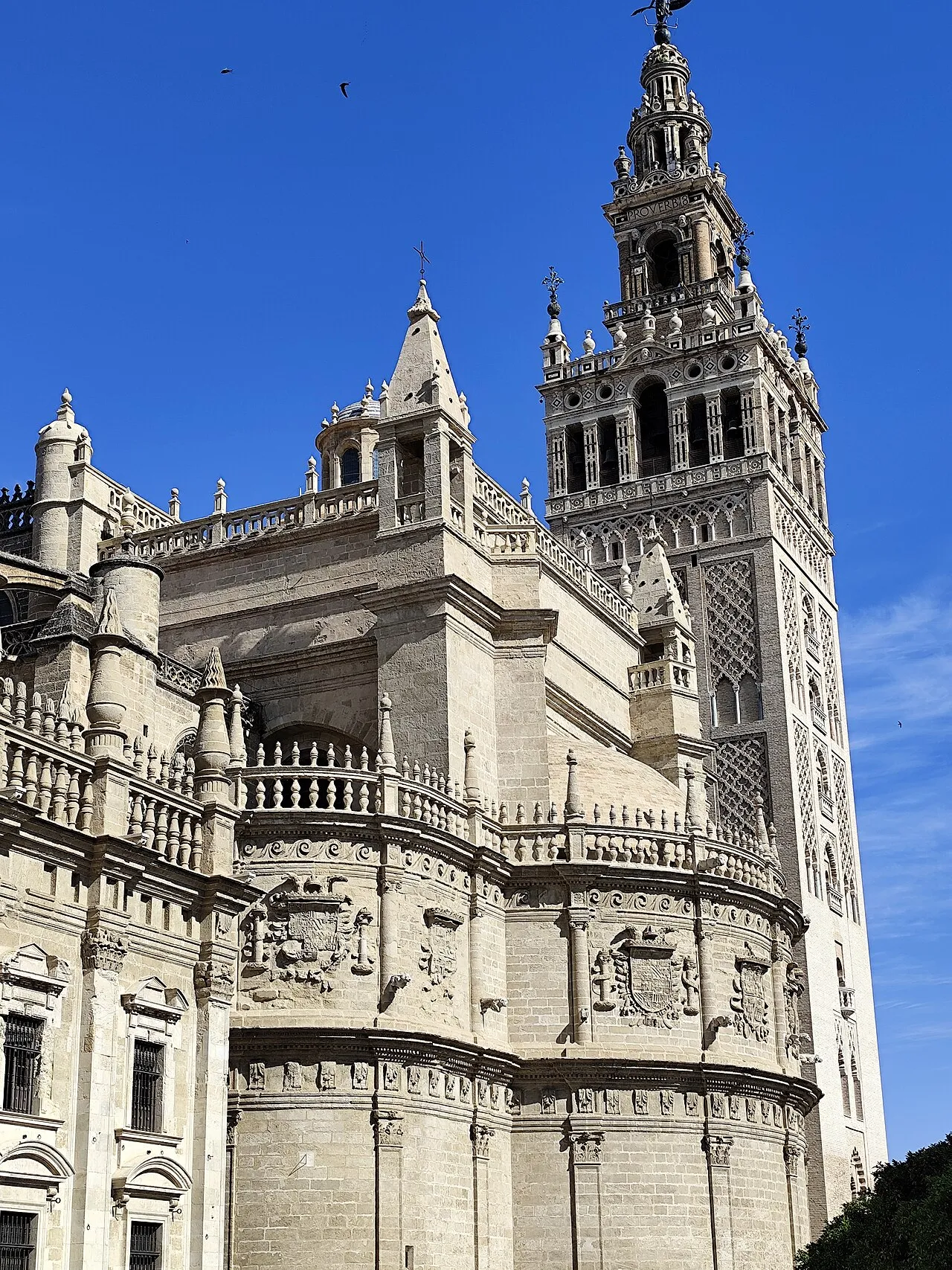
The largest Gothic church in the world, and built with that declared intention: when the chapter decided in 1401 to raise it on the site of the old great mosque, the chronicle records the aim of making a temple so large that whoever saw it finished would take them for madmen. Inside are five immense naves, a high altarpiece with more than two hundred carved and gilded figures, and the tomb of Columbus carried by four heralds. In the Royal Chapel lies Ferdinand III, the king who conquered the city in 1248 and to whom Seville prays as its patron. Allow a good hour and a half: it is one of those interiors where time slips away without warning.

2The Giralda

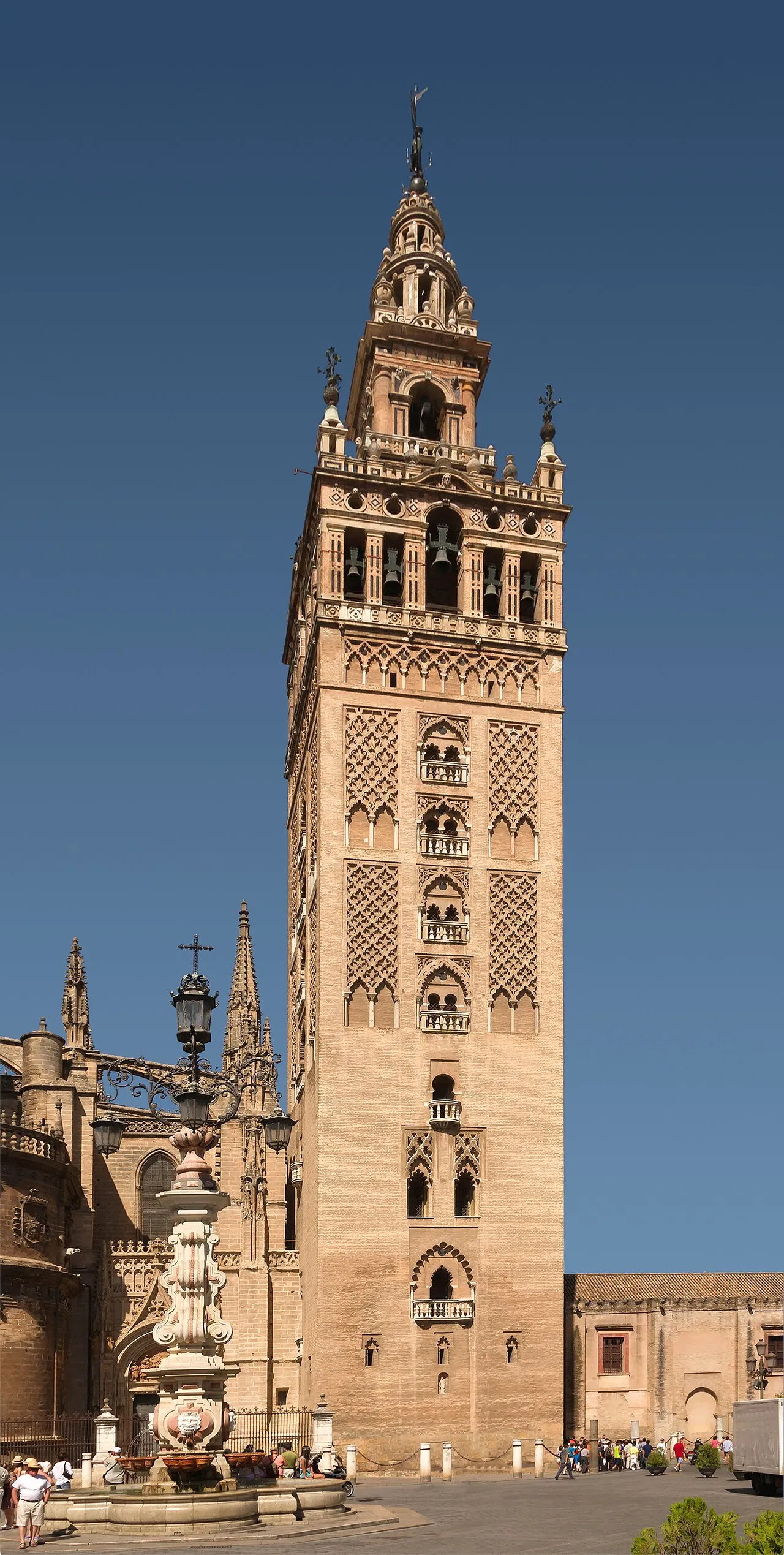
The Giralda

📍 Included in the cathedral ticket

Almost a hundred metres of brick that started out as something else: it was born around 1184 as an Almohad minaret, when Seville was Isbiliya and one of the capitals of the Muslim West. You climb it without a step until the final stretch, up thirty-five gentle ramps designed so that a rider could go up on horseback. At the top is the best panorama of the old town, with the rooftops opening out towards the river. Do it first thing: the ramps get narrow when there are crowds, and midday turns the climb into an unnecessary effort.

3Real Alcázar

Real Alcázar

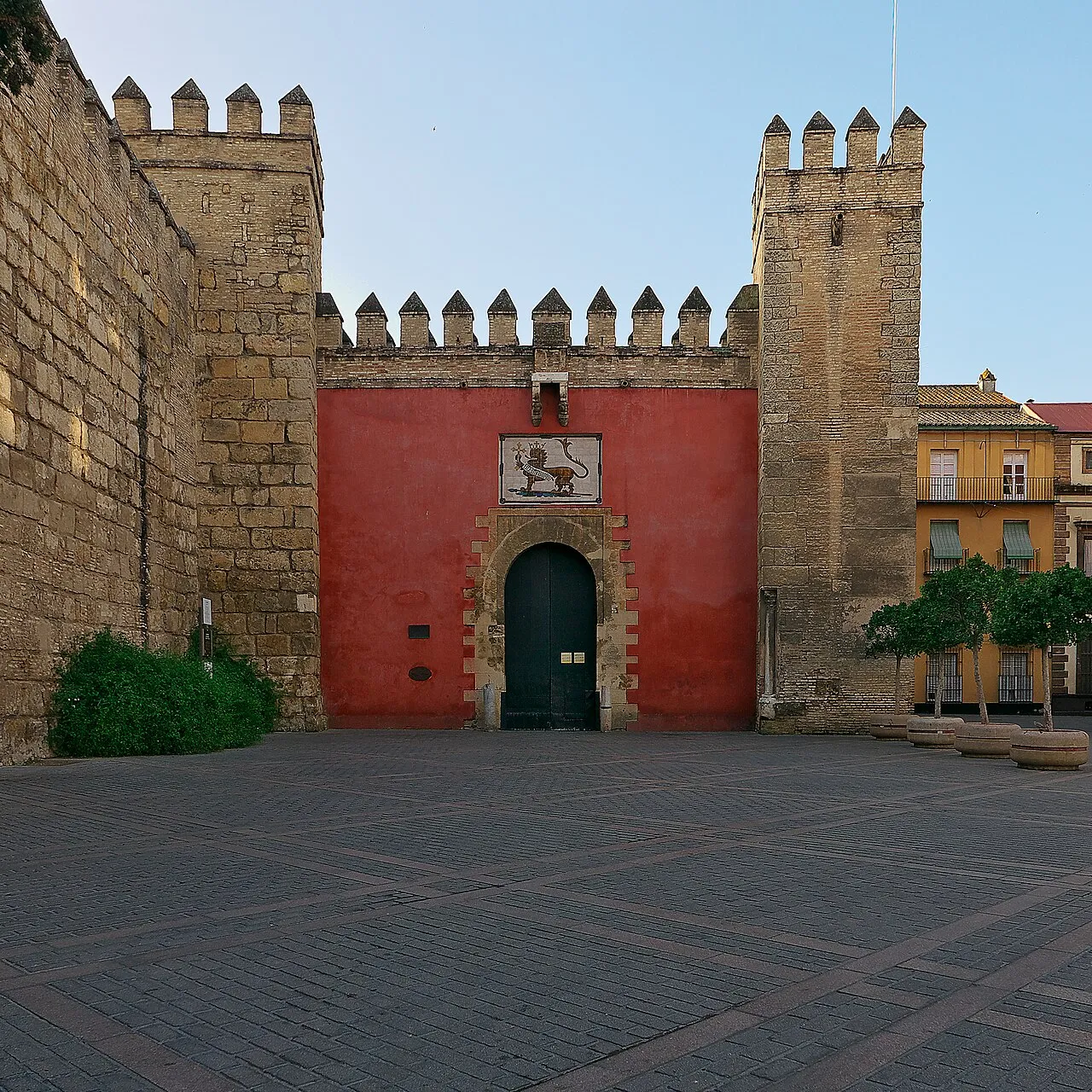
📍 Entrance through the Puerta del León, Plaza del Triunfo

The oldest royal palace still in use in Europe: the Spanish royal family still stays here when it visits Seville. A thousand years are stacked up inside, from the Almohad walls to the Mudéjar palace that Peter I built in the fourteenth century with craftsmen who wove Christian and Islamic art into the same walls. Waiting inside are the Patio de las Doncellas, the Salón de Embajadores beneath its gilded dome, the intimate Patio de las Muñecas, the underground baths of María de Padilla and gardens that swallow half the visit. Book without fail, and allow two hours minimum.

4General Archive of the Indies

General Archive of the Indies

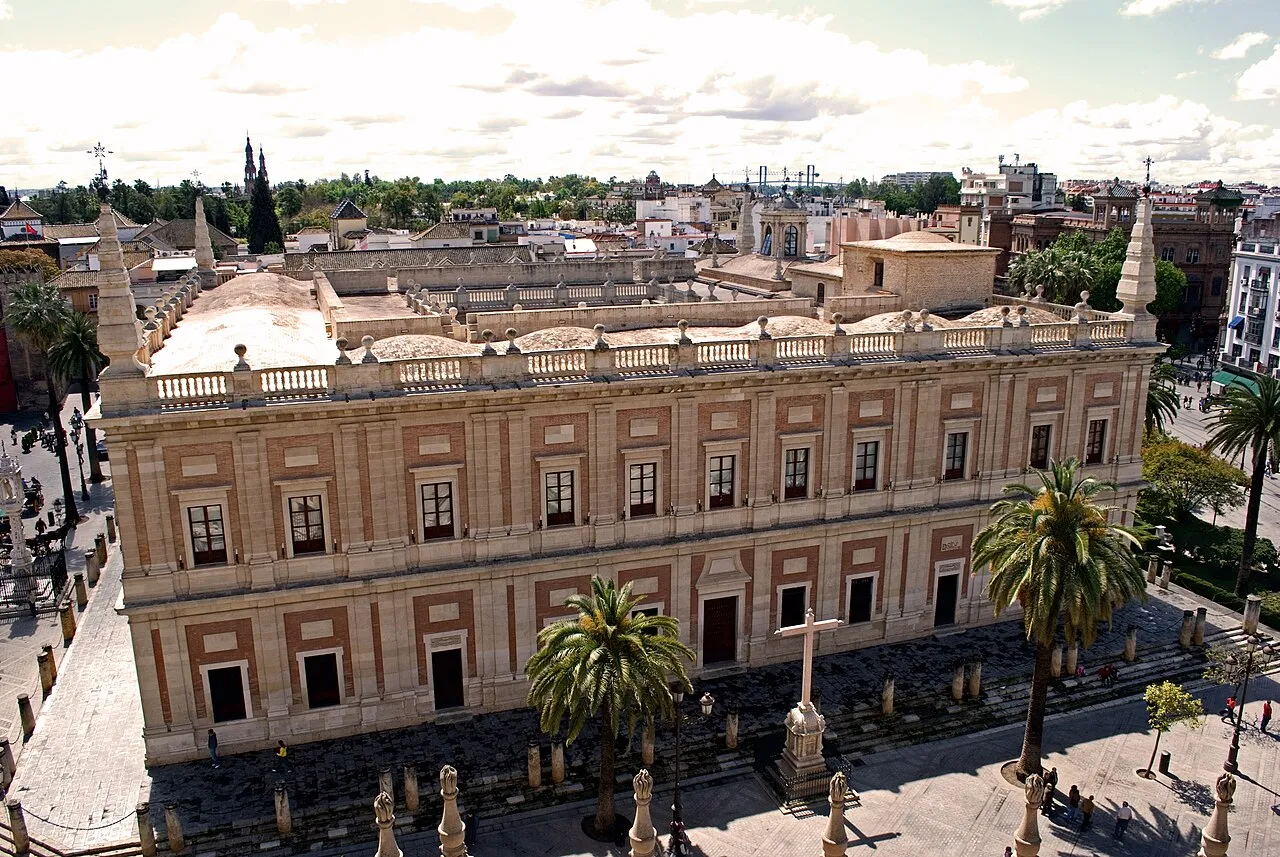
📍 Avenida de la Constitución · free entry

Right opposite the cathedral, a square, severe building that looks like a safe. In a way it is: kept here are some eighty million pages holding the paper memory of the American empire, including Columbus's diary and the Treaty of Tordesillas that split the world in two. Philip II had it built as the Casa Lonja, the merchants' exchange, and Charles III turned it into an archive. It is free, you see it in half an hour and it is usually almost empty while next door there is a queue: one of the best bargains in the city.

🎧 With Viavoy

Explore Seville at your own pace

Download the app and discover Seville offline, whenever you like. Take the walking tour The Cathedral, the Giralda, and the Royal Alcázar with a local guide in your ear.

Find out more about Viavoy →

Afternoon of day 1 · Getting lost in Santa Cruz

The old Jewish Quarter, which today is largely a beautiful stage set built over very real stories.

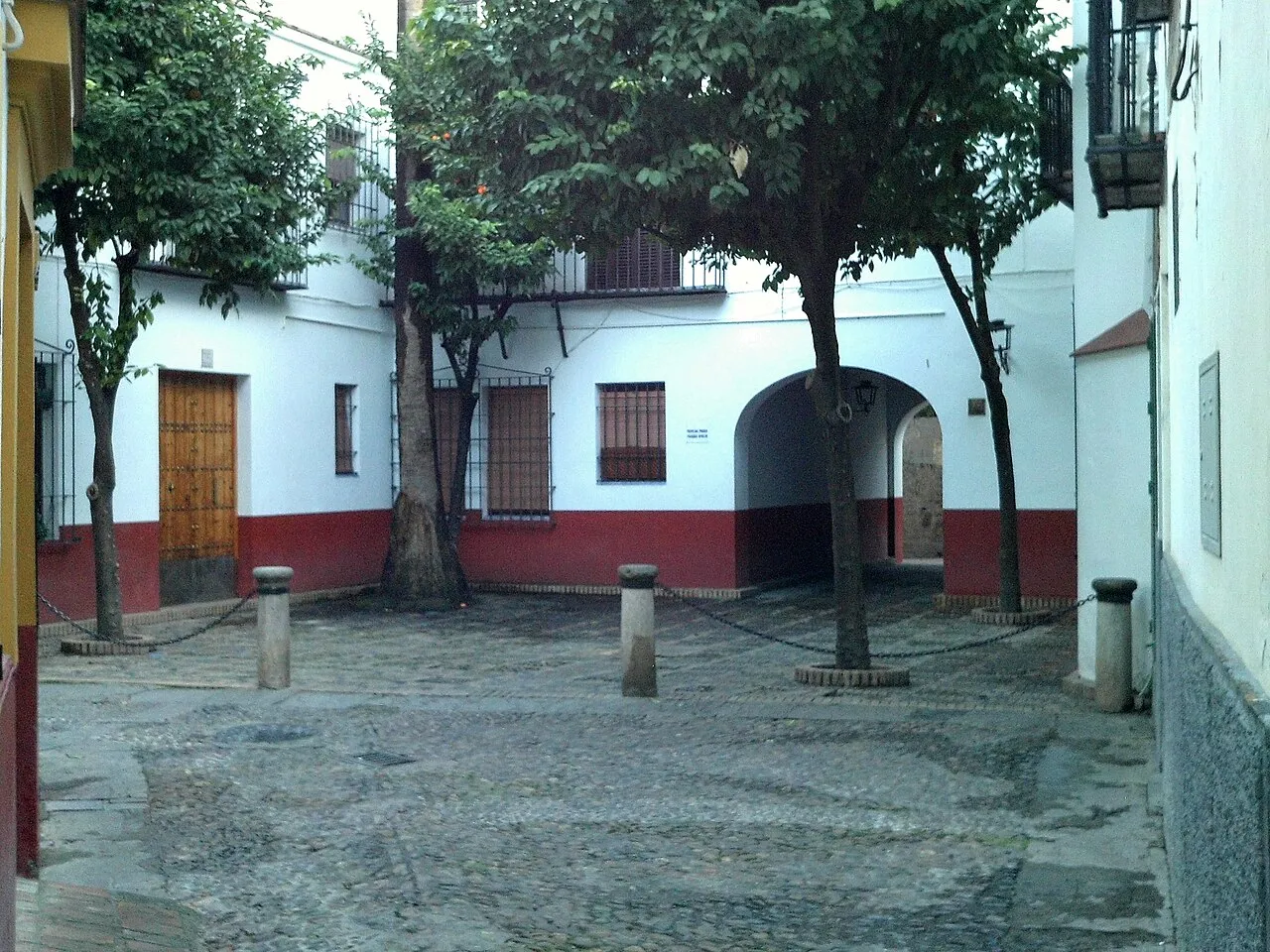
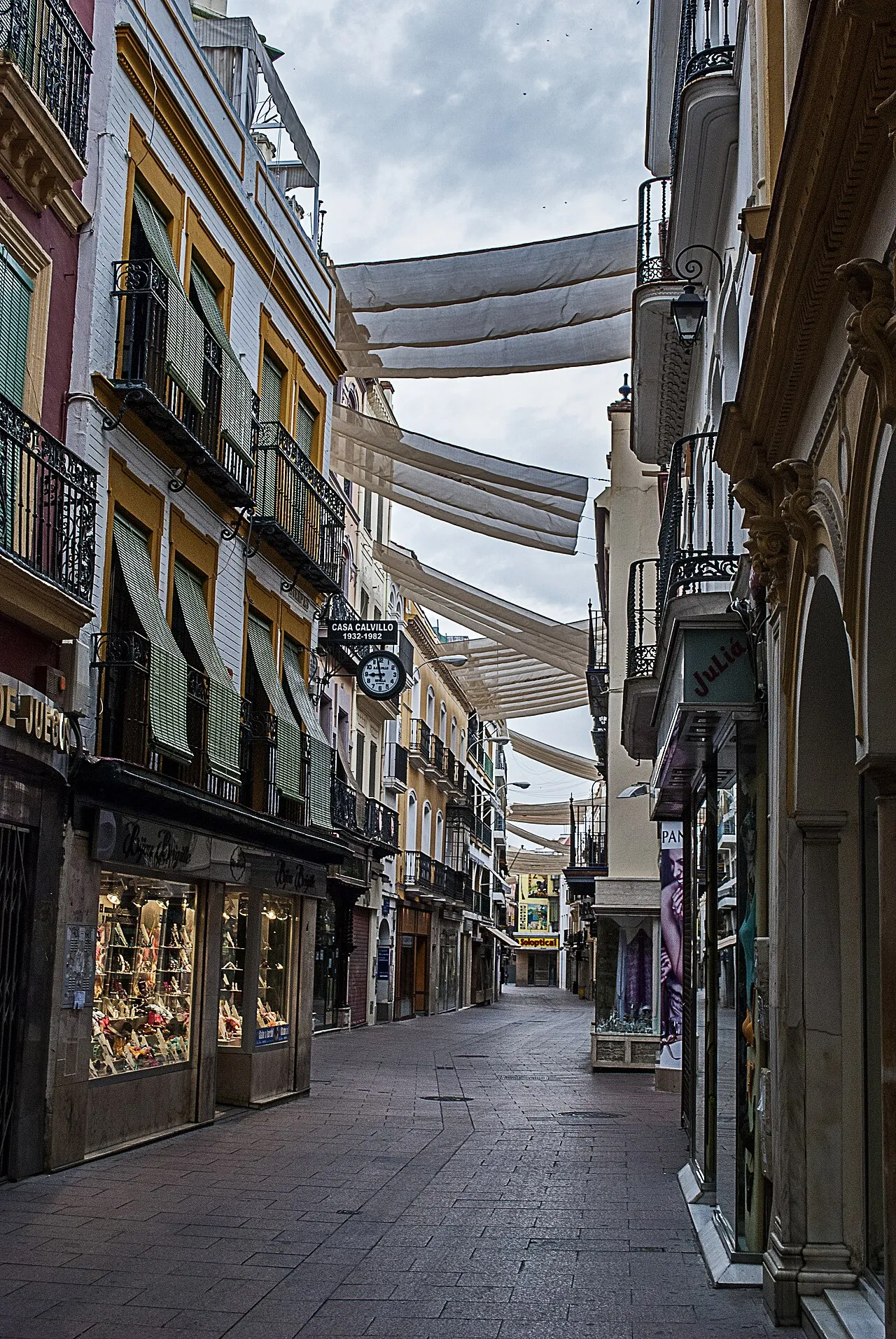
Santa Cruz is explored without a map, and that is the best thing you can do with it. It is a maze of extremely narrow lanes, courtyards full of flowerpots and squares that appear out of nowhere, pressed up against the wall of the Alcázar.

It helps to know one thing that changes the way you look at it: much of what seems ancient is little more than a century old. At the start of the twentieth century the neighbourhood was half in ruins and, ahead of the 1929 Ibero-American Exposition, there was even talk of demolishing it entirely. Instead it was combed through: squares were restored, orange trees were planted and it was given the romantic image travellers already expected to find. The architect Juan Talavera y Heredia designed the Plaza de Doña Elvira this way around 1918. Knowing it takes nothing away from its beauty; it adds a layer.

5Patio de Banderas

Patio de Banderas

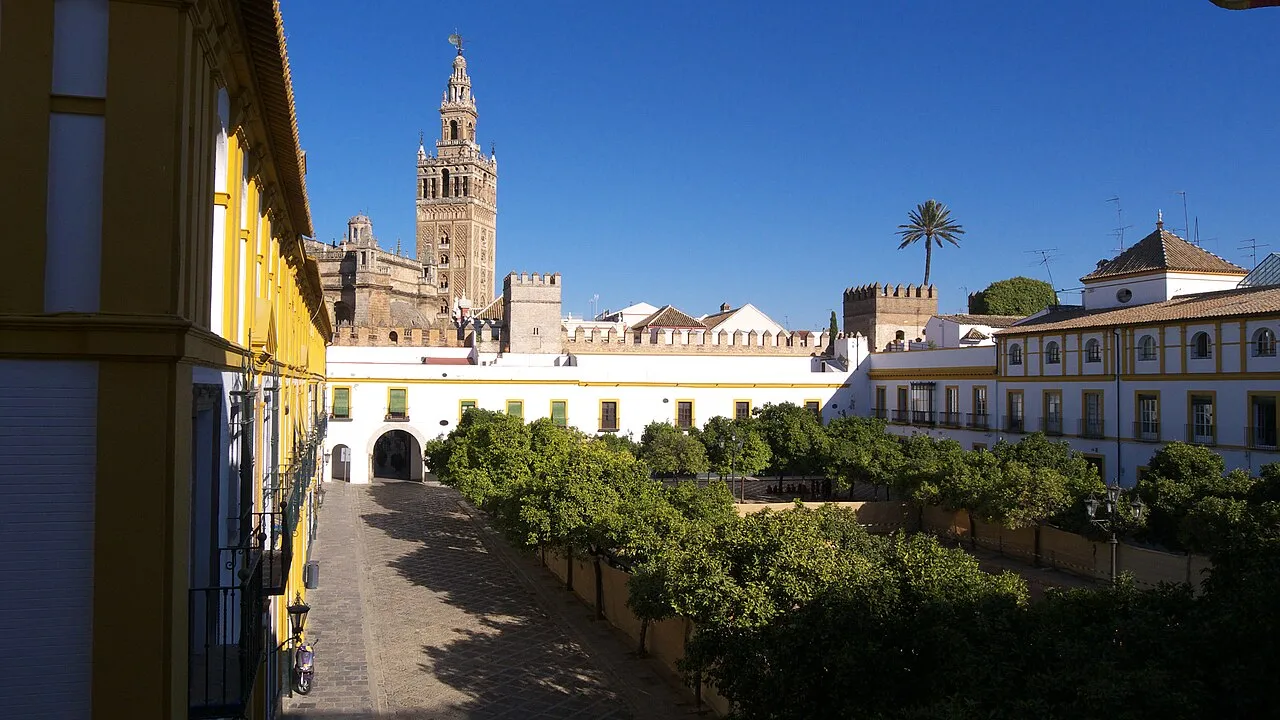
📍 Next to the Alcázar exit

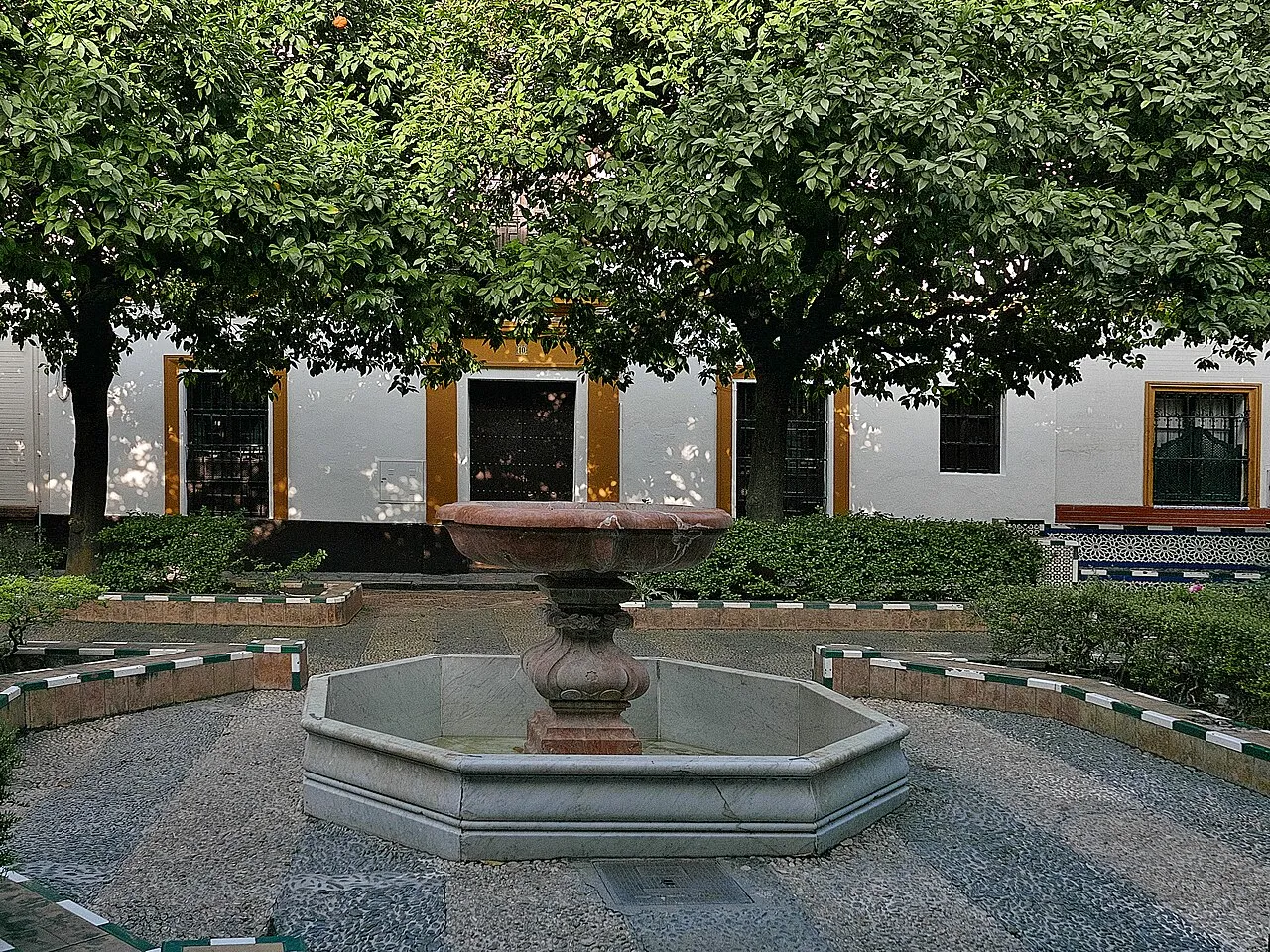
An enclosed courtyard with ochre-coloured houses, a fountain and the Giralda peeking over the rooftops: the photo everyone takes. What almost nobody knows is what lies beneath. Excavations under these flagstones have found levels going down to the ninth century BC, almost three thousand years, including what is interpreted as a Phoenician sanctuary. It is one of the few spots in the city where you can peer into its first heartbeat.

6Calle Susona

Calle Susona

📍 Look for the tile with the skull

The quietest alley in the neighbourhood holds its darkest legend. Tradition says that this is where Susona lived, daughter of Diego de Susán, one of the richest men in the Jewish Quarter at the end of the fifteenth century. In love with a Christian knight, she overheard her father conspiring against the newly founded Inquisition and denounced him; the plotters were arrested and executed. Devastated by guilt, she asked on her deathbed that her head be hung over the door of her house as a warning. The historical background is real: the first tribunal of the Spanish Inquisition was set up in Seville and its first auto-da-fé took place here in 1481.

7Plaza de Doña Elvira

Plaza de Doña Elvira

📍 Centre of Santa Cruz

Small, enclosed, with orange trees and tiled benches, almost always with a guitar playing. For many people it is the prettiest corner of the neighbourhood, and you can sit down too: the ceramic benches are there for exactly that. On this very ground, during the Golden Age, stood a corral de comedias, an open-air theatre where the career of Lope de Rueda took off, the Sevillian craftsman whom Cervantes remembered with admiration after seeing him act as a child.

8Hospital de los Venerables

Hospital de los Venerables

📍 Plaza de los Venerables

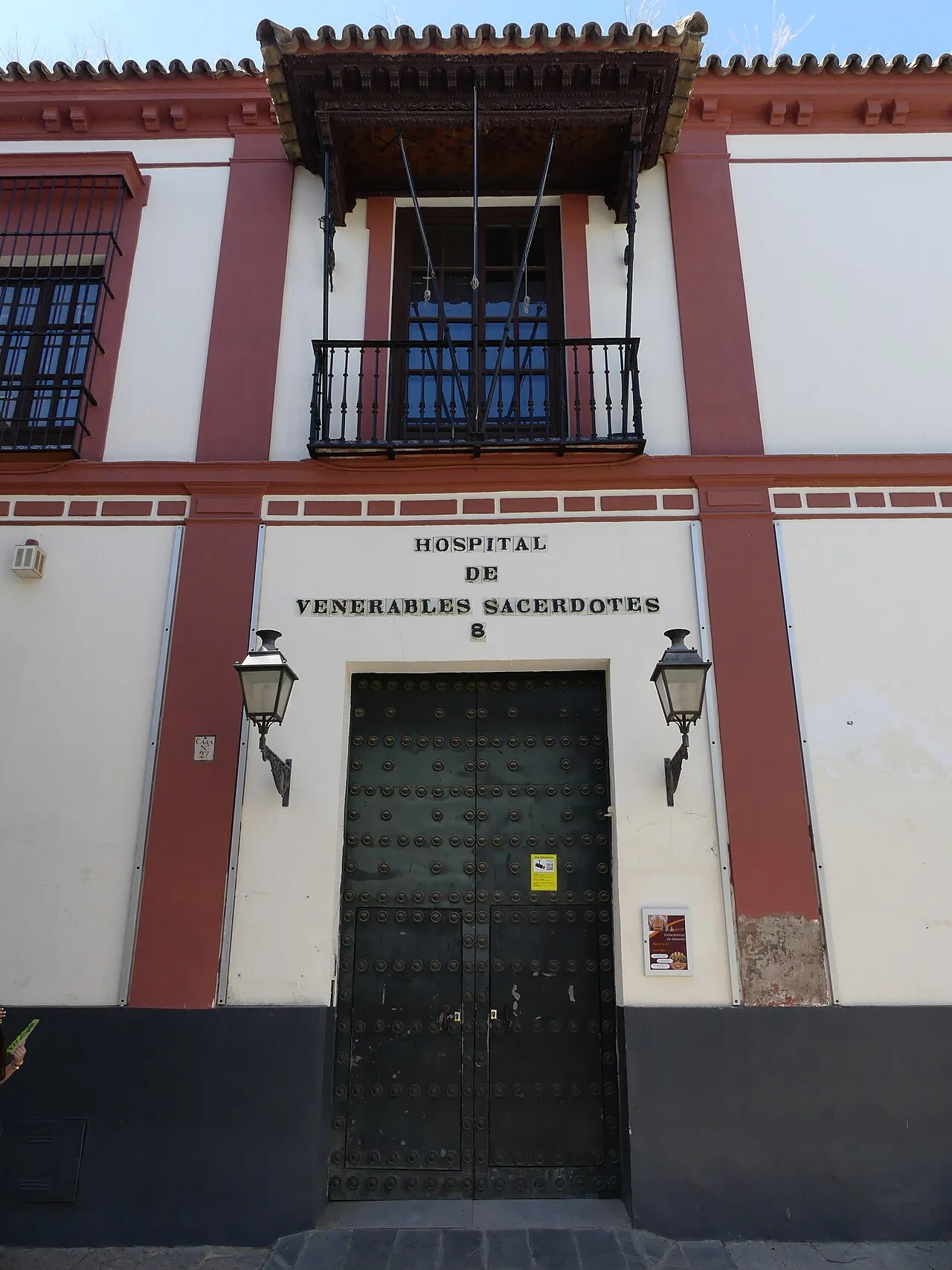
Red brick and a sober façade that gives no hint of what is inside. It was founded in the seventeenth century to take in elderly, poor priests, and its courtyard is sunken, with the fountain at the bottom of a kind of bowl: it is not for looks, it is a device for collecting water in a city of scorching summers. Inside are the vault painted by Valdés Leal and the Centro Velázquez, with the “Santa Rufina” bought in 2007 for a record sum for a Spanish painting. Seeing it in the city where Velázquez was born changes the experience.

9Plaza de Santa Cruz

Plaza de Santa Cruz

📍 Next to the Jardines de Murillo

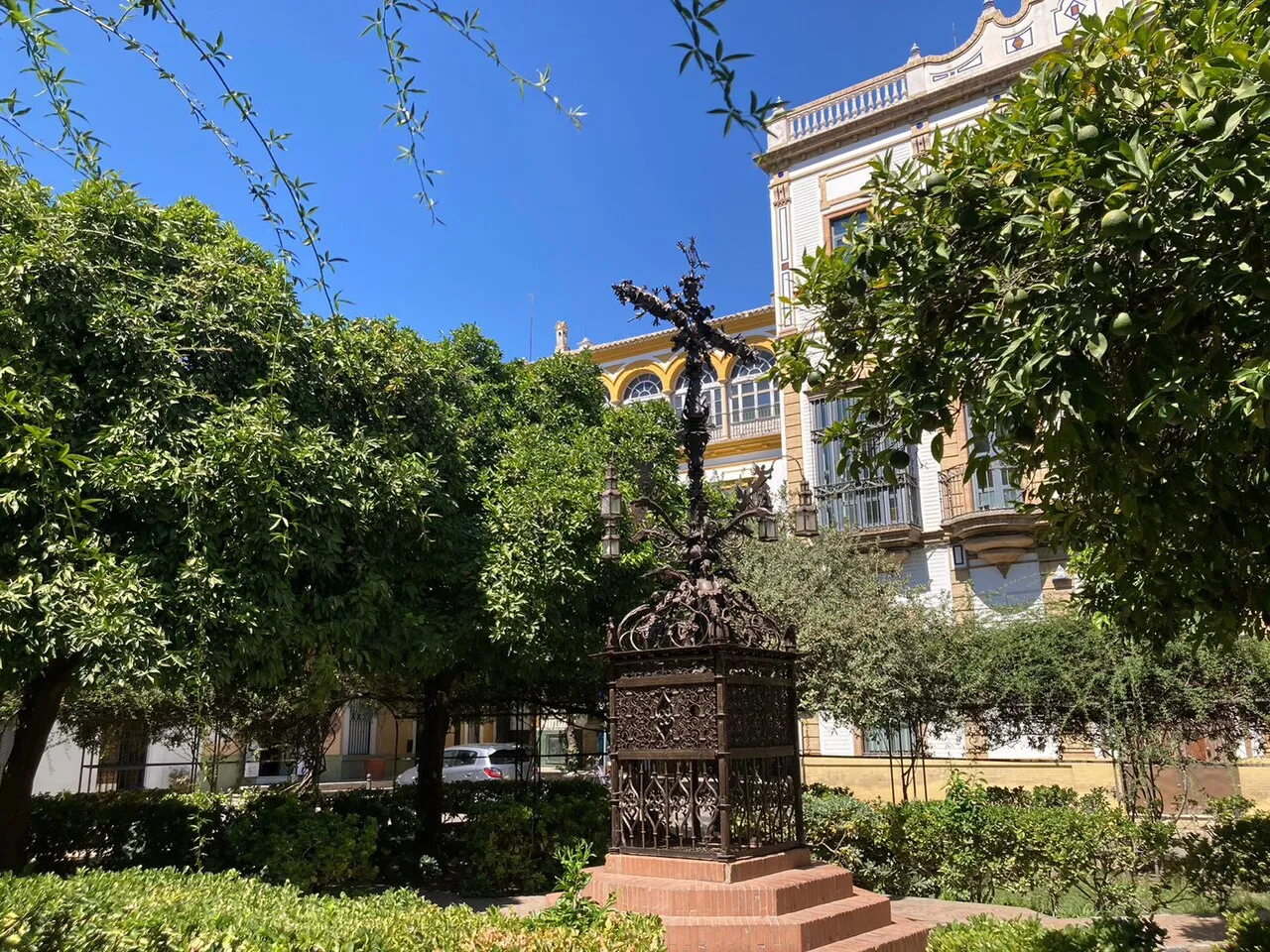
You emerge from the maze into an open space with clipped hedges, orange trees and an extremely fine black iron cross in the centre, the Cruz de la Cerrajería, from 1692, which once presided over calle Sierpes. But the important thing is underfoot: there was no square here but the old church of Santa Cruz, and Murillo was buried in it in 1682. During the French invasion the church was demolished to open up this space, and the tomb was lost with it. The painter rests without a headstone somewhere beneath the orange trees.

Day 2 · The river, El Arenal and Triana

The Seville that looked towards America, and the neighbourhood on the other side of the water.

The second day changes register. If the first is monumental and indoors, this one is about the riverbank, the open air and neighbourhood life. Start early again, but for another reason: to reach Triana at aperitif time, which is when the neighbourhood is at its best.

It helps to understand one thing here so that everything falls into place: the Guadalquivir is the only large navigable river in Spain, and that is why a city almost a hundred kilometres from the sea could be the port of an empire for two centuries. The galleons sailed up the current from the Atlantic to this very bank. Seville held the monopoly on trade with the Indies not on a whim, but because the river made it a safe inland port, far from the pirates.

10Hospital de la Santa Caridad

Hospital de la Santa Caridad

📍 Calle Temprado

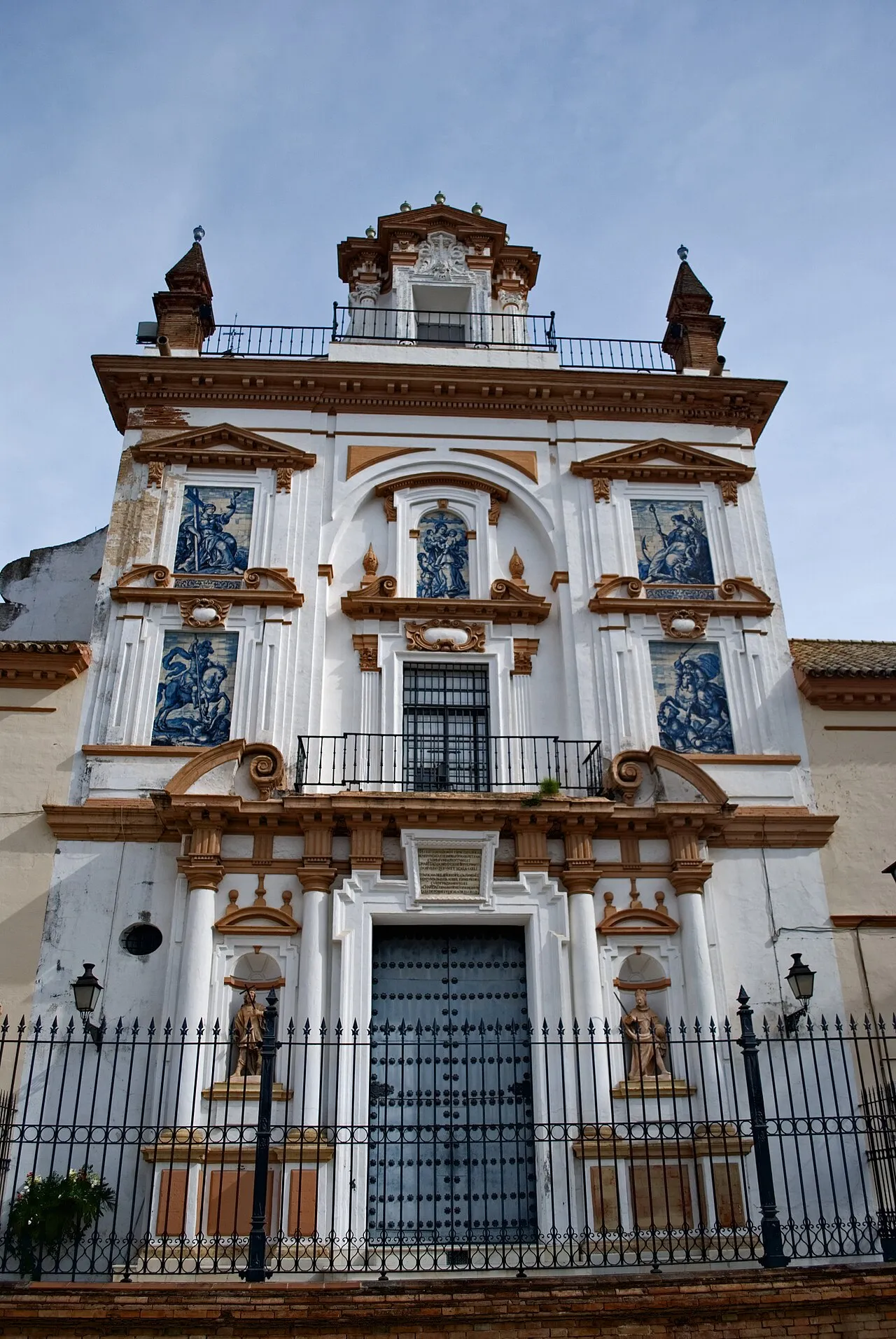
One of the most intense stories in the city. It was refounded in the seventeenth century by Miguel de Mañara, a rich, worldly nobleman who — according to legend — saw his own funeral pass by in the street and devoted the rest of his life and his fortune to collecting and burying the poor nobody wanted. Inside hang the two harrowing canvases by Valdés Leal on death and vanity, so raw that Murillo said you had to hold your nose to look at them, alongside the gentler paintings of Murillo himself. What impresses is that the brotherhood is still alive: today it runs a home here for elderly people without means.

11Torre del Oro

Torre del Oro

📍 Paseo de Cristóbal Colón

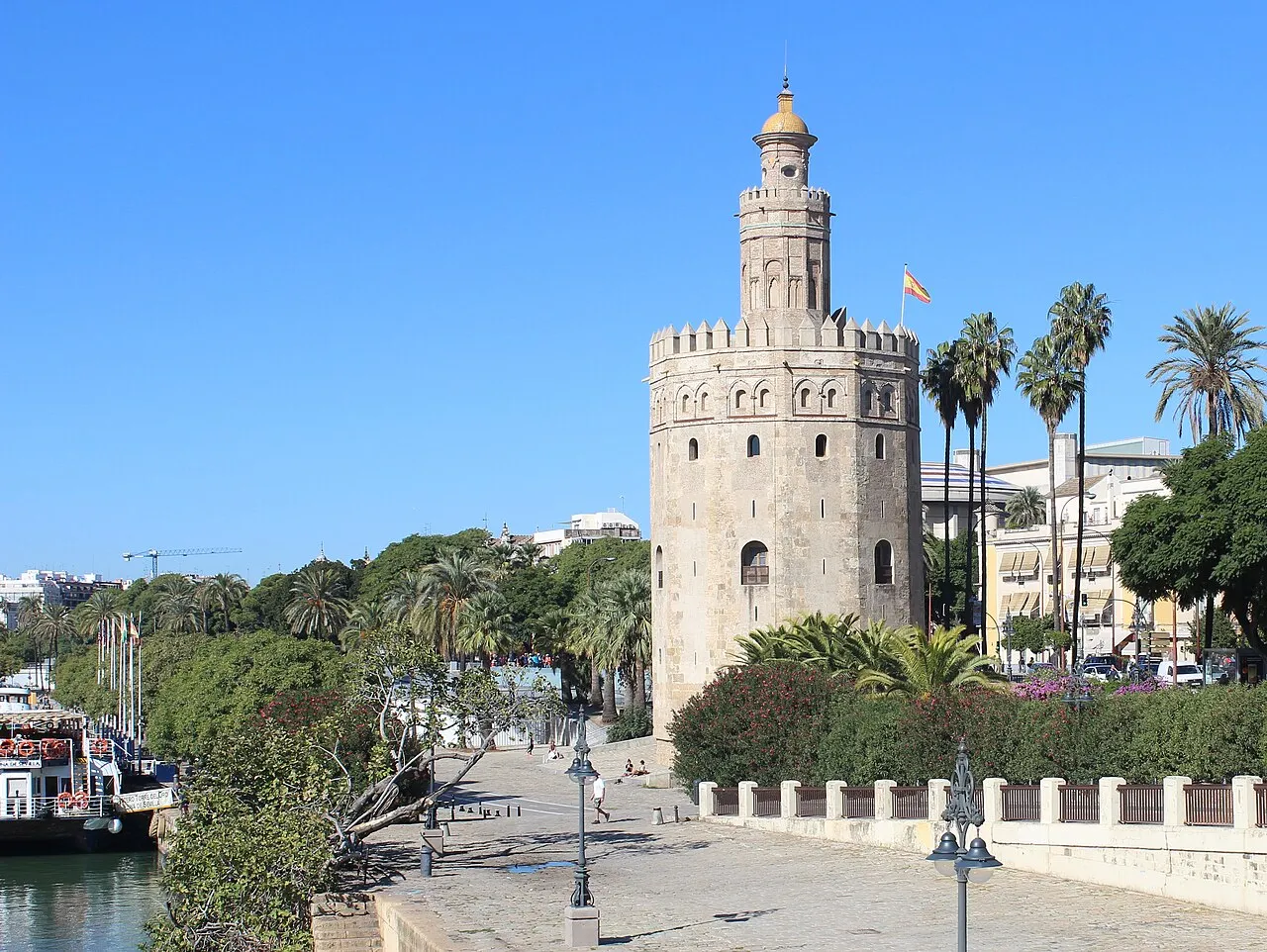
Twelve sides of warm stone at the water's edge. The Almohads raised it between 1220 and 1221 as a torre albarrana, a tower standing apart from the wall and joined to it by an arm of stone, to watch over the river. Its shape reads like a geological section: the twelve-sided body is Almohad, the middle one was added by Peter I in the fourteenth century and the round top is from the eighteenth, after the Lisbon earthquake of 1755. The name does not come from gold: a restoration in 2005 discovered that the shine came from a mixture of lime mortar and pressed straw that gleamed in the sun.

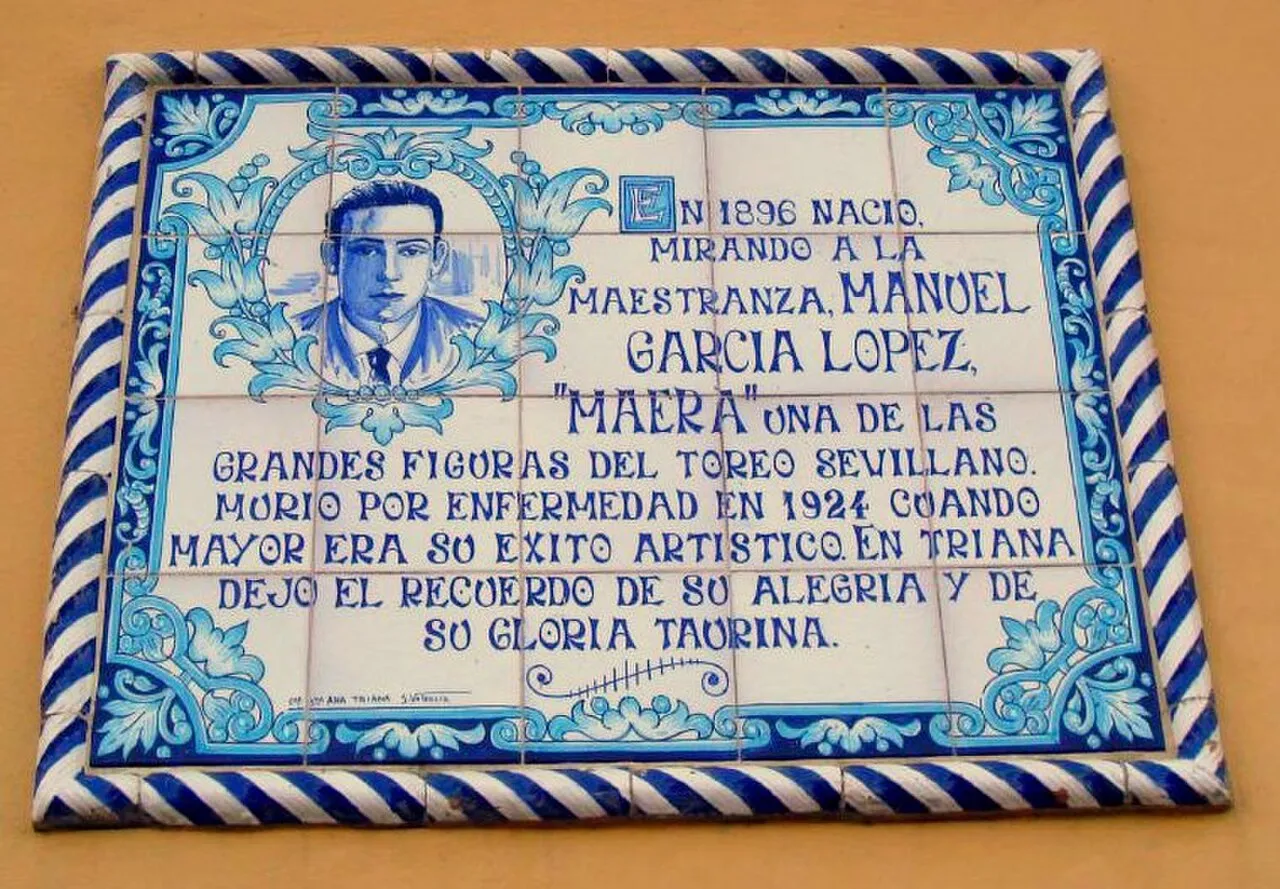
12Real Maestranza Bullring

Real Maestranza Bullring

📍 Paseo de Cristóbal Colón, 12

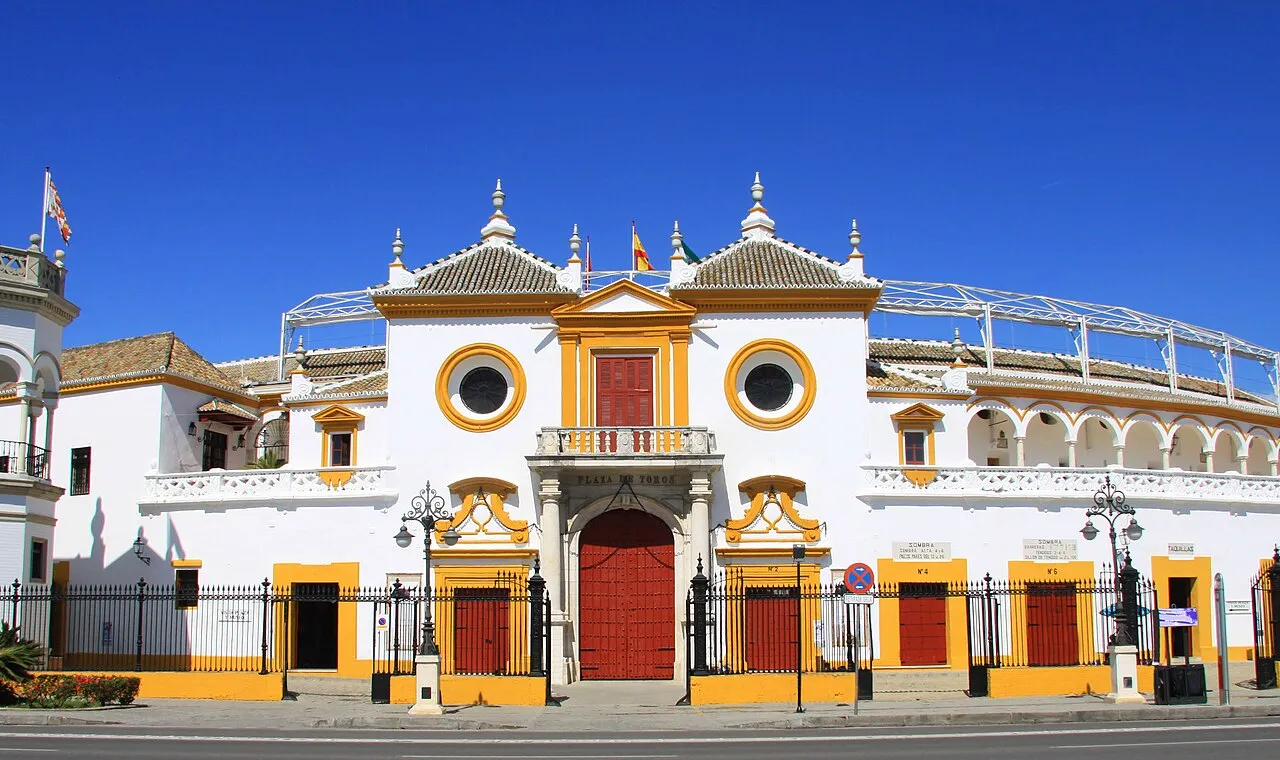
A very long wall, white and ochre, curving beneath a balcony of yellow arches. It was begun in the eighteenth century by the Real Maestranza de Caballería, a corporation of mounted nobles founded around 1670, and the works dragged on for more than a hundred years, until 1881: that is why it is not a perfect circle. It holds around eleven and a half thousand people. Look at the Puerta del Príncipe: there is only one way to leave through it, carried shoulder-high, and doing so in Seville counts for more than in any other ring. The guided tour explains three centuries of the city's history, whether or not you like bullfighting.

13Isabel II Bridge

Isabel II Bridge

📍 The Triana bridge

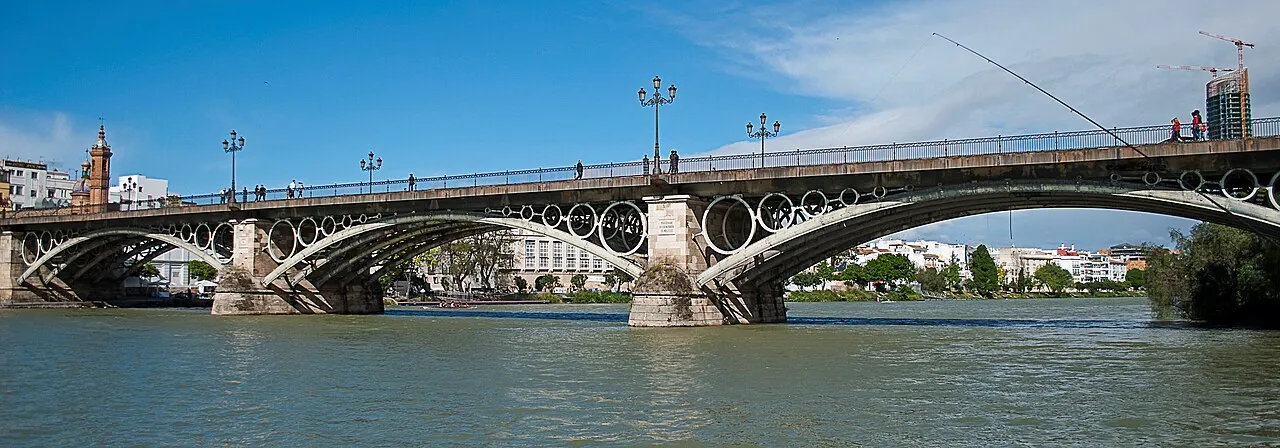
Almost nobody calls it by its official name. Its linked cast-iron arches went up between 1845 and 1852 and hide a story nobody expects: they were not invented from scratch but copied girder by girder from a bridge across the Seine in Paris, the Pont du Carrousel, next to the Louvre. The Parisian original was demolished almost a century ago and the Sevillian copy is still standing. From the middle of the bridge you understand the city better than from any viewpoint.

14Calle Betis

Calle Betis

📍 Triana bank

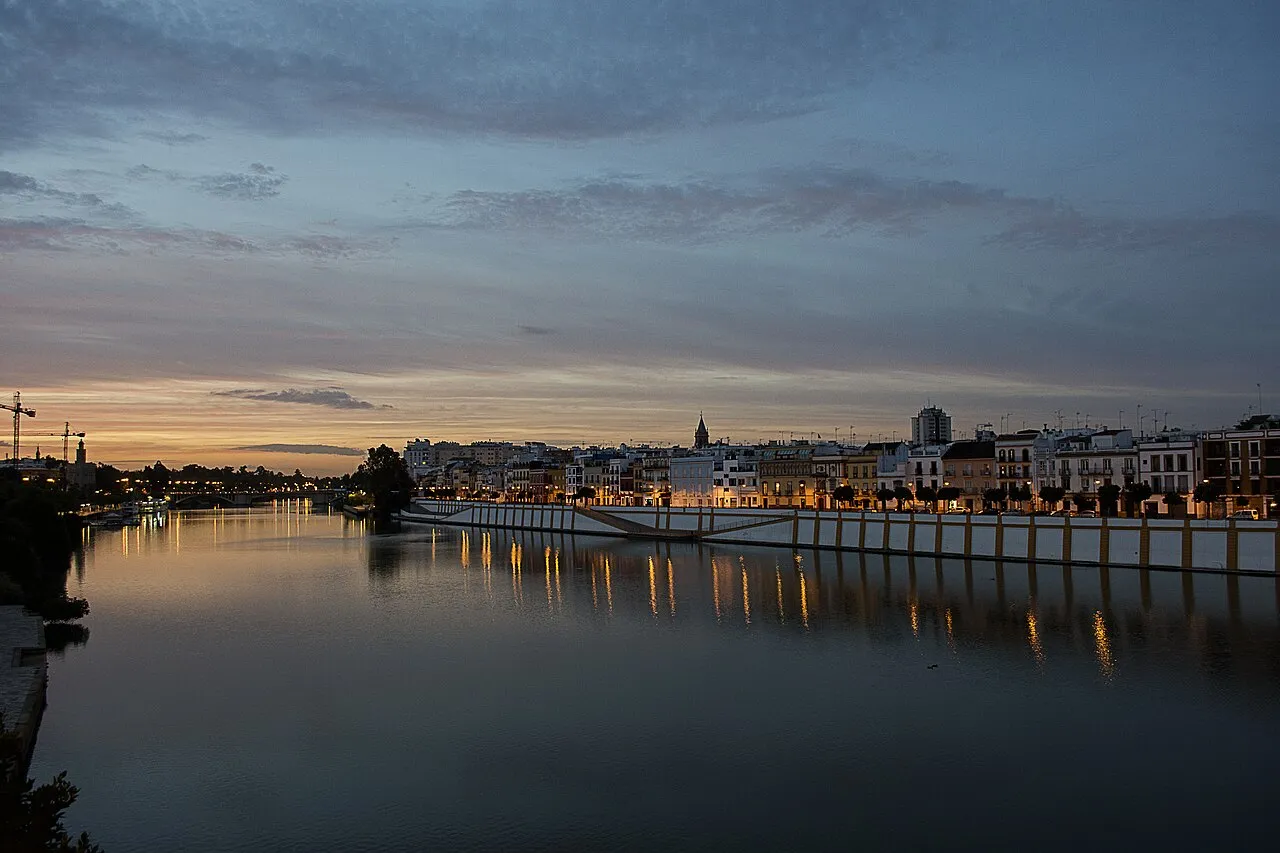
A row of coloured façades — ochre, earth red, indigo, yellow — lined up in front of the Guadalquivir like a backdrop, with the whole of Seville posing opposite: the Torre del Oro golden in the sun, the Maestranza and, behind, the Giralda peeking out. It is the city's postcard and it works best at sunset. Betis, or Baetis, is what the Romans called the Guadalquivir two thousand years ago. These houses have been fighting the water for centuries: the bank was raised in the nineteenth century with a retaining wall because the river flooded Triana time and again.

Plaza del Altozano
Don't skip it

Plaza del Altozano

Triana's living room. The name explains everything: altozano, a small rise. When the Guadalquivir burst its banks and flooded the neighbourhood time and again, this mound stayed dry for longer, so Triana made it its safe ground and, over the years, its meeting place. Turn slowly and you will see two bronzes that sum up the soul of this bank: one dedicated to the art of flamenco and the other to Juan Belmonte, the bullfighter who changed bullfighting by standing firm where others fled, born on this side of the river.

🎧 On the tour Triana: Ceramics, Flamenco, and River📍 View on Google Maps

Afternoon of day 2 · The Plaza de España at sunset

The best possible ending, and the worst plan at midday.

Leave the Plaza de España for late afternoon. It is not a question of taste but of shade: the semicircle is enormous and almost entirely exposed, so at three in the afternoon in June it is downright inhospitable, while at seven it is one of the most beautiful places in Spain.

Before you get there it is worth crossing the Parque de María Luisa, which was the private garden of the Palacio de San Telmo until 1893, when the Infanta María Luisa Fernanda de Borbón, by then a widow, gave the city almost twenty hectares to become a public park. Hence the name. It is the best way to reach the square: in the shade, listening to peacocks.

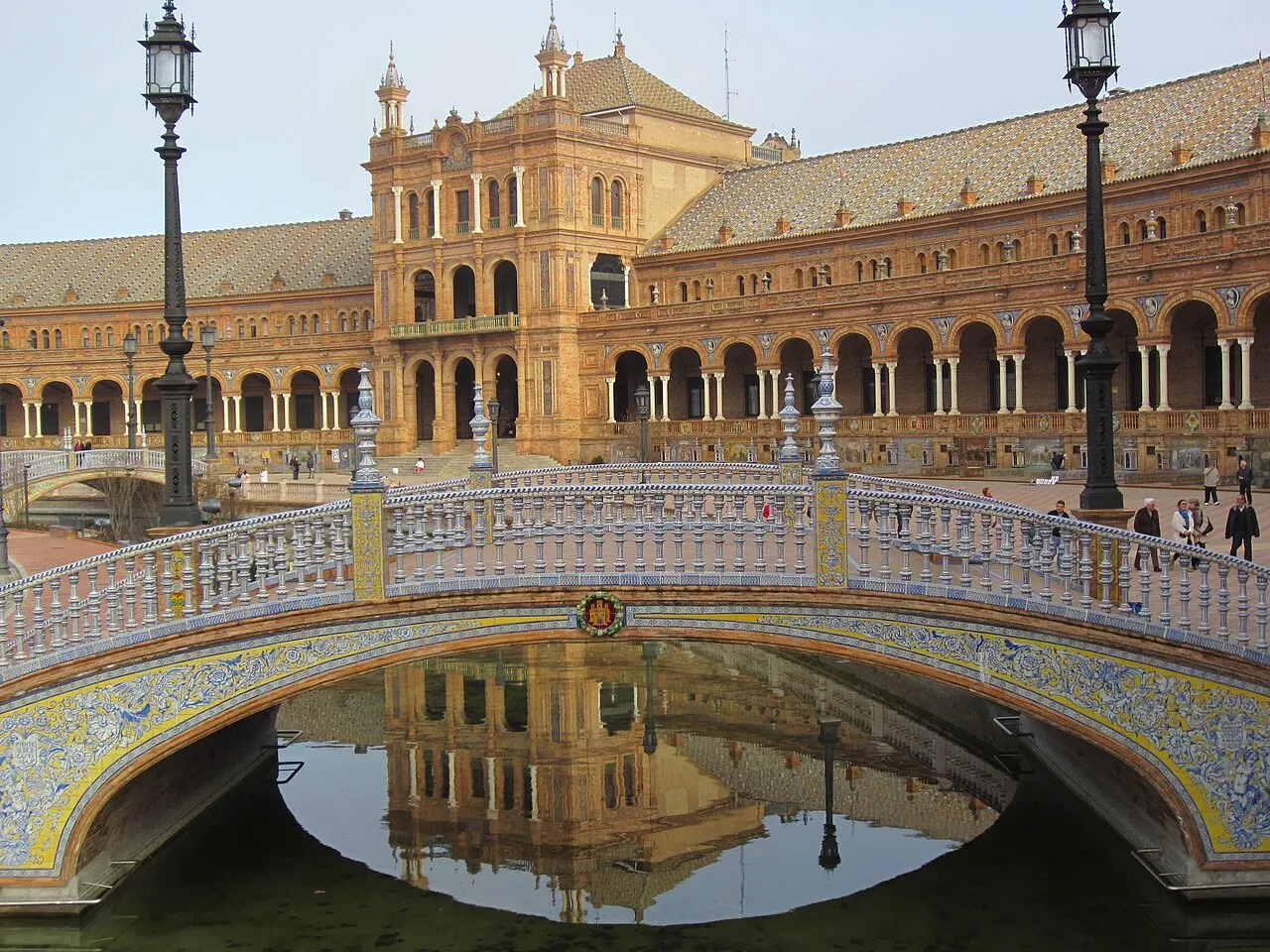
15Plaza de España

Plaza de España

📍 Parque de María Luisa

A semicircle a hundred and seventy metres across in brick and ceramic, with a colonnaded gallery, two very tall towers and a canal that embraces it all. It was designed by the Sevillian Aníbal González for the 1929 Ibero-American Exposition and is the greatest work of Regionalist architecture. The forty-eight benches along the front each represent a Spanish province, with its map and its historical scene in tiles: looking for your own has become a ritual. In 2000 it stood in for the palace of the planet Naboo in Star Wars Episode II, without moving a single stone.

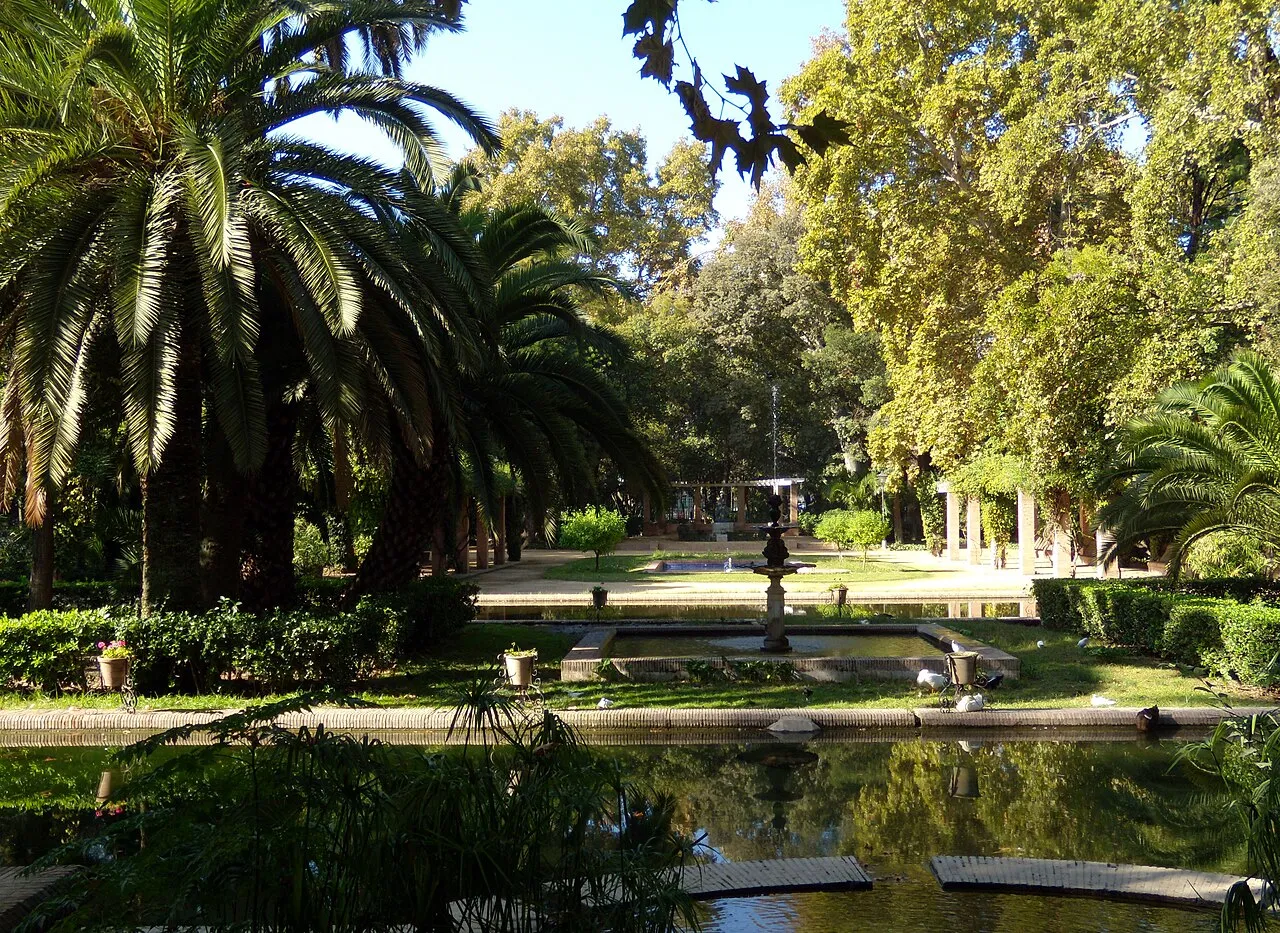
16Parque de María Luisa

Parque de María Luisa

📍 Entrance through the Glorieta de San Diego

The city's great green lung and one of the most beautiful historic gardens in Spain. Inside, sound rules over sight: the cooing of doves, a peacock hidden somewhere, running water, the crunch of albero gravel underfoot. Look for the Glorieta de Bécquer, with its huge cypress and the three figures representing love that arrives, love that wounds and love that is lost, the work of Coullaut Valera. It is the most literary corner of Seville and it is almost always quiet.

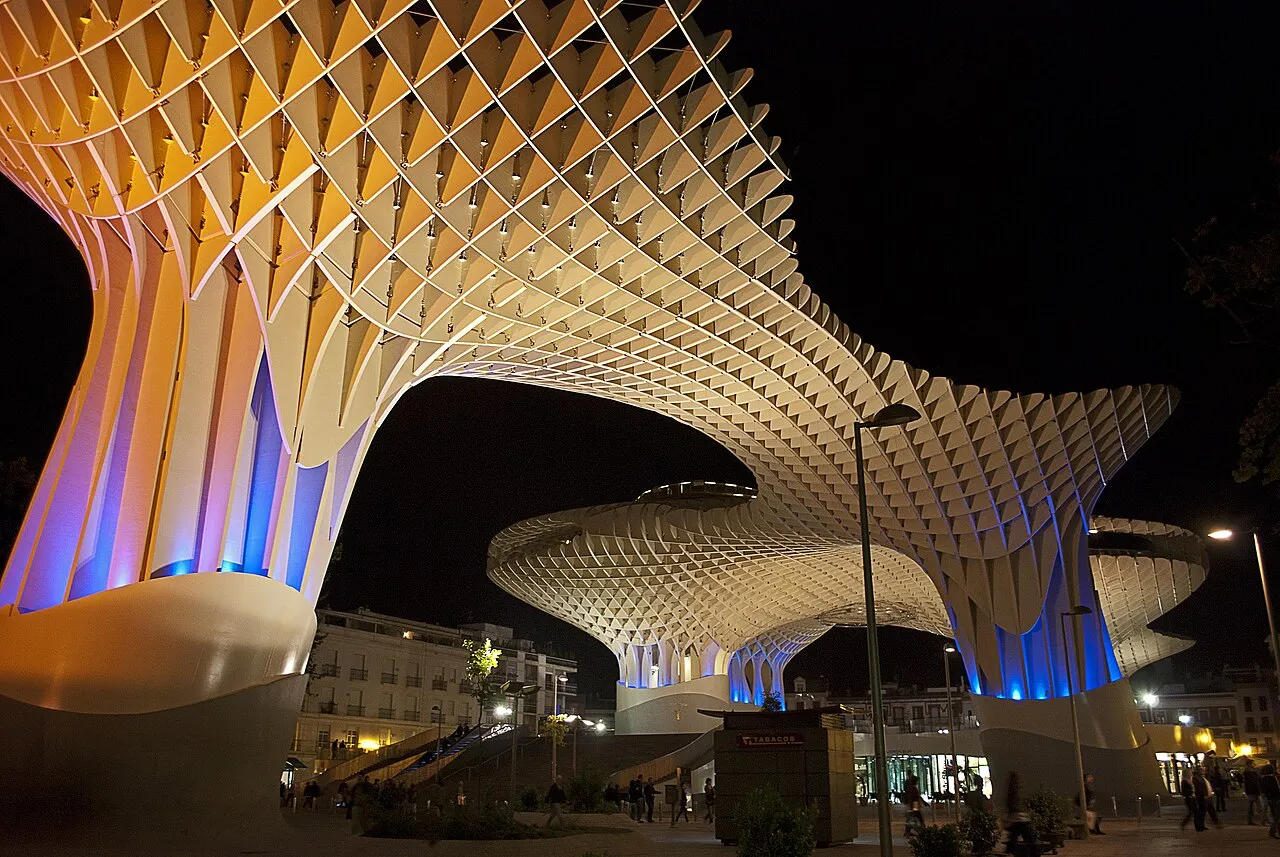
17Las Setas

Las Setas

📍 Plaza de la Encarnación

If there is still light, the last viewpoint. An undulating wooden structure shaped like six giant parasols, the work of the German architect Jürgen Mayer, opened in 2011 and the largest wooden construction in the world. When it went up it split the city between those who hated it and those who adored it; today it is already a postcard. Underneath is a museum, the Antiquarium, with the Roman and Moorish remains that appeared during the excavation: that is why the works took so long, because another city turned up underneath.

Where to stop for lunch without losing the day

Four classic bars that fall right on the route.

In Seville the timetable rules more than the menu: lunch is served from 14:00 to 16:00 and dinner from 21:00, and outside those slots many kitchens close. Organising the day while ignoring this is the fastest way to end up eating badly.

The other rule is about format: order a little of many things and don't sit down if the place is a bar-counter sort of place. Eating standing up, with your beer resting on a barrel out in the street, is not a discomfort to be put up with; it is exactly the plan.

These four fall within the itinerary and you don't need to make a detour to reach any of them. None is a secret — they have all been open for decades or centuries — but that is precisely what makes them reliable.

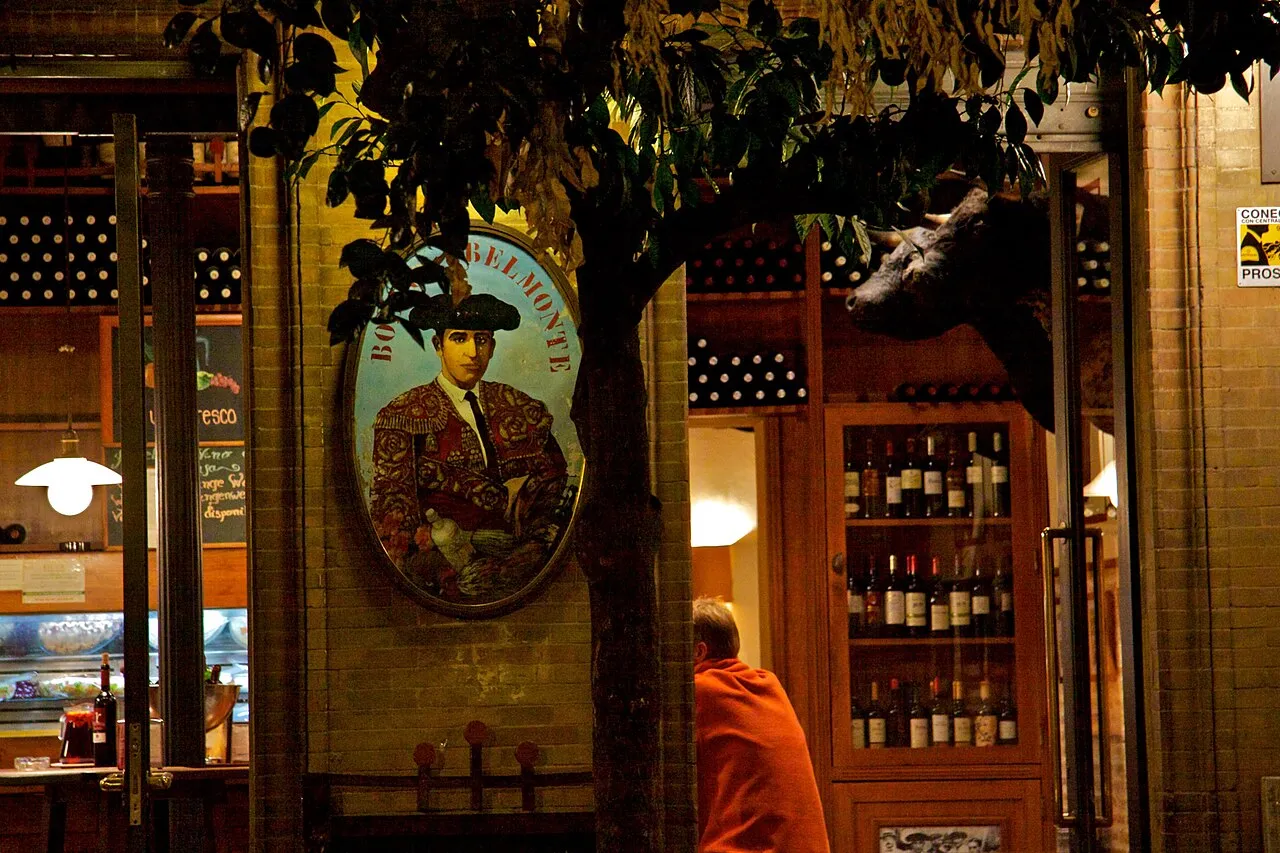
Bodega Santa Cruz “Las Columnas”

Bodega Santa Cruz “Las Columnas”

📍 Calle Rodrigo Caro, 1 · Santa Cruz

One of the most legendary bars in Seville, and one of the noisiest. There are no tables with tablecloths here: you eat standing up, at the bar or with your beer resting on a barrel in the street, and the waiter chalks up the bill on the wooden counter. Order the montadito de pringá — the stewed meat from the cocido pressed into warm bread — the spinach with chickpeas or the fried aubergine with cane honey. Those tapas have their roots in Andalusi and Sephardic cooking, that of the people who lived in this very neighbourhood.

Las Teresas

Las Teresas

📍 Calle Santa Teresa, 2 · Santa Cruz

It opened in 1870 and is, by right, one of the oldest and best-loved taverns in the city. The first thing to reach you is the smell of ham: the ceiling is a constellation of hanging legs, dozens of them, perfuming the air above a marble bar, old photographs and bullfighting posters. What it does best is a tapa of Iberian ham sliced to order and a well-pulled beer. The street is named after Saint Teresa of Ávila, who founded a Carmelite convent nearby in 1575.

La Brunilda

La Brunilda

📍 Calle Galera, 5 · El Arenal

Unassuming from outside and one of the places where you eat best in the whole of El Arenal, which half the city knows: there is almost always a queue, or it is worth booking. Modern-cooking tapas with ideas but without trying to be too clever. The creamy risotto with mushrooms and cheese is worth ordering twice; if you fancy meat, the pork cheek stewed until it falls apart. The portions are generous: with three or four and a glass of white you eat more than enough.

Las Golondrinas

Las Golondrinas

📍 Calle Antillano Campos · Triana

The neighbourhood stop in Triana, right in the potters' quarter. Tiles, waiters who have been there forever and a short menu that hasn't changed because it doesn't need to: grilled mushrooms, sirloin tips, cuttlefish. It is where the people of the neighbourhood go when they don't want to think, and it works just as well at midday as at eleven at night.

Frequently asked questions

Are 2 days enough to see Seville?

Yes, for the essentials. The city has the advantage that the cathedral, the Alcázar and Santa Cruz are right next to each other, and from there the river is a short walk away and Triana is just across a bridge. Two full days fit in the three great monuments, the two neighbourhoods with the most character and the Plaza de España. What doesn't fit are the excursions to the surrounding area or an unhurried visit to the museums.

What do you need to book in advance in Seville?

The Real Alcázar, without exception: it is the monument that sells out first and in spring it fills up days in advance. The cathedral is worth booking online to avoid the queue, although there is always availability. The bullring and the Hospital de la Caridad can be entered on the spot without any problem.

How much does it cost to see the essentials of Seville?

The tickets for the cathedral with the Giralda and for the Real Alcázar are the two main expenses of the trip. To these you can add, if you fancy them, the bullring and the Hospital de la Caridad, which are considerably cheaper. And there is a counterweight: the Archivo General de Indias is free, and so are the Parque de María Luisa, the Plaza de España, the Patio de Banderas and the whole riverside walk, which are some of the best moments of the visit.

Where should you start on the first day?

At the cathedral, at nine in the morning. It is the busiest spot in the whole city and the difference between seeing it first thing or at midday is enormous. The ticket also includes the climb up the Giralda, which is likewise better done without the heat. From there the Alcázar is two minutes' walk away.

Is it worth crossing over to Triana?

Very much so, and it is not just a question of views. Triana is the neighbourhood where a good part of flamenco and of Sevillian ceramics were born, and it keeps a character of its own that the centre has partly lost. Calle Betis also offers the best panorama of the city, with the Torre del Oro and the Giralda opposite. Crossing the bridge takes five minutes.

Can you do this itinerary in summer?

Yes, but you have to turn the timetable around. From June to September the middle hours of the day are not for walking: use the early morning for the monuments, have a leisurely lunch and leave seven o'clock onwards for the river, Triana and the Plaza de España, which is also when they look their best. Going to the Plaza de España at three in the afternoon in July is a mistake you pay for.

How to organise yourself so it goes well

Book the Alcázar as soon as you have your dates. It is the only point in the itinerary that can be completely spoilt by not having done so: in spring it sells out days in advance and there is no equivalent plan B. The cathedral is also worth booking online, although there the queue does move.

Arrange the day around the sun, not the clock. From June to September the middle hours are not for walking: use the early morning for the monuments, have a leisurely lunch, and keep seven o'clock onwards for the Plaza de España, the river and Triana. In winter the problem is reversed and midday is the best time.

Don't try to squeeze Itálica, Carmona or El Rocío into two days. It is the classic temptation and it goes wrong: the city of Seville itself gives you more than enough for two full days, and any excursion forces you to cut precisely what you came to see. If you have a third day, then yes.

Leave some time unplanned. It sounds like empty advice, but in Santa Cruz and Triana what works best is getting lost, and that only happens if the next hour isn't already taken. Both neighbourhoods are made of corners that appear on no list.

How to plan it

Day 1 · 09:00Cathedral and climb up the Giralda. Combined ticket, a good hour and a half.
Day 1 · 11:00Real Alcázar with advance booking. Two hours minimum, gardens included.
Day 1 · 13:30Archivo General de Indias, free and done in half an hour.
Day 1 · 14:30Tapas at Las Columnas or Las Teresas, standing up.
Day 1 · 17:00Santa Cruz without a map: Patio de Banderas, Susona, Doña Elvira, Venerables, Plaza de Santa Cruz.
Day 2 · 10:00Hospital de la Santa Caridad and Torre del Oro.
Day 2 · 12:00Plaza de Toros de la Real Maestranza, guided tour.
Day 2 · 14:00Cross the Triana bridge and eat in the neighbourhood.
Day 2 · 17:00Calle Betis, the Altozano and calle Pureza.
Day 2 · 19:00Parque de María Luisa and Plaza de España at sunset.

Practical information

Essential bookingsReal Alcázar, several days in advance. Cathedral, best booked online.
FreeArchivo General de Indias, Parque de María Luisa, Plaza de España, Patio de Banderas and the whole riverside walk.
Getting aroundOn foot. The full itinerary adds up to about 6 km spread over two days.
Meal timesLunch 14:00-16:00, dinner from 21:00. Outside those hours, many kitchens close.
Best time of yearMarch-May and October-November. In summer, rearrange the day around the morning and the evening.
FootwearThe old town is uneven cobbles and the slopes of Triana are deceptive.
On the map

🎧 With Viavoy

Walk Seville and listen at your own pace

Download Viavoy and walk Seville offline, whenever you like.

from 2,99 €· one-off payment
City Pass · 9,99 €3 days, all the tours in Seville
Find out more about Viavoy →
Viavoy app

Keep reading

More articles

What to see

Cathedral, Giralda and Real Alcázar: how to visit Seville's big three

Neighbourhoods

The Santa Cruz quarter: a guide to Seville's old Jewish Quarter

Neighbourhoods

Triana: a guide to the neighbourhood that thinks it is a city apart

Food & drink

Tapas in Seville: a guide to the bars, the hours and what to order at each