Holy Week in Seville: how to understand it and where to see it
Festivals and traditions · Seville

Holy Week in Seville: how to understand it and where to see it

What a cofradía is, what happens on the Madrugá and why half the city is divided between the Macarena and the Esperanza de Triana.

9 min read · Updated for the season
🎧 On the walk La Macarena and Alameda: Authentic Seville

Seville's Holy Week (Semana Santa) bewilders anyone who arrives without context. It is not a parade or a scheduled show: it is an entire city reorganised for eight days around some sixty brotherhoods that leave their neighbourhoods and cross the centre in silence or amid saetas, sometimes for fourteen hours at a stretch. It can be experienced as an aesthetic event — and it is one, among the most impressive in Europe — but it is enjoyed far more if you understand four basic concepts. This guide is exactly that: the four concepts, and where to stand.

The dates change every year because they depend on Easter: it falls between late March and mid-April. Book accommodation many months in advance and expect prices to multiply that week.

Four concepts and you understand everything

A hermandad or cofradía is an association of the faithful, almost always tied to a neighbourhood or a guild, with centuries of history behind it. Some were born among potters and sailors, others among bakers or chair-makers. They are not groups improvised for the occasion: they are institutions that function all year round and that make their salida, their procession, during Holy Week.

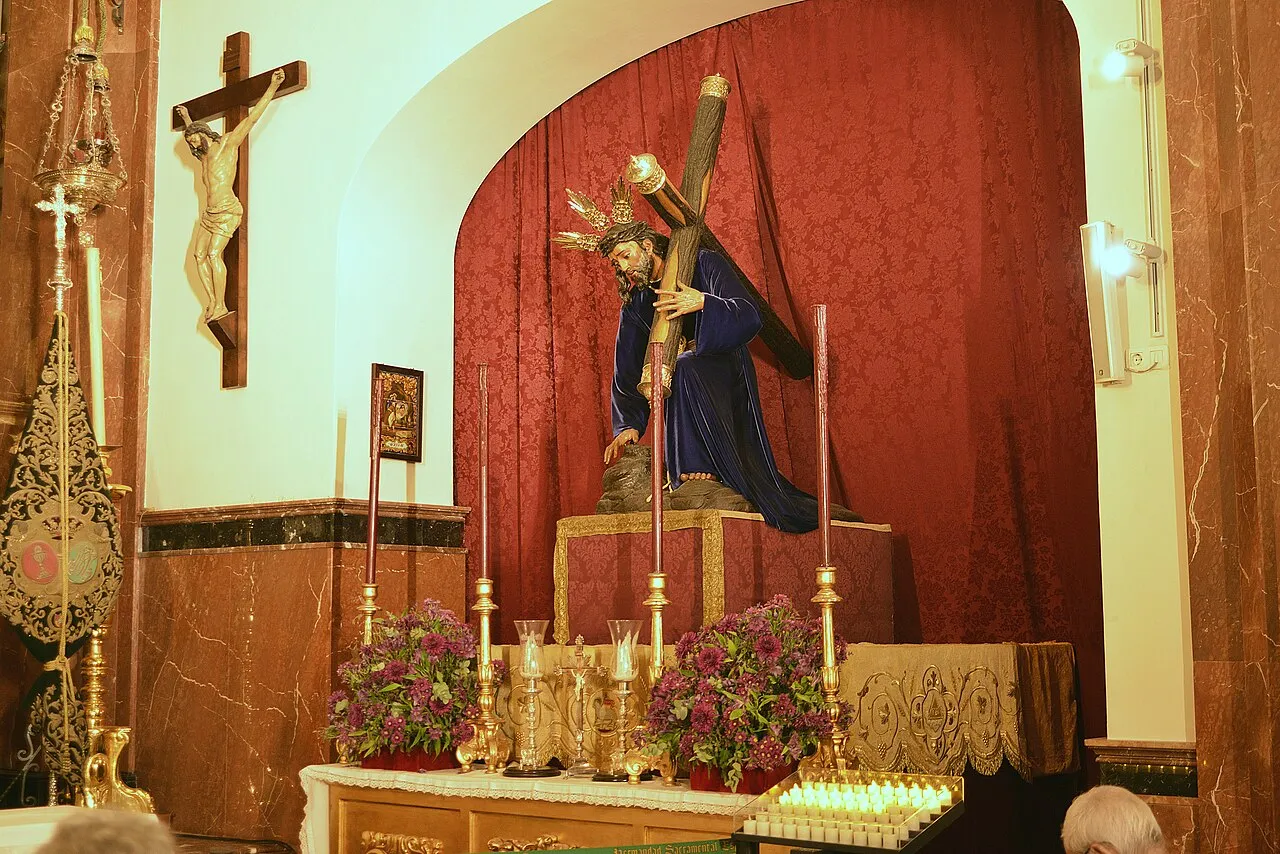
A paso is the platform carried out into the street with the images on top. Each brotherhood usually brings out two: the Christ, more sober, and the palio, with the Virgin beneath a canopy of embroidered cloth held up by silver poles. They weigh tonnes.

The costaleros are the ones who carry the paso, and this is the detail that surprises most: they go underneath, hidden, seeing nothing, bearing the load on the nape of the neck. From outside the paso seems to float. Each stretch between rests is called a chicotá and the rhythm is set by the capataz, the foreman, with a hammer from the front.

A saeta is a flamenco song a palo seco, without guitar, that someone launches from a balcony or from the street when the paso stops. It is not scheduled. When it happens, the whole street falls silent.

🎧 With Viavoy

Explore Seville at your own pace

Download the app and discover Seville offline, whenever you like. Take the walking tour La Macarena and Alameda: Authentic Seville with a local guide in your ear.

Find out more about Viavoy →

The Madrugá: the night that splits the week in two

From midnight on Maundy Thursday to midday on Friday.

If you can only experience one night, it is this one. The Madrugá is the early hours of Good Friday, when six of the oldest and most beloved brotherhoods in the city go out and Seville does not go to bed. It begins after midnight and does not end until well into the following morning.

On that night the two devotions that divide the city cross paths: the Macarena, which leaves its basilica in the north, and the Esperanza de Triana, which leaves the Capilla de los Marineros on the other side of the river. Half of Seville splits between macarenos and trianeros as if it were a derby of devotion. Those in the know say the rivalry is more atmosphere than reality, more about the neighbourhoods than the brotherhoods themselves; ask a Trianero which is the best and you will see the answer.

Realistic warning: it is also the night with the most people, and in some stretches of the centre you can't even move forward. If you go, choose a spot and stay there. Trying to follow a paso through the old town on the Madrugá is the best way to see nothing.

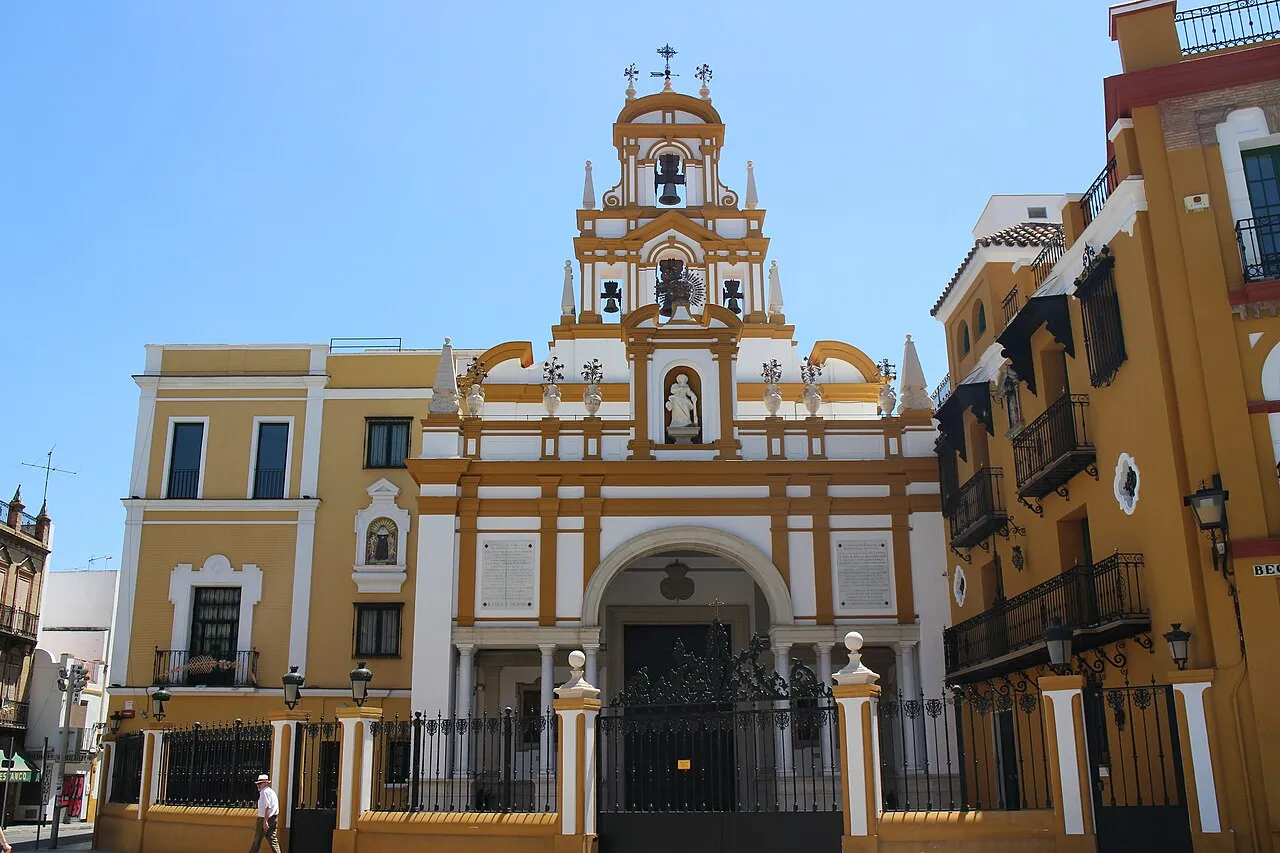
1Basilica of the Macarena

Basilica of the Macarena

📍 Calle Bécquer, 1 · open all year

A clean white façade, and as soon as you enter the smell of candle wax. Inside, in her gilded altarpiece, is Seville's most loved image: the Virgen de la Esperanza Macarena, a Baroque carving from around 1680. Look at her face: she weeps, with five crystal tears running down her cheeks and an expression between grief and sweetness that has moved the city for generations. She has been dressed in mourning only once in her history, in 1920, when the bullfighter Joselito el Gallo, who adored her, died in the ring. The whole city stopped.

2Capilla de los Marineros

Capilla de los Marineros

📍 Calle Pureza, 53 · Triana

The home of the Esperanza de Triana, on one of the most Trianero streets there is: narrow, with low houses, iron grilles and flowerpots. The brotherhood is one of the most loved and oldest in the city, with origins in the guilds of potters and sailors — people of the clay and people of the river — more than five centuries ago. You can go in outside service times and it costs nothing. Seeing the image in her chapel, without crowds, is a different experience from seeing her in the street.

3Arco de la Macarena and the wall

Arco de la Macarena and the wall

📍 Next to the basilica

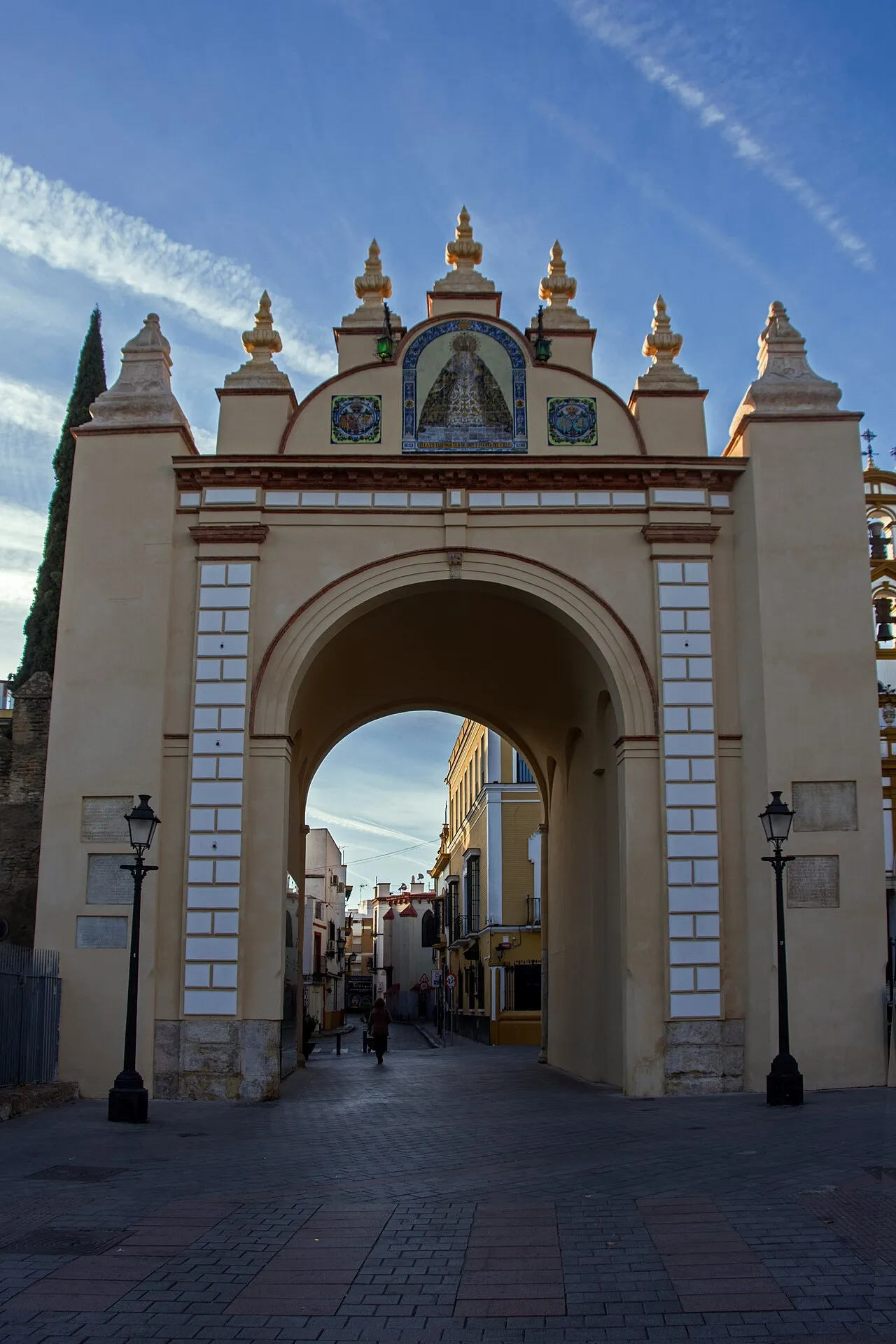
A brick arch and a long stretch of earth-coloured wall, crenellated and sturdy: the most complete section Seville has left. What you touch is Muslim, raised by the Almoravids and reinforced by the Almohads in the twelfth century, when this was one of the great cities of the western Islamic world. Through this arch the kings entered to swear to uphold the city's privileges, and through it the Macarena goes out every Madrugá. It is one of the spots where the paso is best framed.

Where to stand depending on what you are after

Not every spot serves the same purpose.

The carrera oficial is the common route that all the brotherhoods follow to reach the cathedral, and it runs through calle Sierpes, the plaza de la Campana and the avenida de la Constitución. There are paid seats and boxes there, you see very well and you don't have to fight for a spot, but you lose the most moving part: the neighbourhood atmosphere.

For the opposite — the emotion — you have to go to a brotherhood's departure or return at its own church, usually in the early hours or late at night. That is when the saetas are sung, when the people of the neighbourhood are truly moved and when the paso performs its hardest manoeuvres to get through a door it barely fits.

And to see it without the crush, the least glamorous and most useful recommendation: the first days. On Palm Sunday and Holy Monday there are far fewer people than on the Madrugá, the brotherhoods are just as impressive and you can move around the centre.

4Calle Sierpes

Calle Sierpes

📍 Stretch of the carrera oficial

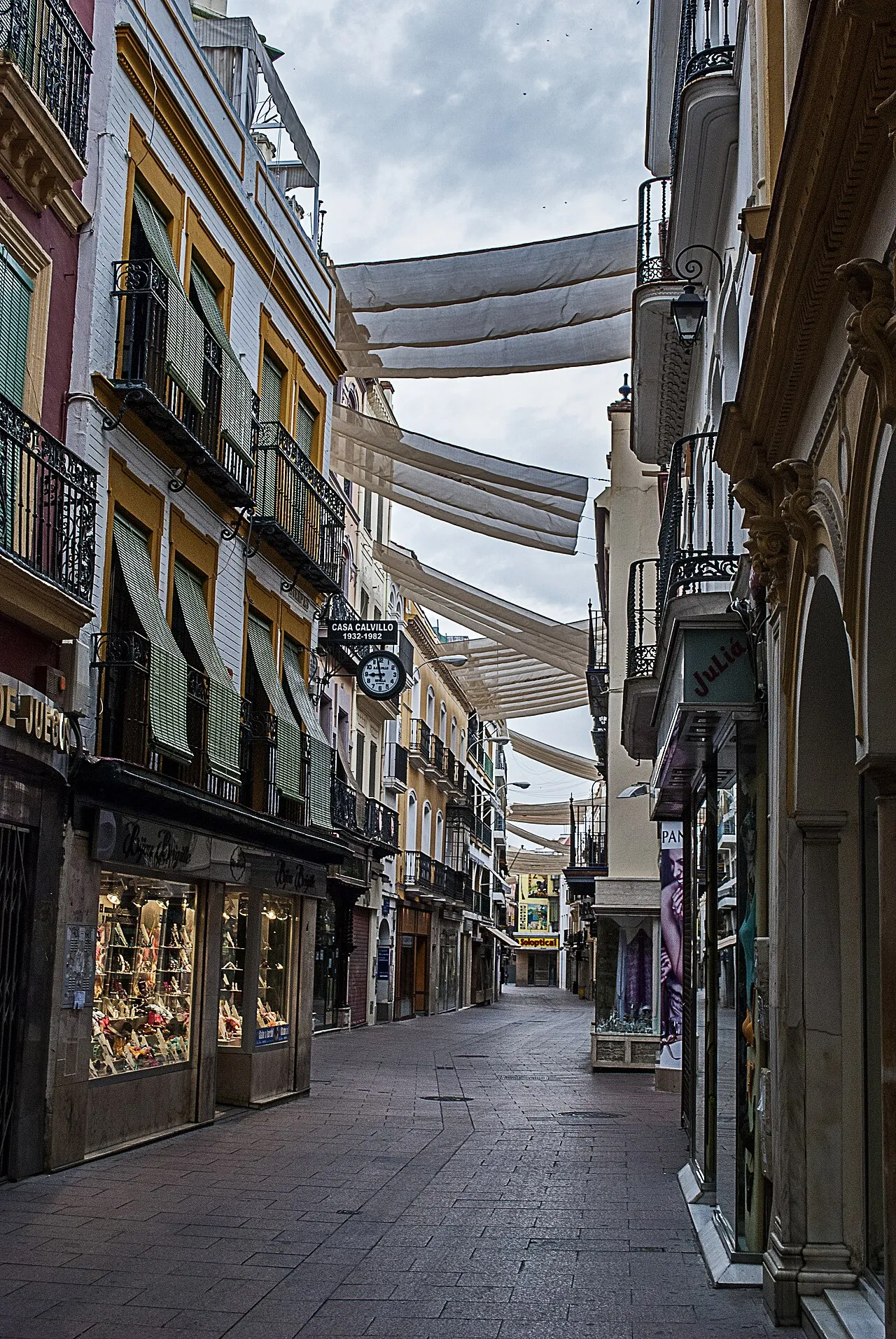
The shopping street par excellence, pedestrianised and without a single car, becomes during Holy Week the most coveted stretch of the carrera oficial. Here are the paid seats and the boxes, and here every single brotherhood passes on its way to the cathedral. In summer the great cloth awnings stretch from façade to façade and leave the street in golden shade, a custom that dates from the mid-nineteenth century. You see very well and you don't have to fight for a spot; what there isn't is neighbourhood atmosphere.

5Plaza Virgen de los Reyes

Plaza Virgen de los Reyes

📍 Next to the Giralda

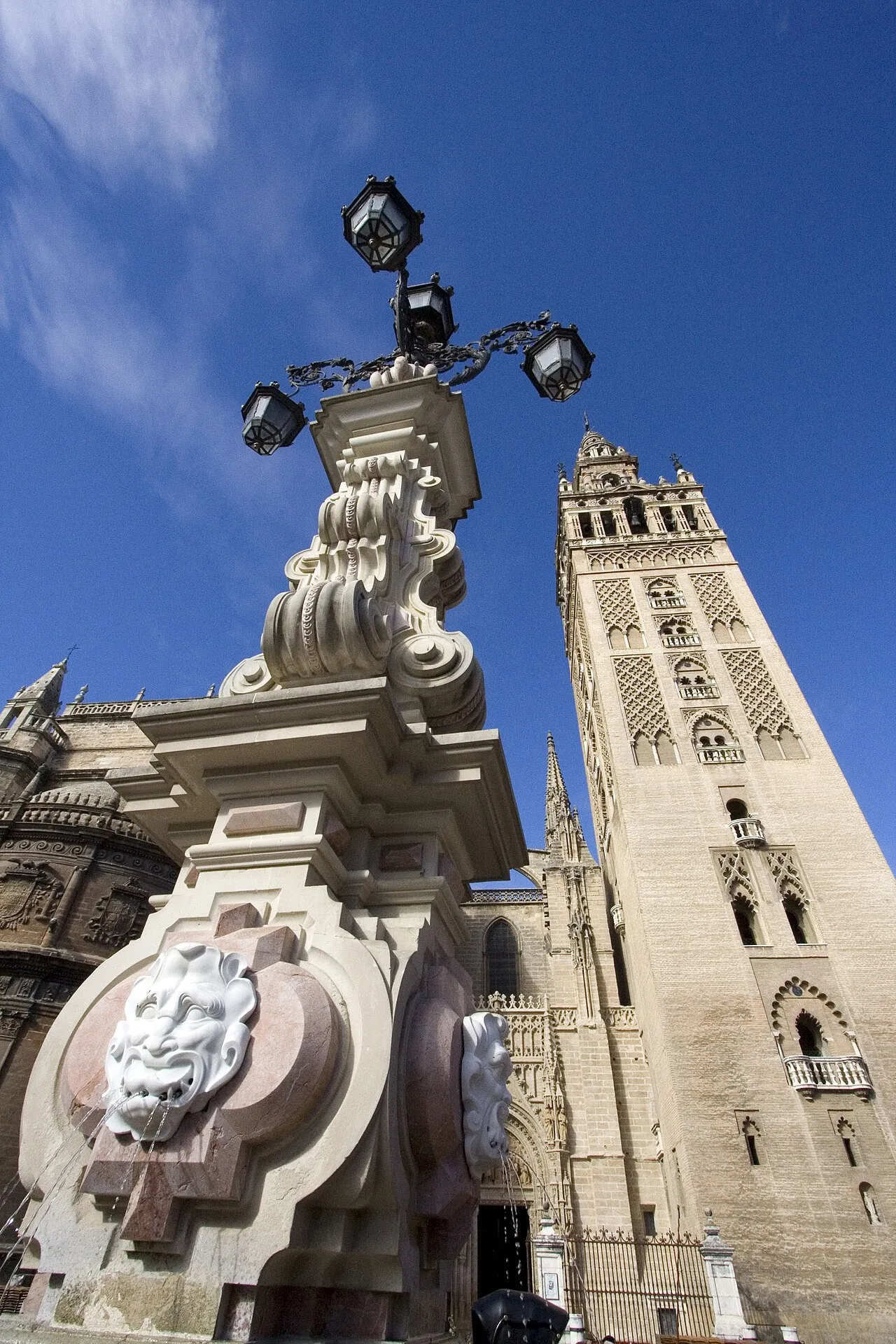
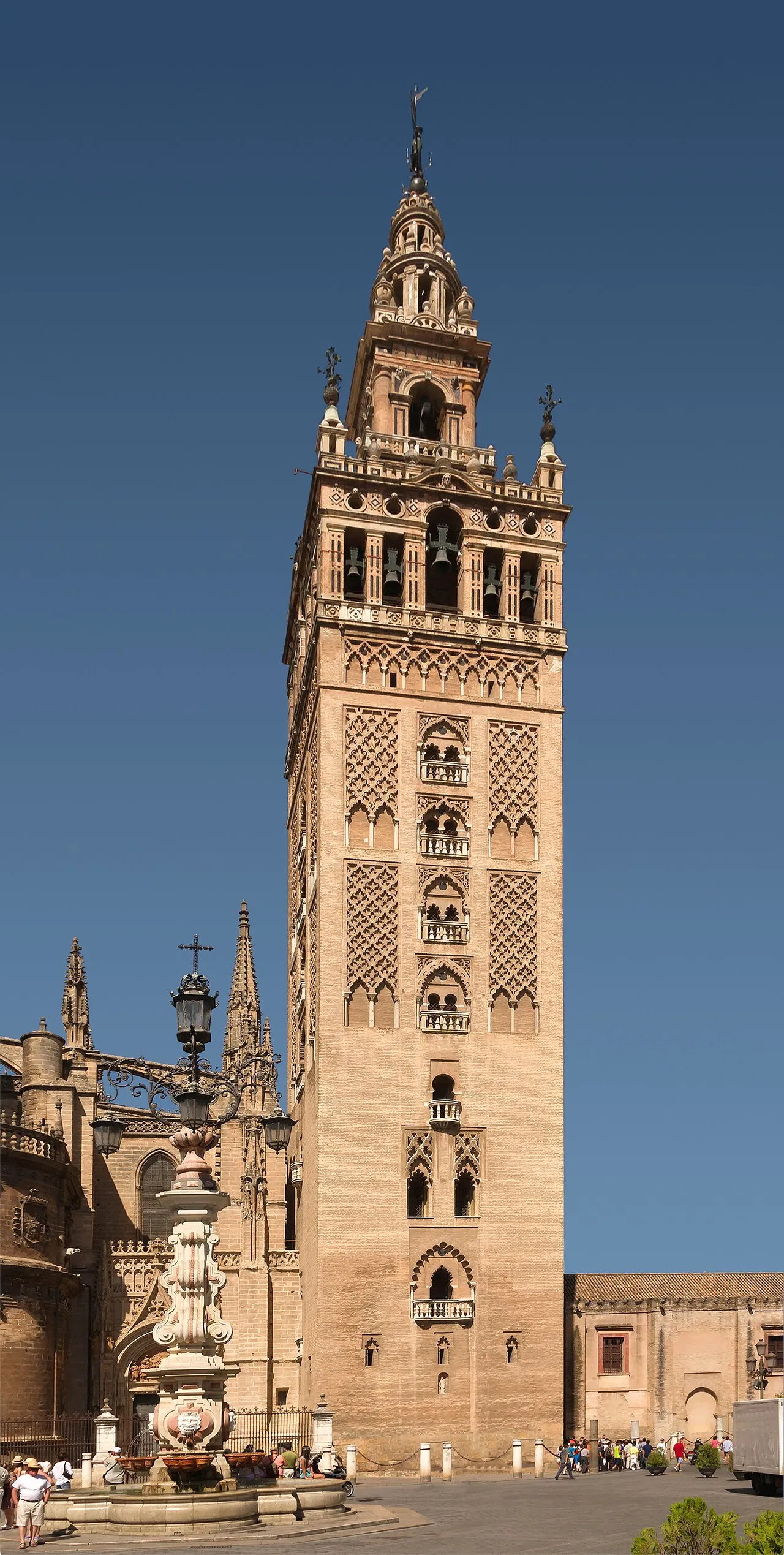
The most photographed spot in all of Holy Week: the square where the pasos turn with the Giralda, lit up, in the background. It is also one of the most crowded, so you have to arrive well in advance and resign yourself to not moving. The advantage is that every brotherhood passes through here and the framing is unbeatable. If you are going with a camera, this is the place.

6Isabel II Bridge

Isabel II Bridge

📍 Route of the Esperanza de Triana

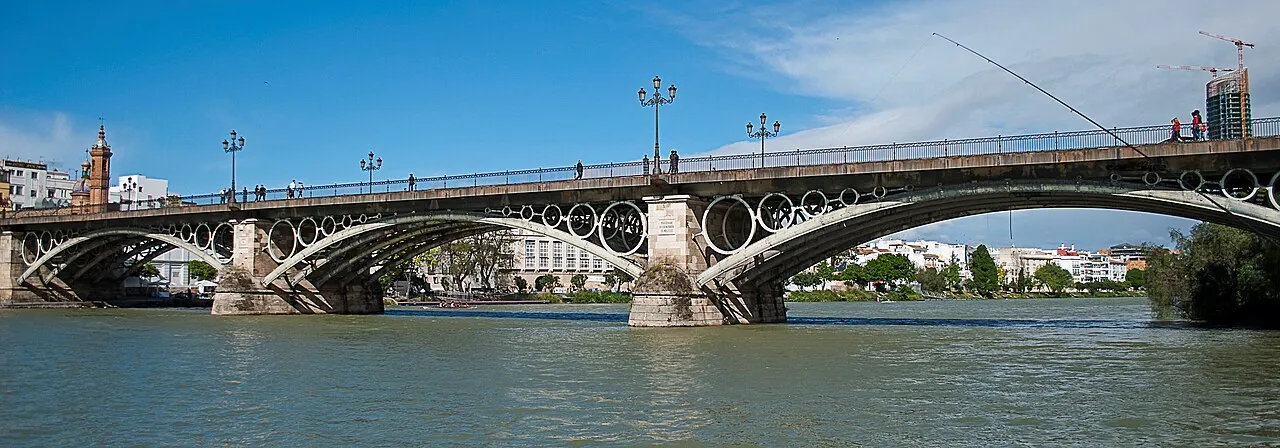
When the Esperanza de Triana crosses the bridge back to her neighbourhood, by then in the morning, it is one of the most moving moments of the whole week, with the river below and the neighbourhood waiting on the other side. The cast-iron arches were raised in the mid-nineteenth century copying a Parisian bridge that has since disappeared. For this moment it is worth getting up early and positioning yourself on the Triana side.

The costaleros go underneath
The detail that changes how you look

The costaleros go underneath

It is what most surprises anyone seeing it for the first time and what best explains Seville's Holy Week. The tonnes of the paso are not carried by hidden machinery or a wheeled cart: they are borne by people tucked underneath, seeing nothing, on the nape of the neck, with a capataz setting the rhythm by striking a hammer from the front. Each stretch between rests is called a chicotá. When the paso seems to float and turn on its own at an impossible corner, what you are watching is brutal physical work done blind and rehearsed for months.

Frequently asked questions

When is Holy Week in Seville?

It changes every year because it depends on the date of Easter: it always falls between late March and mid-April. It runs from Palm Sunday to Easter Sunday, eight days, and its central night is the Madrugá, between Maundy Thursday and Good Friday. It is worth checking the calendar for the specific year before booking anything.

What is the Madrugá?

The early hours of Good Friday, the night when six of the oldest and most beloved brotherhoods go out and the city does not go to bed. It begins after midnight and does not end until well into the morning. It is when the Macarena and the Esperanza de Triana go out, the two devotions that divide the city. It is also the night with the most people: if you go, choose a spot and stay there.

Where is Holy Week in Seville best seen?

It depends on what you are after. To see well and in comfort, the carrera oficial — calle Sierpes, plaza de la Campana, avenida de la Constitución — where there are paid seats and boxes. To be moved, a brotherhood's departure or return at its own church, which is when the saetas are sung and the neighbourhood turns out in force. For photography, the plaza Virgen de los Reyes with the Giralda in the background.

Can you visit Seville normally during Holy Week?

Not entirely, and it is worth knowing. The centre is closed to traffic, the routes change every day, the monuments reduce their hours and the cathedral cannot be visited as a tourist because it is in full use. If your trip coincides, accept that you will see Holy Week: trying to fit in the Alcázar, the cathedral and the museums as well usually ends in frustration.

Why are the pasos carried that way?

Because in Seville the costaleros go underneath the paso, hidden, seeing nothing, bearing the weight on the nape of the neck, with a capataz setting the rhythm by striking a hammer from the front. That is why the paso seems to float and turn on its own. Each stretch between rests is called a chicotá. It is brutal physical work, done blind and rehearsed for months.

What is the rivalry between the Macarena and the Esperanza de Triana?

Both go out on the Madrugá and half of Seville splits between macarenos and trianeros, almost like a derby of devotion. The Macarena leaves her basilica in the north of the city; the Esperanza, the Capilla de los Marineros, on calle Pureza in Triana. Those in the know say the rivalry is more atmosphere than reality, more about the neighbourhoods than the brotherhoods. Even so, don't ask a Trianero which is the best.

What you need to know before you go

On accommodation: book very far in advance. Prices that week multiply and the hotels in the centre sell out months ahead. If you are looking for balance, staying in Triana or the Macarena works out cheaper and also puts you inside the neighbourhood atmosphere, which is the best part.

On getting around: the centre is completely closed off, no cars or buses run in large areas and the routes change every day. The only reasonable way to move is on foot, and you should count on long detours because a brotherhood on the move closes the street for quite some time. Download the route programme, which is published every year, and check which way each cofradía is going.

On the rest of the city: the monuments reduce their hours or close, and the cathedral cannot be visited as a tourist during those days because it is in full use. If your trip coincides with Holy Week, accept that you will see Holy Week and little else; trying to fit in the Alcázar, the cathedral and the museums as well is the recipe for enjoying nothing.

And on behaviour: it is not a parade, it is a religious act attended by people for whom it means a great deal. There are two rules that are respected almost unanimously: silence when the paso stops and someone sings a saeta, and never crossing in front of a moving paso. With that, nobody will look at you badly.

One last note: if you are travelling with children or with little tolerance for crowds, the first days of the week are an infinitely better experience. Palm Sunday has spectacular brotherhoods and half the people.

Practical information

When it isBetween late March and mid-April: it depends on Easter and changes every year.
The big nightThe Madrugá, from midnight on Maundy Thursday to midday on Friday.
To see it without the crushPalm Sunday and Holy Monday, far fewer people.
Where to standCarrera oficial (Sierpes, Constitución) to see well; departures and returns in the neighbourhoods to be moved.
Where to stayBook months in advance. Triana and the Macarena work out cheaper and put you in the atmosphere.
Getting aroundOn foot only. The centre is closed off and the routes change every day.
On the map

🎧 With Viavoy

Walk Seville and listen at your own pace

Download Viavoy and walk Seville offline, whenever you like.

from 2,99 €· one-off payment
City Pass · 9,99 €3 days, all the tours in Seville
Find out more about Viavoy →
Viavoy app

Keep reading

More articles

Neighbourhoods

La Macarena and the Alameda: the Seville where people live

Festivals & traditions

Seville's Feria de Abril: a guide to not being left outside the casetas

Itineraries

Seville in 2 days: the itinerary that really works

Neighbourhoods

The Santa Cruz quarter: a guide to Seville's old Jewish Quarter