Holy Week in Málaga: tronos, legionaries and a freed prisoner
Festivals · Málaga

Holy Week in Málaga: tronos, legionaries and a freed prisoner

Why here they are not called pasos but tronos, who carries them on their shoulders and which brotherhood releases an inmate every year. Where to watch the processions without getting trapped.

8 min read · Updated for the season
🎧 On the walk The Cathedral, the Alcazaba and the Roman Theatre

Holy Week (Semana Santa) in Málaga is nothing like Seville's and it is worth knowing that before you arrive, because anyone who comes expecting silence and recollection finds something else. Here the tronos are enormous, they go on the shoulders of hundreds of people at once, there is almost always a band and the atmosphere in the street is more celebration than mourning. It is one of the most crowded in Spain and it has traditions that exist nowhere else.

Every Holy Wednesday, the brotherhood of Jesús el Rico frees a prisoner, a privilege granted in the eighteenth century and still exercised. The pardoned man walks with the brotherhood that same night.

Tronos, not pasos

The difference is not one of vocabulary.

In Seville they are called pasos and they are carried by costaleros hidden underneath, taking the weight of the structure on the back of the neck. In Málaga they are called tronos, they go on varales, poles that stick out at the sides, and the men and women of the trono carry them on their shoulders, in full view of everyone. You see who is carrying the image, and that changes the scene completely.

Size is the other difference. The Málaga tronos are far bigger: some go beyond five thousand kilos and need more than two hundred and fifty people to move them, spread out in rows on both sides. That is why many streets in the centre cannot take certain brotherhoods, and the official route is conditioned by width.

The gait is different too. Where Seville has a short, rocking step, Málaga has a straighter, more continuous walk, with the band playing marches and the trono swaying in a different way. Neither is better: they are two traditions that evolved separately.

And there is a peculiarity of the calendar: almost all the brotherhoods set out in the afternoon and return in the small hours, so in the centre there is a procession practically without interruption from Palm Sunday to Easter Sunday.

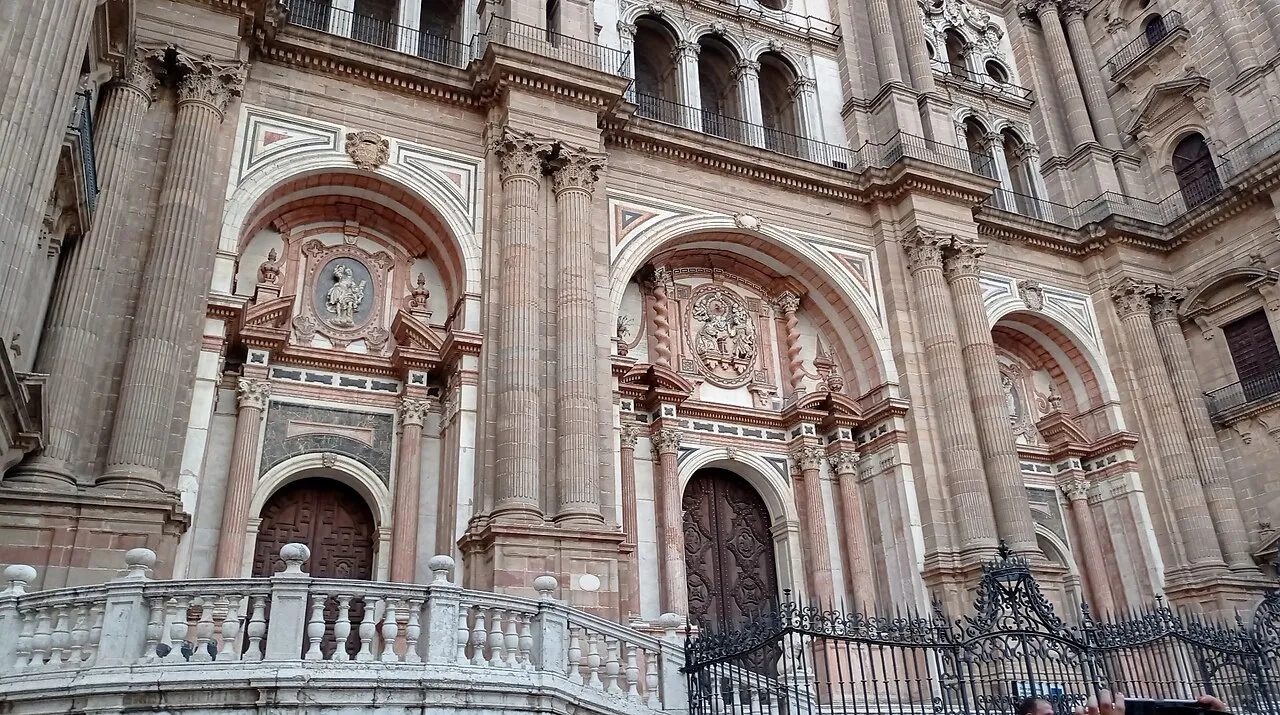
1Málaga Cathedral

Málaga Cathedral

📍 Calle Molina Lario, 9

An obligatory passing point for a good part of the brotherhoods and one of the most photographed settings of the week, with the tronos turning in front of the Baroque façade and the single tower lit up. The area fills up a great deal: you have to be there well in advance.

2Calle Marqués de Larios

Calle Marqués de Larios

📍 From the Alameda to the Plaza de la Constitución

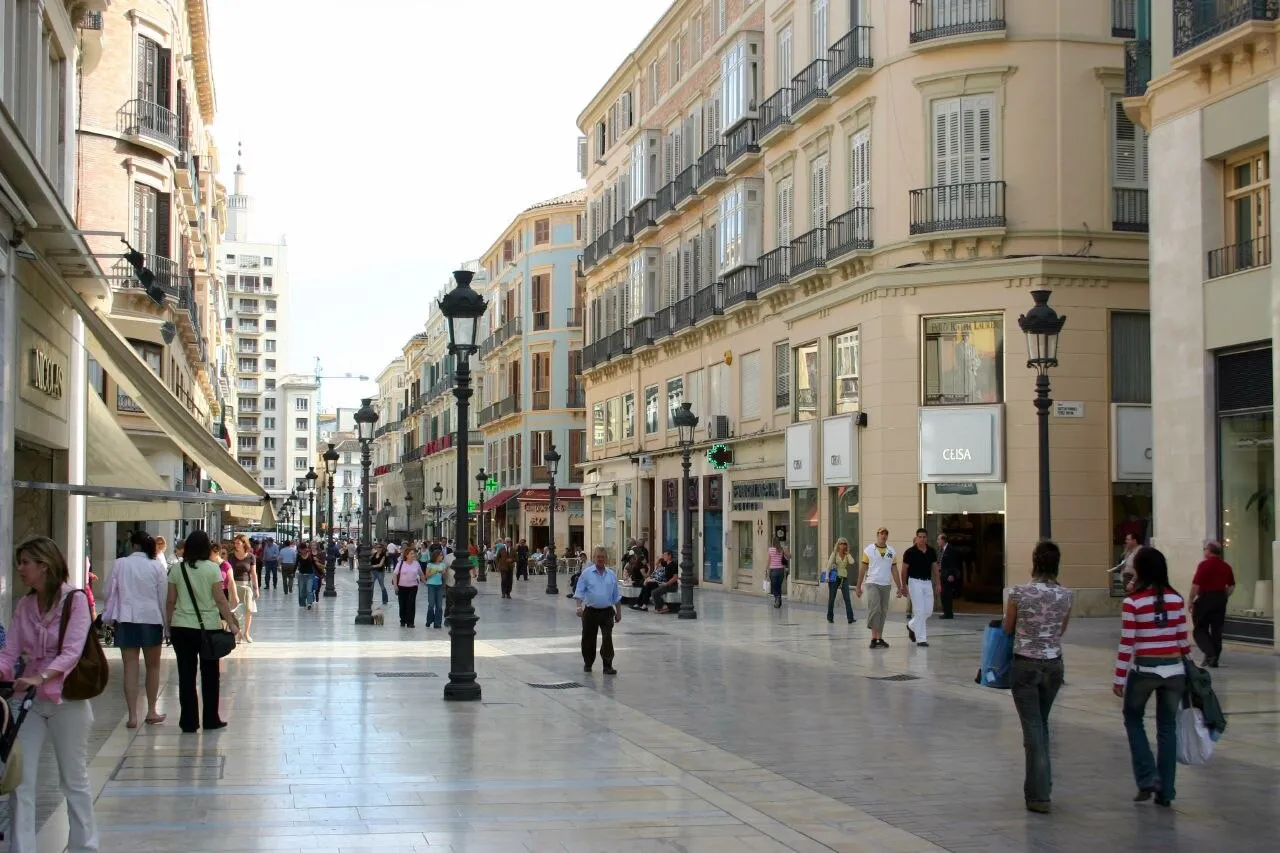
The central stretch of the official route and the most sought after. Paid stands and chairs are set up on both sides, and the rest is taken hours beforehand. Watching a big trono come into Larios from the Alameda is the image that sums up the week.

🎧 With Viavoy

Explore Málaga at your own pace

Download the app and discover Málaga offline, whenever you like. Take the walking tour The Cathedral, the Alcazaba and the Roman Theatre with a local guide in your ear.

Find out more about Viavoy →

The Legion and the prisoner

The moment best known outside Málaga happens on Maundy Thursday morning. The Spanish Legion disembarks in the port and marches to the church of Santo Domingo singing El novio de la muerte to accompany the Cristo de la Buena Muerte, which they then carry on their shoulders through the city.

The image — the Legion's very fast marching step, the goat as mascot at the front, thousands of people on the quay — divides opinion inside and outside the city, but it is without doubt the event that draws the biggest crowd of the whole week. To see it properly you have to be at the port very early.

The other singular tradition belongs to Holy Wednesday. The brotherhood of Jesús el Rico exercises a privilege granted in the eighteenth century, according to tradition after an outbreak of plague, by which a prisoner is freed every year and walks with the brotherhood that same night. It is the only pardon of this kind still in force in Spain.

And there is a name many people will recognise: Antonio Banderas takes part every year in the brotherhood of Lágrimas y Favores, in which he became personally involved and which goes out on Palm Sunday. It is common to see him carrying the trono.

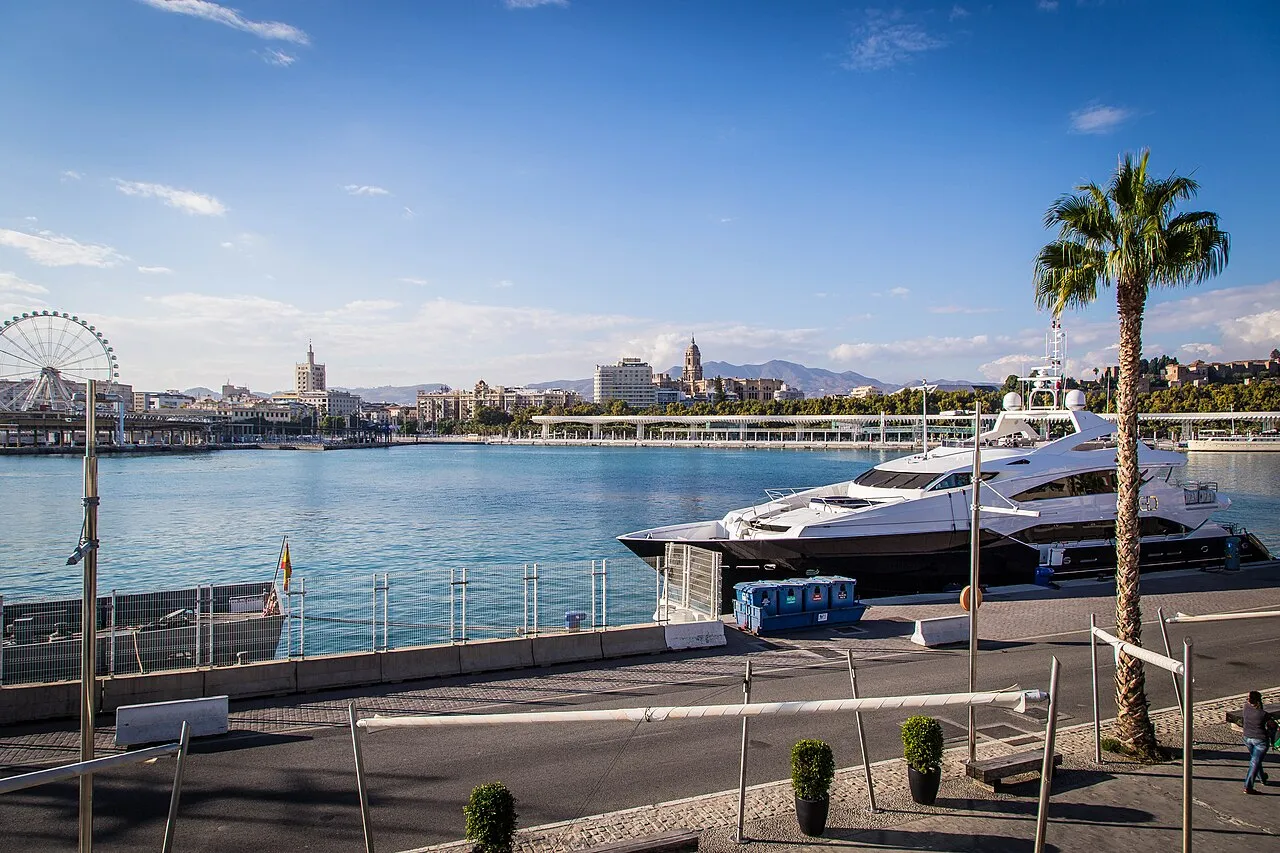
3The port and Muelle Uno

The port and Muelle Uno

📍 Seafront

The setting for the Legion's landing on Maundy Thursday morning, one of the events that gathers the biggest crowd of the year. Outside those dates it is the flat promenade that connects the centre with La Malagueta beach in fifteen minutes.

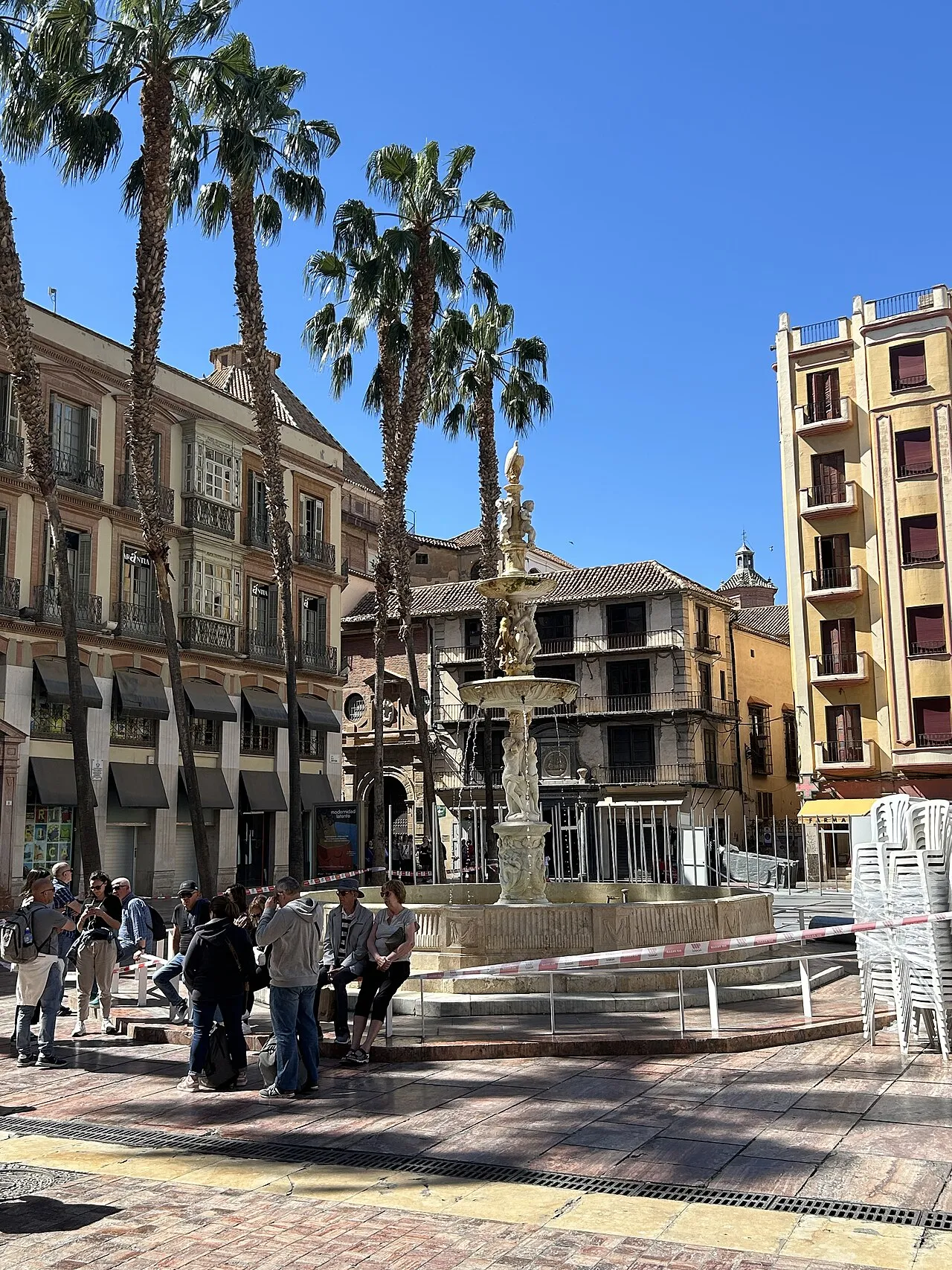
4Plaza de la Constitución

Plaza de la Constitución

📍 Northern end of Larios

The end of the official stretch and one of the best points to watch the tronos manoeuvre, because the turn forces the men of the trono to work in a tight space and in full view. Very busy: it is worth arriving a good hour in advance.

Frequently asked questions

What makes Holy Week in Málaga different from Seville's?

Here they are called tronos and not pasos, and instead of going hidden underneath, the bearers carry them on their shoulders on side poles, in full view. The tronos are far bigger — some go beyond five thousand kilos and need more than two hundred and fifty people — the gait is straighter and more continuous, and the atmosphere in the street is more celebration than recollection.

Is it true that a prisoner is released?

Yes, every Holy Wednesday. The brotherhood of Jesús el Rico exercises a privilege granted in the eighteenth century, which tradition links to an outbreak of plague, by which an inmate is pardoned and walks with the brotherhood that same night. It is the only pardon of this kind still in force in Spain.

When does the Legion march?

On Maundy Thursday morning. It disembarks in the port and marches to the church of Santo Domingo singing El novio de la muerte, then accompanies the Cristo de la Buena Muerte. It is the event that draws the biggest crowd of the whole week, and to see it properly you have to be on the quay very early.

Where are the processions best seen?

On the official route — Alameda, calle Larios and Plaza de la Constitución — they are seen at their best, with stands and paid chairs on the sides and the rest taken hours beforehand. For a calmer, more intimate scene, better to look for a brotherhood setting out from or returning to its neighbourhood church, where there are far fewer people.

Can you visit Málaga normally that week?

In the mornings yes, except on Maundy Thursday because of the landing. Almost all the processions set out in the afternoon and return in the small hours. What you have to accept is that the centre is cut off daily, with stretches that change from one day to the next, and that crossing the official route can take a good while if you do not plan.

Does Antonio Banderas take part?

Yes, every year in the brotherhood of Lágrimas y Favores, in whose revival he was personally involved and which processes on Palm Sunday. It is common to see him carrying the trono alongside the other men of the trono, with no special treatment, and it is one of the busiest moments of the first day.

How to watch it without suffering it

The first rule is to accept that the centre is cut off. All week there are closed stretches that change every day, and crossing from one side of the official route to the other can take forty minutes if you get it wrong. It is worth looking at the day's itinerary before leaving your accommodation.

The second is to choose between the two ways of watching it. On the official route — Alameda, Larios, Plaza de la Constitución — you see the tronos at their best, but with crowds and paid stands. In the neighbourhood streets, at the setting out or the return to the church, there are far fewer people and the scene is more intimate.

The third is the timetable. Almost everything happens in the afternoon and in the small hours, so mornings are free to visit the city normally, except on Maundy Thursday because of the landing. Museums open on special hours and it is worth checking them.

And a practical warning: staying in the centre during those dates means noise until the small hours and noticeably higher prices. Anyone looking for rest would do well to sleep a little further out, in Pedregalejo or around the port.

Practical information

WhenFrom Palm Sunday to Easter Sunday; the date changes every year.
Where to see itOfficial route: Alameda, Larios and Plaza de la Constitución. With fewer people, at the neighbourhood departures.
StandsPaid chairs and boxes on the official stretch, sold in advance.
Maundy ThursdayThe Legion's landing at the port, in the morning. You have to arrive very early.
Getting aroundThe centre is cut off daily and the stretches change. Check the itinerary before going out.
Where to stayHigh prices and noise until the small hours in the centre. Pedregalejo is a quiet alternative.
On the map

🎧 With Viavoy

Walk Málaga and listen at your own pace

Download Viavoy and walk Málaga offline, whenever you like.

from 2,99 €· one-off payment
City Pass · 9,99 €3 days, all the tours in Málaga
Find out more about Viavoy →
Viavoy app

Keep reading

More articles

Itineraries

Málaga in 2 days: the hill, the centre and the sea

Monuments

Visiting Málaga Cathedral: La Manquita and its roofs

Neighbourhoods

Málaga's historic centre: Larios, Picasso and the squares

Neighbourhoods

The Soho of Málaga: murals, medianeras and a theatre