The Soho of Málaga: murals, medianeras and a theatre
How a neighbourhood on the way down turned its ugliest walls into its greatest attraction. A one-hour walking route between the CAC, the big international murals and Banderas's theatre.
There is one technical word that explains this whole neighbourhood: medianera. It is the blind wall, without windows, left exposed when the building next door is knocked down, and it is the ugliest thing any area in decline has. The Soho was full of them. In 2013 somebody had the idea of turning that defect into the draw, and today there are people who cross the city to have their photograph taken in front of those walls.
The full route is forty-five minutes on foot, it is flat and you cannot get lost. Go in the middle of the morning or the middle of the afternoon: at midday many medianeras are backlit and the murals cannot be seen.
A neighbourhood between the Alameda and the river
Small, tightly packed and permanently under works.
The Soho occupies a modest rectangle between the Alameda Principal and the bed of the Guadalmedina, ten minutes from the centre. Its official name is Ensanche Centro, but nobody uses it: the English-language label was given to it by the regeneration project itself, and it stuck.
For decades it was an area you passed through, with shuttered premises and empty plots. It had the location in its favour — right beside the Alameda, the port and the centre — and against it a run-down fabric with no obvious appeal. The transformation began with the CAC in 2003 and picked up speed ten years later.
It is worth going knowing that the operation is not finished. Between the good pieces there are stretches that are still shabby, half-done façades and the odd empty plot. That is part of what you come to see: it is a neighbourhood under works, not a finished set, and a good share of its interest lies there.
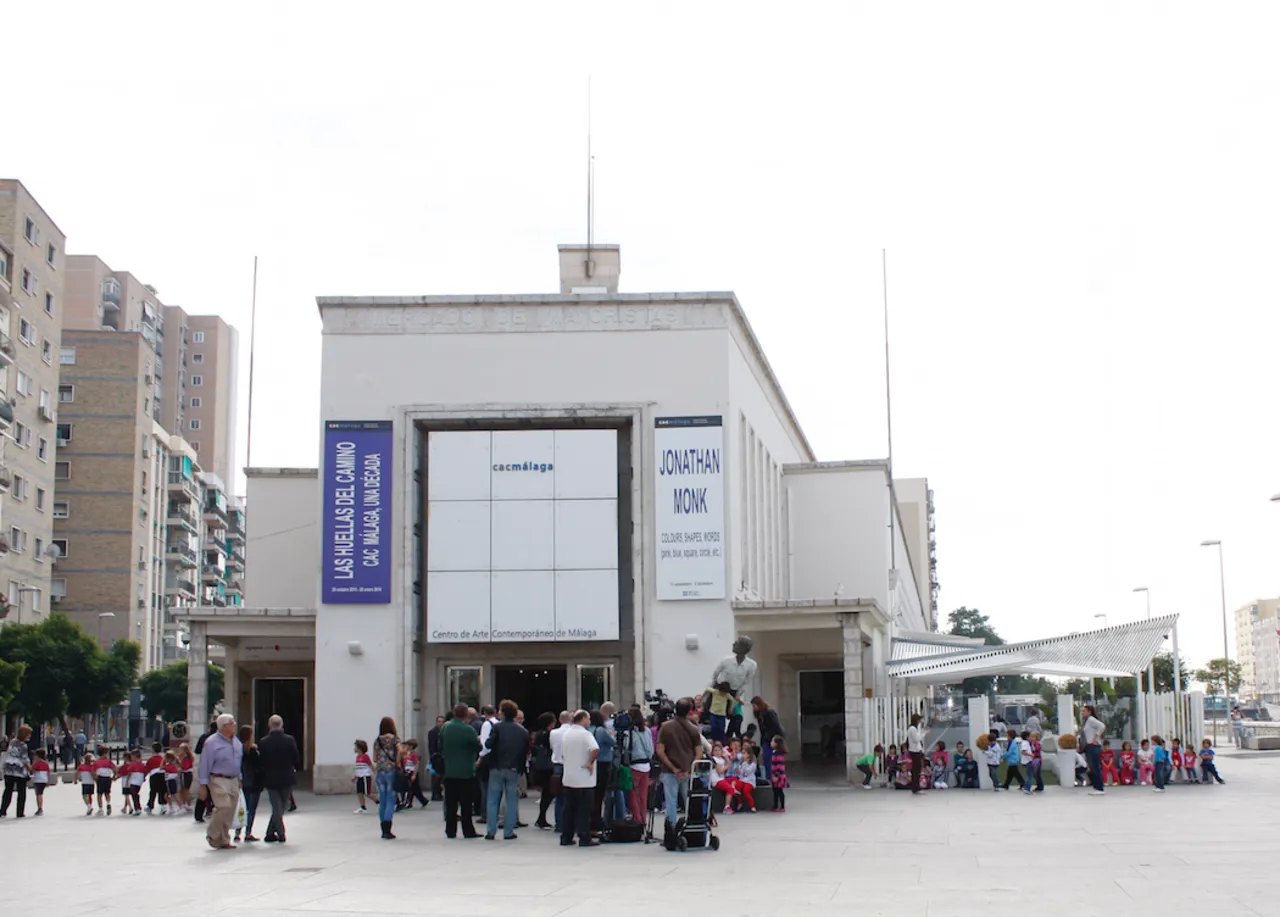
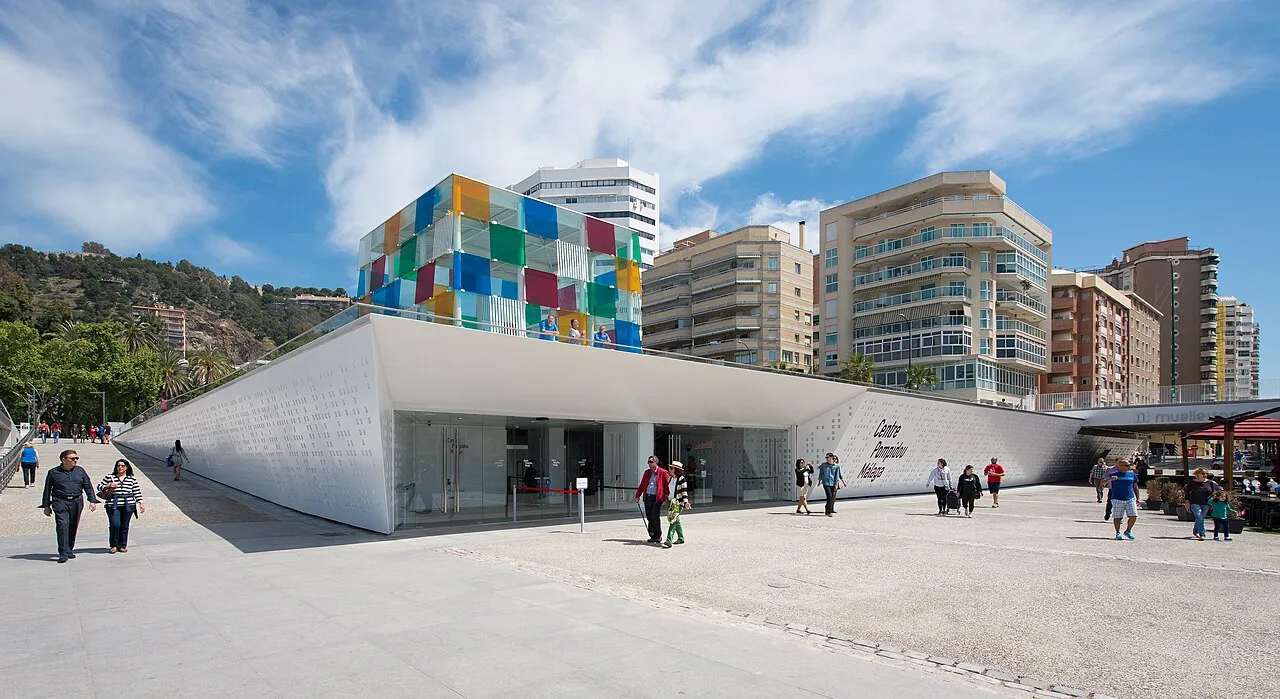
The old wholesale fish and fruit market, opened in 1939 and signed by Luis Gutiérrez Soto, one of the major names of Spanish Rationalism. It became an art centre in 2003, keeping the hall-like floor plan and the long strip windows. Free entry and a programme that rotates a lot.
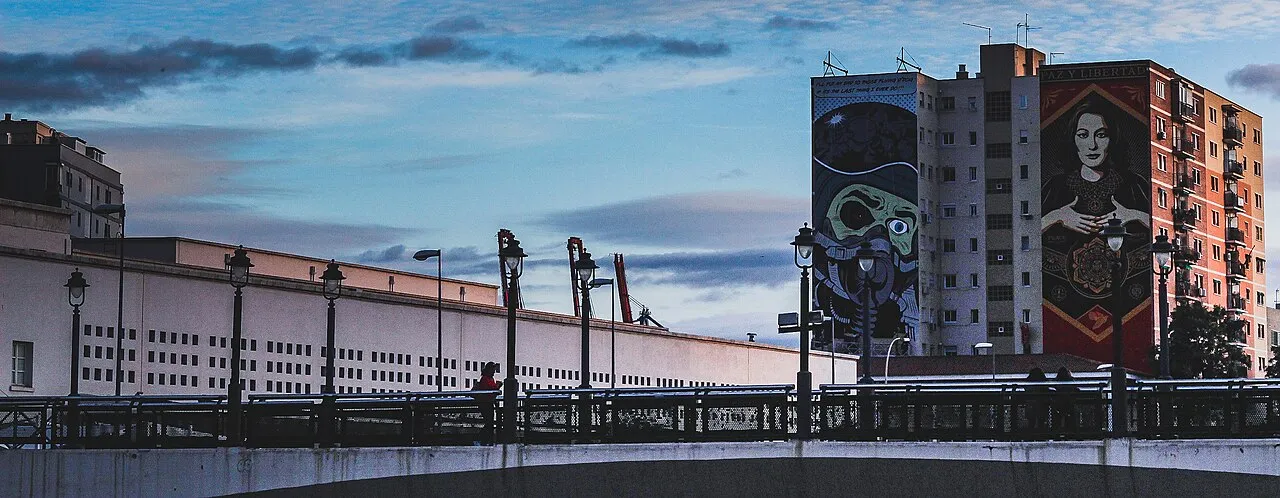
A woman's face several storeys high signed by Shepard Fairey, the author of Obama's HOPE poster in 2008. Two or three flat inks, hard outlines and Art Deco borders framing the figure: propaganda disguised as ornament, which is precisely its subject.
The Briton D*Face left one of the largest-scale pieces in the neighbourhood here, in his pop comic-book language and saturated colours. Seeing it straight after the Obey one, a few streets away, makes it clear that the festival brought in front-rank names from the international circuit, not filler.
In 2013 the neighbourhood invented a festival called MAUS, short for Málaga Arte Urbano Soho, with a very specific aim: to paint the medianeras. The idea was simple and a little reckless, to turn the greyest thing about the area into its main argument, and it worked better than anyone expected.
Artists from the international circuit were brought in alongside local names, and that made the difference compared with other similar initiatives in Spain. It was not a matter of decorating walls: it was a matter of the signatures being recognisable outside Málaga, and of the neighbourhood turning up in conversations about street art.
The side effect is the usual one and it is worth naming: rising property values. What began as neighbourhood regeneration has brought higher rents, fashionable premises and some of the tension that comes with any neighbourhood that becomes fashionable. The Soho has spent a few years negotiating that balance.
For the visitor, the result is a three-quarter-hour walk with a density of art per square metre that no other area of the city has, and free on top of that.
The theatre that gave it prestige
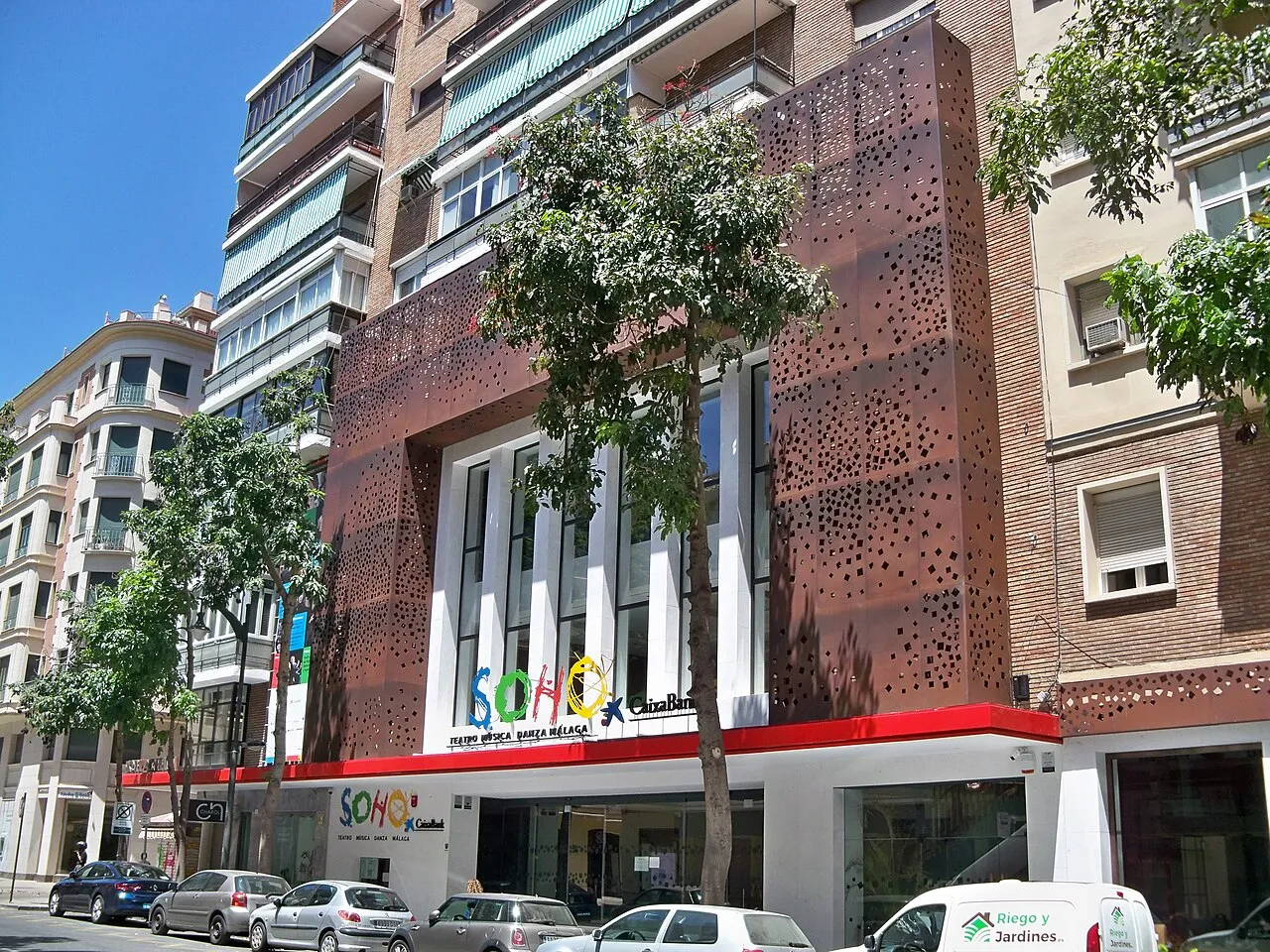
On one corner of the neighbourhood stands the old Alameda theatre, a lifelong cinema and venue that had closed, one more stalled building in an area full of them. Antonio Banderas reopened it in 2019, and inaugurated it directing and dancing in “A Chorus Line” himself, on the point of turning sixty.
The bet was not to open a hall for hire but to mount in-house productions of musicals in Spanish, with a resident company and a live orchestra, something that in Spain was concentrated almost entirely in Madrid. Taking that kind of theatre out of the capital was the risky part.
For the Soho, the effect was immediate. A Hollywood star putting his name and his money here did more for the prestige of these streets than any campaign: the neighbourhood stopped being a promise and became an address.
You visit it by buying a ticket for a performance, and the weekend ones sell out. If your dates do not fit, the building has a restaurant area on the upper floor with independent access that works as a viewpoint over the neighbourhood.
The old Alameda, refurbished with the façade and the stage house respected and the inside modernised, with a capacity of around a thousand seats. Musical programming with a resident company and long seasons: there is a title on the bill almost all year. On the street, say “Banderas's theatre” and anyone will know what you mean.
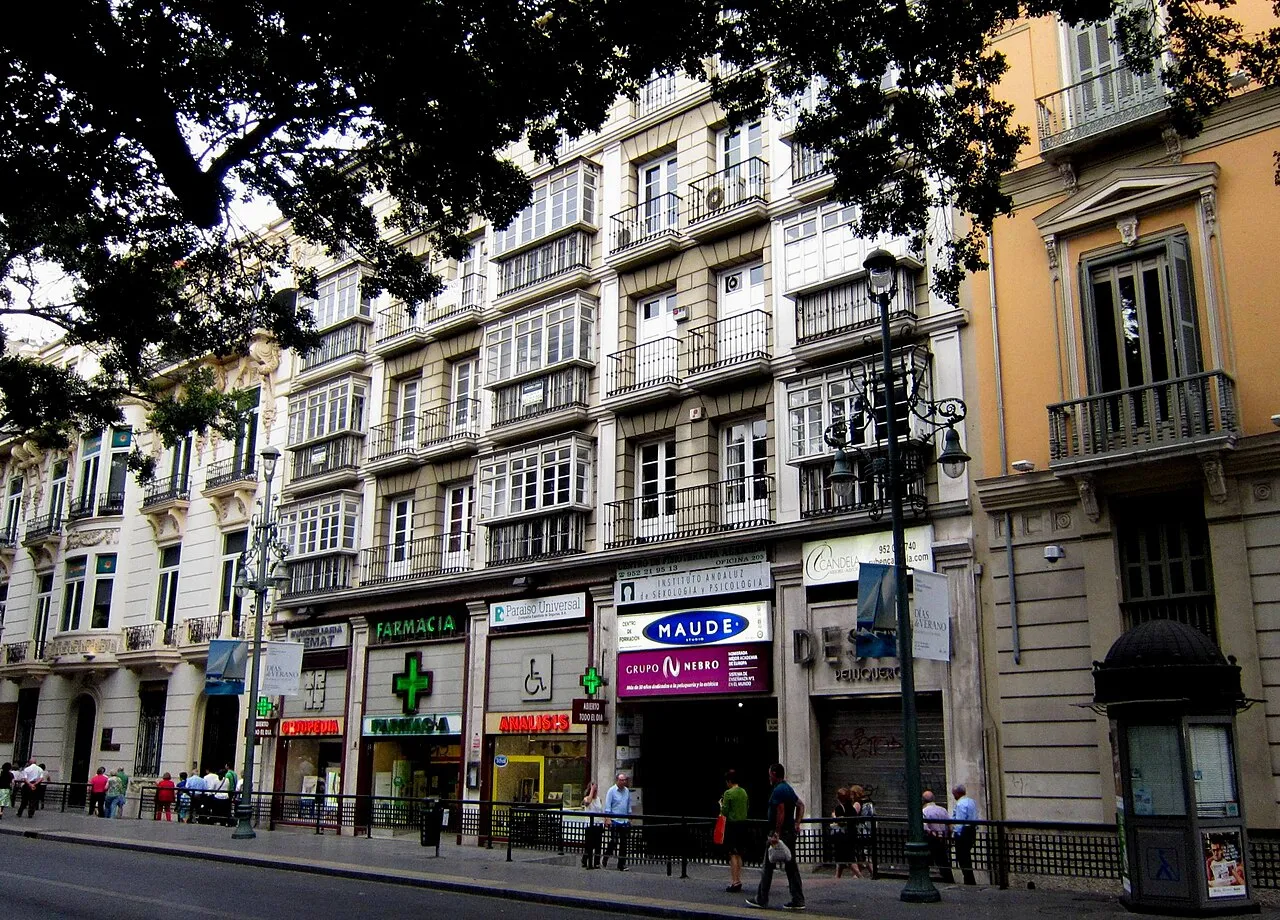
The great tree-lined boulevard that separates the Soho from the historic centre, with enormous ficus trees more than a century old that give continuous shade. It is the best point of entry and exit for the neighbourhood, and at this height it connects in five minutes with the port and with calle Larios.
A small neighbourhood wedged between the Alameda Principal and the bed of the Guadalmedina, ten minutes from the centre. Its official name is Ensanche Centro; the Soho label was given to it by the regeneration project that started with the CAC in 2003 and was consolidated by the street art festival of 2013.
How long does it take to see the murals?
Forty-five minutes on foot at an unhurried pace cover the main pieces, and a good hour if you also go into the CAC. The route is flat and compact: the logical thing is to start at the CAC, which sits at one end, and work your way up towards the Alameda looking at medianeras.
Who is Obey and why is his mural here?
Obey is the signature of Shepard Fairey, the American artist who made the portrait of Obama in blue and red with the word HOPE, the unofficial icon of the 2008 campaign. He came to paint in 2013 as part of the MAUS festival, which brought artists from the international circuit to work on the neighbourhood's medianeras.
Do you have to pay for the CAC?
No, entry is free, something unusual in a city that has filled up with paying museums. That lets you go in for twenty minutes, see a single room and leave. It closes on Mondays and changes its hours in summer, and it is worth checking the programme beforehand because the turnover of exhibitions is high.
Can you visit the Teatro del Soho inside?
Not in the morning as if it were a monument: it is a working theatre and the way in is to buy a ticket for a performance. The seasons are long and there is usually a title on the bill almost all year. Without a performance, the restaurant area on the upper floor is open to the public anyway.
Is it a safe neighbourhood?
Yes, it is a central and busy area, especially during the hours of the mural walk. As in any neighbourhood in transformation there are stretches shabbier than others and the odd empty plot, but the usual route runs along streets with life, shops and terraces.
Practical information
WhereBetween the Alameda Principal and the bed of the Guadalmedina, 10 minutes from calle Larios.
DurationForty-five minutes for the mural walk; a good hour with the CAC.
TicketsThe CAC is free. The murals are on the street. The theatre, only with a ticket for a performance.
Best timeMid-morning or mid-afternoon. At midday the medianeras are backlit.
Getting thereOn foot from the centre. It is completely flat.
Watch outA neighbourhood in transformation: between the good pieces there are stretches that are still shabby.
On the map
🎧 With Viavoy
Walk Málaga and listen at your own pace
Download Viavoy and walk Málaga offline, whenever you like.