Málaga in 2 days: the hill, the centre and the sea
Alcazaba and Gibralfaro early in the morning, cathedral and centre at midday, and a whole afternoon of espetos in El Palo. With the lift that skips the climb and the bus that avoids the ascent to the castle.
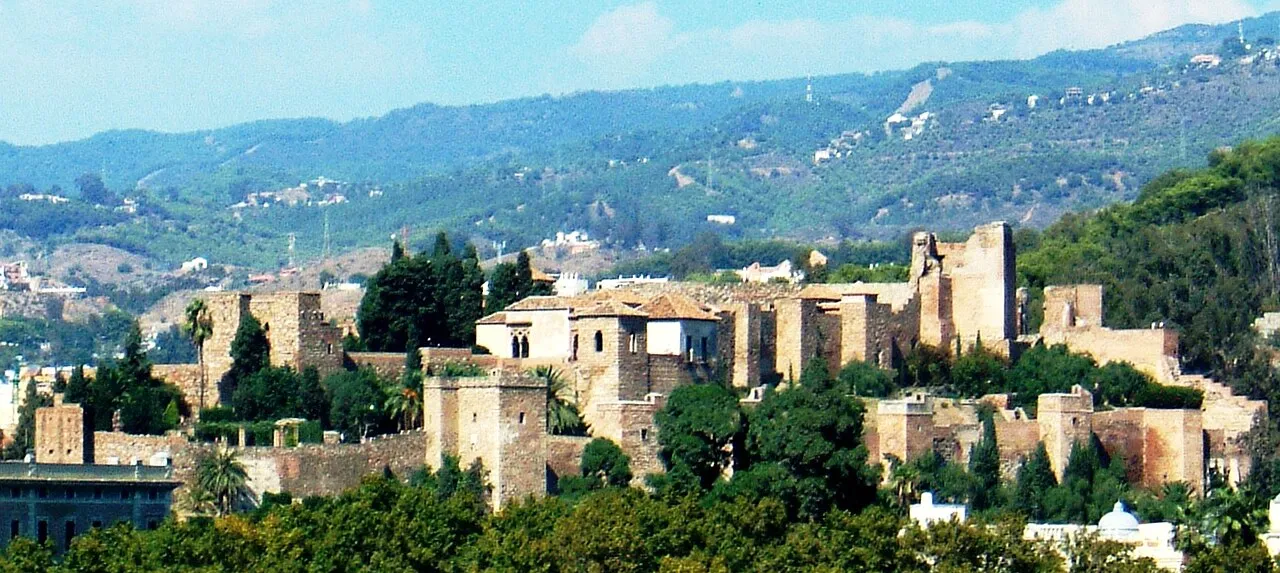
Málaga has a geography that is very easy to read: a hill with two fortresses on top, a flat, compact centre at its feet, a recovered port front and, to the east, the fishing neighbourhoods. Everything essential is in those four blocks and it is all covered on foot except for two journeys. The only important decision is the order, because the hill has to be climbed early and the east of the city asks for a whole afternoon, not an hour.
There is a free lift on calle Guerrero that goes straight up to the upper part of the Alcazaba and skips the whole ramp. Almost nobody uses it, and in the heat it changes the entire morning.
Day 1, morning: the hill
Before ten, and from the bottom up.
Start at the Alcazaba first thing, while there is still shade on the way up. It is the best preserved Andalusi fortress in Spain and its charm is not in any one room but in the route: the entrance forces you to turn again and again between bent gateways, and every turn was designed to slow the attacker down and leave him exposed from above.
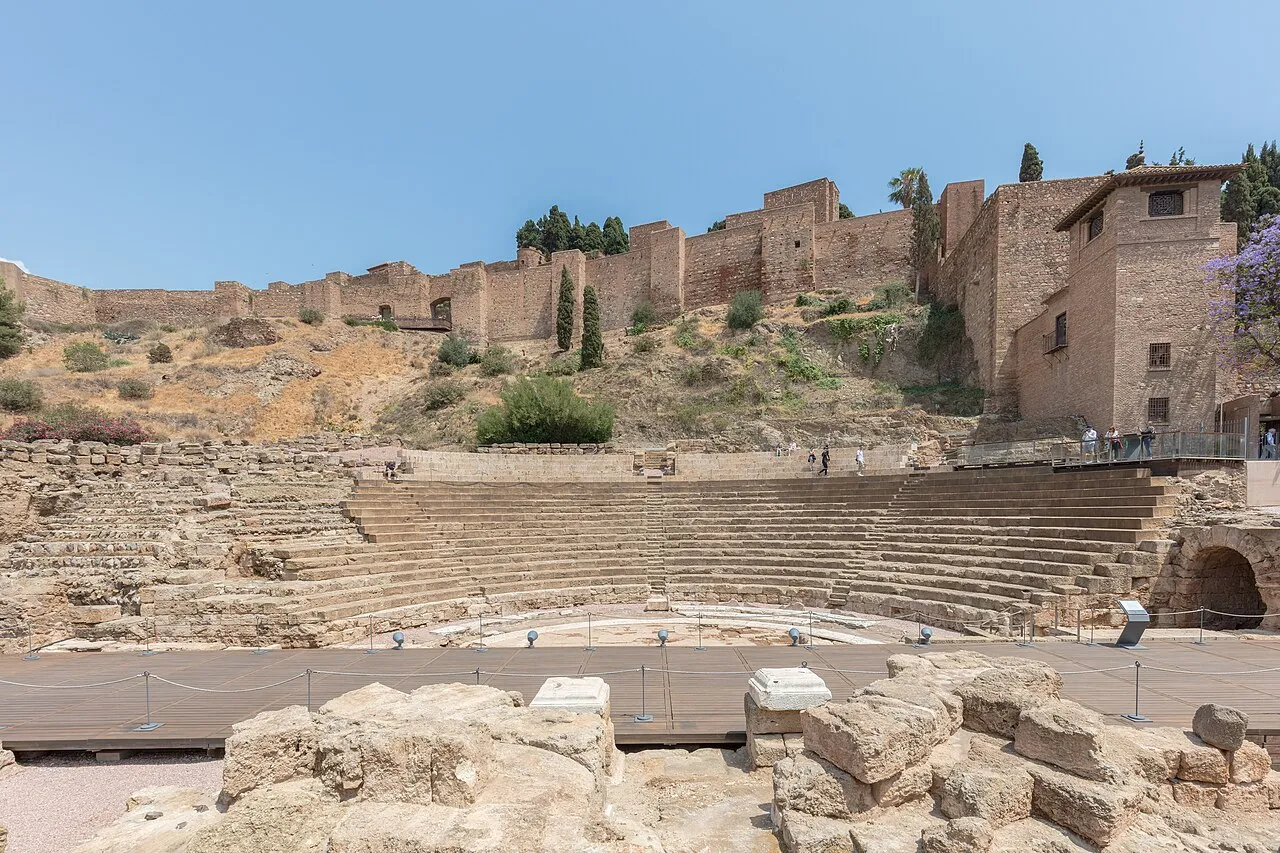
As you pass, look at the Puerta de las Columnas, where Roman column shafts and capitals are set into Arab walls with no attempt to hide them. They came from the Roman theatre just below, at the foot of the slope, which lay buried and forgotten until 1951, when it turned up during building works. Seeing them together is the best history lesson the city gives.
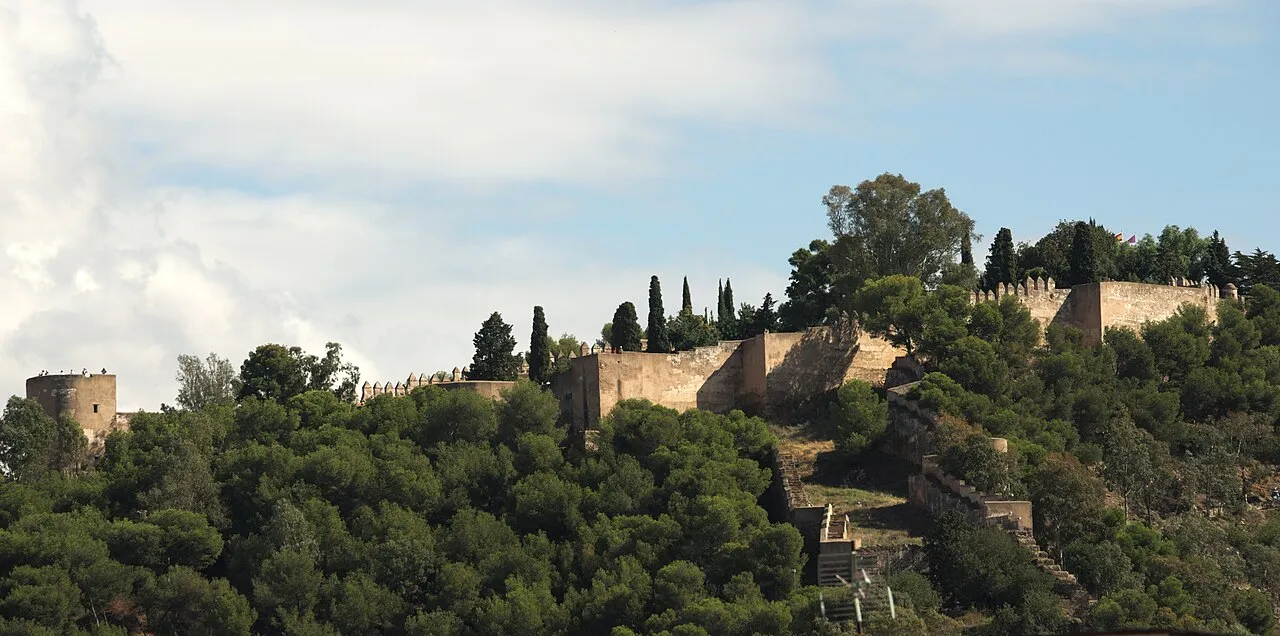
From the upper part the Coracha sets off, a walled corridor that climbs to the castle of Gibralfaro. If you are going to do both, buy the combined ticket, which works out considerably cheaper. And if the heat is fierce, take bus 35 up to the castle and then walk down: the descent is easy and ends in the centre.
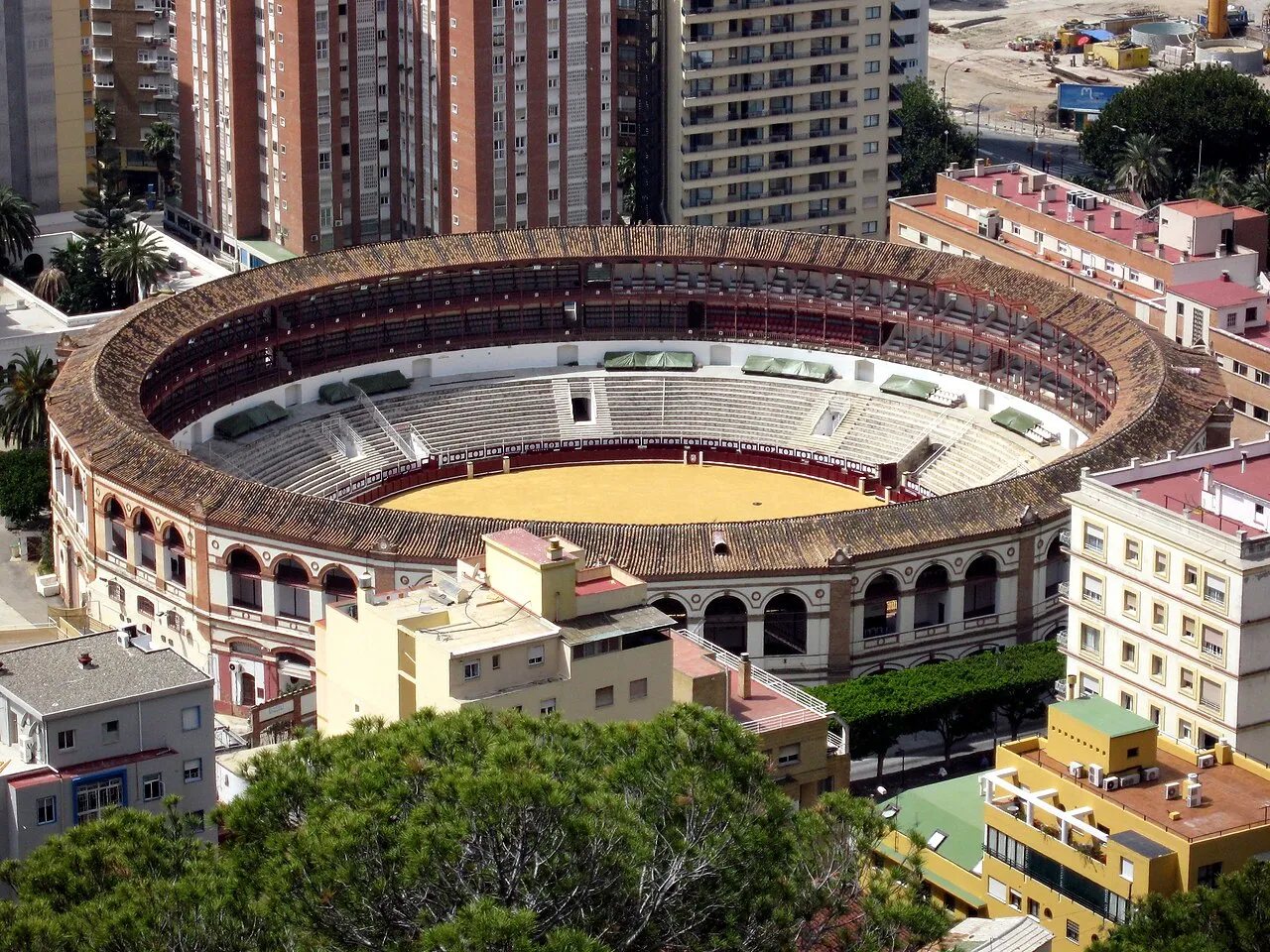
At Gibralfaro what you have to do is the adarve, the wall-walk that goes all the way round the rampart. In twenty minutes you see Málaga from all four points of the compass, and from the southern side the whole bullring appears among the rooftops, read as a perfect circle.
Two concentric enclosures, a zigzag route designed to break the attacker's momentum and, up above, palaces with acequias, fountains and pools on top of a dry hill. Bringing the water up here was the real display of power. Watch out for the reused Roman columns at the Puerta de las Columnas.
Yusuf I had it built in the fourteenth century to protect the Alcazaba from above, with a forty-metre well cut into the rock to withstand long sieges. In 1487 it was the last position to fall. The real visit is the adarve: port, cathedral, bullring and sea changing quadrant every few steps.
From the first century and buried until 1951, when it came to light during works on the Casa de la Cultura. You can see the whole of it from the street without paying, and its interest is not only in the tiers of seats: it is in having it right below the Arab wall that was built reusing its stones.
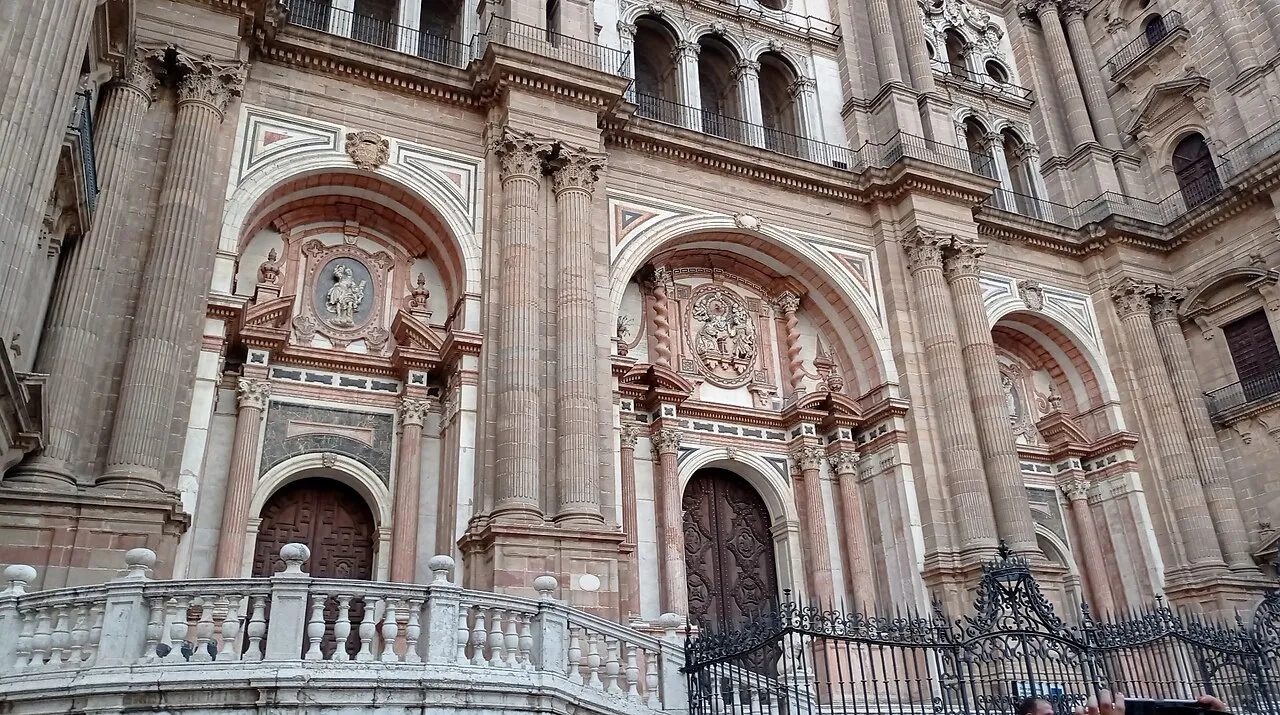
Come down from the hill straight to the cathedral, five minutes away. It is known as La Manquita, the one-armed lady, because of the two planned towers only one was raised: the other starts with the same thickness as its twin, so it was not a change of plan, it was that the money ran out in 1782 and the work stopped for good.
In Málaga they tell you that money was diverted to help the independence of the United States, in the days of Bernardo de Gálvez, a son of the city. It is a magnificent story, but the documents point rather to road works in the province. That the city prefers the epic version says quite a lot about Málaga.
If you have the energy, book the climb to the roofs: you walk on top of the vaults, something possible precisely because the planned roof was never built. They are narrow spiral staircases and the best view of the centre.
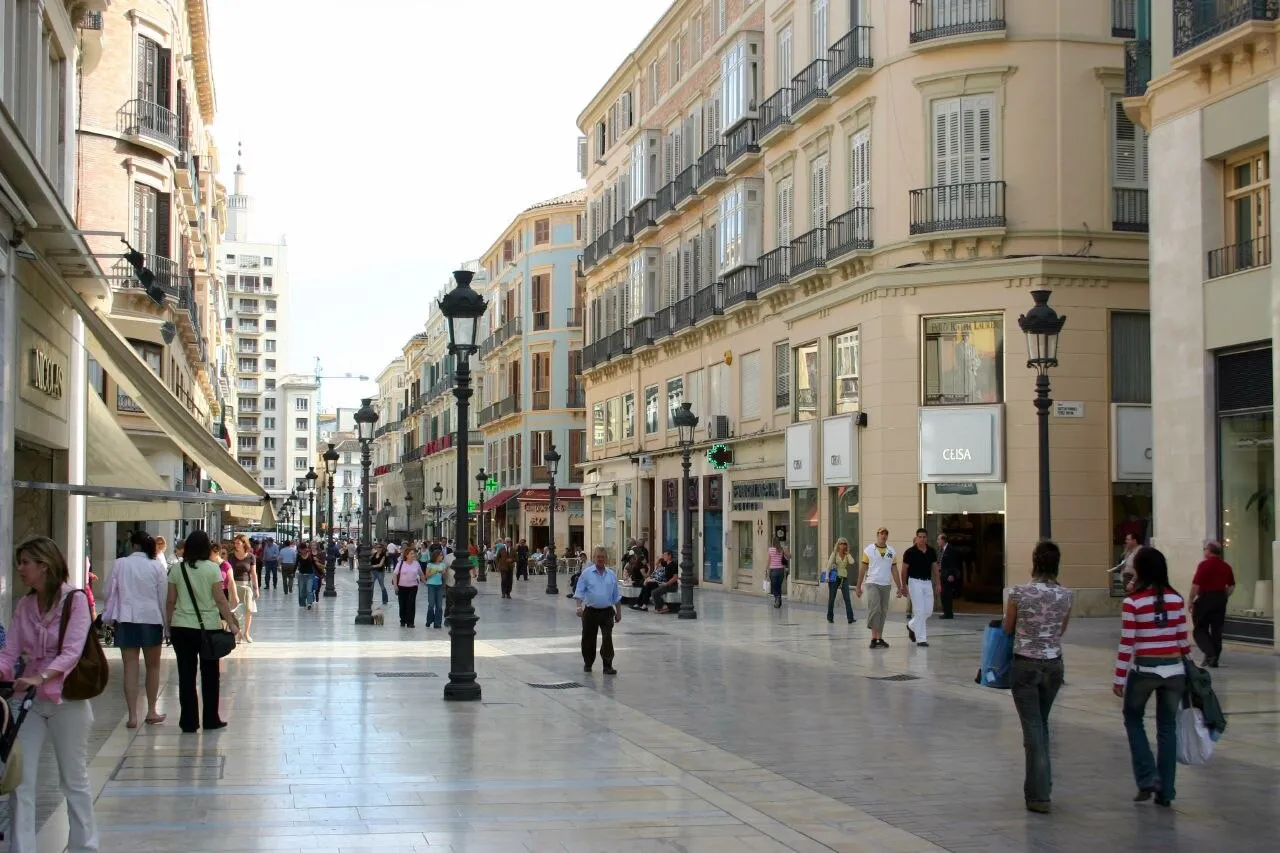
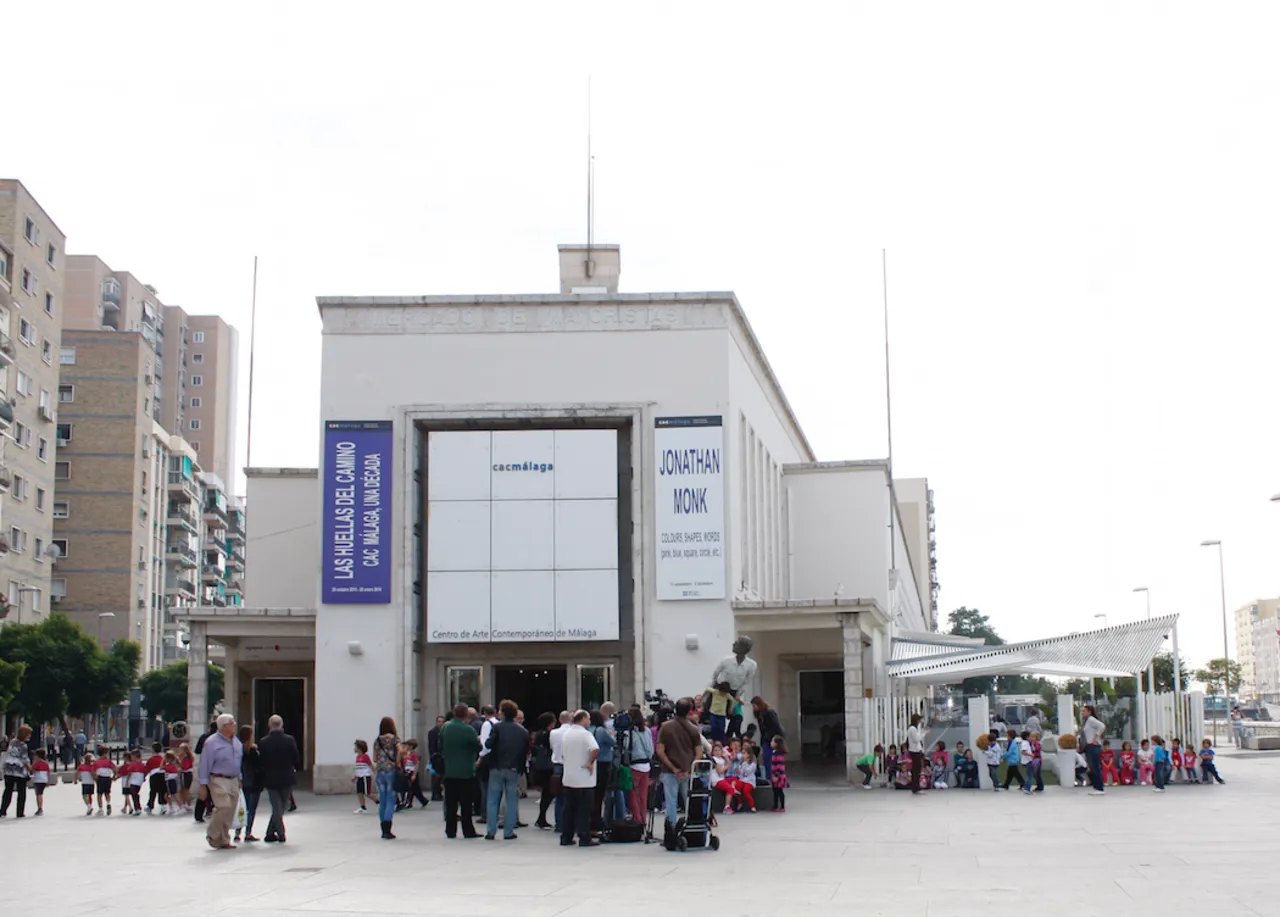
Afterwards, calle Marqués de Larios, which is the city's drawing room and is paved in marble. And at the end of the afternoon, cross the Alameda and go into the Soho, the neighbourhood of painted medianeras, the blind end walls: it takes a good hour to walk, looking at façades, and ends at the CAC, which is free.
Two hundred and fifty years of building work left Gothic in the foundations, Renaissance in the body and Baroque on the façade, and one tower unbuilt that gave it its nickname. Inside, the choir stalls by Pedro de Mena, with some forty figures in cedar and mahogany. Up above you walk across the roofs.
📍 From the Alameda to the Plaza de la Constitución
Three hundred metres of grey marble opened in 1891, with a metal frame and rounded corners because it was designed with an eye on Chicago after the 1884 earthquake. An Andalusian street with the skeleton of a skyscraper. Raise your eyes above the shop windows: Art Nouveau miradores and domes.
It was the wholesale fish and fruit market, opened in 1939 and signed by Luis Gutiérrez Soto, one of the greats of Spanish Rationalism. It became an art centre without disguising its origin: the hall-like floor plan and the long strip windows are the same ones. Free entry, ideal for twenty minutes.
Málaga's seafront is recent and it changed the city: until twenty years ago the port turned its back on the centre. Today the Palmeral de las Sorpresas and Muelle Uno stitch it all together, and you walk on the flat from the Alameda to the beach without crossing a single street with cars.
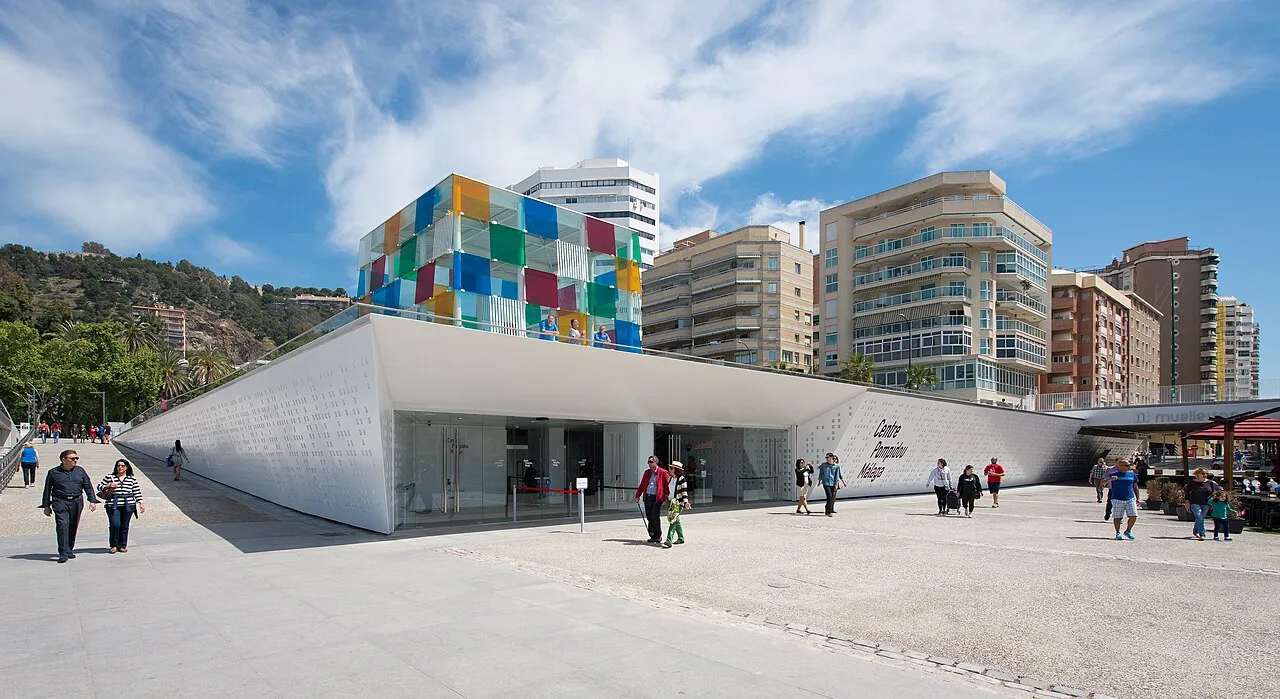
Halfway along is the Centre Pompidou, which nobody in Málaga calls by its name: it is El Cubo, the Cube. What you see on the surface is an eight-metre glazed piece by Daniel Buren, with layers of coloured glass that never look the same twice. The whole museum is underneath, buried so as not to block the sea frontage that had just been recovered.
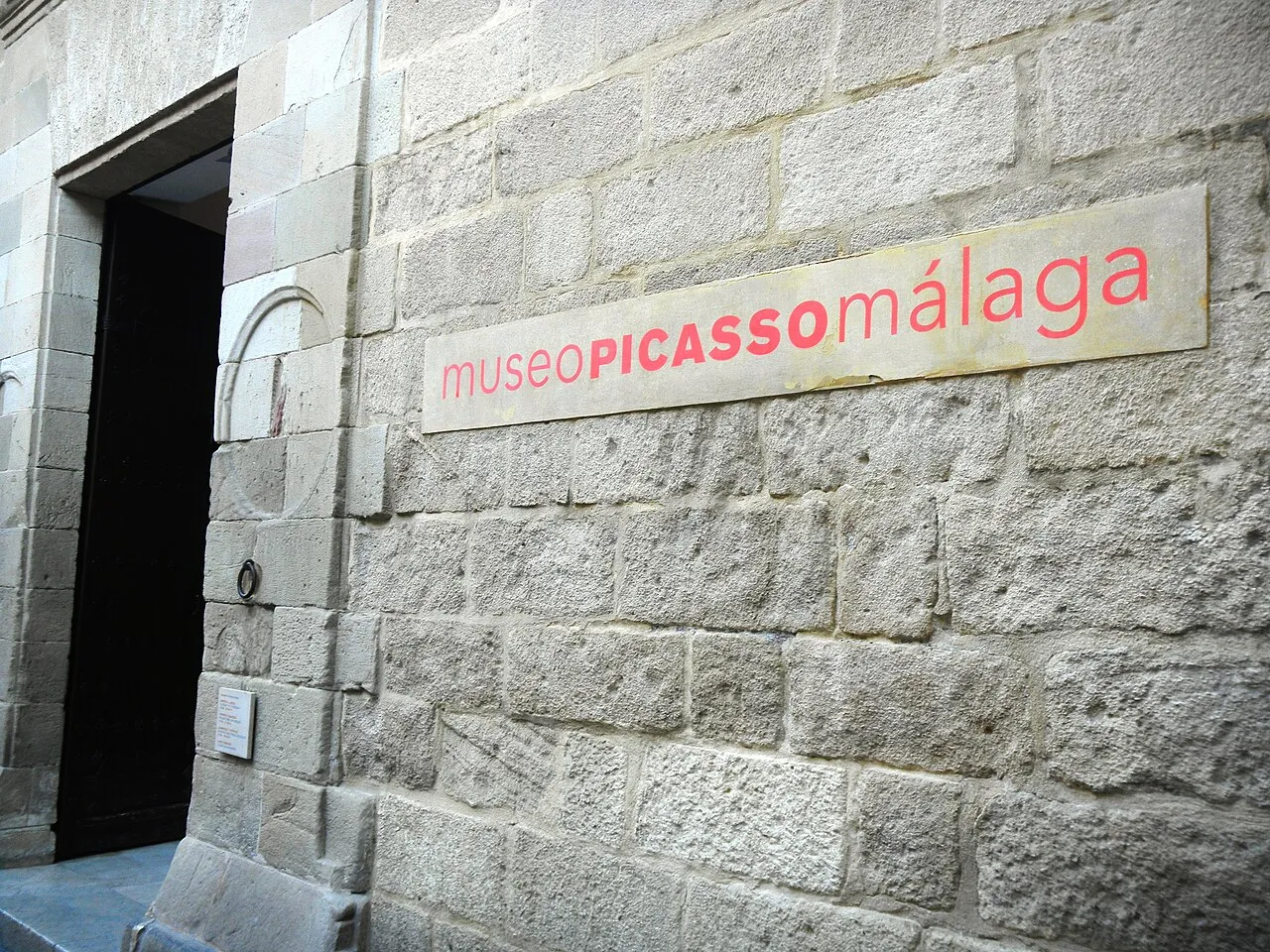
If museums interest you, this is the morning for them. Málaga has more than thirty exhibition venues and there are combined passes that pay off from three visits onwards. The Museo Picasso, in a sixteenth-century palace, and the Casa Natal on the Plaza de la Merced are the two that almost everybody links together.
Finish at the La Malagueta bullring and its beach, the city one. If you were at Gibralfaro on the morning of the day before, you have already seen the bullring from above: down here it is just a curved brick wall, and that is precisely the charm.
The first branch of the Pompidou outside France, signed in 2015 as a five-year experiment that went so well it has kept being renewed. The works are on loan from Paris and rotate, so what is hanging today may not be there in two years. Walk round the cube before going down: it changes with the light.
It opened in 2003 in the city where the painter was born and it was the starting gun for the Málaga of museums. It is in a sixteenth-century palace with a Renaissance courtyard, and in the basement there are Phoenician and Roman remains that turned up during the works. The collection comes in good part from the artist's family.
A sixteen-sided polygon in exposed brick, from 1874, signed by Joaquín Rucoba, the same architect as the Mercado de Atarazanas. It gave its name to the beach and to the whole neighbourhood. Picasso came to these tiers as a child with his father, and bulls never left his painting.
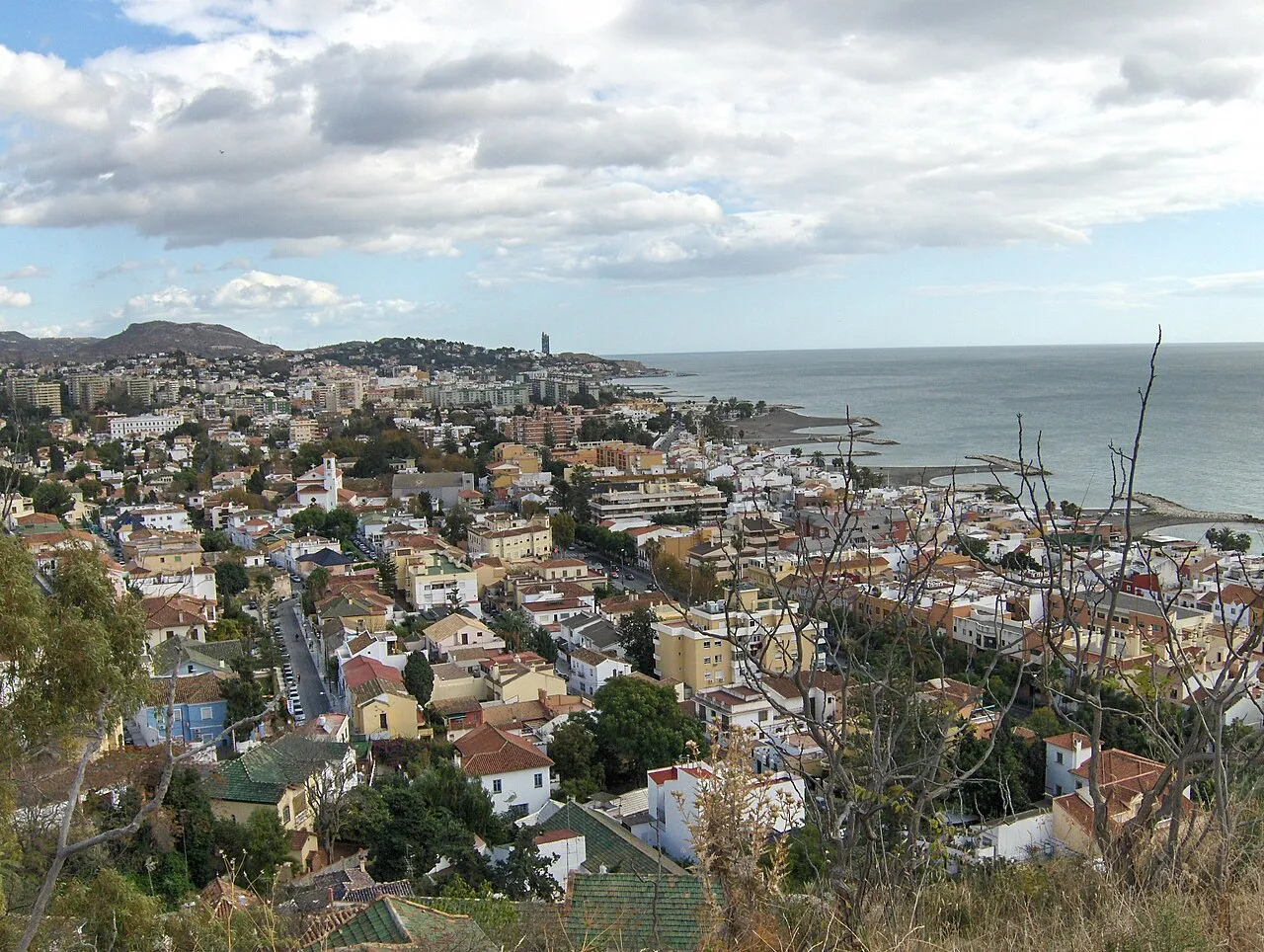
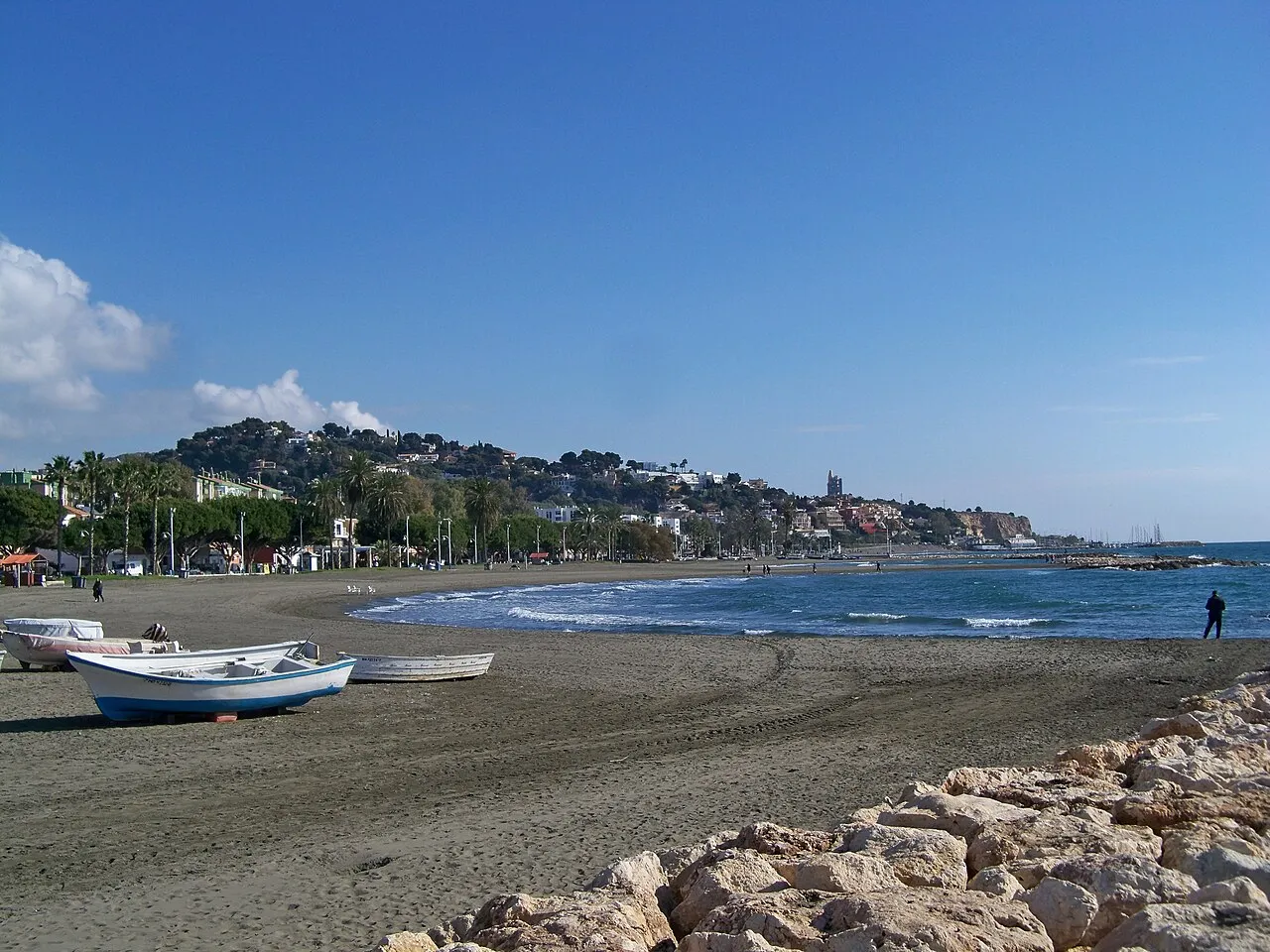
This is the part most visitors miss, and that is a mistake. Twenty minutes away on bus 11 the seafaring Málaga begins: first Pedregalejo, with its boardwalk — the oldest in the city — and a necklace of little coves separated by stone groynes.
Walk one street up from the promenade and the neighbourhood changes. There you find the fishermen's houses, whitewashed, with three-metre frontages and a lot of depth because land was taxed by the metres it had facing the street. And among them, every few numbers, villas with glazed miradores and palm trees: the summer houses of merchant families, many of them from northern Europe.
Carry on east to El Palo, which is more working-class and less tidied up. Here boats still go out to fish from the sand, and the beached jábegas, the traditional boats, carry an eye painted on each side of the bow, a motif of Phoenician origin so the vessel can “see” its course. It is the oldest thing you can touch in Málaga without going into a museum.
And this is where you have dinner. The espeto was born on these beaches: six sardines threaded onto a cane, planted at an angle in the sand next to an old boat filled with sand where olive wood burns. They are grilled by the side heat, never on top. The local rule about when to order them is the one about the months without an R: from May to August.
The oldest promenade in the city, boarded and hugging a succession of little coves with groynes. A century ago this was stony ground and market gardens; it was the tram linking the centre with El Palo that turned it into a bathing resort. Today its two souls, the seafaring and the genteel, share the same pavement.
Frontages of three or four metres and houses that stretch back inwards, with a central patio to bring in light and air. Walk along the street parallel to the promenade, not along the promenade: only from there do you see the contrast between the fisherman's house and the little mansion with a garden, door to door.
Dark sand, brightly coloured boats hauled up and the smell of espeto from several merenderos at once. For centuries it was a fishing village separate from Málaga, and even today jábegas go out to fish from this same sand. In summer there are rowing regattas with these very boats.
Yes, comfortably. The city has a very clear geography — the hill, the centre, the port and the eastern neighbourhoods — and everything except two journeys is done on foot. Two days cover the two fortresses, the cathedral, the centre, the Soho, the seafront and a whole afternoon in Pedregalejo and El Palo. What does not fit is more than two or three museums at a calm pace.
In what order should you see the Alcazaba and Gibralfaro?
Alcazaba first and castle afterwards, going up the Coracha, the walled corridor that joins them. That way you do the climb only once. If the heat is fierce, the alternative is the other way round: bus 35 up to Gibralfaro and walk down to the Alcazaba, which is easy and ends in the historic centre.
Is the climb to the cathedral roofs worth it?
It is the best part of the visit, by a distance. You walk on top of the vaults, something possible precisely because the planned roof was never built, and you see the port, the Alcazaba and Gibralfaro in one go. It is booked separately and works in time slots. They are narrow spiral staircases and it is not for everyone.
How long does it take to get to El Palo from the centre?
About twenty minutes on city bus 11 from the Alameda. You can also go by bicycle along the lane that runs the whole coast, or on foot along the seafront promenade if you fancy a good hour beside the sea. It is a whole-afternoon plan, not a quick visit.
When do you eat espetos?
The local rule is the one about the months without an R: from May to August, when the sardine is at its peak of fat. In the months with an R it is leaner. They are eaten with your fingers, with no cutlery, and straight off the cane. The merenderos open at midday and many close one day during the week.
Do you need a car to see Málaga?
No, and it is rather a nuisance. The centre is pedestrian, parking is expensive and everything in this guide is solved on foot plus two city bus lines. A car only makes sense if the trip includes excursions into the province, such as Ronda, Antequera or the Caminito del Rey.
Practical information
Getting thereAirport 15 minutes from the centre on the C1 cercanías train. AVE to Madrid in two and a half hours.
Getting aroundThe whole centre is pedestrian and flat. Bus 35 for Gibralfaro and bus 11 for Pedregalejo and El Palo.
TicketsCombined Alcazaba + Gibralfaro cheaper than separately. The Alcazaba is usually free on Sunday afternoons.
When to goSpring and autumn. In summer, the hill before ten in the morning.
EatingEspeto in El Palo from May to August. In the centre, boquerones, ensalada malagueña and sweet wine.
In the rainThe marble on Larios really is slippery. A museum day: Picasso, Pompidou, Thyssen and CAC are all under cover.
On the map
🎧 With Viavoy
Walk Málaga and listen at your own pace
Download Viavoy and walk Málaga offline, whenever you like.