Visiting Málaga Cathedral: La Manquita and its roofs
Why it is missing a tower, what story is told about that money and why you can walk on top of the vaults. Everything to look at inside, and in what order.
No city loves its cathedral so much for what it is missing. In Málaga they call it La Manquita, the little one-armed one, because of the two planned towers only one was raised, and they say it with affection. The interesting thing is that the stump of the second is not a change of mind: it starts with the same thickness and the same strength as its twin, with everything ready to rise eighty metres. What was missing was money.
The climb to the roofs is the best part of the visit and is booked separately. You walk on top of the vaults, something possible precisely because the planned pitched roof was never built.
Two hundred and fifty years of building in a single building
It is read from the bottom up, like the rings of a tree.
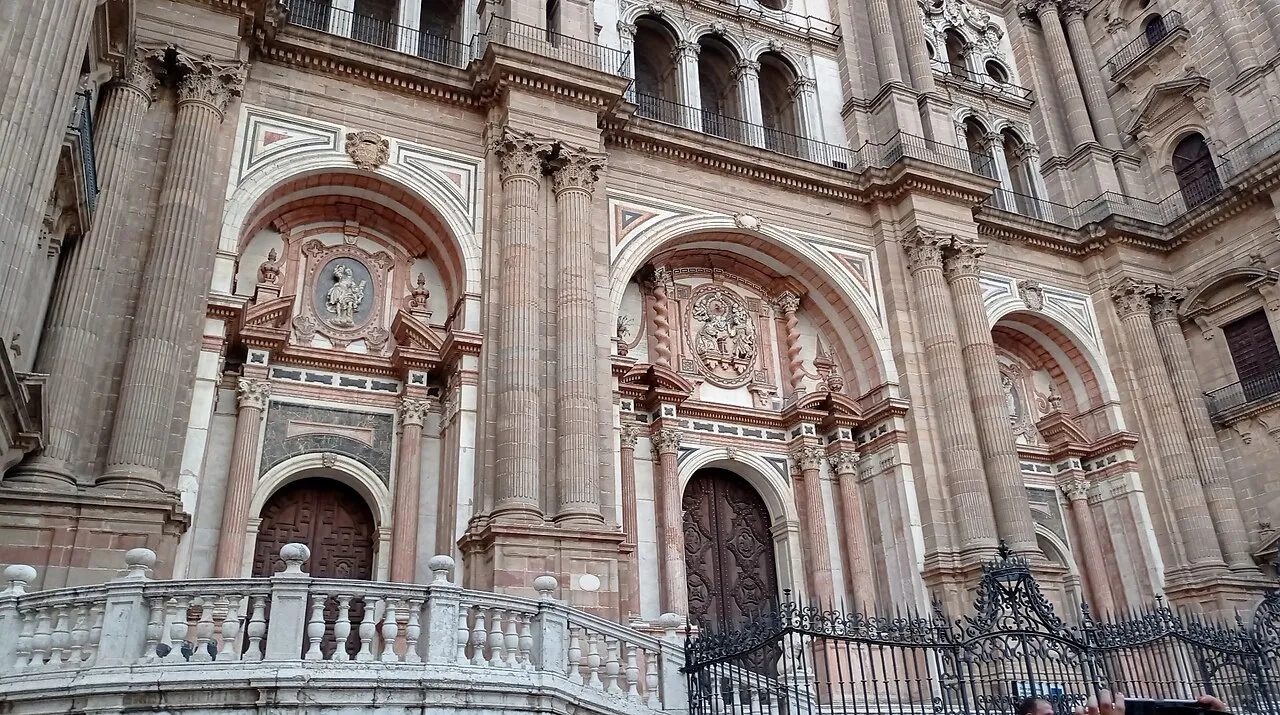
Work began in 1528, on the old main mosque, and it did not stop for good until 1782. Two and a half centuries of building leave layers, and here they can be told apart with unusual clarity: layout and foundations of Gothic root, a fully Renaissance body and a final doorway already Baroque.
What unifies the whole is the height. The vaults of the central nave are around forty metres and the three naves are almost at the same level, a hall-church solution that was not usual in Andalusia. The result is an enormous, very vertical box of light, where the golden stone keeps changing colour as the afternoon goes on.
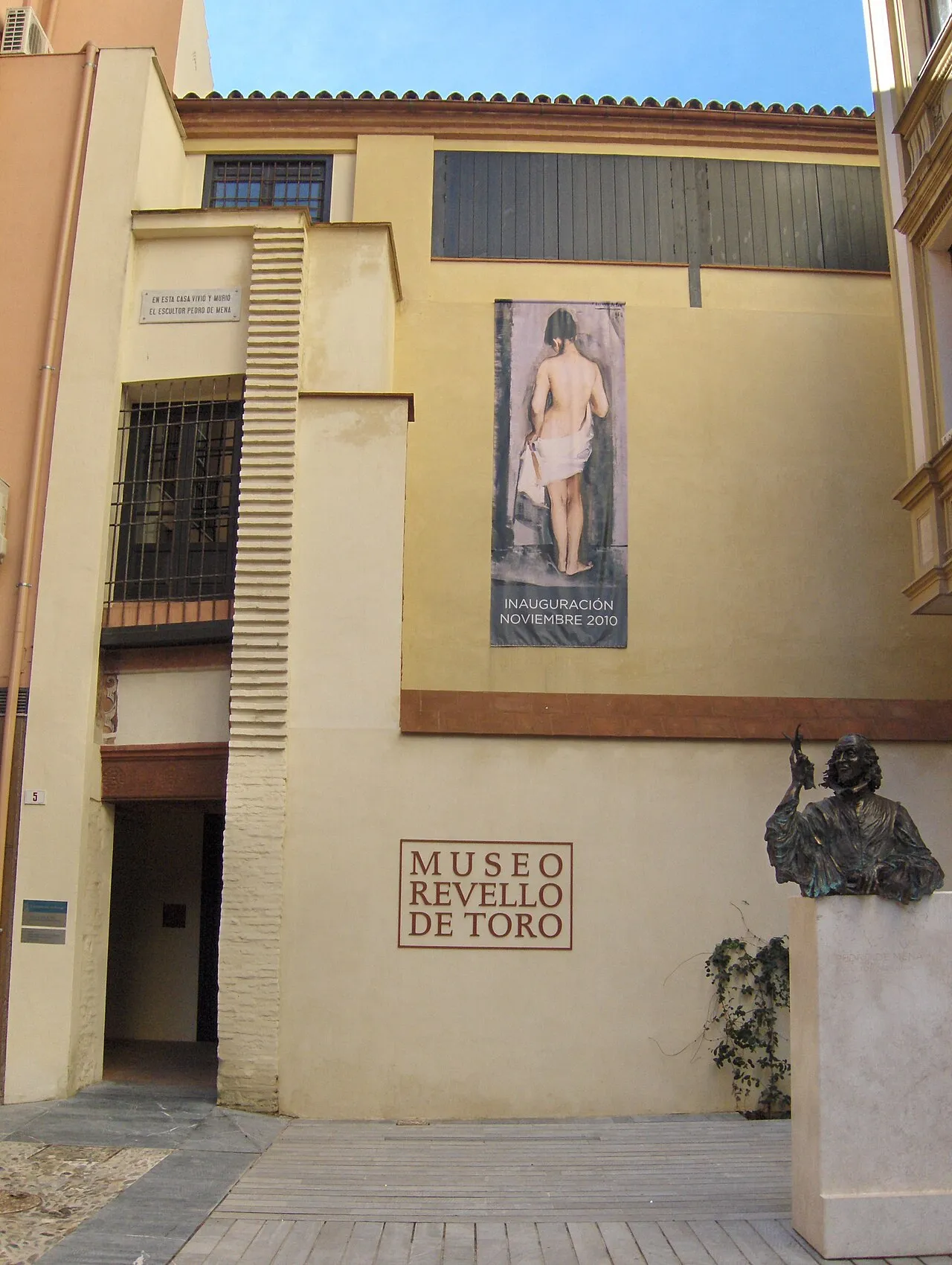
The piece most people skip is the choir, and it is the one most worth stopping at. The stalls were carved by Pedro de Mena in the middle of the seventeenth century: some forty figures of saints in cedar and mahogany wood, with a treatment of the hands and the folds that explains why he is the great name of the Málaga Baroque.
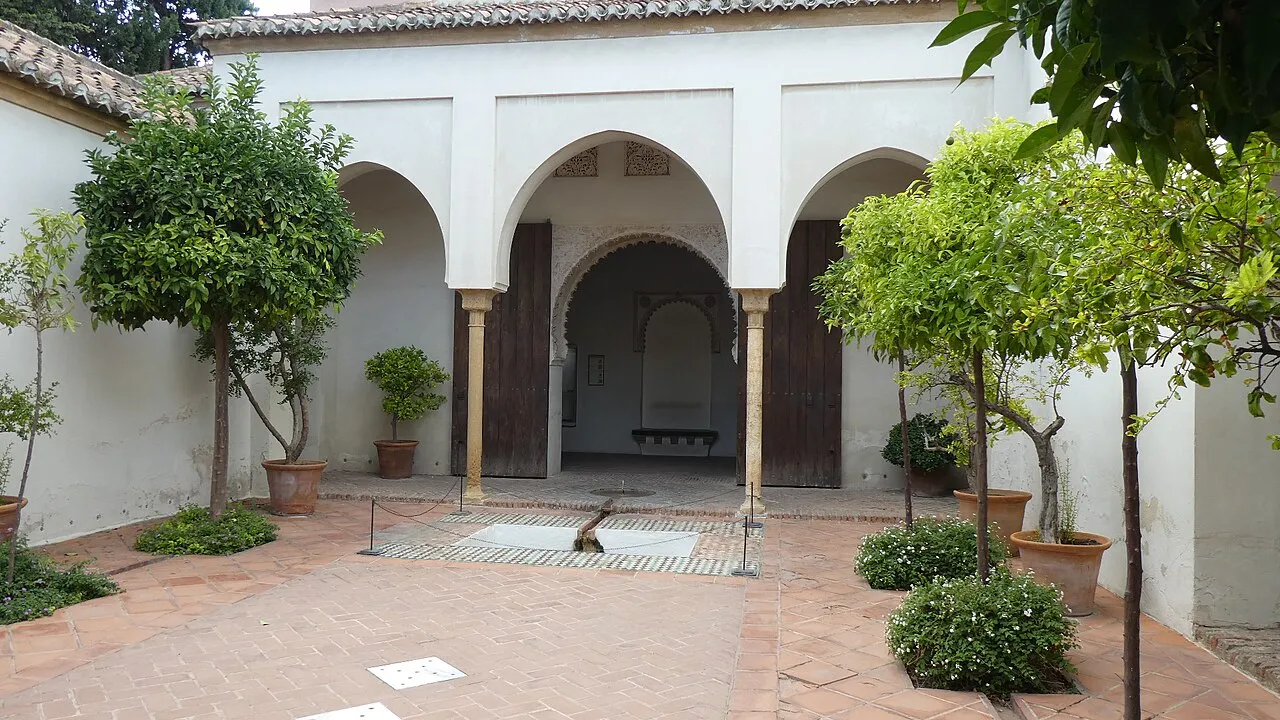
Walk round the building before going in, because from outside it reads just as well. On the north side are the Puerta de las Cadenas and the Patio de los Naranjos, which is what survives of the ablutions courtyard of the earlier mosque; on the south side you take in at a glance the contrast between the finished tower and the one that stopped halfway up.
Begun in 1528 on the main mosque and halted in 1782 with the second tower half done. Gothic in the foundations, Renaissance in the body, Baroque on the façade, and three naves at almost the same height that turn the interior into a box of light. Allow forty minutes inside.
Some forty figures of saints in cedar and mahogany carved in the mid-seventeenth century. De Mena worked here for years and he is the sculptor who defines the Málaga Baroque. Look closely at the hands and the fall of the tunics: the whole craft is there.
What is left of the ablutions courtyard of the main mosque on which the church was built. Access is free and hardly anyone stops: it deserves five minutes to see how the old plan still conditions the new building five centuries later.
The version told in Málaga for generations is a magnificent one: the money gathered to finish the second tower was diverted to help the independence of the United States, in the years when Bernardo de Gálvez, a son of Málaga, was fighting on the other side of the Atlantic. It is a perfectly rounded story and it is worth knowing.
It is also worth taking with a pinch of salt. The documents published over the years point rather to those funds ending up financing road works in the province itself, far less epic and considerably more believable for an eighteenth-century treasury.
What can be verified is the usual thing: the budget ran out and the work stopped. That the city has preferred for two centuries to keep the heroic version says quite a lot about how Málaga tells its own story, and that detail is at bottom more interesting than the fact.
The result, in any case, is a unique silhouette. That solitary eighty-four-metre tower can be recognised from the port, from Gibralfaro and from any rooftop, and it is what makes Málaga Cathedral unmistakable among the great Andalusian cathedrals.
Climbing to the roofs
This is the part that turns a normal visit into a memorable one. Since the planned pitched roof was never built, what sits on top of the vaults is a large walkable terrace, and since 2015 it can be visited on a guided tour.
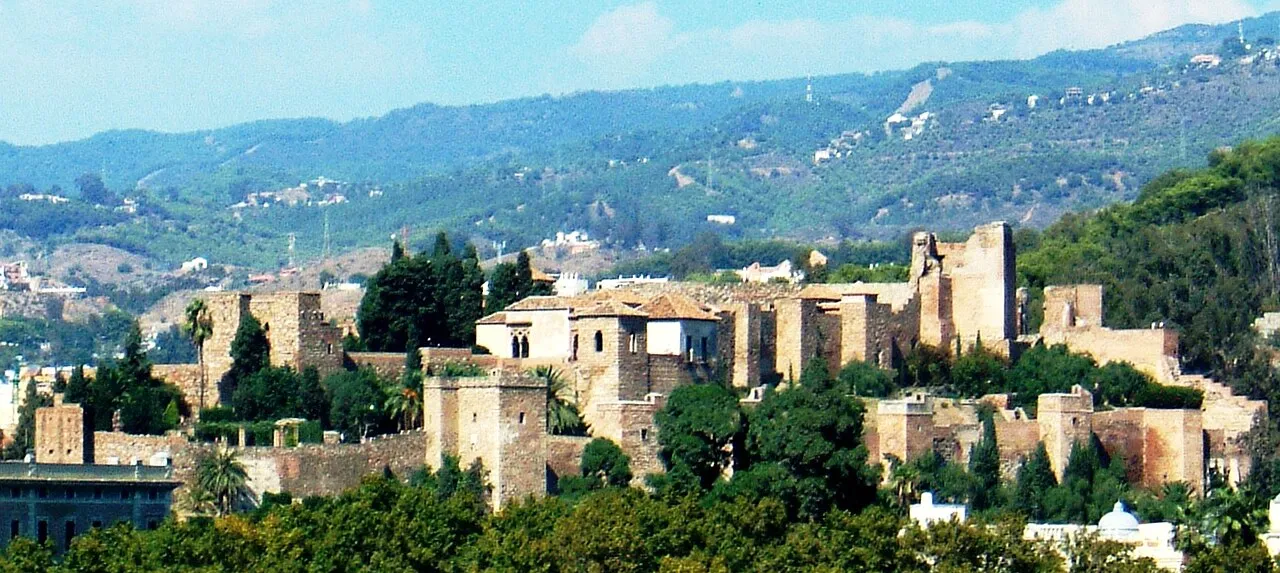
You go up a narrow spiral staircase of about two hundred steps, and at the top you walk literally on the extrados of the vaults, among buttresses, with the port on one side and the Alcazaba and Gibralfaro on the other. It is a perspective on the centre that no other point in the city gives.
It works in time slots and with small groups, so it is worth booking in advance, especially in high season. It is not suitable for anyone with mobility problems or vertigo, and footwear matters: there are uneven stretches.
The best moment is the end of the afternoon. The stone turns golden, the port lights up and the single tower stands out against the sky. Forty minutes inside the church plus thirty up above: an hour and a quarter in all.
Frequently asked questions
Why is Málaga Cathedral called La Manquita?
Because of the two towers designed only one was raised, the one on the left of the façade, which reaches eighty-four metres. The other stopped at the first section, cut off short. The people of Málaga christened it “the one-armed lady” with more affection than mockery, and the nickname has been working for more than two centuries.
Is it true that the tower money went to the independence of the United States?
That is the version told in the city for generations, linked to the figure of Bernardo de Gálvez, a son of Málaga. The published documents point rather to the funds going to road works in the province. What is certain is that the budget ran out and the work stopped in 1782.
Can you climb to the cathedral roofs?
Yes, on a guided visit, with advance booking and in time slots with small groups. You walk on top of the vaults, something possible because the planned roof was never built. The climb is a spiral staircase of about two hundred steps, narrow, and it is not suitable for anyone with vertigo or mobility problems.
How much time do you need to see it?
Forty minutes is enough for the interior at a calm pace, choir stalls included. If you add the climb to the roofs, allow an hour and a quarter in all. It is also worth setting aside five minutes for the Patio de los Naranjos, which has free access and which hardly anyone visits.
What must you look at inside?
Three things: the choir stalls by Pedro de Mena, with some forty figures in cedar and mahogany; the height of the three naves, almost at the same level, which is what gives that sense of a box of light; and the two facing Baroque organs, from the eighteenth century, which are still played in concerts.
Is it included in any combined pass?
The cathedral has its own ticket, independent of the municipal museum passes. If the plan includes several museums in the city, it is worth looking at the combined passes separately, because the cathedral is not usually in them and its roofs are always booked apart.
Practical information
WhereCalle Molina Lario, 9, right in the historic centre of Málaga.
TicketsAround 10 € for the church; the roofs are paid separately and run in time slots. Check the official website.
DurationForty minutes for the interior, thirty more if you go up to the roofs.
AccessibilityThe church is accessible. The roofs are a narrow spiral staircase, not suitable for everyone.
FreeThe Patio de los Naranjos, on the north side, has free access.
Best timeThe last slot of the afternoon for the roofs: the stone turns golden.
🎧 With Viavoy
Walk Málaga and listen at your own pace
Download Viavoy and walk Málaga offline, whenever you like.