Eating in Palma: sobrasada, frit mallorquí and bread without salt
An island cuisine with black pork, dry-farmed vegetables and a bread that has been kneaded without salt for centuries. What to order, where, and why the ensaïmada is called that.
Mallorcan cooking is island cooking and dry-farming cooking: pork, seasonal vegetables, olive oil, little fish in the traditional recipe book — however contradictory that sounds — and a remarkable skill at using everything up. All that lives today alongside an international restaurant scene that has grown enormously, and knowing how to tell one from the other helps.
The bread has no salt and that is not a mistake. Pa moreno has been kneaded this way since salt was taxed, and that is why it soaks up the oil and the sobrasada without fighting them.
Pork, and black pork in particular
Sobrasada, camaiot, frit.
Sobrasada is the flagship product: a raw cured sausage of minced pork with paprika, salt and spices, spreadable in texture and deep red in colour. It is eaten just as it comes on bread, melted over toast with honey, and used as the base of stews.
The good one is made with porc negre, the Mallorcan black pig, a native slow-growing breed with plenty of marbled fat that came close to disappearing and was brought back from the eighties onwards. The difference in flavour and in price compared with industrial sobrasada is considerable.
Camaiot is its more rustic cousin: the same mixture stuffed into the animal's own skin, with coarser pieces. And frit mallorquí is the offal dish par excellence — liver, blood, heart — sautéed with potato, pepper and fennel. There is also a shellfish version, frit de marisc.
The home slaughter, les matances, is still a family occasion in the villages of the island in autumn, and out of it come the sobrasada, the camaiot and the butifarró. This is not revived folklore: it is a living practice.
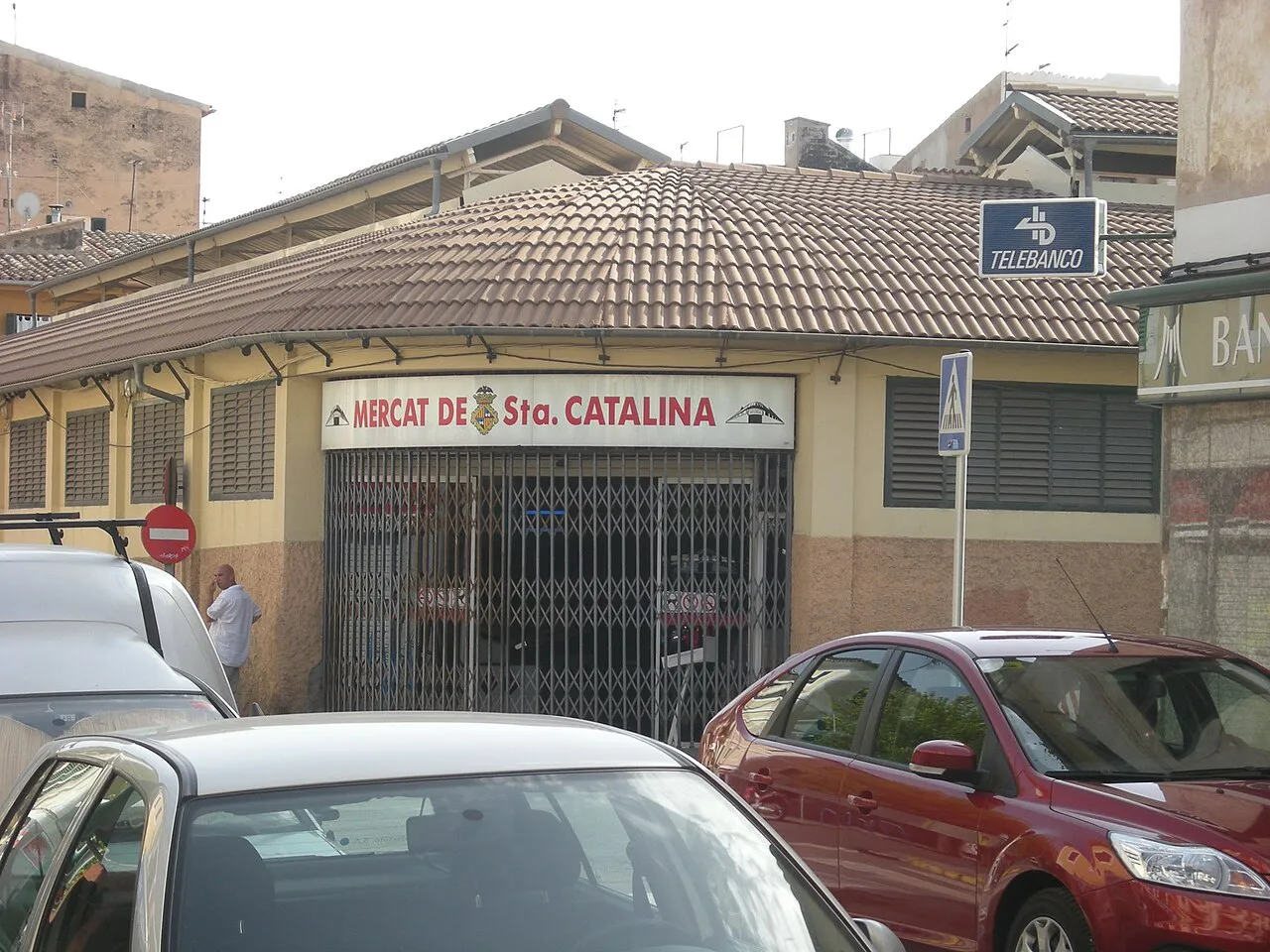
The best place to buy produce: porc negre sobrasada, camaiot, Mahón cheese, cracked trencades olives with fennel. And to eat at the counters, with oysters, Mallorcan wine and fish fried to order. In the morning.
Tumbet is the great vegetable contribution: potato, aubergine and pepper fried separately and assembled in layers with tomato sauce. It is a cousin of pisto and of ratatouille, and like them it was born from the market-garden calendar rather than from a recipe.
Trampó is the summer salad: tomato, green pepper and onion in big chunks, with oil and salt, nothing else. It is eaten on its own or on coca, the thin dough base that in Mallorca works like a pizza without cheese.
Arròs brut is the soupy rice of the interior, with meat, game and vegetables, dark from the sofrito and the spices. And pa amb oli is the national institution: pa moreno rubbed with ramallet tomato, oil and salt, with sobrasada, cheese or ham on top.
The bread is the detail that surprises most. Mallorcan pa moreno has been kneaded without salt for centuries, from the days when salt was taxed and expensive. It sounds like a defect and it is exactly the trick: this way it soaks up the oil, the tomato and the sobrasada without competing with them.
Together with calle de la Fàbrica, the greatest density of restaurants in Palma: chef-led cooking, Asian, Latin American, wine bars and tapas. This is where the city goes out to dinner, and it is worth booking at weekends.
The ensaïmada is the sweet of the island: fermented dough rolled into a spiral with pork lard, which in Mallorcan is called saïm, and that is where the name comes from. It is made plain or filled with cabello de ángel, candied pumpkin, and the good one has a stringy crumb that pulls apart in leaves.
Other local sweets: the coca de patata from Valldemossa, very light and airy; rubiols and crespells, for festivities; and gató d'ametla, the almond cake served with almond ice cream, the most Mallorcan dessert there is.
Mallorca has two denominations of origin, Binissalem and Pla i Llevant, with very distinctive native varieties: manto negro and callet for reds, prensal blanc and giró ros for whites. They are small-production wines, little exported and mid-to-high in price, but they are worth it.
On areas: the mercado de Santa Catalina and calle de la Fàbrica and calle de Sant Magí for dinner; the old town, around the Lonja and Sant Francesc, for lunch; and Ca'n Joan de s'Aigo, working since the eighteenth century, for chocolate with ensaïmada.
Frequently asked questions
What do you absolutely have to try in Palma?
Sobrasada, ideally porc negre; frit mallorquí, the offal dish with potato, pepper and fennel; tumbet, the island version of pisto; pa amb oli with the salt-free pa moreno; and for dessert, ensaïmada or gató d'ametla with almond ice cream. To drink, wine from Binissalem or Pla i Llevant.
Why does Mallorcan bread have no salt?
Because it has been kneaded that way for centuries, from the days when salt was taxed and came expensive. What began as a saving became the key to pa amb oli: bread without salt soaks up the oil, the ramallet tomato and the sobrasada without competing with them, and that is why the whole thing works.
What is porc negre?
The Mallorcan black pig, a native slow-growing breed with plenty of marbled fat that came close to disappearing and was brought back from the eighties onwards. Sobrasada made with it has a flavour and a texture notably different from the industrial version, and a considerably higher price too.
Why is it called ensaïmada?
Because of the pork lard, which in Mallorcan is called saïm and is what is spread over the dough before it is rolled into a spiral. The good one has a stringy crumb and pulls apart in leaves when you open it. It is made plain or filled with cabello de ángel, and there are bakeries in the city that have been making it for generations.
Is Mallorcan wine any good?
Yes, although production is small and little is exported, which is exactly why prices are mid to high. There are two denominations, Binissalem and Pla i Llevant, with very distinctive native varieties: manto negro and callet for reds, prensal blanc and giró ros for whites. They are worth trying precisely because you will not find them off the island.
Where should you eat in Palma?
For dinner, Santa Catalina: the market in the morning and calle de la Fàbrica and calle de Sant Magí at night, which hold the greatest density of restaurants in the city. At midday, the old town around the Lonja and Sant Francesc. And for chocolate with ensaïmada, Ca'n Joan de s'Aigo, working since the eighteenth century.
Practical information
The productPorc negre sobrasada, from the native black pig breed. Notably better than the industrial one.
The dishesFrit mallorquí, tumbet, trampó, arròs brut and pa amb oli.
The breadPa moreno, without salt, from the days when salt was taxed. That is why it soaks up the oil so well.
The sweetEnsaïmada (from saïm, lard) and gató d'ametla with almond ice cream.
The wineDO Binissalem and Pla i Llevant, with manto negro, callet and prensal blanc.
AreasSanta Catalina for dinner; the old town at midday; Ca'n Joan de s'Aigo for chocolate.
🎧 With Viavoy
Walk Palma and listen at your own pace
Download Viavoy and walk Palma offline, whenever you like.