Santa Catalina market
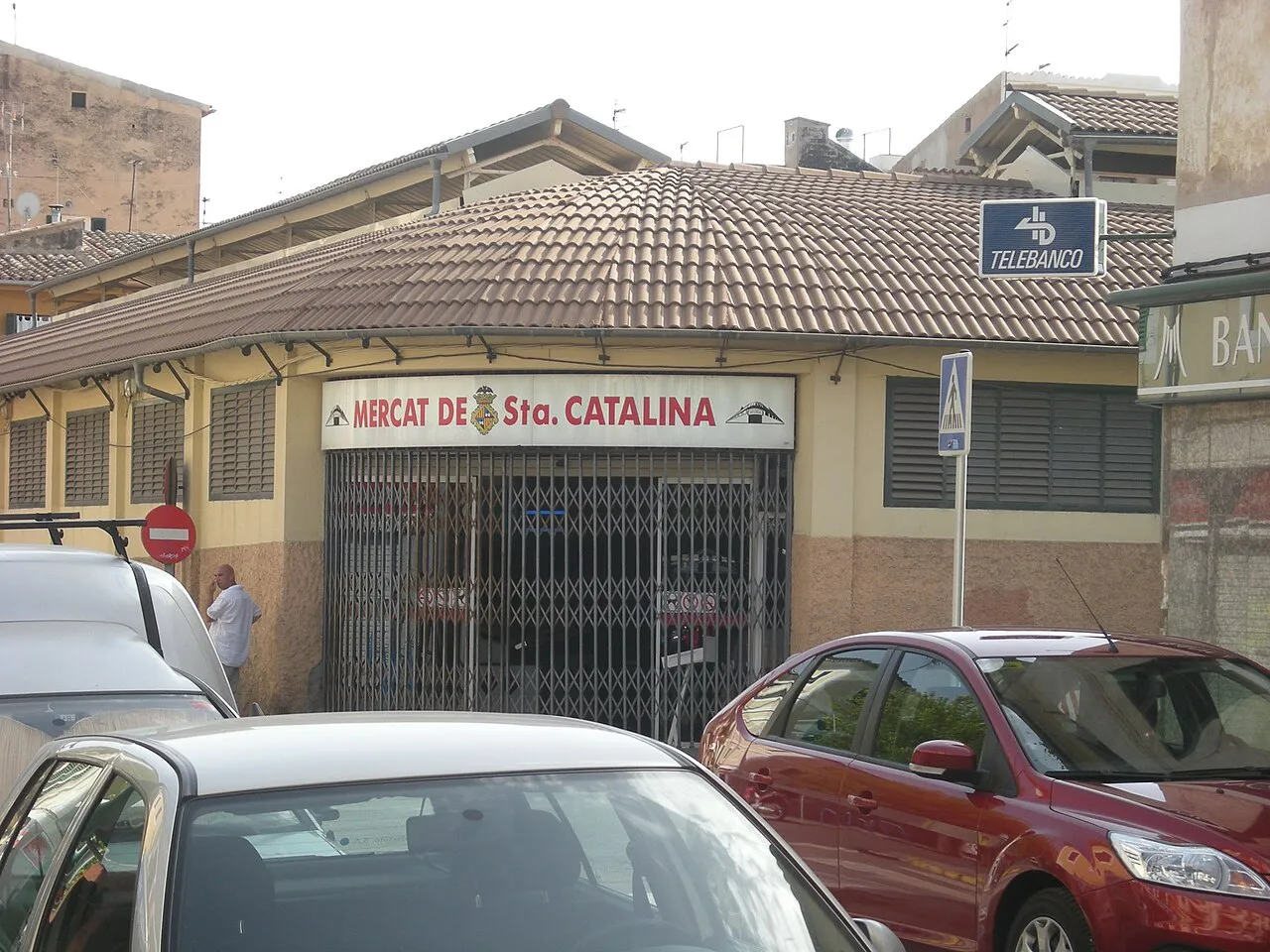
The oldest produce market in Palma, in a building of around 1920 with an open iron hall so the air could run through it. Go hungry, walk the whole way round before deciding and buy where there is a queue of local people.

A market that did not push out its lifelong stalls, a set of windmills protected by law and the greatest density of restaurants in the city. What to see and how to walk it.
🎧 On the walk Santa Catalina, the market and Es JonquetThirty years ago Santa Catalina was a working-class neighbourhood west of the centre, with low houses, plenty of lifelong residents and no tourist interest at all. Today it is the area with the most restaurants per square metre in Palma and one of the most expensive places to live. That change, which in other cities has wiped neighbourhoods out, has happened here with less damage than usual.
Santa Catalina grew up outside the walls, west of the walled city, as a quarter of fishermen, sailors and people who did not fit inside. The name comes from a medieval hospital that operated from 1343 to look after the poor, pilgrims and people of the sea; the gate in the wall took its name, and from the gate it passed to the whole neighbourhood.
That condition as an outer quarter explains its layout: low two-storey houses, regular narrow streets, no palaces and no noble patios. This is popular town planning, and that is why the scale is completely different from the old town, fifteen minutes from here.
It also explains its relationship with the sea. People here lived off fishing and off whatever came in through the harbour, and the market, the windmills and the fishermen's houses are all part of the same economy.
The oldest produce market in Palma, in a building of around 1920 with an open iron hall so the air could run through it. Go hungry, walk the whole way round before deciding and buy where there is a queue of local people.
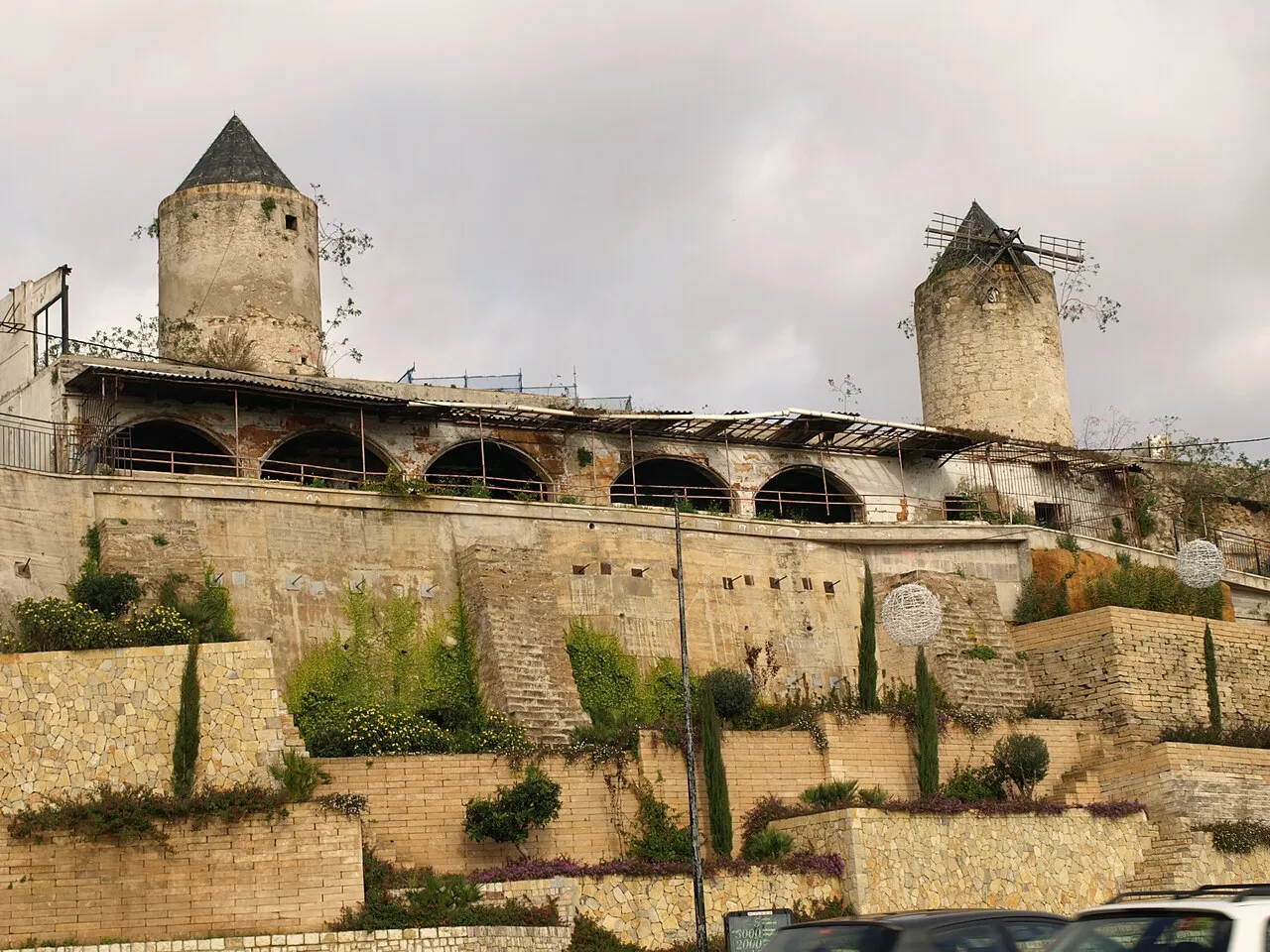
The mound with the flour windmills and the whitewashed fishermen's cottages. They are up there because that is where the wind blows best. The whole enclave is protected as an asset of cultural interest, and that is the only thing holding back the property pressure.
Download the app and discover Palma offline, whenever you like. Take the walking tour Santa Catalina, the market and Es Jonquet with a local guide in your ear.
Find out more about Viavoy →The market is the centre of everything and the first stop. It is a morning market, with the activity concentrated before two, and from mid-afternoon on the atmosphere shifts completely towards the nightlife.
The church of the Inmaculada Concepción, which everyone in the neighbourhood calls Sant Magí, is the parish church, and its bell tower will orient you better than any map. It holds the Virgen de los Huérfanos, the Virgin of the Orphans, a reminder of the old medieval refuge that stood on this ground.
Es Jonquet, five minutes downhill, is the one corner you should not miss: a mound facing the sea with flour windmills and whitewashed cottages. The windmills are there for technical reasons, not aesthetic ones: up high and facing the bay is where the wind blows best.
And there is one fact almost nobody knows: the synagogue of Mallorca was built in this neighbourhood, the only working one on the island, in a discreet building with nothing to mark it from outside. It is a detail that says quite a lot about the long history of this city.
Together with calle de la Fàbrica, it holds the greatest density of restaurants in Palma: chef-led cooking, Asian, Latin American, wine bars and tapas. It is the street where the neighbourhood became what it is today.
After a medieval hospital that operated from 1343 to look after the poor, pilgrims and people of the sea who were left outside the walled city. The gate in the wall on this side took its name, and from the gate it passed to the whole quarter that grew up behind it.
The market, the oldest produce market in Palma; Es Jonquet, the mound with the flour windmills and the fishermen's cottages; the church of the Inmaculada Concepción, which the neighbourhood calls Sant Magí; and calle de la Fàbrica and calle de Sant Magí, which hold the greatest density of restaurants in the city.
In the morning, with the activity concentrated before two, if what you want is the real market: the stalls of fish, meat and island vegetables. From mid-afternoon on the atmosphere shifts towards the counters and the nightlife, which is another thing, equally interesting but different.
Because up on top of the mound and facing the bay is where the wind blows best, and that wind turned the stones that made the grain into flour for the whole neighbourhood. They are not there for looks: the location is purely functional, and the enclave is protected as an asset of cultural interest.
Quite a lot. Housing prices have risen a great deal in two decades, part of the original community has left and there are already many businesses aimed at the visitor. What saves it, for now, is that the market still works as a market, with the lifelong stalls alongside the new counters.
On foot, in fifteen minutes from the Paseo del Born, crossing the avenida de Argentina, which runs over the old bed of sa Riera, the torrent that was diverted outside the walls in 1613. There is a city bus too, but the walk is easy and flat.
The logical circuit is a good hour: come in along the avenida de Argentina from the centre, go up to the market, walk calle de la Fàbrica and calle de Sant Magí, drop down to Es Jonquet and finish on the Paseo Marítimo, facing the water.
It is fifteen minutes on foot from the Paseo del Born, crossing the avenida de Argentina, which runs over the old bed of sa Riera, the torrent that was diverted outside the walls in 1613.
For eating there are two different moments: midday at the market, with the produce counters, and the evening in the surrounding streets, which is when the neighbourhood runs at full tilt. It is worth booking at weekends.
And an honest note: the gentrification here is real. Housing prices have risen a great deal, part of the original community has left and the neighbourhood already has plenty of businesses aimed at the visitor. What saves it, for now, is that the market is still a real market.
Download Viavoy and walk Palma offline, whenever you like.

Keep reading