The patios of Palma: a hundred grand houses hidden behind a gate
Architecture · Palma

The patios of Palma: a hundred grand houses hidden behind a gate

An architectural genre of its own that cannot be seen from the street. Which ones you can see, how to read them and why the doorways are so absurdly big.

8 min read · Updated for 2026
🎧 On the walk The old town: courtyards, Sant Francesc and Santa Eulàlia

Palma keeps more than a hundred listed noble patios, and hardly any of them can be seen from the street. They sit behind wooden gates that are sometimes open and sometimes not, in an old town where the façades are deliberately sober. All the ostentation of the Mallorcan nobility was kept behind the door, and learning to look in changes the walk.

The rule is simple: if a gate is open, put your head in. Nobody will say anything. It is the custom of the city and the only way to see half of its heritage.

What exactly a Mallorcan patio is

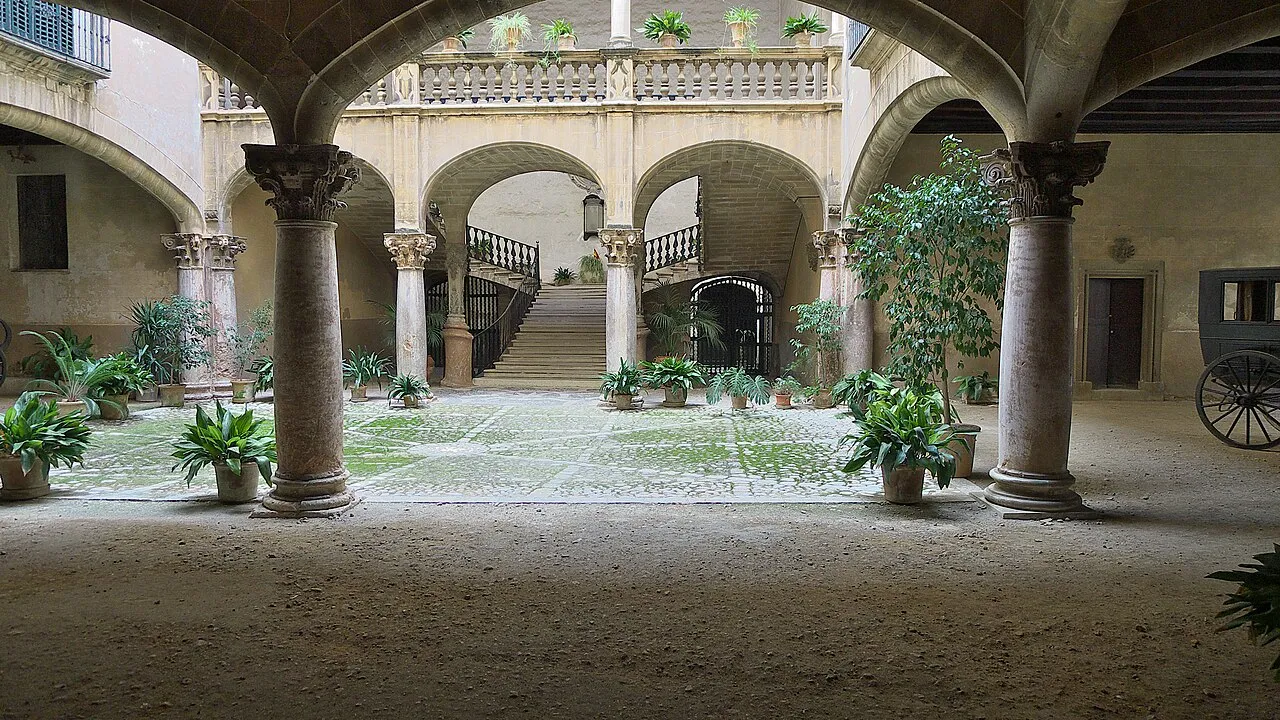
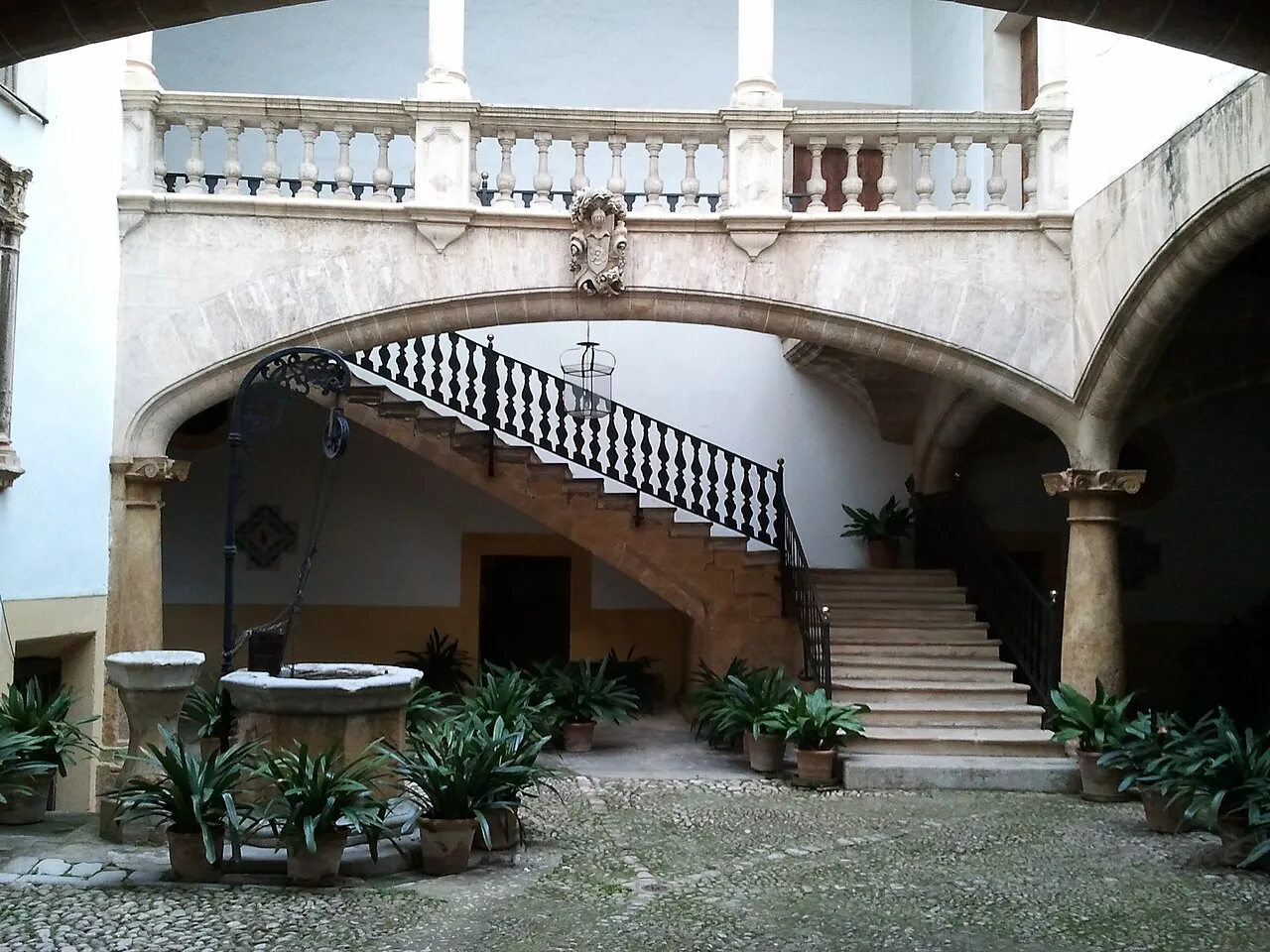
It is not a shared courtyard nor a cloister: it is the ceremonial space of a noble house, set between the zaguán, the entrance hall, and the private rooms. It is made up of an enormous doorway, an uncovered central space, a gallery of arches and a staircase that climbs in a theatrical gesture towards the main floor.

The doorways are outsized for a purely practical reason: they had to swallow a whole carriage. The coach came in from the street as far as the patio, the family got down under cover without stepping in the mud and the horses carried on to the stables at the back. That arch is not just swagger, it is the garage door.

And the staircase is the key element. It was designed so that walking up ahead of a visitor was a small performance, with the light falling from above and the person appearing and disappearing between the flights. The Mallorcan noble house is, to a large extent, a machine for receiving people.

1Can Vivot

Can Vivot

📍 Carrer de Can Savellà

The most spectacular in Palma: red marble from Binissalem, iron lanterns and an imperial double-flight staircase. Untouched since its 1683-1711 remodelling, furniture, paintings and library included, because the family is still tied to the house.

2Can Oleza

Can Oleza

📍 Carrer de Morei

The one that reads most clearly: the Gothic twin-light window on the façade, the Renaissance Ionic columns of the patio and the carved stone balustrade, the most elegant in the old town. Three centuries of architecture three metres apart.

🎧 With Viavoy

Explore Palma at your own pace

Download the app and discover Palma offline, whenever you like. Take the walking tour The old town: courtyards, Sant Francesc and Santa Eulàlia with a local guide in your ear.

Find out more about Viavoy →

How to read them: like a tree ring

A Mallorcan patio was almost never built in one go. It was polished over generations: each heir added his own whim and showed off a little more than his father. That is why Gothic, Renaissance and Baroque elements live in the same space with no apparent conflict.

The keys to dating them by eye: the pointed arch and the twin-light window are Gothic, fourteenth or fifteenth century; the slim, plain columns with an Ionic capital are Renaissance, sixteenth century; the red marble columns, the bulging balusters and the double-flight staircase are Baroque, seventeenth or eighteenth century.

The red marble, by the way, does not come from Italy: it is the reddish limestone from the quarries of inland Mallorca, above all from Binissalem, which the stonemasons polished until it shone. Once you learn to recognise it, you see it across half of Palma.

And look at the height of the gallery and at the size of the patio in relation to the house: the greater the share given over to display, the more money there was. It is a fairly reliable measure.

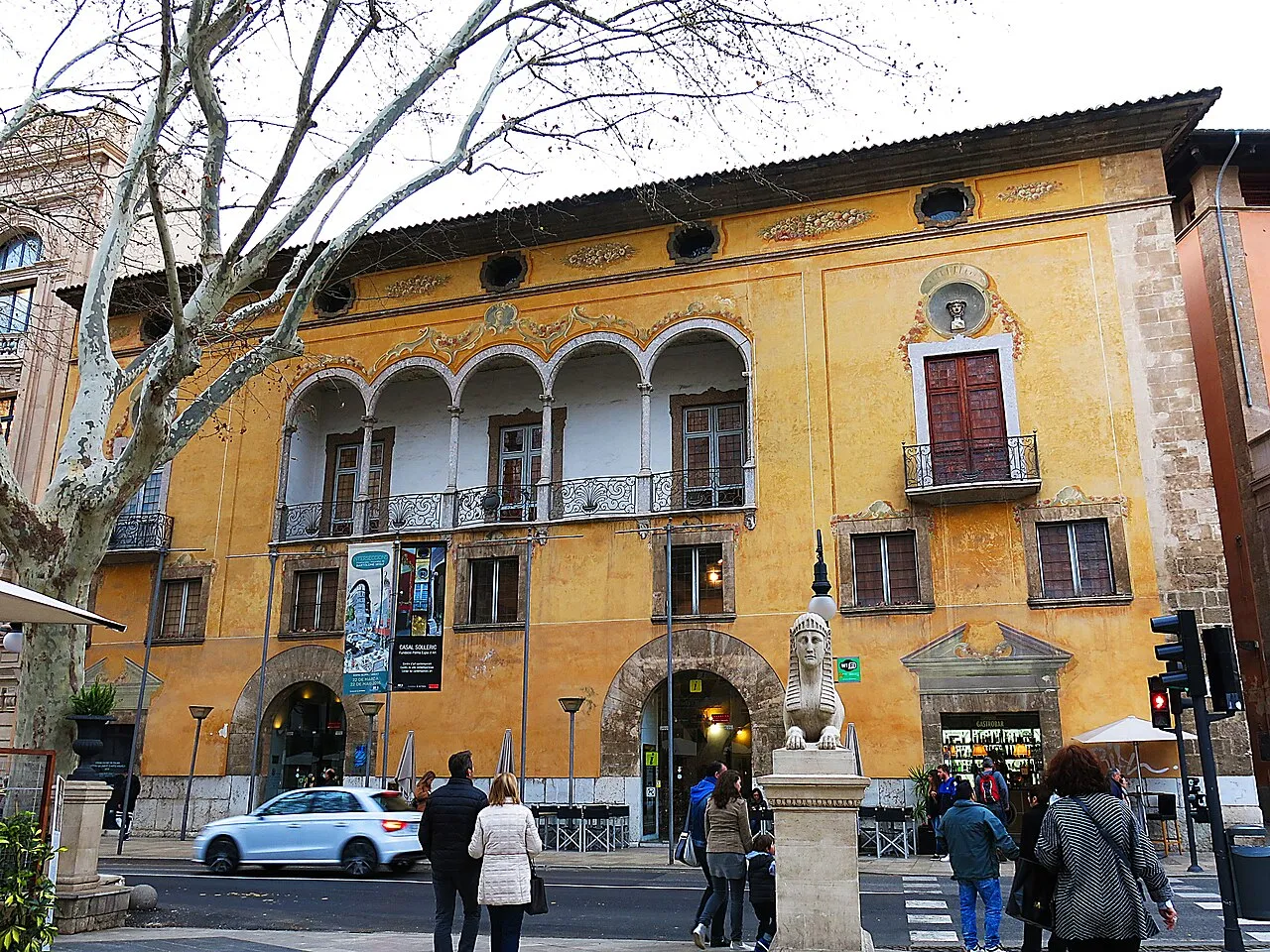
3Casal Solleric

Casal Solleric

📍 Passeig del Born

The only one you can visit any day of the year, because it is municipal and free. Rococo from 1763, put up by a marquis family enriched by exporting olive oil. If you only go into one, make it this one.

Frequently asked questions

How many patios are there in Palma?

More than a hundred listed in the old town, though the exact number depends on the criteria. Most are behind closed gates in houses that are still private residences, foundations or institutional headquarters, and they can only be seen when the doorway is open.

Which ones can be visited?

The Casal Solleric, on the Born, is municipal, free and open every day; Can Bordils, home to the municipal archive, opens during office hours. The rest are seen from the doorway, and to get inside you have to go on the City Hall's open days or on arranged guided routes.

Why are the doorways so big?

Because they had to swallow a whole carriage. The coach came in from the street as far as the patio, the family got down under cover without stepping in the mud and the horses carried on to the stables at the back. The outsized arch is not just ostentation: it is, literally, the garage door.

How do you tell the periods apart?

The pointed arch and the twin-light window are Gothic, fourteenth or fifteenth century. The slim, plain columns with an Ionic capital are Renaissance, sixteenth century. The red marble columns, the bulging balusters and the imperial double-flight staircase are Baroque, seventeenth or eighteenth century. All three usually live together in the same patio.

Where does the red marble come from?

From the island itself: it is the reddish limestone from the quarries of inland Mallorca, above all around Binissalem, which the stonemasons polished until it shone like marble. It is not imported Italian marble, however much it looks like it, and once you learn to recognise it you see it across half of Palma.

Is it all right to look into an open doorway?

Yes, it is the custom of the city and nobody will say anything to you. Putting your head into the zaguán and taking a photograph is perfectly accepted. What you do not do is walk through to the patio or up the staircase: these are lived-in houses, and the custom works precisely because everybody respects that limit.

Where to go, in practice

The essential route is calle Morei and calle Zavellá, a step from plaza de Cort. In ten minutes you pass in front of Can Oleza, Can Bordils, Can Marquès and Can Vivot, four of the best. You see them from the doorway when it is open, which is usually during office hours.

The only one always accessible and free is the Casal Solleric, on the Born, which is municipal and works as an exhibition space. Can Bordils, home to the municipal archive, also opens during office hours.

To get properly inside the private ones there are two ways: the open-day events the City Hall runs periodically, and the arranged guided routes, which reach patios that do not open on their own. If the subject interests you, it is worth timing the trip around one of them.

A note on manners: these are lived-in houses. Putting your head into the zaguán and taking a photograph is normal and accepted; walking through to the patio or up the staircase is not. The custom works because everybody respects that limit.

Practical information

How many there areMore than a hundred listed in the old town. Almost all behind closed gates.
The routeCalle Morei and calle Zavellá: Can Oleza, Can Bordils, Can Marquès and Can Vivot in ten minutes.
Always openCasal Solleric, on the Born: municipal and free. And Can Bordils during office hours.
Getting insideThe City Hall's open days and arranged guided routes.
How to date themPointed arch = Gothic; plain Ionic column = Renaissance; red marble and double flight = Baroque.
EtiquetteLooking into the zaguán and photographing, yes. Walking into the patio or up the staircase, no.
On the map

🎧 With Viavoy

Walk Palma and listen at your own pace

Download Viavoy and walk Palma offline, whenever you like.

from 2,99 €· one-off payment
City Pass · 9,99 €3 days, all the tours in Palma
Find out more about Viavoy →
Viavoy app

Keep reading

More articles

Itineraries

Palma in 2 days: an itinerary through the old town, Bellver and Santa Catalina

Art & architecture

Modernista Palma: an hour between trencadís and wrought iron

Art & architecture

La Seu: a guide to visiting Palma Cathedral

Neighbourhoods

Bellver and El Terreno: the round castle and the neighbourhood of legendary nights