Eating in Mérida: the dehesa, the Guadiana market gardens and Ribera del Guadiana
Acorn-fed Ibérico pork, torta del Casar, irrigated tomatoes and peppers and a wine denomination that has improved a great deal. What to order and where, with the heat as a factor.
The cooking of Mérida is Extremaduran by the book — dehesa, Ibérico pork, lamb, paprika — but with a nuance of its own: here there is a river and there is irrigation. Las Vegas del Guadiana are one of the great market-garden areas of Spain, and that brings onto the menu vegetables and fruit that have less of a presence in the dry-farmed Extremadura.
With forty degrees outside, the logical order is reversed: Extremaduran gazpacho at midday and the caldereta or the grilled meat for dinner, when it cools down.
What the dehesa gives
Ibérico pork, lamb and paprika.
Acorn-fed Ibérico pork is the great product of the province. The dehesa — that landscape of holm oaks and pasture you see from the train — is its natural habitat: the animal grazes freely during the montanera, the acorn season between October and March, and it is that diet and that exercise that give the characteristic marbling of fat.
As well as the ham, in Extremadura the fresh cuts grilled over coals are far more common on menus: presa, secreto, pluma, carrillera. And the cured meats, with pimentón de la Vera as the common denominator: lomo, salchichón, chorizo and morcón.
Pimentón de la Vera has a denomination of origin of its own and is smoke-dried with oak or holm oak wood, which gives it a smoky taste no other paprika has. It is in the stews, in the marinades, in the migas and in the sausage: it is the signature of all the cooking of the region.
For lamb, the Extremaduran caldereta, stewed with its own pounded liver, which is what gives it its thickness and its flavour. And migas, a shepherd's dish: stale bread, garlic, paprika and torreznos, fried pork belly, sometimes served with grapes to cut the fat.
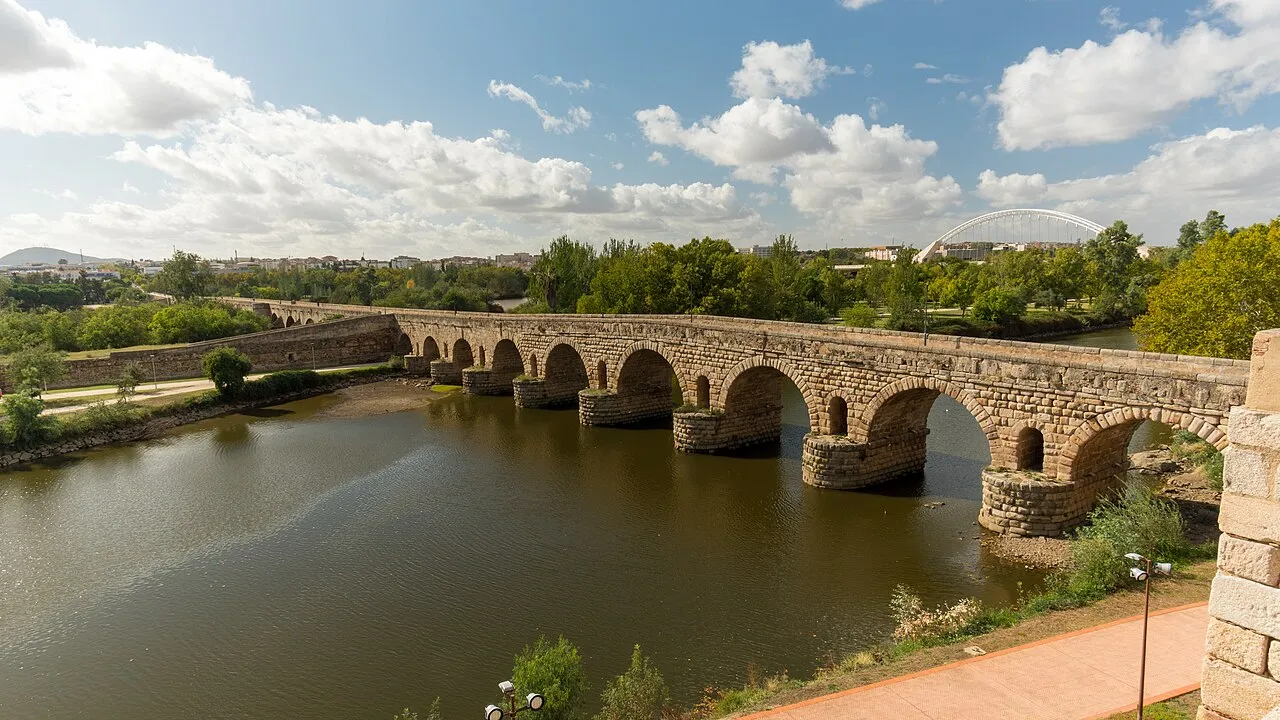
The centre of the living Mérida, with the co-cathedral of Santa María and the terraces where people have lunch and dinner. Around it and on the pedestrian streets that run off it almost all the restaurants are concentrated, and it is five minutes from the Temple of Diana and the Roman Bridge.
Torta del Casar is the compulsory cheese: merino sheep's milk, vegetable rennet from thistle instead of animal rennet, and therefore a paste that never quite sets. It is served whole, a lid is cut in the top and it is eaten with a spoon or spread on bread. It has a bitter edge that comes from the thistle itself.
Nearby they also make torta de la Serena, very similar, from the district in the south of Badajoz. Both have a denomination of origin and both are much cheaper here than outside the region.
And then there is the market garden. Las Vegas del Guadiana are one of the great irrigated areas of Spain — tomatoes for processing, peppers, maize, rice, fruit trees — and in summer that shows on the menus: Extremaduran gazpacho, which is coarser and more chopped than the Andalusian kind, tomato salads and roast peppers.
To drink, the Ribera del Guadiana denomination of origin, the province's own, with reds from tempranillo, garnacha and local varieties that have improved enormously over the last two decades and that come at very reasonable prices. You can also find pitarra wines, made in clay tinajas, in traditional tabernas.
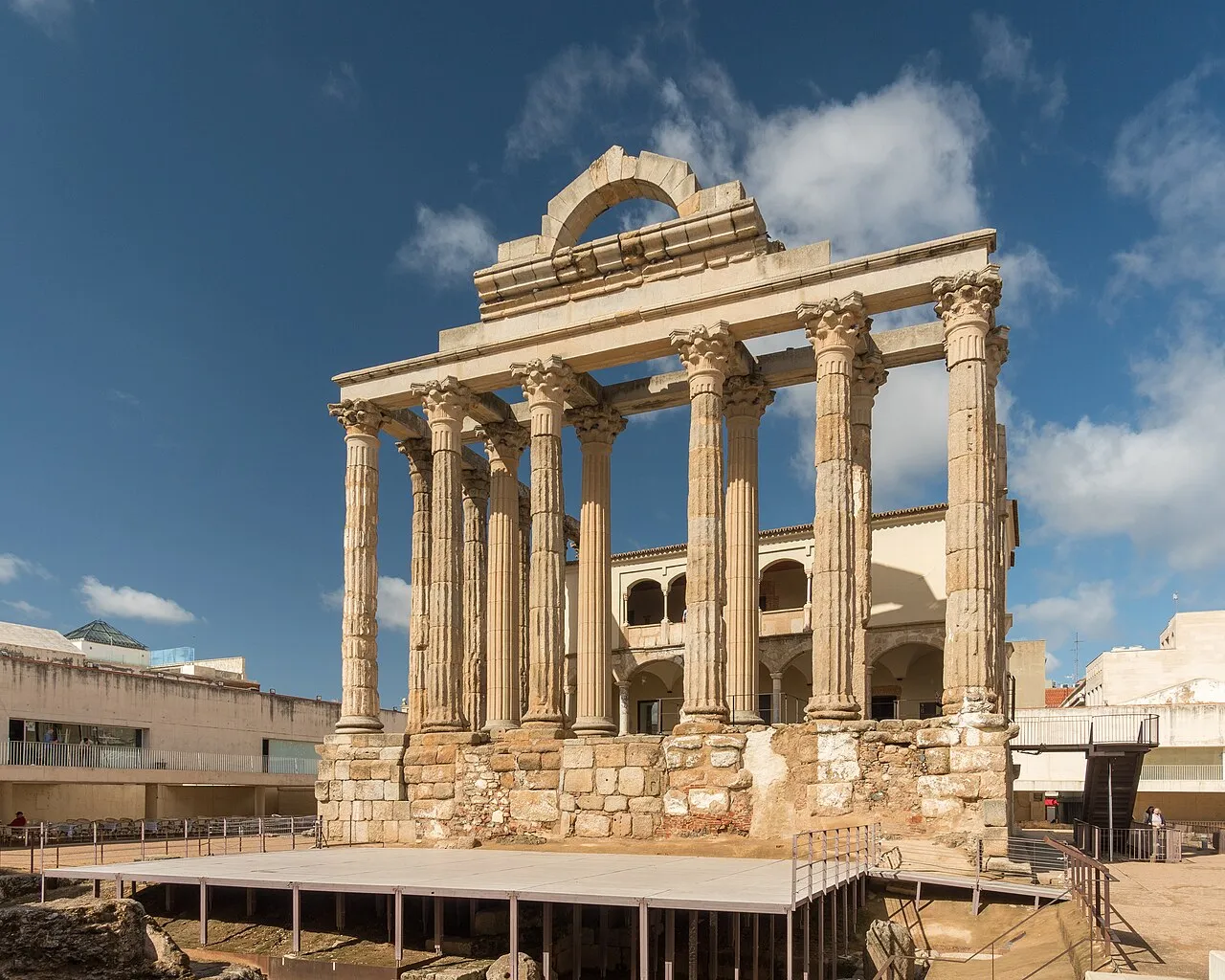
The area around the temple and calle Sagasta concentrate a good part of the tapas scene in the centre, and they have the advantage that you dine with the lit Roman columns in view. It is one of the few places where monument and terrace genuinely share the space.
The restaurants are concentrated on the plaza de España, on the pedestrian streets that run off it and around the Temple of Diana. It is a small area and everything is five or ten minutes' walk from any monument in the centre.
The heat rules the order of meals. In summer, with more than forty degrees, the sensible thing is to eat light at midday — gazpacho, salad, some Ibérico — and save the caldereta, the migas or the grilled meat for dinner, which in Extremadura is eaten late and on a terrace.
During the classical theatre festival, in July and August, dinners shift later and many places extend their hours for the audience coming out of the performances, past midnight. It is worth booking on those nights, because the city fills up.
And a shopping tip: torta del Casar and Ibérico products cost considerably less here than in Madrid or Barcelona. If you take cheese away with you, bear in mind that it is a living product and does not last well shut in a suitcase for many hours in summer.
Frequently asked questions
What must you try in Mérida?
Torta del Casar, acorn-fed Ibérico pork — and not only ham: the fresh cuts grilled over coals are excellent and very common on menus — lamb caldereta and, in summer, Extremaduran gazpacho. To drink, a red from Ribera del Guadiana, the province's denomination.
How do you eat torta del Casar?
Whole, cutting a circular lid in the top and eating it with a spoon or spreading it on bread, because inside it is creamy, almost liquid. It is not sliced. That texture comes from the vegetable rennet from thistle used instead of animal rennet, and that is also where its bitter edge comes from.
What is Extremaduran gazpacho?
A coarser, more chopped version than the Andalusian one: instead of a fine cream, it has the tomato, the pepper, the cucumber and the onion in pieces, with bread, oil and vinegar. It is country and summer food, and in Las Vegas del Guadiana, one of the great market-garden areas of Spain, it is made with produce from the district itself.
Is the wine from Extremadura any good?
It has improved enormously over the last two decades. The Ribera del Guadiana denomination produces reds from tempranillo, garnacha and local varieties with very good value for money, and whites too. Apart from those there are the pitarra wines, made traditionally in clay tinajas, more uneven but very characteristic.
Where should you eat in Mérida?
On the plaza de España and the pedestrian streets that run off it, and around the Temple of Diana, where you dine with the lit Roman columns in view. It is a small area and everything is five or ten minutes from any monument in the centre.
How do you organise meals with the heat?
By reversing the usual order. With more than forty degrees, it is best to eat light at midday — gazpacho, salad, Ibérico — and leave the caldereta, the migas or the grilled meat for dinner, which in Extremadura is eaten late and on a terrace. During the theatre festival, in summer, many places extend their hours and it is worth booking.
Practical information
The productAcorn-fed Ibérico pork from the dehesa: ham and fresh cuts grilled over coals — presa, secreto, pluma.
The cheeseTorta del Casar, from sheep's milk and vegetable rennet. You open it at the top and eat it with a spoon.
The spicePimentón de la Vera, smoked with oak or holm oak wood, with a denomination of its own.
DishesLamb caldereta, Extremaduran migas and Extremaduran gazpacho, more chopped than the Andalusian kind.
WineRibera del Guadiana, the province's denomination. And pitarra in traditional tabernas.
AreasPlaza de España, the pedestrian streets of the centre and around the Temple of Diana.
🎧 With Viavoy
Walk Merida and listen at your own pace
Download Viavoy and walk Merida offline, whenever you like.