Mérida beyond the theatre: the circus, the Mitreo and the alcazaba
What you see on the second day, or on the first if you have hours to spare: a circus for thirty thousand people, domestic mosaics, family tombs and an Arab fortress with a Visigothic cistern.
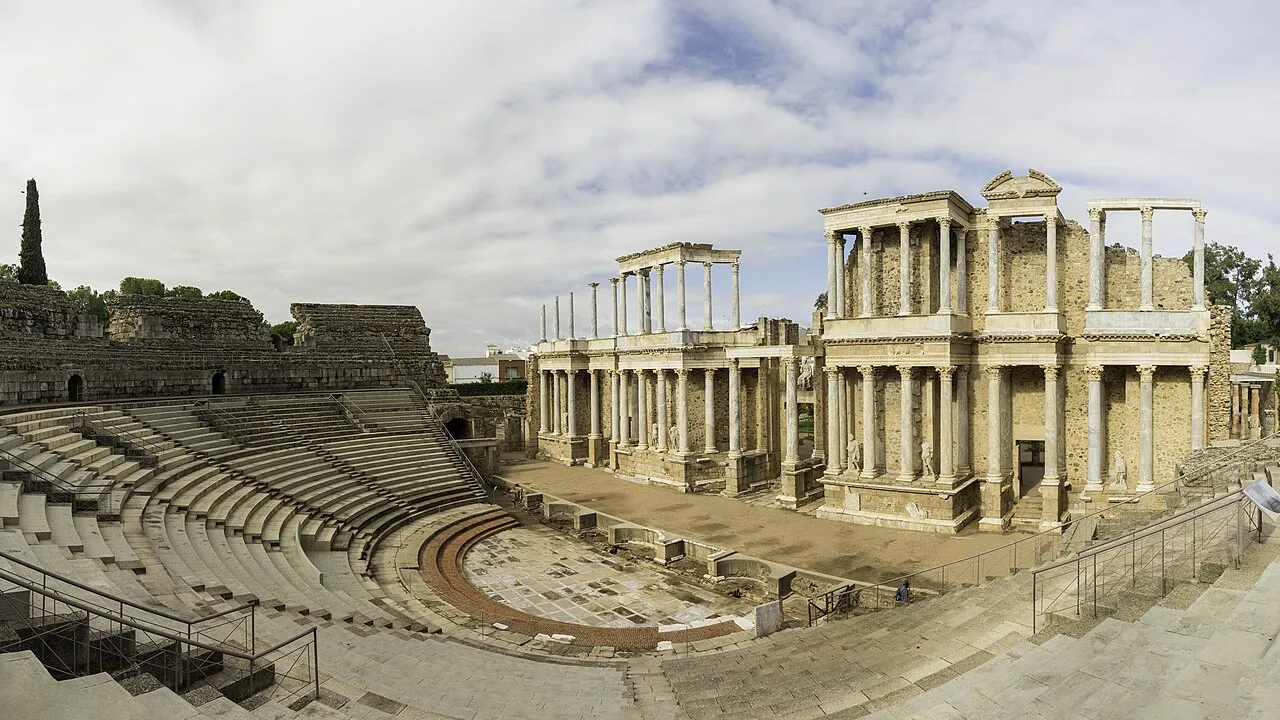
The theatre, the amphitheatre and the museum take almost all the visits in Mérida, and that is logical. But the pass for the monumental complex includes half a dozen more sites that usually stay empty, and some of them are among the best there is: an enormous circus, a house with complete mosaics, a family cemetery and an alcazaba that sums up a thousand years of history in a single building.
Almost all these sites are in the same pass you have already paid for the theatre. Skipping them means leaving tickets unused.
The circus: thirty thousand people for some races
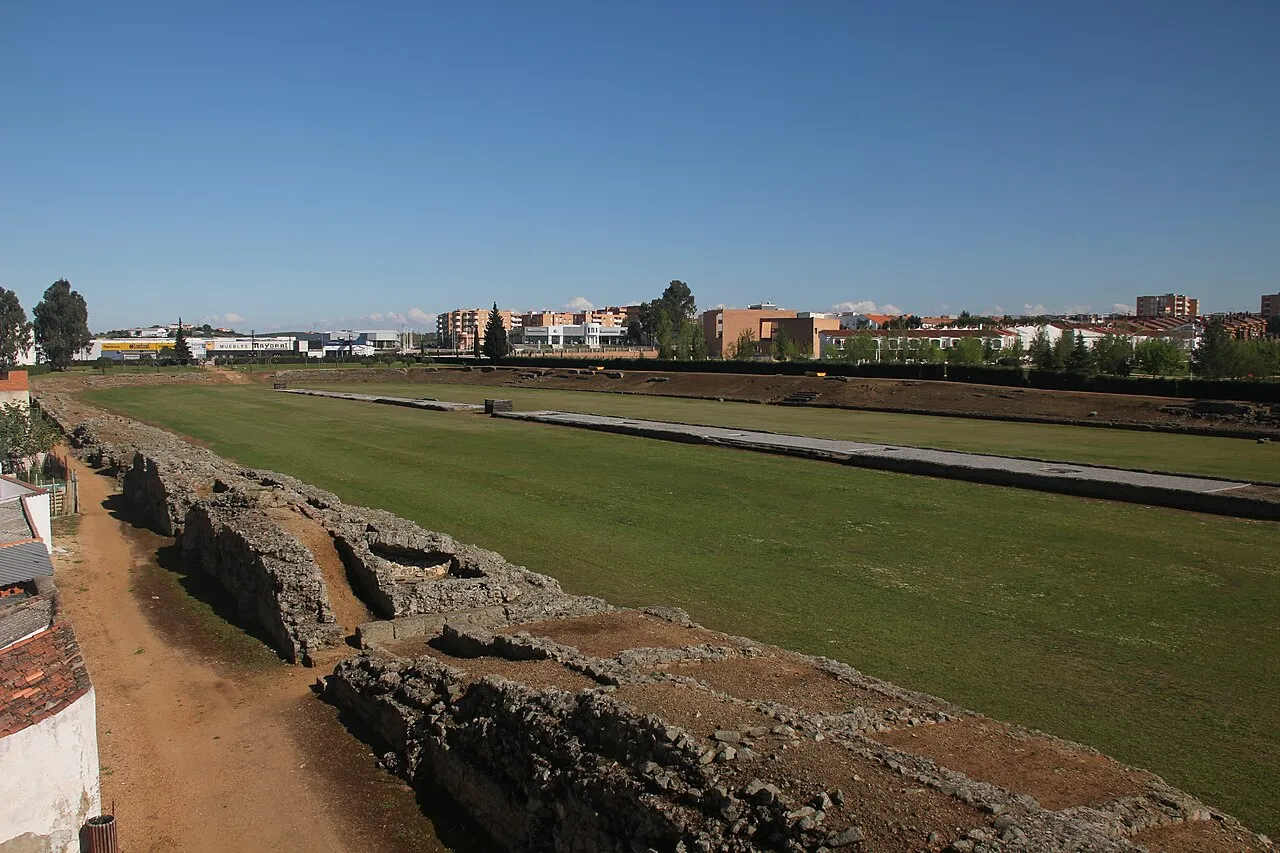
It is the biggest building the Romans put up in Mérida and one of the best preserved circuses in the Empire: some four hundred metres long by a hundred wide, with an estimated capacity of thirty thousand spectators, more than the entire population of the city at its peak.
That means the races drew people from across the province. The circus was, by a distance, the most popular spectacle in the Roman world — more than the gladiators — and it moved organised factions, betting and an idolisation of the charioteers comparable to that of professional sport today.
The track survives, the central spina that divided it and a good part of the seating tiers, and there is an interpretation centre that explains how the races worked. It lies somewhat away from the centre, beside the road, and that is why far fewer people visit it than should.
It is worth going if only for the contrast of scale: after the theatre, which seems big, the circus shows what a great Roman entertainment venue really was.
1
Roman Circus
📍 East of the city
Four hundred metres of track and thirty thousand spectators for chariot races, the most popular spectacle in the Roman world. The central spina and a good part of the seating tiers survive, with an interpretation centre. It is away from the centre and almost always empty.
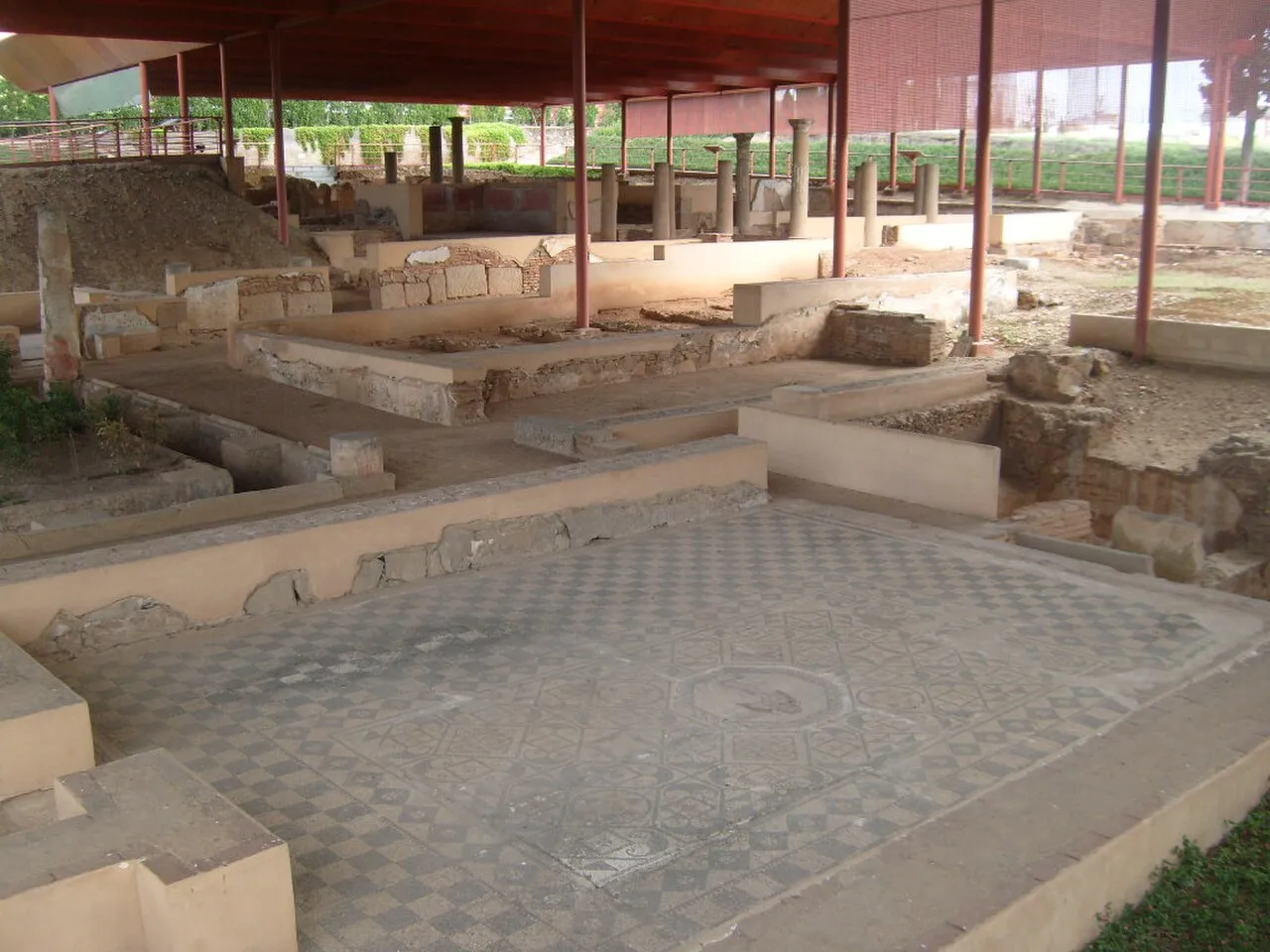
A suburban villa with courtyards, private baths and mosaics in place, among them the so-called cosmological mosaic, with personifications of the natural elements. It is where you best understand how the city's elite really lived.
The Casa del Mitreo is a suburban villa with porticoed courtyards, rooms and private baths, and it keeps mosaics in their original position. The best known is the so-called cosmological mosaic, with figures personifying the natural elements and the winds, an extremely rare piece for its iconography.
Visiting it after having seen the great public buildings changes your perspective: you go from collective spectacle to domestic scale, with rooms of a recognisable size and decorated floors that somebody commissioned for their home.
Next to it is the Columbarios funerary area, a family cemetery with two burial enclosures and their inscriptions. The Romans buried their dead outside the city, beside the roads, so that travellers would read the names of the deceased: it was a way for the dead to go on being seen.
It is the most intimate visit of the whole complex, and also the one that most helps to put concrete names and biographies to a city that is otherwise remembered as an accumulation of structures.
3
Columbarios funerary area
📍 Next to the Casa del Mitreo
A Roman family cemetery with two enclosures and their inscriptions. Burials took place outside the city and beside the roads, so that travellers would read the names: the dead went on being seen. It is the most intimate visit of the whole complex.
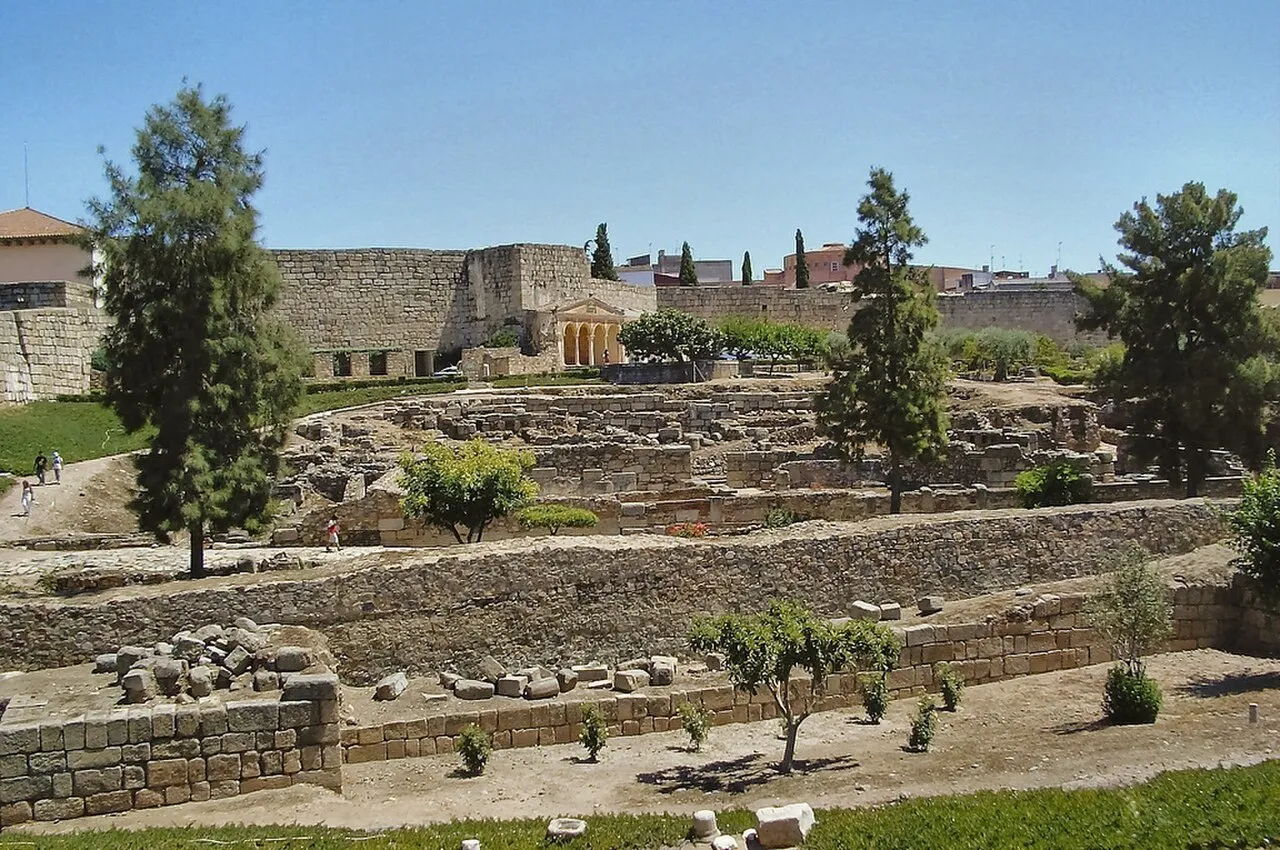
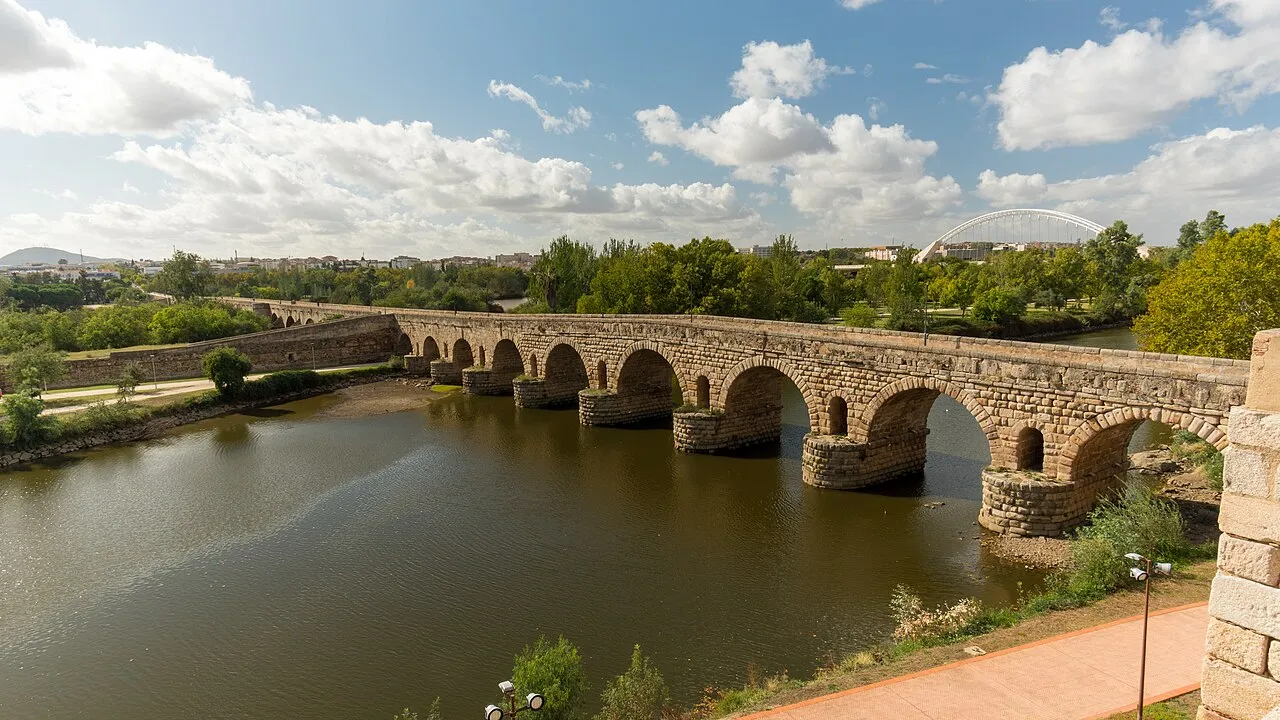
The Arab Alcazaba, next to the bridge, was built in the year 835 by order of the Emirate of Córdoba after Mérida rebelled. It was not designed to defend the city from an outside enemy, but to control it from within and to command the head of the bridge, which was the key to the crossing.
Inside there is an extraordinary cistern that you go down to by two ramps, built reusing decorated Visigothic pilasters and panels, which in turn came from Roman buildings. Three periods on top of one another in a single stairway: it is the best material summary of the city's history.
The basilica of Santa Eulalia, north of the centre, is the other essential site of this period. Beneath the present church there is a site open to visitors with remains of Roman houses, a necropolis and the successive early Christian basilicas raised over the martyr's tomb.
And next to it, the so-called Santa Eulalia obelisk, from the seventeenth century, built with reused Roman column shafts and capitals. In Mérida the recycling of ancient material is so constant that it is sometimes hard to date by eye what you are looking at.
4
Alcazaba de Mérida
📍 Head of the Roman Bridge
From the year 835, raised by the Emirate of Córdoba to control a rebellious city from within. Its cistern, which you go down to by two ramps, is built with reused Visigothic pilasters that in turn came from Roman buildings.
What does the pass for the monumental complex include?
Theatre and amphitheatre, Roman circus, Casa del Mitreo, the Columbarios funerary area, the Arab alcazaba and the basilica of Santa Eulalia. The National Museum of Roman Art goes separately, with its own ticket. If you have already paid for the pass for the theatre, skipping the rest means leaving tickets unused.
Is the Roman circus worth it?
Yes, above all for the scale. It is the biggest building the Romans put up here, with room for some thirty thousand people, more than the population of the city. After seeing the theatre, which already seems big, the circus shows what a great Roman entertainment venue really was. And it is usually empty.
What is the cosmological mosaic?
The best known mosaic in the Casa del Mitreo, with figures personifying the natural elements, the winds and the phenomena of the cosmos. Its iconography is extremely rare and has no clear parallels in the Roman world, which has given rise to numerous interpretations. It survives in its original position inside the villa.
Why were people buried outside the city?
By law and by custom. Roman regulations forbade burial inside the urban precinct, so the necropolises were placed beside the roads leading out. That also had a social function: the funerary monuments with their inscriptions stayed in view of everyone entering or leaving, and the deceased went on being remembered.
What was the alcazaba built for?
To control the city from within, not to defend it from an outside enemy. It was raised in the year 835 by order of the Emirate of Córdoba after Mérida rebelled, and its position commands the head of the Roman Bridge, which was the key to reaching the city. It is a fortress of occupation, not of protection.
What can you see at the basilica of Santa Eulalia?
Beneath the present church there is a site open to visitors with remains of Roman houses, a necropolis and the successive early Christian basilicas raised over the martyr's tomb. It is one of the groups that best documents the passage from the Roman world to the Christian one in the Iberian Peninsula, and it is included in the pass.
Practical information
Included in the passCircus, Casa del Mitreo, columbaria, alcazaba and the basilica of Santa Eulalia.
The circusAway from the centre, to the east. Four hundred metres of track and an interpretation centre.
Mitreo and columbariaTogether, to the south, near the bullring. An hour for the two.
AlcazabaNext to the Roman Bridge. Do not miss the cistern with Visigothic pilasters.
Santa EulaliaA site open to visitors beneath the church, with Roman remains and early Christian basilicas.
TimeA long half-day for the whole group. Ideal for a second day in the city.
🎧 With Viavoy
Walk Merida and listen at your own pace
Download Viavoy and walk Merida offline, whenever you like.