The Plaza Mayor of Salamanca: a square that was a bullring
Eighty-eight arches, medallions with gaps left empty on purpose and a Romanesque church trapped inside the block. Why it is closed and why it is not square even though it looks it.
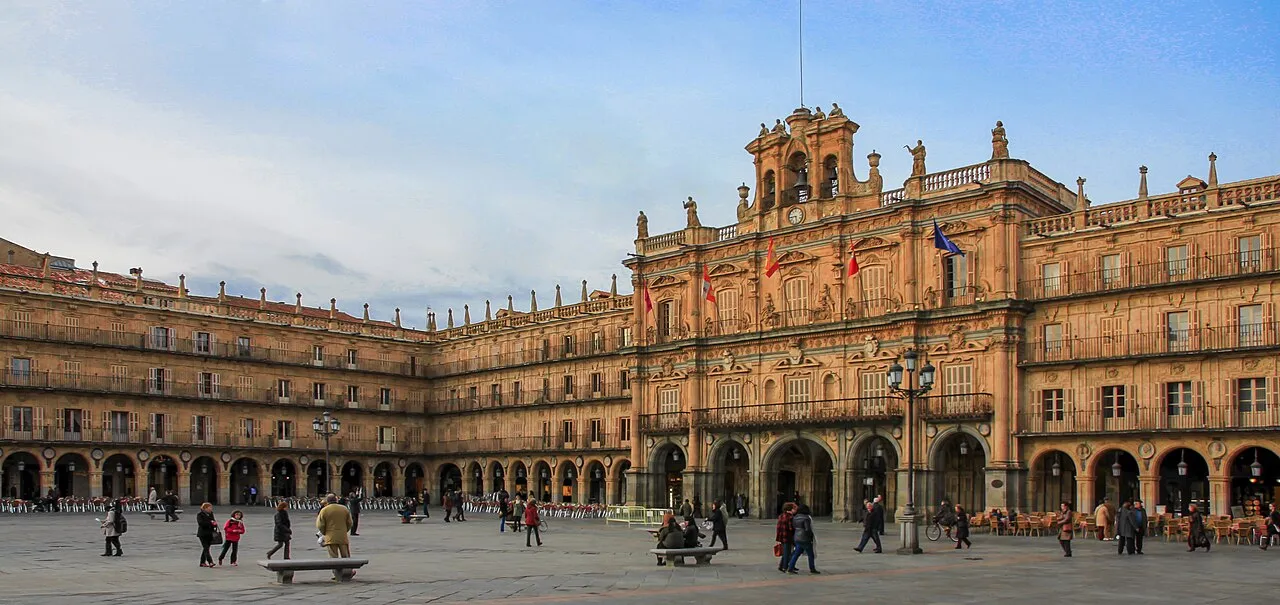
Its effect does not come from any single element but from repetition: eighty-eight identical arches running along all four sides, three floors of balconies with the same rhythm, all in the same golden stone and without a single façade facing outwards. It was built between 1729 and 1755 and was not conceived as a space for strolling, but as a bullring.
It is not square. The four sides are of different lengths and none of the angles is a right angle, because it had to be fitted into the existing street plan. The uniformity of the elevations conceals it completely.
Why it is closed
The form follows the function.
The design was signed by Alberto de Churriguera, of the family that gave its name to the Churrigueresque, and his starting decision was to seal it off: a completely closed square, with no façades facing outwards, entered only through arches at the corners and a few side passages.
That form is not aesthetic but functional. The square was conceived to hold bullfights, which were the great public spectacle of the age: the centre was fenced off, the entrances were closed and the balconies were rented out as seats, priced according to height and orientation.
The same scheme is repeated in the Castilian main squares of the period, but few achieve this uniformity. Here every elevation is identical, with the same height, the same number of openings per bay and the same module, which produces that sense of an open-air room.
The north side is occupied by the City Hall, with its bell gable and its sculptures crowning the whole, and on the east is the Royal Pavilion, with the medallion of Philip V, who funded the work. Beneath the arcades are the city's historic cafés.
The arcades give shelter in the rain and shade in summer, and the square works as the default meeting place for the whole city. At nightfall, when the lighting comes on, the golden Villamayor stone turns practically orange.
Relief busts of kings, conquistadors and soldiers, which were not all put up at once: the series was completed over centuries and some medallions are still empty on purpose. There have been removals and replacements for political reasons at various moments.
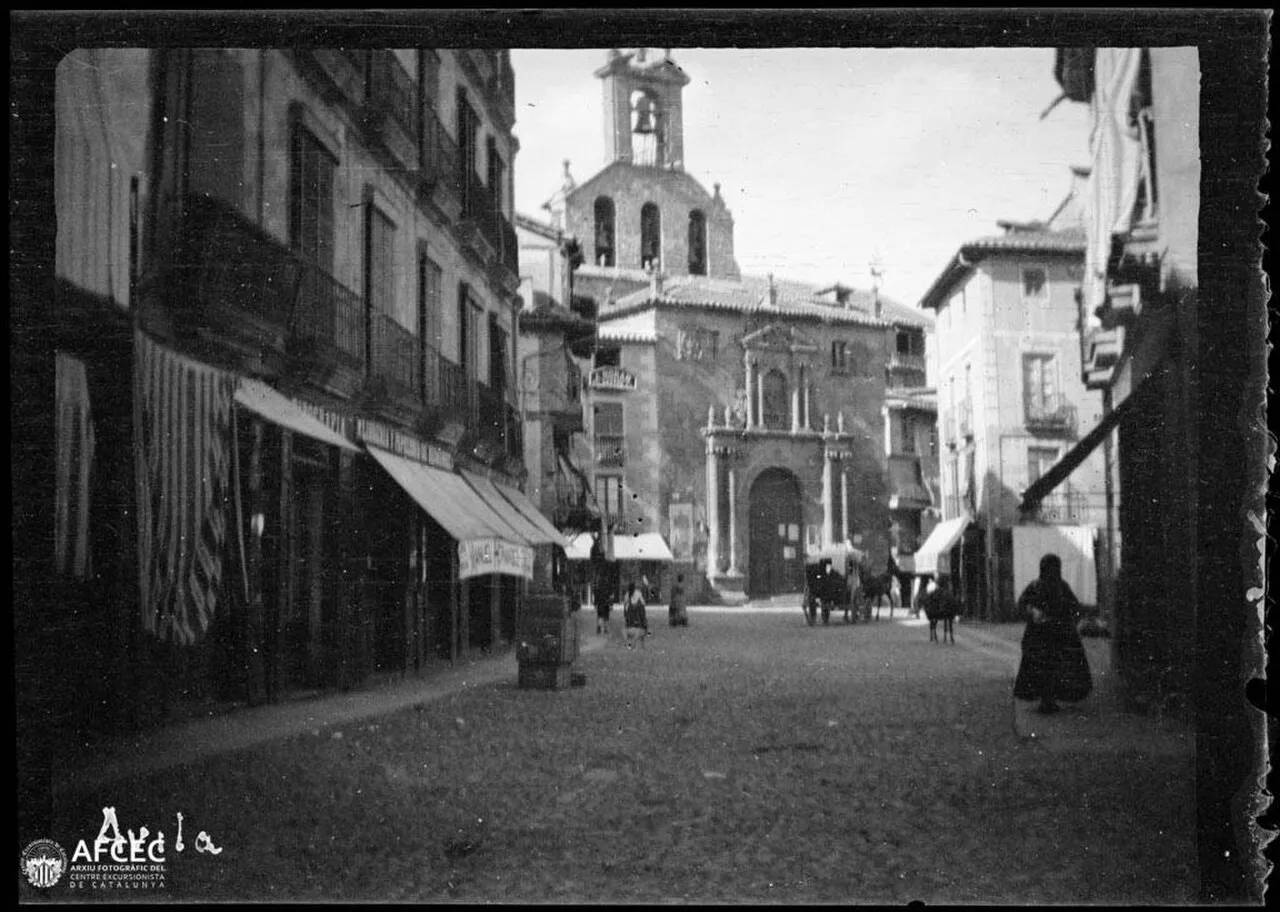
Going out through the passage on the south-western side you reach the Corrillo, a small square with arcades on columns, and there something appears that throws you: a Romanesque church from 1103, San Martín de Tours, wedged in between the buildings and sharing a party wall with homes and shops.
It was not built next to the square: the square was built around it six centuries later, with the new houses set against it. Walking round it is impossible and it shows on only two fronts. It is the most visible remnant of the resettlement-era Salamanca that predates everything else, and almost nobody identifies it as a church.
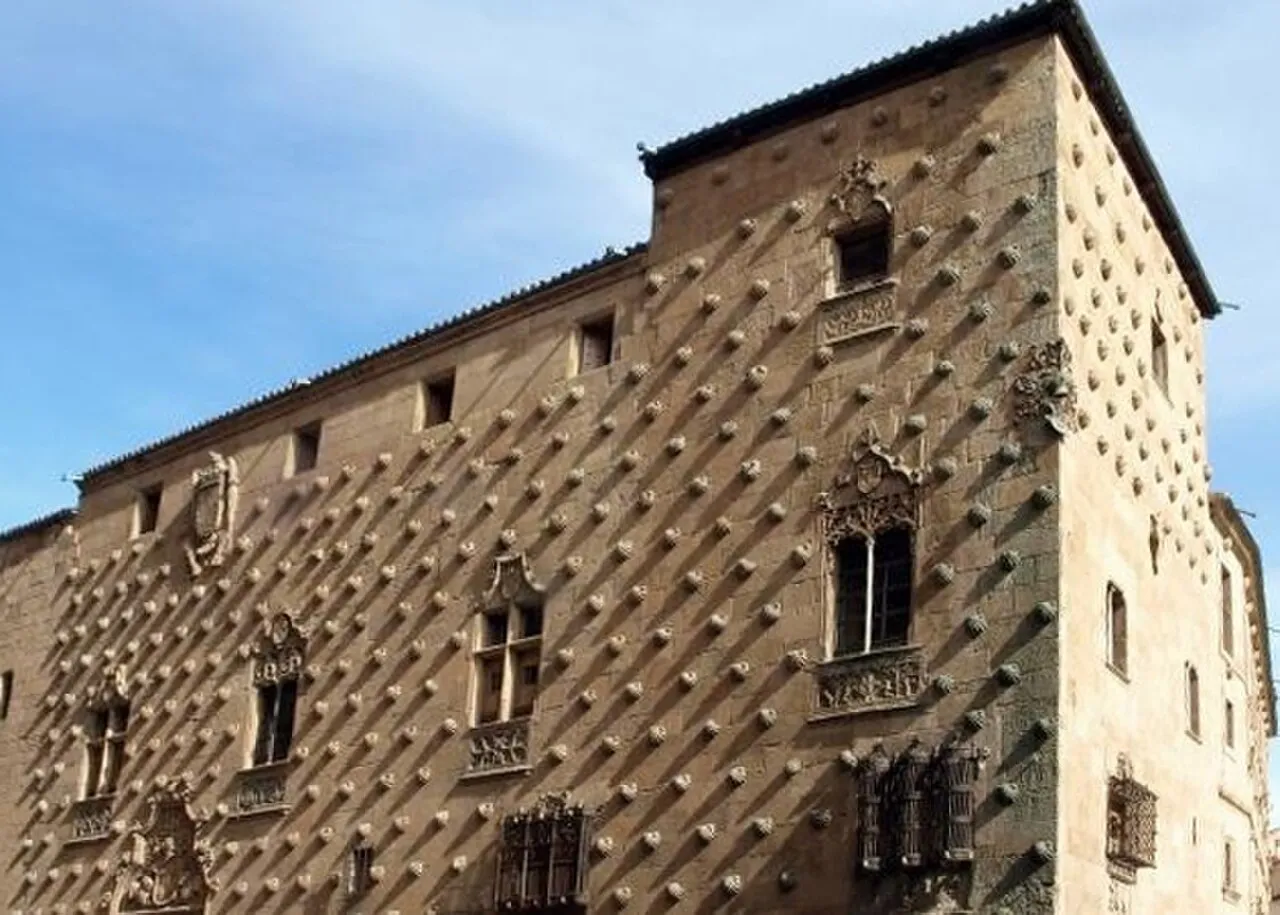
Down the Rúa Mayor, three minutes away, is the Casa de las Conchas, with its more than three hundred stone scallop shells fixed to the façade. And right opposite, the Baroque bulk of the Clerecía. That crossing, civil Gothic against Jesuit college, is one of the most photographed points in the city.
The Clerecía also offers the best view of the old town: Scala Coeli, a route that climbs through the high galleries and the inside of the dome up to the bell chambers of its two twin towers.
When to see it
The moment is nightfall, when the lighting comes on and the Villamayor stone turns almost orange. It is when the square fills with people and when the effect of the eighty-eight arches lit in sequence works at its best.
First thing in the morning the opposite happens and it is just as interesting: the square is practically empty, you can walk across the middle with nobody around and you take in the real scale of the space, which with people in it you cannot perceive.
At midday in summer it is an oven with no shade in the centre, although the arcades solve the problem. And in the rain it is probably the best place in the city, because you can walk the whole way round without getting wet.
One note: the square is the point you pass through several times a day without meaning to, and that is why it is worth looking at it carefully at least once instead of crossing it. The medallions, the City Hall and the Royal Pavilion deserve a slow lap.
More than three hundred scallop shells carved one by one, the emblem of the Order of Santiago to which the patron belonged. They are not identical: they vary in size and relief because different stonemasons carved them. Today it is a public library and entry is free: the courtyard is the best of it.
A Jesuit college begun in 1617 and carried well into the eighteenth century. Its Scala Coeli visit climbs through the high galleries and the inside of the dome up to the towers, and gives the best panorama of the old town. Combined ticket around 6 €.
Romanesque, from 1103, and trapped inside the block of the square, which was built around it. Its north doorway, the one facing the Corrillo, keeps its archivolt with sawtooth decoration and is the oldest thing on view in the whole surrounding area.
Because it was conceived to hold bullfights, which were the great public spectacle of the eighteenth century. The centre was fenced off, the entrances were closed and the balconies were rented out as seats, priced according to height and orientation. That is why it has no façades facing outwards and is entered only through arches at the corners.
Is it square?
No, although the eye does not detect it. The four sides are of different lengths and none of the angles is a right angle, because the square had to be fitted into the street plan that already existed. The absolute uniformity of the elevations — same height, same rhythm of openings, same stone — conceals the irregularity completely.
What are the medallions on the arches?
Relief busts of kings of Spain, conquistadors, soldiers and prominent figures, placed in the spandrels above the arches. The series was completed over the centuries and some medallions are still empty on purpose, working as an open list. There have been removals and replacements for political reasons.
Who built it?
The design was signed by Alberto de Churriguera, of the family that gave its name to the Churrigueresque style, and the works ran between 1729 and 1755. It was partly funded by Philip V, whose medallion presides over the Royal Pavilion, on the east side. The City Hall, with its bell gable, occupies the north side.
What is the best time to see it?
Nightfall, when the lighting comes on and the golden Villamayor stone turns practically orange. The alternative is first thing in the morning, with the square empty: that is when you take in the real scale of the space, which with people in it you cannot perceive.
What is there around the square?
Attached to it, the Romanesque church of San Martín de Tours, from 1103, wedged into the block because the square was built around it. Three minutes away down the Rúa Mayor, the Casa de las Conchas and, opposite, the Clerecía, whose Scala Coeli visit gives the best panorama of the old town.
Practical information
WhereThe exact centre of Salamanca. The whole pedestrian old town converges here.
PriceA public square, always open and with no entrance fee.
Best timeNightfall, with the lighting on. Or first thing, with the square empty.
In the rainThe arcades let you walk the whole way round without getting wet.
Next doorCasa de las Conchas and the Clerecía 3 minutes away; San Martín de Tours, attached.
DetailLook at the medallions above the arches: some are still empty on purpose.
On the map
🎧 With Viavoy
Walk Salamanca and listen at your own pace
Download Viavoy and walk Salamanca offline, whenever you like.
from 2,99 €· one-off payment
City Pass · 9,99 €3 days, all the tours in Salamanca